



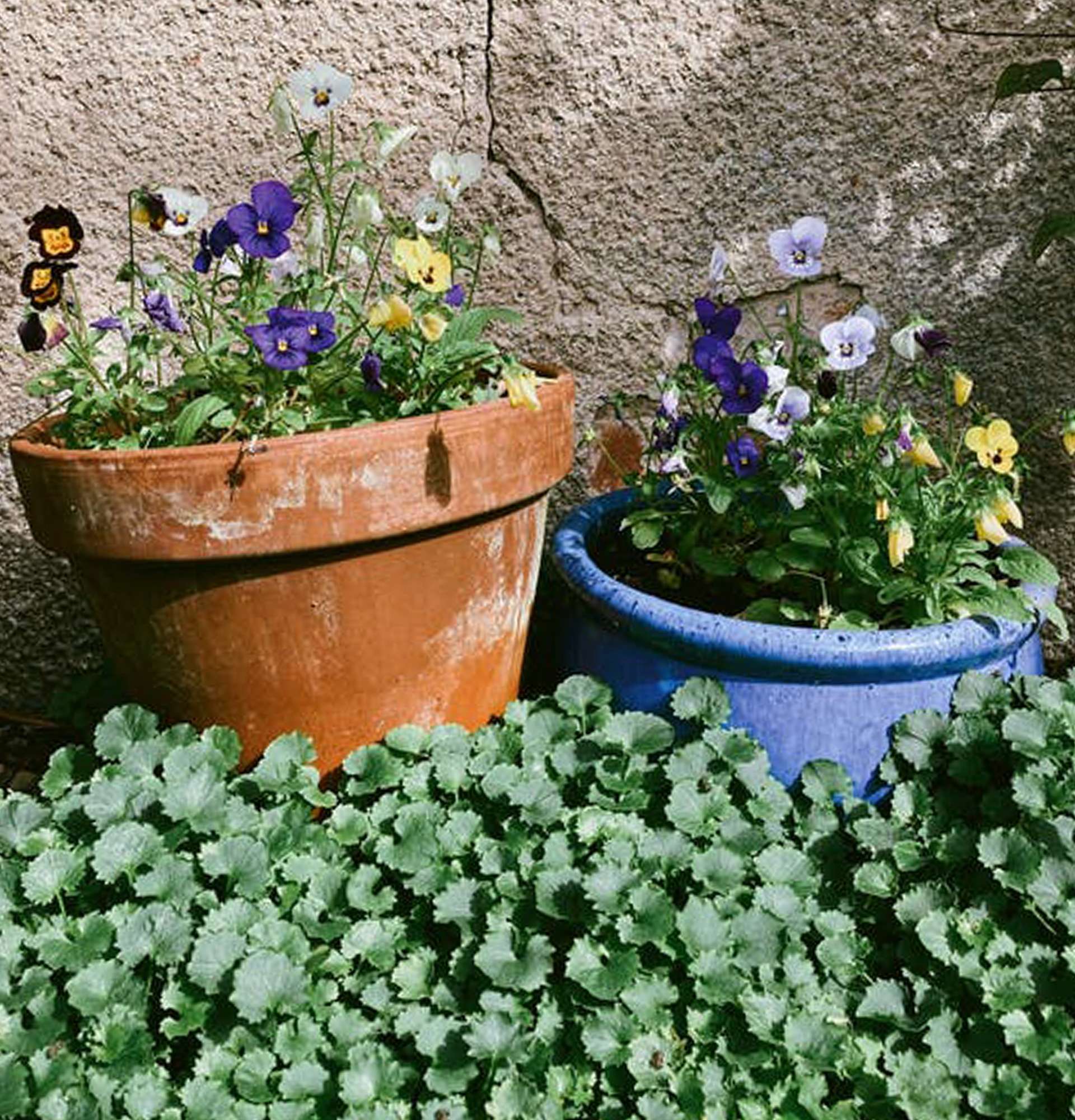
Latin name: (Viola tricolor)
Category: perennial herbaceous plants
Origin: Europe
Amazing and unique flowers of childhood – Pansies
Viola tricolor, commonly known as Pansies, is a charming genus of annual or biennial herbaceous plants (some varieties are perennial). They belong to the Violet family.
This beautiful and unique flower has many folk names. It is most often called field pansies, brother and sister, half-flower, Ivan and Mary, or pansies. And this may not be a complete list of names.
The violet genus includes five hundred wild varieties of amazing plants. Where do pansies grow? The natural habitat where pansies thrive is in fertile, acidic or neutral soils of meadows, forest glades, roadside verges, ditches, ravines, and pastures in Europe, the Caucasus, Western Siberia, the Far East, Scandinavia, and Asia Minor, where they hide in the shade of shrubs and trees from the scorching rays of the sun.
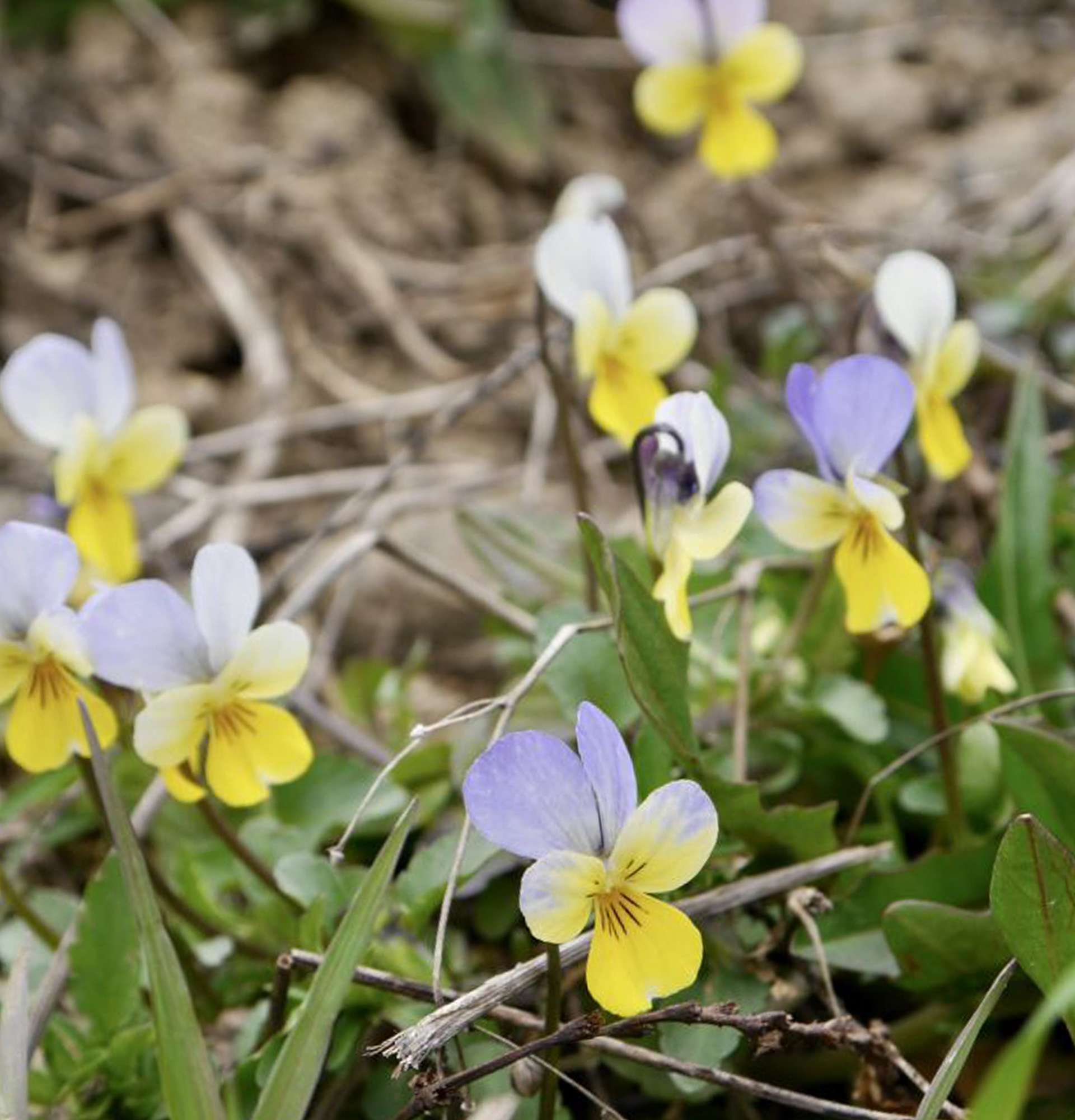
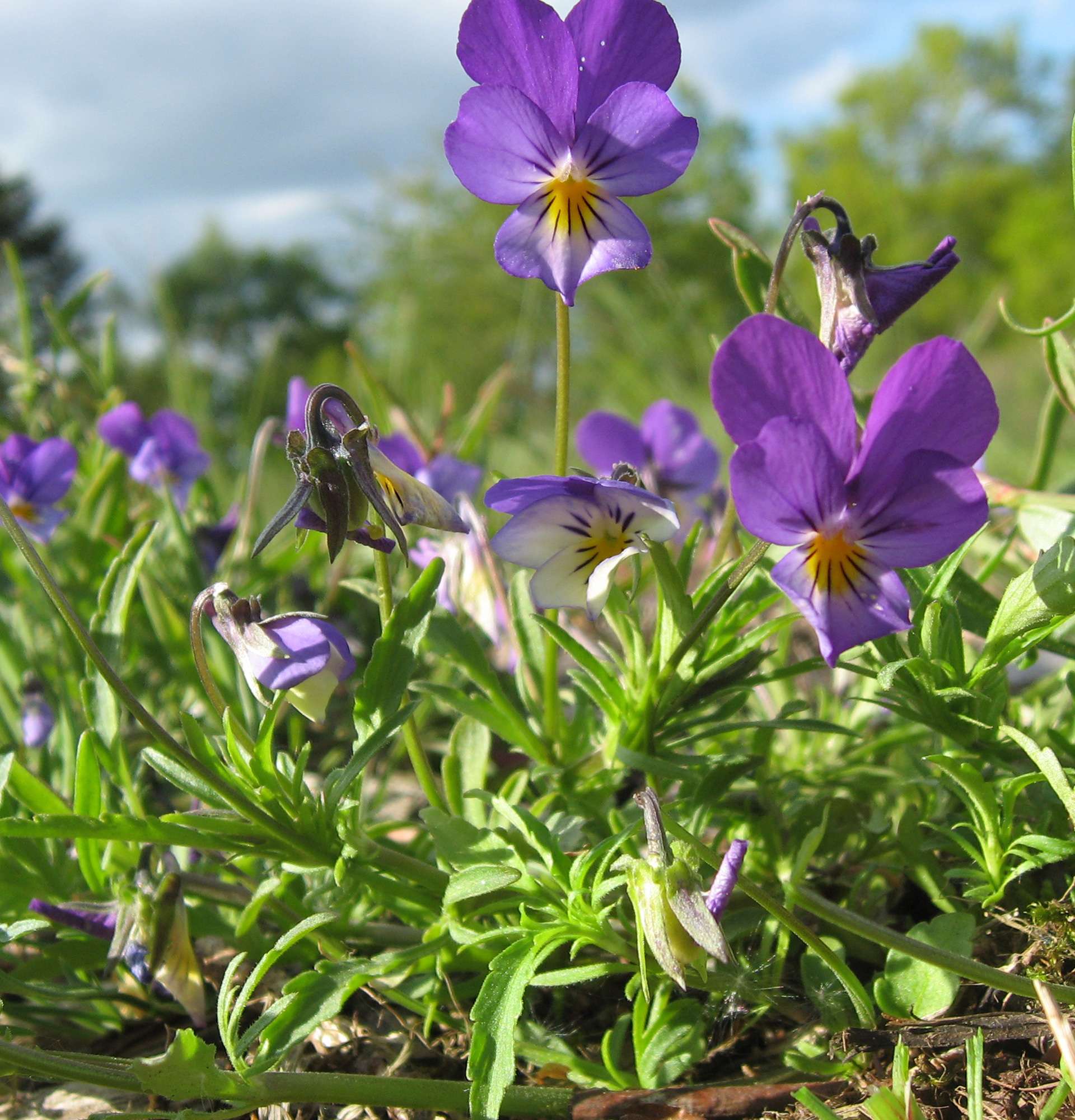
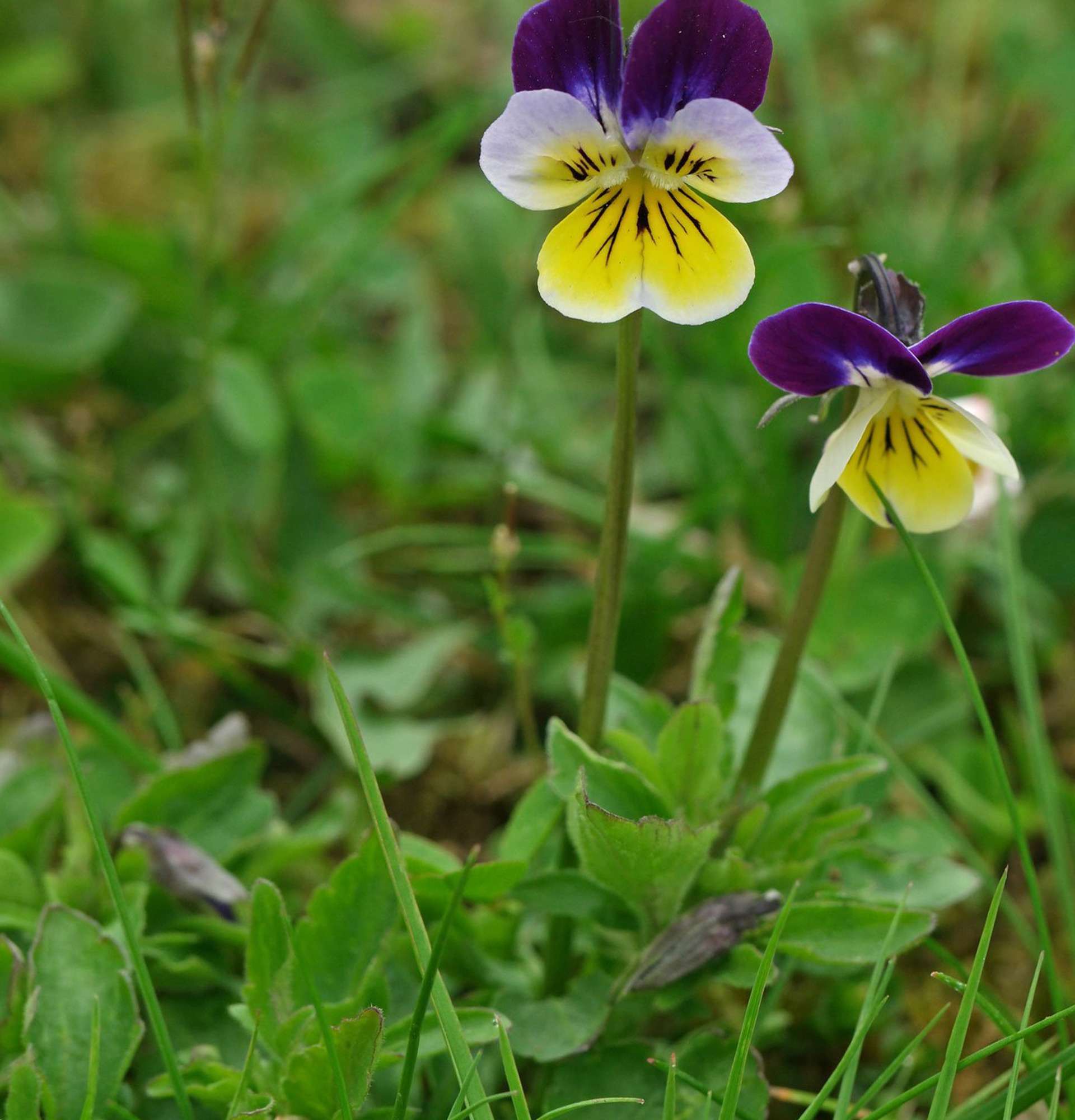
There are also wild pansies – perennial or biennial wonderful shrubs. They are formed by branched, pubescent stems. The height of these flowering shrubs ranges from fifteen to thirty centimeters. These wild herbaceous beauties have rounded leaves with pointed ends and large, three-centimeter-long stipules, forming rosettes – a platform for flower stalks.
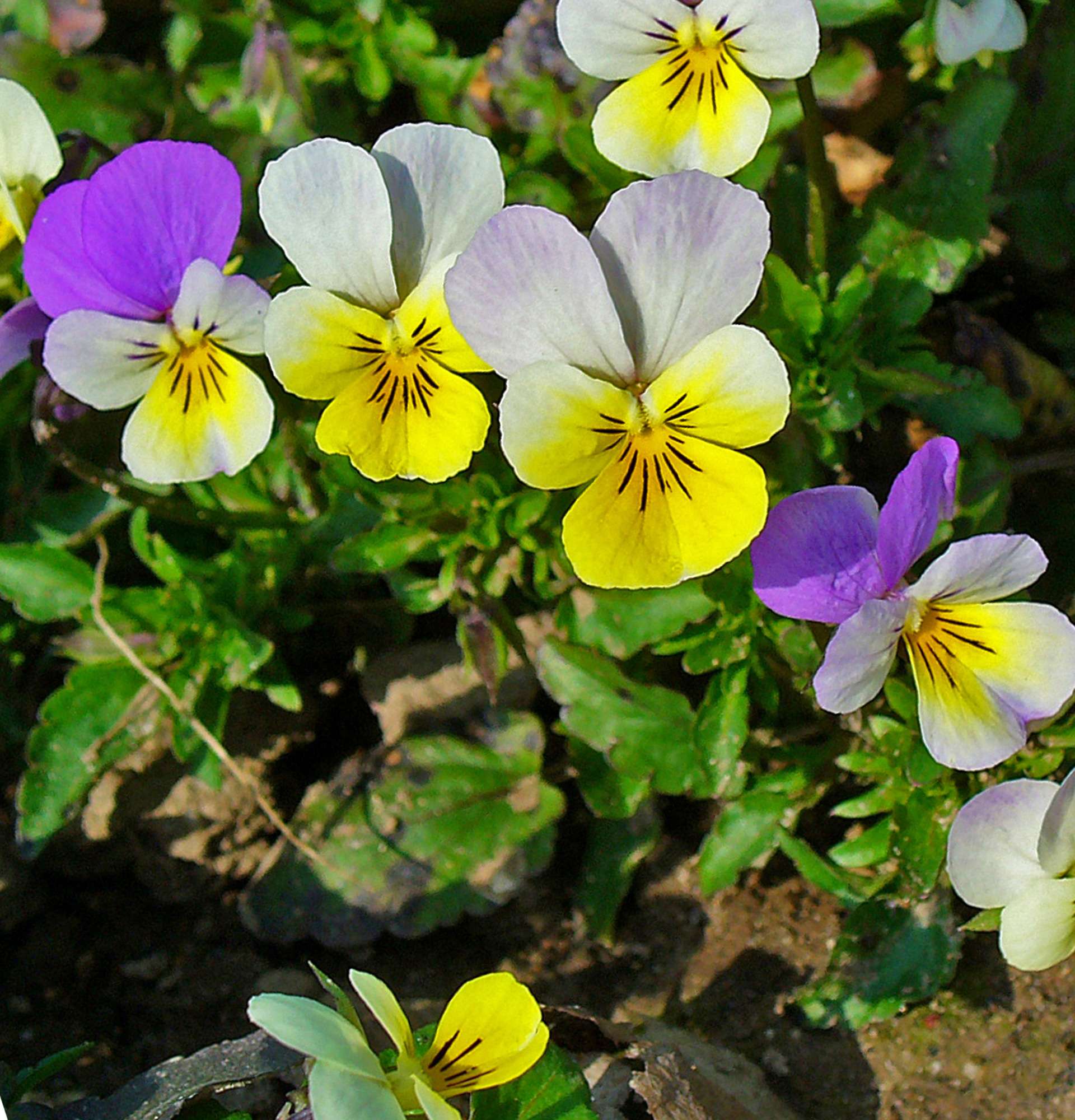
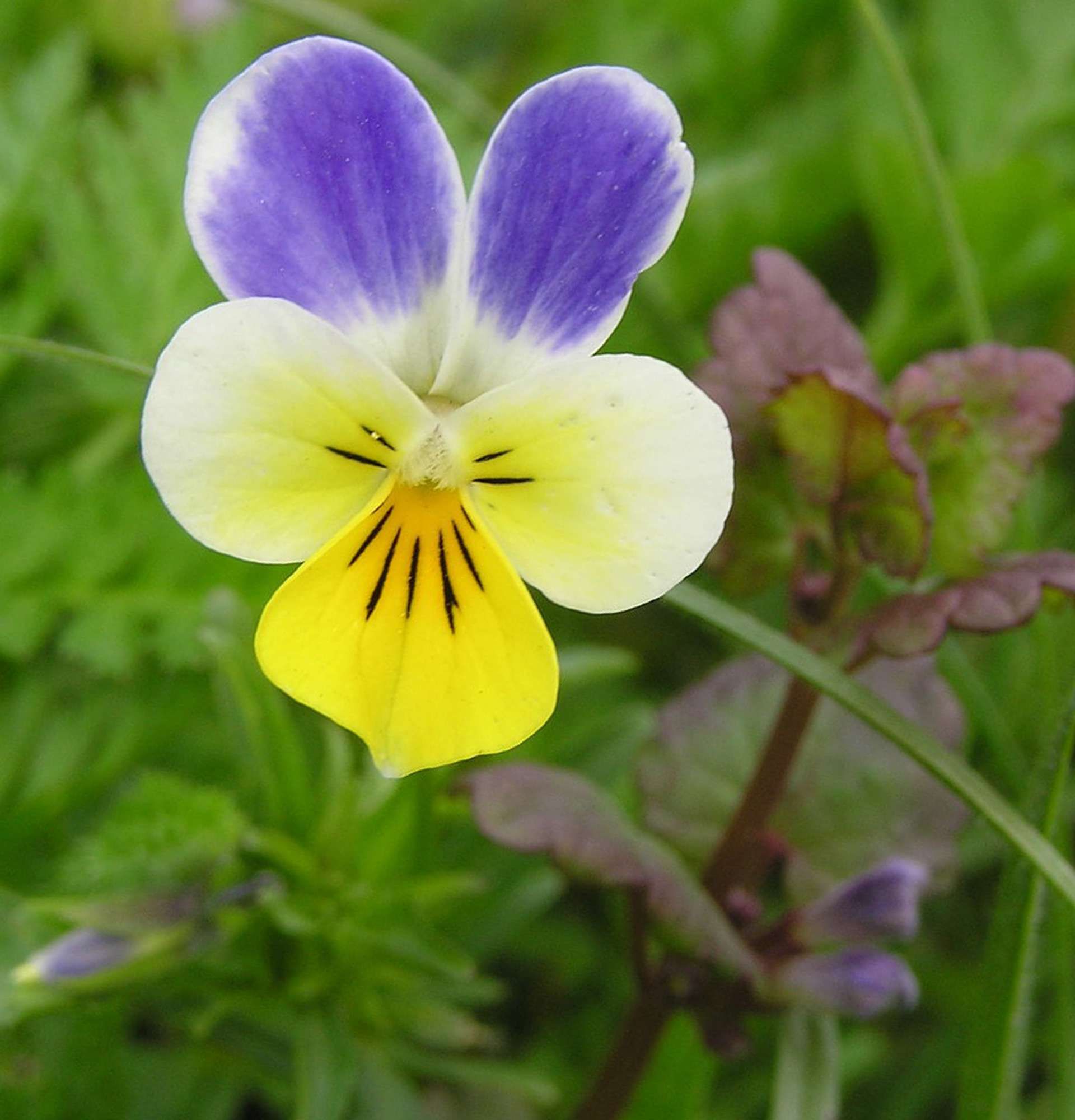
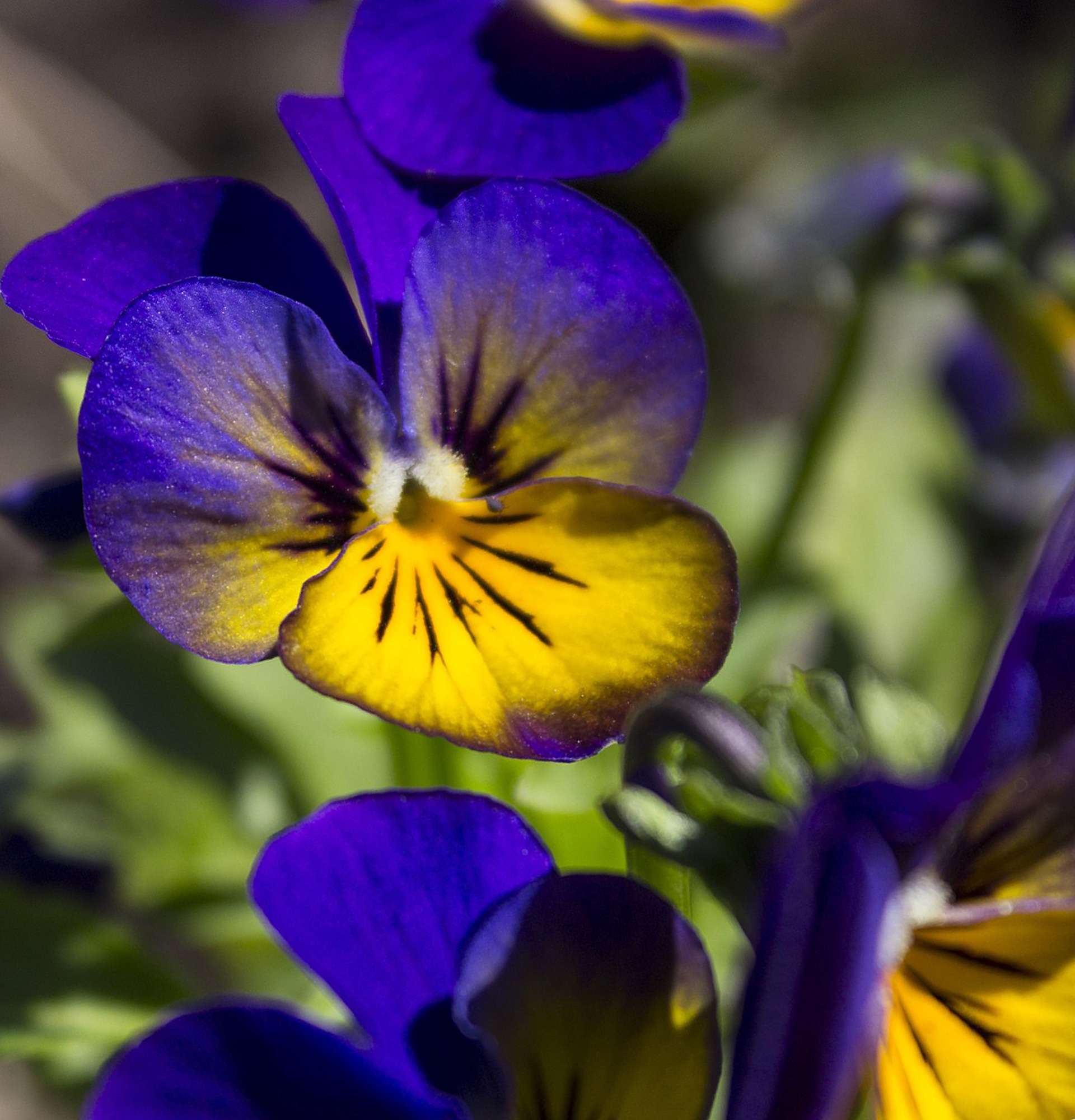
How do pansies bloom? During the summer, one and a half centimeter flowers rise from the rosettes on flower stalks, adorning the wild and amazing plants. The color palette is not very diverse. Against the background of the lower, yellowish or whitish petal, decorated with dark stripes, the upper petals of purple or dark blue color with a yellow-orange central part of the flower stand out.
Thanks to the fruitful work of breeders on Viola tricolor and its hybrid form, Viola × wittrockiana, a huge number of new beautiful varieties of this amazing plant have appeared.
Viola × wittrockiana is also called large-flowered garden pansies. Viola tricolor, Viola altaica, and Viola lutea have become excellent material for creating this incredible beauty. Pansies on the balcony, pansies on the flower bed – all this is a multitude of new original varieties of Viola × wittrockiana.
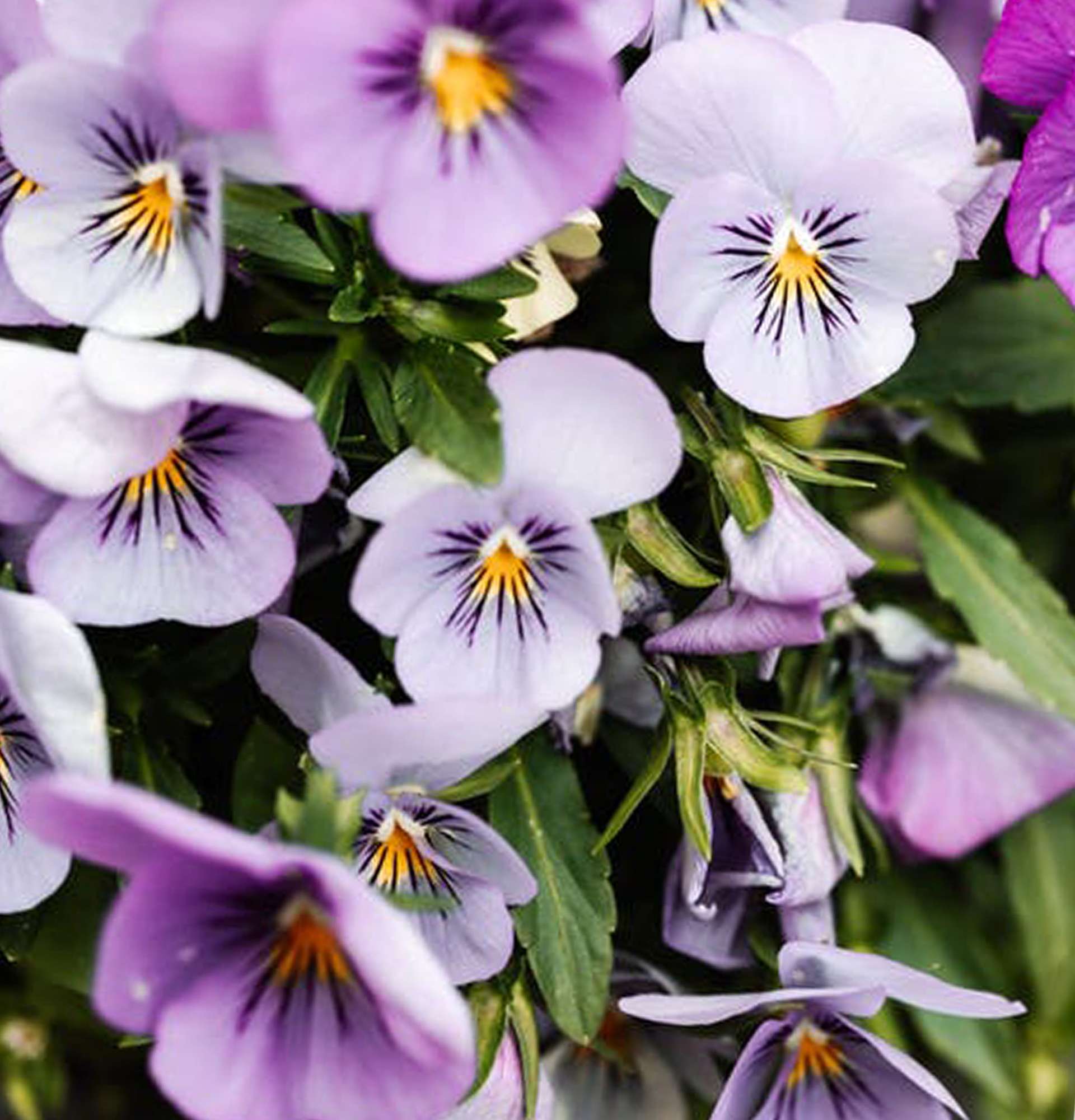
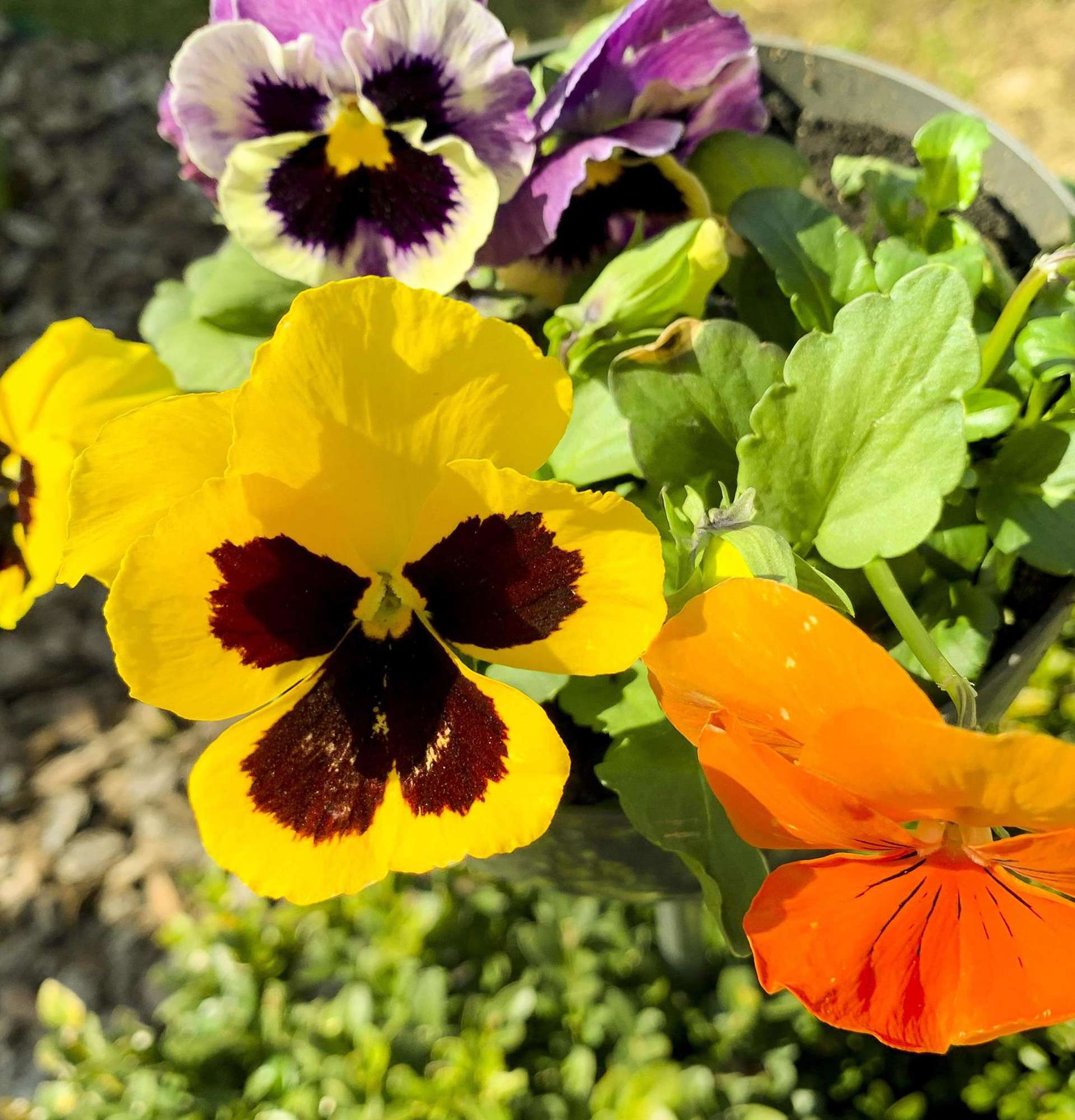
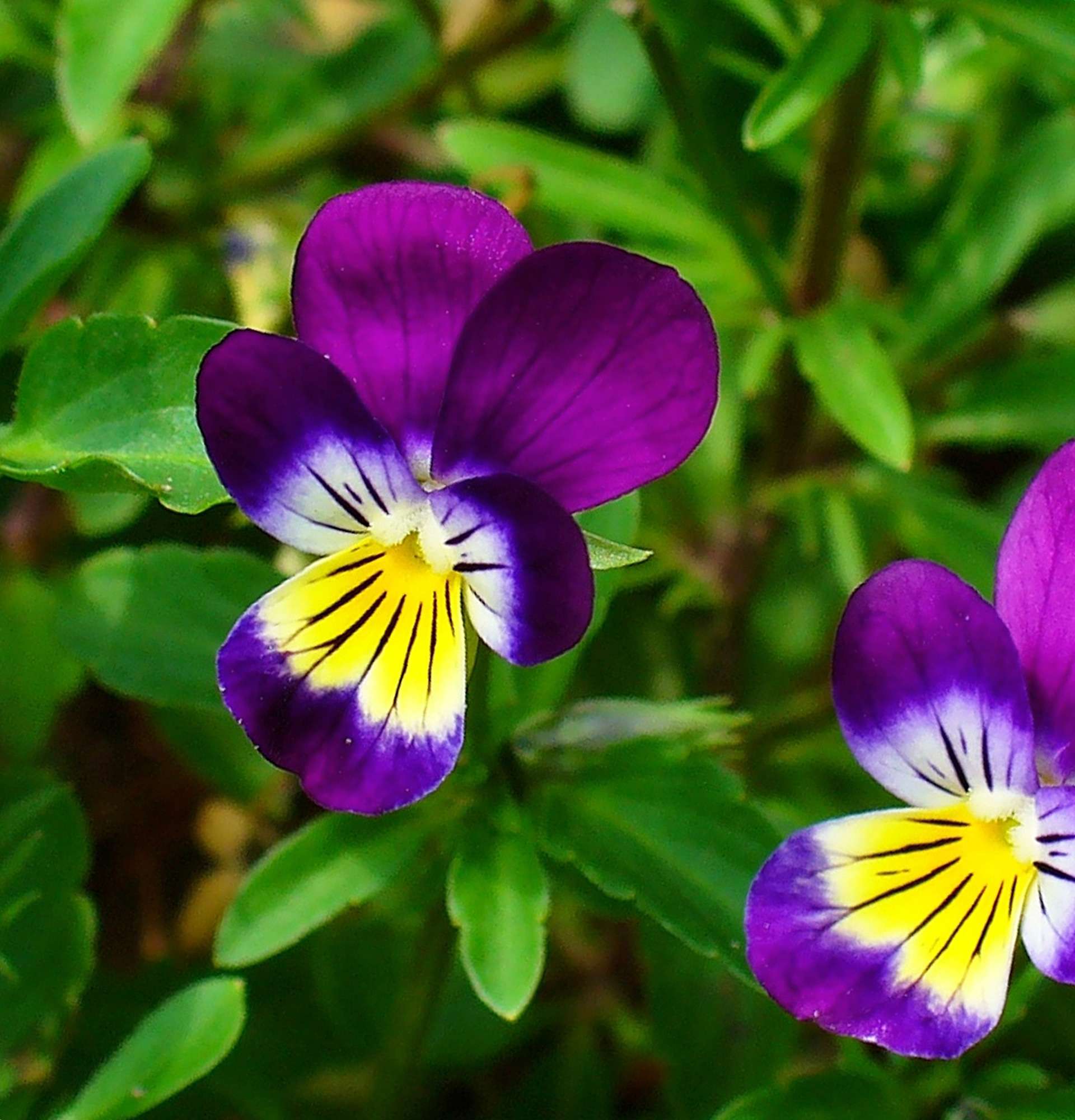
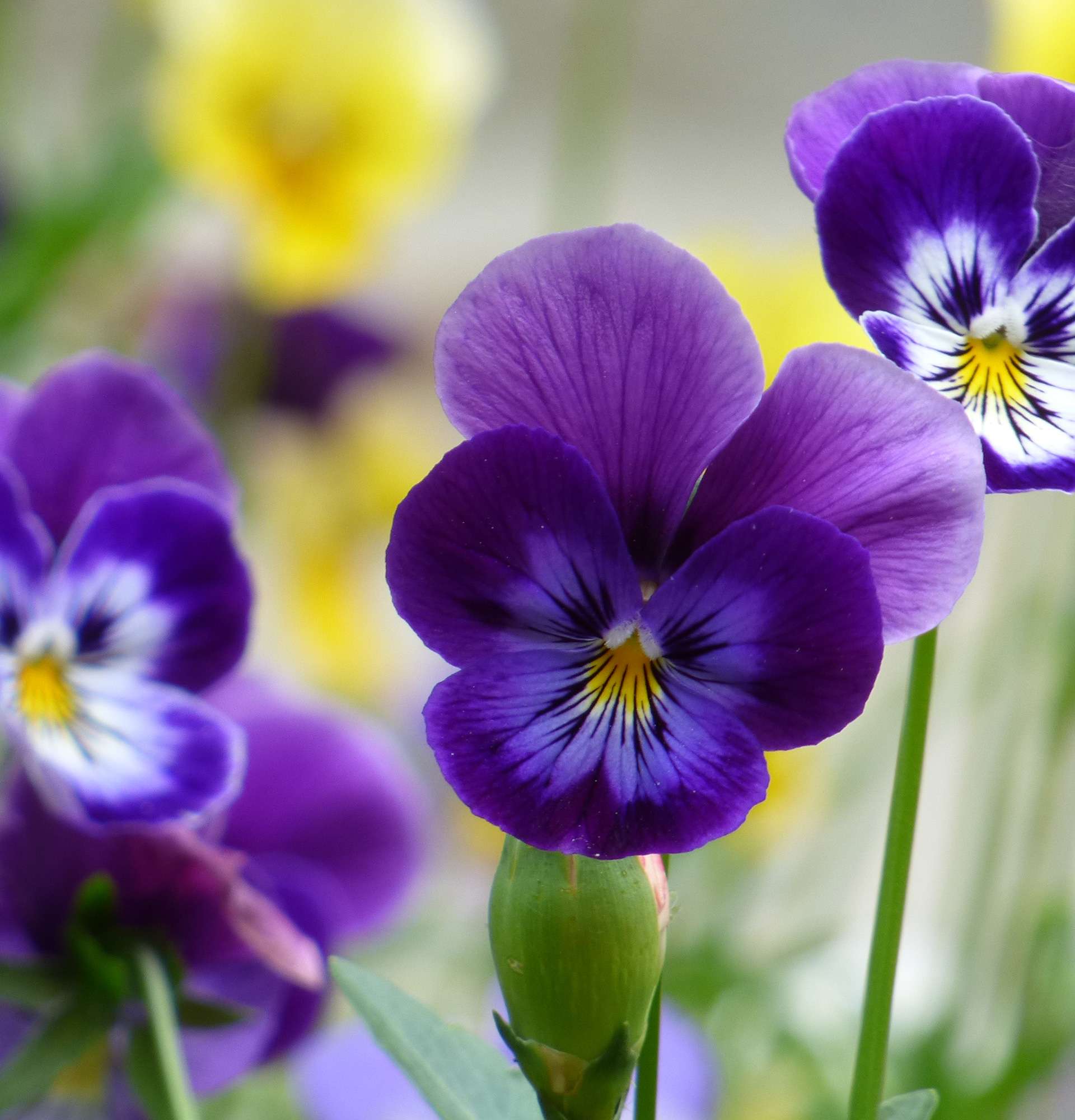
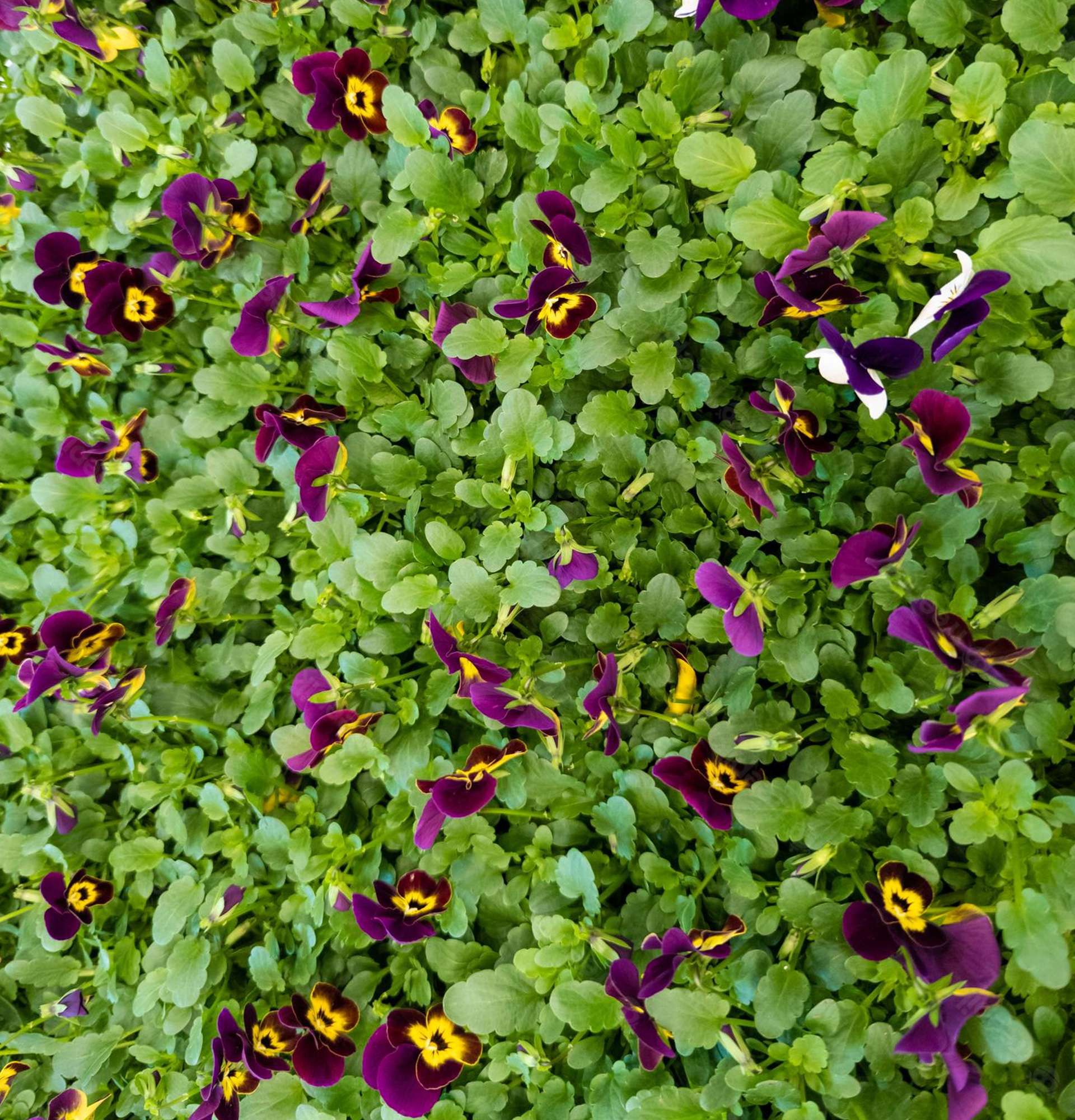
Thanks to the knowledge and skills of gardeners, how beautifully to plant pansies of cultivated and wild species, they look great in flower arrangements, and are the decoration of gardens, parks, and squares throughout the world. It is absolutely impossible to describe all the varieties and species of these amazing plants from the childhood of every person. You can see pansies in the photo when looking at some varieties of viola.
Pansy varieties
Pansies with medium-sized flowers
Pansies "Blue Boy" have blue-blue flowers, reaching a size of four centimeters.
Pansies "Snegurochka" are adorned with white flowers, reaching a diameter of four centimeters.
Pansies "Red Hat" delight the eye with bright red, four-centimeter flowers.
Pansies "Rococo" – variegated and bright, strongly corrugated petals of flowers, raised in the form of miniature roses, give the plant an extraordinary exoticism and beauty.
Pansies with large flowers
Pansies "Ice King" – the bush of this wonder reaches twenty centimeters. White flowers have a greenish-yellow tint. The three lower petals with even edges are covered with purple spots. And these five-centimeter flowers rise on flower stalks, the height of which reaches ten centimeters.
Pansies "Winter Sun" adorn a twenty-centimeter bush with five-centimeter flowers, which rise on a ten-centimeter flower stalk. The flowers are bright yellow with uneven edges. The three lower petals are covered with velvety dark brown spots.
Pansies "Evening Heat" are low, beautifully flowering shrubs, the height of which reaches fifteen centimeters. Five or six centimeter original flowers with wavy edges rise on a flower stalk up to ten centimeters. The flowers are not distinguished by special brightness. The reddish-brown color of the upper petals looks great against the background of the three lower dark spotted petals.
Pansies "March Magic" grow as a bush up to twenty centimeters high. Special beauty comes from the amazing flowers of a beautiful dark purple color, which turn black after a couple of days. They rise on ten-centimeter flower stalks. The petals are velvety and have even edges.
Pansies "Sky Queen" are very pretty bushes, twenty centimeters high. On nine-centimeter flower stalks, blue, five-centimeter flowers bloom, which become lighter and turn light blue after a couple of days. The petals are beautiful with even edges.
Pansies "Jupiter" form twenty-centimeter bushes. Their decoration is flowers, the centers of which are purple and violet, and the edges are a more delicate whitish hue. The flowers reach a diameter of five centimeters, and the flower stalks – eight centimeters.
Pansies "Tiger's Eye". Compact bushes reach a height of twenty centimeters. They have a property to grow abundantly and look like a lush carpet with amazing four-centimeter yellow flowers with a black textured stripe. This variety of pansies visually resembles a tiger's eye. This variety of pansies decorates the adjacent area well if there is soil with effective water permeability.
It is impossible to describe the entire range of field pansies in a short article. Next, let's consider how to plant pansies, how to grow pansies in your garden, on a flower bed, on a balcony, so that they delight not only you but also everyone around. Let's consider some of the nuances of cultivation.
Caring for pansies
Ivan and Mary is an unpretentious flower to grow, and it is not difficult to care for it.
Choosing a place for pansies
Light-loving pansies need an open, sunny place, but direct sunlight on the flowers should not last all day. This means that garden pansies should be in diffused light due to the pleasant neighborhood with large shrubs or trees with a not dense crown.
Interesting! Sunny areas will allow you to grow large and bright flowers of field pansies, but they will bloom very quickly. In shaded areas – smaller and paler flowers, but you can admire them for longer.
Soil for pansies
An important factor for obtaining colorful flower beds with amazing butterfly flowers is the presence of fertile soil. To feed the soil, you need to use minerals. When loosening and digging the area for tricolor violets, neutral and loamy soil should be enriched with mineral complex fertilizers containing nitrogen, phosphorus, and potassium. The concentration of the solution is forty grams of fertilizer per ten liters of water.
Using fresh manure can harm pansies.
Planting pansies
The seeds are sown shallowly directly into the loosened soil. Be sure to water well with a watering can with a small sieve. Seedlings will appear in seven to ten days.
Starting in February, seeds can be sown in greenhouses or hotbeds. The boxes with sown seeds should be kept in the dark for seven days. When the seedlings appear, we provide bright light. It is necessary to ensure regular watering, hardening, and feeding. Timely pick. In the open ground, seedlings with four leaves are planted at a distance of at least fifteen centimeters from each other.
Attention! Picked young seedlings are planted in the open ground in two months.
The first flowers will appear in a month.
Don't forget! Regular watering is essential. The soil should not dry out, but excessive moisture is also harmful to the seedlings.
In order to admire the beautiful flowering of field pansies for a longer time, it is necessary to remove the flowers that have already faded in time. If possible, pinch the plant – the lateral shoots will grow, and there will be more flowers.
Reproduction of pansies
Viola can be propagated by cuttings. It is necessary to cut green cuttings with two or three nodes. Plant them in the ground, water and spray. To help the seedlings take root better, you can use growth stimulants – epin, kornevin. In a month, the new bushes will bloom.
Perennial varieties of pansies are propagated by dividing adult bushes into several parts in the spring before the start of flowering. The young bushes can be planted in another place to prevent degeneration and disappearance of the viola.
Pansies diseases and pests
These beautiful flowers, if care is not taken, are affected by unwanted guests – aphids and spider mites. If measures are not taken in time, the plants will begin to wither, stop blooming, and may even die. When parasites appear, immediately use chemical preparations against pests.
If the rules of care are violated, Viola tricolor can be affected by: powdery mildew, gray rot, spotting, black leg – fungal diseases manifest themselves as white plaque on the leaves and stems. You can spray the plant with fungicides.
Pansies medicinal properties, application
- Viola tricolor is an excellent medicine. It has the most valuable biologically active substances – essential oil, saponins, carotenoids, salicylic acid, ascorbic acid, tannins. Such a source of substances, when used correctly, can provide effective help in the treatment of diseases.
- Infusions and tinctures of Viola tricolor are used as an expectorant, diuretic, anti-inflammatory, diaphoretic, and sedative. They heal wounds, cleanse the blood, relieve itching and irritation. Special drops from pansies have found application in the treatment of sinusitis.
Pansies and landscape design
These beautiful, incomparable butterflies – pansies, forming flowering carpets, look original in combination with various plants. These can be agave, iberis, ornithogalum, asters.
Pansies look good in combination with emerald green lawns, planted on garden paths; on balconies and loggias, hanging pots with pansies look great.
We have already considered how to plant pansies for the benefit of the plant. There is nothing difficult in this process, and the result is an effective bright flower bed that delights its owners and friends with its colorful fragrance throughout the season.
It is very beneficial to use viola in landscape design. After all, the plant blooms early in the spring, blooms every year, has a huge palette of colors, among which you can choose exactly the variety that suits the design of flower beds and other areas.
You can admire pansies constantly, and also get acquainted with interesting indoor flowers, photos and names of which can be found on the website. Catalog of indoor plants is at your service!
Write comments
Comments