



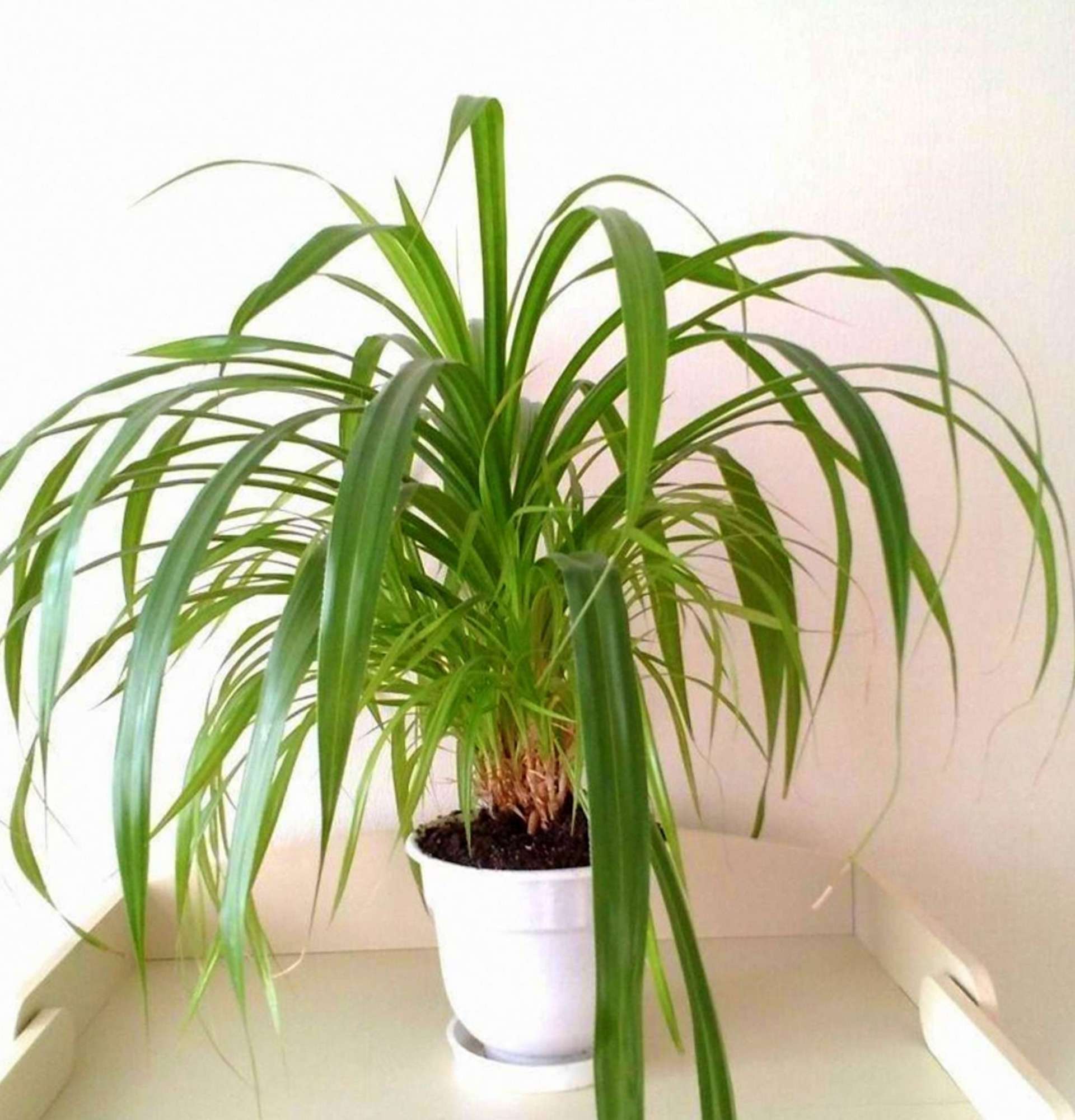
Latin name: (Pandanus)
Category: perennial evergreen tree-like plants
Origin: tropical part of Asia, Africa, Madagascar Island
Interesting facts about Pandanus
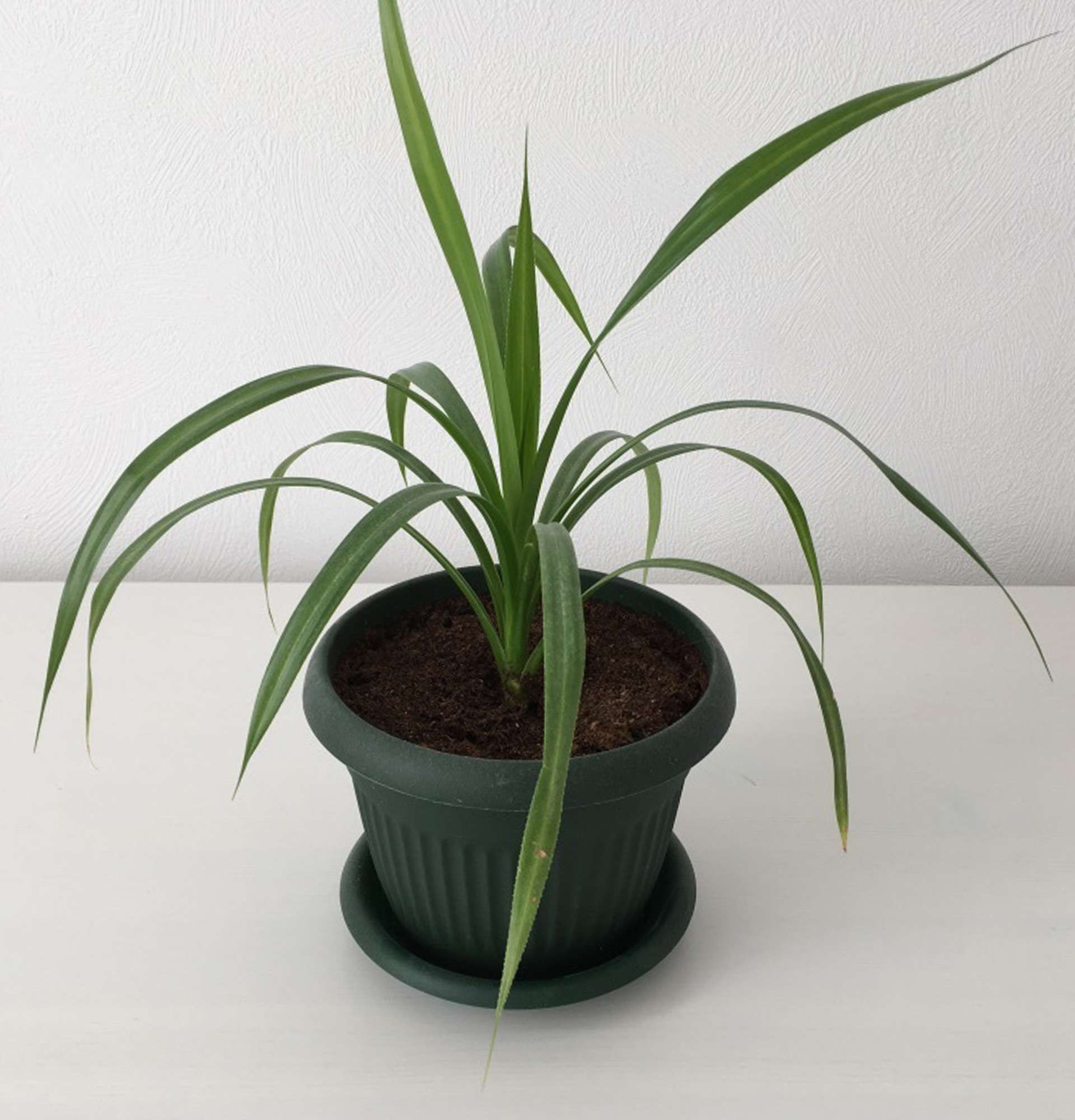
Pandanus (Pandanus), also known as pandan, adorns the Pandanaceae family with its beauty. It is a genus of seven hundred and fifty perennial tree-like evergreen specimens that prefer the tropical climate of the eastern part of the globe.
The native growing areas include Hawaii, the western part of the African continent, India, Vietnam, Polynesia, and the Australian continent.
The island of Madagascar is most favorable for pandanus, which has provided a haven for about ninety varieties of this plant.
These wonderful screw palms can grow beautifully along river banks, in mountainous forests, in the highlands; they even adorn the slopes of volcanoes, coral reefs, and coastal areas.
Under natural conditions, these beauties can reach a height of ten meters, and sometimes even twenty meters. In appearance, pandanuses resemble lianas and palms. The tree-like branched pandans are similar to dracaena, but its leaves are softer.
In most cases, a pandanus flower is able to form numerous aerial roots, which reach the ground and eventually take root. Throughout its life, the vertical position of the screw palm is maintained only by the woody aerial roots, called stilt roots.
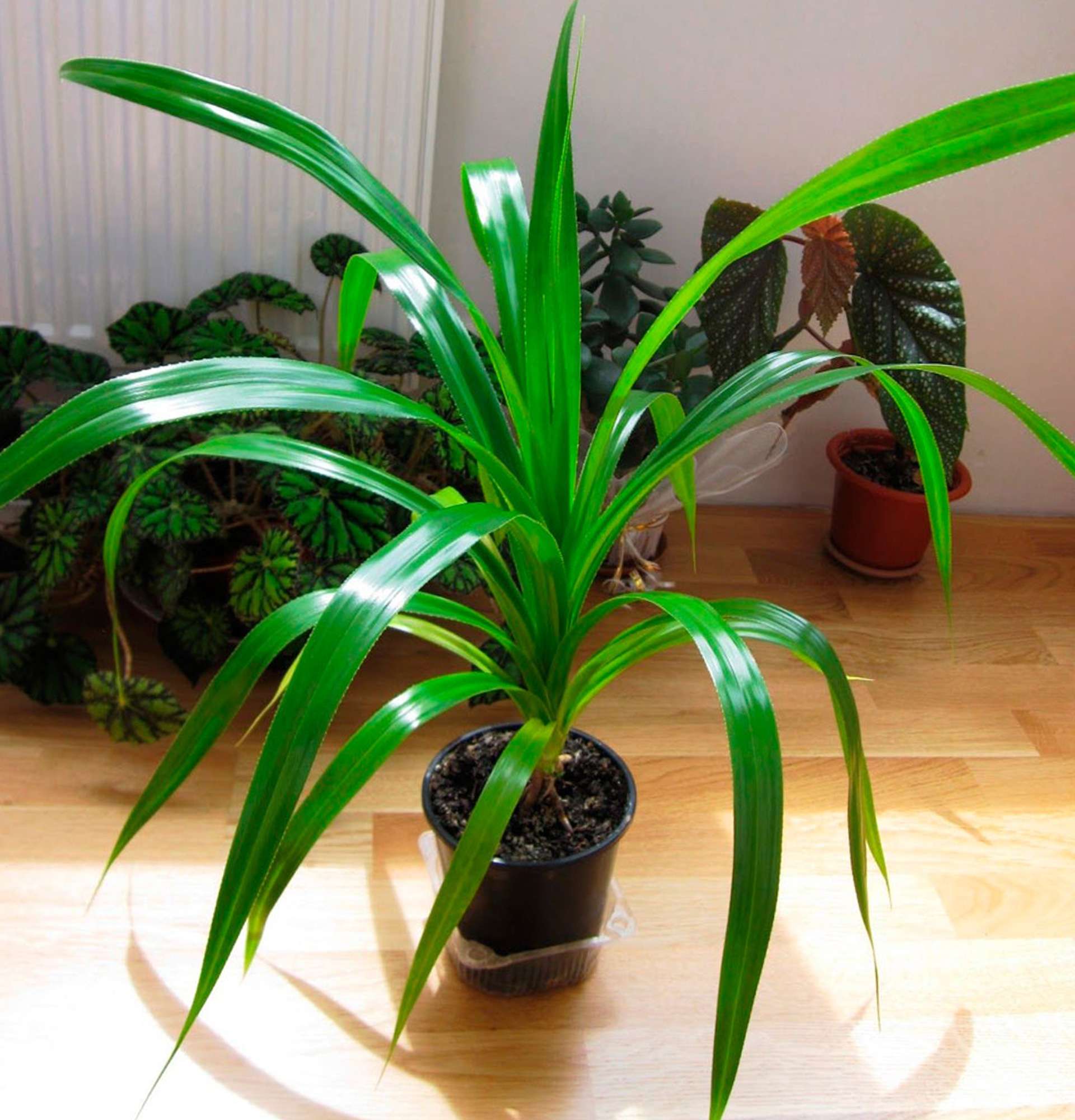
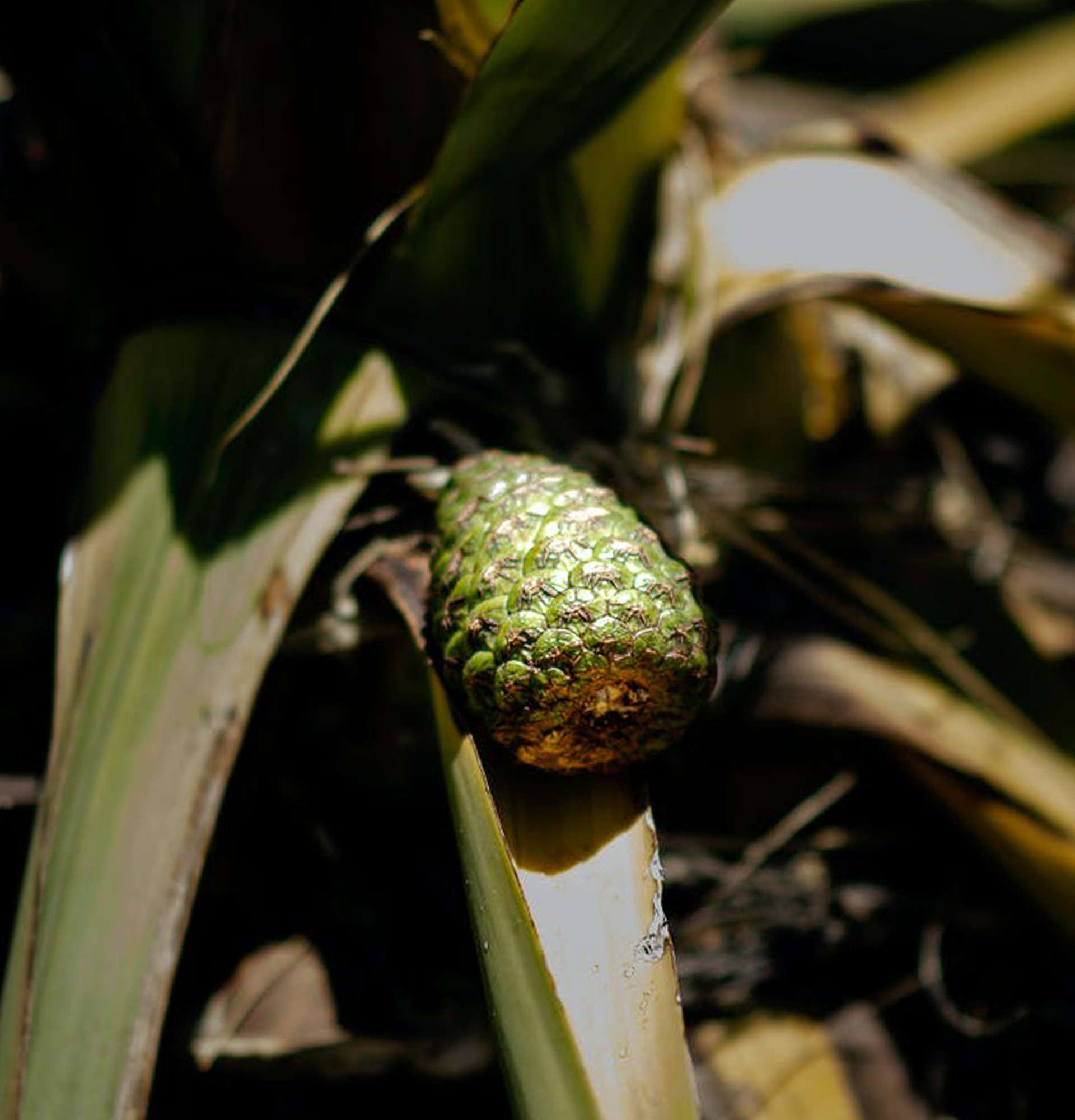
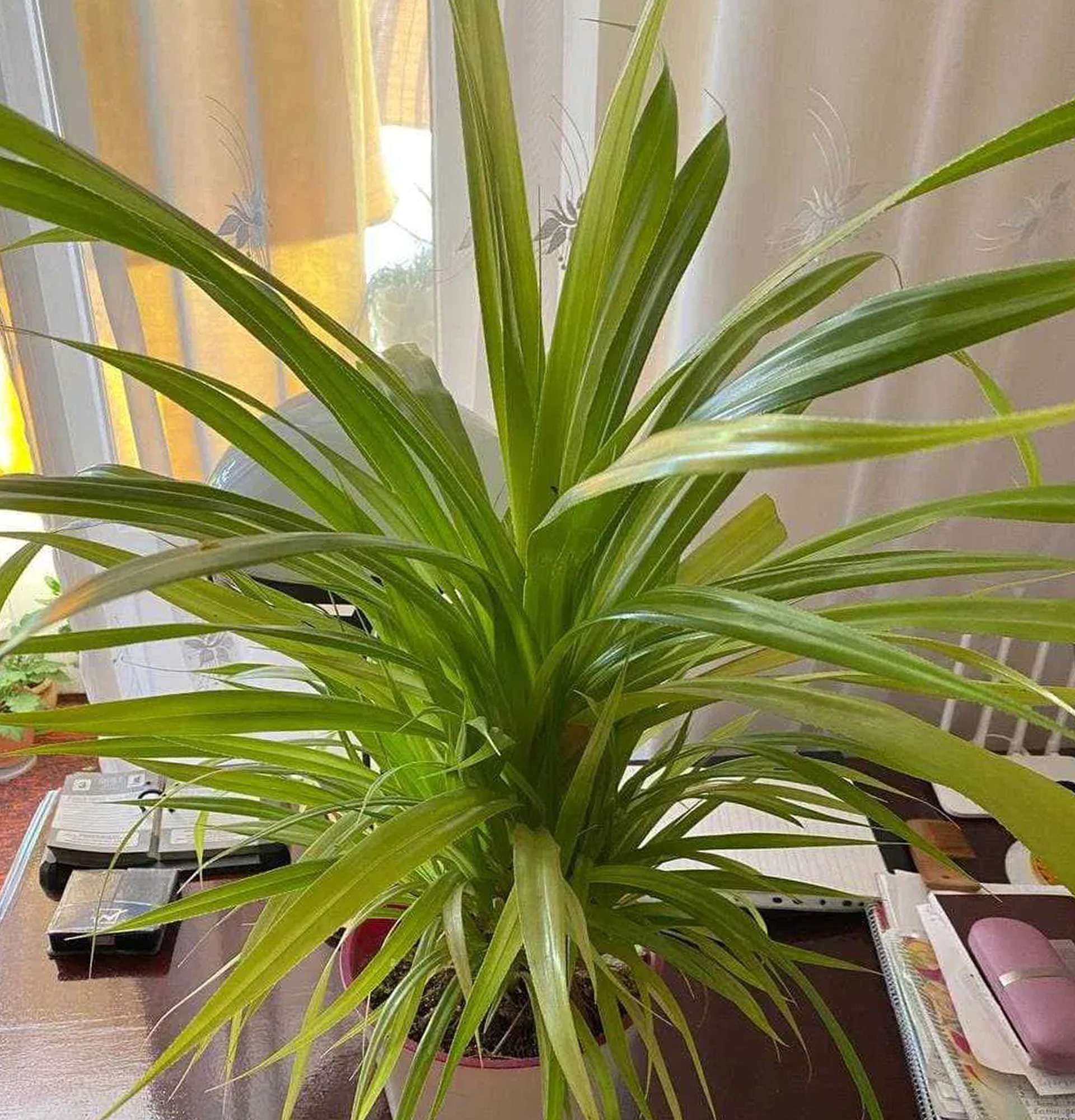
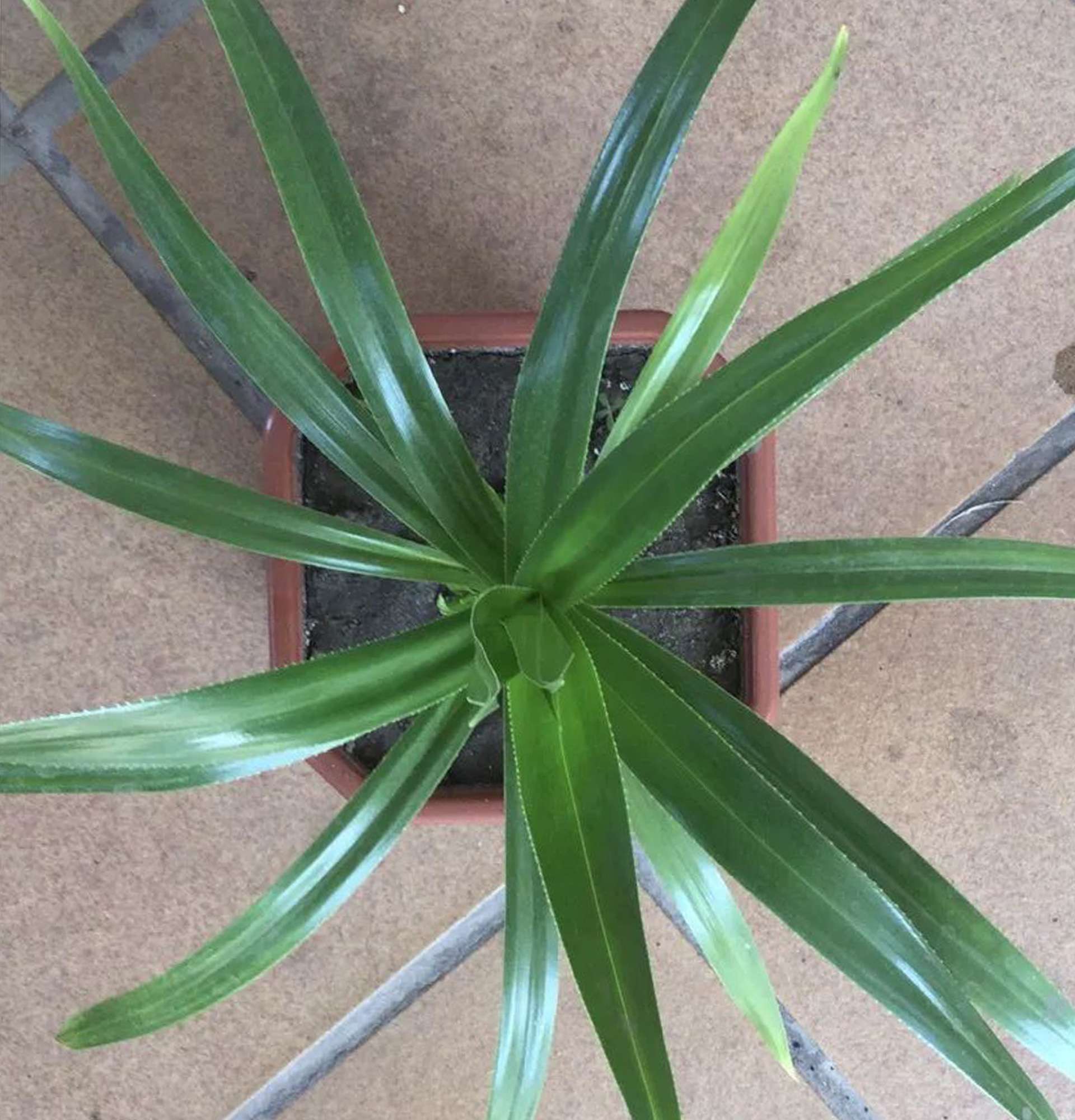
The pandanus plant has four-meter-long linear, sword-shaped leaves with serrated edges, the width of which reaches fifteen centimeters. The leaves are located on the trunk and form two-rowed spiral patterns. Thanks to this, the pandanus flower has other names, such as "screw palm" or "screw tree." As it ages, the leaf plates fall off from below, leaving behind scars. The flowering of pandanus can most often be observed in natural conditions. Its small yellow flowers, without a perianth, are collected in spike-like inflorescences or cobs.
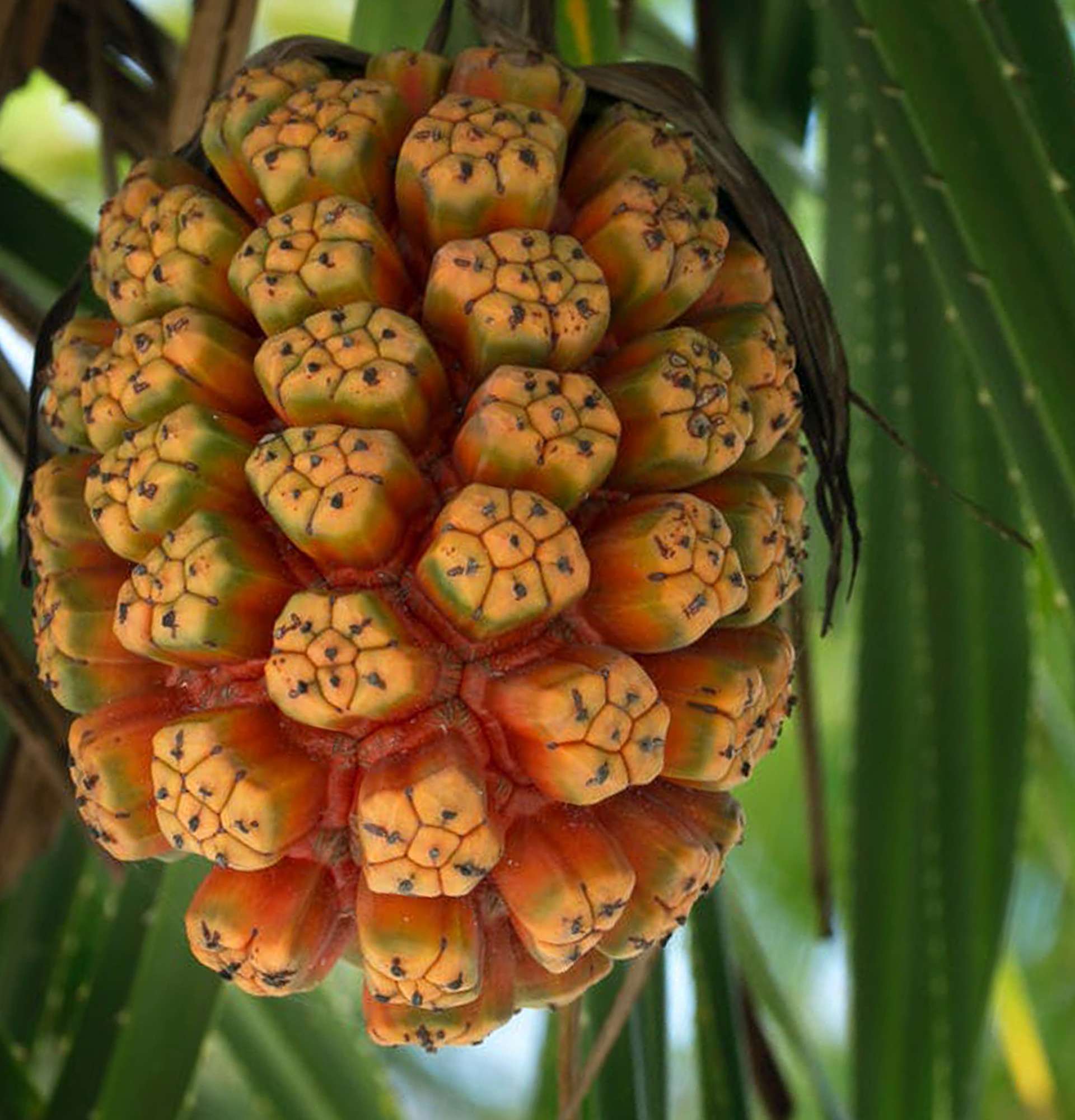
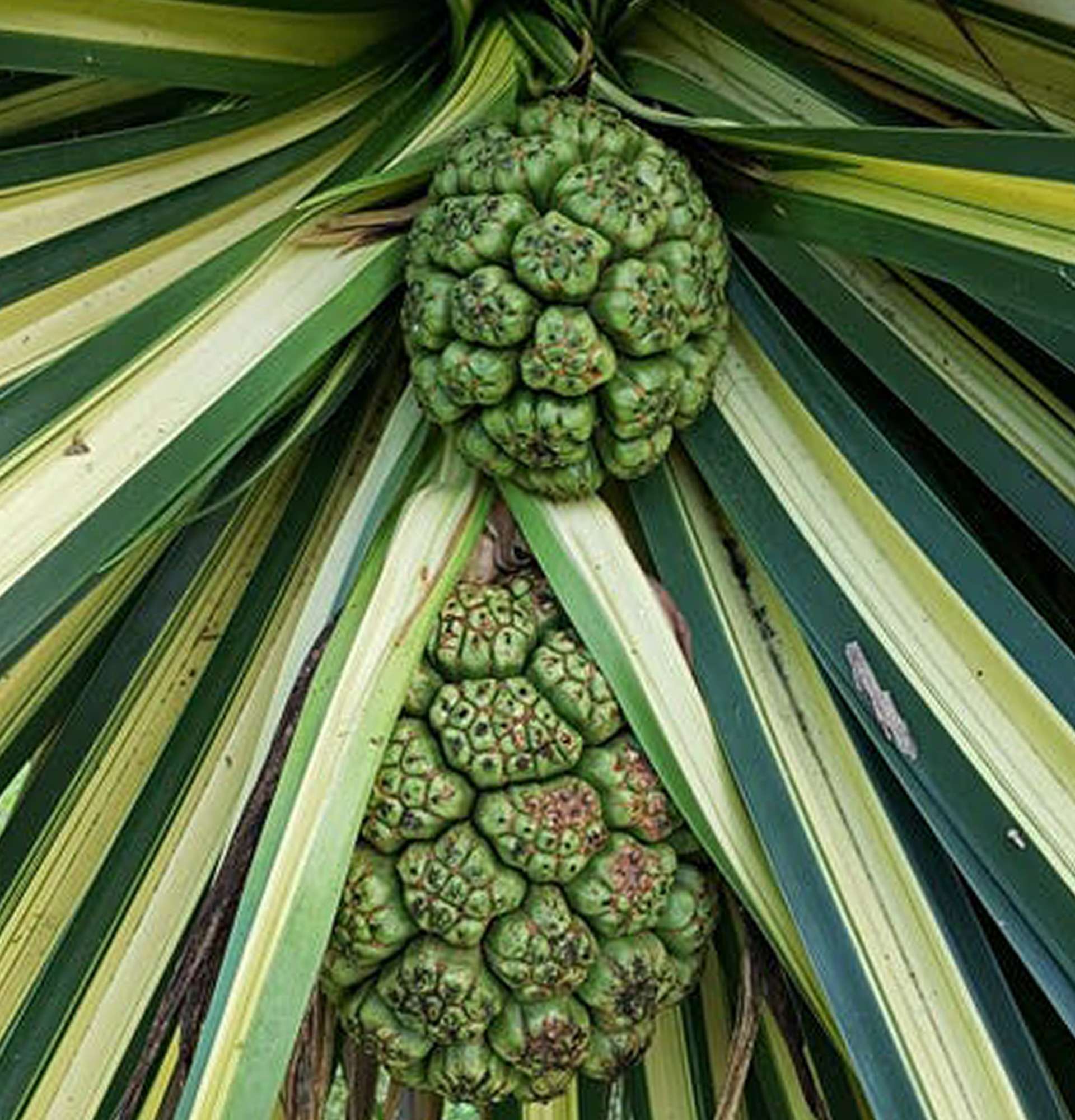
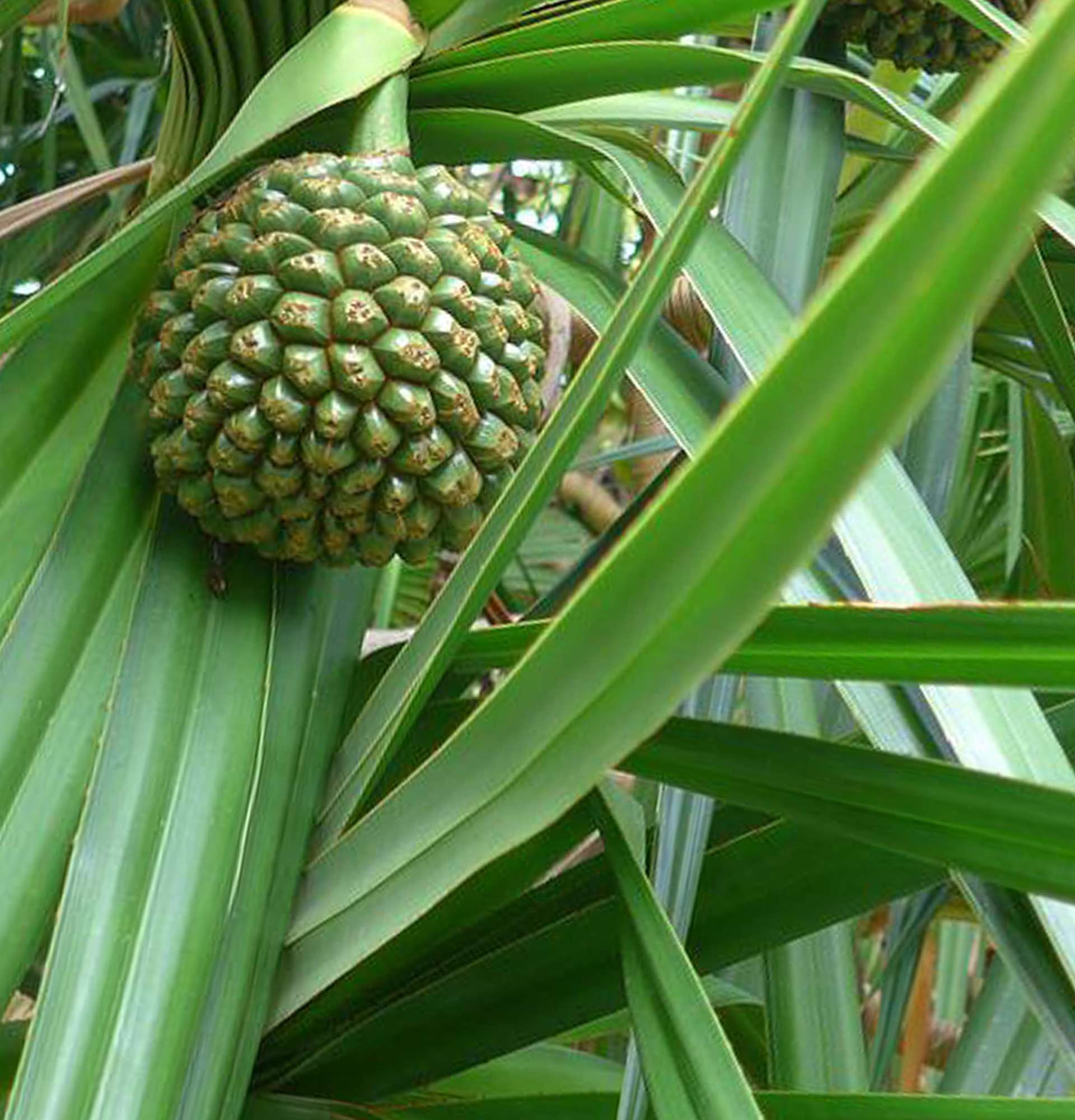
Indoor pandanus rarely blooms. This unpretentious flower calmly tolerates poor lighting, perfectly tolerates a lack of moisture, grows quickly, and is most often a guest of winter gardens, greenhouses, or large halls. The most interesting thing is that the fruits of the screw palm are similar to pineapple.
You can see photos of pandanus in the next section.
Pandanus species
Pandanus sanderi
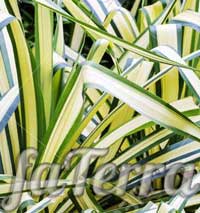 The Malaysian archipelago with humid tropical forests is the homeland of Pandanus sanderi. This screw palm has a short trunk, decorated with dark green leaf plates. Narrow, yellow longitudinal stripes refresh the surface, with a prickly edge due to the sparsely spaced thorns. The leaves reach eighty centimeters in length and are about five centimeters wide.
Pandanus veitchii
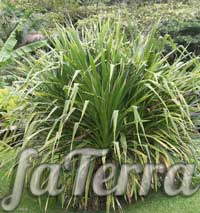 The homeland of Pandanus is Southeast Asia. On the shortened trunk of Pandanus veitchii, green leaves with white trim, up to one meter long and eight centimeters wide, are arranged in a spiral. Very stiff thorns with white tips are located on the edges of the leaves. This variegated pandanus can reach a height of one and a half meters in indoor conditions.
In cultivated conditions, you have to wait a long time, and sometimes in vain, for the flowering of Pandanus veitchii.
Pandanus utilis
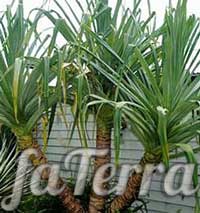 In natural conditions, this large screw palm reaches twenty meters in size, and in cultivated form, up to three meters. Dark green, stiff leaves, reaching one and a half meters in length and ten centimeters in width, are arranged on the trunk in a spiral. The edge of the leaves is dotted with pale red thorns. After flowering, the useful pandanus branches beautifully and turns into a beauty. In indoor conditions, this non-flowering pandan pleases the owners only with its magnificent foliage.
Pandanus tectorius
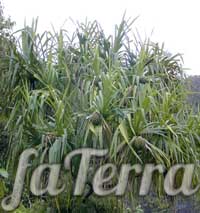 A very interesting flowering species. It has the form of an evergreen branched four-meter shrub, which is nourished by stilt roots. Pandanus tectorius has linear leaves that narrow towards the ends, the edges of which are protected by narrow white thorns. In its native lands, this species of pandanus delights with sweet, tasty fruits that are yellow, red, or orange in color. The indoor palm does not have enough conditions for flowering and fruiting.
Pandanus care in the home
It is not difficult to care for pandanus. This unpretentious indoor palm does not have special requirements for its existence. For successful cultivation, it is advisable to consider some of the nuances of its care.
Choosing a location and temperature regime
The Pandan plant loves bright light throughout the year. Indoor pandanus will feel great near windows facing west or east. It is advisable to periodically rotate the pot with the plant to prevent it from becoming one-sided.
A lack of lighting will negatively affect the brightness of the color of the leaves.
A temperature range of 19°C to 25°C will be acceptable for the indoor palm throughout the year.
In the cold season, the temperature in the room should not be lower than 13°C. This temperature limit leads to the death of pandanus.
The indoor palm loves fresh air very much. Periodic ventilation will be pleasant for the flower.
Protect the indoor pandanus from drafts.
Humidity and watering
The pandanus palm can be satisfied with moderate levels of humidity. You can wipe the leaves from bottom to top with a damp cloth. Be sure to use gloves. Do not get rid of the aerial roots that appear; add some moss to the pot and keep it moist. For greater comfort, you can use self-watering flower pots.
Watering in the summer should be plentiful, every three days. The upper part of the soil mixture should dry out slightly between waterings. We use water that is slightly warm and settled. In the cold season, we reduce watering, and be sure to monitor the condition of the substrate.
Soil mixture and its fertilizer
Turf soil, leaf soil, sand, and compost, taken in equal parts, will create a comfortable and suitable soil mixture for the pandanus plant.
The pandanus plant needs regular feeding in the warm season. It is necessary to use a complex mineral fertilizer that is suitable for decorative leafy plants. The pandanus flower does not need feeding in the cold season.
How to propagate pandanus?
Pandanus can be propagated by seeds, cuttings, and divided bushes.
The seeds are sown in a sand-peat mixture and kept in a warm mini-greenhouse at a temperature of 25°C. It is advisable to ventilate and moisten the soil mixture. After a month, seedlings will appear. Seedlings with three leaves can be planted in a permanent place.
Cut side cuttings, twenty centimeters long, are slightly dried, after pre-treating the cuts with charcoal powder. They are rooted in a soil mixture consisting of sand and peat in equal quantities. They create greenhouse conditions with a temperature of 25-28°C. They are regularly ventilated and watered with a spray bottle; after one and a half to two months, the seedlings develop roots.
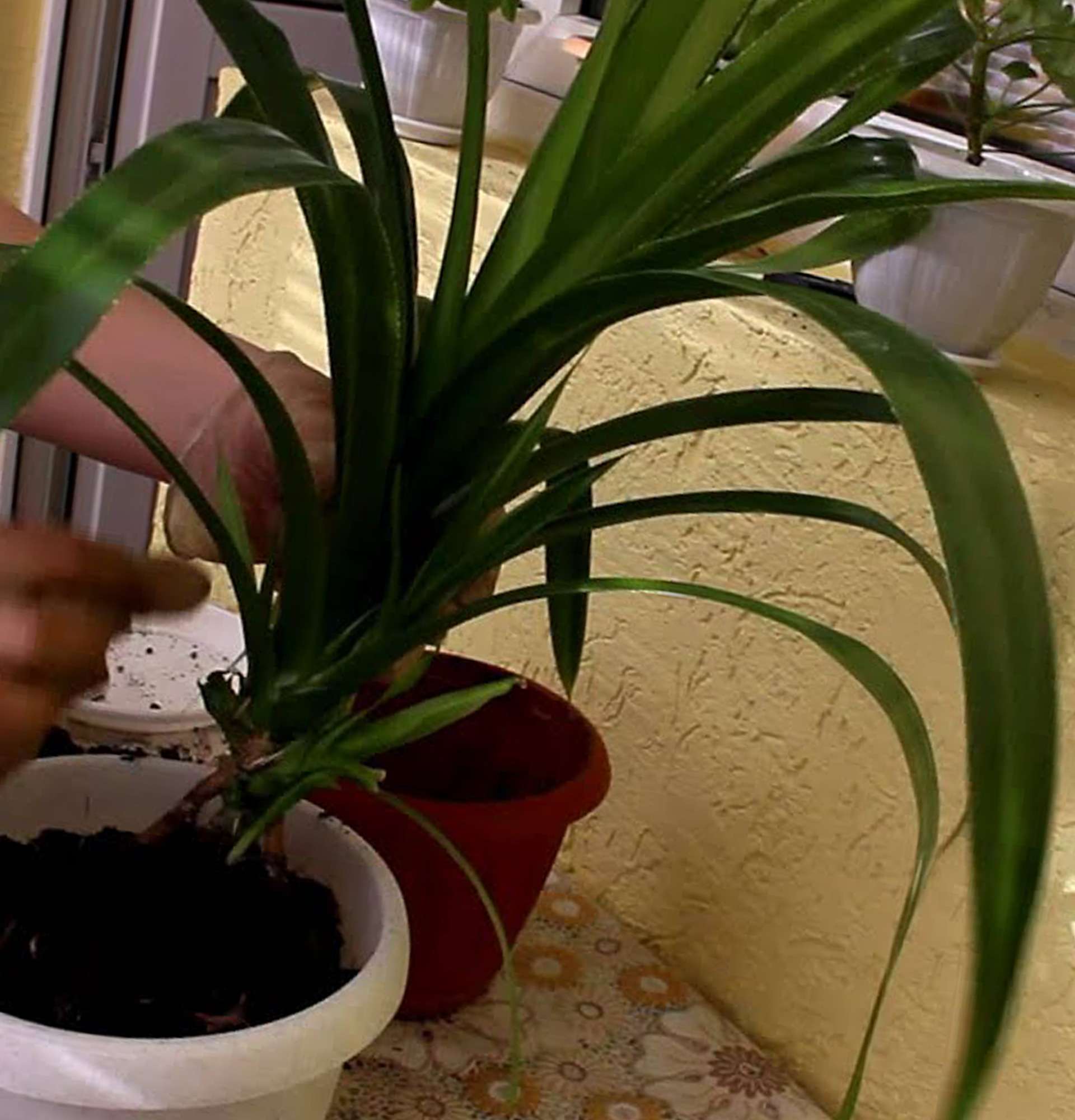
The daughter rosettes formed on the trunk or in the leaf axils are also suitable for propagating pandanus. We separate the rosettes with small roots and plant them in shallow pots. A good drainage is necessary - at least twenty millimeters, then turf soil - at least seventy millimeters, and sand, the thickness of the layer - at least forty millimeters. We plant the roots in the sand, press them down, cover them with a transparent airtight material, and create a comfortable temperature of over 22°C. After two months, the grown seedlings are transplanted into larger pots.
Transplanting
The pandanus plant has very fragile roots. Therefore, transplanting must be done very carefully, by transferring it from a small pot to a larger one. You can renew the pot with young specimens every year, and for more mature palms, you can increase the period to three years, depending on how much the root ball fills the pot.
Pandanus pests and diseases
The indoor palm pandanus is not very attractive to pests. But sometimes unwanted guests appear on it: spider mites, scale insects, mealybugs. When pests are detected, the plant is treated with an insecticide.
Difficult moments of cultivation
- The leaves of pandanus turn yellow - the soil mixture is oversaturated with calcium; hard water is used for watering; too much light.
- The leaves are very small and the variegated color becomes dull - the palm does not have enough light.
- The tips of the leaves dry out and turn brown - low air humidity.
Carefully familiarize yourself with the interesting moments of growing indoor pandanus, love it, and take care of it, and this wonderful palm will decorate both the house and the office.
You can familiarize yourself with other interesting indoor flowers by opening the catalog of indoor plants in alphabetical order on the website.
Write comments
Comments