



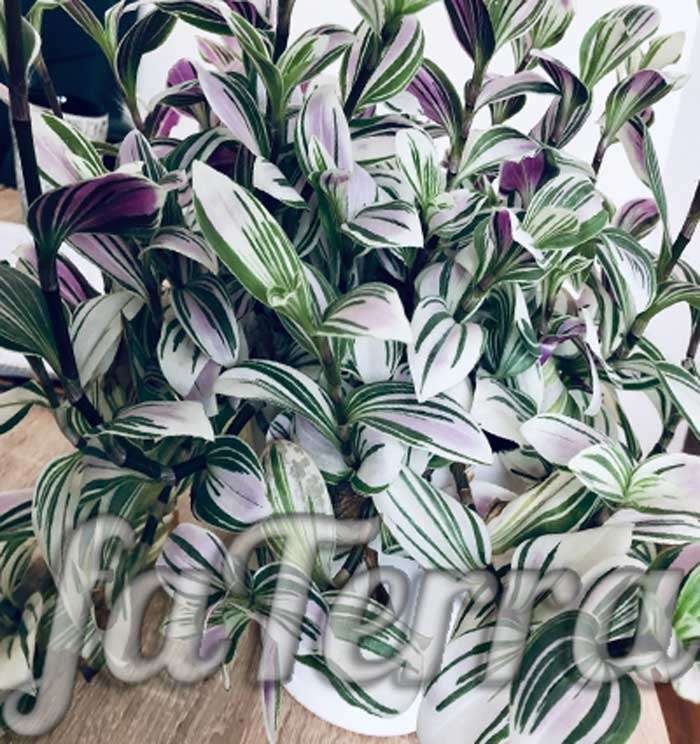
Latin name: (Zebrina)
Category: herbaceous shrubs
Origin: Central and South America, Antilles
Striped wonder of zebrina
Zebrina (Zebrina) is a herbaceous, very decorative, unpretentious perennial in the Commelinaceae family.
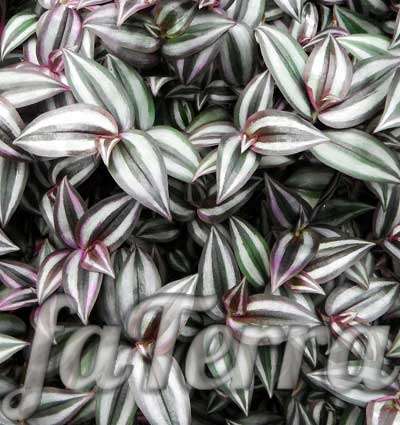
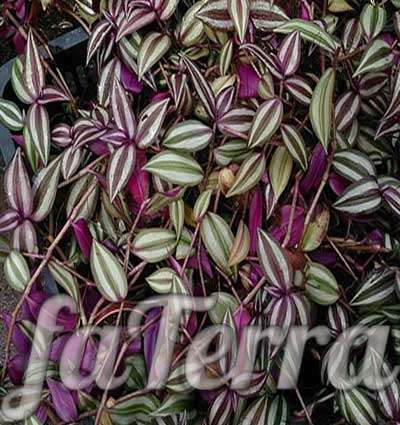
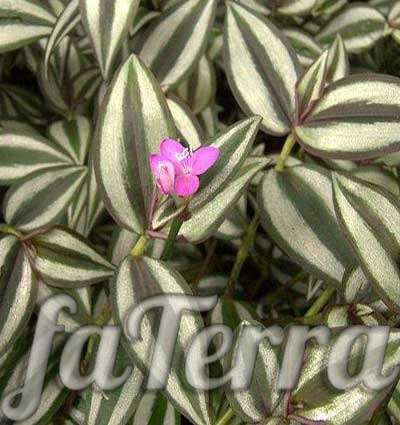
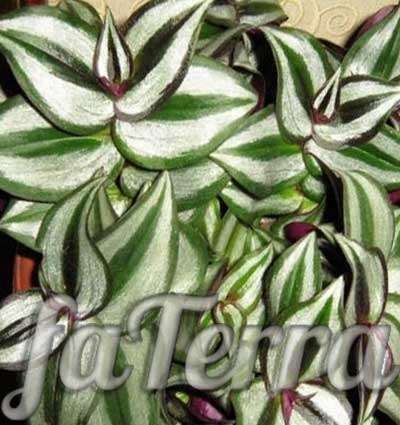
It is undeniable that zebrina belongs to the Tradescantia family, but there are differences. First, these are the incomparable stripes on the oval, pointed leaves, the upper side of which is shiny, green-silvery, and the back is purple-violet. This beauty is located on young, straight stems, which, with age, droop downwards. The root system of the flower is not deep.
The original color of the flower's leaves gave rise to its interesting name, zebrina or striped.
The second distinctive feature of zebrina can be considered its direct relationship to traditional medicine.
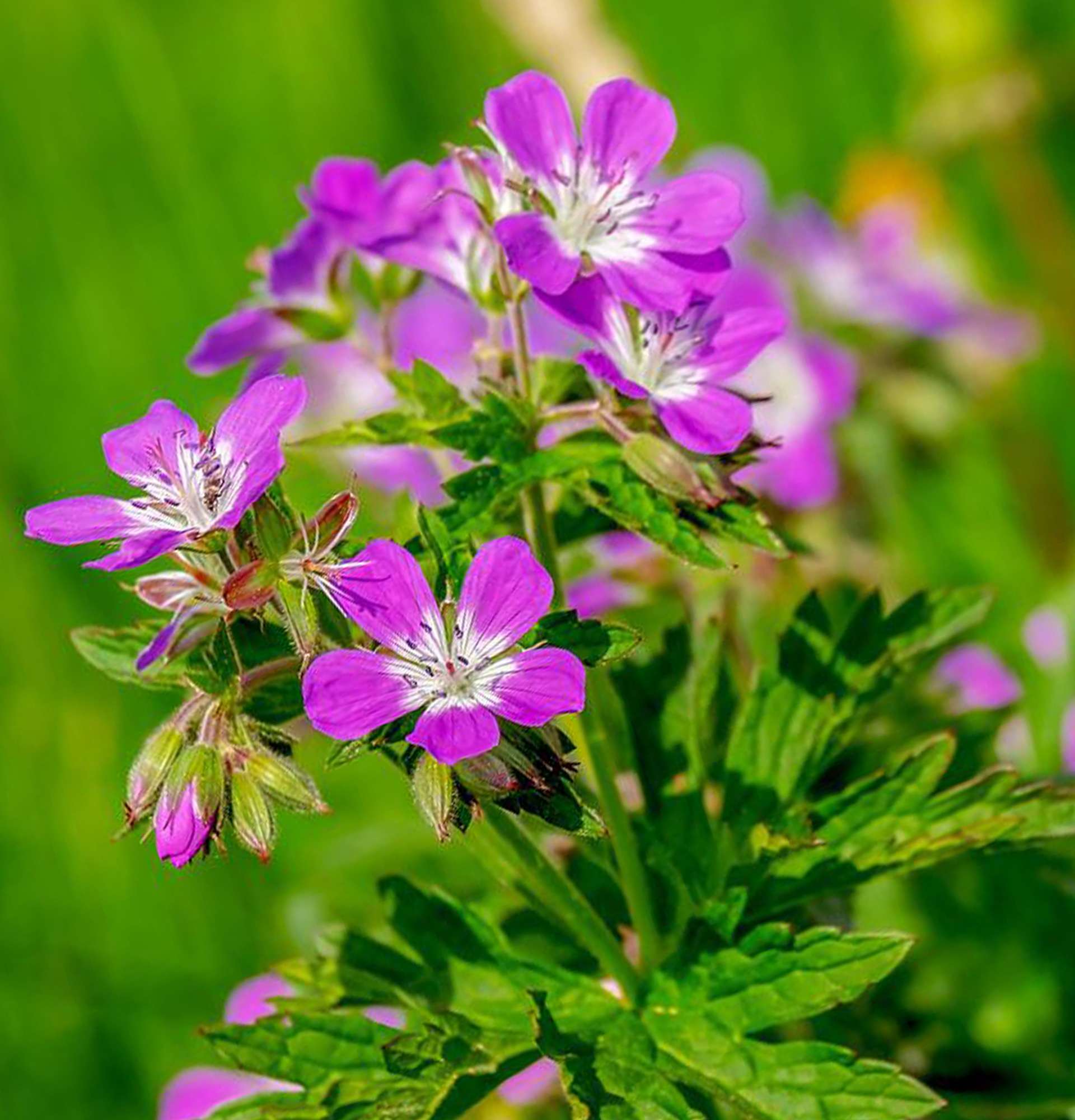
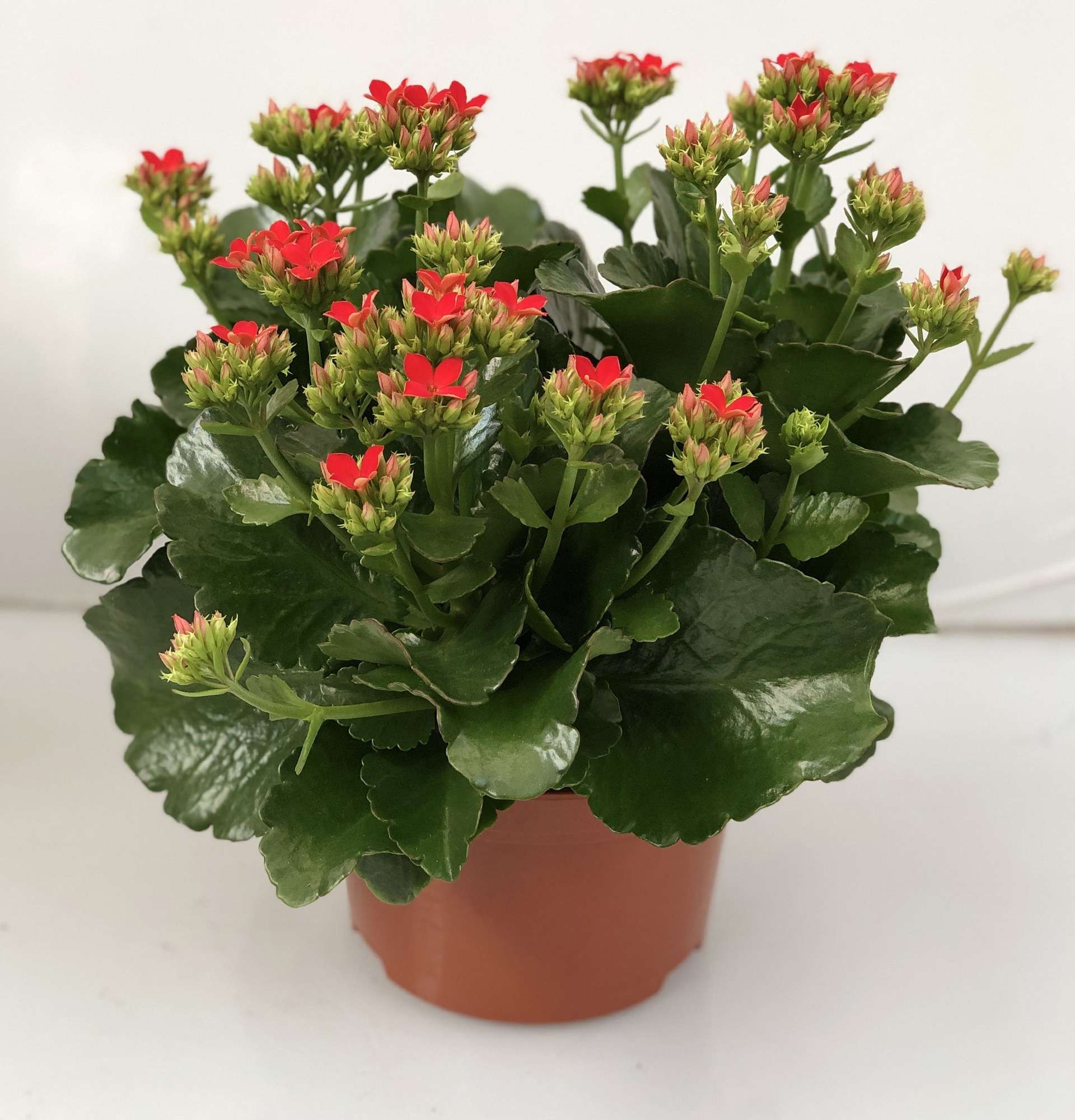
Tradescantia zebrina has medicinal properties that are very similar to those of large and well-known homeopaths, such as kalanchoe, aloe, and geranium.
Chlorophytum and spathiphyllum can become partners with this striped wonder in purifying the air in the room.
Thanks to the latest research, antibacterial elements with a unique ability to lower blood sugar have been found in the leaves of zebrina. The presence of natural phytoncides endows the plant with the ability to help the body fight microbes and viruses, burns, and even stomach ulcers.
In folk tradition, it is said that the zebrina flower has extrasensory abilities. The flower reacts to negative and positive areas. The overall appearance of the plant changes. The presence of the beautiful zebrina lifts the mood and well-being, and improves relationships between family members and relatives.
The zebrina plant considers the tropics of the American continent, its central and southern parts, to be its native territories.
Zebrina species
Zebrina pendula
 This is the most common variety in home cultivation. It came to us from the humid tropical forests of Mexico.
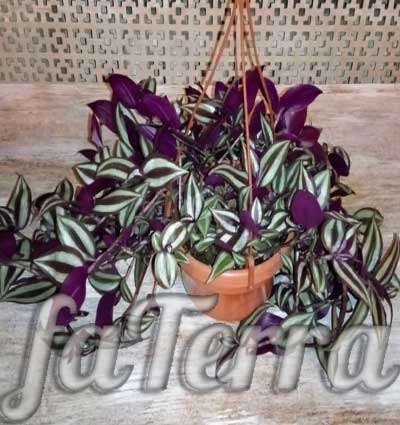
By creating conditions close to natural, your decorative perennial with creeping stems will look magical. On the drooping, quickly rooting stems, arranged alternately in two rows, are beautiful six-centimeter, egg-shaped leaves with pointed ends. The upper side is reddish-green with silvery stripes, and the lower part of the leaf is purple. Zebrina pendula blooms with small pink flowers.
Zebrina purpusii
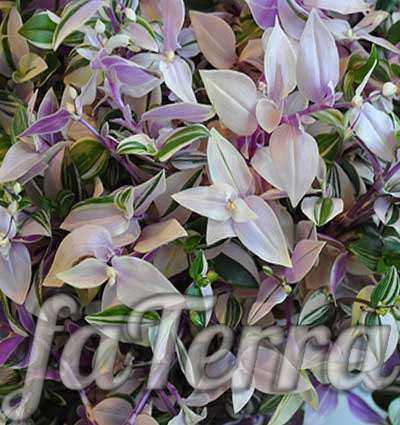
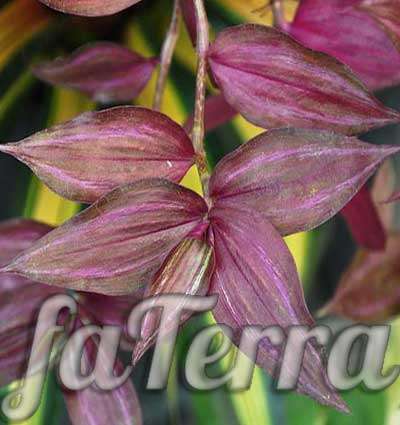
 This is a perennial, demanding flower. On the olive-red stem are arranged lilac-purple leaves, covered with soft fluff. The lower part of the leaf is purple with a reddish tint. Indoor zebrina will have a rich color palette of leaves with good, intense lighting. It blooms with small lilac flowers.
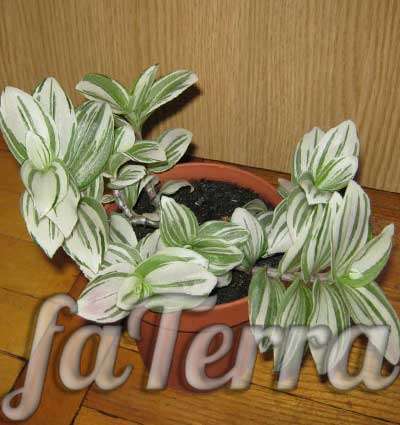
In the photo, zebrina looks very attractive.
Zebrina pendula f. Guadricolor
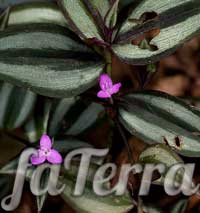 This variety is distinguished by its brightly colored leaves. The central part of the leaf is green with a metallic tint, and the edges are reddish-green with white stripes. The back of the leaf is purple.
Zebrina care in the home
It is not at all difficult to grow zebrina. Both a beginner and an experienced gardener can easily cope with this. Then the Tradescantia zebrina will not only decorate the space with its presence but also purify the air and lift the spirits of the owners.
Choosing a location
For a clear and bright color, zebrina needs a lot of bright light, but not direct sunlight. It will look great as an ampelous flower at a distance of half a meter to two meters from a brightly lit window, or in a space between windows. East- or west-facing windows are suitable.
Lack of light will spoil the beauty of the flower - the stems will stretch out, and the leaves will fade.
Your zebrina needs to be treated to fresh air. In the warm season, it will feel great on a balcony or terrace. Garden zebrina, planted in the open ground, will decorate the garden or park area with its charming and graceful appearance.
Remember! The zebrina plant does not like smokers and smoky rooms.
Temperature regime
The ideal option is 17-23°C. The lower temperature limit is acceptable at 13°C.
How to water zebrina?
In summer, water every three days, and in winter - less often, every seven days. A light shower and regular spraying of the leaves will be beneficial and pleasant for zebrina, which will maintain the necessary humidity in the room.
Important! Do not allow water to stagnate in the pot so that the roots do not rot and the plant does not die.
Soil and feeding
Indoor zebrina is absolutely not demanding in terms of the composition of the soil mixture. It can be prepared from equal parts of peat or compost, sand, and garden soil.
Liquid fertilizers will be the optimal feeding for indoor zebrina. You can also additionally stimulate indoor plants with banana peels, potato peelings, liquid biohumus, potassium sulfate, eggshells, wood charcoal, yeast, and the "Cirkon" preparation.
It should be remembered! An excess of growth stimulants can weaken the zebrina.
Zebrina propagation
The indoor zebrina plant is very easy to propagate throughout the year, just like hoyya or ivy. Cuttings can be rooted, if desired, in water or immediately in soil. When planted in a wide pot, the cuttings will quickly take root even without a mini-greenhouse.
For three years, the zebrina flower, with regular pruning and shaping, will be beautiful and attractive. When the plant begins to lose its decorative qualities, it is renewed.
Zebrina pests and diseases
Indoor zebrina is among the plants that are resistant to diseases. If the zebrina does not receive proper care, some unpleasant things can be expected. It may be visited by unexpected guests in the form of spider mites, aphids, scale insects, and thrips. The spread of diseases caused by insects occurs quickly. We urgently fight pests with a soap solution. If there are no positive results, we use chemical preparations.
Difficulties in growing zebrina
- The leaves turn pale, the stems stretch out - poor lighting.
- White spots on the leaves, shoots rot - excessive watering and too high humidity.
- Indoor zebrina grows very slowly - it needs to be fed with fertilizers.
- The leaves turn brown - increase the amount of watering.
The zebrina plant, which is carefully cared for in the home, will be a wonderful decoration for both living rooms and offices. You can place the plant closer to the TV or computer to take advantage of the zebrina's ability to absorb electromagnetic radiation. It will look especially effective in compositions with flowers that have solid-colored leaves.
Write comments
Comments