



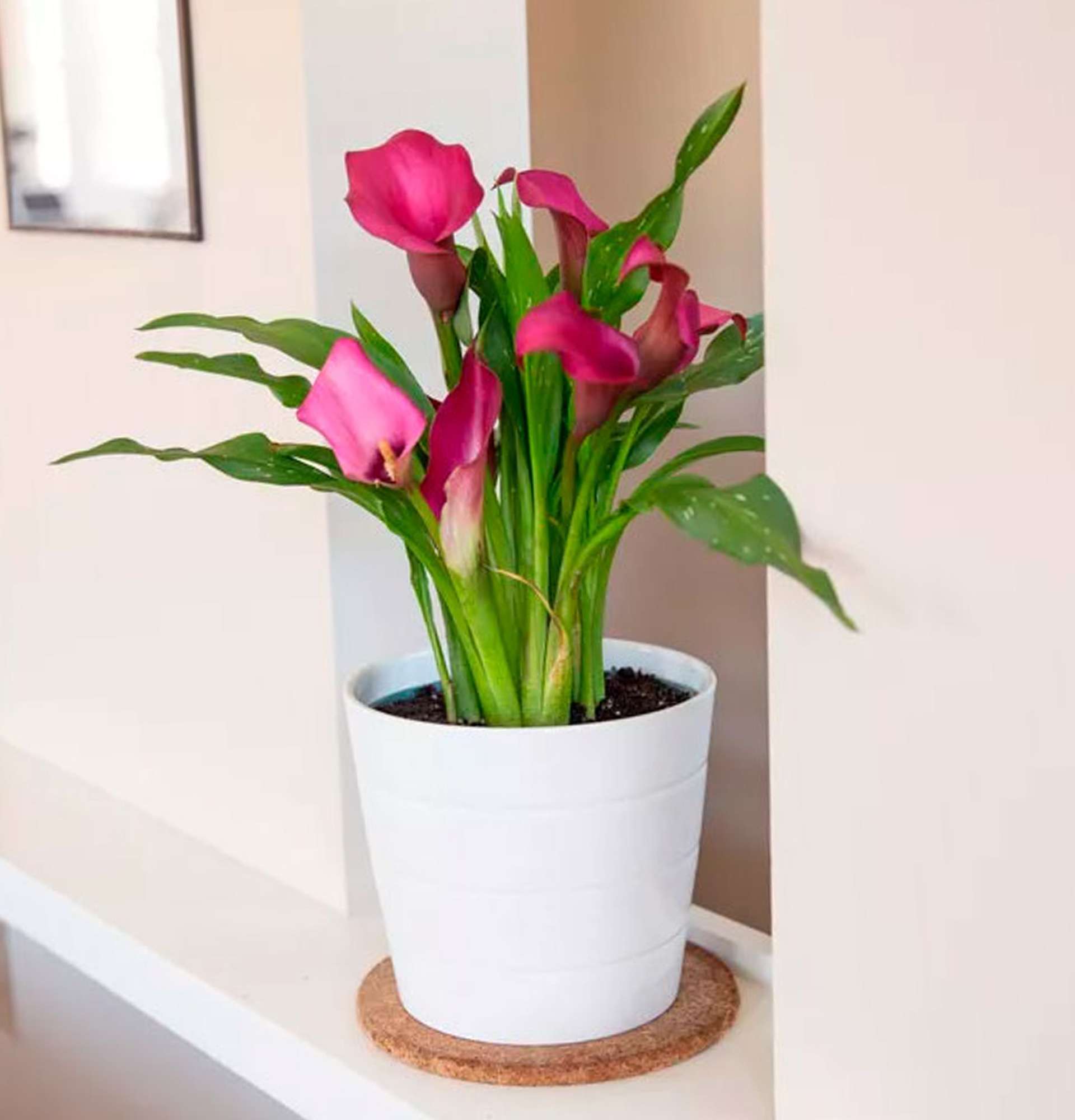
Latin name: (Zantedeschia)
Category: perennial herbaceous plants
Origin: South Africa
Zantedeschia – a symbol of passion and desire
Zantedeschia (Zantedeschia), also known as calla (Calla), is a colorful genus with eight varieties of representatives of the Flora empire. These amazing perennial rhizomatous, as well as bulbous plants, decorate the Araceae family with their presence.
This elegant flower, with its unusual name and diverse colors, against the background of bright, glossy green leaves, owes its name to the German botanist Kurt Sprengel, who honored the name of his colleague, the Italian botanist Giovanni Zantedeschia, with this natural wonder. A more common name for lovers of this attractive plant is calla. If you translate "Calla" literally from the Greek phrase "kallos," you get "beautiful." But this is not the only name for this wonderful plant.
Flower lovers call it a snake, snake grass, red-cheeked, breadbox, bean, or rooster.
The moisture-loving wonder considers its native home to be the tropical part of South Africa. Tanzania and Nigeria, with its swampy meadows and bodies of water, are a wonderful microclimate for Zantedeschia, where it thrives with its beauty and considerable size. Calla also adorns the swampy areas and bodies of water in South America.
Zantedeschia is considered a relative of Calla (Calla), which is known as Marsh Calla.
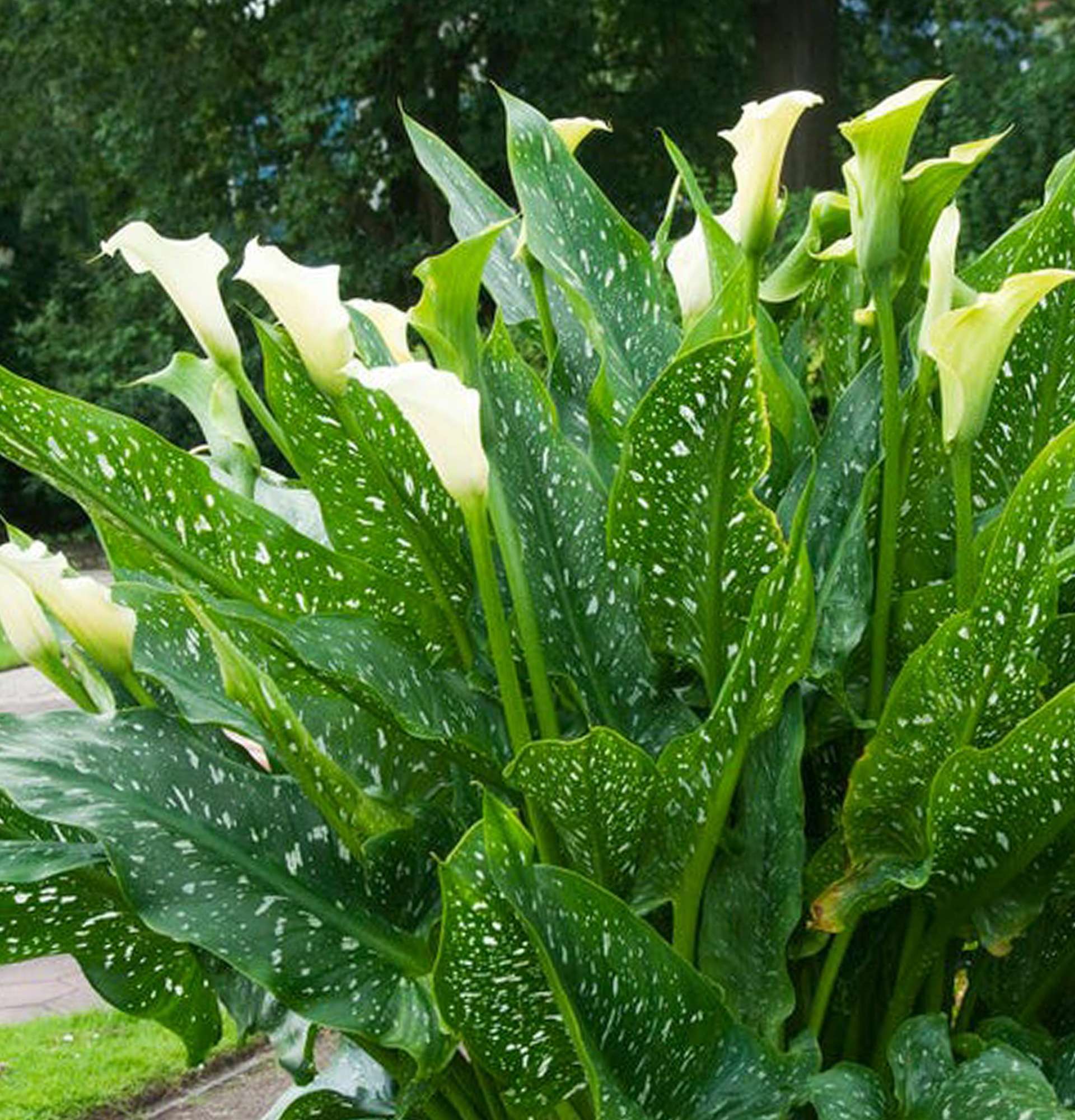
Flower lovers are delighted with the unique, striking flower of unusual shape and with very colorful, heart-shaped leaves, the surface of which is glossy, reaching a length of forty centimeters and a width of twenty centimeters. The thick leaves are decorated with arched veins, and these beauties rise on long, massive petioles. Different varieties have differences in the form of creamy or silvery spots.
The height of this wonderful plant can reach from one to two meters. Zantedeschia has a strongly branched, powerful root system. The newest subspecies have thickened underground bulbs.
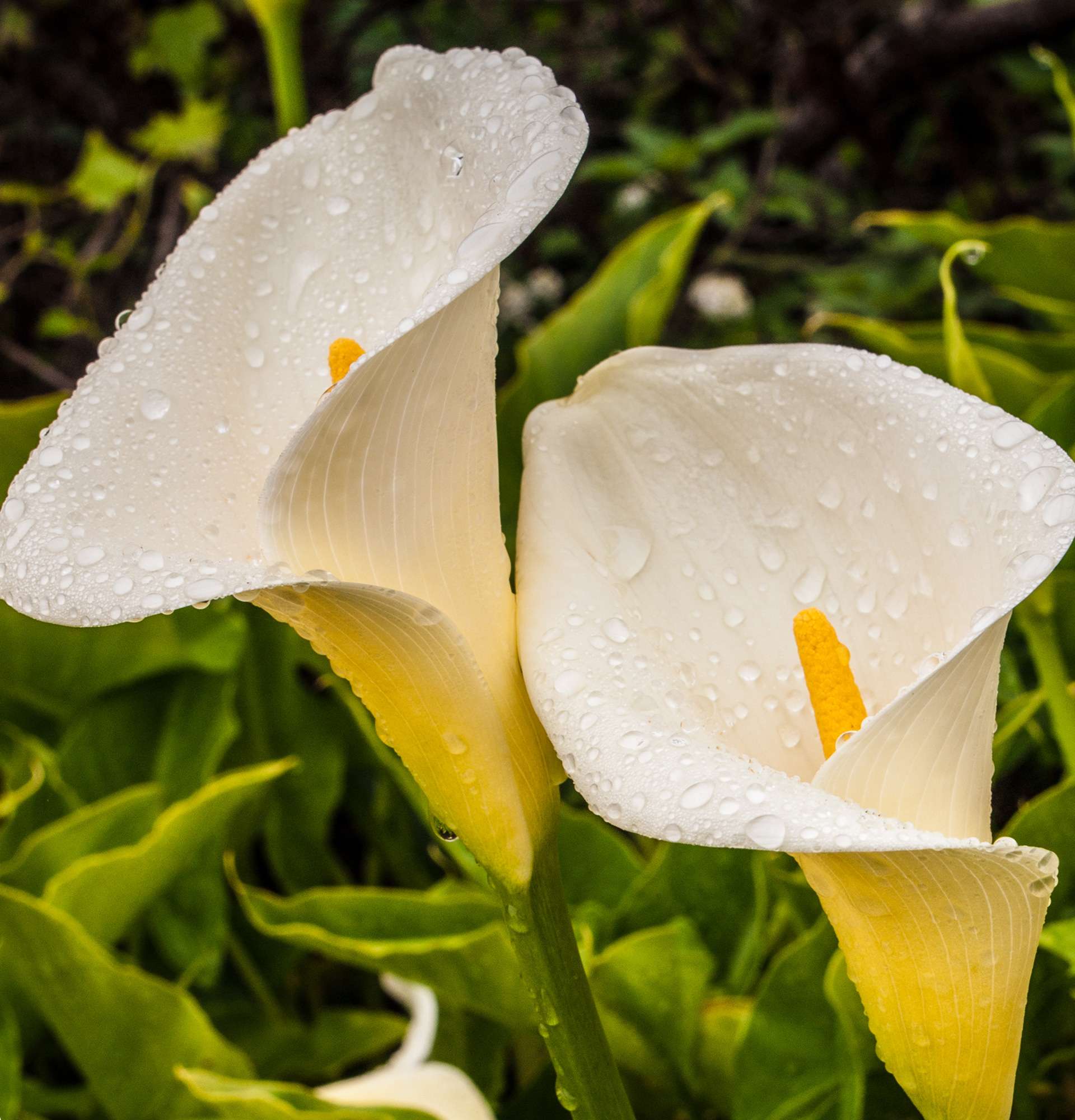
The stem, from fifty to eighty centimeters long, is decorated with a bright yellow inflorescence, which consists of unique flowers. This wonder is surrounded by a large and striking bract.
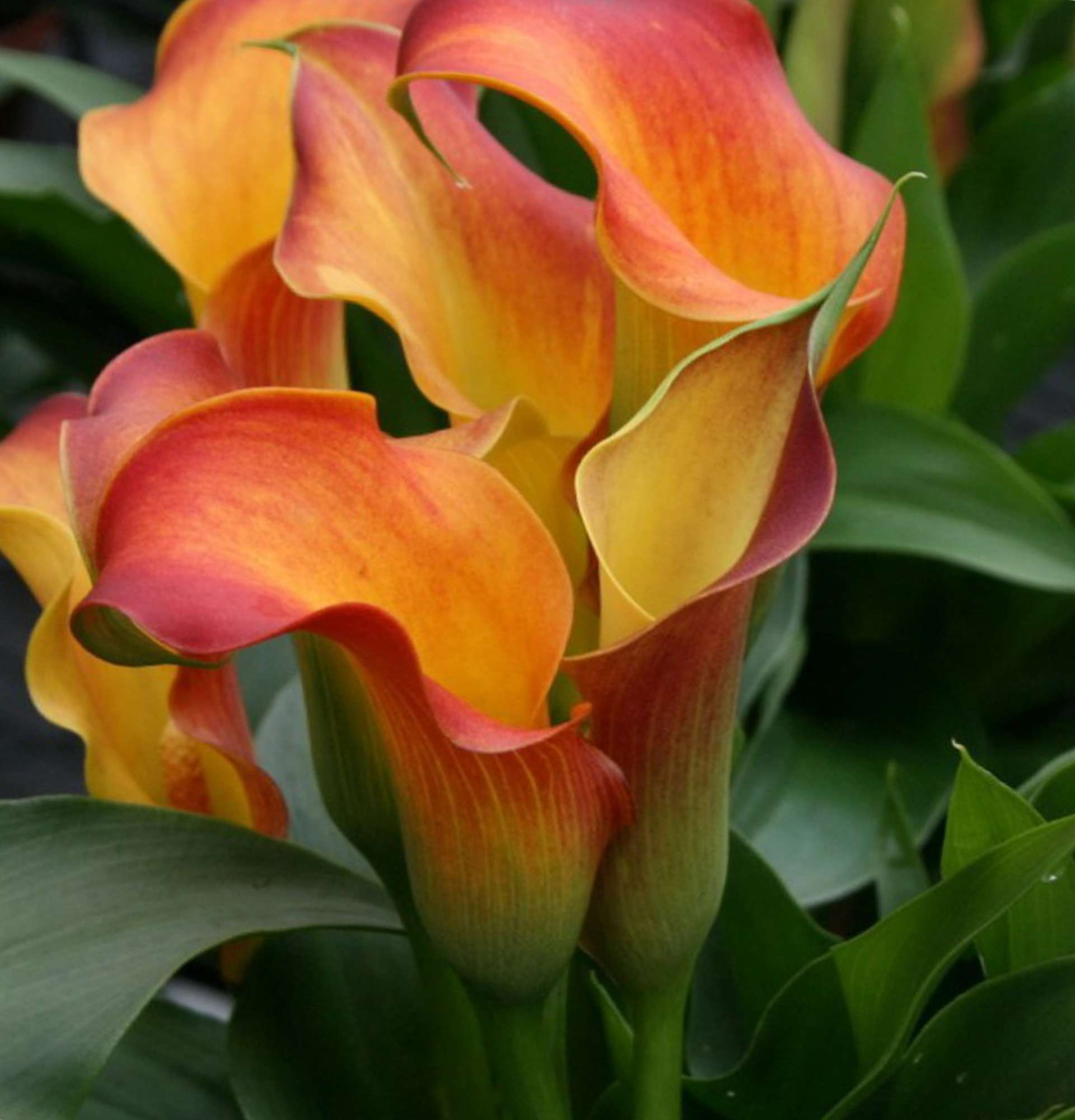
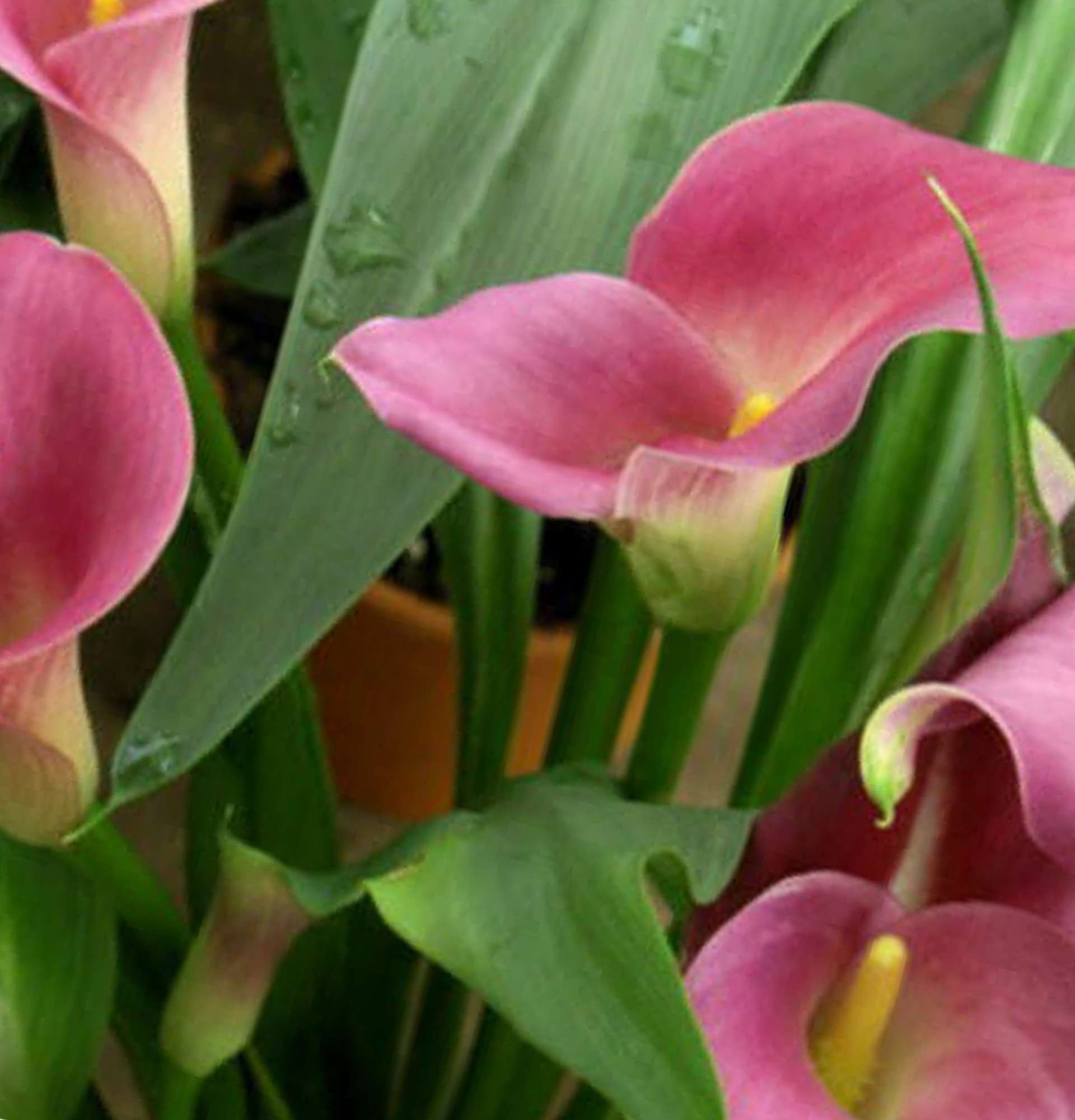
The diverse color palette of this tubular "bract" ranges from attractive white, yellow, cream, golden, pink, to purple – each variety has its own beauty. A hybrid of Zantedeschia mix is especially beautiful and charming. This wonder is created from a mixture of various varieties with flowers of different colors.
When interacting with this southern beauty, it is important to remember that Zantedeschia is poisonous. All parts of the plant contain calcium oxalate, as well as toxic alkaloids. When interacting with the flower, it is necessary to take precautions to prevent burns, itching, and burning, and if it enters the body, diarrhea, vomiting, and inflammation of the intestines and stomach. This also applies to animals, which may also suffer if they eat the juicy green treats.
The local people of Africa have studied this exotic plant well and use the young leaves in their traditional dishes, and feed the rhizomes to pigs. The medicinal properties of Zantedeschia have been studied by local healers of the African continent, and they use this flower to treat arthritis, sciatica, wounds, boils, and insect bites.
Popular varieties of Zantedeschia and new varieties
Zantedeschia aethiopica
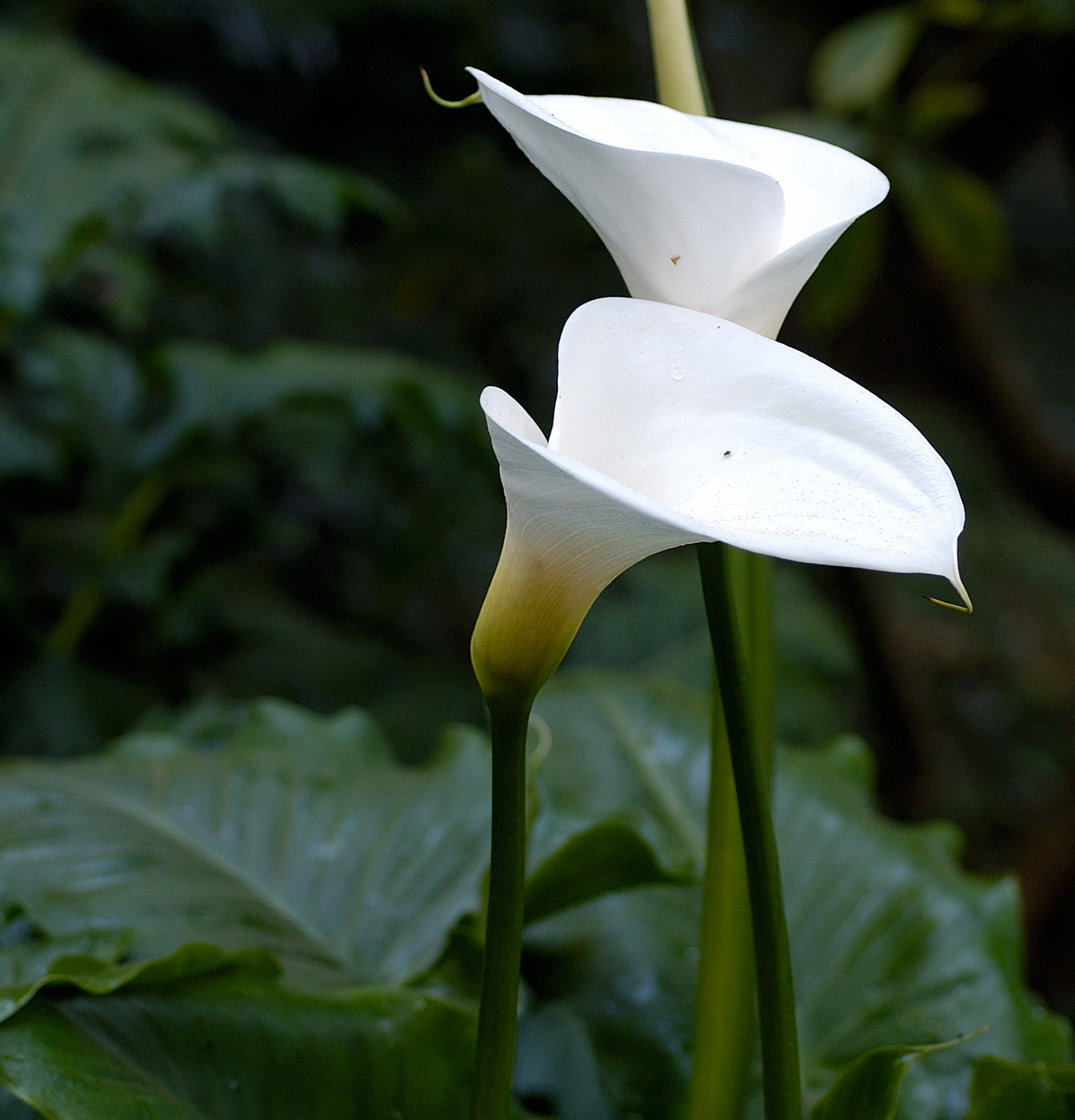 A perennial, evergreen, herbaceous South African plant is one of the most common and recognized by flower lovers around the world.
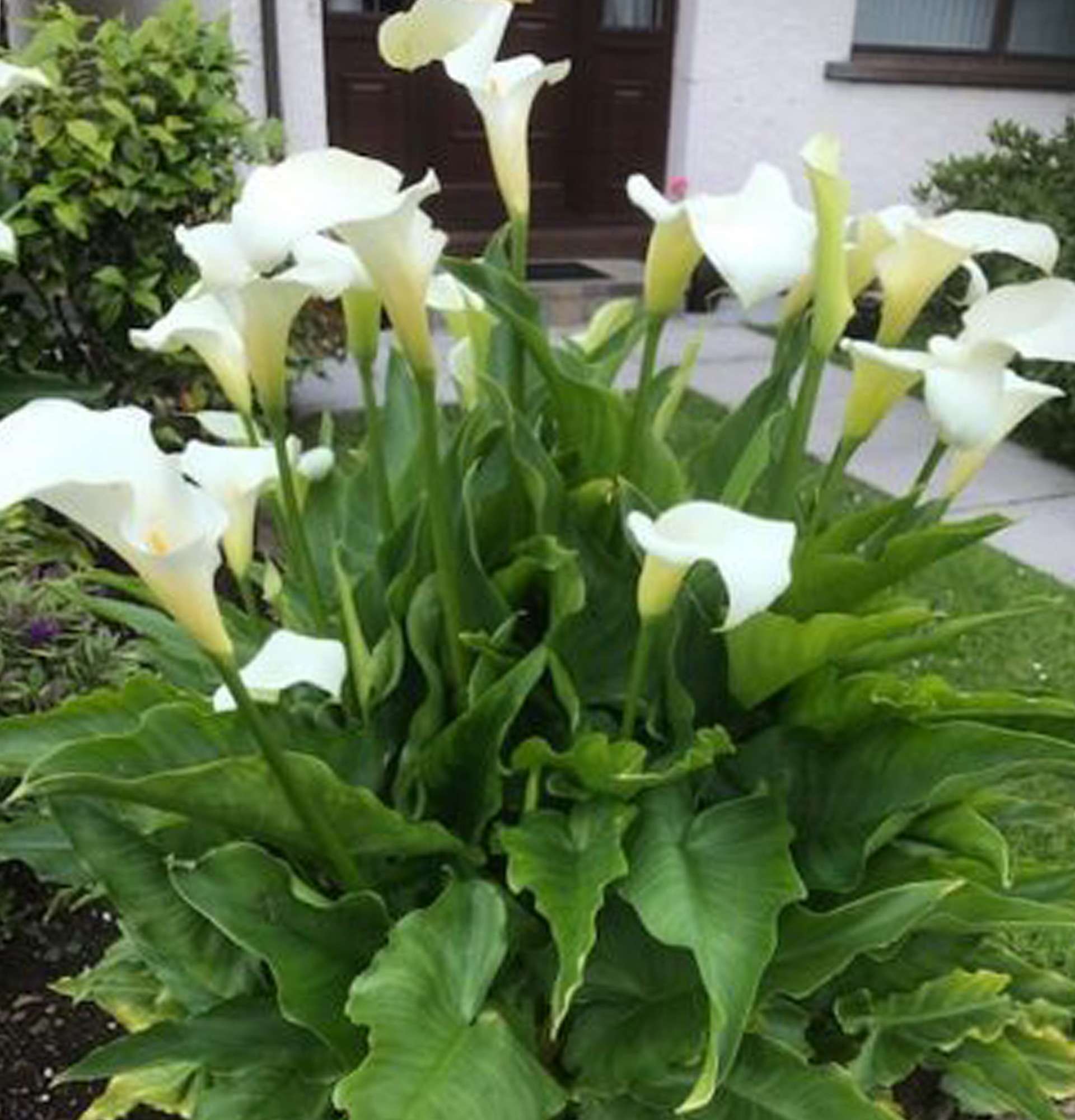
Ethiopian calla has proven itself as a tall plant, exceeding one meter in height. The huge, glossy leaves, shaped like a spearhead or a heart, can reach a width of twenty-five centimeters and a length of forty-five centimeters. The arrangement of the leaves is unique. Long, fleshy petioles raise the alternate leaf blades at a right angle to the ground. The magnificent shoots are represented by clusters that gradually grow into a unique, dense green carpet that pleases the eye even in winter. This amazing calla is rhizomatous and does not have bulbs underground.
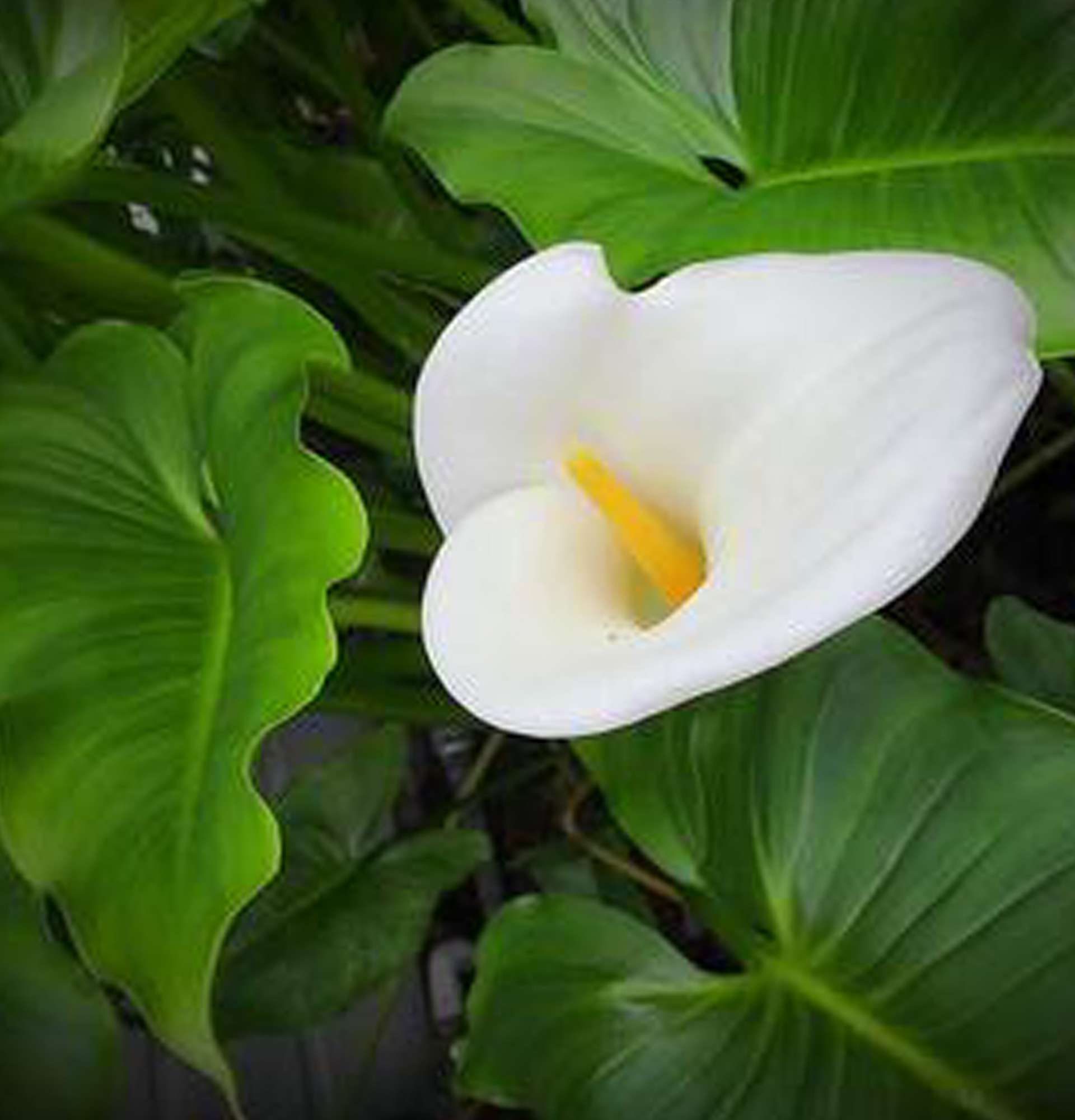
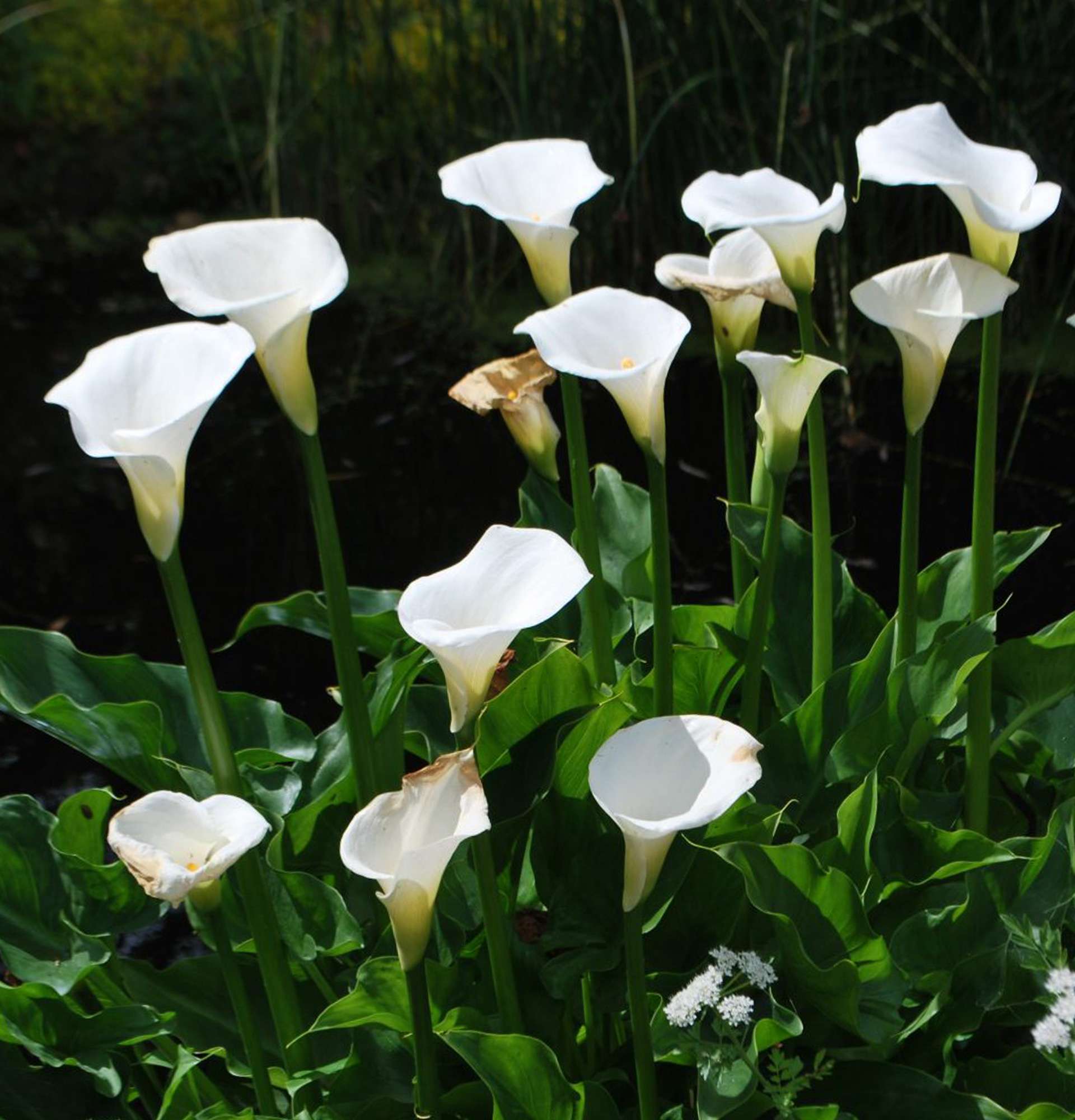
White Ethiopian calla with its beautiful large flowers looks extremely beautiful with a bright yellow cob in the center.
Caring for Ethiopian calla at home, as in the garden, is not difficult. In order for the indoor calla and the outdoor calla of this species to feel comfortable, it is necessary to constantly care for the plant, following all the rules of proper care. This unpretentious wonder desires increased humidity, plenty of light, and avoiding drafts and temperature fluctuations.
Zantedeschia rehmannii
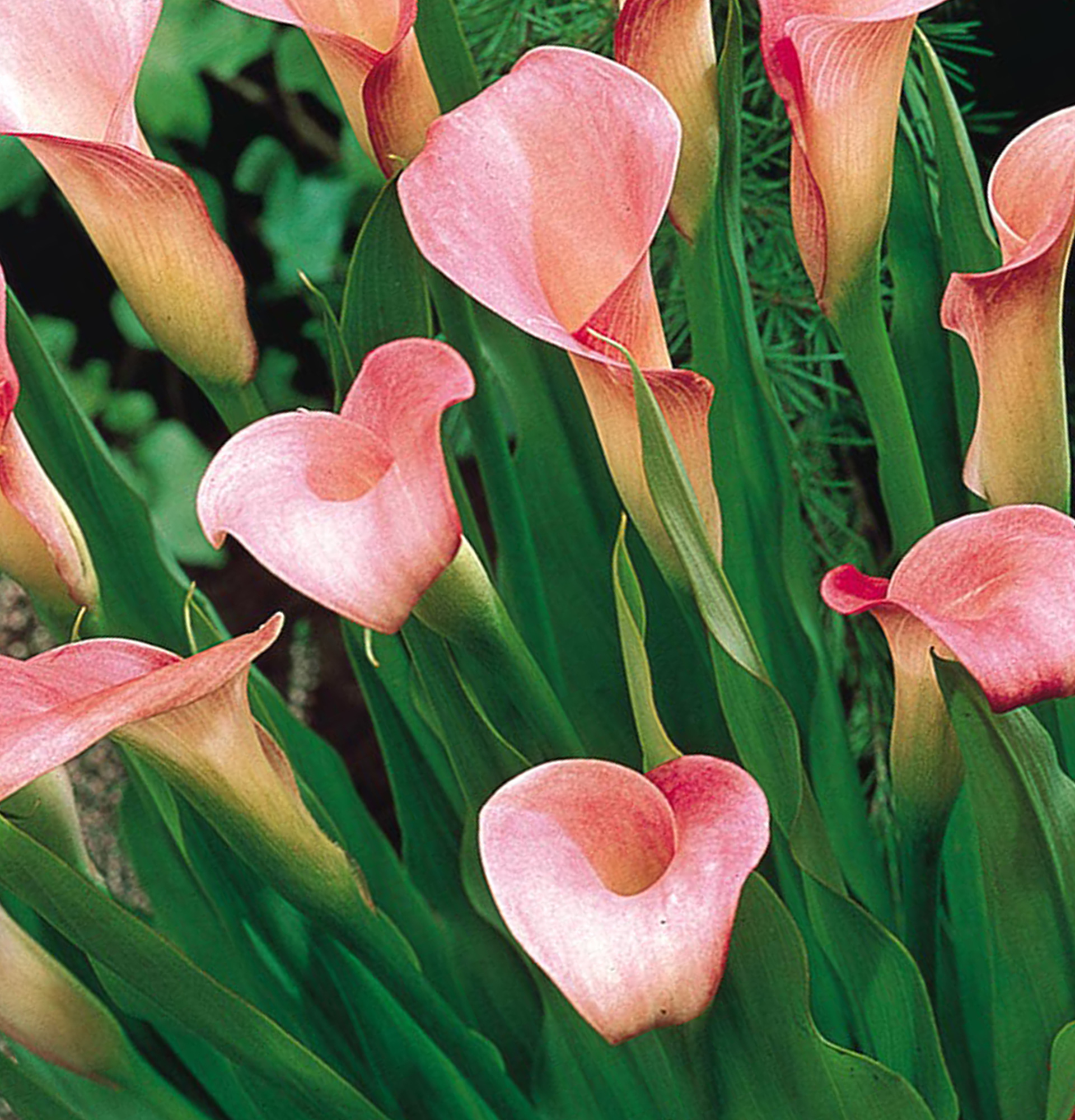 Rehmann's calla is a small, bushy plant up to seventy centimeters high. It has narrow, thin, wedge-shaped green leaves. The pink color of the bract gives the plant a delicate shade. Sometimes, bracts with reddish-pink or purple hues are found. The underground part of the seedling consists of bulbs. Many interesting varieties and hybrids have been bred based on this species.
Zantedeschia elliottiana
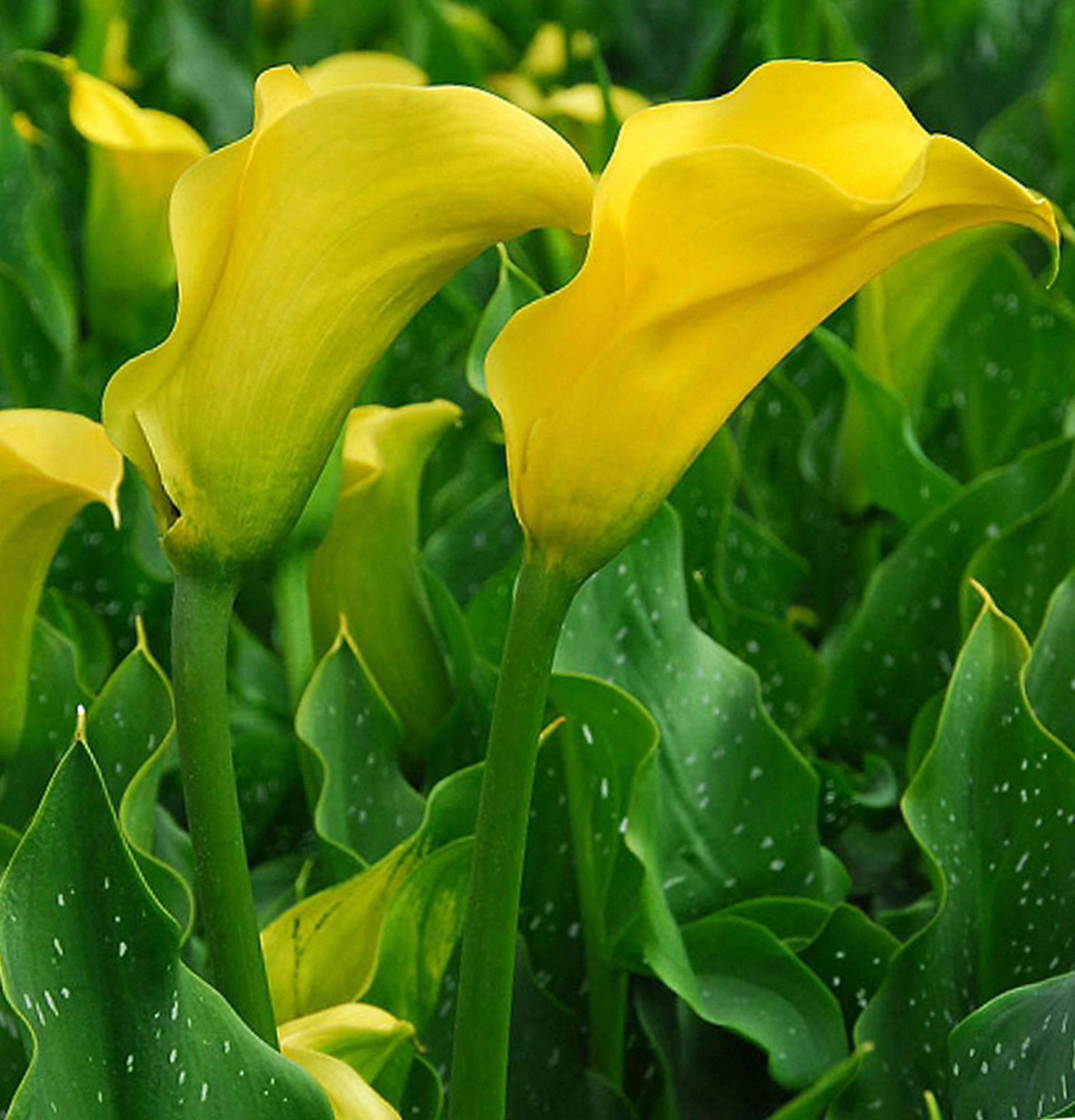 A very interesting golden, no more than half a meter high, Elliott's calla has heart-shaped, juicy green, large leaves up to twenty-five centimeters, decorated with small light spots. The leaf-bract is bright yellow and reaches a height of up to sixteen centimeters.
Zantedeschia albomaculata
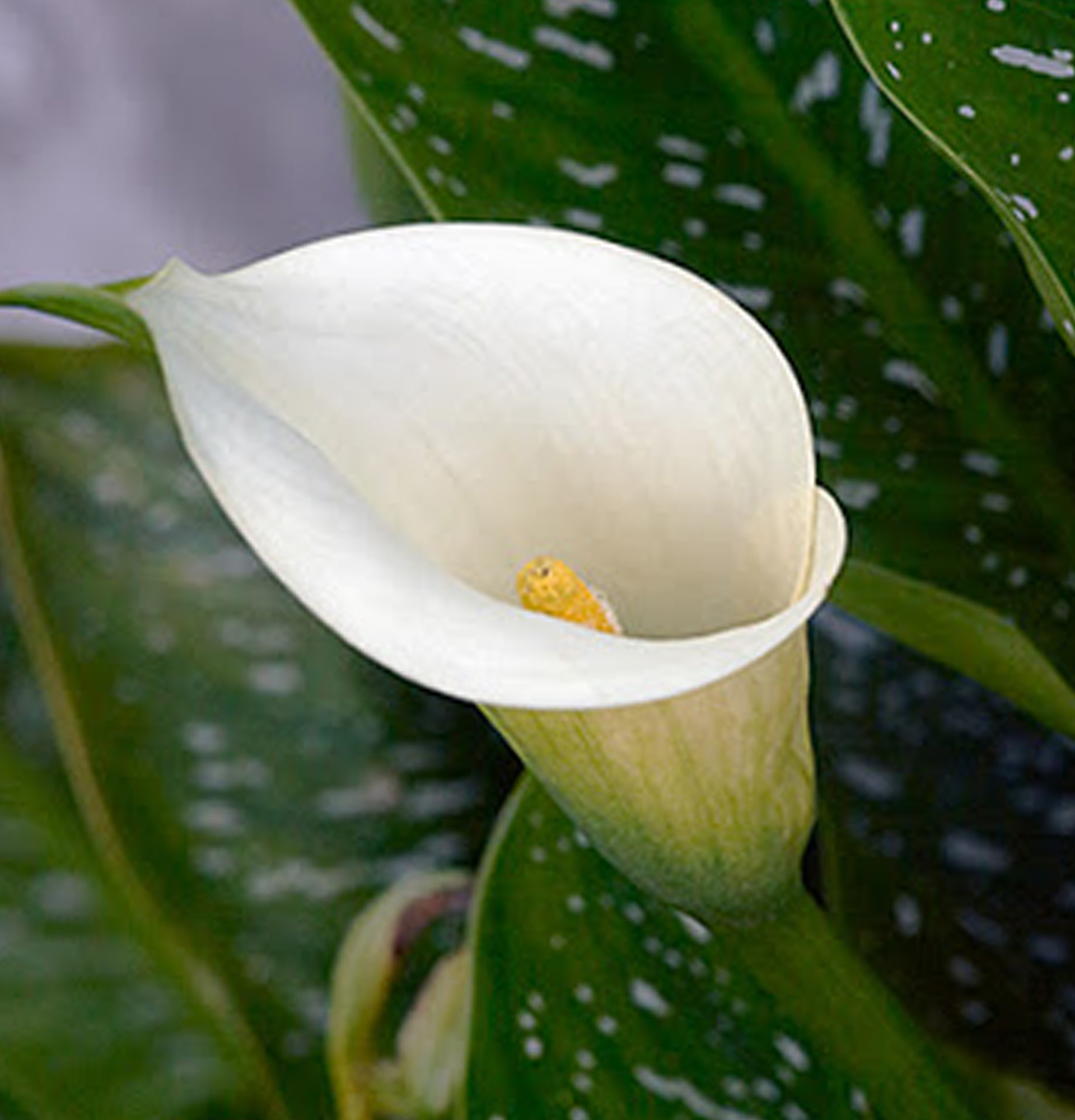 Albomaculata calla is a large, bulbous plant, the straight stems of which grow up to sixty centimeters. Long, arrow-shaped, forty-centimeter leaves have a bright green color with small white speckles. The indoor plant with white-green leaves justifies its name. This white-spotted beauty produces several long flower stalks when it blooms. They are decorated with light yellow or white bracts on the inflorescence-cob with a purple base.
Zantedeschia Purple Sensation
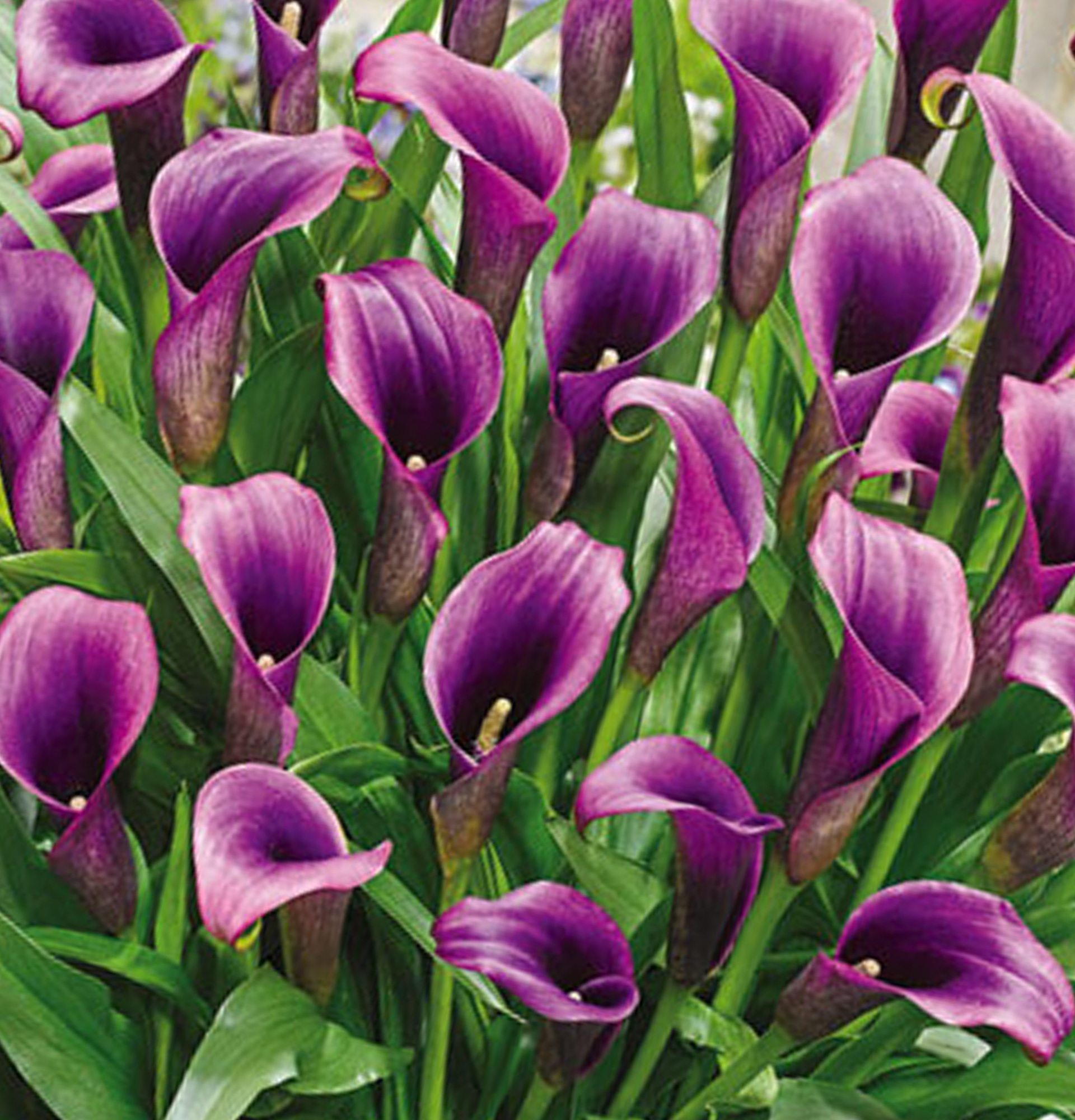 The charm of this exotic plant is at a high level. Crimson bracts, the edge of which is refreshed by a light border, cover light or completely white delicate inflorescences. Purple Sensation calla has not only unique flowers, but also rich green, matte, arrow-shaped leaves. The height of this plant reaches half a meter. It blooms in summer and delights with its sweet, delicate vanilla scent. This amazing wonder – an outdoor calla will be an unsurpassed decoration of a garden, park, or flower bed, and it will also feel great on a windowsill or terrace.
Zantedeschia Black Magic
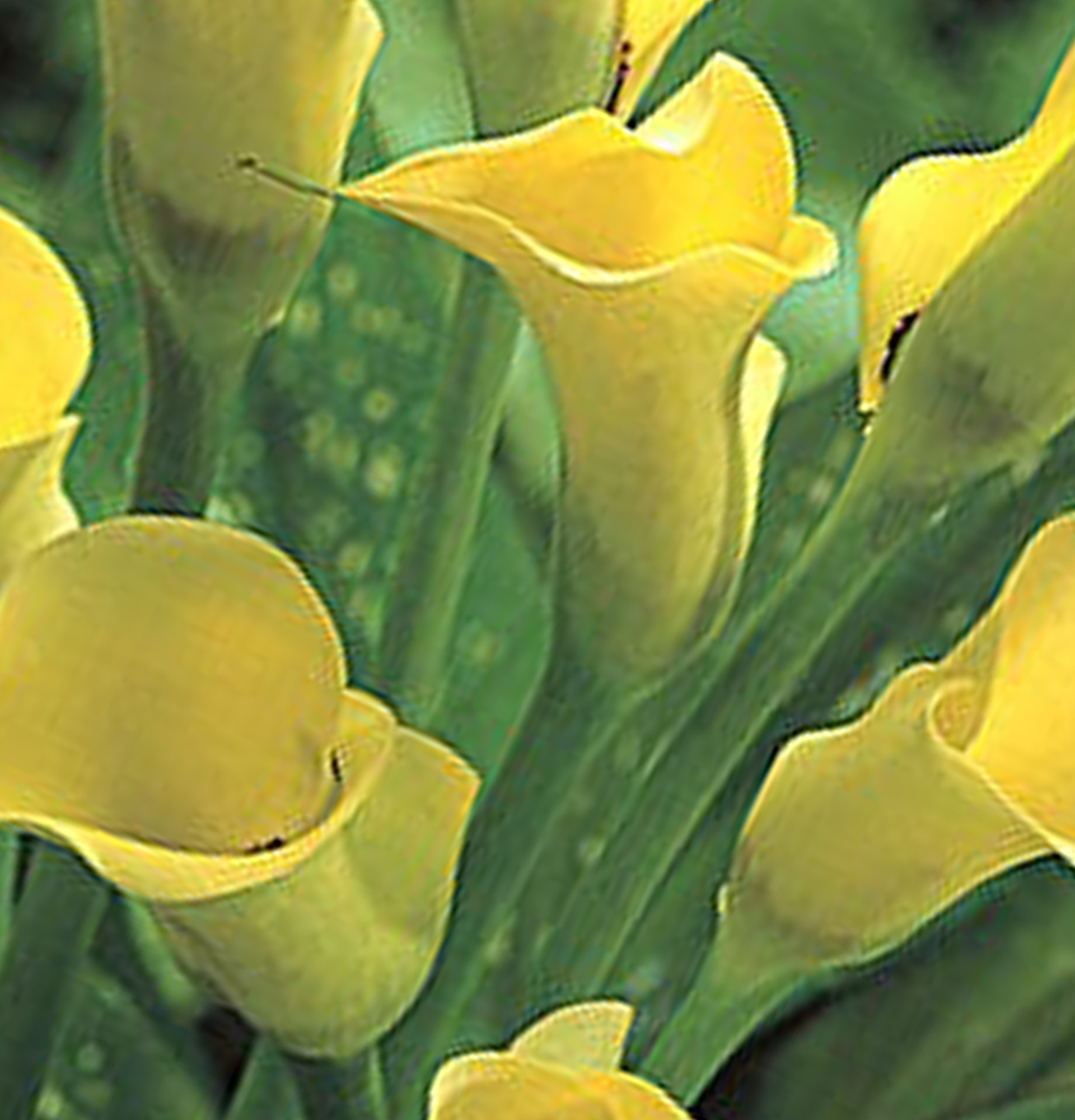 The wonderful outdoor calla Black Magic reaches a height of ninety centimeters. Its waxy, dark green leaves are covered with rare, large white spots. It delights the owners with yellow flowers. It will feel great both outdoors and indoors.
Zantedeschia Picasso
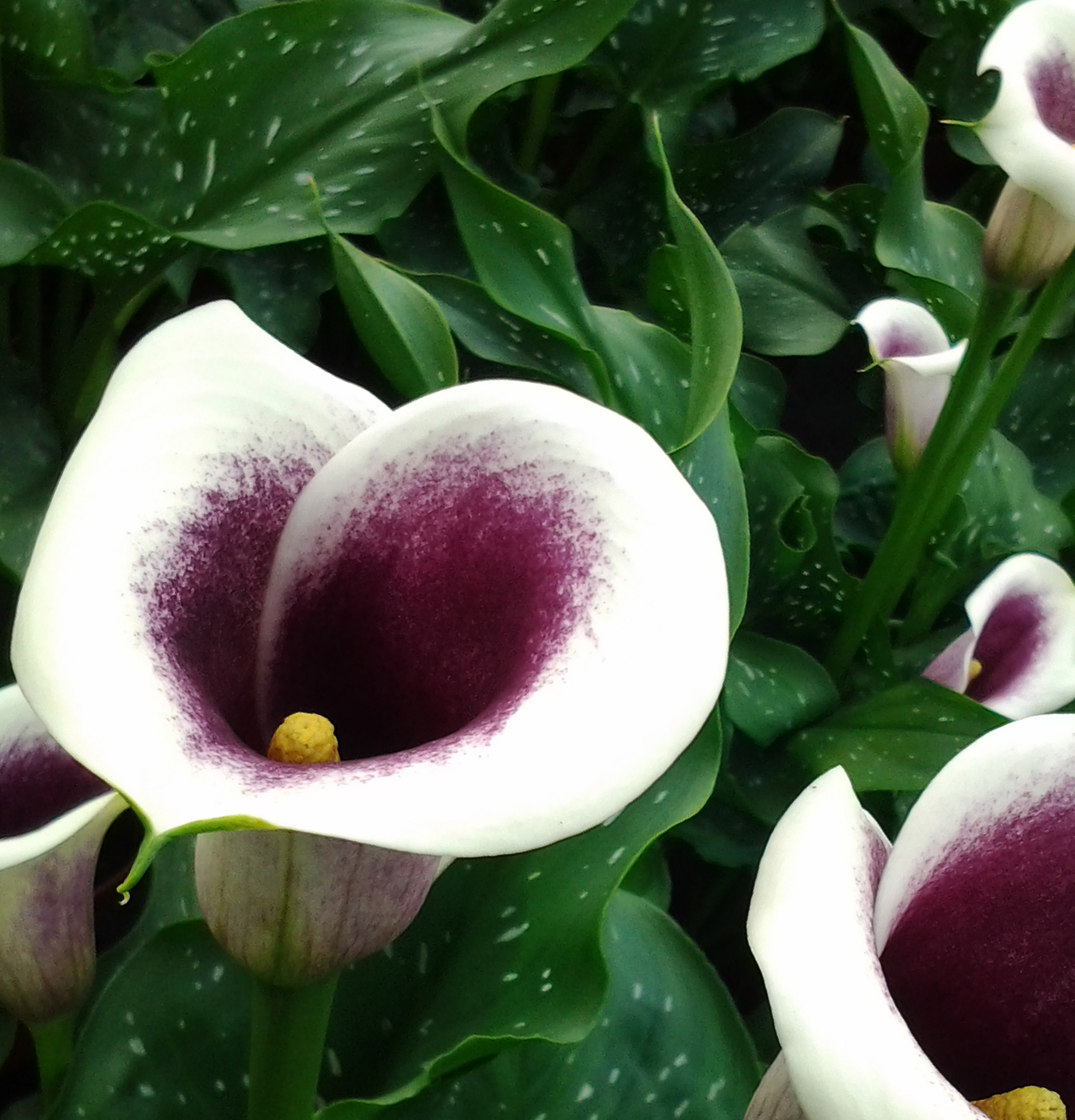 Picasso calla is considered the most favorite flower of professional florists. The seedlings grow up to sixty centimeters in height. The leaf plates are dark green in color with beautiful white spots. In summer, the outdoor calla delights with its magnificent purple flowers on which a bright white border is clearly visible.
Zantedeschia Red Alert and Red Sox
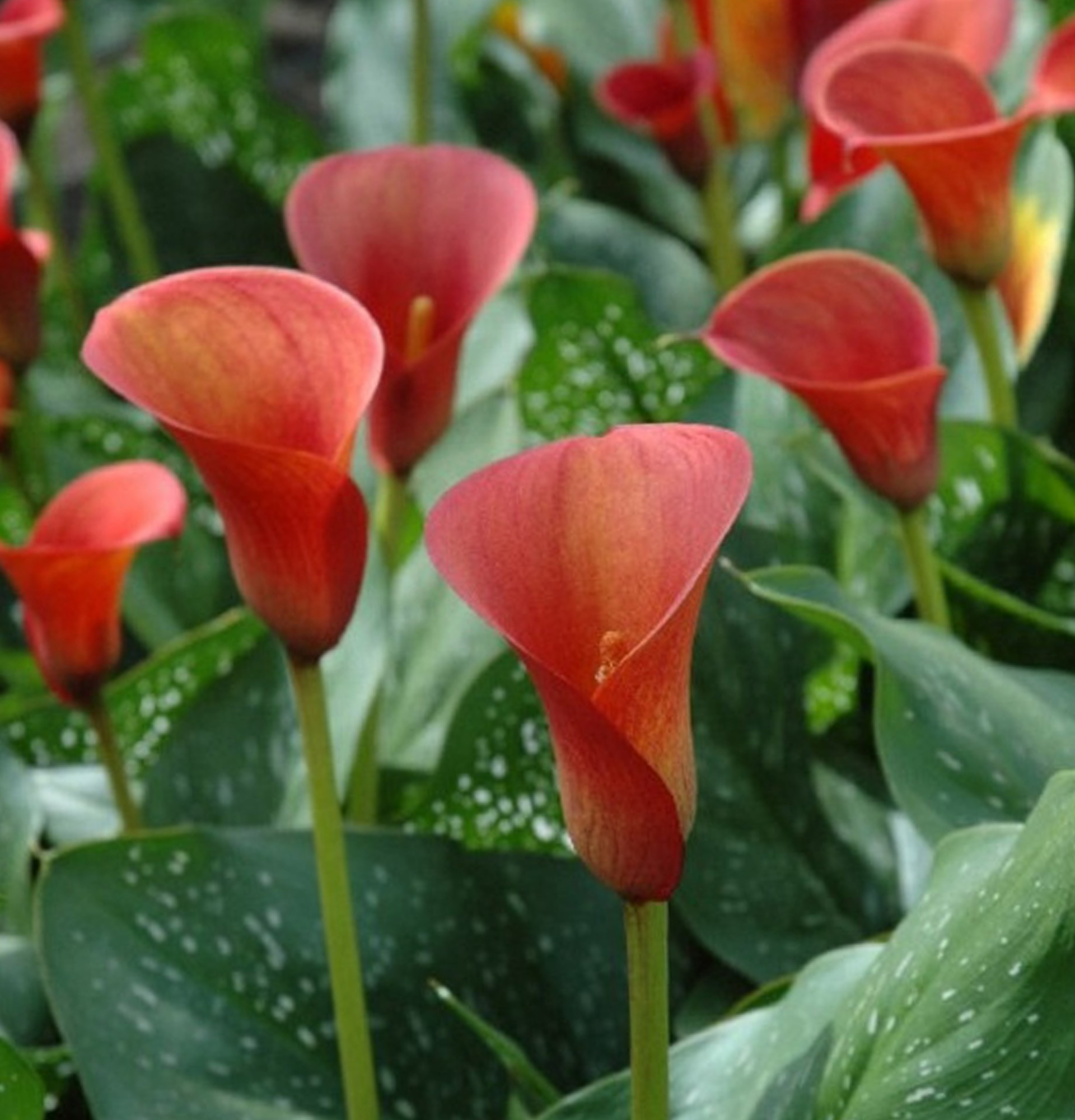 Red Sox calla and Red Alert calla are unique decorative varieties. The leaves are green in color and covered with spots. The plants reach a height of half a meter. They will decorate the garden and the apartment.
Zantedeschia Sunshine
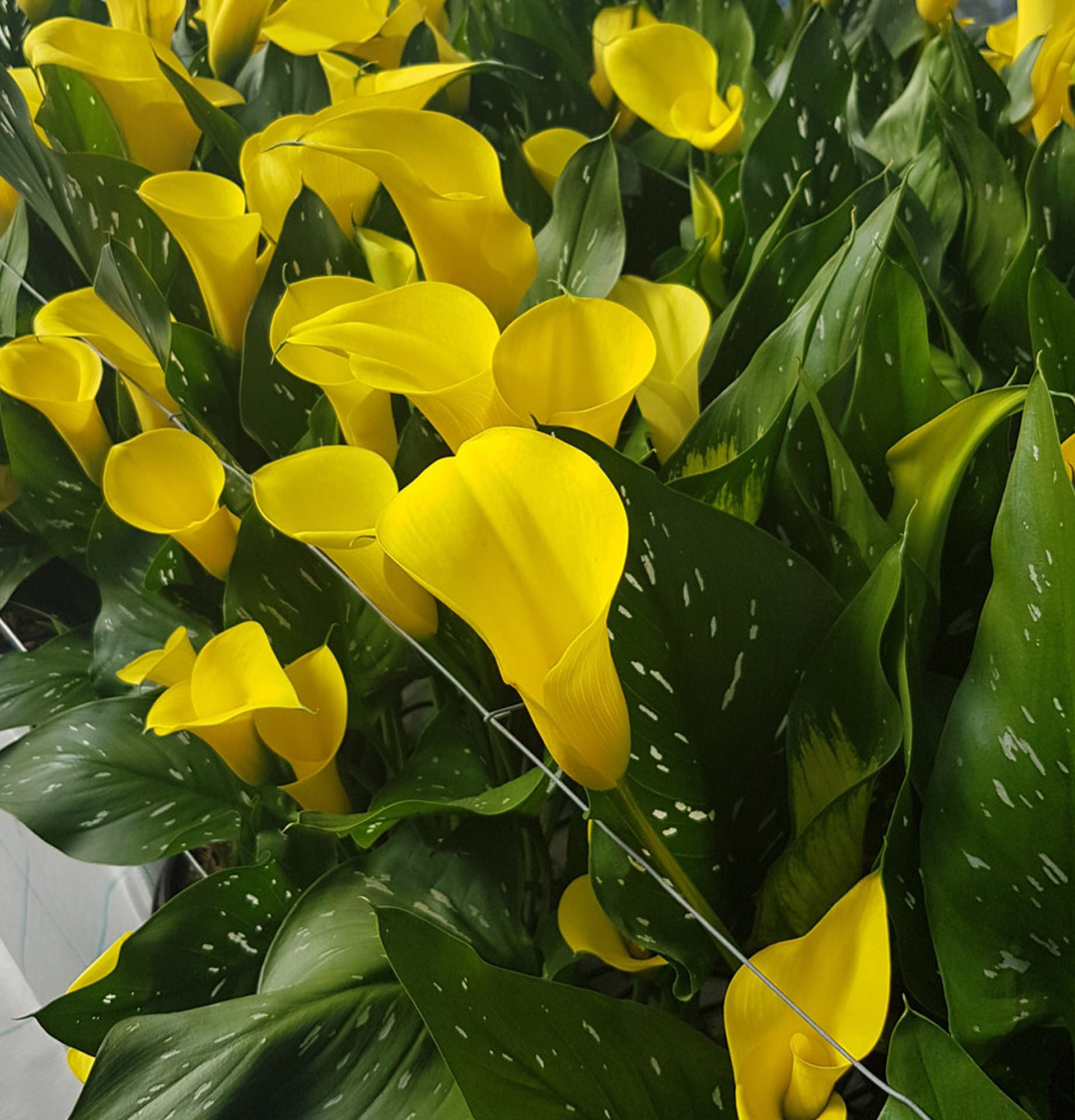 Sunshine calla beautifully decorates any area. This wonder has green, fleshy leaf plates with small white spots. In summer, it blooms with amazing yellow, waxy flowers.
Zantedeschia Samur
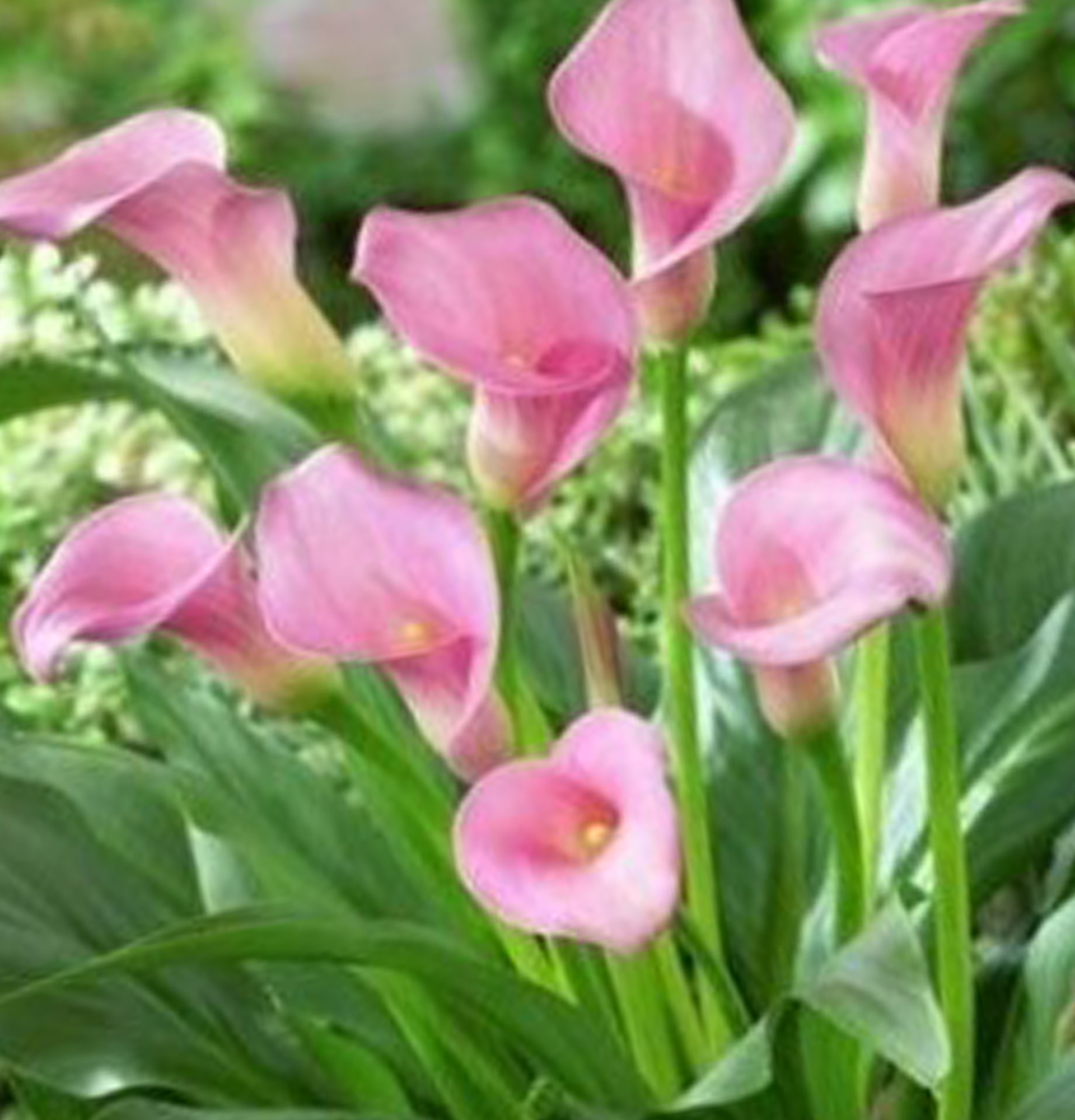 Samur calla is a wonderful herbaceous, bulbous, beautifully flowering perennial plant that reaches a height of sixty centimeters. Elegance and grace in combination with green leaves and extremely beautiful pink flowers.
Zantedeschia Night Life
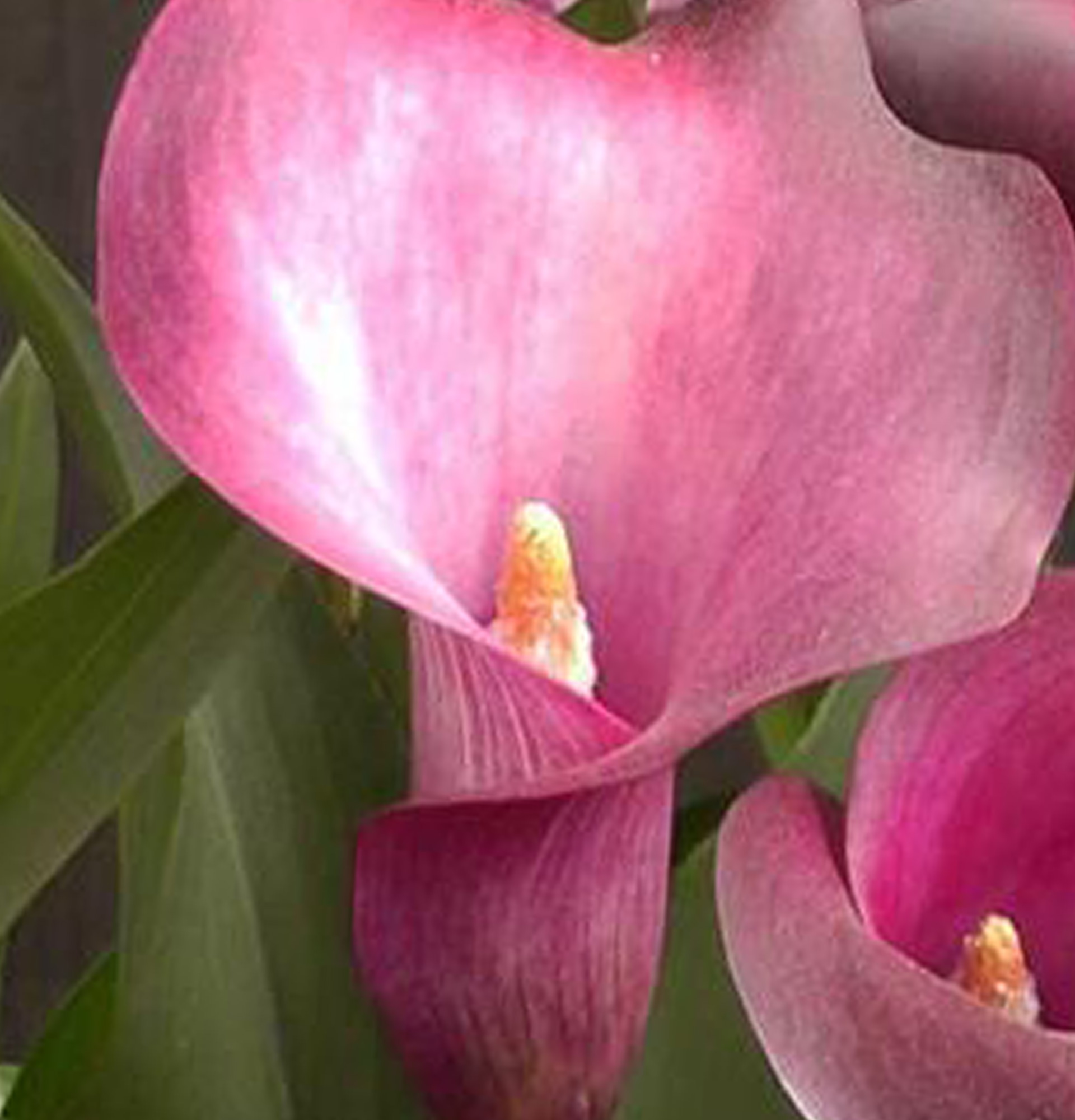 Night Life calla has gained popularity thanks to its amazing fragrant dark purple flowers, which bloom in the second half of summer and until mid-autumn. Green leaves reach thirty centimeters in height, and flower stalks rise to forty-five centimeters. It is allowed to plant calla in a pot, and these unpretentious indoor flowers will decorate any interior. It can also be planted in a flower bed, and it will look very original on borders.
Zantedeschia Lavender Gem
 The wonderful Lavender Gem calla, which loves the sun, attracts flower lovers with its lilac flowers with funnel-shaped, dark pink bracts. Forty-five-centimeter flower stalks rise above dark green, arrow-shaped, pointed or heart-shaped leaves with white spots.
Zantedeschia Summer Sun
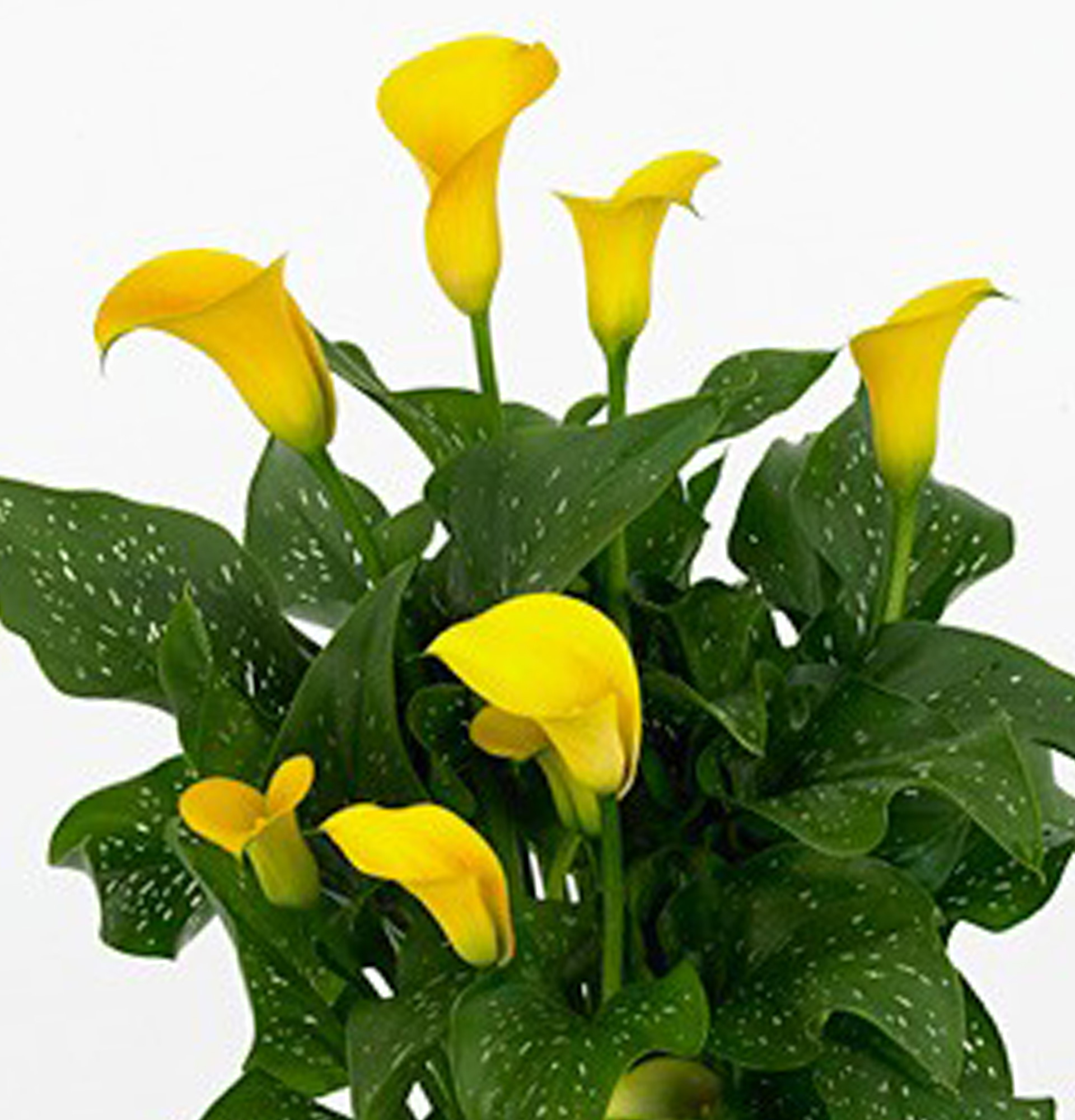 Summer Sun calla is decorated with bright lemon-yellow flowers up to twelve centimeters in diameter, with a yellow cob in the center. Lush bushes are formed by dark green leaves with small white spots.
Zantedeschia Schwarzwalder
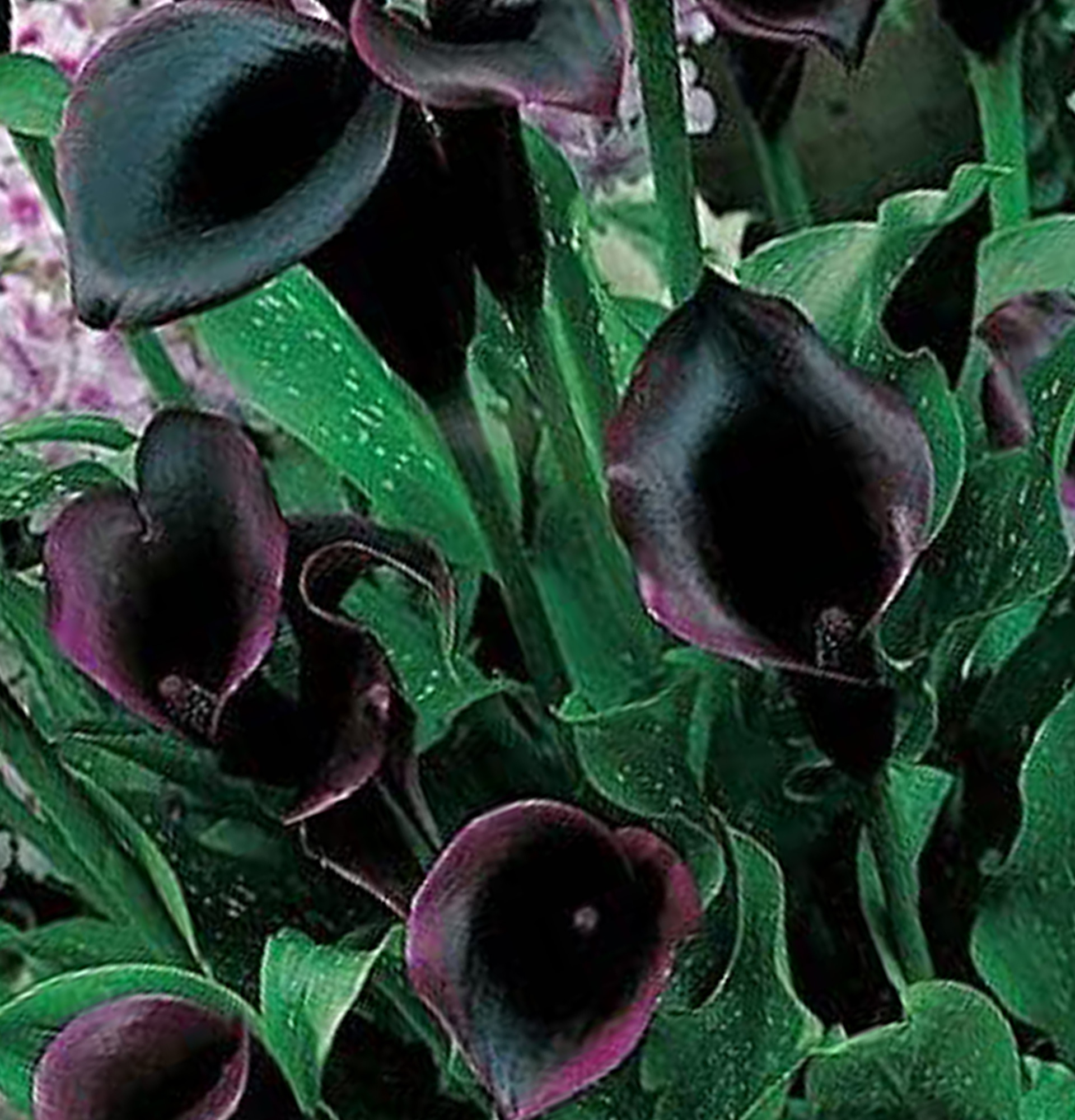 The very beautiful herbaceous perennial bulbous, beautifully flowering culture, Schwarzwalder calla, has unique flowers of a dark purple, almost black color on tall flower stalks. Green leaves are slightly decorated with white stripes. It can reach a height of 70 cm. The plant is heat-loving and does not like drafts.
Zantedeschia Las Vegas
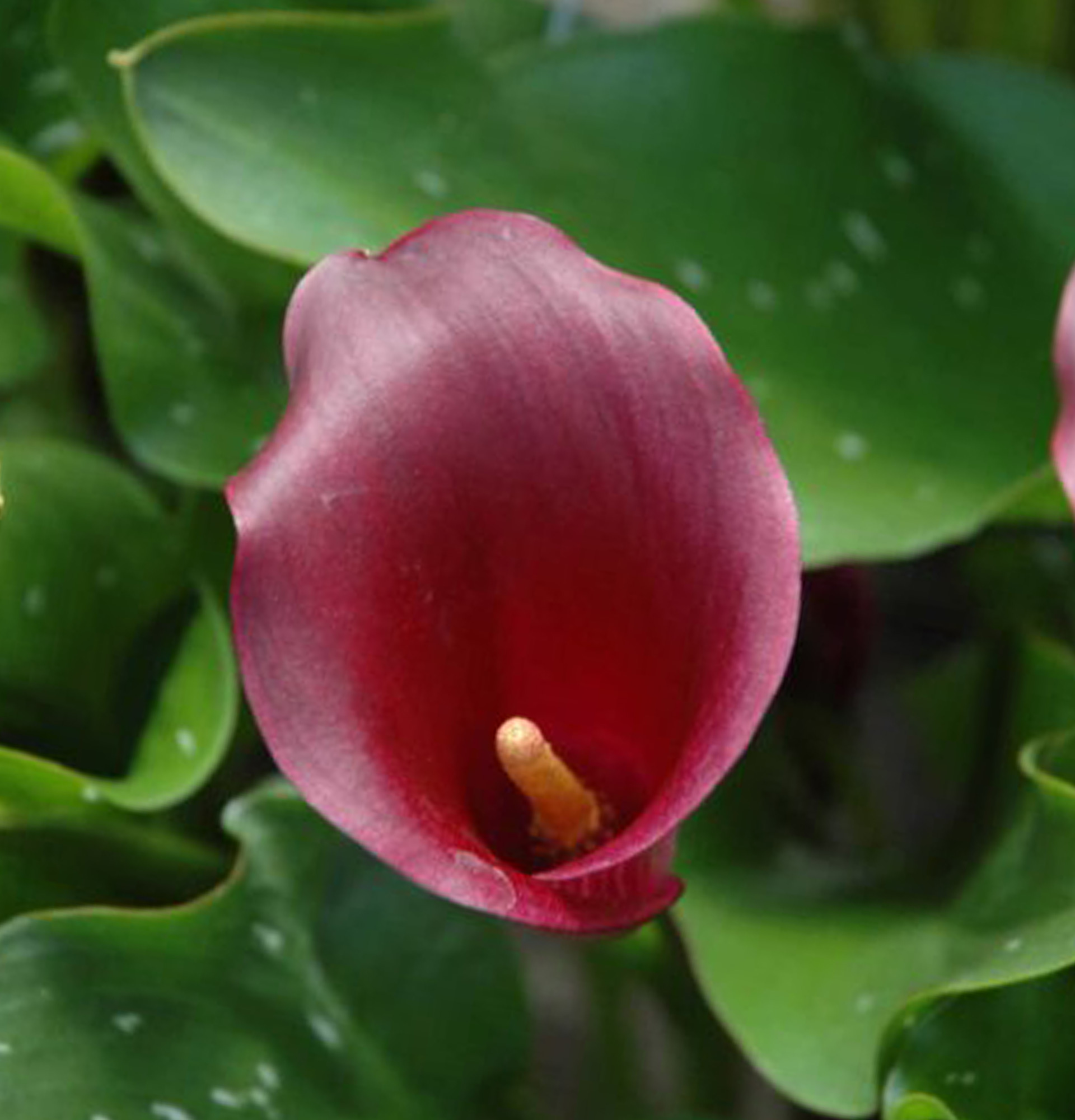 Tropical Africa is the homeland of this exquisite perennial, sun-loving bulbous plant. Las Vegas calla blooms in the second half of summer with dark purple, almost black flowers. Forty-centimeter flower stalks rise above dark green leaves with white spots.
Zantedeschia Florex Gold
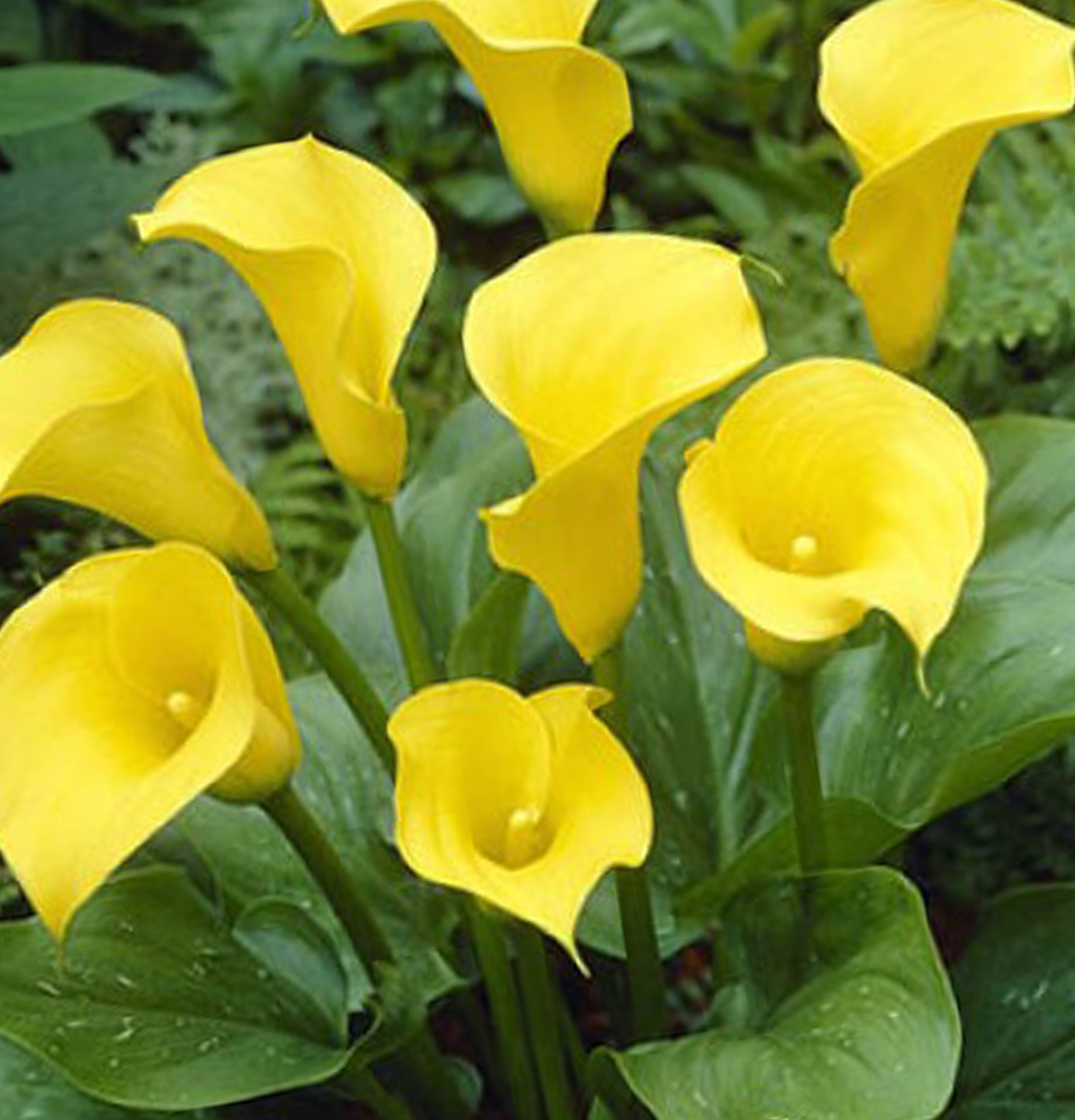 Florex Gold calla is popular with florists and interior designers. This is a very original variety with yellow-golden flowers, the center of which is decorated with a dark eye. Gradually, the flowers acquire a greenish tint. Large leaf plates are dark green and covered with white spots.
Zantedeschia Jack O Lantern
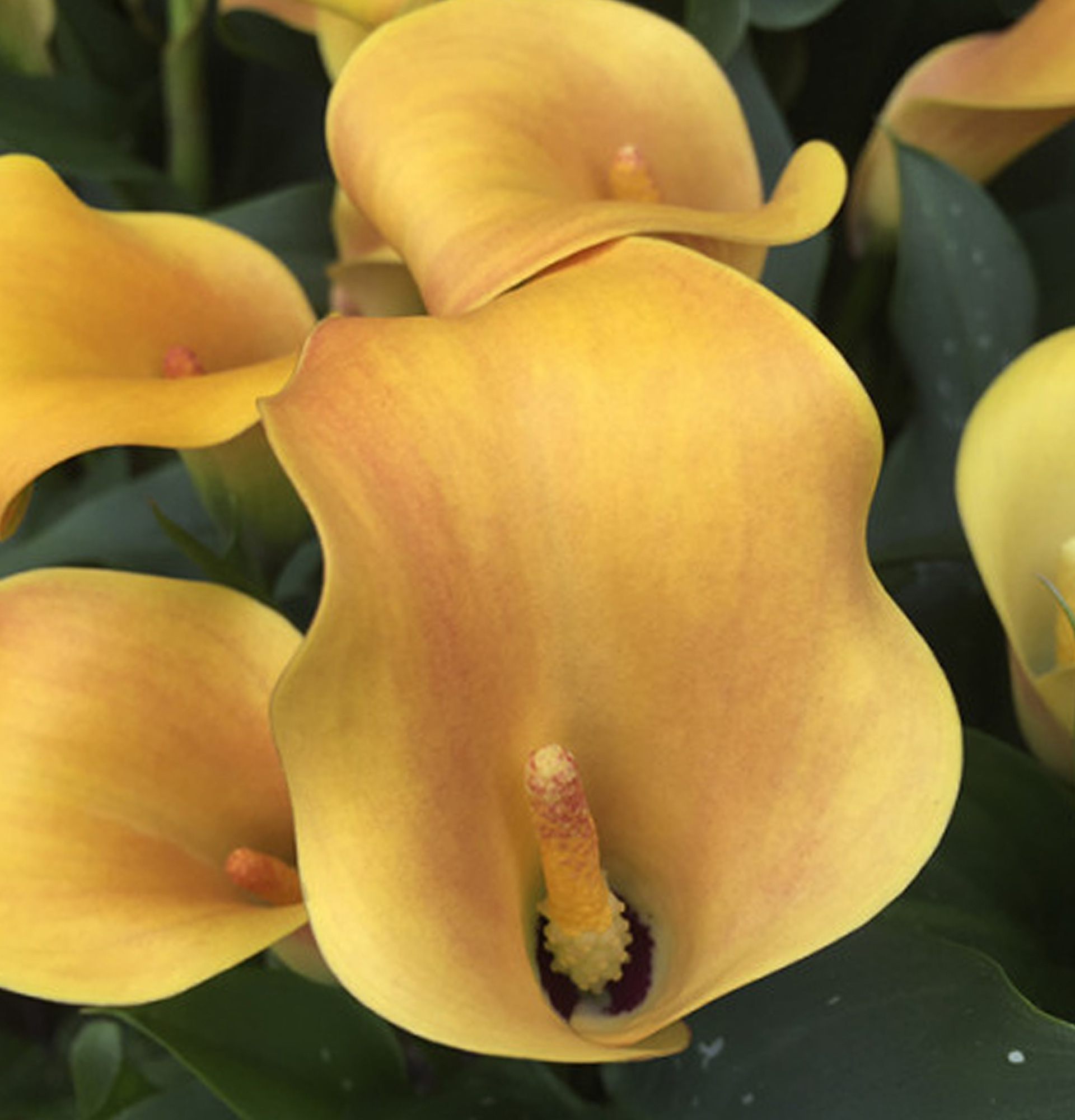 Jack O Lantern calla is a very decorative, resistant to diseases and weather conditions variety. The culture reaches a height of 45 cm. Summer is a favorable period for flowering. The rich orange-yellow color of the six-centimeter flowers attracts flower lovers. On the arrow-shaped, pointed, dark green leaves, white spots are arranged.
Zantedeschia Ascari
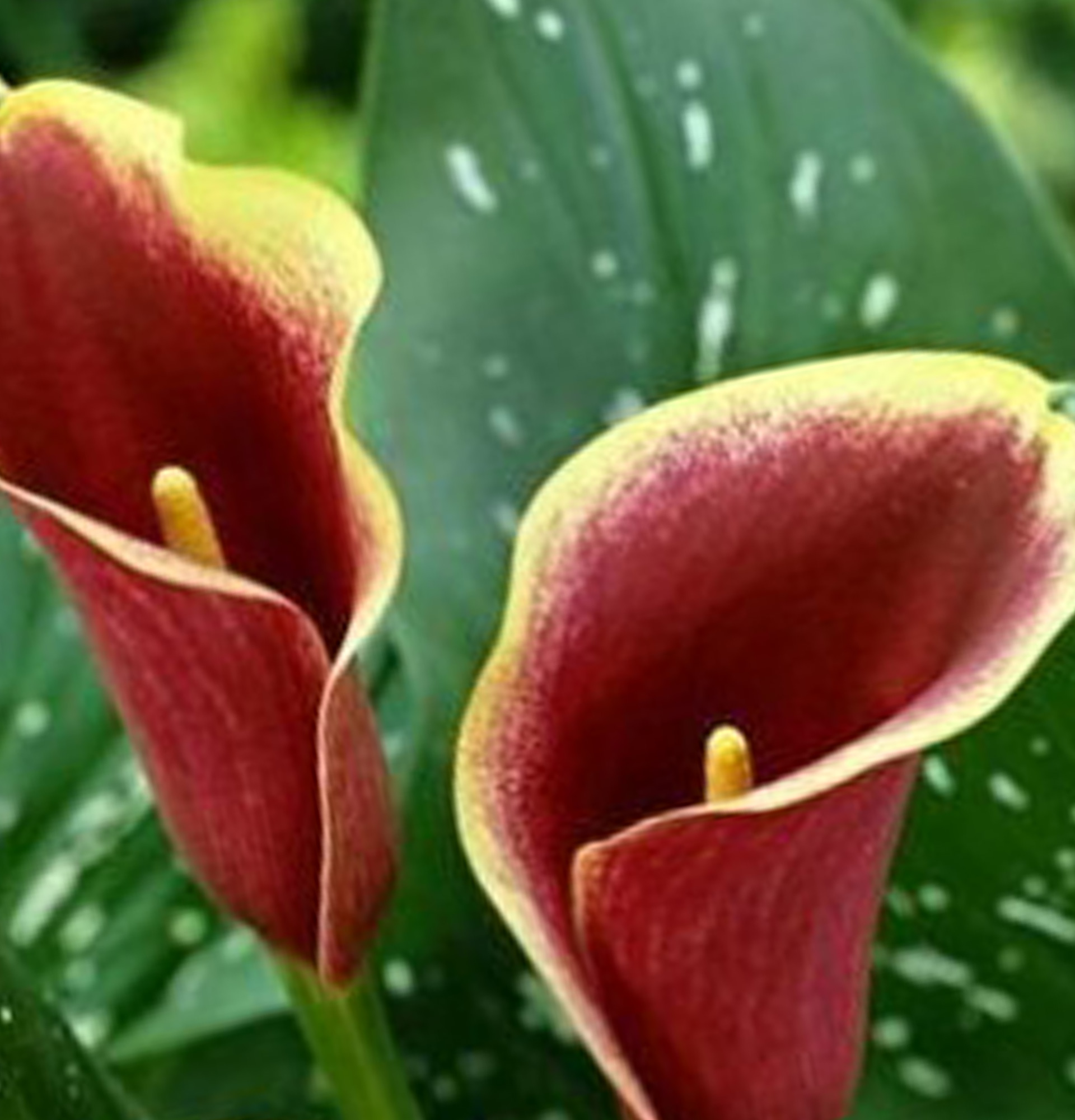 Ascari calla stands out with its red-purple flowers, about ten centimeters in diameter, with a thin light border. Green leaf plates are decorated with white spots. The bush grows up to seventy centimeters.
Zantedeschia care at home
The effective and elegant African beauty will feel great both at home and in the garden if properly cared for. The main thing is that this beauty will transform the interior of any room, whether it is an office or a residential one.
Choosing a place and temperature regime
Zantedeschia loves bright, but diffused light, does not like direct sunlight, and will gladly be placed on the east and west sides. The desired duration of daylight is at least 12 hours. In winter, it is desirable, if possible, to move the indoor plant to the south side or to illuminate it with phyto-lamps in order to prevent the shoots from stretching.
In the warm season, comfortable temperatures will be about 25˚C, and in the winter off-season – up to 15˚C.
Protect Zantedeschia from drafts.
Humidity and watering
The mistress of the swampy area desires increased humidity. This can be achieved by regularly wiping the leaf plates, placing a tray with moistened expanded clay next to the flower, or purchasing a flower pot with automatic watering.
Zantedeschia requires regular watering every three days in summer, and no more than once a week in the cold season. Water with non-cold, purified, lime-free, soft water with a little lemon juice. The substrate should be slightly moist, but after watering, excess water should be removed from the pot and tray.
Soil and its feeding
It will feel great in a soil mixture with the following composition: soddy-podzolic soil, peat, humus, sand – all ingredients are taken in equal quantities. Indoor Zantedeschia responds positively to slightly acidic substrates. The main indicator of the soil mixture is water-air permeability. Peat without impurities is suitable for growing the flower. You can buy a substrate intended for Araceae in flower shops.
During the growing season, it is advisable to apply liquid mineral fertilizers every thirty days.
The plant needs nitrogen for good growth, and potassium and phosphorus for abundant flowering.
Transplanting Zantedeschia
Annual transplanting will benefit the plant. A good drainage layer of up to five centimeters is necessary at the bottom of the pot. The pot may not be deep. The convex side of the bulb should face down, and it should be buried only slightly, so that the root neck is covered.
Propagation of Zantedeschia
Zantedeschia can be easily propagated by separating the offshoots, by dividing the rhizome, and by seeds, depending on the variety.
In a faded plant, offshoots are separated and planted in shallow, wide pots.
The planting depth should not exceed ten centimeters.
Rhizomatous varieties are propagated by parts of the root. Each part of the root is planted in pots, covered with a layer of soil up to eight centimeters.
The seed method is laborious. Fresh seeds are sown in pots. At a temperature of 20-26˚C, after 2-3 months, you can see small seedlings. They will grow in a couple of months and be ready for transplanting. Flowers in calla grown in this way can be seen after five years.
Pests and diseases
Zantedeschia may be visited by unwanted guests: red spider mites, aphids, scale insects, root nematodes, thrips. When insects appear on the plant, insecticides should be used immediately. You can treat with Aktellik, Akarin, Komandor.
Problems that may arise during cultivation
- The leaves of Zantedeschia are covered with dark spots – excessive watering, possibly the roots have begun to rot, infection with fungi.
- Wilted and drooping leaves – the plant is susceptible to drafts.
- Why is Zantedeschia not blooming? Most likely, the indoor plant does not have enough light or there is not enough feeding. There may be an excess of nitrogen in the fertilizer. The quality of flowering may be affected by a very tight pot. It is necessary to monitor the watering of the plant during the period of active growth, the water should be warm or at room temperature.
The main thing is to follow the simple rules of care, and the indoor plant with white-green leaves will look great and delight its owners.
Write comments
Comments