



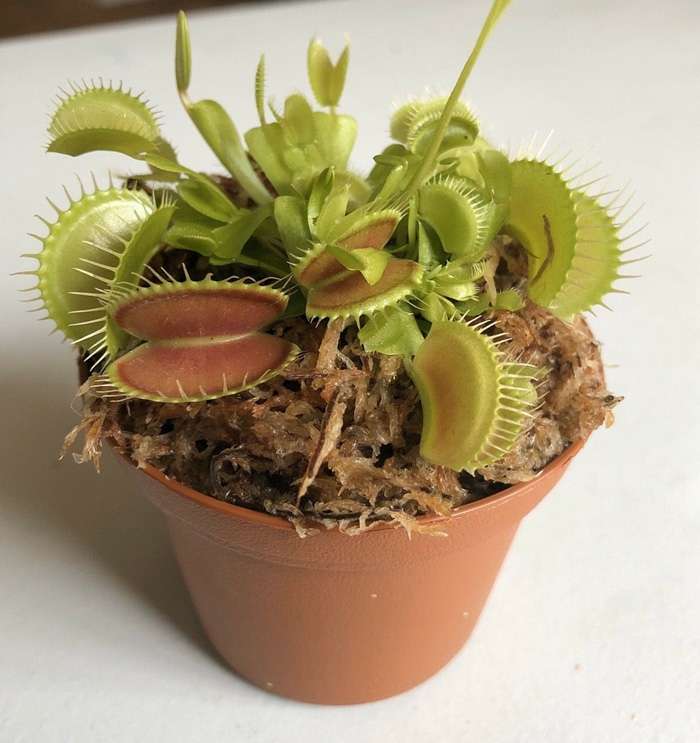
Latin name: (Dionaea muscipula)
Category: herbaceous carnivorous plants
Origin: North America
Rare insectivorous predator
Venus flytrap (Dionaea muscipula) is the only species of unique insectivorous herbaceous carnivorous plants, which is part of the Droseraceae family.
From a scientific point of view, the name of this exotic plant, muscipula, was translated by experts as "mousetrap." The English call such a plant Venus flytrap, which literally means Venus flytrap. This unusual flower is also called dionaea. And the prototype of this interesting name was the Greek goddess who gave birth to Aphrodite (Venus). This unusual wonder was discovered back in 1760. And since those ancient times, dionaea flytrap has interested flower lovers all over the planet. It is grown in domestic conditions and has become an essential attribute and decoration of the interior of any space.
The flytrap plant is a floristic carnivorous wonder and considers North America to be its homeland. Here, in its homeland, the flytrap flower is listed as a plant that may become extinct. The reason for this process is the emergence of a huge demand for the carnivorous plant and the export of large quantities of Venus flytraps to the European part of the world. The second misunderstanding that leads to the extinction of this plant is the deterioration of the environment in which the plant lives. This unique exotic plant is satisfied with swampy peat bogs and open sunny humid meadows with a reduced content of nitrogen compounds in the soil. As a result, the flytrap plant diligently and regularly replenishes the lack of this component by feeding on mollusks (slugs) and other various insects.
Mature bushes reach a height of only fifteen centimeters. This perennial flower has a short underground stem, like an onion. Five or seven special leaves grow from it, forming an interesting rosette.
How does the Venus flytrap bloom? Yes, it is an indescribable beauty and also blooms from May to July, producing a long peduncle with a racemose inflorescence, on which there are not very attractive, small, white flowers that have a pleasant aroma.
To create healthy and strong traps, it is necessary to sacrifice the aroma of the blooming predator; the peduncles must be cut off.
The Venus flytrap flower is also a predator, like the Nepenthes, which also eats flies and other various insects. But they are not considered relatives.
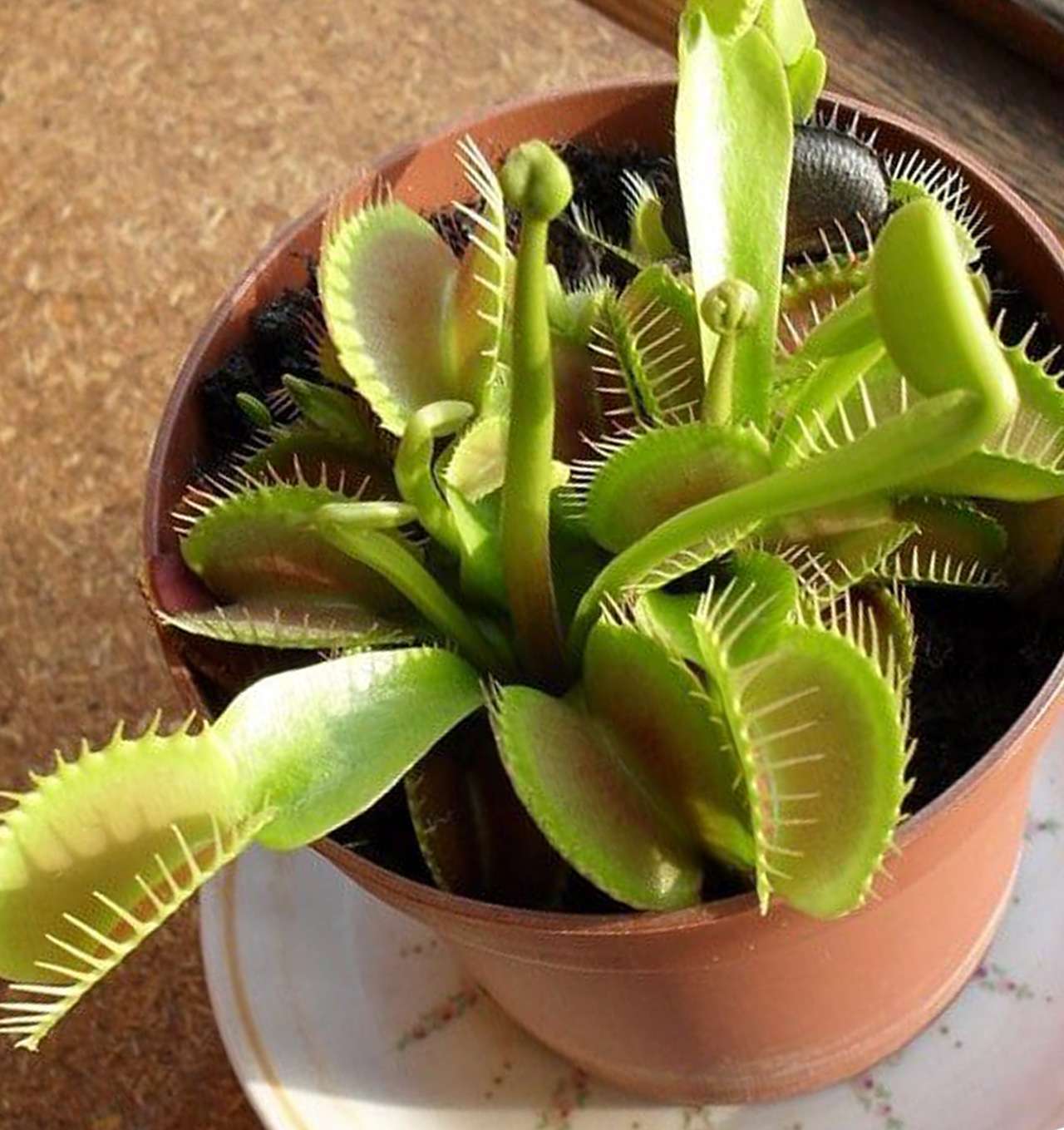
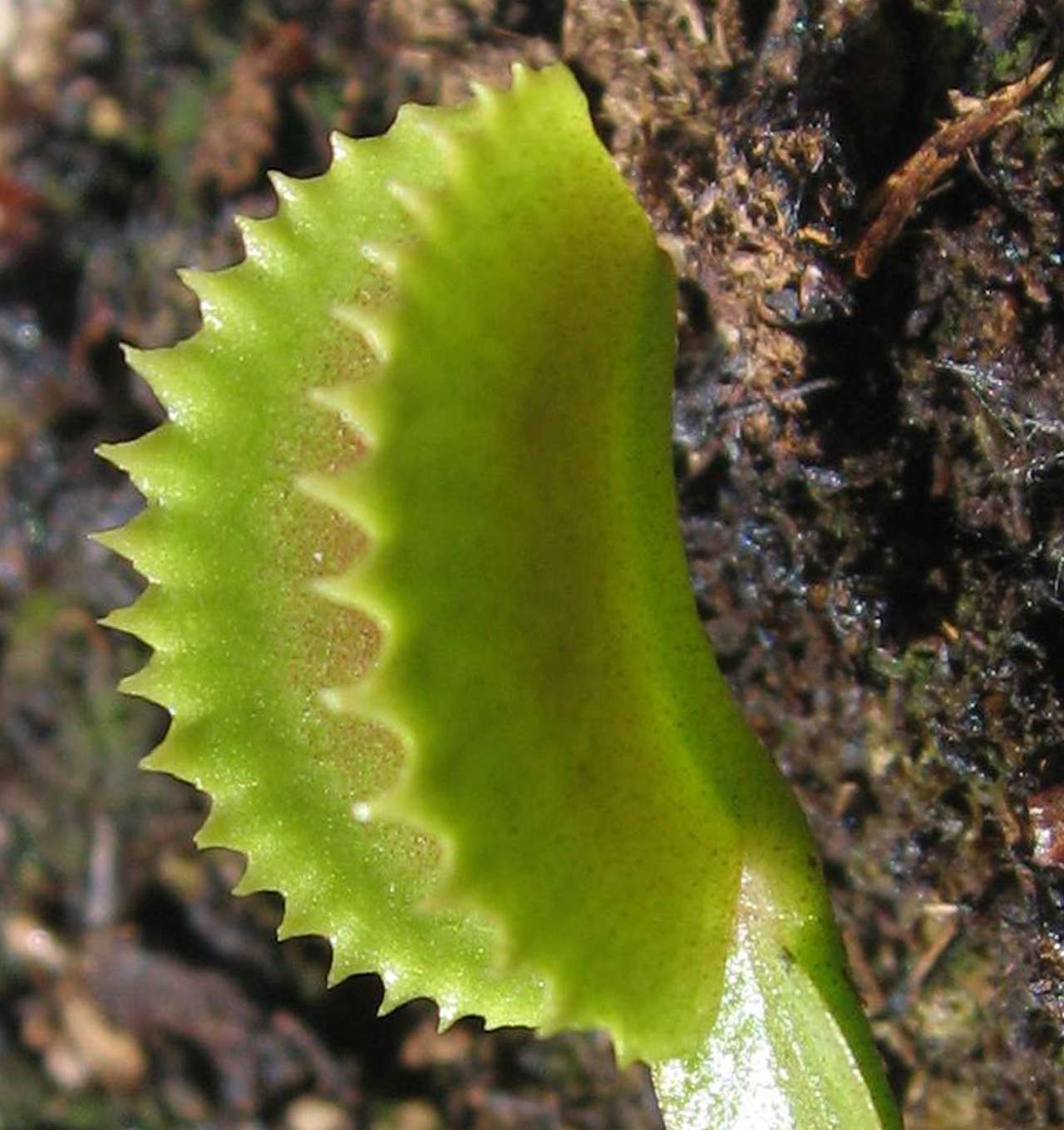
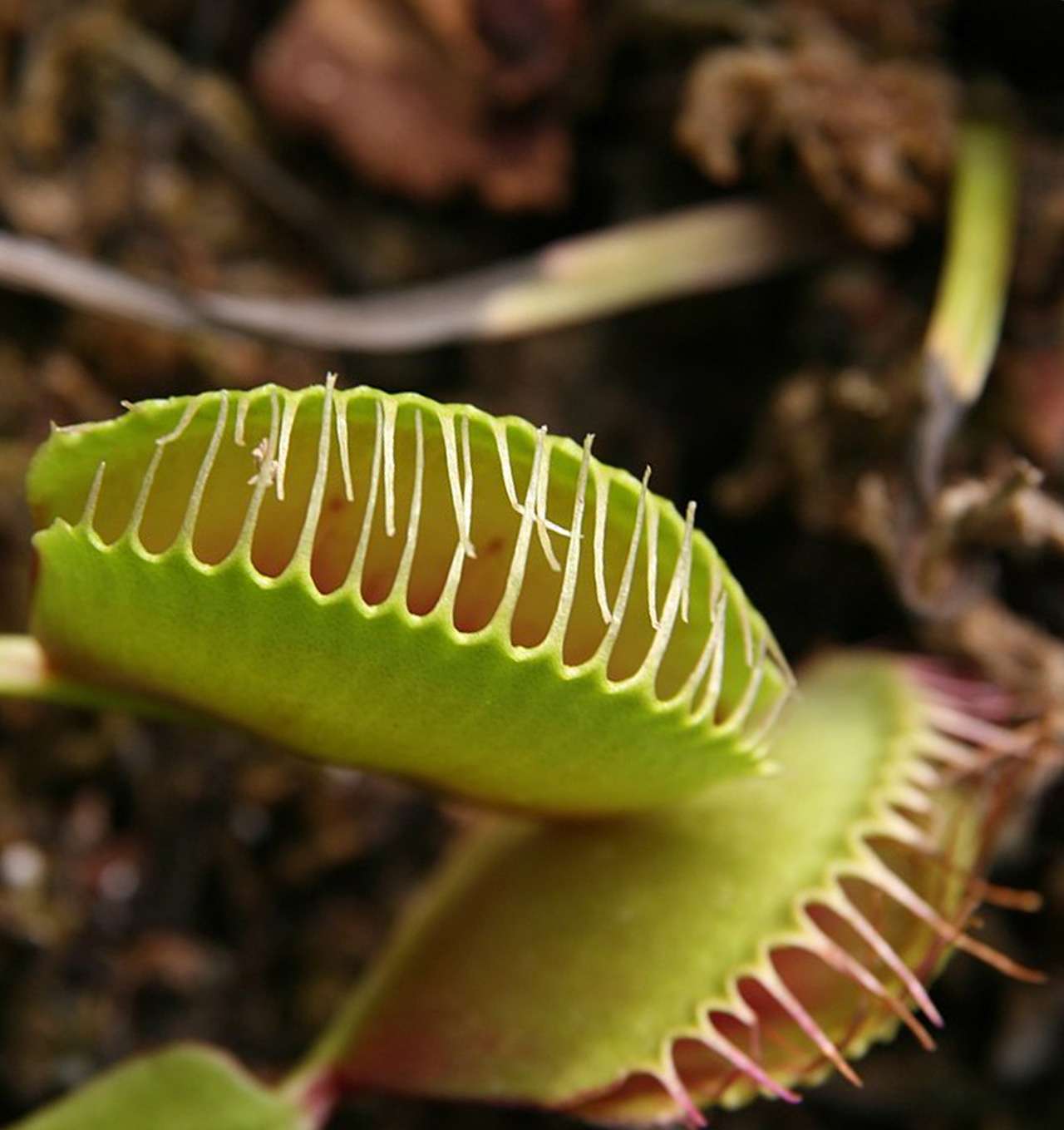
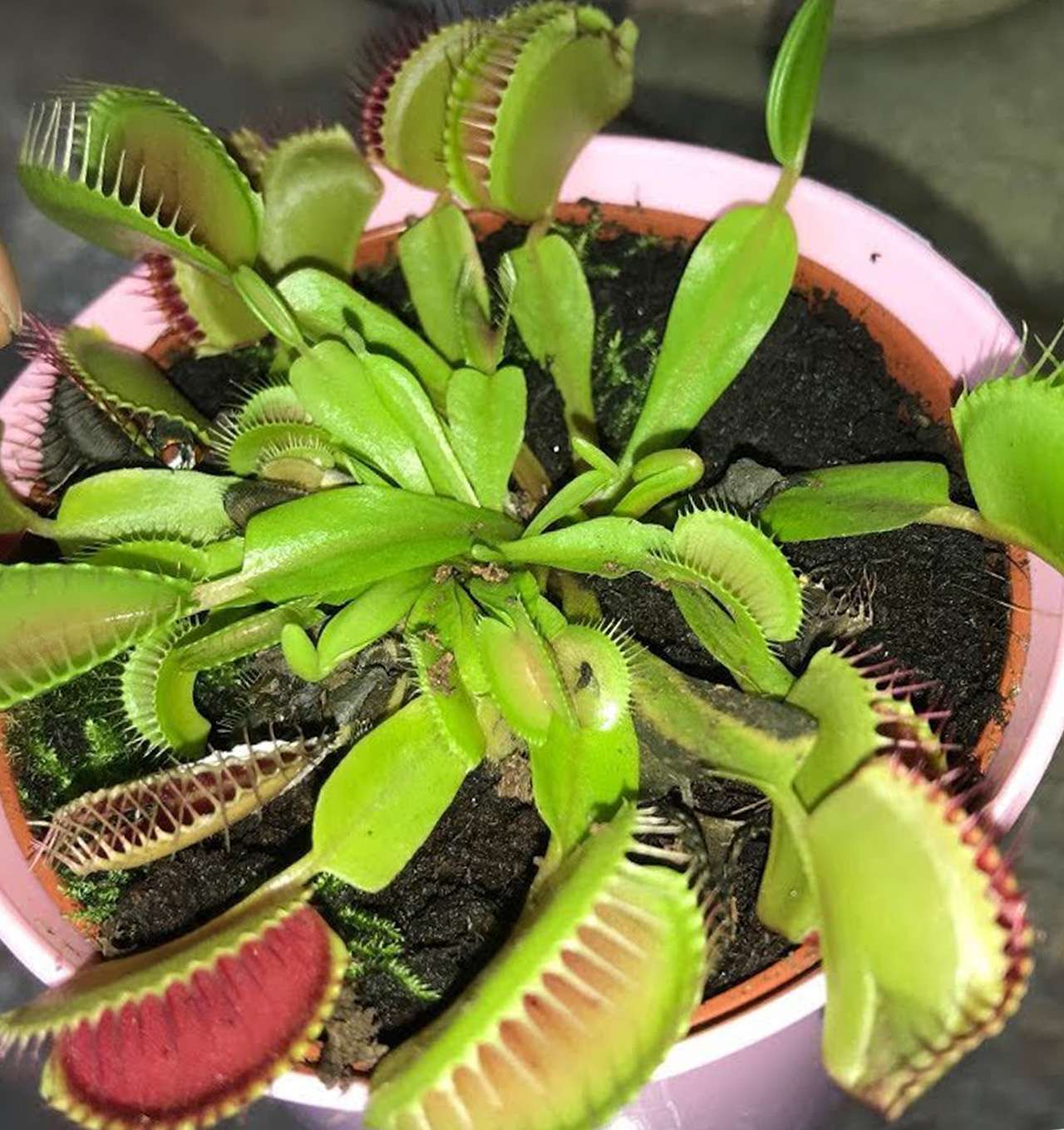
How does the Venus flytrap feed? When the dionaea finishes blooming, the process of trap formation begins. They are formed by two petals, which have original bristles along the edges; these original flaps can close and create traps. They reach a size of eight to fifteen centimeters. The outside of the trap is green, and the inside is red. Special glands produce a pleasant nectar, which attracts guests. When insects get inside, the trap closes, and the process of forming a secret for digesting food begins. The absorption of the prey by the predator can take from five to ten days. After eating the prey, the leaf trap opens again and waits for a new victim. One leaf trap can process from three to five insects, as a result of which the leaf loses its vitality and frees up space for a young trap.
How long does the Venus flytrap live? With good care, a domestic predator can delight family members for twenty years.
Dionaea is a single species in its genus, Venus flytrap. The plant is very popular among flower lovers. Thanks to the selective work carried out, new and even more original varieties have appeared, which you simply need to see – Venus flytrap, a photo of it in more detail.
Interesting varieties
Venus flytrap Dentate Trap (Dionaeva Dentate Trap)
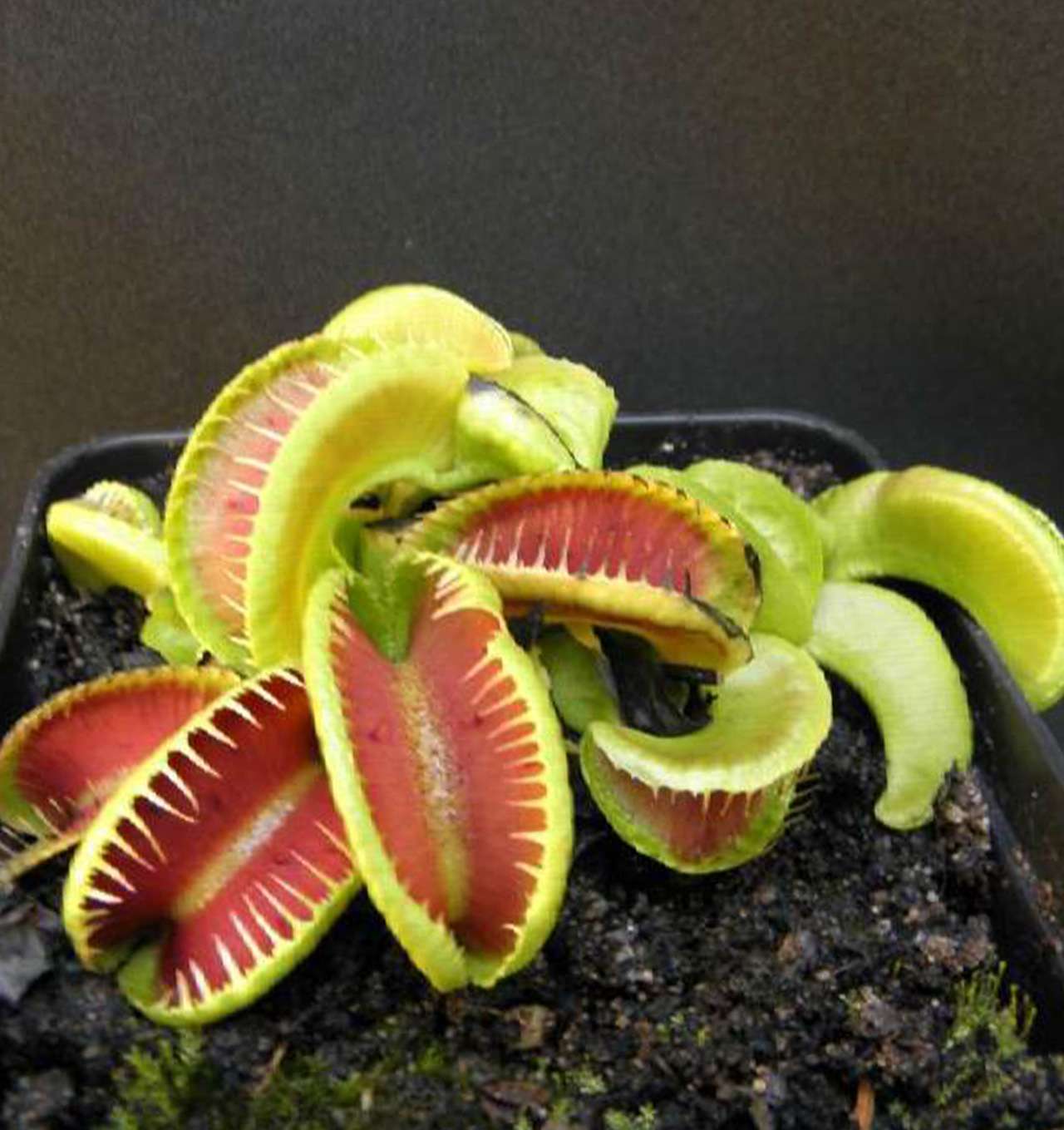
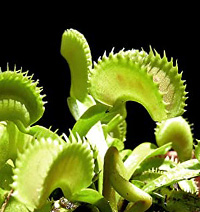 A picturesque variety in which the rosette grows up to twelve centimeters and can produce at least twelve leaf traps. They are arranged vertically. The green color of the outside of the trap has a bright red stripe. Inside, the mouth of the trap is decorated with a bright red color.
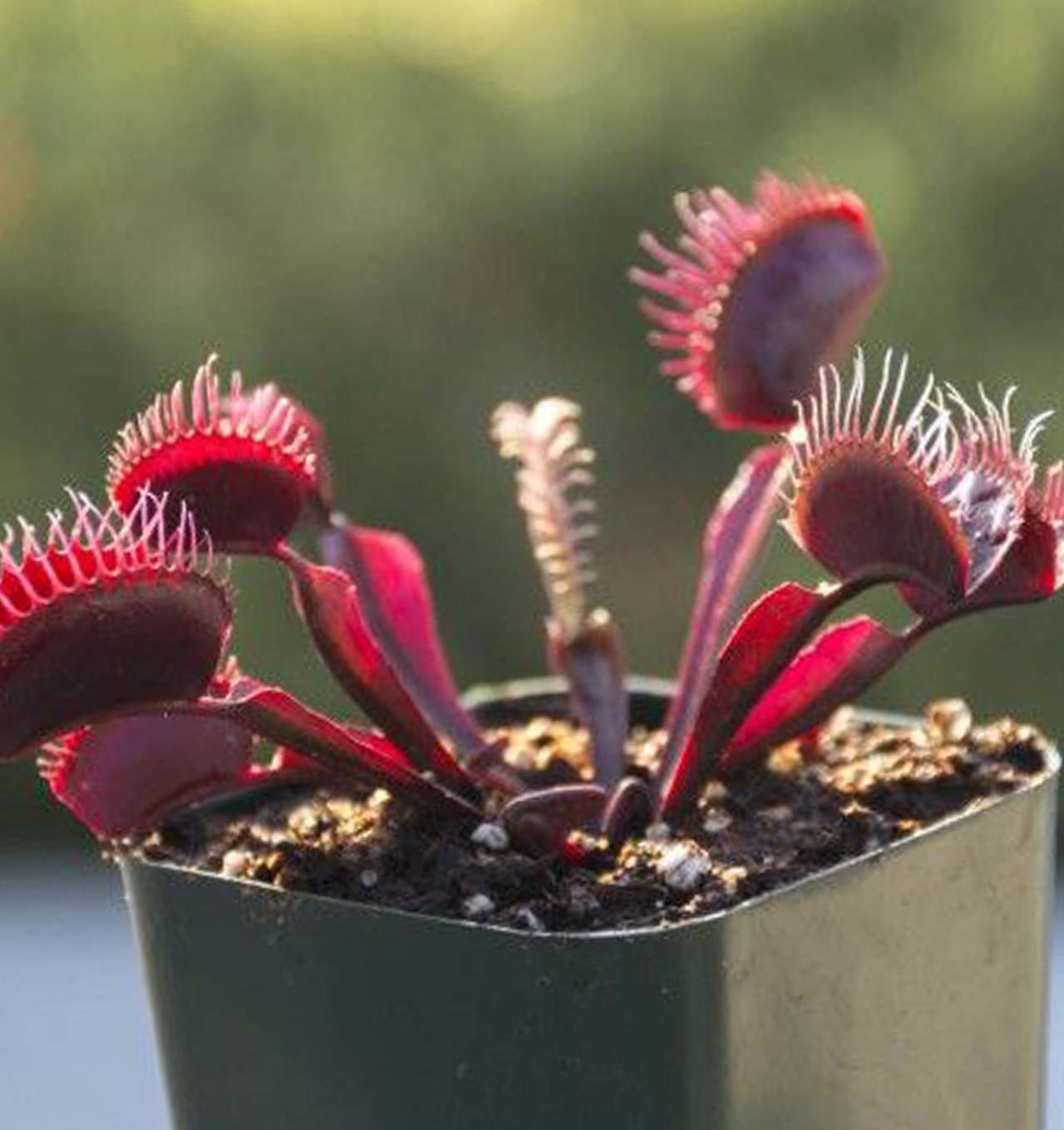
Venus flytrap Red Dragon (Dionaeva Red Dragon)
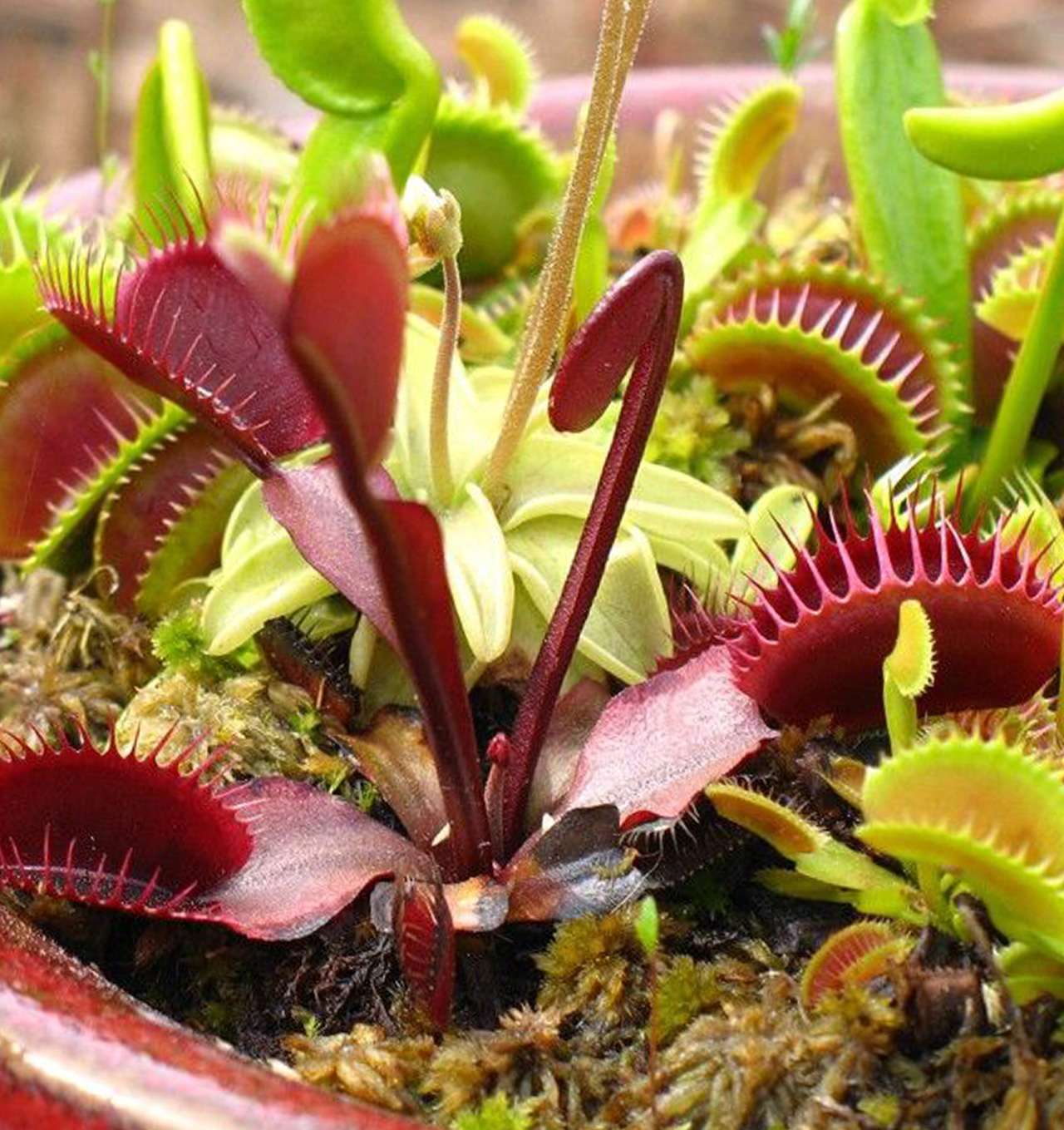
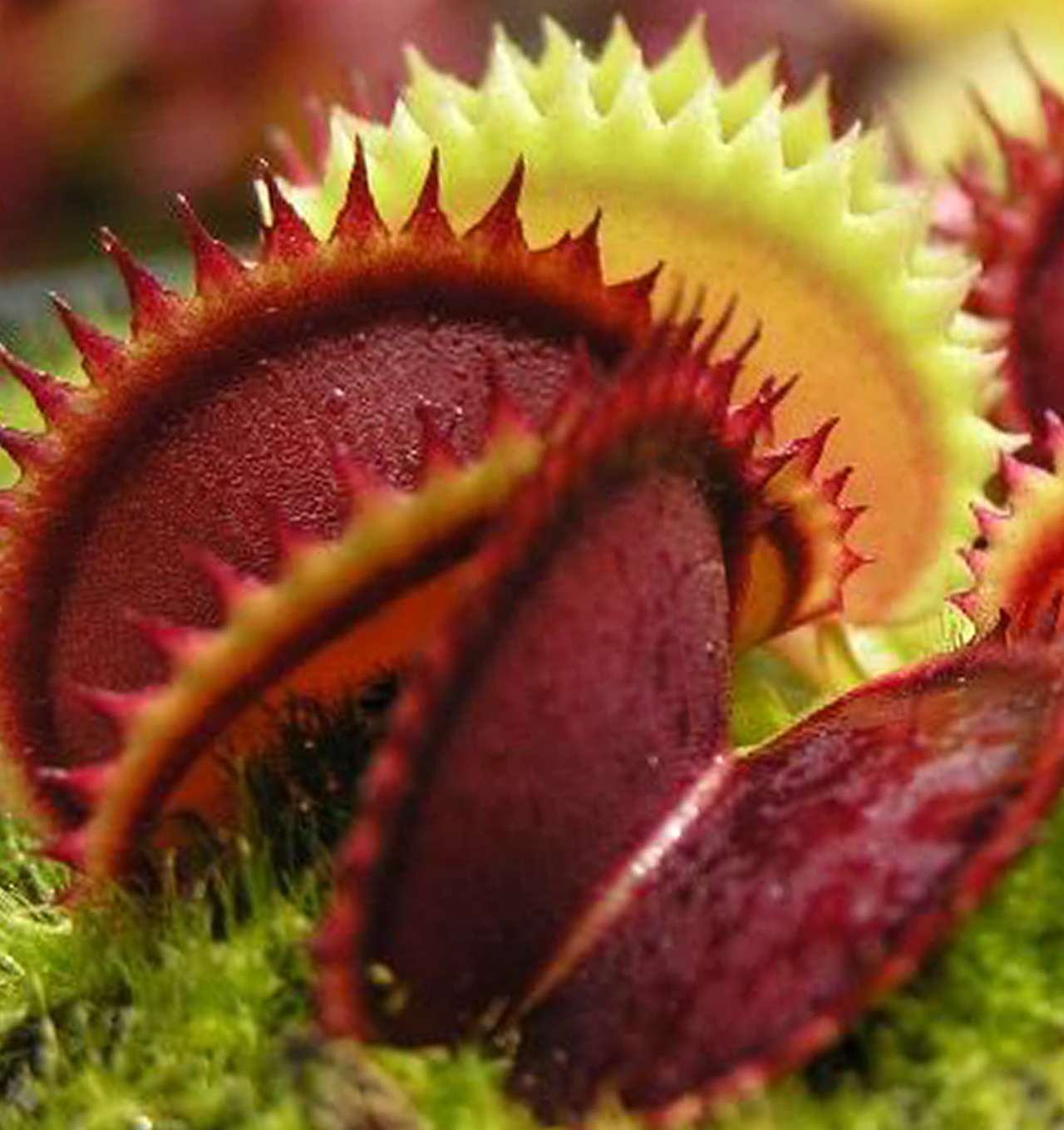
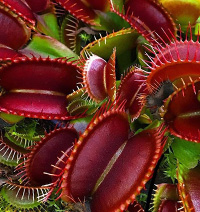 This amazing variety has leaves and traps of a very original burgundy color. If the indoor plant does not receive enough light, its traps will be pale. It blooms in late spring and early summer with small, centimeter-sized flowers that rise on long peduncles. Old leaves and traps must be removed in a timely manner.
Venus flytrap Long Red Fingers (Dionaeva Long Red Fingers)
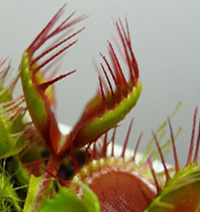 This variety has a mutation. The lures-traps are bright red in color, and the plant has bowl-shaped leaves. The densely arranged reddish teeth sometimes grow together.
Venus flytrap Low Giant (Dionaeva Low Giant)
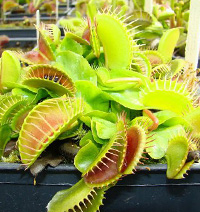 This interesting specimen of the Venus flytrap can beautifully improve the interior – it has the largest traps-lures. It is interesting to watch this flower feed.
Venus flytrap Fondue (Dionaeva Fondue)
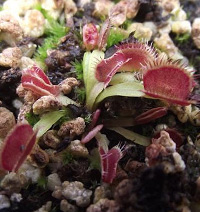 This variety is prone to mutation. This is manifested in the absence of teeth on the traps, and their color can be of various colors.
Venus flytrap Bristletooth (Dionaeva Bristletooth)
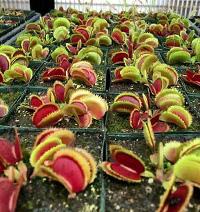 A distinctive feature of this variety is the fiery red traps-lures with short and sparse teeth. It can boast numerous offshoots.
Venus flytrap Jaws (Dionaeva Jaws)
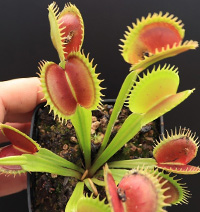 This amazing colorful predator differs from its previous representatives with interesting triangular teeth.
Dionaea care in domestic conditions
The carnivorous plant Venus flytrap has proven to be a very whimsical, demanding, and fastidious plant to grow. Just wanting to have a healthy and strong plant is not enough; you need to put in a lot of effort, energy, attention, love, and, if possible, bring its living conditions as close as possible to natural ones. The main thing is that the care of the Venus flytrap should be of high quality, and this wonderful exotic predator will feel good both on the windowsill and in the garden.
Choice of location and temperature regime
The Venus flytrap dionaea will gladly decorate the windowsill of the east and west sides. The plant should receive at least four hours of daily sunlight. Ideally, it should be the rays of the morning or evening sun. The desired duration of daylight is thirteen hours, and if it is not enough, it must be supplemented with phytolamps.
Attention! It is not recommended to change the location of the overseas predator and turn the pot with the flower around its axis.
The Venus flytrap flower loves fresh air. Do not deny it this pleasure. Ventilate the room more often.
Dionaea flytrap does not tolerate drafts; protect it from them.
The pleasant temperature for the heat-loving flytrap plant is in the range of twenty to thirty degrees Celsius. The lower permissible temperature limit can be considered seven degrees Celsius.
Humidity and watering
Air humidity of 40-70% is a mandatory factor for the growth of the dionaea flower. This can be achieved by regularly spraying the plant or placing a tray of water next to it. You can purchase a flower pot with automatic watering to maintain the necessary humid environment in the room. A terrarium or florarium would be an excellent option for this exotic predator, where humidity is maintained and supported in a more natural way.
Venus flytrap care is closely related to proper watering. One of the attributes of this high-quality process is soft, settled rainwater or distilled water, but it should not contain mineral impurities.
The soil in the pot is constantly kept in a humid state to maintain the ideal condition of the traps.
The Venus flytrap flower prefers bottom watering; for this, we use a tray, into which we pour water. It is not desirable to water the plant from above so that water does not get on the leaves and the soil is not too dense. The roots should receive more air – the dionaea flytrap will look very decorative.
Soil and its feeding
The plant has its own wishes for what kind of soil mixture it is comfortable growing in. This requirement of the domestic flower must be strictly followed. The soil should be light, acidic, and poor. The more nutritious the soil, the more discomfort and harm to the plant, as it cannot absorb mineral salts, which is harmful to the flytrap. The optimal soil mixture consists of two parts of quartz sand, three parts of peat, which can be replaced with sphagnum and perlite in one part.
It is not necessary to feed the indoor plant with fertilizers so as not to harm its sensitive roots.
Flytrap flower transplant
A spring transplant of the domestic Venus flytrap every two or three years will only benefit the plant. The pot for the domestic predator must have a hole, not wide, but high – for the comfortable placement of the delicate roots, the length of which is twenty centimeters. The bush extracted from the old pot is carefully cleaned of the old soil mixture, and the leaves are rinsed with a spray bottle. It is necessary to prepare a new substrate – soak perlite for a week, and the sand should be boiled. In a pot with new soil, the roots are placed vertically in the formed hole and covered with soil. It is not necessary to tamp the soil in the pot. Water generously. It is not recommended to feed the planted Venus flytrap for two or three weeks.
What should the flytrap eat after the adaptation period? The domestic predator needs to be fed with natural food. Its diet should include various insects – spiders, mosquitoes, flies, bees. If the dionaea flytrap receives enough food, this has a positive effect on its development and growth. The food should be of high quality: in size, the insect should not exceed the trap by more than twice, but insects with hard shells are not desirable for the dionaea predator. Earthworms, moths, larvae, and meat products are also not useful, as they can cause the domestic predator to rot.
Overfeeding the plant is harmful.
One prey can last the flytrap for a month. The next feeding can be offered when the trap opens. During the growing season, the Venus flytrap can eat three flies, spiders, or mosquitoes. During the winter dormancy, dionaea does not need to be fed. In the warm season, the domestic predator can be placed in the garden or on the veranda or balcony, where it can find food to its liking.
Venus flytrap reproduction
The flower can be propagated by seeds, bulbs, cuttings, and even peduncles.
The most laborious and time-consuming process of obtaining a new domestic exotic predator is to grow it from seeds. By the way, this wonder can differ significantly from the parent plant.
What do flytrap seeds look like? The flowering Venus flytrap, at the age of three, is pollinated with a cotton swab. After flowering, a box is formed, which contains about thirty shiny, smooth, black seeds. This wonder is sown in the autumn in peat soil and creates conditions for a mini-greenhouse. After about three months, small sprouts appear.
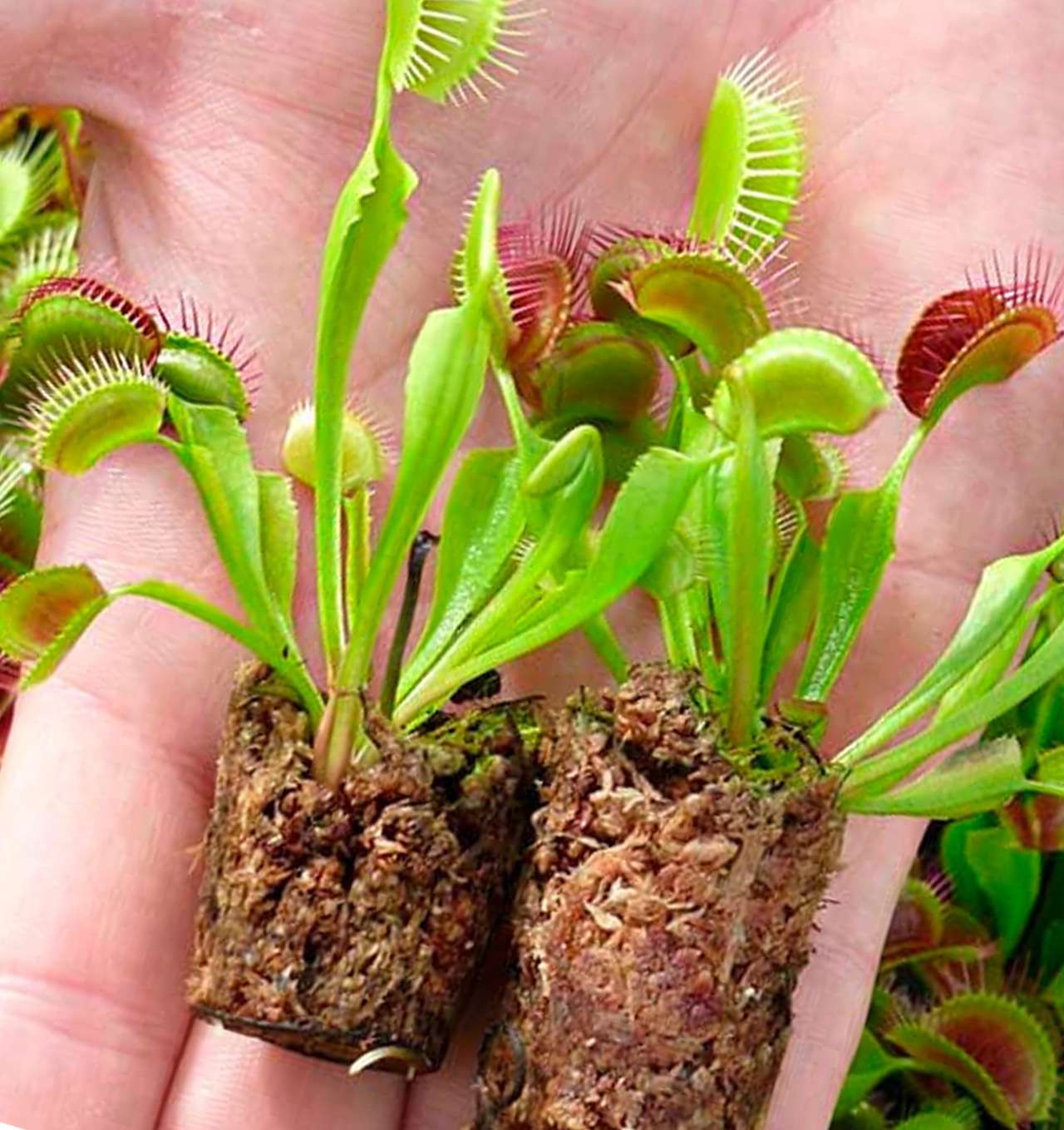
Once every three years, you can disturb the adult plant, separate a daughter bulb to get a new flytrap. To help the sprout take root better, it is created with greenhouse conditions and plenty of diffused light.
A new flytrap can also be obtained from the peduncle. A five-centimeter cut peduncle is planted to a depth of one centimeter in peat substrate. In a mini-greenhouse, with high humidity and regular ventilation, roots can appear in two months.
Diseases and pests
The domestic dionaea flower is a resistant plant with good immunity, and unwanted pests rarely visit it. It is necessary to periodically inspect the plant to prevent unpleasant situations. Sometimes aphids, spider mites, fungal mosquitoes, and mealybugs are found on the flytrap. If this misunderstanding occurs, immediately treat your pet with insecticides – Aktellik, Aktara, Fitoverm.
Problematic moments in growing Venus flytrap
- The leaves turn yellow, then dry out and fall off – the plant is watered irregularly with hard water.
- The plant is covered with brown spots – the flower is fed with mineral fertilizers.
- The leaf plates are covered with black plaque – this is sooty fungus.
The flytrap flower is an exotic and unique plant that amazes with its original habits, which are not characteristic of plants. This predatory culture will not only decorate your interior but also be an assistant in exterminating mosquitoes, flies, spiders, and other unwanted insects for you, but pleasant for the dionaea flytrap flower.
And each flower lover can decide for himself whether it is possible to keep a Venus flytrap in his house.
Write comments
Comments