



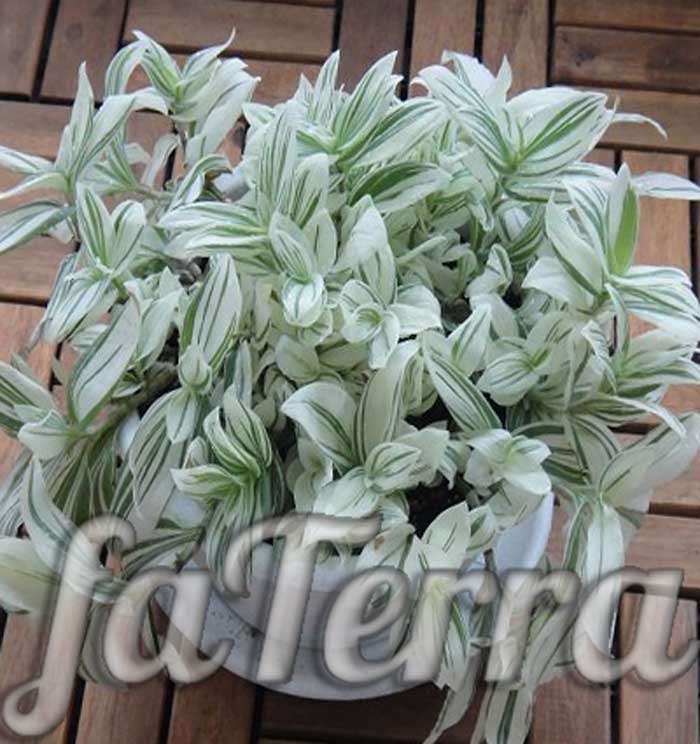
Latin name: (Tradescantia)
Category: herbaceous shrubs
Origin: Central and South America
Amazing Tradescantia – a favorite among flower lovers
Tradescantia is a genus that includes up to a hundred plants belonging to the Commelinaceae family.
These evergreen, herbaceous perennials are found in the humid regions of Central and South America. This is where the Tradescantia originates. These natural conditions allow the amazing plant to grow freely in the shade in vast, uninhabited areas.
The plant, Tradescantia, owes its name to the gardener of the English Royal Court of Charles I in the 17th century, John Tradescant. He was the first to discover this absolutely unpretentious flower.
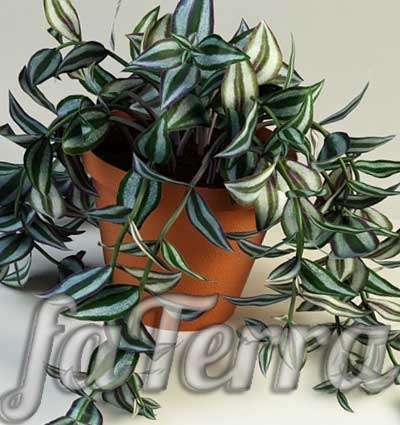
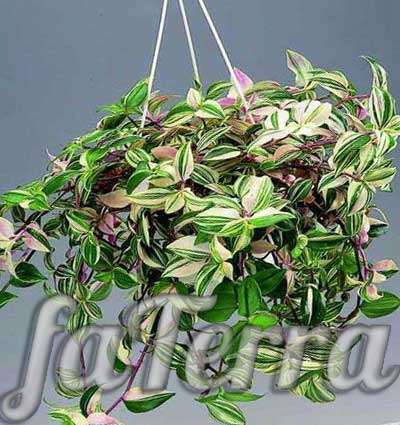
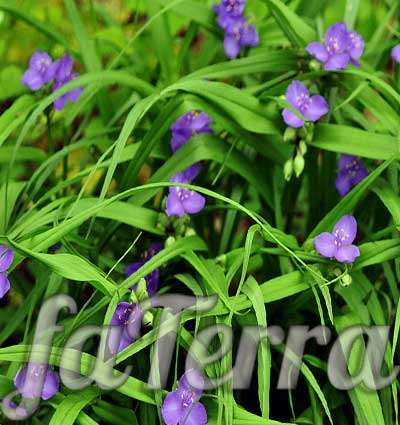
Let's briefly consider what Tradescantia looks like. Its special beauty and attractiveness come from the amazing leaves, which are located on long, straight stems with many branches. In different species, they are elliptical, ovoid, lanceolate, and alternate. The color palette of the plant is diverse. The leaves of the flower can be light green, dark, variegated, or green-purple. Numerous white stripes give the variegated varieties a particularly colorful and decorative appearance. The flowers of Tradescantia are white, pink, lilac, or purple and are located in greenish sepals. The flowering of Tradescantia lasts only a few days. The overall appearance of the flower resembles chlorophytum.
In our climate zone, beautiful Tradescantia is often found in gardens, grown outdoors, but it is more comfortable in a home environment. Indoor Tradescantia not only benefits the atmosphere of the home and the health of its inhabitants but also pleases with its charm and attractiveness. Indoor Tradescantia has a wide range of colors. It can be green, lilac, white, or pink. You can look at Tradescantia photos endlessly. From a huge number of varieties, you can choose a plant that you like, because caring for Tradescantia is not difficult at all.
Types of Tradescantia
Tradescantia albiflora
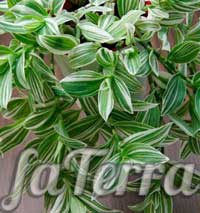 This is one of the most common varieties. Indoor Tradescantia has flexible stems covered with six-centimeter ovoid or oval leaves with pointed edges. Their smooth surface can be solid, variegated, or striped, depending on the variety.
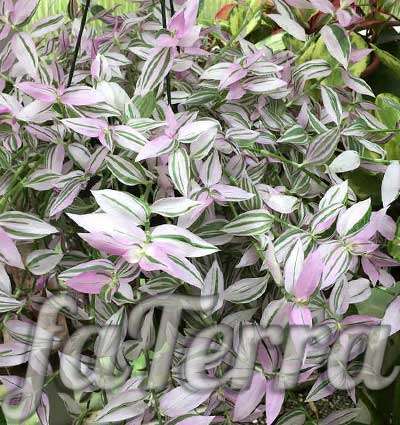
Striped white Tradescantia albiflora has many varieties:
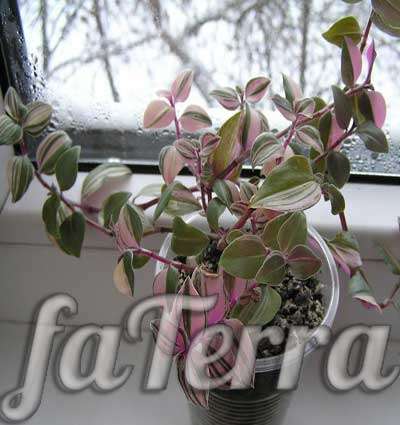
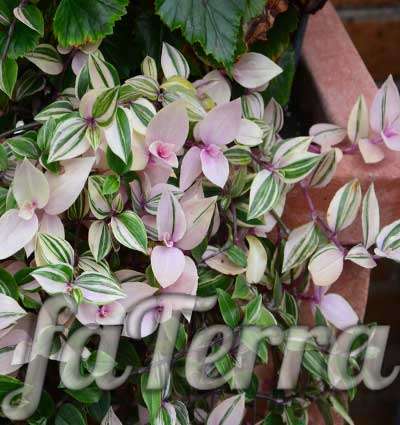
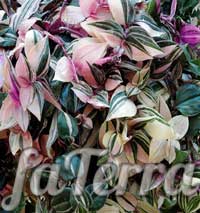 Tricolor – white, cream, and lilac-pink stripes on the leaves distinguish this variety from others;
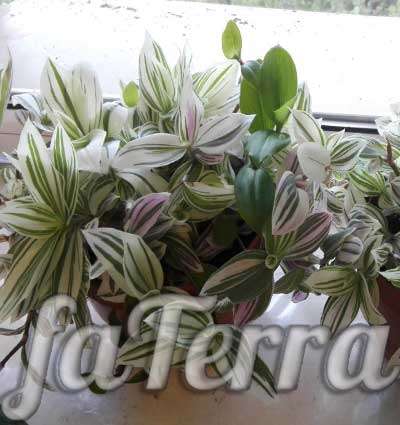
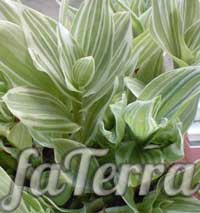 Albovittata – green leaves are covered with wide white stripes;
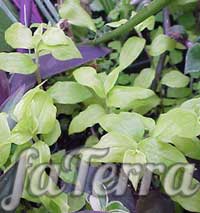 Aurea – has yellow leaves with green stripes;
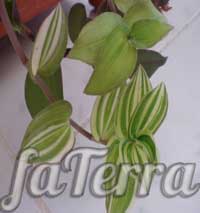 Aureovittata – the upper side of the leaves is decorated with longitudinal golden-yellow stripes.
The tops of the stems are periodically decorated with umbellate inflorescences of small white flowers.
Folk names have not bypassed the Tradescantia flower. You can hear "gossip" or "spiders".
Tradescantia virginiana
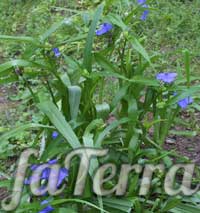 This is a frost-resistant herbaceous perennial that is an excellent decoration for gazebos and arches in gardens and parks. Garden Tradescantia has straight, branched stems that can grow up to sixty centimeters. On them, in two rows, are linear or lanceolate leaves that narrow towards the top. The color palette ranges from bright green to dark green tones with the addition of silvery shades. The bases of the leaf plates are covered with fine fluff. In warm weather, the Tradescantia flower is covered with a carpet of flowers of various shades, which delight the eye for two months.
It is important to remember that Tradescantia virginiana is a big fan of spraying.
Tradescantia Andersoniana
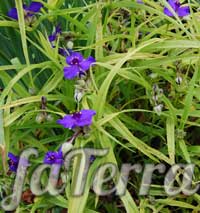 This combines a large number of hybrid varieties that were obtained by crossing Tradescantia virginiana with other species. Garden Tradescantia Andersoniana has a wide range of colorful shades of both leaves and flowers. Very decorative, beautifully flowering plants with green, purple, variegated, or yellow leaves and blue, pink, or lilac flowers can often be seen in parks and gardens.
Tradescantia fluminensis
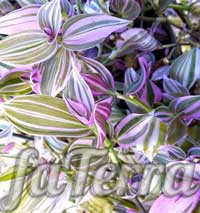 This is a Brazilian beauty, where, in the conditions of a tropical climate, it has spread beautifully near rivers, ponds, and lakes.
This is a common species of fast-growing Tradescantia with delicate purple stems covered with small, ovoid green leaves on short petioles. The reverse side of the leaf is almost red. Tradescantia fluminensis has small white or white-pink flowers.
If there is bright light and good preliminary preparation, Tradescantia fluminensis will feel great in an aquarium.
Tradescantia navicularis
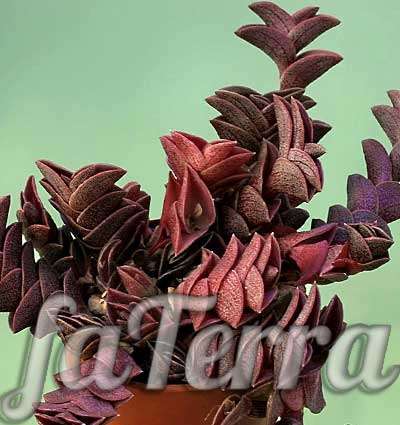
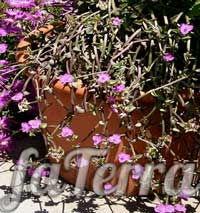 This is a unique representative of the succulent type of Tradescantia from the arid outskirts of Mexico.
Creeping, fleshy stems are covered with boat-shaped succulent leaves arranged in two rows, with fringed edges. They hold a lot of liquid, which helps the plant stay in dry, dense, heavy soil for longer.
This is a highly decorative ampelous Tradescantia navicularis, which can also be confidently called garden Tradescantia, which looks great in flowerbeds and park areas, in rock gardens, and stone hills. The flowers of the plant are red or pink.
Tradescantia sillamontana
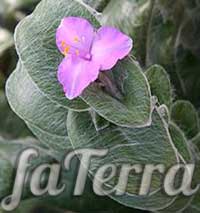 This is a succulent exotic with fleshy ovoid leaves with white soft fluff, which is an excellent protection from direct sunlight. On the straight stems, the whitish leaves are arranged in a spiral. During flowering, the tops of the stems are covered with solitary small lilac or pink flowers.
Tradescantia melkolistn
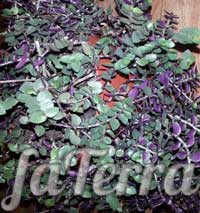 This is the smallest, moisture-loving, and very decorative type of indoor Tradescantia. A neat, fast-growing plant with a large number of five-millimeter ovoid green leaves. The outer side of the leaf has small spots. The flowers are white.
Tradescantia Reo, Tradescantia podvialchata, or Tradescantia raznotsvetnaya
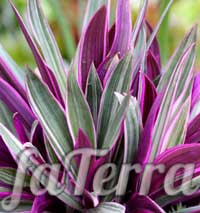 This is an exotic plant from the subtropics of the American continent. Its remarkable appearance and lush forms make it unique. The special beauty comes from the chic leaves, which are arranged horizontally on a fleshy, straight, forty-centimeter stem. The upper side is dark green with a touch of emerald, and the underside of the leaves is bright with purple and red colors. Unusual decorativeness is given by the orange-red hairs on the leaves. With good care, the flowering can last constantly.
Tradescantia Zebrina, or Tradescantia striped
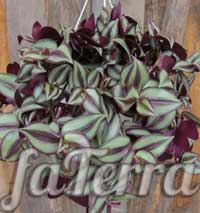 This is a very original and effective striped plant with elongated, fleshy, dark green leaves. Parallel silvery stripes run along the edges of the leaves. The lower part of the leaf is purple-red. White, lilac, or red-pink flowers make the plant even more decorative. To obtain a bright color, Tradescantia Zebrina needs a lot of light and regular, high-quality watering.
Tradescantia care in a home environment
By providing comfortable conditions for keeping indoor Tradescantia, we get an ideal air purifier and neutralizer of electromagnetic waves.
Choosing a place and comfortable temperature
Unpretentious indoor Tradescantia will not mind intense diffused light.
Bright sunlight can burn the delicate leaves of Tradescantia.
The temperature range of 10°C to 25°C will be acceptable for your spider plant.
Humidity and watering
Unpretentious Tradescantia wants constantly moist soil and will gratefully accept regular spraying of the leaves. In the cool period, water moderately.
Important! Stagnant water in the pot is undesirable.
Soil and feeding
- Indoor Tradescantia is not very demanding on the composition of the substrate.
- Garden soil with compost, sand, or expanded clay, peat – take all the ingredients in equal parts.
- We compensate for the lack of nutrition with liquid fertilizers in moderate doses.
Remember! Fertilizers are applied to moist soil to avoid harming the roots of the plant.
Reproduction and transplanting of Tradescantia
It is easy to propagate Tradescantia. Take eight-centimeter apical or lateral cuttings and plant them in a sandy-peat mixture. They root easily in water. You can also get a young plant by dividing the bush, rooting cuttings, or sowing seeds.
How to transplant Tradescantia? Choose a wide pot for Tradescantia, put a layer of drainage, nutritious soil, and plant the young shoots. Pinch off the long shoots in advance.
Finish the transplant with good watering.
Diseases of Tradescantia
If the rules of care are not followed, indoor Tradescantia can attract unwanted guests – aphids, spider mites, and scale insects. When pests are detected, we use insecticides.
Difficulties in growing
- Why do the leaves of Tradescantia dry out? It is necessary to increase the humidity of the air in the room.
- The shoots are too stretched – the plant does not have enough light.
- Indoor Tradescantia grows very slowly – it needs feeding.
- The colored leaves turn green, and there is no flowering – too much organic fertilizer or not enough light for the plant.
- The stems become dark and soft – this is due to waterlogging. We cut and root.
There is no doubt that indoor Tradescantia will be among your favorite flowers and will definitely surprise you with its unique appearance and modesty. And the question: can you keep indoor Tradescantia at home? The answer will be yes.
There are other indoor flowers, photos, and names of which you can find in the catalog of indoor flowers.
Write comments
Comments