



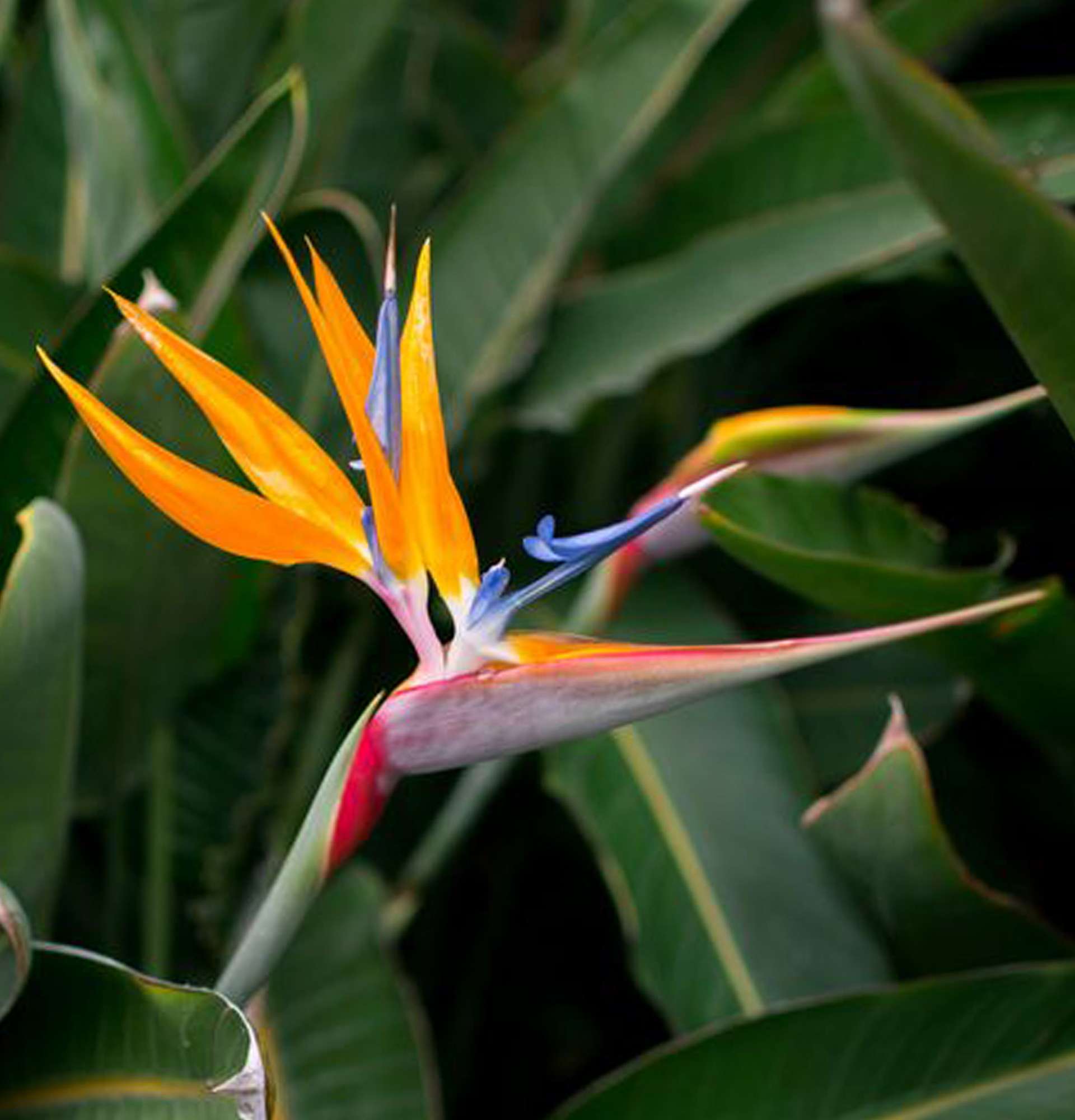
Latin name: (Strelitzia)
Category: perennial herbaceous plants
Origin: South Africa, Madagascar
Strelitzia – an exclusive tropical paradise bird exotic
Strelitzia, also known as strelitzia, is a small genus that includes five species of unique perennial evergreen plants in the Strelitziaceae family.
The area of distribution and origin of this tropical exotic plant is South Africa and Madagascar. The paradise bird has adapted well to the tropics and subtropics of America.
The prototype for the genus name of the flower was the wife of King George III, Queen of Great Britain and Ireland, Charlotte-Sophia of Mecklenburg-Strelitz. For her, sailors who explored and discovered new geographical areas of Africa brought new amazing plants from these territories. She appeared first in the Royal Botanic Gardens, Kew. Among them was the Strelitzia.
One of the varieties of this beautiful unique wonder was named royal strelitzia, and the next interesting variety was named Strelitzia nicolai in honor of the all-Russian emperor Nicholas I. This unusual perennial herbaceous plant has popular names – paradise bird, crane flower.
The evergreen perennial paradise bird in its wild natural environment reaches a height of ten meters, but most often it is a bush up to three and a half meters high.
The strelitzia flower has a root in the form of a trunk, which penetrates deep into the soil.
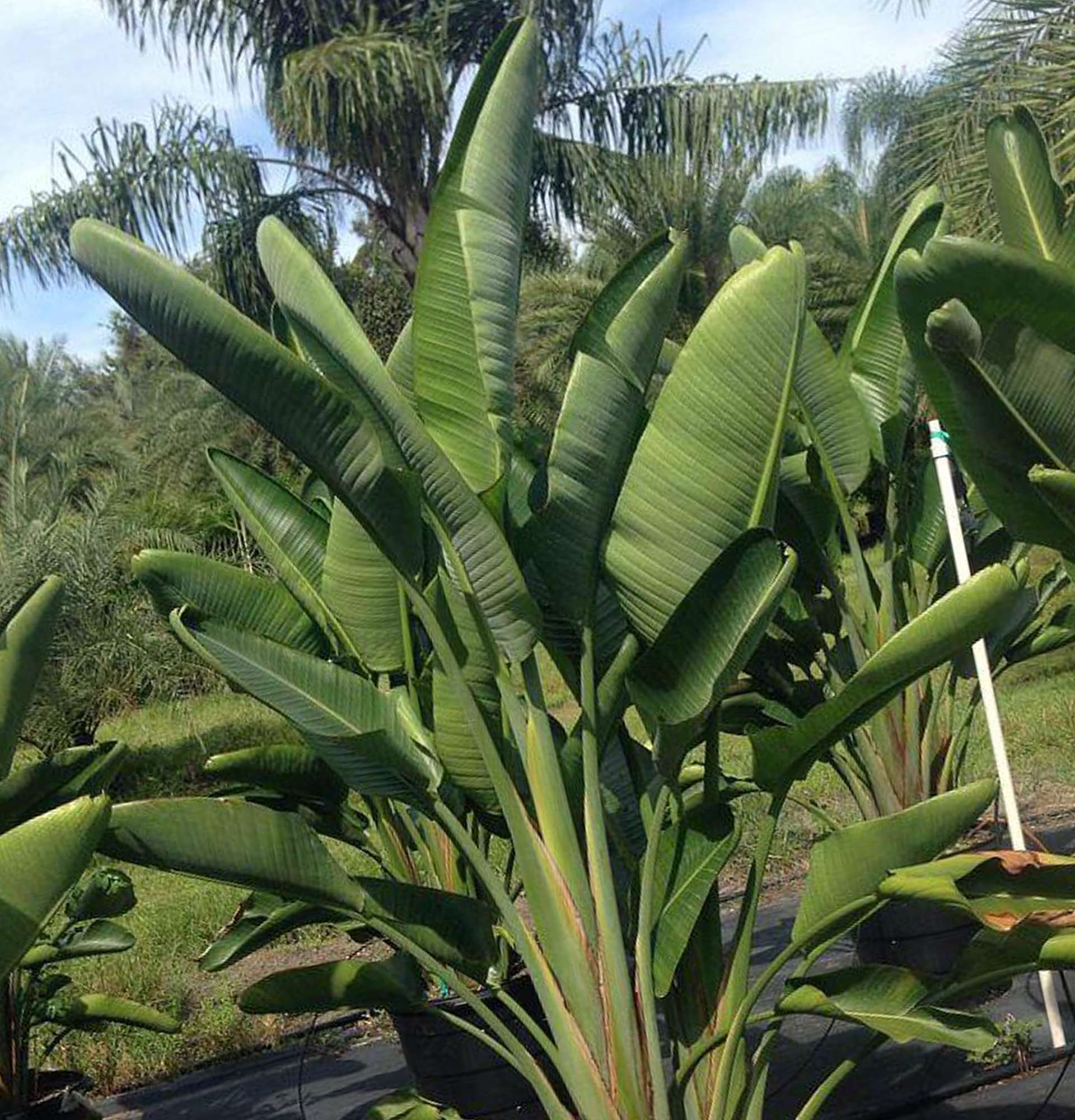
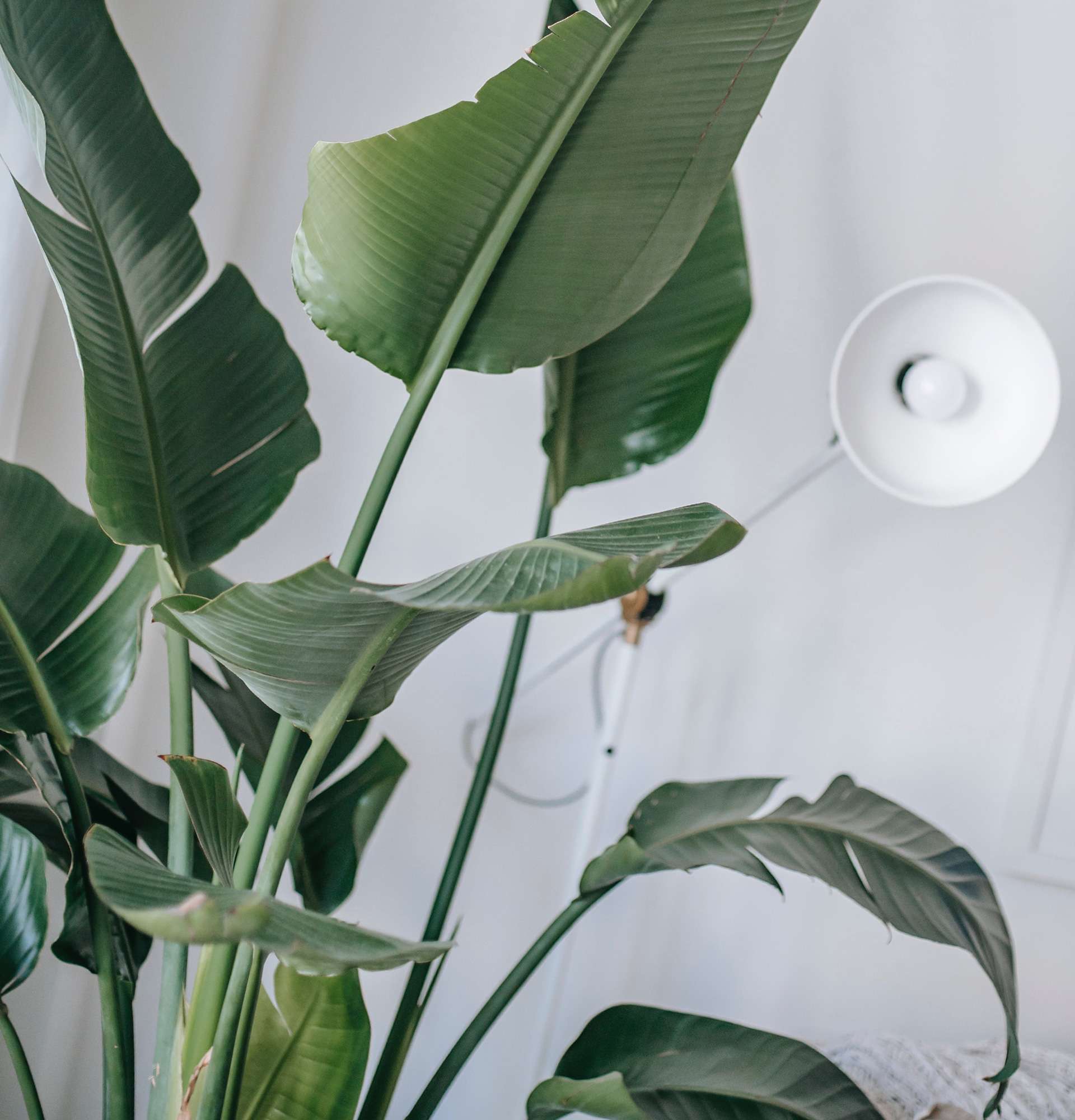
Strelitzia has large, oval leaves. Very beautiful green, leathery leaves with a bluish-blue tint have an oval structure and are located on shoots from fifty to ninety centimeters high. The length of these beauties can vary from thirty centimeters to two meters, with a width of ten to eighty centimeters.
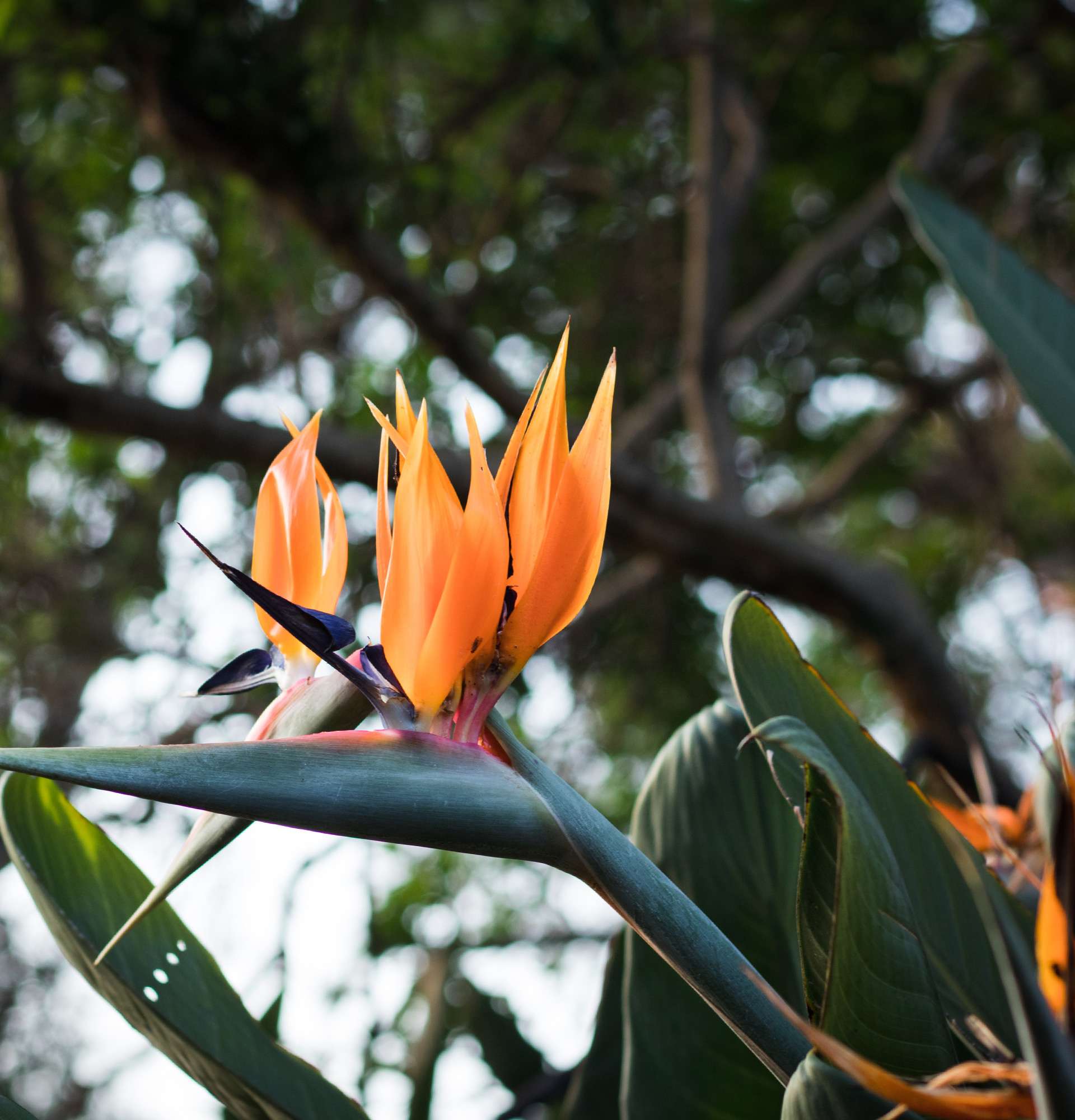
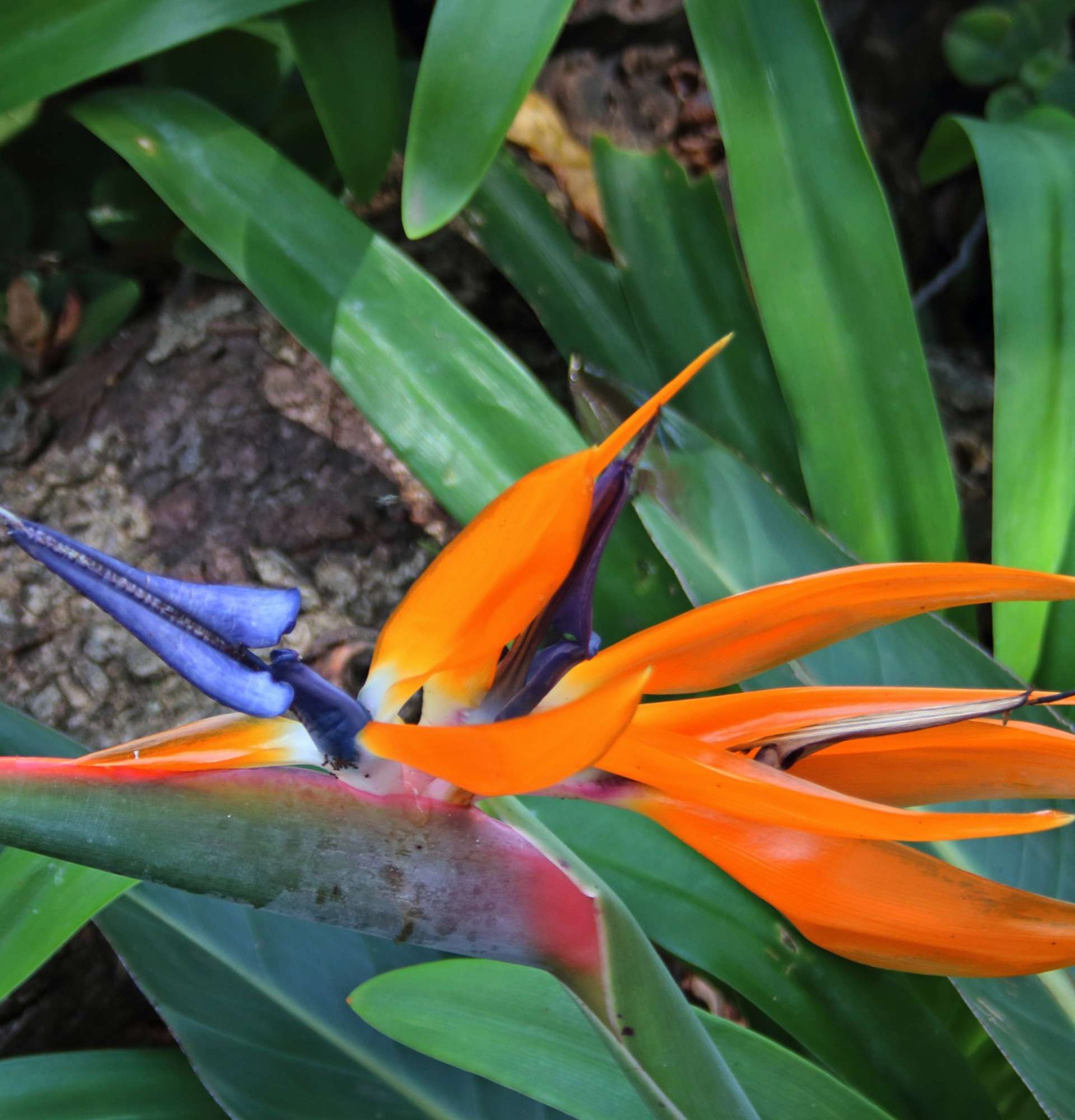
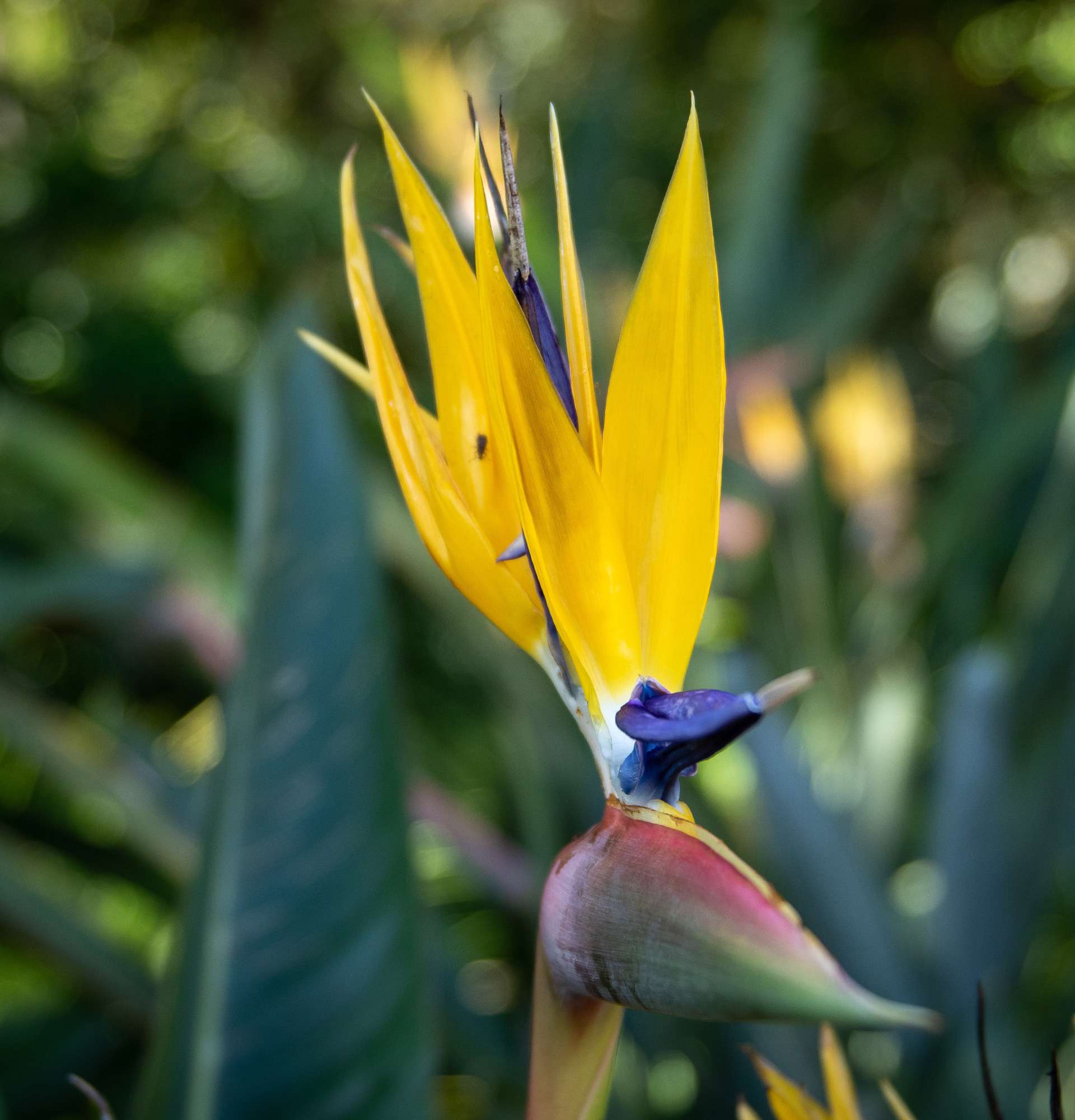
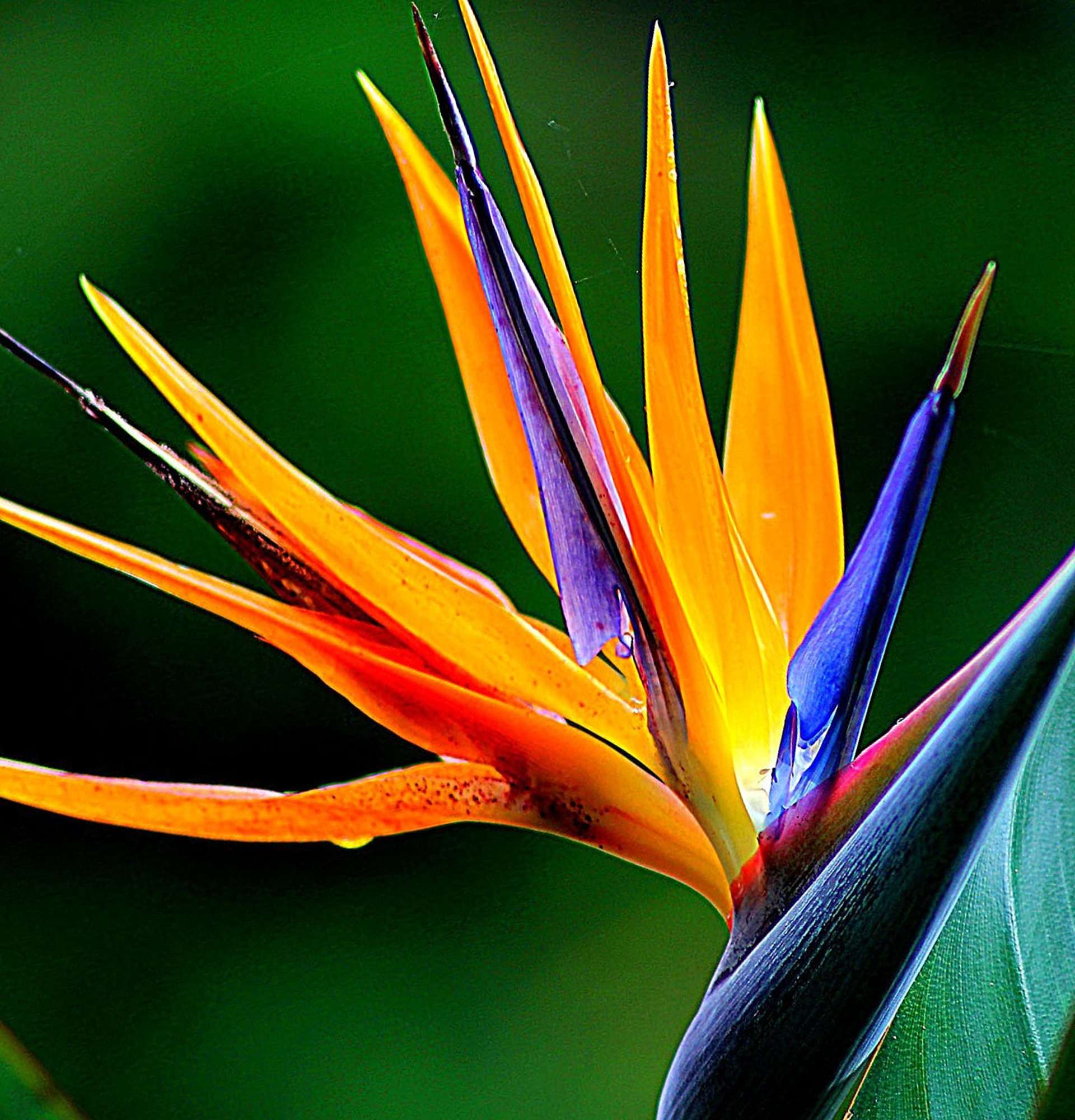
Strelitzia paradise bird is a beautiful exotic foreigner that delights the eye with its exquisite, whimsical, bird-crest-like flowers for six months. The long peduncle raises a horizontally arranged inflorescence, created by orange or lilac flowers, which reach a diameter of ten to twenty centimeters. One paradise bird plant can have up to six peduncles, each of which can have five to seven spectacular flowers.
The indoor paradise bird flower, with good and diligent care, will reward its owners by decorating its bush with abundant unique flowers repeatedly during the year. These unpretentious indoor plants will perfectly decorate any interior. They look great in halls, offices, and rooms. The beauty of flower arrangements with the presence of strelitzia is undeniable. For any festive occasion, a bouquet of paradise bird will be a unique and unforgettable wonder.
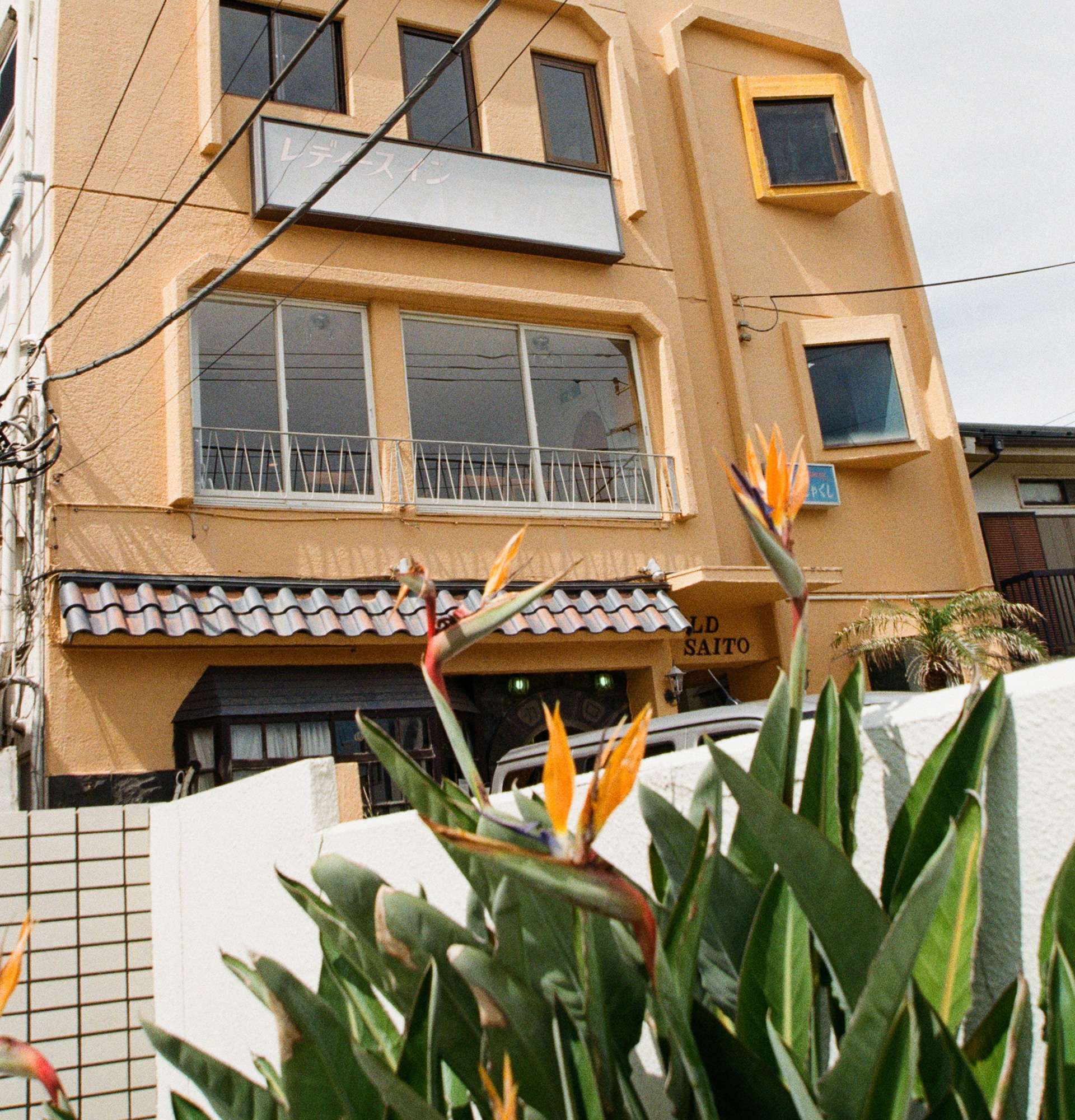
In areas with warm climates, the crane flower has long been established as an outdoor planting in urban landscapes. Parks, squares, and recreation areas are transformed by the presence of this beautiful and unique plant. It looks beautiful in the form of a container plant in greenhouses, greenhouses, and atriums. Strelitzia paradise bird loves regular movement during the summer from indoors to the outdoors.
The amazing crane flower is not only able to delight the eye with its unique beauty, but also bring practical benefits. Despite its toxicity, this plant has medicinal properties. Its phytotherapeutic qualities are known. The plant can relieve itching or even relieve inflammation in swollen glands and fight against venereal infections.
The cosmetic industry widely uses the stems, peel, and fruits of strelitzia. From these ingredients of the plant, an extract is prepared, which is used by cosmetologists in the manufacture of preparations, mainly masks, creams for rejuvenation, and serums. Their regular use can remove dark circles under the eyes, improve the color structure of human skin, and even fight against fine wrinkles.
The amazing paradise bird plant is considered a symbol of victory, courage, determination, and originality. This home favorite helps its hardworking owners, especially men, to become strong, successful, and brave. The energy potential of the tropical strelitzia flower can help a person become more creative. With the presence of a paradise bird in the house, residents are less likely to face conflict situations and are more likely to compromise in difficult situations. This is worth noting for families with incompatible characters, which leads to quarrels.
The most common place for strelitzia is Los Angeles, which helped it become its symbol with colorful images everywhere.
Strelitzia species
Royal Strelitzia (Strelitzia reginae)
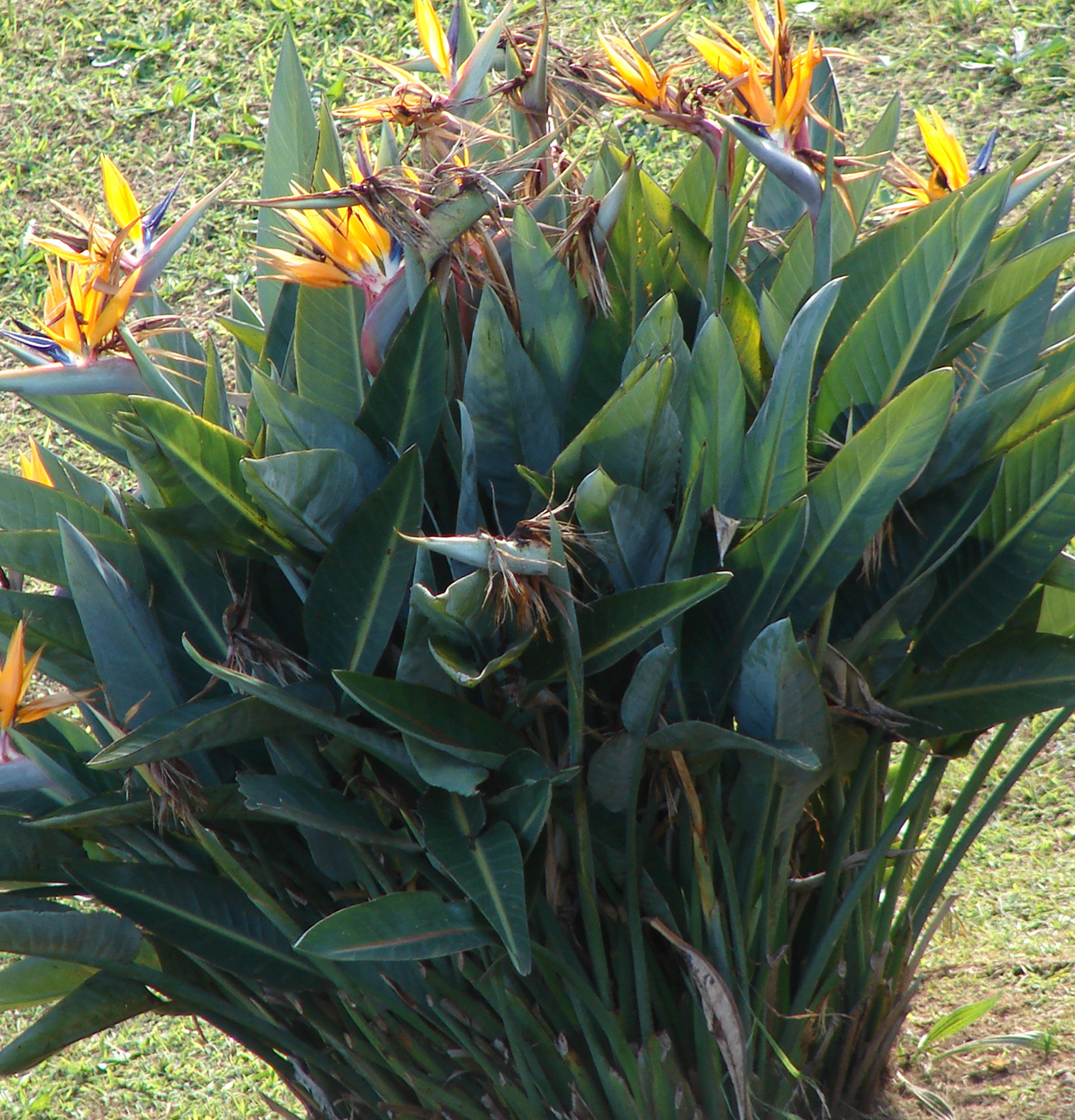 The native territories of the popular flower are the Cape Province of South Africa with its mountainous forest areas. In suitable natural conditions, the Regina strelitzia is decorated with amazing shrubs that reach a height of up to two meters. The culture has dark green, oval-elongated, slightly wavy leaf plates that form original rosettes. The length of the leaf can reach forty-five centimeters, the width is twenty centimeters, and this beauty rises on almost meter-long petioles.
Twice a year, the strelitzia can delight the eye with interesting flowers, which are presented on long peduncles with a green bract, decorated with red veins. The fifteen-centimeter petals are dark blue on the inside and orange on the outside. Royal strelitzia care in the home is not difficult.
Strelitzia nicolai
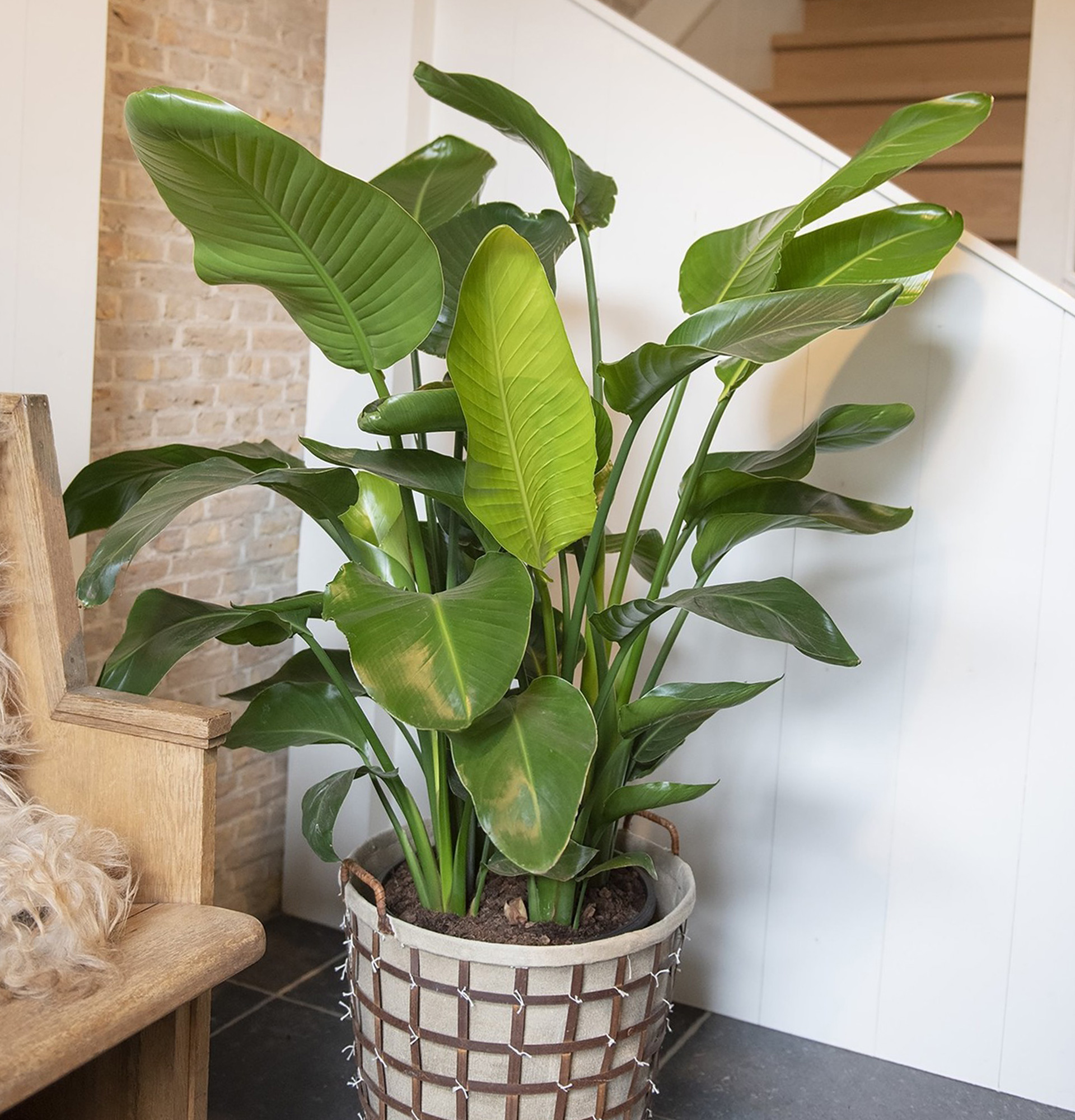 The tall Strelitzia nicolai, which received its name in honor of the Russian monarch, has direct family ties with the royal strelitzia, but there are also distinctive features. How does Regina strelitzia differ from nicolai? The colors of the petals are completely different. The woody Strelitzia nicolai develops peduncles before flowering, on which there are four beak-like bracts of reddish-green color. The length of the very original flower petals reaches seventeen centimeters, the inside is blue, and the outside is white.
The favorite places for growing this wonder, which reaches a height of twelve meters, are tropical forests and ravines in mountainous areas, more than three hundred meters above sea level.
Strelitzia nicolai care in the home is not difficult, but this tall, spectacular plant needs large and high rooms. The best places for the flower are greenhouses. Strelitzia nicolai in the dining room, a large hall, or office will look very beautiful. It is not difficult to get a new plant. Strelitzia nicolai can be propagated by seeds, lateral shoots, or parts of adult seven-year-old bushes.
Strelitzia caudata
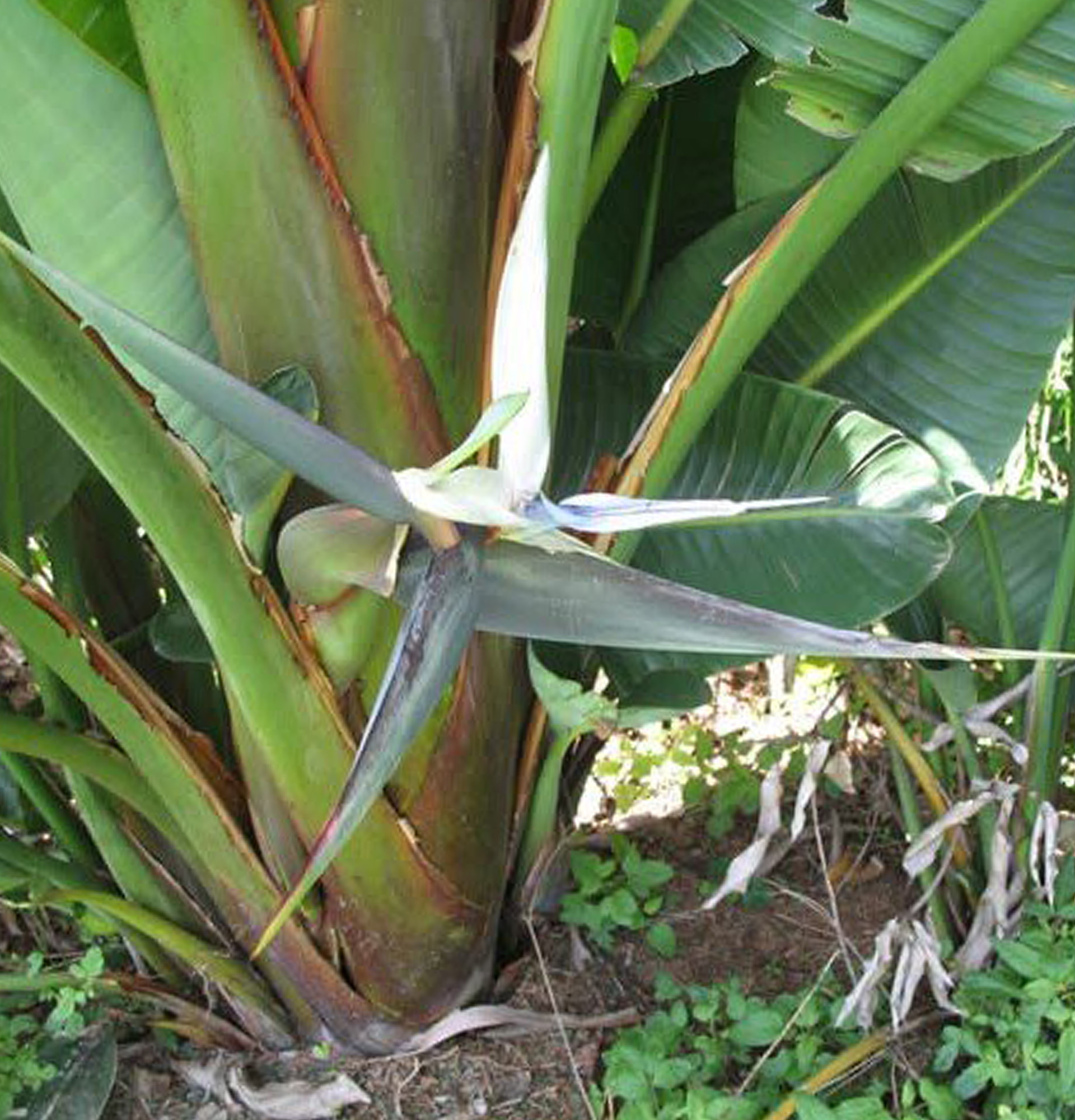 The mountain strelitzia is a very rare species that lives only in South Africa and is called the "desert banana". The plant is tree-like and grows up to ten meters high. The unique feature of the mountain strelitzia is the two-row arrangement of giant, elongated leaf plates. The voluminous white flowers with red pointed bracts, which reach a length of forty-five centimeters, resemble a boat. The inside of the flower is blue.
Strelitzia juncea
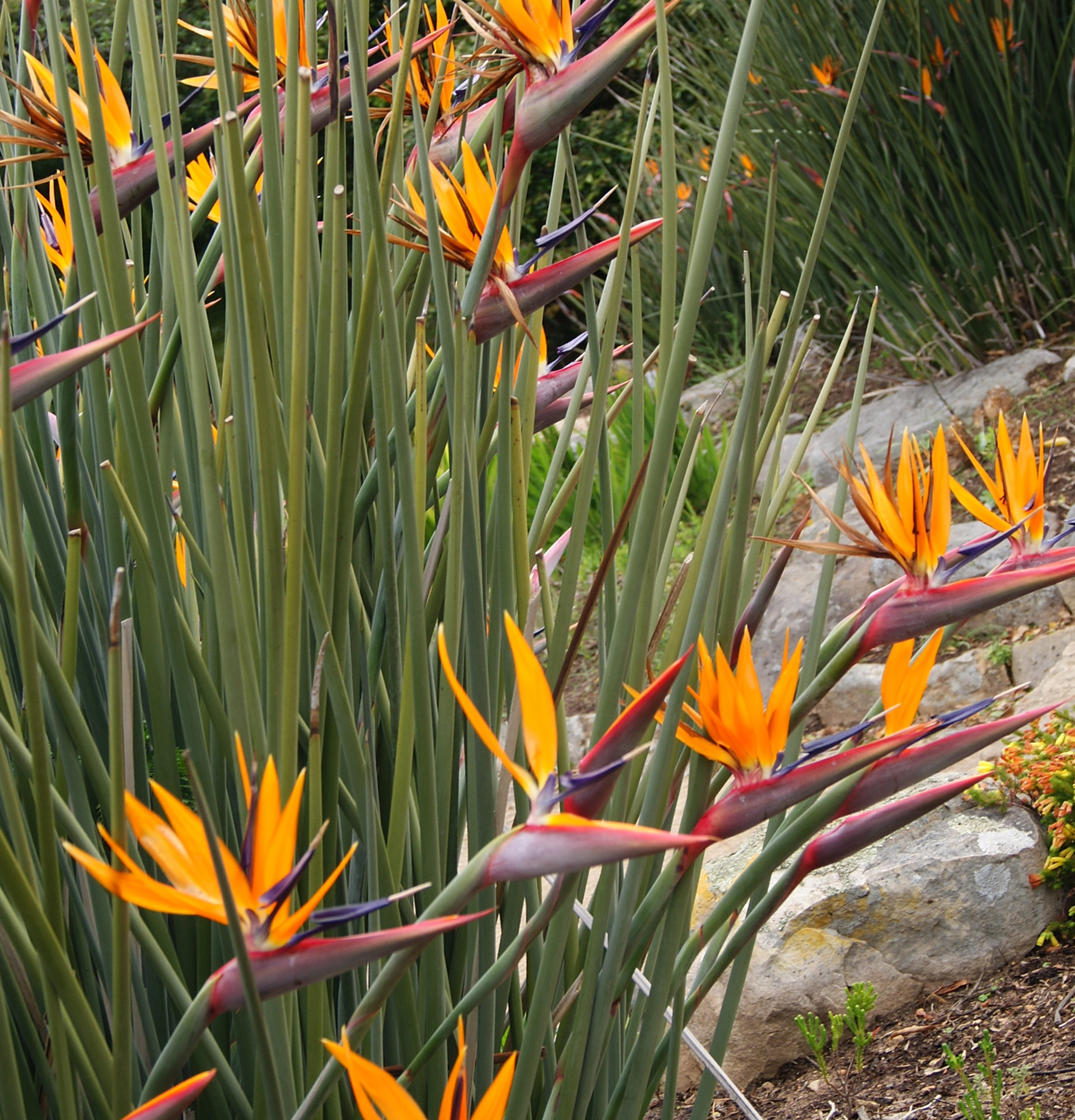 The habitat of this unpretentious beauty is the southern part of South Africa. It adapts well to cold and drought. This variety of strelitzia is similar to the royal strelitzia. It differs in the shape of the leaf plates. Strelitzia juncea has large, prickly, greenish-blue leaves that resemble needles and resemble reeds. They form a fan-shaped rosette. The culture grows slowly and has bright blue-orange flowers.
Strelitzia alba
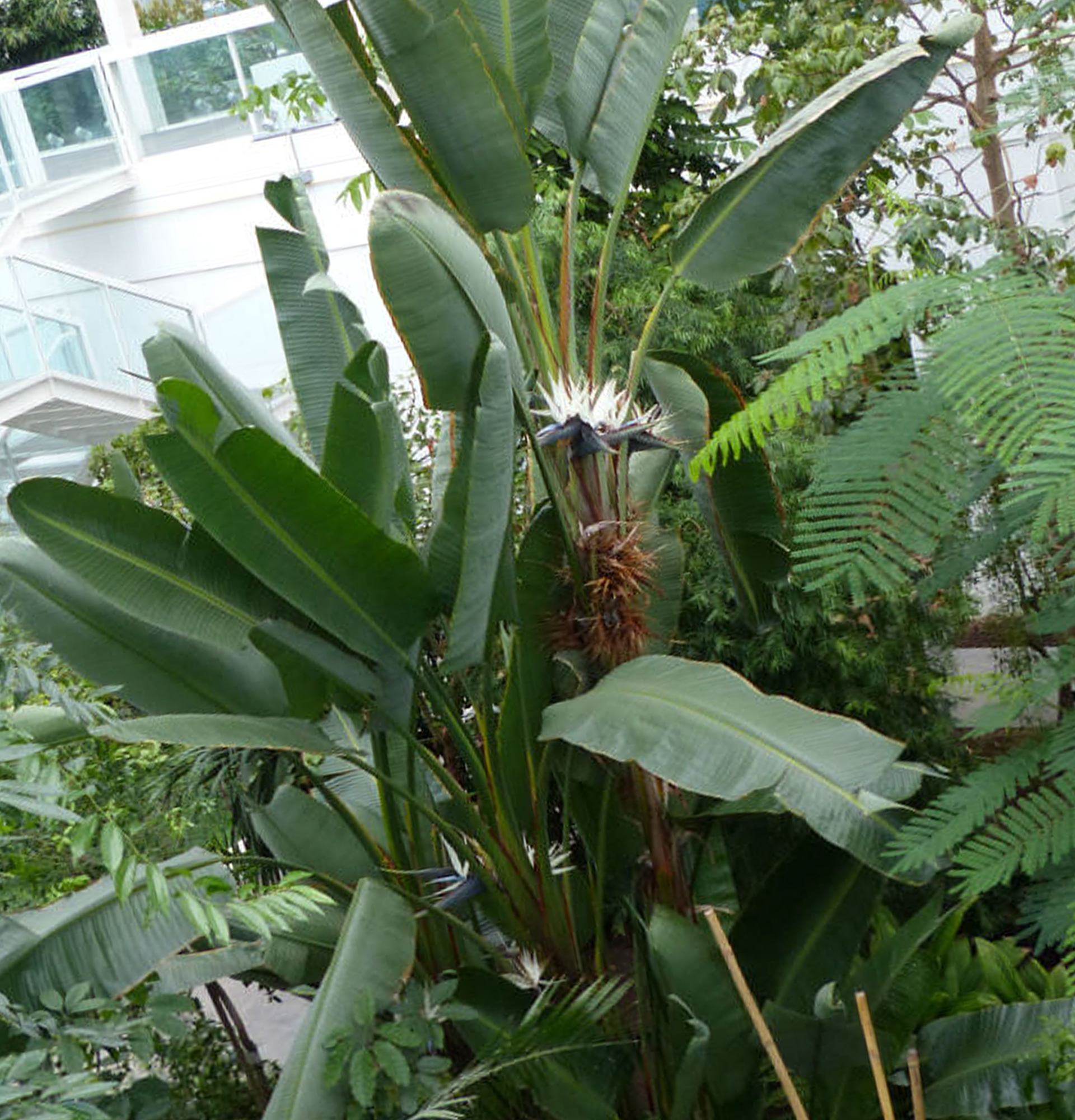 The native land of this species can be confidently called the Cape Province of South Africa. The culture has a tree-like trunk. Oval, heart-shaped, shiny, light green leaves reach a meter in length. The width of the leaves can reach fifty centimeters. White flowers are located on peduncles with two bracts and a purple bract. It will feel good in large halls, greenhouses, and in the home, provided there are spacious rooms. Strelitzia alba delights the surroundings with its flowering from January and until the beginning of spring.
Strelitzia care in the home
The paradise bird flower does not have special requirements for its cultivation. To get a beautiful seedling, it is necessary to fulfill all its needs and have knowledge of proper care. Then the bird flowers will look beautiful not only in a pot but also in a cut state in the form of a bright bouquet, which retains its attractiveness for thirty days.
Location and temperature regime
Light-loving indoor flowers of strelitzia need bright, diffused light. The most suitable places for the favorite pet will be the east and west-facing windowsills.
It is necessary to avoid direct sunlight, especially at noon.
Sufficient lighting is directly proportional to the flowering of strelitzia. In the warm season, the indoor plant will be grateful for moving it to the balcony, loggia, or garden for fresh air.
Protect the plant from drafts.
The temperature regime is also important for strelitzia. The tropical culture loves greenhouse conditions. In summer, the ideal indicators for the actively growing flower will be 22-27°C. The rest period of the paradise bird flower falls in the winter season, and during this period, it needs coolness with a temperature range of 14 to 16°C. The main thing is that during this period, the strelitzia should receive bright lighting.
Air humidity and watering
The tropical paradise bird can adapt in indoor conditions to both normal and high air humidity. In hot weather, the leaves require wiping or spraying with warm, settled water. In the warm season, strelitzia will not refuse a warm shower for hygiene purposes.
Abundant watering and always moist soil will be a comfortable attribute when growing indoor strelitzia.
Do not allow stagnant water in the pot. This will harm the roots and the entire indoor plant.
In summer, a three-day or two-day watering interval will be sufficient for the indoor paradise bird. Approximate winter watering is no more than three times a month with regular monitoring of the soil, without allowing it to dry out more than one centimeter deep. With the onset of spring, the strelitzia is watered more intensively.
Soil and its feeding
Ideally, the substrate for strelitzia should be fertile, loose, and light. Such a mixture can be obtained by taking the following components in equal doses: turf and leaf soil, peat, or humus, coarse sand, or perlite. In flower shops, you can buy ready-made soil mixture intended for indoor plants and flowers.
During the period of active growth and flowering, strelitzia should be pampered with alternating organic and mineral fertilizers every ten days. After the end of flowering, the resting paradise bird is not fertilized for about three months. First, remove all dry peduncles and provide the strelitzia with a light area with a more cool temperature regime. This will help the plant to gain strength and delight the owners with lush and exotic flowering in the new season.
Strelitzia transplant
Annual spring transplanting is very necessary for young strelitzias to improve growth and prepare for amazing flowering, which the four-year-old plant will delight. An adult crane flower can be transplanted every three years. It is desirable to purchase a high, spacious pot for the comfortable placement of long, spiral, thick roots.
The bottom should be filled with a drainage layer of expanded clay, which perfectly passes and removes excess moisture from the pot.
Then a little fresh soil. And for the safety of the delicate roots, carefully transfer the plant from the old pot to the new one. Add fresh soil and compact. If necessary, a large plant can be divided into several specimens.
Strelitzia propagation
It is possible to propagate the paradise bird by seeds, by dividing the bush, or by rooted lateral shoots.
It is easy to get a young crane flower by sowing freshly harvested seeds. First, they should be kept in warm water for a day. In the prepared soil, the seeds are laid out, slightly pressing them. It is necessary to create greenhouse conditions with a temperature of up to 24°C, the light should be diffused. Seedlings will appear in two or three months. As they grow, they are transplanted into separate pots in a permanent place.
Strelitzia from seeds will delight with wonderful flowering in five years.
An adult indoor plant after the end of the flowering process can be propagated by dividing the rhizome into parts with apical shoots.
How does strelitzia bloom?
The main attribute of a flowering crane flower is its five or six years of age, to which it must reach with good care: regular watering, bright lighting, and the necessary high-quality winter rest at a temperature of 15°C and preferably a cool room in the summer. In this case, strelitzia will bloom not only in spring but also be a beautiful flowering New Year's gift. The answer to the question: why does strelitzia not bloom? You can get it if you do not follow these simple care measures for your indoor pet.
Pests and diseases
The hardy and resistant to pests indoor strelitzia, if the conditions of keeping are violated, can be visited by unwanted guests in the form of spider mites, scale insects, or mealybugs. When pests are detected, immediately treat your pet with insecticides: Aktara, Aktellik, acaricides.
Problems that arise during cultivation
- Strelitzia leaves turn yellow – it is necessary to feed the plant with fertilizers, increase the temperature of the environment, and improve the lighting. Monitor the watering regime.
- Slow growth of the paradise bird indicates that it is necessary to change the cramped pot, transplanting the plant into a more spacious one.
- Strelitzia leaves curl – the soil is too wet. The answer to the question: why does strelitzia curl its leaves? There is another assumption. The root system is too pressed against the bottom of the pot. The plant needs an urgent transplant.
Remember! Before flowering, the strelitzia should not be moved from its location. It will shed its flowers.
Drooping leaves in winter – the plant is cold.
Is strelitzia poisonous? The question is very interesting and is viewed differently by different sources. A slightly toxic plant has a conditionally poisonous juice, and its flowers should not be eaten. Therefore, children and pets should not come into contact with the plant.
By following the care instructions for the unpretentious indoor plant, you will improve the interior of your home, have a real gem of floristry, and enjoy its beauty.
Write comments
Comments