



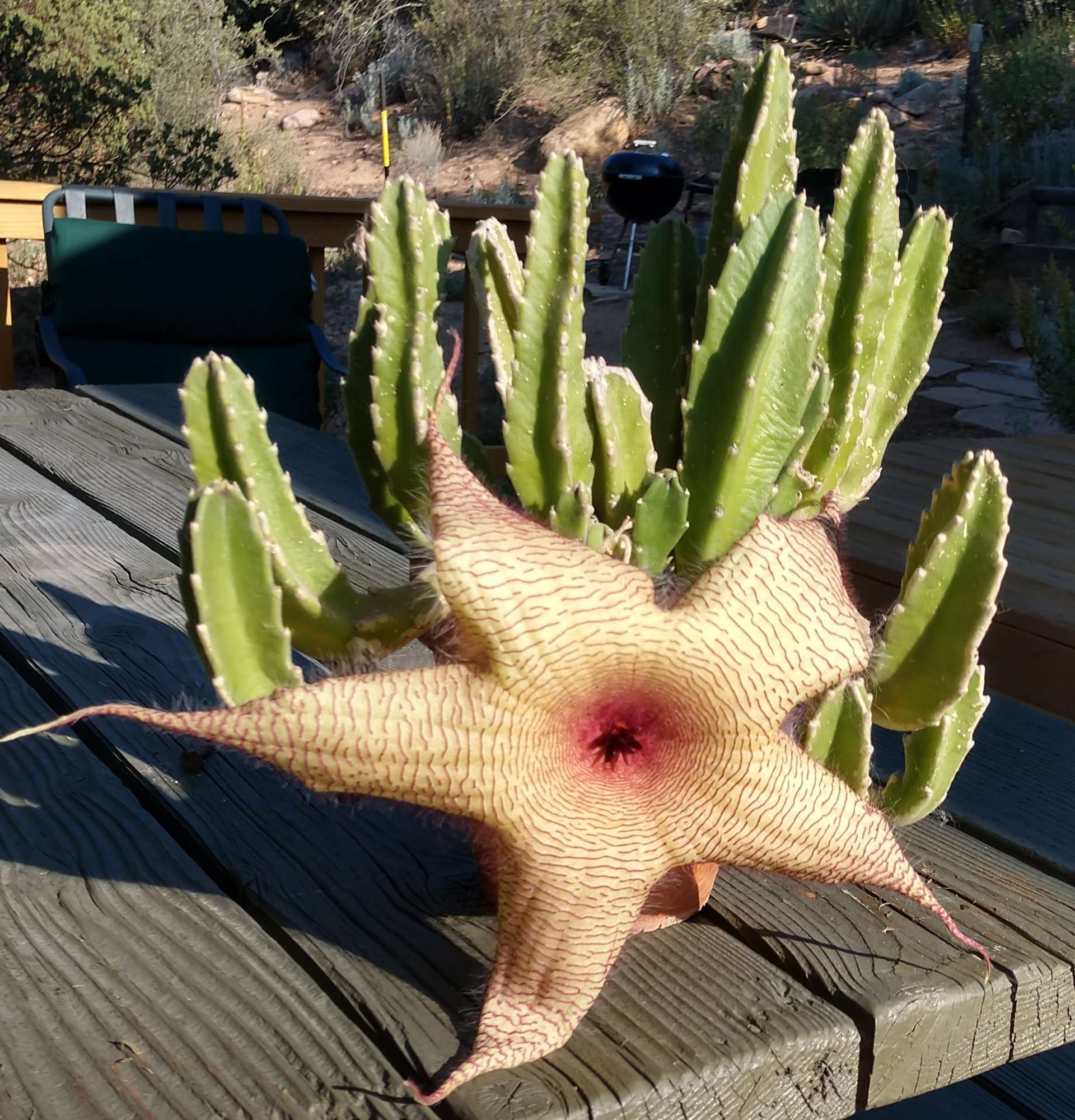
Latin name: (Stapelia)
Category: perennial succulent plants
Origin: Eastern and Southern Africa
Graceful and temperamental, beautiful Stapelia
Stapelia is a separate genus, comprising hundreds of succulent perennials that do not require special care, and it occupies a prominent place in the family Apocynaceae.
The native habitat of these succulents is the African continent, its southern and southwestern part. In its natural environment, this amazing plant prefers forest-covered mountain slopes and areas near water bodies or near trees.
Stapelia owes its name to the prominent Dutch physician of the seventeenth century, Van Stapel.
The well-known relative can be considered hoya.
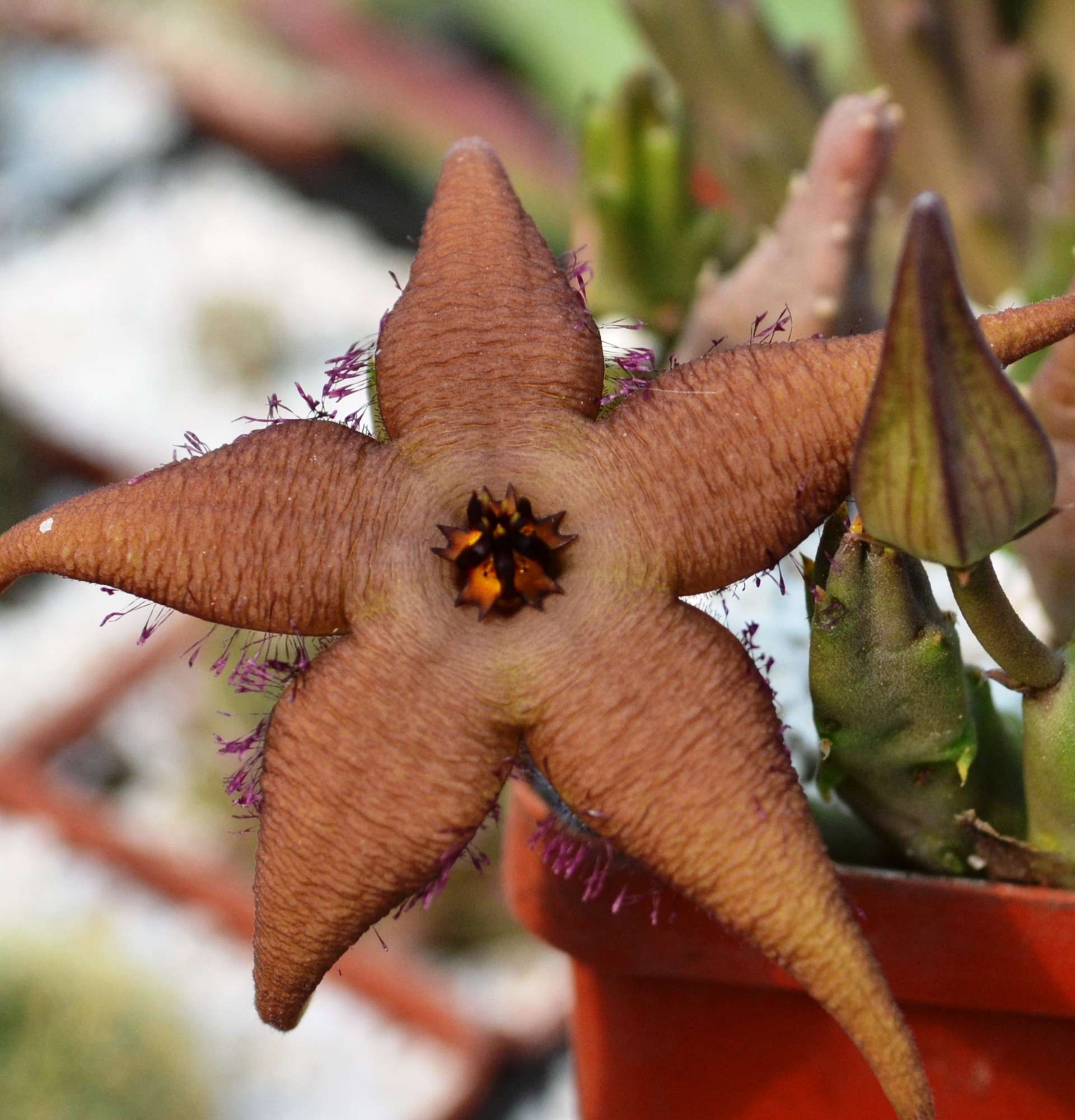
The unpleasant and repulsive aroma of the star-shaped flowers, which resembles the smell of decay, is a characteristic feature of this plant and helps it survive in its natural environment. Many flies are attracted to these aromatic scents and pollinate the stapelia. Perhaps the striking beauty and unpleasant smell of this unpretentious plant have long made it very popular in the wonderful world of flower lovers. Even Goethe, in his statements about the unusual flower, called this miracle "the most beautiful - the most terrible flowers."
Depending on the growing conditions, the unique Stapelia cactus can grow from ten centimeters to half a meter in height.
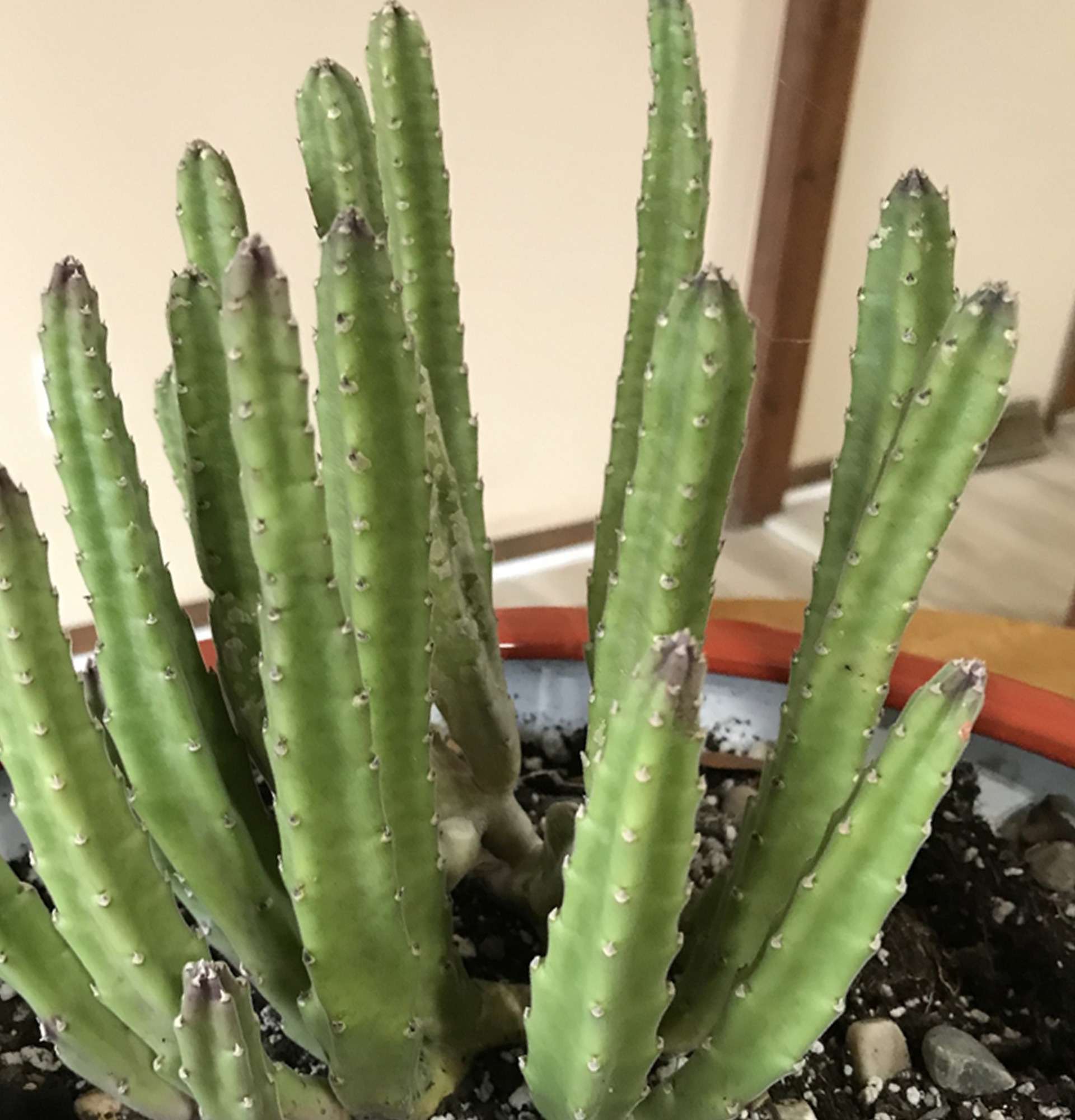
It is decorated with a large number of original stems in the form of juicy quadrilaterals that branch out from the roots. The shades of the color palette depend on the presence of bright sunlight. A beautiful green color can change to bluish or purple-violet. The faces of the stapelia are bordered by soft, prominent teeth, due to which the plant acquired the name "stapelia cactus." The beautiful stapelia does not have leaves.
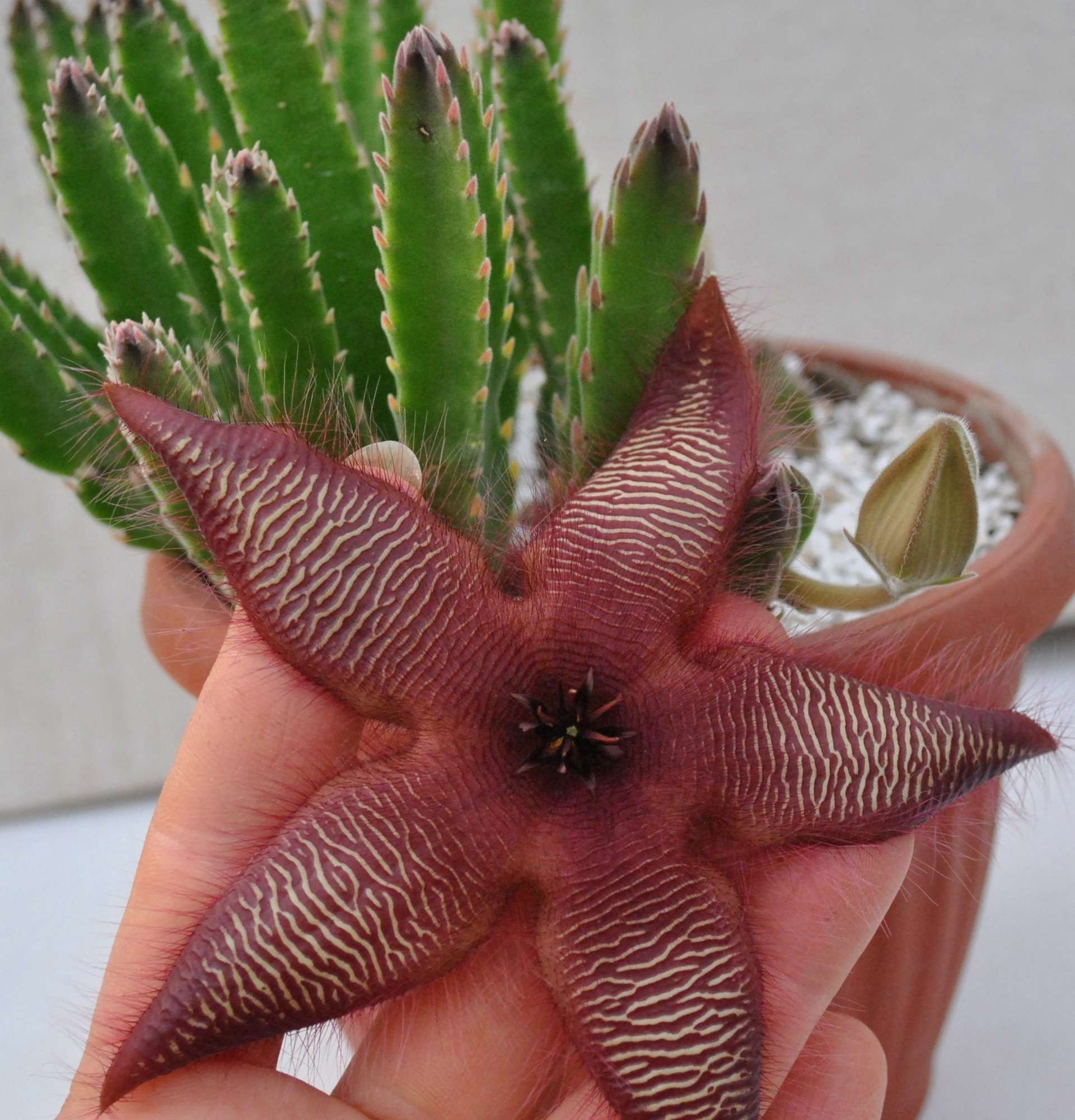
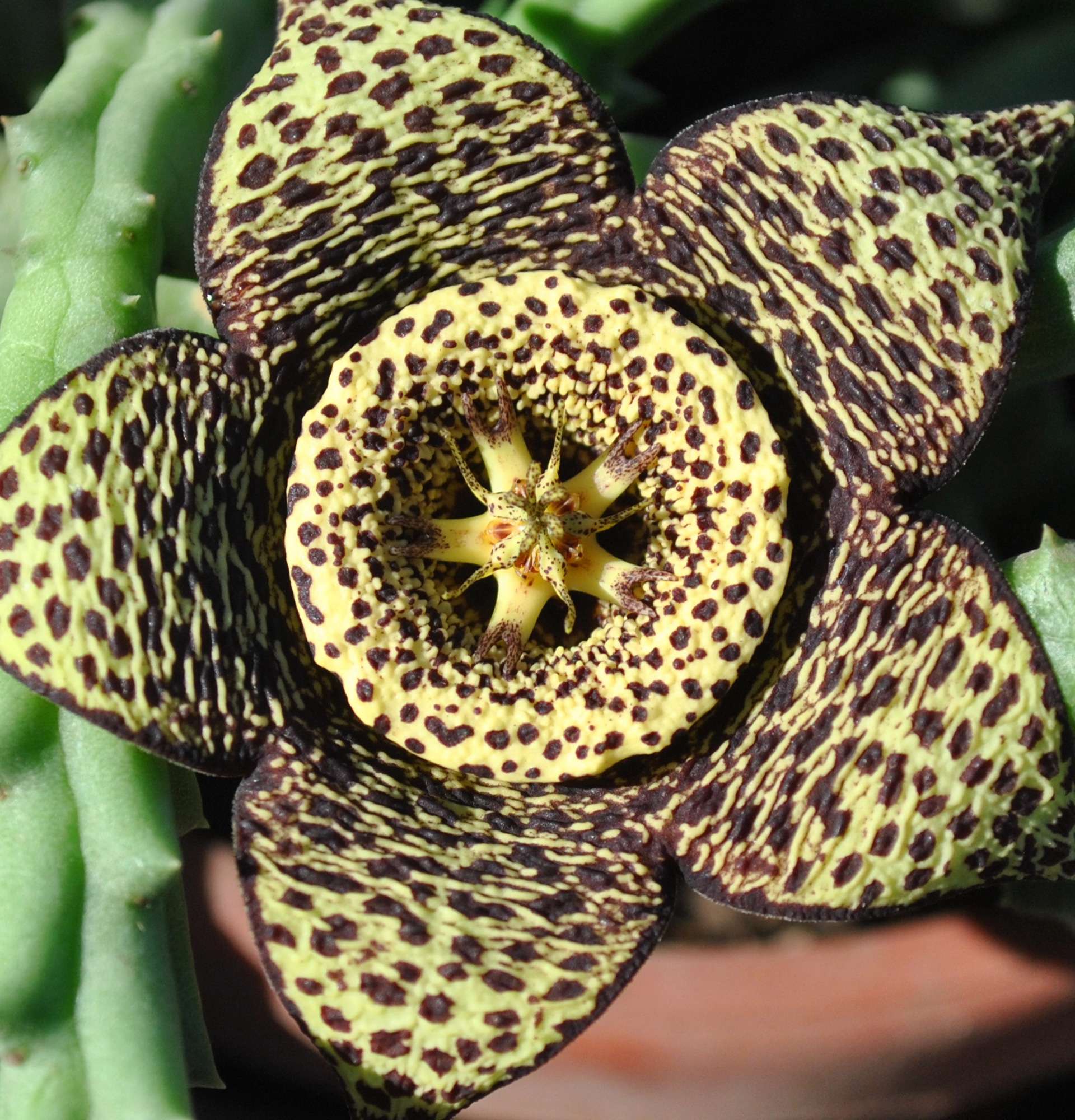
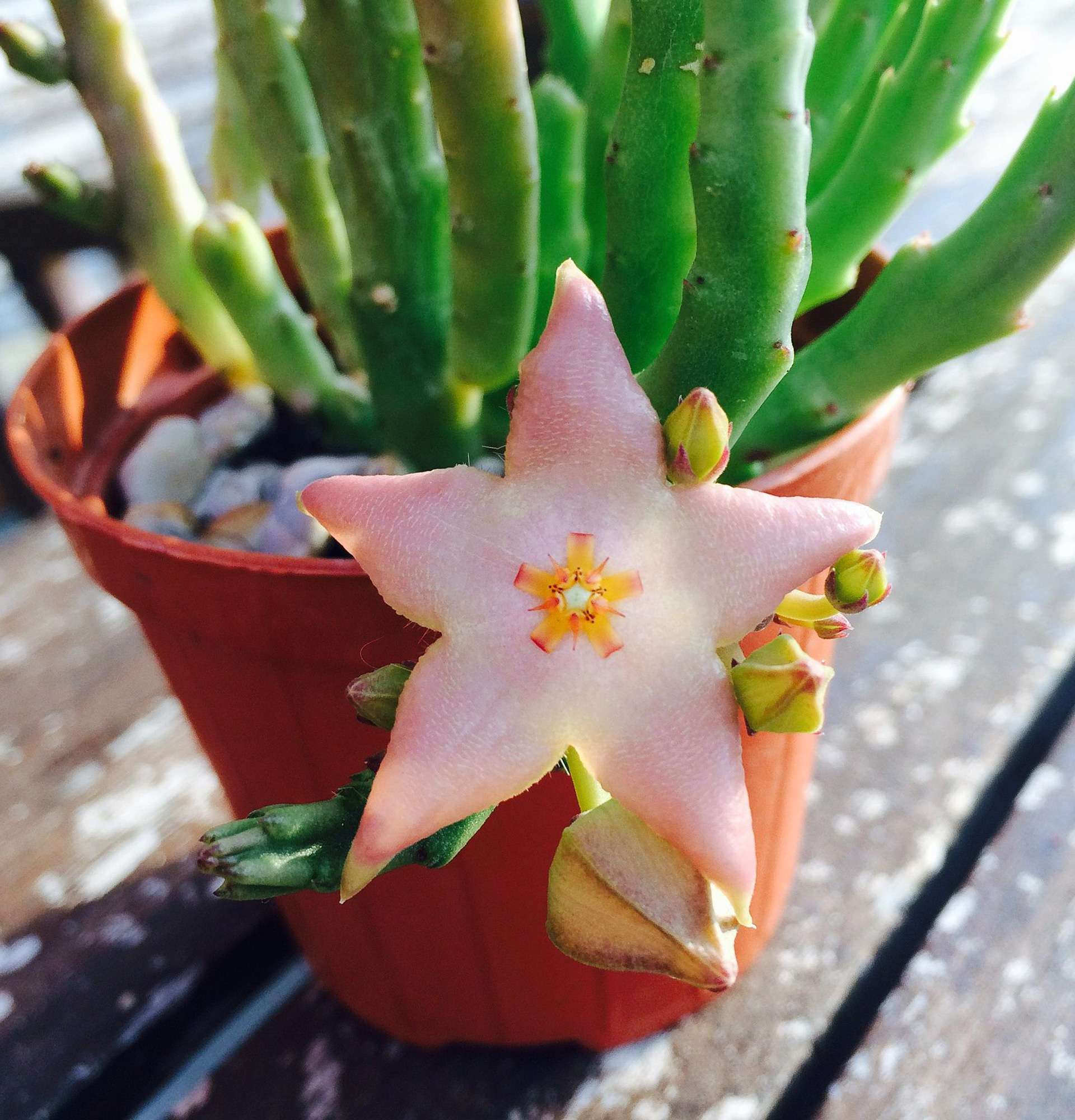
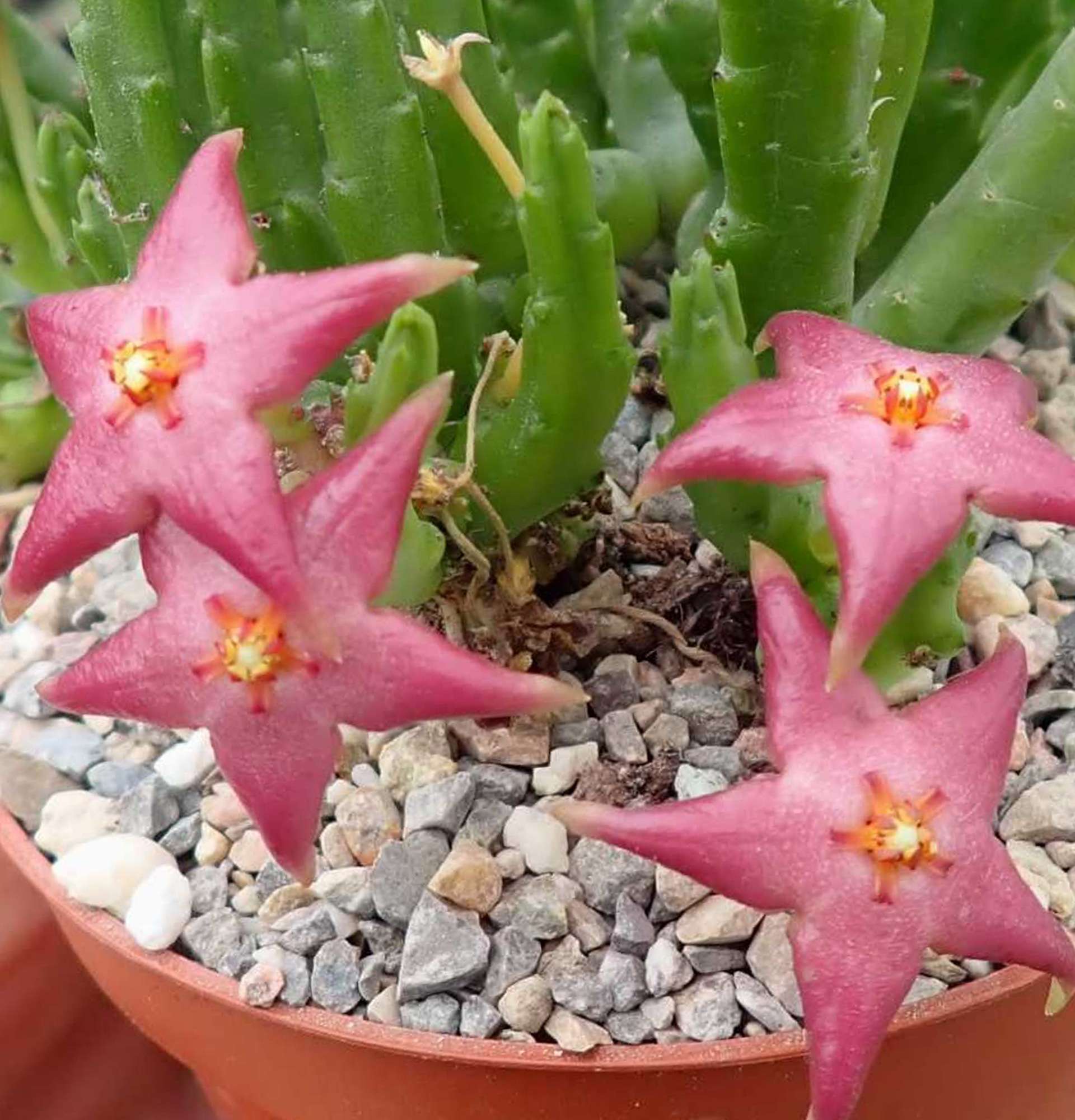
The base of the stems is the location of exotic group or single flowers, which are located on the bent stem part of the flower. It gives the impression that the plant is sprinkled with sea stars. Each variety of stapelia has its own variegated or monochromatic flower color and its own not very pleasant aroma, which causes nausea. The size of these exotics ranges from five to thirty centimeters.
You can see photos of stapelia and admire the beautiful exotic plant by familiarizing yourself with its unusual and charming varieties.
Stapelia species
Stapelia stellata (Stapelia asterias)
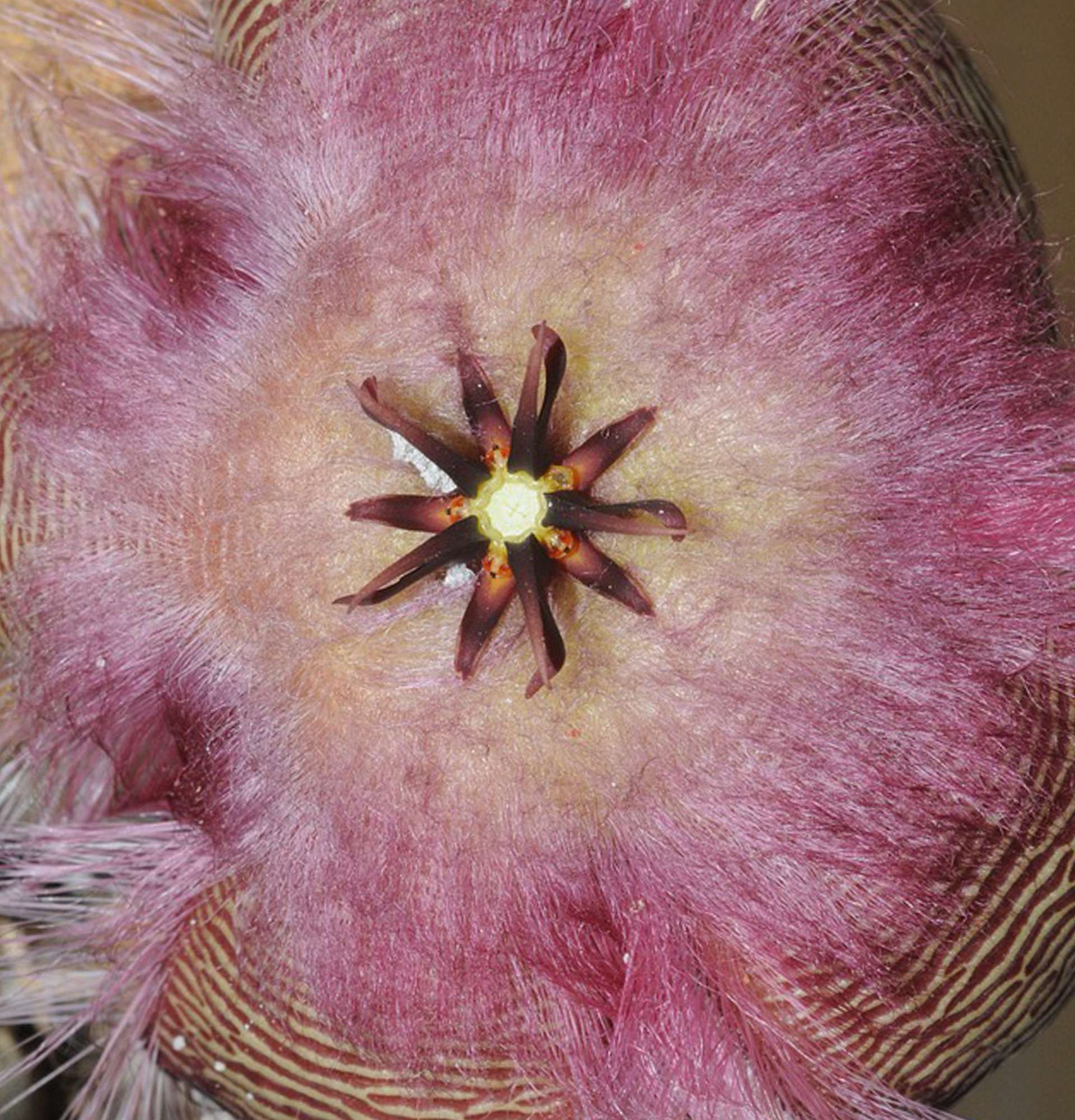
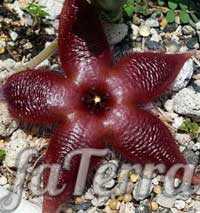 South African low-growing succulent beauty grows in shaded areas, where it adorns rocky mountain slopes. Twenty-centimeter green or red stems are covered with small teeth. Long peduncles emerge from the base of the young stems, on which brownish-red star-shaped flowers with thin yellow stripes are clustered. Pink thick hairs cover the entire flower. Longer hairs are concentrated along the edges of the petals.
Stapelia grandiflora
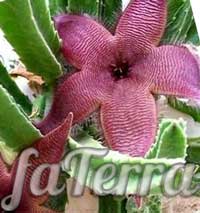 Elegant succulent attractive monster with ribbed glossy stems that change their appearance as they grow. Young shoots are thick and delicate, light green in color. As they grow, they become denser, covered with a silvery-pink coating, and seem to glow. Stapelia delights with its flowering in the summer with huge sixteen-centimeter flowers, raised on long, flexible peduncles. The petals, covered with silvery fluff, are greenish-blue on top and burgundy on the bottom, lanceolate in shape, forming a halo of a sea star. The duration of the beautiful, but with an unpleasant smell, flowering is from two to five days.
Stapelia gigantea
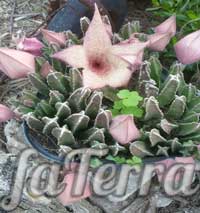 Rocky areas of South Africa are the native habitat of the least fragrant species of stapelia. Perennial succulent with straight, strong, twenty-centimeter faceted stems, the thickness of which reaches three centimeters. Tall peduncles raise huge thirty-five-centimeter flowers. Yellow petals in the shape of a triangle, covered with hairs and carelessly painted stripes.
Stapelia variegata
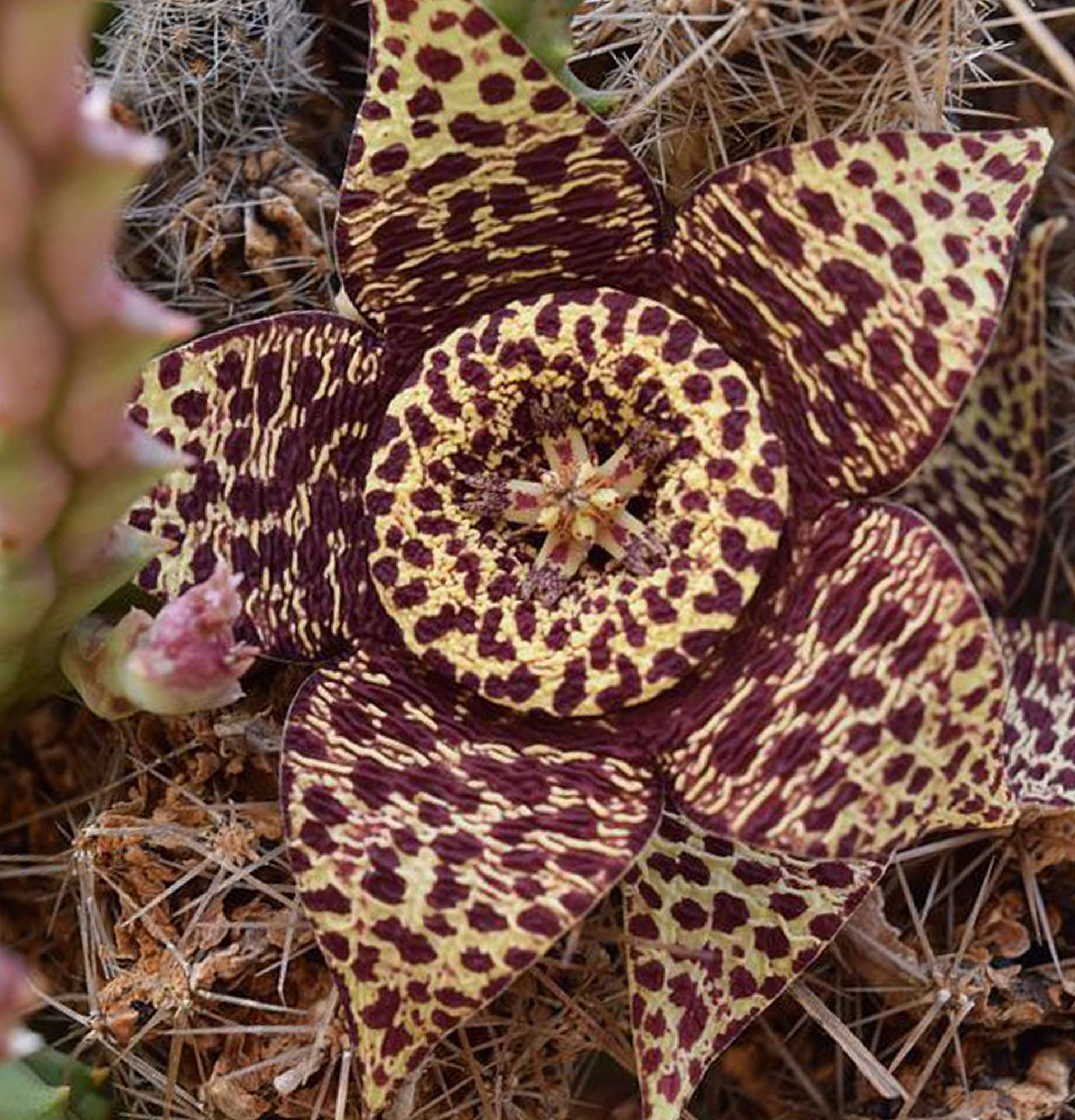
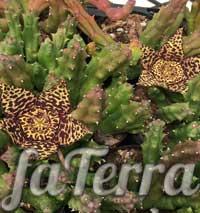 Highly decorative exotic succulent of compact growth, up to ten centimeters in height. It is decorated with fleshy bright green or purple stems that form blunt faces with hooked teeth. In the warm season, the indoor stapelia flower is covered with amazing eight-centimeter yellow or cream-colored flowers. The outer side of the petals is smooth, and the inside is wrinkled, decorated with asymmetrical dots or brown stripes.
Stapelia glanduliflora
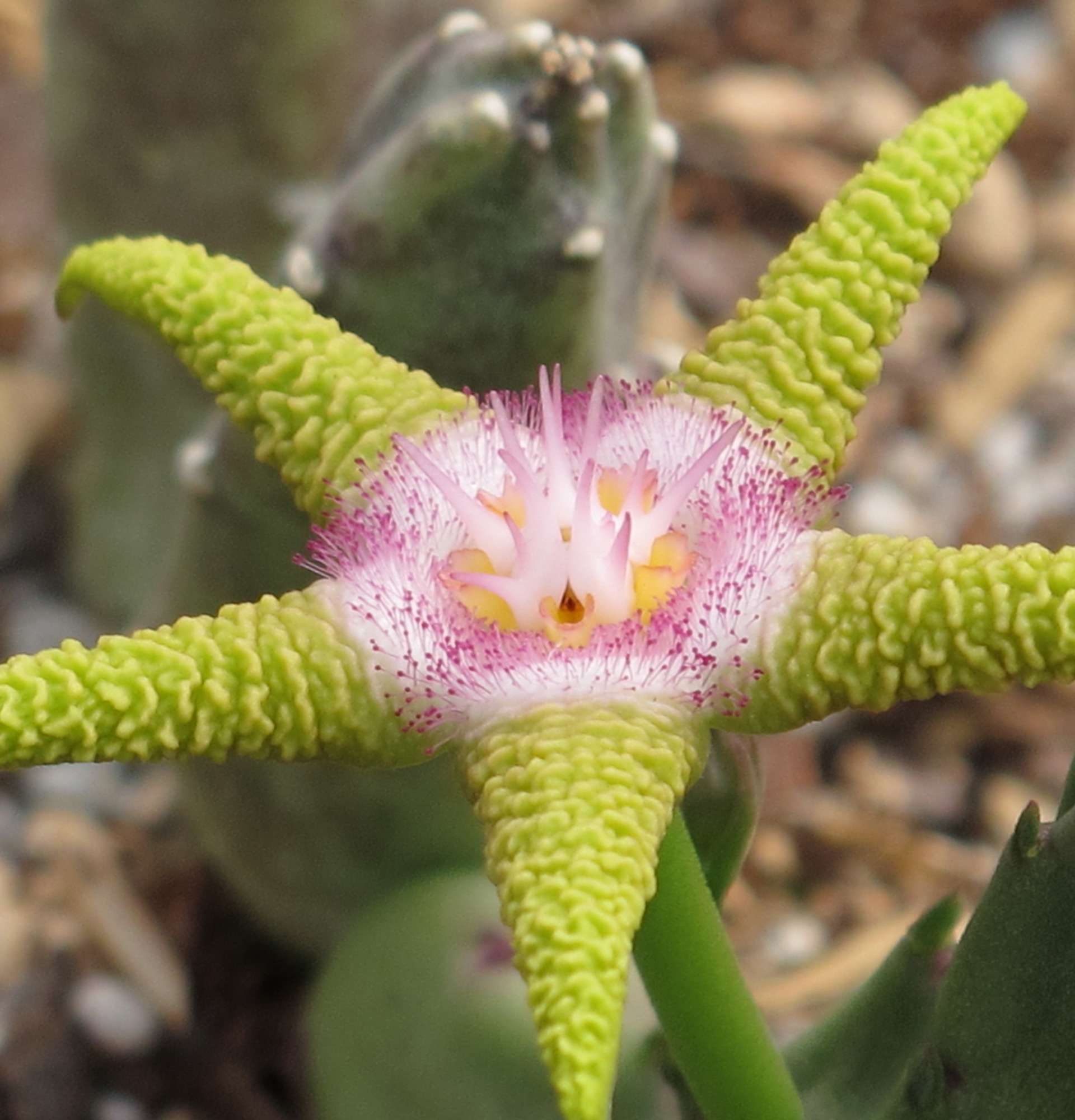
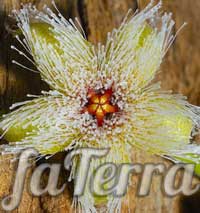 The height of the compact, purely colored and effective succulent perennial reaches only fifteen centimeters. Its stiff and delicate, light green, three centimeters in diameter, faceted stems are wing-shaped, framed by small, sparsely located teeth. It captivates with the simultaneous flowering of three five-centimeter greenish-yellow flowers. Pale pink dots and stripes make the flowers very attractive. The slightly bent edges have long white hairs. Numerous club-shaped hairs cover the entire surface of the flower.
Stapelia flavor-purpurea
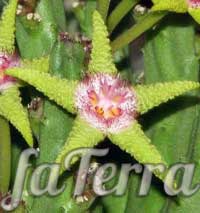 This variety is a succulent ten-centimeter bush. The shoots are green or purple in color with blunt toothed faces. In the flowering mode, the tops of the newly formed stems are decorated with up to three flowers with a charming waxy aroma. The petals of the flowers are oval in shape, pointed triangles, and the edge is beautifully bent. The flowers are smooth on the outside, pale yellow in color, slightly wrinkled on the inside, yellowish in color, sometimes dark red.
Stapelia mutabilis
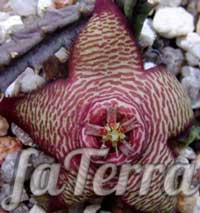 This variety has bare, strong stems up to fifteen centimeters long, with teeth around the perimeter, the tips of which point upwards. Tall peduncles hold yellow flowers with a greenish tint, consisting of petals of a triangular-ovoid shape, the edge of which is decorated with cilia. The top of the flower is pointed, brown in color, and the flower is decorated with transverse stripes and dots.
We have briefly reviewed the stapelia cactus, its various species, how the stapelia blooms, and analyzed the differences in the characteristics and structure of this exotic wonder.
Stapelia care in the home
Stapelia is an unpretentious plant, but there are nuances that must be known and applied when interacting with it. It is necessary to bring the care of indoor flowers as close as possible to natural conditions, providing them with access to fresh air and coolness during the winter off-season.
Choosing a location and temperature regime
Cactus stapelia care is determined by seasonal care. It is desirable to place the stapelia on windowsills facing west or east. The lighting should be diffused. To form a beautiful crown, the "sea star" needs a lot of bright sunlight.
Attention! To avoid burns, do not place the stapelia near the window glass during the summer.
Comfortable temperature indicators will be in the range of 22-26°C. Stapelia loves fresh air, but not cold air. Drafts are not scary for stapelia. The indoor plant will be happy with summer holidays on the balcony, terrace, or garden. Protect your exotic from rain. Stapelia care in winter is slightly different from the warm season. It is desirable to provide a smooth transition to lower the temperature to 10-12°C.
Humidity and watering
The fluffy star flower is a succulent plant, which means it is not afraid of dry air throughout the year. Frequent spraying is not necessary. A warm shower for hygienic purposes will not hurt, but we exclude the flowering period.
We water the "sea star" modestly, controlling the state of the soil mixture in the pot, which should have time to dry out a little between waterings.
Soil and its feeding
We buy a ready-made mixture for cacti. You can add a little sand.
An individual soil mixture will have approximately the following composition: soddy soil, leafy soil, and half the amount of sand.
It is desirable to feed your pet during the active growth period with an interval of thirty days. It is necessary to take half the norm of fertilizer intended for cacti. The presence of potassium fertilizer will be useful for stapelia, which helps to fight against decaying microorganisms.
Stapelia transplant
Spring transplanting into small and wide pots will be acceptable for stapelia. More adult specimens change pots every three years. The old central stems can be removed to free up space for new shoots. In perennial stapelias, we change the top layer of the substrate to a new one.
Stapelia propagation
Seeds or slightly dried stem cuttings are used to propagate stapelia. For rooting, you need to take peat, sand, or water.
Pests and diseases
Uninvited guests rarely affect stapelia. With violations of the growing process, spider mites, aphids, or mealybugs may appear. It is desirable to immediately treat your exotic with insecticides. In order to prevent such misunderstandings from recurring, we carry out regular preventive measures. These include regular inspection of the stapelia, wiping it with a brush soaked in alcohol, lowering the temperature, and reducing watering.
Difficulties in growing
- Why does the stapelia not bloom? Perhaps the plant lacks light, there is not enough potassium fertilizer in the soil, and there may be an excess of nitrogen. It is desirable to add sand to the pot.
- Why do the flowers of the stapelia turn yellow? Perhaps the plant does not have enough light, plus errors in care.
- Why does the stapelia wilt? Too frequent watering, excess water, and waterlogging of the soil.
Stapelia signs and superstitions
If you believe the experts who study the energy capabilities of plants, then the indoor flower stapelia can improve the energy of the room and change it from negative to more positive, restore harmony between people living in the house. It reduces harmful electromagnetic radiation.
On the other hand, stapelia can also have a negative effect on the environment. For example, people who grow stapelia become more rigid and proud. It is also said that if you receive a flower as a gift, you may lose a loved one. If there is a flower in the house, the marriage may fall apart.
Whether to believe these assumptions or not is up to you.
We have briefly reviewed how to care for stapelia. This amazing and original flower, even with its specific aroma, can be an excellent solution for how to diversify and revitalize any interior.
Write comments
Comments