



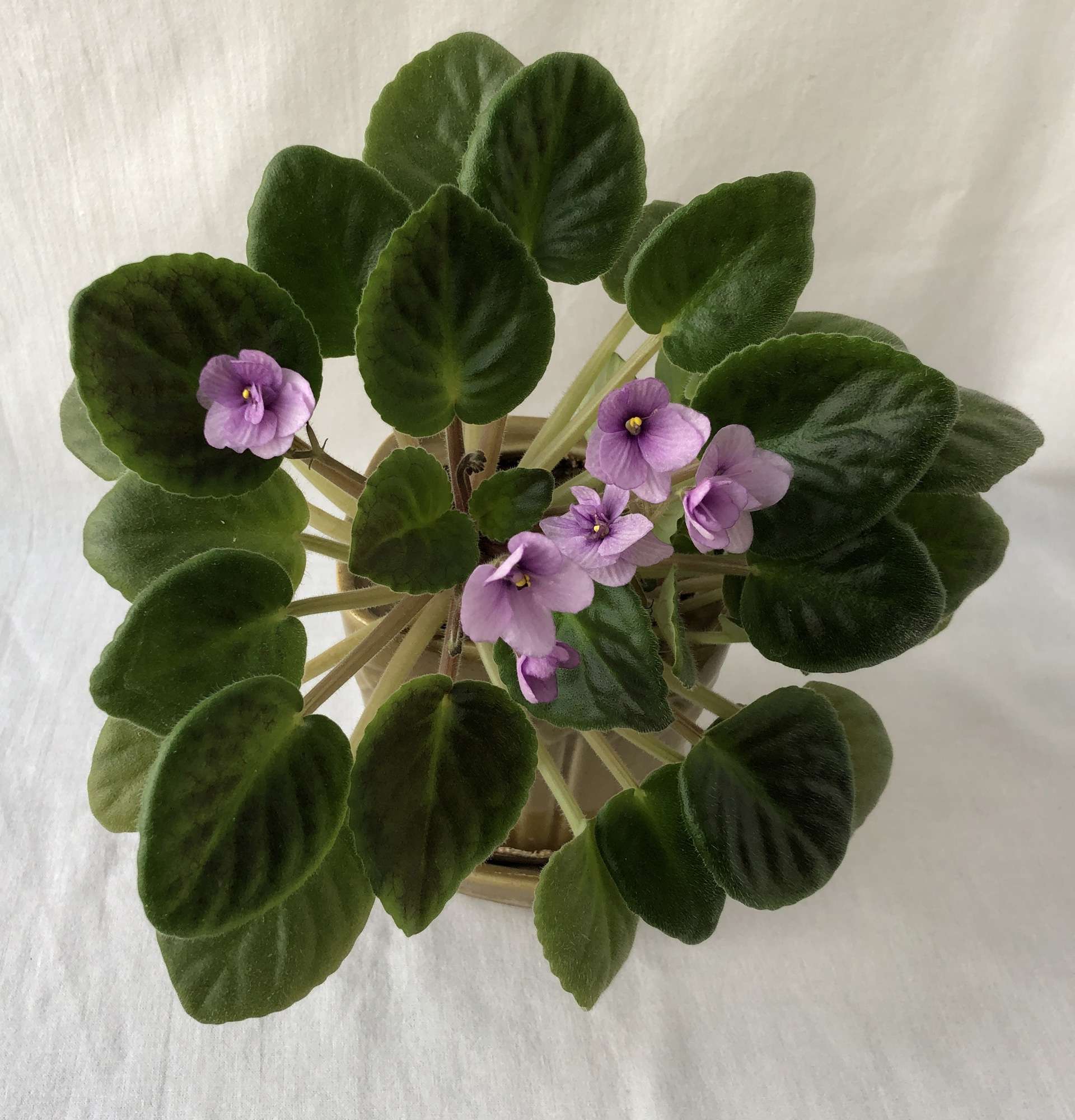
Latin name: (Saintpaulia)
Category: perennial herbaceous plants, semi-shrubs
Origin: Tropical East Africa
Miniature charming saintpaulia – the queen of indoor plants
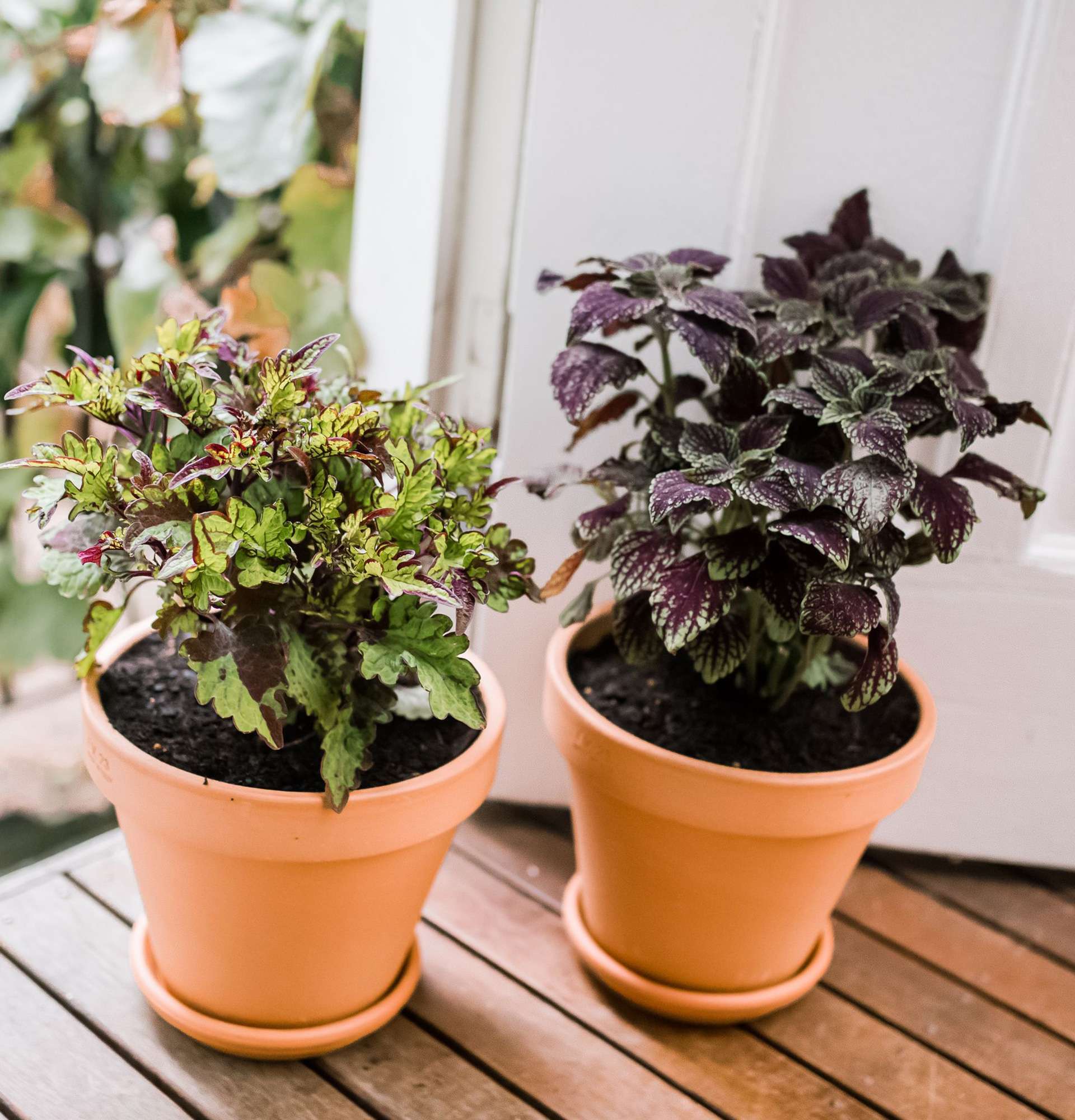
Saintpaulia (Saintpaulia) – this genus includes beautiful flowering herbaceous plants that are the pride of the Gesneriaceae family and remain the most popular among indoor flowers. The closest relative of saintpaulia is coleria.
The homeland of the saintpaulia flower is considered to be the mountainous regions located in East Africa. Wild violets prefer coastal river areas with beautiful waterfalls, which are abundant in Kenya and Tanzania.
Thanks to Baron Walter von Saint-Paul, a flower lover, the amazing violet appeared. In 1892, he accidentally discovered the amazing flower at the foot of the Usambara Mountains in Tanzania. The collected violet seeds were immediately sent to the German Dendrological Society. Botanist Wendland planted the seeds, grew a wonderful plant, described it, and named it Saintpaulia in honor of the discoverer. It was separated into a separate genus.
The demonstration of this wonderfully beautiful miniature plant, with its long flowering period, at the International Flower Exhibition accelerated the process of familiarization with the flower. The result did not take long. The African violet immediately captivated flower growers and won first place in the family of indoor plants.
Breeders have been working for many years to create new and amazing varieties of saintpaulia. The popularity and fame of the Usambara violet were primarily due to its year-round flowering, compactness, and unpretentiousness.
African violet pots look like a low herbaceous plant with small roots and rounded, fleshy leaves with a velvety texture. The basal rosette is formed by green leaf plates with various spots, which rise on short, succulent stems.
Five-petaled flowers are collected in original inflorescences-brushes. The calyx of the saintpaulia has five sepals. The result of flowering is numerous small seeds, carefully hidden in the fruit-capsule. In their natural environment, the flowers are blue, purple, and blue.
Thanks to the successful work of modern breeders, the range of colors has expanded. Now, the saintpaulia violet has a community of twenty thousand Usambara violets.
Important! Do not confuse representatives of two different genera from completely different families.
Violet (Viola) from the Violet family is a general name for this beauty – pansy flower, also known as tricolor violet, forest, garden. Interesting information will be discussed in another article.
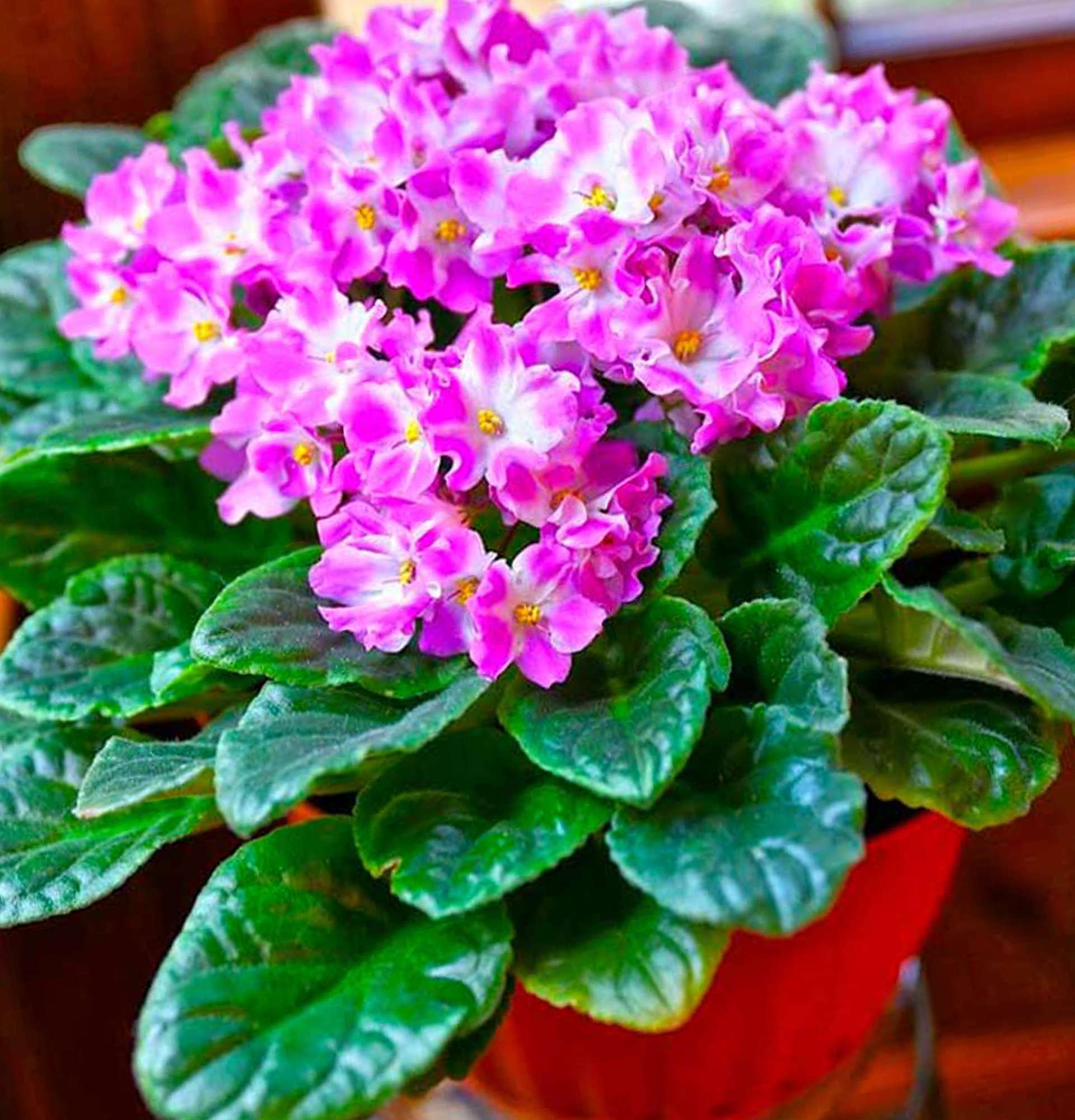
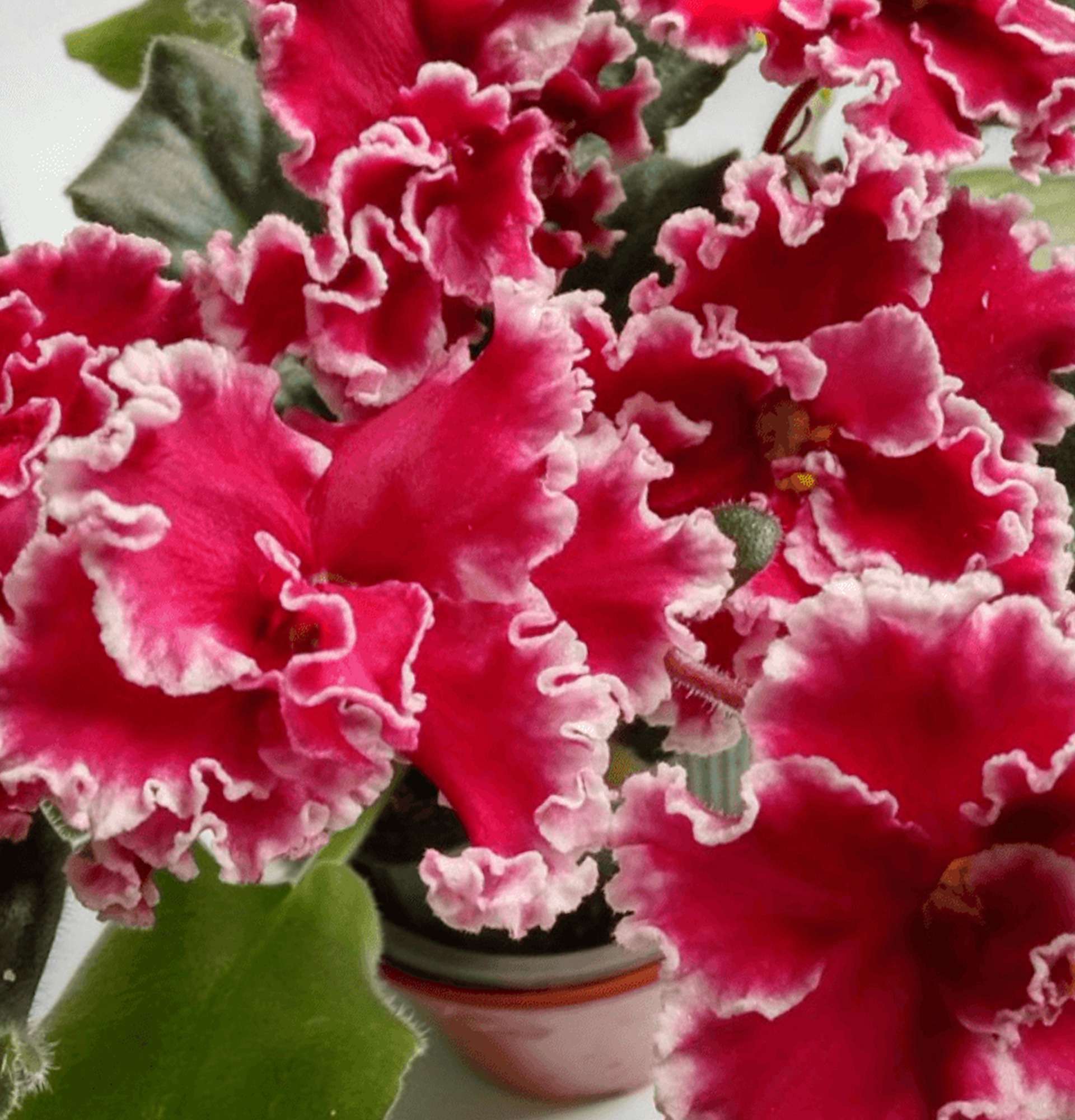
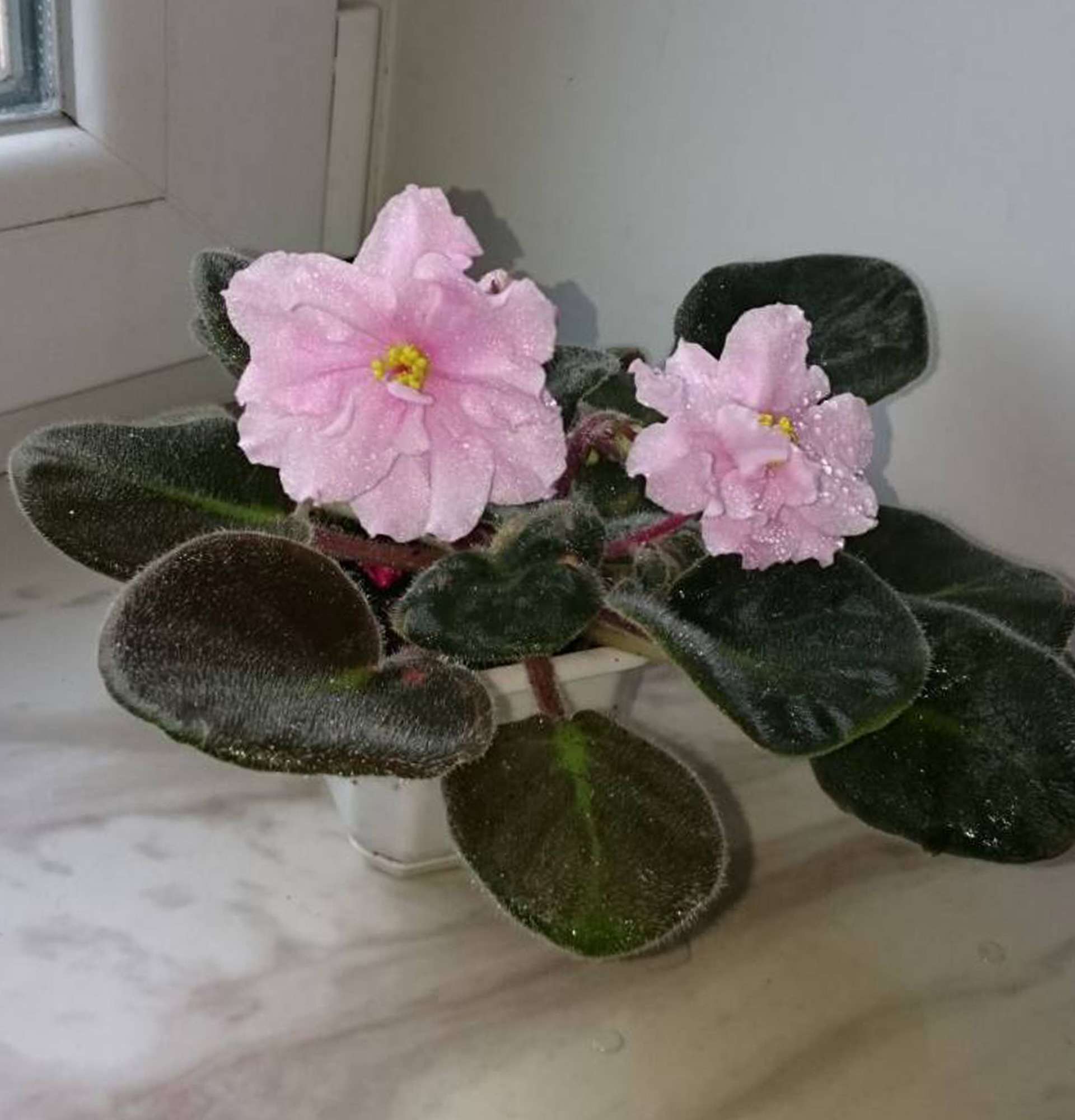
And now, let's talk in detail about the African flower that has won the attention and love of flower growers around the world. The incomparable Usambara violet is an indoor flower, saintpaulia, numerous varieties, and types. You can see photos of saintpaulia below.
Saintpaulia species and varieties
Saintpaulia ionantha, also known as violet-flowered saintpaulia (Saintpaulia ionantha)
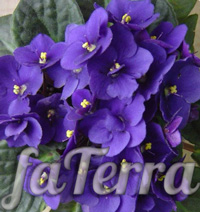 Natural conditions favorably support the dark green color of the upper part and the reddish-green underside of the heart-shaped leaves. They beautifully form a rosette-shaped perennial herbaceous plant with a shortened stem.
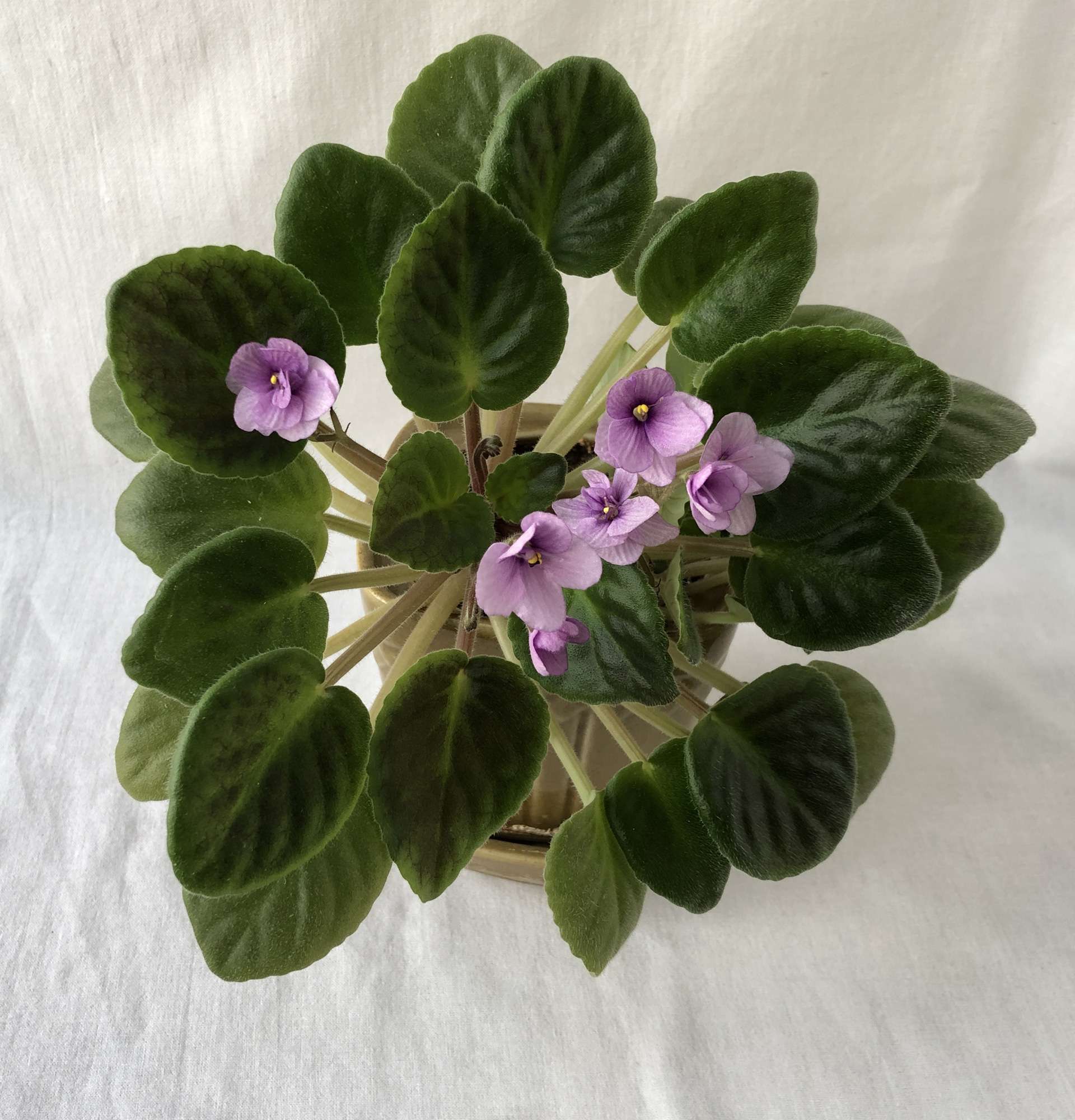
Saintpaulias bloom with numerous inflorescences, collected from four-centimeter blue-violet flowers. Thanks to the efforts of breeders, indoor saintpaulia pots have become available in single, semi-double, and double colors. The variety of colors is unlimited. They decorate the interior of any room with white, yellowish, pink, lilac-red, blue, and dark blue tones.
Saintpaulia Sea Wolf (Saintpaulia Morskoi volk)
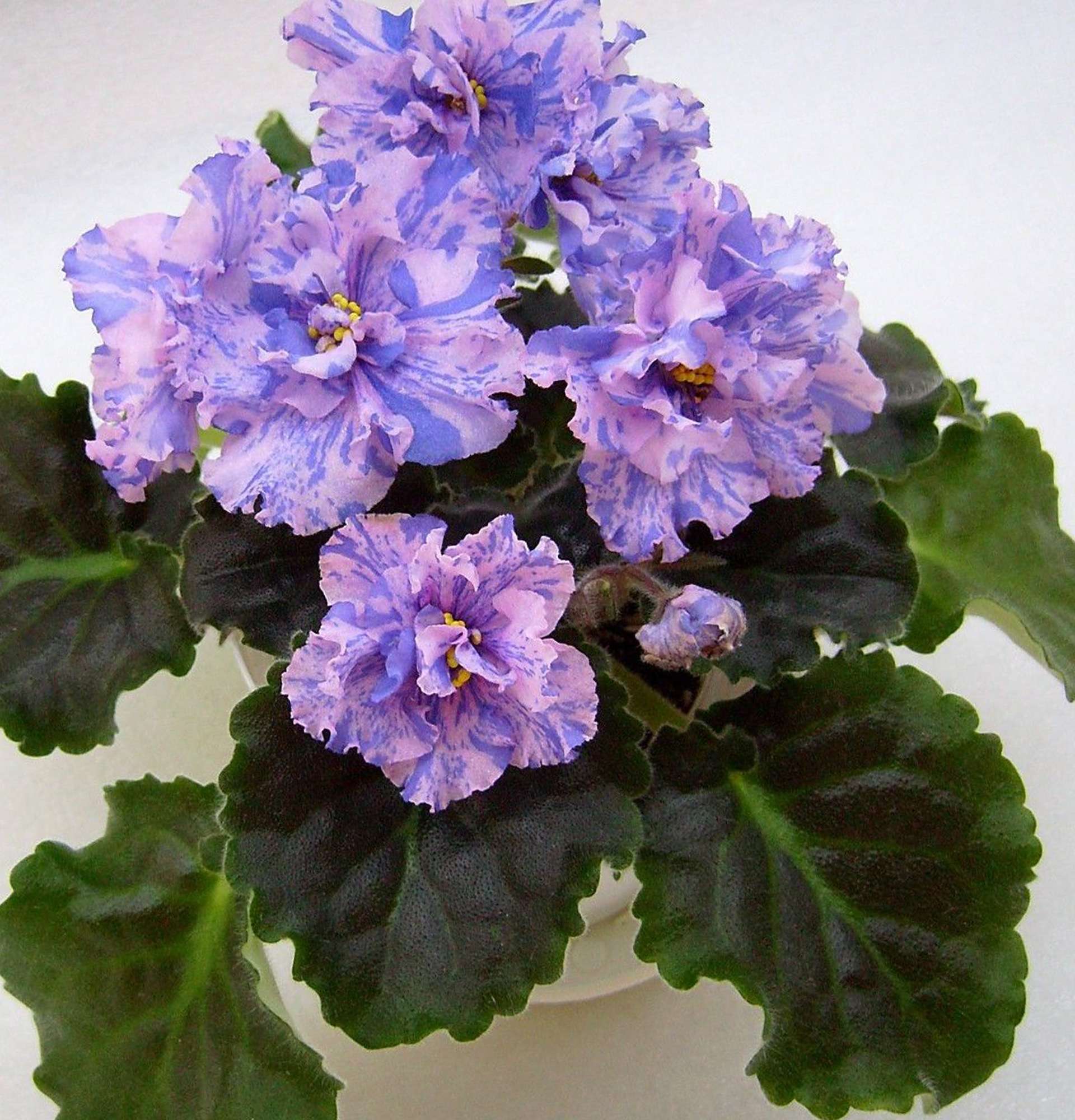
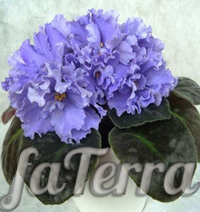 One of the newest and most beloved varieties of saintpaulia, Sea Wolf, was created by breeder Elena Vasilievna Korshunova in 2006. Large, eight-centimeter, semi-double, blue flowers with wavy petals and a mesh pattern immediately became popular among lovers of the beautiful world of flowers. This variety of violet has high aesthetic qualities and is often presented at flower competitions.
Saintpaulia Ian-Minuet (Saintpaulia Ian-Minuet)
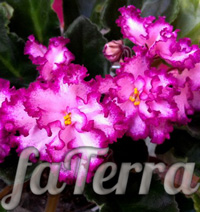 The emerald color of the pointed, velvety, heart-shaped leaves covered with fine fluff makes the Ian-Minuet violet unsurpassed. This blooming wonder delights the eye of its owners for ten months, from early spring to the onset of winter cold. The Ian-Minuet violet is covered with airy bouquets of five-petaled, nine-centimeter, lacy buds. Each long and strong peduncle has up to three pink-white, semi-double, star-shaped flowers with a bright raspberry edging. The tireless, abundantly flowering Ian-Minuet violet will undoubtedly decorate any interior.
Saintpaulia Lithuanian (Saintpaulia Lituanika)
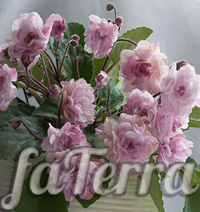 The main feature of this variety of saintpaulia is the presence of an elongated stem with side shoots in the leaf axils. It looks like a lush rosette bush, formed by dark green, oval leaves, which blooms all year round if the pot is placed on a bright windowsill. The peach color of the dense, double flowers with many petals that rise on long peduncles gives the plant uniqueness. The flowers of the Lithuanian violet resemble dahlias.
Saintpaulia Le-Shato Brion (Saintpaulia Le-Shato Brion)
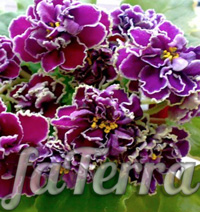 The Chateau Brion violet forms a neat rosette of green, serrated, egg-shaped leaves. A chic cap of six-centimeter, double, wine-ruby flowers adorns the rosette. The flowers rise on strong, sturdy, straight peduncles. The buds change for ten days. The abundantly flowering saintpaulia is the decoration of any interior.
Saintpaulia Mother's Heart (Saintpaulia Mother Heart)
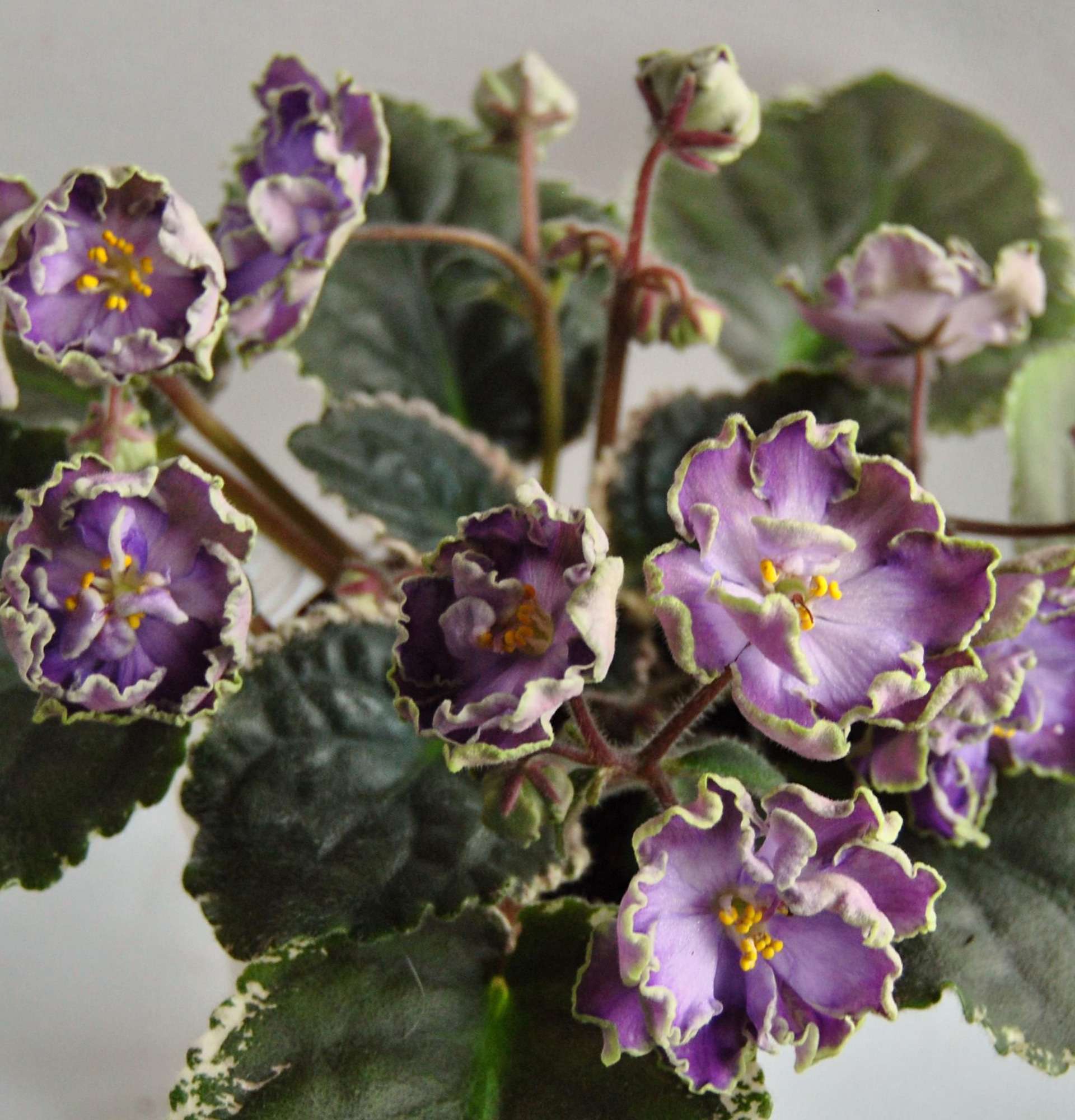
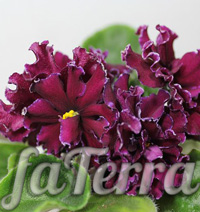 The year of birth of the new variety of violet is 2014. The plant has a compact, even, neat rosette, formed by green leaves. The rosette is decorated with eight-centimeter, wavy, contrasting, single and semi-double, dark purple flowers with a snow-white edging and bright lemon-colored stamens.
Saintpaulia Cinderella's Dream
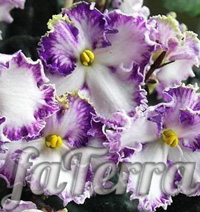 The violet is adorned with large, wavy, dark green, shiny leaves that form a rosette. Especially beautiful are the four-centimeter, delicate white flowers with a lilac edging.
Saintpaulia Whipped Cream (Saintpaulia Whipped Cream)
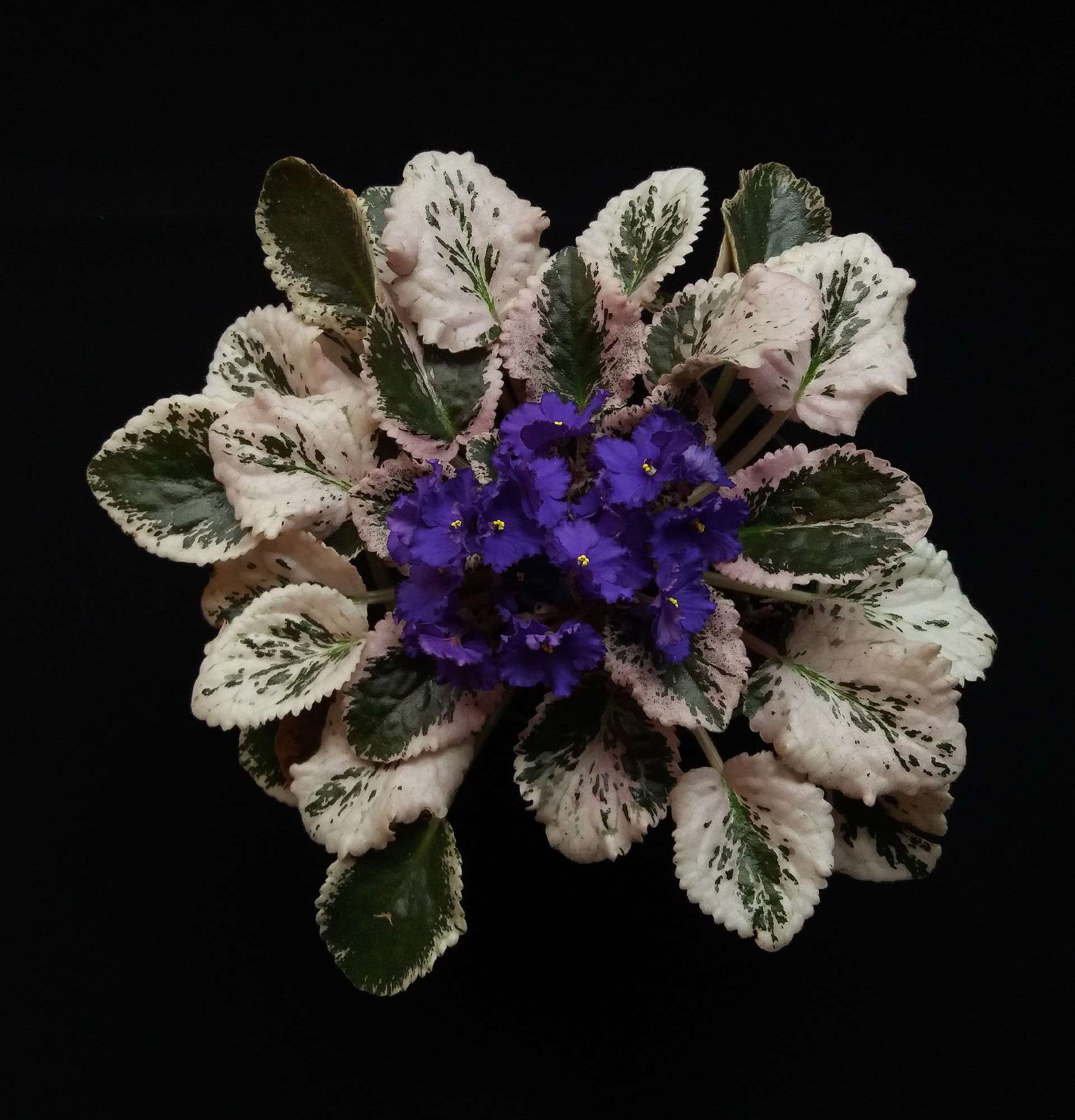
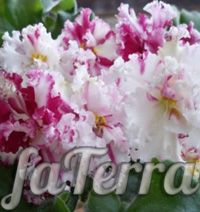 This very original new variety has become a favorite of flower growers. A wonderful specimen to decorate any interior. It has a neat rosette of light, slightly wavy leaves. Unique, large, white flowers with a lacy texture and a thin edging of raspberry-pink on the edges of the petals are placed on strong peduncles, constantly in a state of a beautiful bouquet.
Saintpaulia Black Pearl (Saintpaulia Black Pearl)
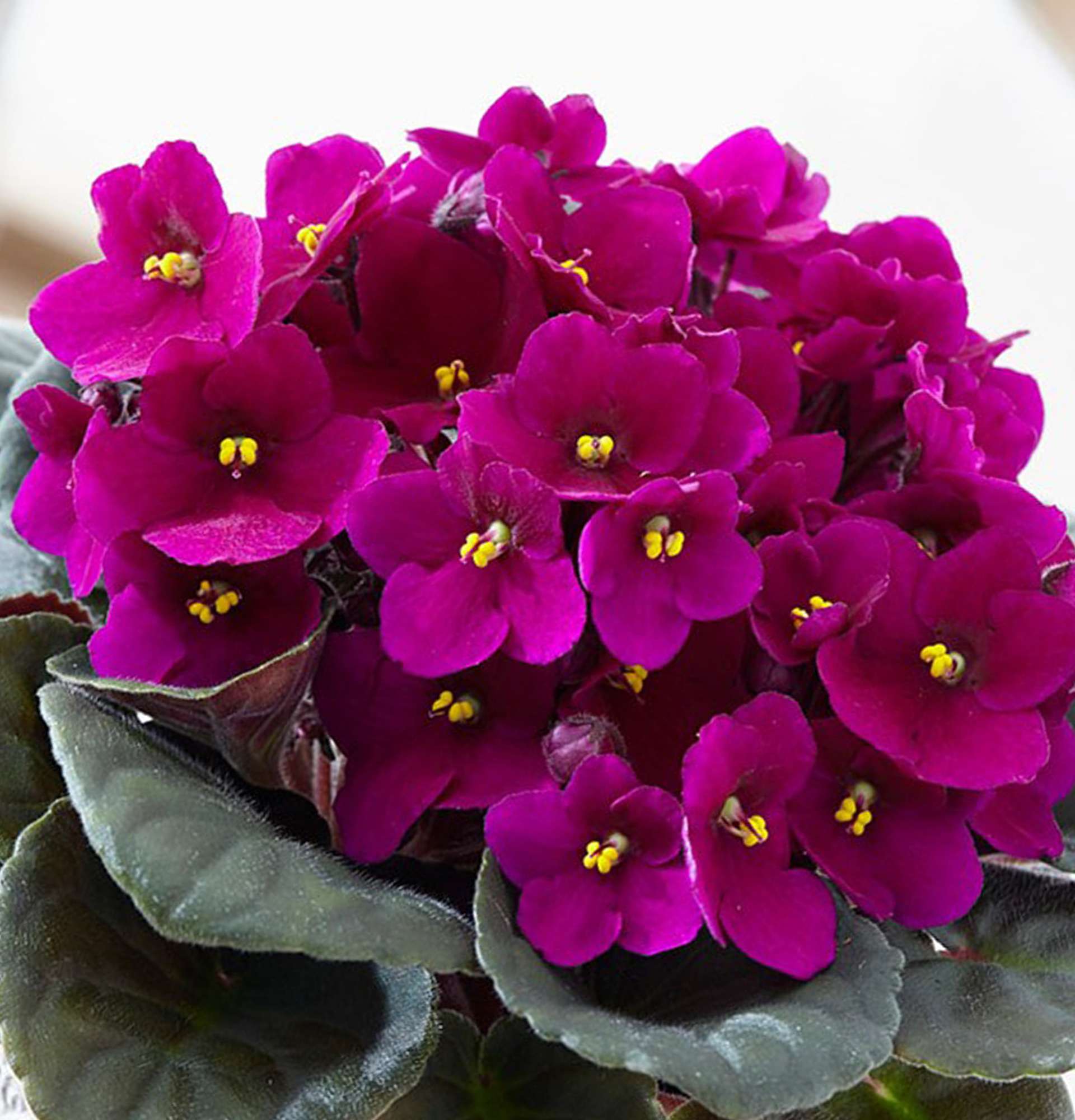
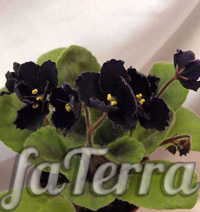 The uniqueness and originality of this variety are given by the large, bright, purple-purple flowers with a velvety texture. They rise on high, strong peduncles above a twenty-five-centimeter rosette of wonderfully beautiful, dark green leaves. The intensity of lighting can adjust the color shades of the plant.
Saintpaulia care in the home
The care of the Usambara violet at home is not difficult, as is the case with most indoor favorite plants. The main points of proper cultivation and achieving year-round flowering are: proper selection of soil, planting, watering, and fertilization.
Choosing a location and temperature regime
The indoor Usambara violet flower will feel good and bloom abundantly on the windowsills of east and west-facing windows. If there is not enough sunlight, artificial lighting can be used.
Important! Drafts and scorching sunlight have a negative effect on saintpaulia. It is not desirable to keep it on the balcony or in the garden.
The comfortable temperature for the violet is from 20°C to 25°C in the summer, and up to 15°C in the cold season. Both cold and heat negatively affect the flowering and growth of the plant.
Humidity and watering
The indoor saintpaulia flower prefers high air humidity up to 70%.
Attention! Spraying with cold water at ambient temperatures below 25°C is not recommended. The leaves will be covered with white spots, and the violet will lose its decorative appearance.
We increase the humidity with a spray bottle. We spray water near the plant, place the pot with saintpaulia on a tray with wet pebbles, expanded clay, or sand.
We water the African violet with soft, warm, settled water every two to three days. The indicator for the next watering will be completely dry soil in the pot. You can use the bottom watering method. Place the pot with your plant in a deep container until the substrate is moistened. Then, place the pot in its place.
Remember! When watering from above, the center of the rosette and the leaves should remain dry.
Soil and feeding of saintpaulia
The indoor saintpaulia violet prefers light, loose, and breathable soil. The following composition has these qualities: leaf soil, sod soil, coniferous soil, peat, coarse-grained sand, and wood charcoal. Ready-made soil mixture for saintpaulias is sold in retail stores.
For feeding, you can use complex mineral fertilizers in half the dose. The procedure is carried out in the warm season when the plant is actively growing and blooming.
Saintpaulia transplant
The home Usambara violet can be easily transplanted in early spring. Carefully transfer the plant to another pot, protecting the delicate roots. A good drainage layer is required at the bottom.
Saintpaulia propagation
The saintpaulia violet can be propagated by leaves, side shoots, or seeds.
How to grow a violet from a leaf? This procedure is suitable at any time of the year. We select a good leaf from the rosette, cut the tip of the petiole at an angle, and place it in water. The leaf plate is above the water. The leaf petioles root well in water. The leaf can be planted in soil or sphagnum. Under greenhouse conditions, they quickly root and grow young rosettes, which are planted in separate pots and watered well. Propagating violets with leaves is not difficult and does not take much time.
Near an adult violet, small plants often grow, which take root well in separate pots.
When side shoots appear on the main rosette with three or four leaves, they can be used to propagate saintpaulia and obtain a beautiful young flower. Carefully cut the side shoot with a sharp scalpel from the adult plant and root it in a fertile substrate, providing greenhouse conditions. We have considered how saintpaulia is propagated at home. With these methods, you can replenish and renew your collection of saintpaulias, which will be a wonderful decoration for your interior.
Pests and diseases of saintpaulia
The indoor violet can be affected by thrips, mites, aphids, and mealybugs. You can prevent pest attacks by regularly inspecting your favorite plant. But if a misunderstanding has already occurred, the plant must be treated with special insecticidal preparations.
Difficult moments in cultivation
- Why does the violet not bloom? The main factors for abundant flowering are good lighting for twelve hours a day, proper feeding, watering, and maintaining air humidity within 70%.
- The leaves are covered with light yellow spots – excess direct sunlight.
- Brown spots have formed on the leaf plates – the negative effect of cold water during watering.
- The leaves have turned pale green – it is cold in the room, especially in winter, it is desirable to remove the plant from the windowsills at night.
- The leaves have become flabby, and the middle of the rosette is rotting – the soil is too wet, and there are sharp temperature changes.
- Mold has appeared on the leaves and flowers – when spraying, saintpaulia can be covered with powdery mildew. A systemic fungicide will help here.
The indoor saintpaulia flower is a miniature, unique, abundantly flowering indoor plant that is considered the most beloved among flower growers. Love your African violet, and it will decorate the interior of your home.
Write comments
Comments