



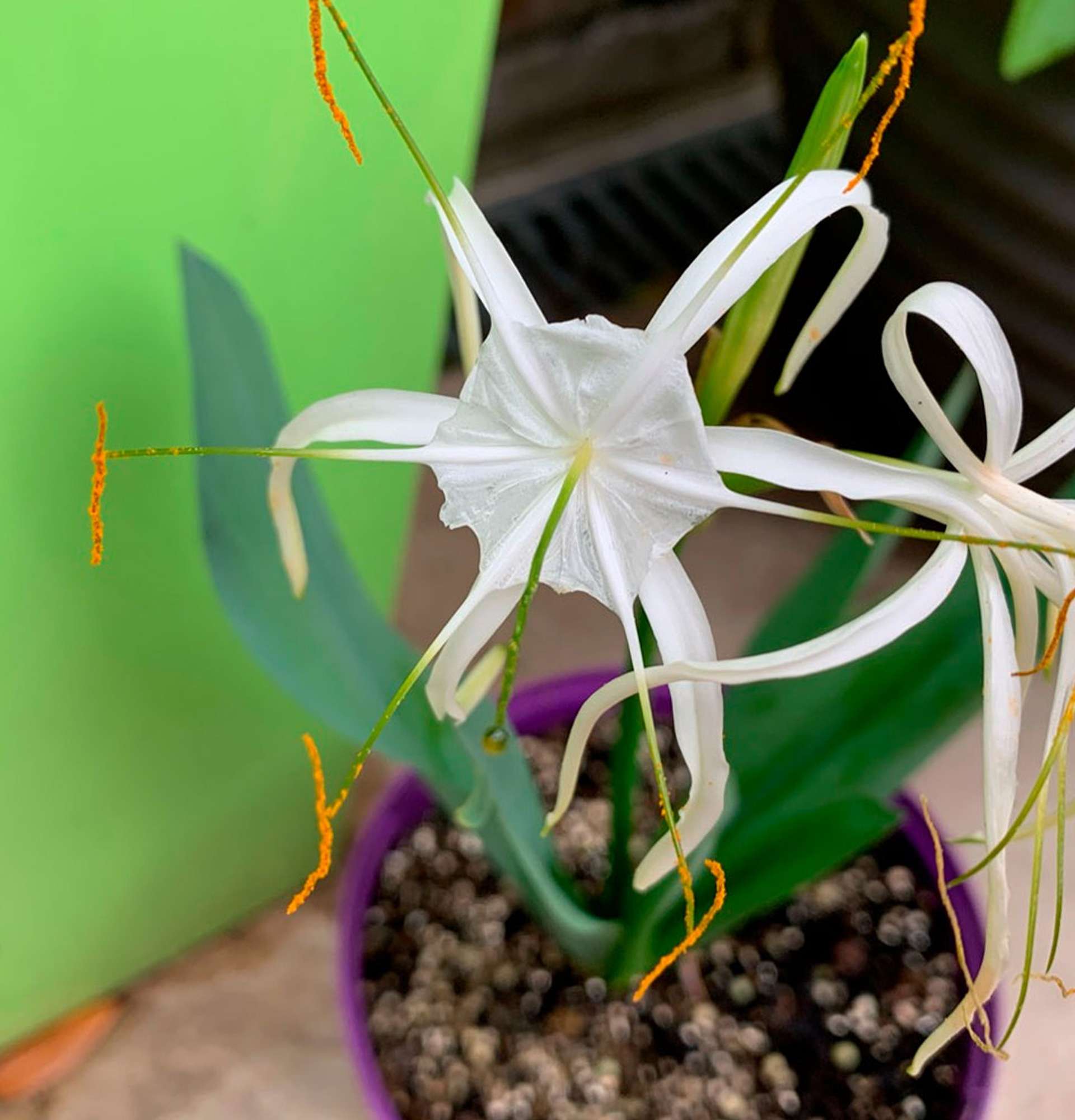
Latin name: Hymenocallis
Category: perennial herbs
Origin: Central and South America
Luxurious and charming spider lily - Hymenocallis
Hymenocallis is a genus of bulbous plants that holds a respectable place in the Amaryllidaceae family. This group includes more than fifty varieties of attractive and amazing perennials. The homeland of Hymenocallis is the tropical and subtropical part of Latin America, where it thrives in valleys near the banks of rivers and lakes; it is not even afraid of heights of up to two kilometers.
The Hymenocallis flower came to our area about two hundred years ago. It feels great in plant compositions and in open areas, where it creates wonderful landscapes both on its own and with its partners. The closest relatives of Hymenocallis are considered to be Haemanthus, Crinum, Clivia.
The amazing Hymenocallis plant has a large number of popular names: bride's basket, spider lily, Peruvian narcissus, early Ismene.
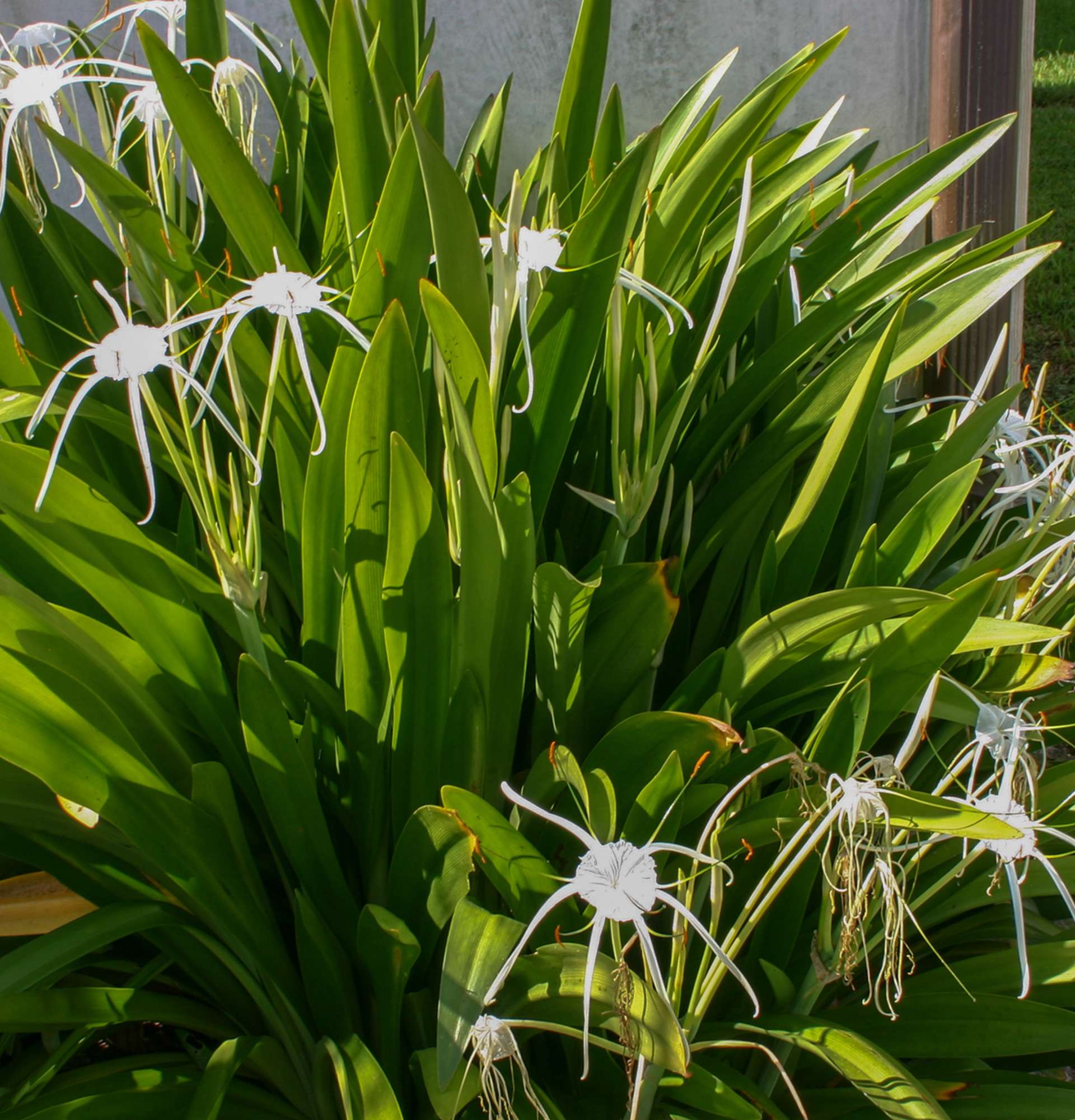
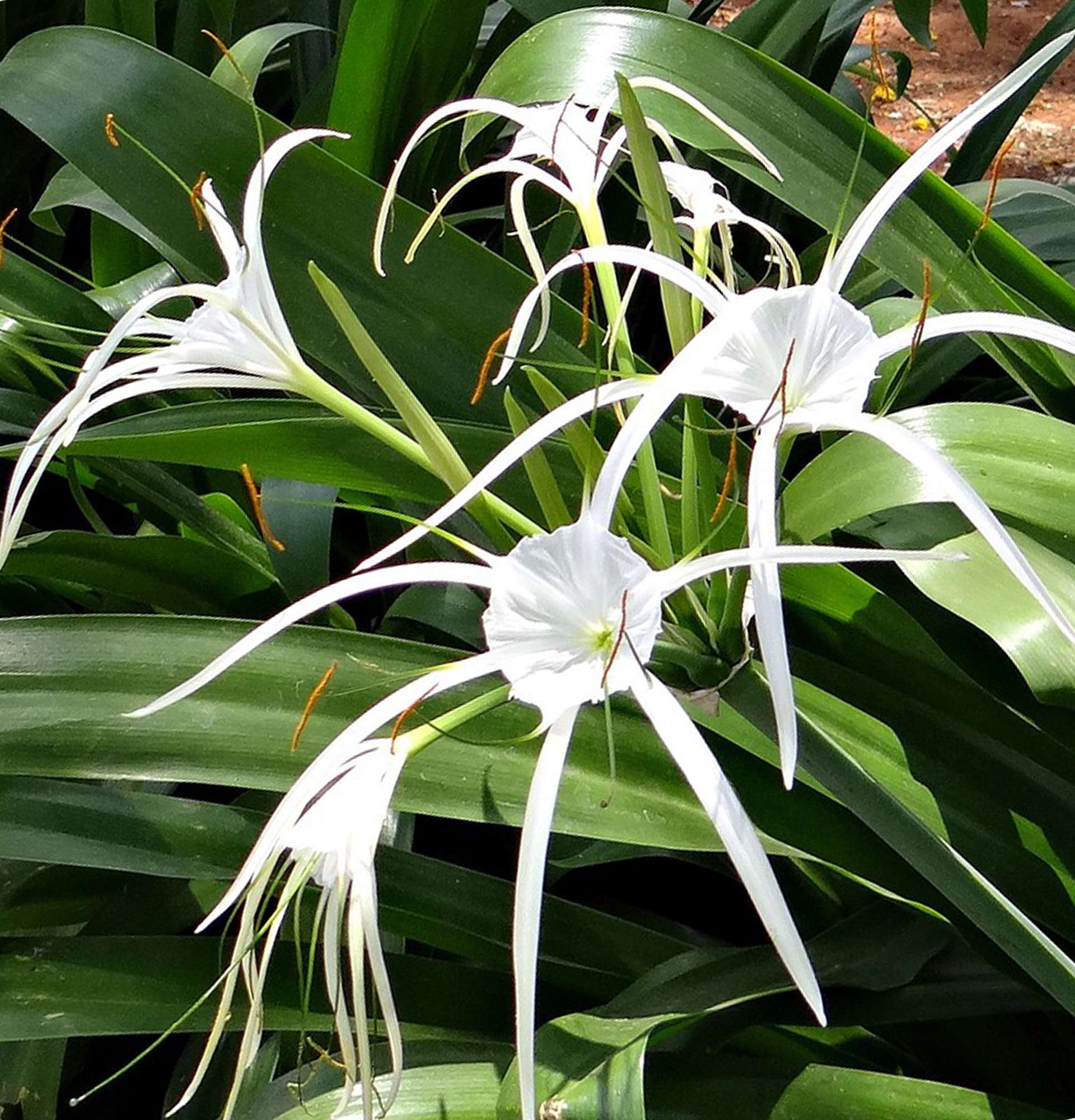
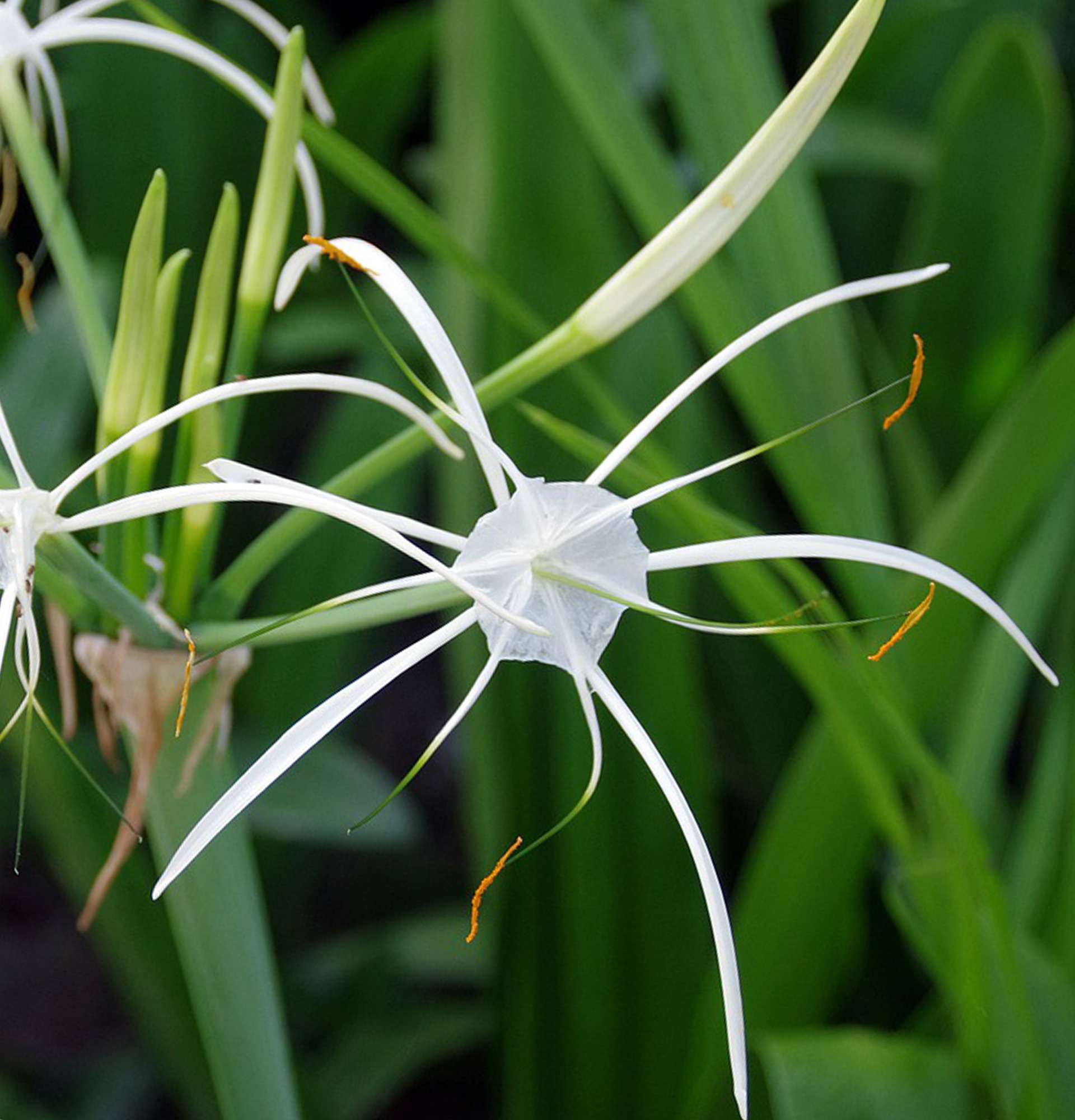
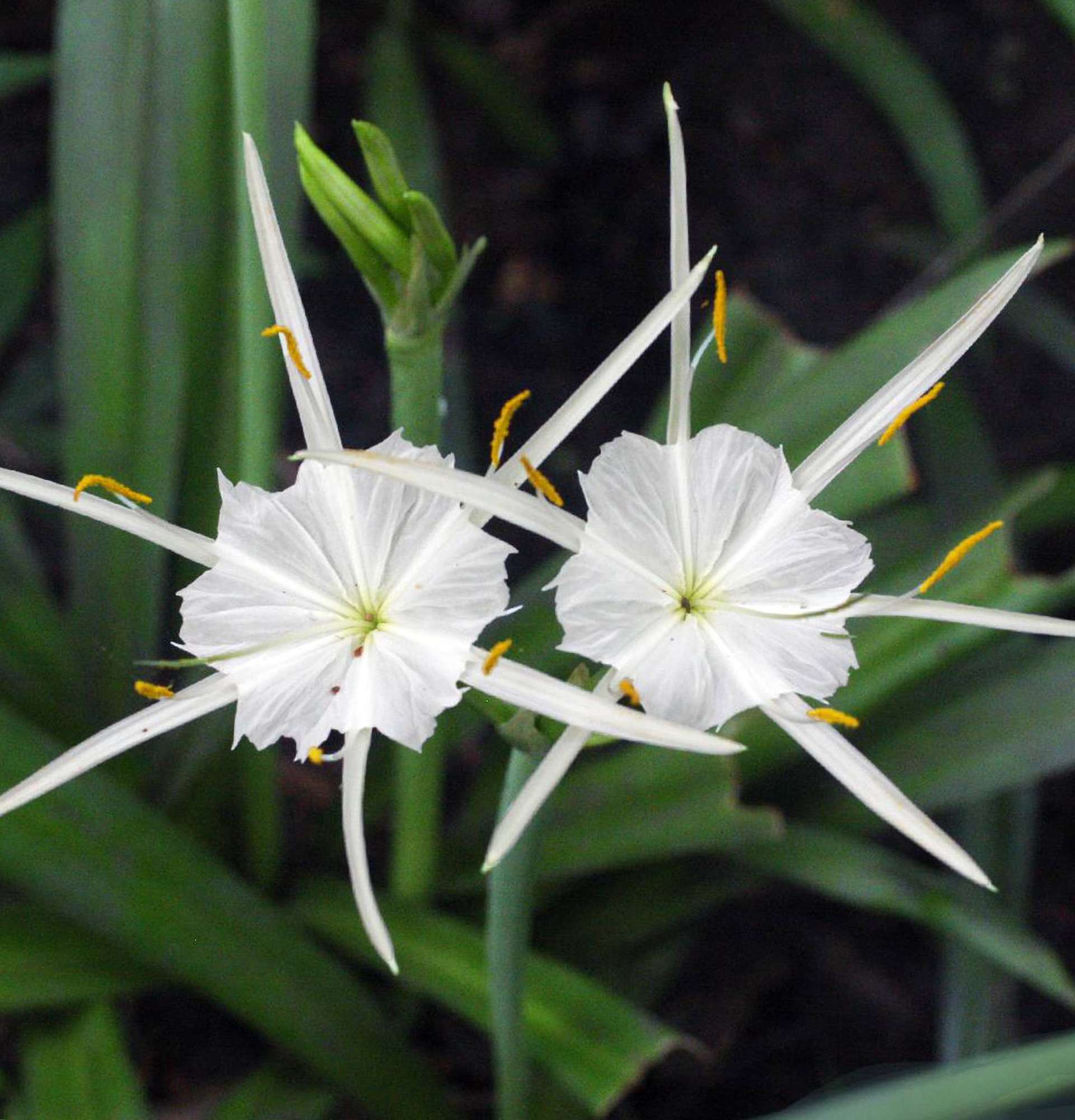
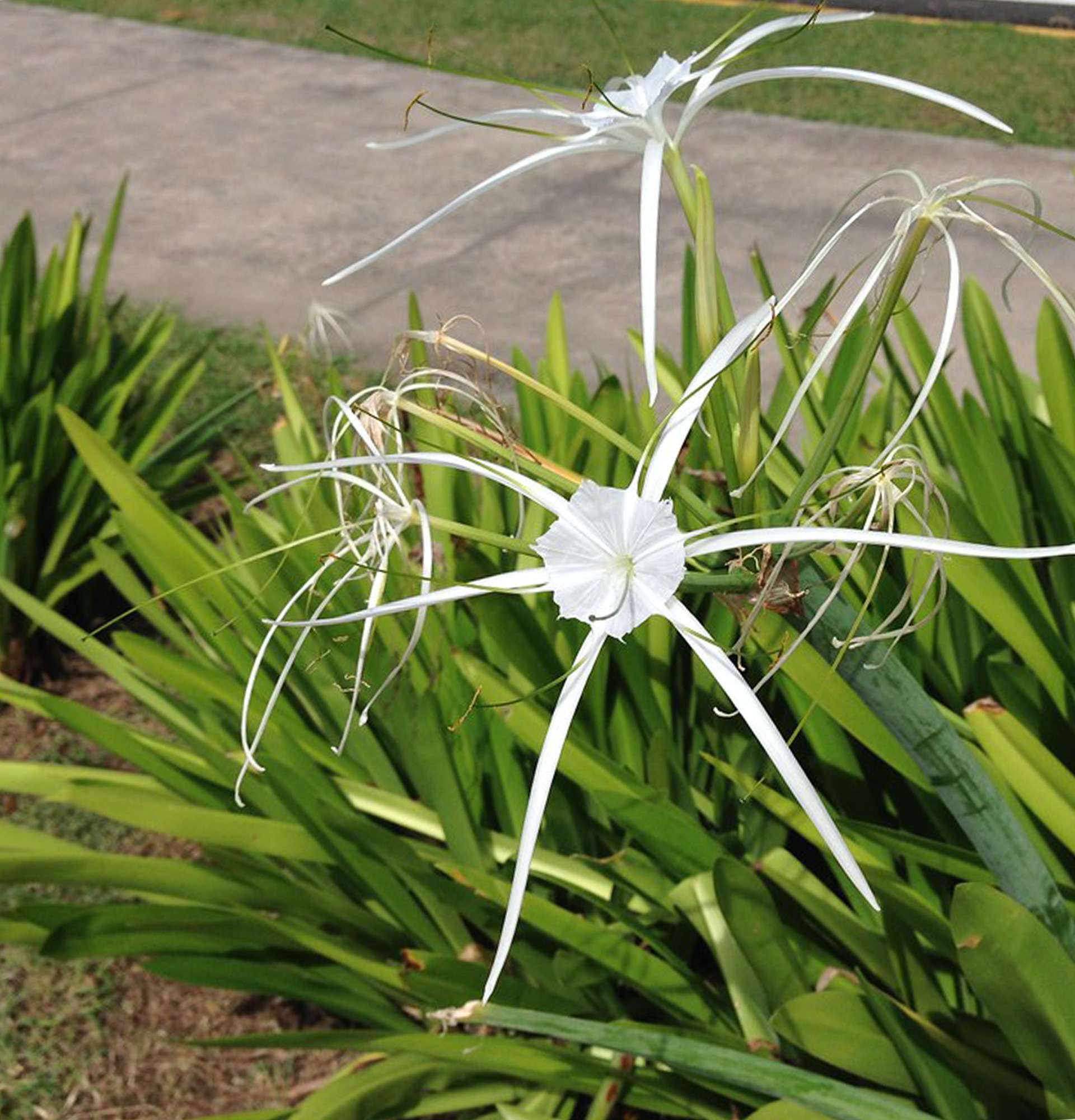
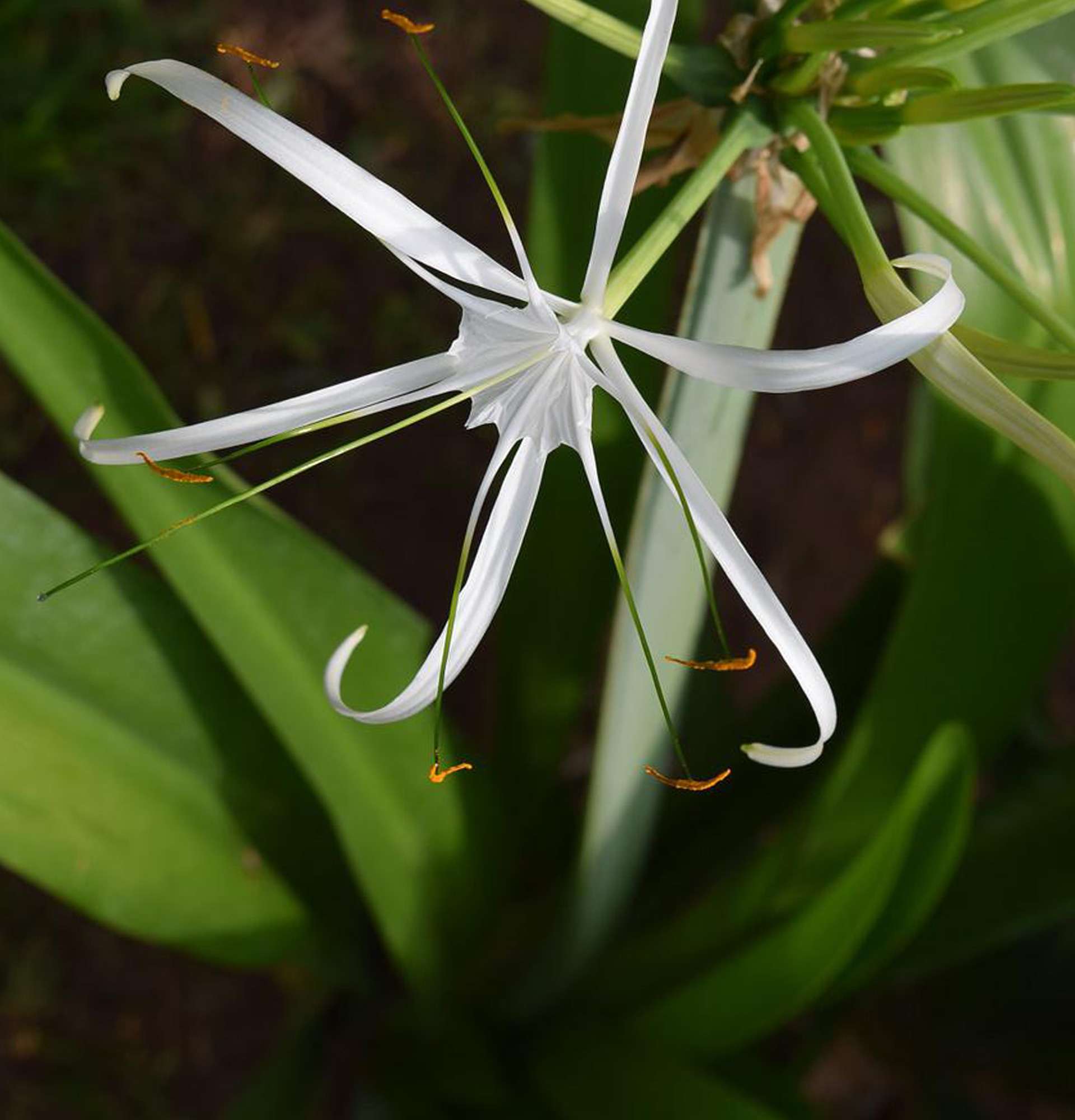
You can admire this bulbous exotic, which has a sweet vanilla scent of delicate white flowers of a whimsical shape, endlessly. Hymenocallis is decorated with its strap-like leaves, the length of which can reach eighty centimeters. Its leaves begin from a pear-shaped bulb in dry, shiny scales, the diameter of which reaches ten centimeters. Indian bulb has similar bulbs. The number of flowers, from two to sixteen, directly depends on its size, which form inflorescences similar to umbrellas. And they are located on a flower arrow, the length of which varies from fifty to eighty centimeters. The unusually fantastic, fragrant flowers are especially decorative. The result of flowering is an oval, fleshy seed.
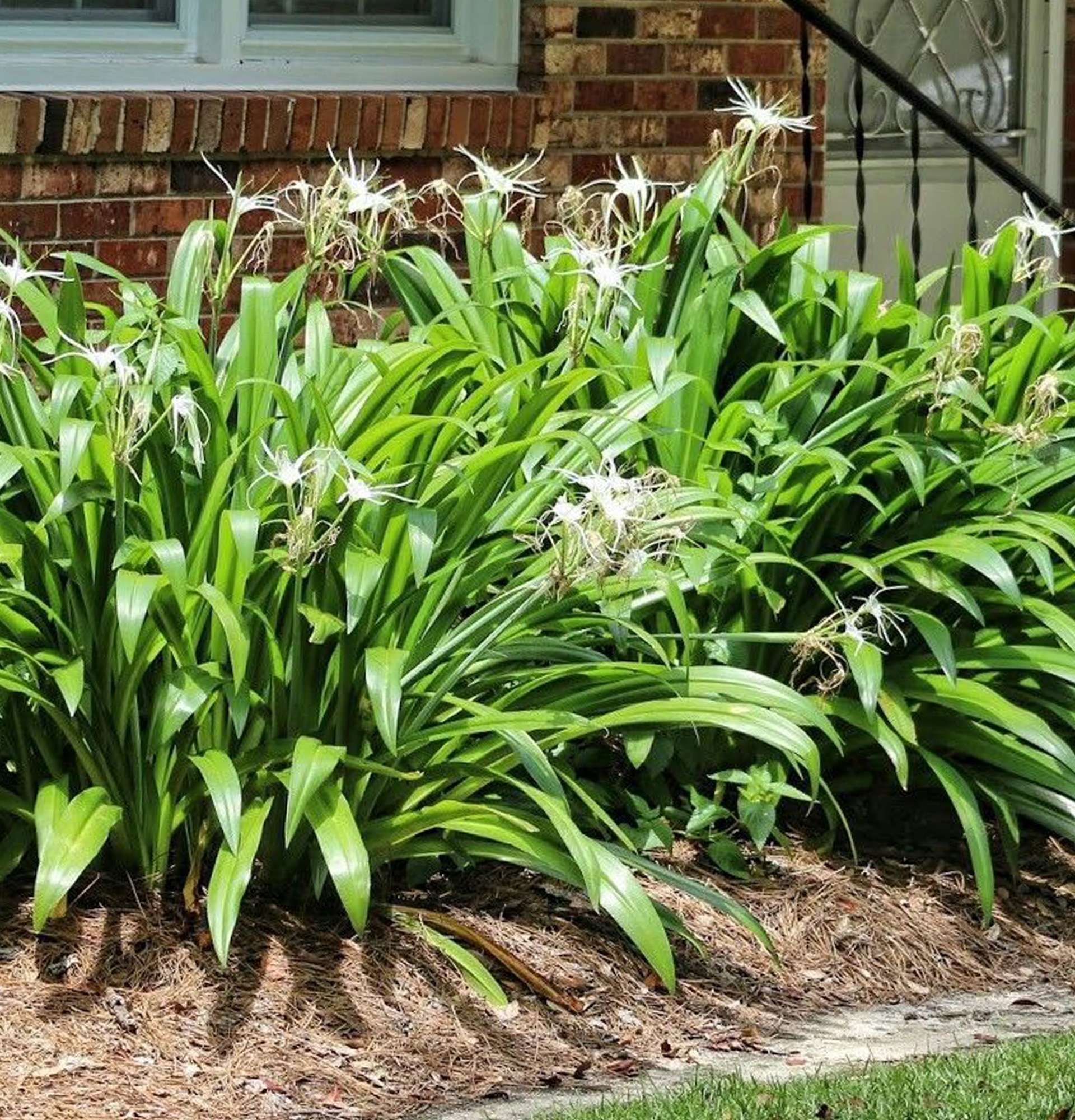
The bride's basket looks stunning both in a separate planting and in the company of other plants. It will perfectly decorate the front of alpine slides or the central part of a flower bed. Even small ponds can improve their appearance with the appearance of this charming exotic. Hymenocallis, photos of which can be seen in the next section of the article.
Types of Hymenocallis
Hymenocallis speciosa, also known as Hymenocallis pleasant
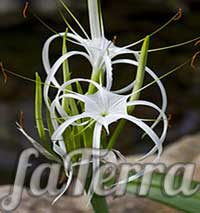 An evergreen native of the Antilles. This unusual beauty with fifteen-centimeter-diameter white flowers and elongated sixty-centimeter leaves will decorate any living space.
Hymenocallis littoralis
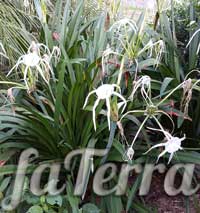 An exotic that reaches a height of half a meter with long leaves and fragrant, large, spider-like flowers. They begin to appear as early as February and bloom for three months. This variety is also called spring spider lily.
Hymenocallis caribaea
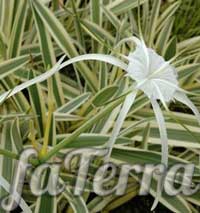 The most famous in indoor floriculture, an evergreen beauty. It is often called the "Caribbean lily". It is native to the sea coast near the Antilles. Flowering can be observed in winter. On a wide, sixty-centimeter fleshy peduncle, up to ten large white flowers rise, arranged in an inflorescence that looks like an umbrella.
Hymenocallis festalis
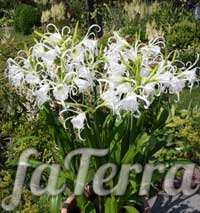 The natural conditions of Peru are native to this species. The Peruvian narcissus has become widespread in tropical and subtropical territories. Here it decorates gardens, parks, greenhouses, balconies, industrial premises and apartments of flower lovers. Hymenocallis festalis has not very long, up to sixty centimeters, dark green, strap-like leaves. With the beginning of warm spring days, the early Hymenocallis blooms with ten-centimeter white flowers. This beauty pleases the eye for several months.
Hymenocallis latifolia
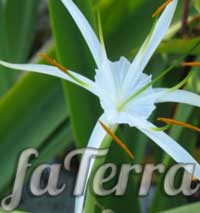 The distribution of this strongly growing evergreen flowering wonder extends to the sandy Cuban areas and the coastal dunes of the Caribbean island of Jamaica. On a sixty-centimeter stem, there is a large number of long leaves with a clearly defined central vein. The size of the leaves varies from forty to seventy centimeters. On a high peduncle, flowers are located, which form an inflorescence - an umbrella. After flowering, it is covered with oval, three-centimeter fruits.
Some flower lovers are sure that Hymenocallis and Pancratium are the same plant. There are some differences, but the care for them is similar.
Hymenocallis care in the home
It is very easy to grow such a plant.
The main thing! Find a bright, beautiful place for your pet and water it regularly and properly.
More details in points.
Choosing a place and comfortable temperature
Hymenocallis is a light-loving plant of the Amaryllidaceae family. It is not afraid of direct sunlight, within reasonable limits. Ismene will feel good all year round on west, east, and south-facing windows. In the warm season, it will gladly enjoy fresh air in the garden, on the balcony, or in the gazebo.
Lack of lighting will negatively affect flowering. Hymenocallis will not bloom.
Acceptable temperature indicators in the summer months are 17-25°C, and the winter temperature difference is 13-18°C. Deciduous varieties can withstand temperatures of 10-12°C; the bulbs should be in a dry state.
Air humidity and watering
The Peruvian narcissus is not particularly demanding on air humidity. Maintaining clean leaves will help by using warm water.
Hymenocallis care will be of high quality with proper watering. It is necessary to monitor the condition of the soil mixture, which should not be dry. But excessive watering should not be allowed, so that the roots do not rot.
Soil mixture and its feeding
The spider lily is not biased towards the composition of the soil mixture, but there are certain requirements. It should be fertile and loose. Its composition: garden soil, peat, manure, sand or perlite. All ingredients should be taken in equal parts. Another option is three parts of leaf soil and one part of sod soil and sand. You can purchase a ready-made mixture for bulbous plants in the store. It is desirable to correct it with crushed wood charcoal so that putrefactive processes do not spread.
The Peruvian narcissus, which is actively growing, needs high-quality feeding. Use liquid fertilizers intended for bulbous or flowering indoor plants.
Attention! Do not overdo it with fertilizers with a lot of nitrogen. They have a positive effect on the growth of leaves and bulbs, but reduce the duration of the flowering period of the plant.
Transplanting
For Ismene, transplanting every four years will be acceptable. Choose a beautiful pot with a hole for your pet. It should be three centimeters larger than the previous one. A good drainage layer should be placed on the bottom.
Remember! Ismene blooms more abundantly in a slightly cramped pot.
How to propagate the spider lily?
Propagation is carried out by seeds or daughter bulbs, which are four years old. They need to be separated from the main bulb and planted in a separate pot in a permanent place.
Seeds are sown in a mixture of peat and sand. The long-awaited seedlings can be seen in a few months after sowing.
Diseases and pests of Hymenocallis
Uninvited guests do not often visit this beautiful and spectacular indoor flower. But, sometimes, if the above care rules are not followed, Ismene can be a breeding ground for spider mites, aphids, or thrips. When these insects are detected, immediately treat the plant with insecticides. Use Aktellik or Fitoverm.
Difficult moments of cultivation
- Why does the spider lily not bloom? This misunderstanding can be corrected by fulfilling the plant's desire. It needs to be fed, the lighting improved, and the watering checked. The temperature regime is not maintained during winter dormancy.
- The leaves are drooping - excessive or insufficient moisture in the soil.
- The leaves are covered with long red spots - the plant has received a burn.
- The bulb is rotting - possible stagnation of water in the pot, poor drainage. Use a weak solution of potassium permanganate for prevention.
We take care of Hymenocallis conscientiously, plus a little love and attention, and in return we get abundant, whimsical flowering of our pet. Accuracy in this process will not hurt, because the flower is poisonous.
You can admire the bride's basket for a long time, and other indoor flowers, photos and names, can be viewed by opening the catalog of indoor plants on the site.
Enjoy viewing!
Write comments
Comments
Влад
Администра...
Если сыро - перед следующим поливом дайте почве почти полностью просохнуть. И конечно же обязателен хороший дренаж!