



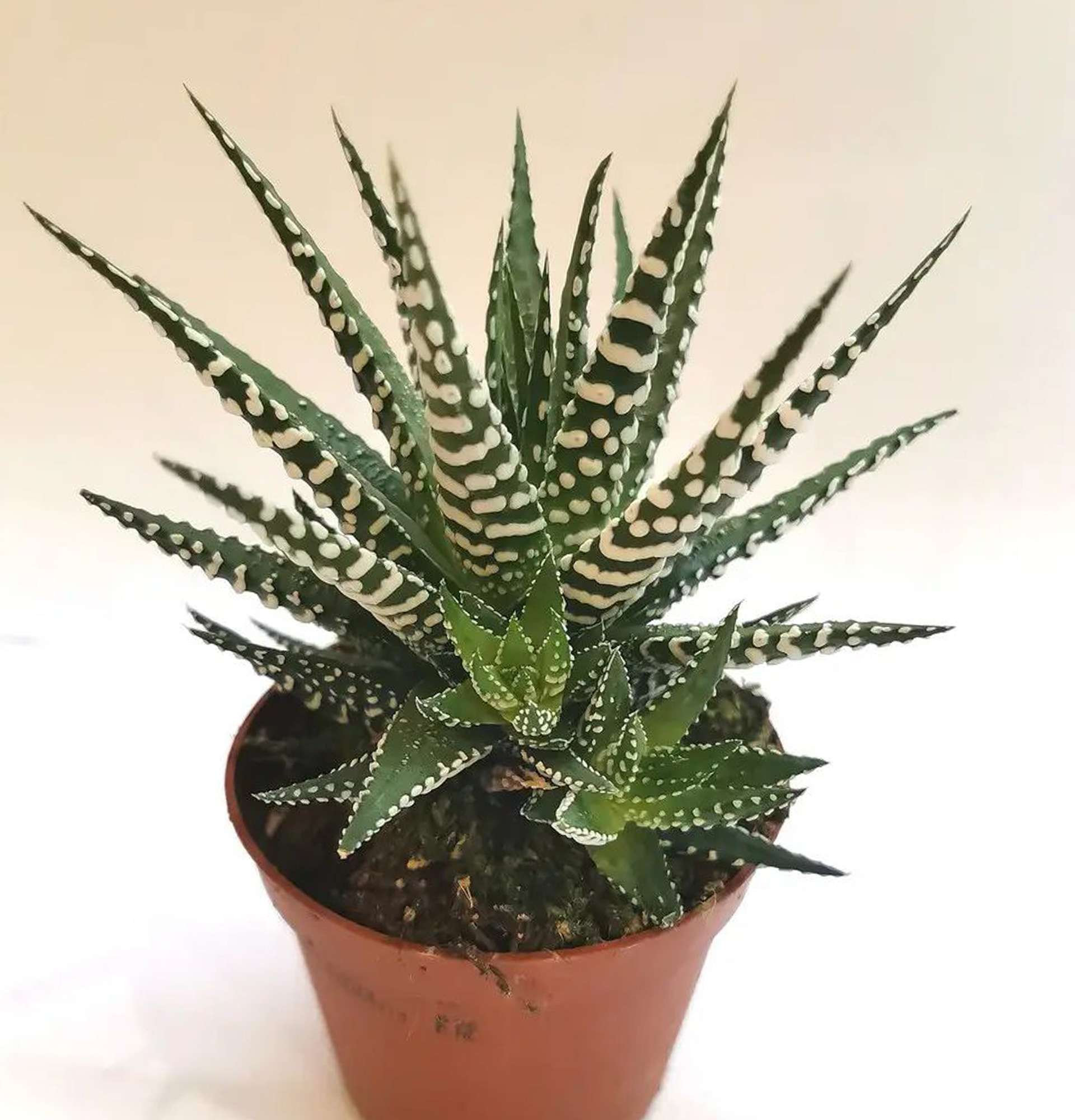
Latin name: (Haworthia)
Category: perennial succulent plants
Origin: South Africa
Extravagant and flamboyant haworthia – a miniature plant
Haworthia is a genus of one hundred and fifty amazing, tiny, and whimsical succulents, found in the subfamily Asphodelaceae.
This genus of amazing plants was named in 1809, in honor of the outstanding entomologist and botanist of Britain, Adrian Haworth, who dedicated his professional career to studying the flora of the South African continent.
The homeland of these tiny plants is considered to be the desert territories of South and Southwestern Africa, and some varieties are found in American deserts.
Despite the dry and hot atmospheric conditions of these territories with rocky and sandy soil, the haworthia flower feels great. The haworthia cactus hides under taller plants and uses the short, meager rainy season to store nutrients and water in its stems and leaves.
In these extreme wild conditions, the succulent can reach a height of one meter, while the usual standard size is about thirty centimeters.
The indoor haworthia plant never exceeds twenty centimeters. Flower lovers are simply delighted with this absolutely unpretentious African resident, which not only decorates but also introduces a creative atmosphere and exotic beauty into offices, study rooms, living rooms, and other public places. The haworthia mix looks great in the company of other succulents, such as agave, eonium, crassula. It will also look great in terrariums.
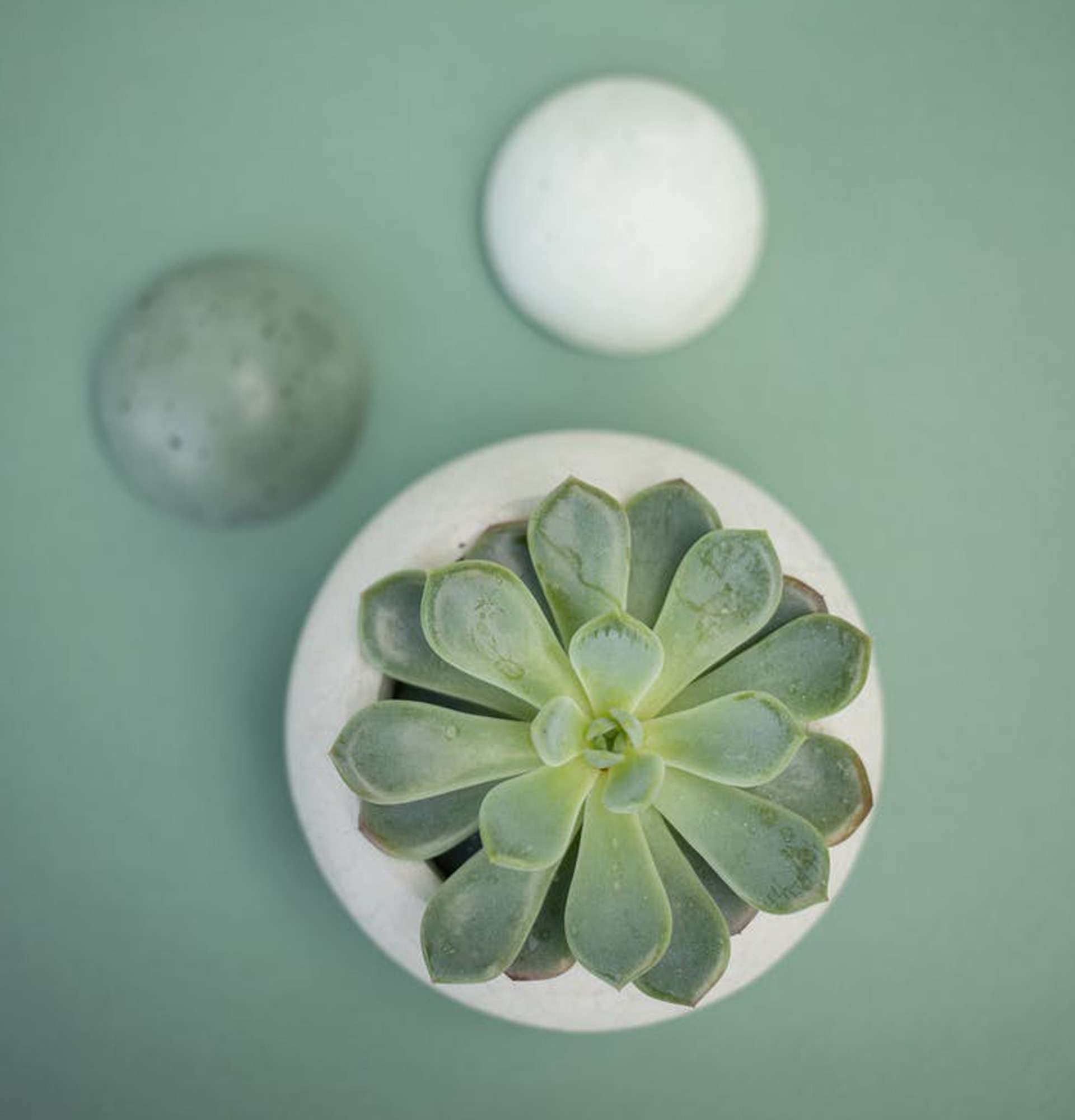
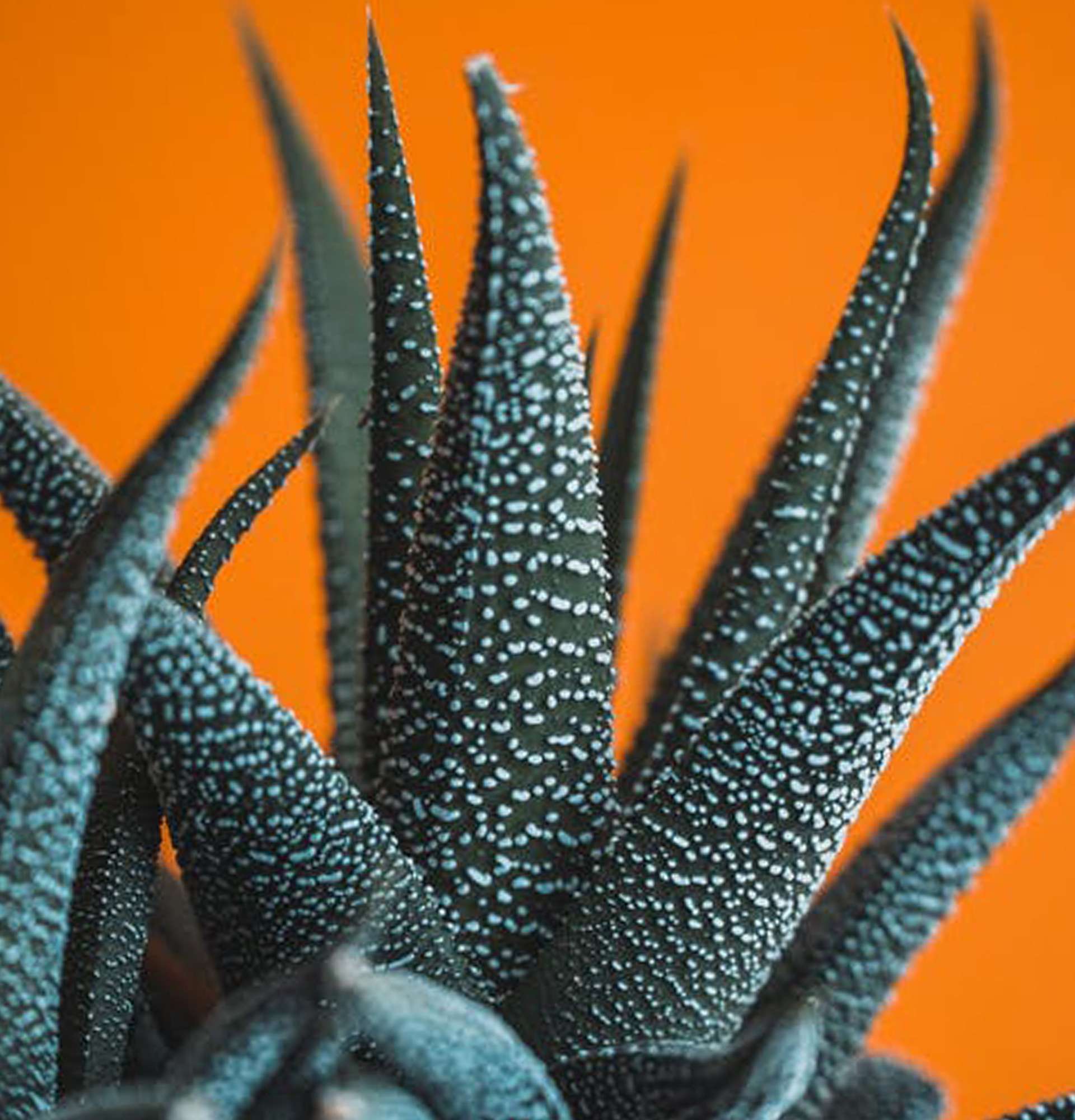
The unusual beauty that attracts flower growers comes from the unique, fleshy, hard leaves, originally arranged in rosettes. In shape and color, they can be round, triangular, lanceolate, needle-like, with white, blue, salad, dark green, brown, brick-red leaves with various patterns, as well as flat or voluminous stripes, dashes, or spots. The stems are practically absent.
How haworthia blooms can be seen in nature, in its natural environment. Long flower stalks bear small white flowers, arranged in a spike-like inflorescence. They are not particularly attractive, but they can significantly spoil the appearance of the beautiful exotic plant.
To avoid this process, it is better to remove the flower stalk when it appears.
You can see a photo of haworthia if you look at the varieties of this exotic beauty in the next section of the article.
Haworthia species
Striped haworthia (Haworthia fasciata)
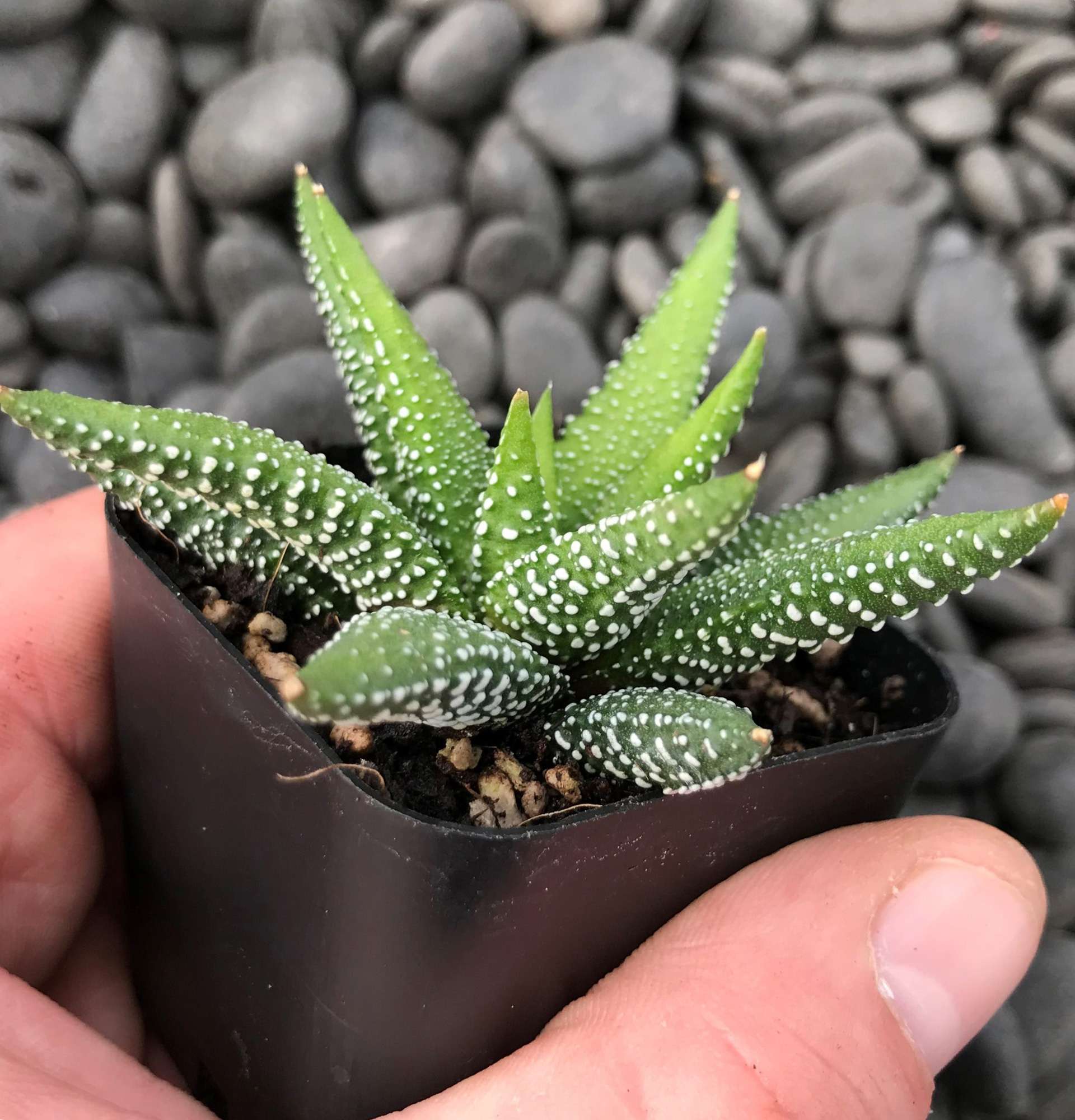
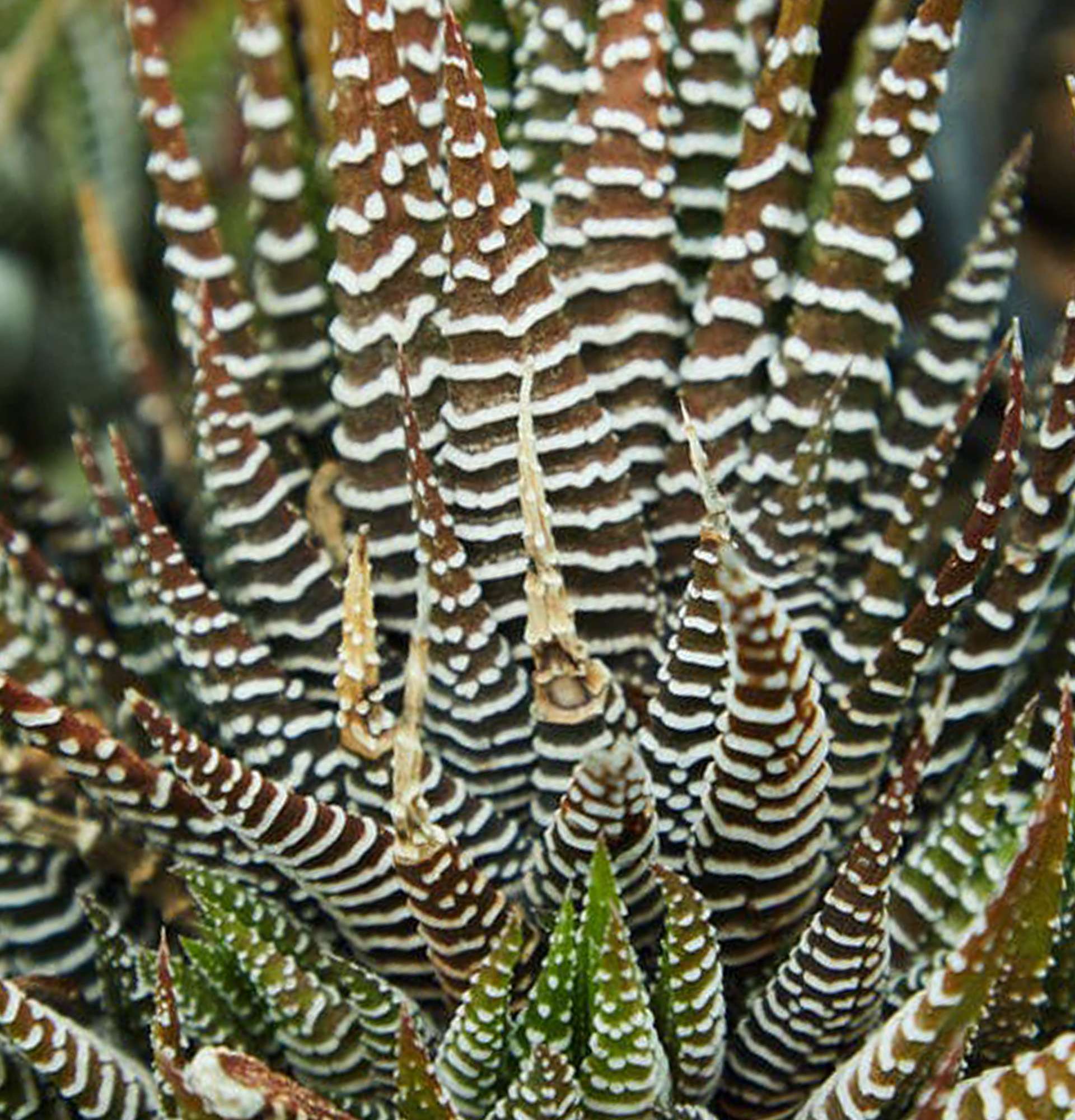
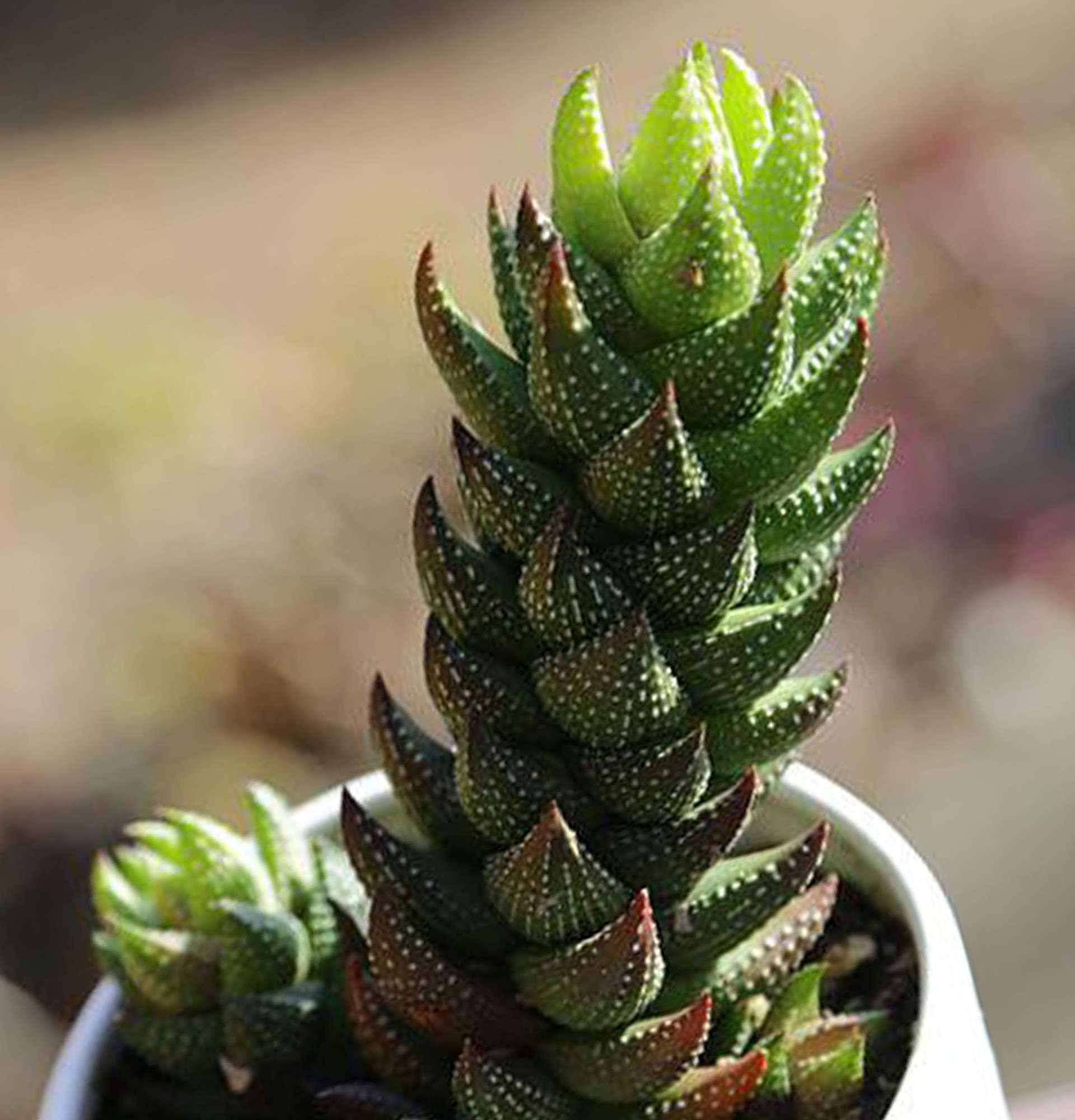
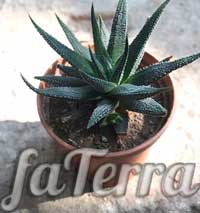 Haworthia fasciata is a perennial miniature bushy flower, with a diameter of fifteen centimeters. It is organized by dense basal rosettes, which are formed by thick leaf plates up to five centimeters long and slightly more than one centimeter wide. The shape of the leaves is lanceolate. The outer side of the leaf is smooth, green, and the inner side is decorated with bumpy white stripes. The striped haworthia visually resembles aloe, but in miniature.
Elongated haworthia (Haworthia attenuata)
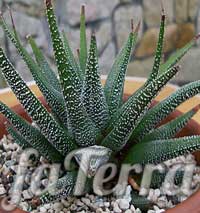 Visually similar to the striped one. The difference is the absence of white striped bumps, which makes it less attractive.
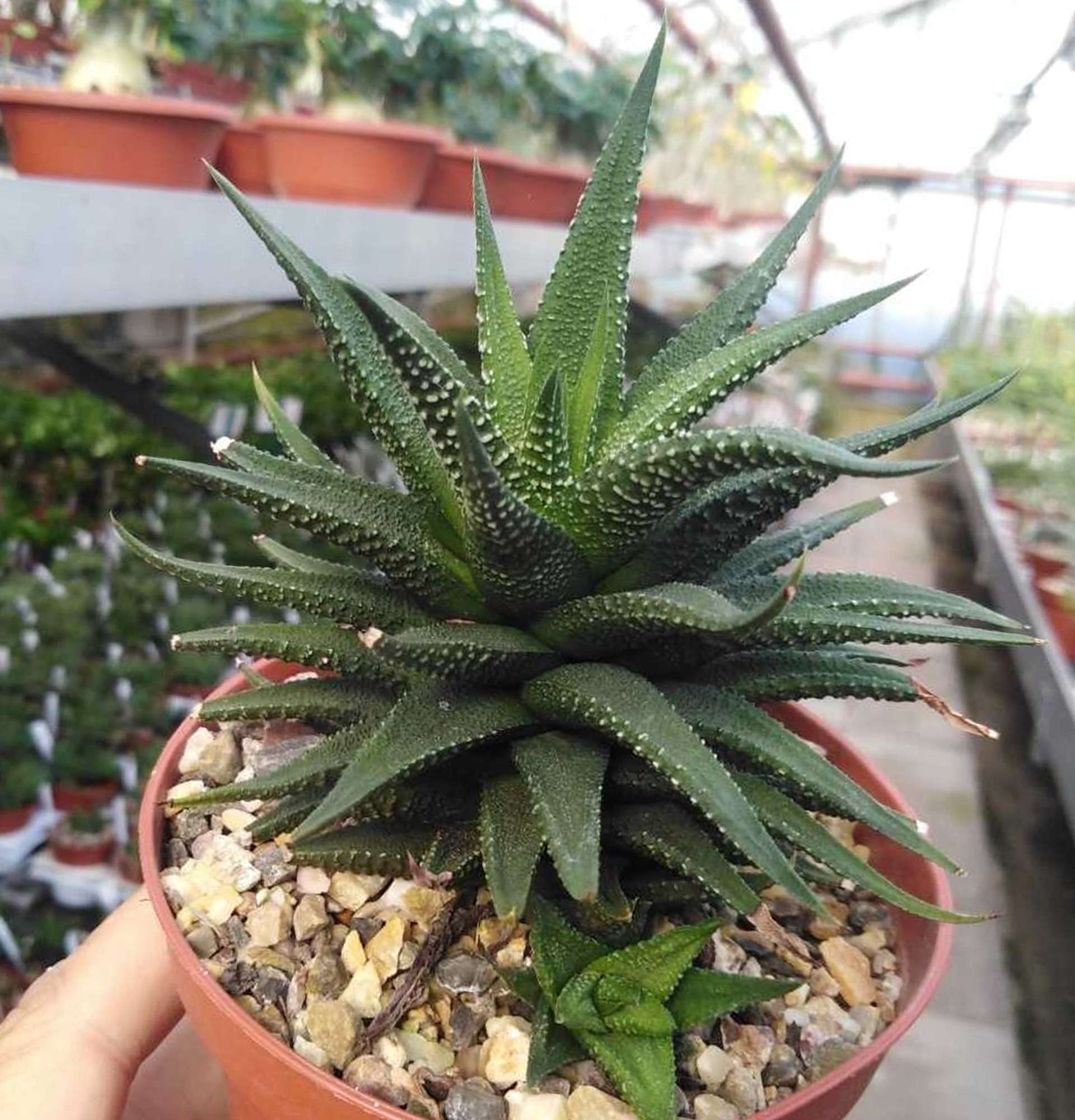
Haworthia attenuata is decorated with its lanceolate, seven-centimeter-long green leaves, covered with small white bumps. The width of the leaves, directed upwards, reaches one and a half centimeters.
Twisted haworthia (Haworthia tortuosa)
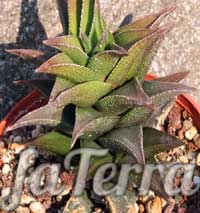 This variety has a short, fifteen-centimeter-long stem, on which small, twenty-five-millimeter-long, dark green leaves are located. The reverse surface of the leaf plate of haworthia tortuosa has a bulge, slightly covered with small bumps.
Pearl haworthia (Haworthia margaritifera)
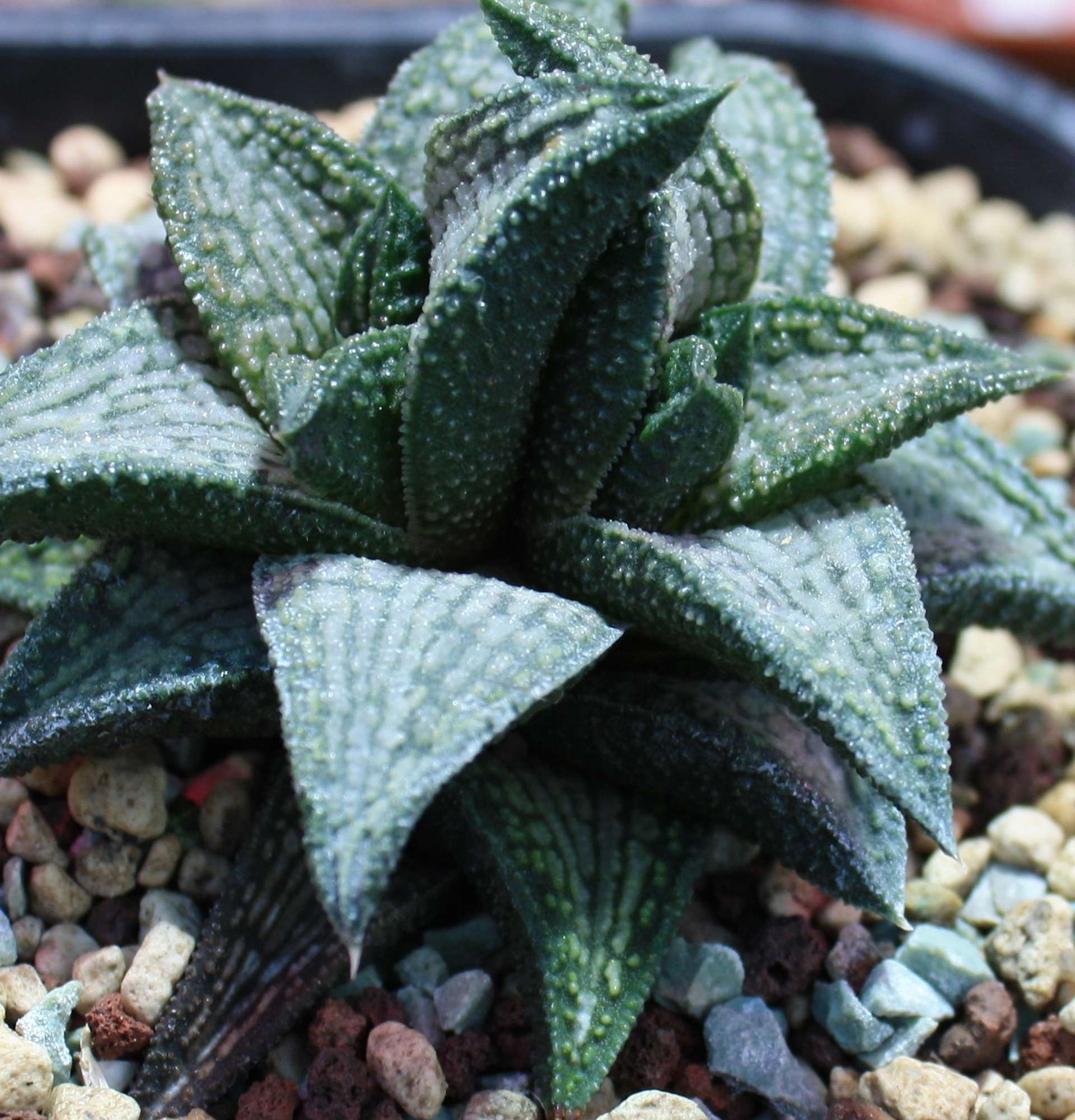
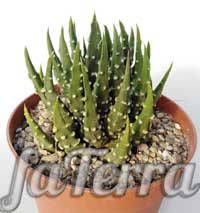 Like other members of its family, pearl haworthia forms rosettes of dark green, fleshy leaves up to eight centimeters long, with prickly edges. On both sides of the leaf plates are white, pearly, large bumps. It creates the impression that these bumps are pearls, which give the flower more decorativeness. In the spring-summer period, pearl haworthia blooms with small green flowers, arranged in spike-like inflorescences on thirty-centimeter flower stalks.
Cooper's haworthia (Haworthia Cooperi)
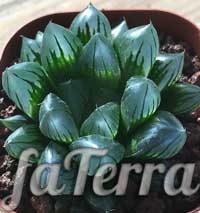 This miniature herbaceous succulent is popular with flower lovers. And its fame came from its unpretentiousness and extraordinary appearance. These whimsical plants are even called living stones and are used to create amazing and unique landscape designs.
Cooper's haworthia attracts attention with its small, dense, light green rosettes, which are created by transparent, rough leaves. The edges of which are framed by long cilia.
One of the well-known subspecies is Haworthia Cooperi truncata.
Blunt haworthia (Haworthia retusa)
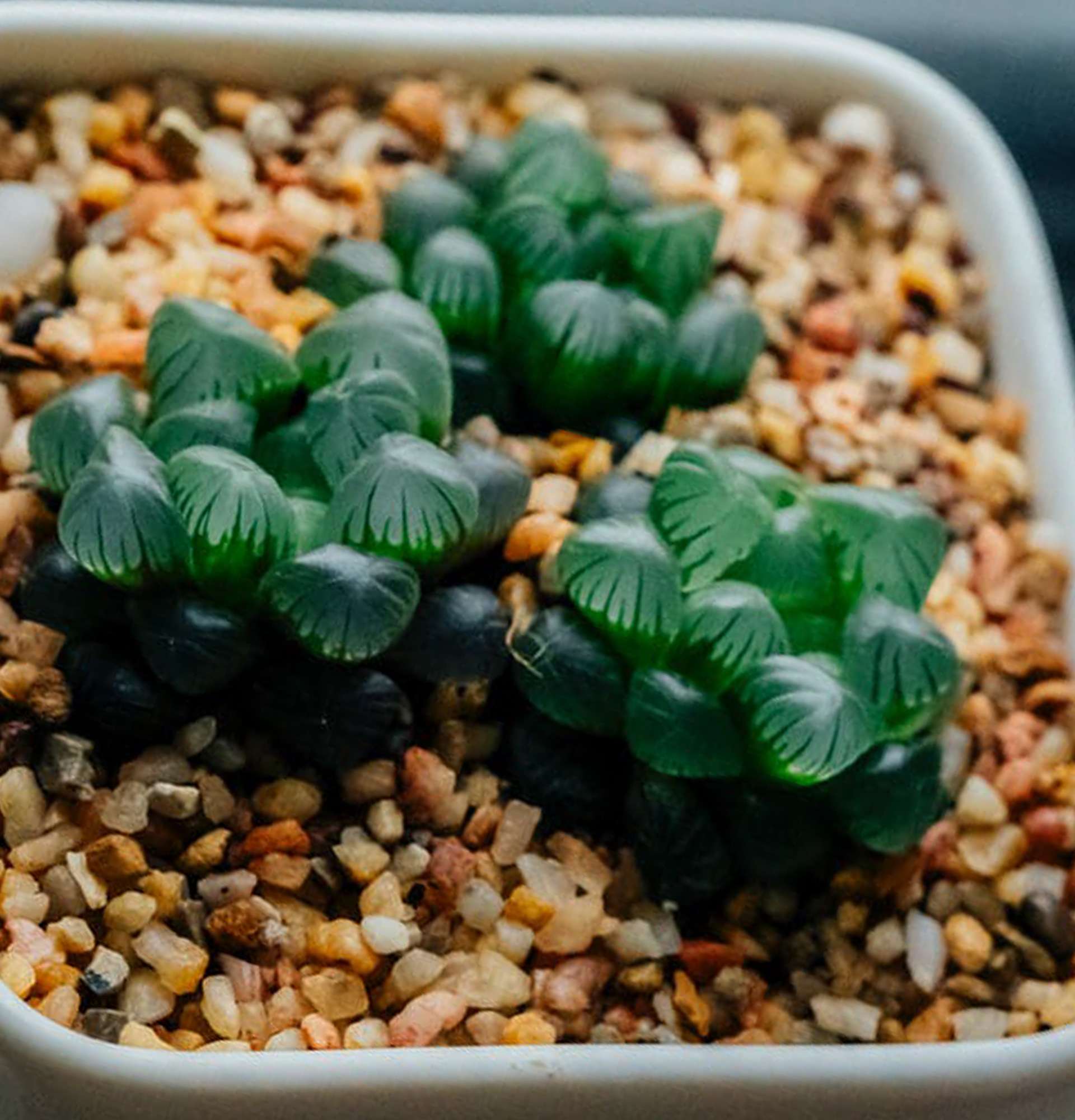
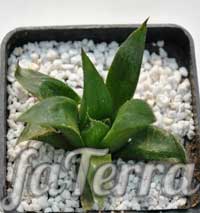 Haworthia retusa is in demand among flower growers. It is decorated with triangular, hard, five-centimeter-long leaves, slightly bent at the top. Whitish stripes on green, red, or brown-red leaves and unusual glass-like windows give the flower originality.
Boat-shaped haworthia, or boat-shaped (Haworthia cymbiformis)
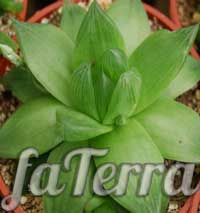 Pale, translucent leaves, similar to a boat, form ten-centimeter rosettes. Not very original white and small flowers bloom on forty-centimeter flower stalks.
Lime-leaved haworthia, limifolia (Haworthia limifolia)
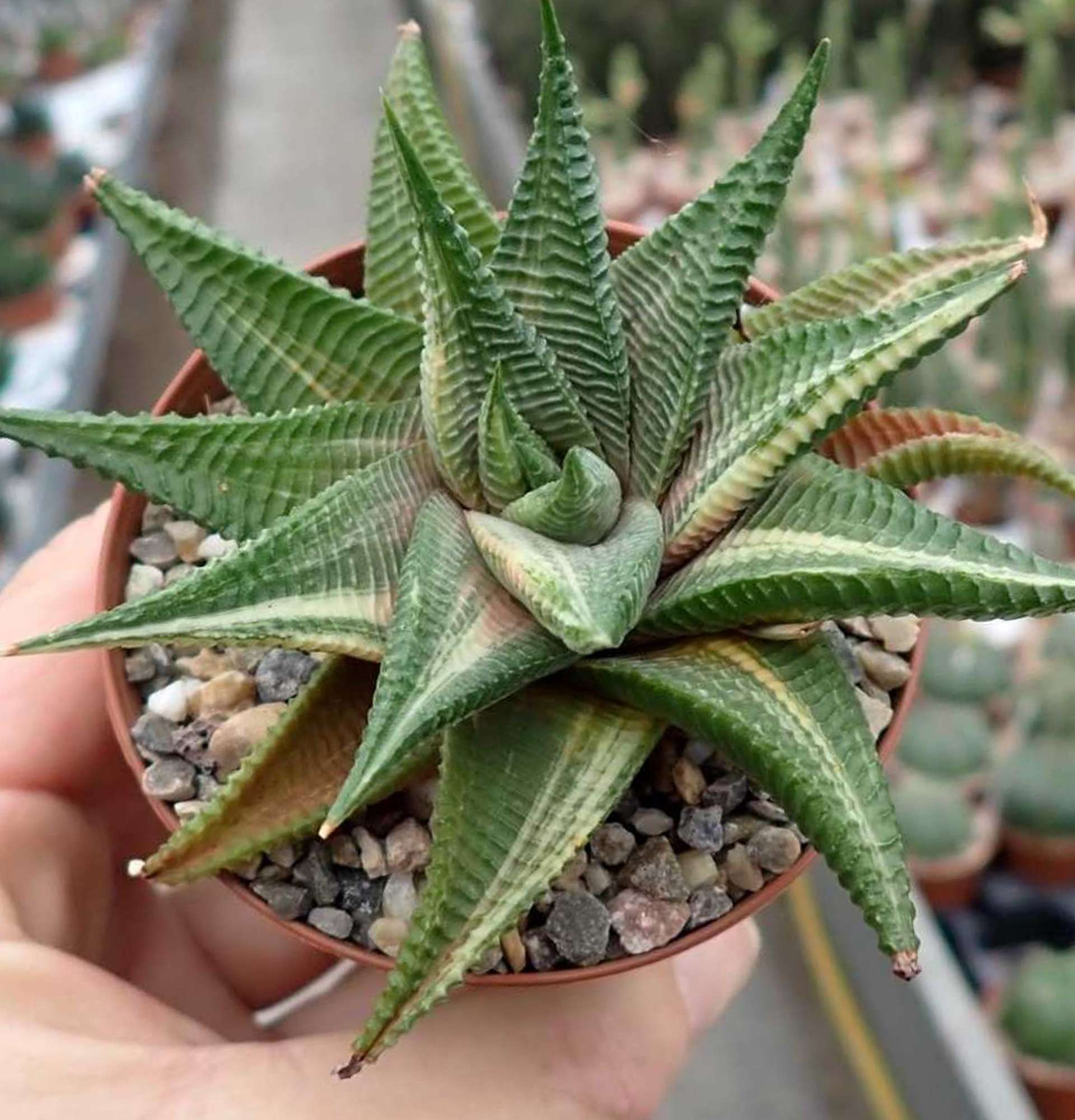
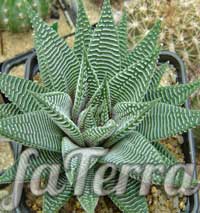 A charming and attractive beauty in the form of a sea star. A ten-centimeter rosette is made up of hard, fleshy, juicy, triangular leaves, decorated with wavy lines on both the outer and inner sides.
Haworthia limifolia 'Spider White' is a very beautiful variety, created by a South African succulent collector. On both sides of the symmetrical leaves are original, clear, white, bumpy stripes. These compact specimens grow very slowly.
Reinwardt's haworthia (Haworthia reinwardtii)
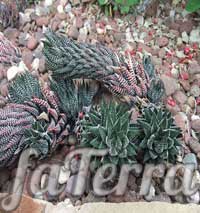 The plant does not have a basal rosette. On a short stem, elongated, thirty-millimeter-long, triangular leaves are arranged in a spiral. The upper side of the leaf plate is smooth, and the lower side is bumpy. These white bumps are arranged along and across the leaves, making them very original. Greenish-yellow flowers are collected in spike-like inflorescences and rise on a meter-long flower stalk.
White haworthia (Haworthia alba)
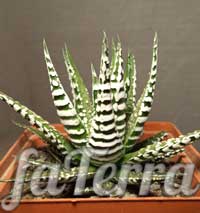 A wonderful specimen with thick, dark green leaves. The outer side has an original decoration in the form of white horizontal stripes. The inside of the leaf is smooth.
Herbaceous haworthia (Haworthia Herbacea)
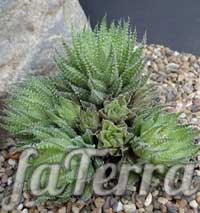 Beautiful rosettes up to eight centimeters in size are created from translucent, seraphic, juicy, concave, oval, lanceolate, greenish-yellow leaves. The veins on the leaves create an interesting mesh pattern. Transparent, bristly thorns are located along the edges. With age, the plant becomes darker or greenish-waxy in color. Sunlight gives the leaves a red color. It blooms with large, white-cream flowers on a thirty-centimeter flower stalk.
Mosaic haworthia, or checkerboard (Haworthia tessellata)
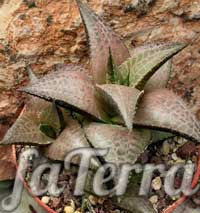 The checkerboard haworthia does not have a stem. The exotic has long, pointed, bent inward, very thick leaves, arranged in a spiral. The entire area of the leaf plate is painted with light transverse streaks, which look great in sunlight. The edges of the leaves are framed by small, almost invisible teeth.
Haworthia tessellata blooms in nature several times a year.
Big Band haworthia (Haworthia tasciata Big Band)
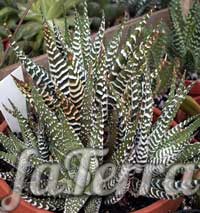 The leaves are dark green, massive, up to ten centimeters long, with a small pointed end, and small bumps on the surface, and small thorns along the edges.
Haworthia care in the home
Successful cultivation of African violets directly depends on knowledge and the correct application of the conditions and rules of keeping. Even inexperienced flower growers can grow a beautiful plant, nicknamed "crocodile tails." Let's consider in detail how to care for haworthia.
Choosing a location and temperature regime
Caring for haworthia will be absolutely easy if you place the indoor flower correctly. This twisted aloe loves a lot of sunlight, but not direct. This can be achieved by placing your exotic plant on an east, south, or west-facing windowsill.
The plant will also appreciate a non-intrusive indoor temperature regime. In summer, it is desirable to maintain a temperature of no higher than 25°C, and in winter, if possible, no lower than 10°C to 15°C to provide haworthia with a period of rest.
Humidity and watering
The humidity level in the air is not particularly important for haworthia. It does not have a significant impact on its growth, and spraying is not necessary. For hygienic purposes, you can wipe the leaves with a damp cloth to remove dust and dirt.
Important! During the summer, "crocodile tails" will enjoy spending time outdoors in the garden, on the balcony, or on the terrace.
Water the indoor flower haworthia with warm, settled water in the warm season approximately every three days. Be sure to check the condition of the soil in the pot. The top part should be dry. Reduce watering in winter to two or once a month.
When watering your plant, make sure that the water does not get into the center of the rosette and on the leaves.
Soil and its feeding
Soil prepared for cacti and succulents in a flower shop will be a quite comfortable substrate for haworthia. Self-made soil mixture will consist of the following ingredients: garden and sod soil, coarse sand. A little wood charcoal and brick chips will not hurt.
During the growing season, the indoor flower can be fed with fertilizers designed for cacti, succulents, or ornamental plants every thirty days. Half the norm will be enough. Overdosing fertilizers will harm haworthia. Its leaves may change color to yellow or red.
Haworthia transplant
It is desirable to repot young indoor haworthias in a larger pot once a year. More mature specimens are repotted no more than once every three years. At the bottom of a small, wide pot, it is necessary to lay a good drainage layer of small expanded clay.
Haworthia propagation
You can propagate your favorite African violet with children, seeds, and leaves. To dry, leave the planting material in the fresh air for a couple of hours. Then, we root it in a mixture of peat and sand.
Pests and diseases
If you carefully follow the conditions of keeping, your plant will never be visited by unwanted guests. If, during inspection, you find scale insects, spider mites, or mealybugs, you must immediately start fighting them. Treat haworthia with insecticides.
Difficult moments of cultivation
Changing the color of the leaf plates from pale to yellowish or reddish is too much fertilizer.
The leaves are flabby - overwatering the soil.
The leaf plates are soft and turn black - low air temperature and drafts.
The leaves curl, and the ends dry out - the temperature is too high, the air is too dry.
The rosette is too loose and elongated - lack of lighting.
We have carefully considered the main issues of how to care for haworthia - this unusual exotic indoor flower. Follow the necessary recommendations. Exotic haworthia, which does not even have lush flowering, will perfectly decorate any interior of your space.
Write comments
Comments