



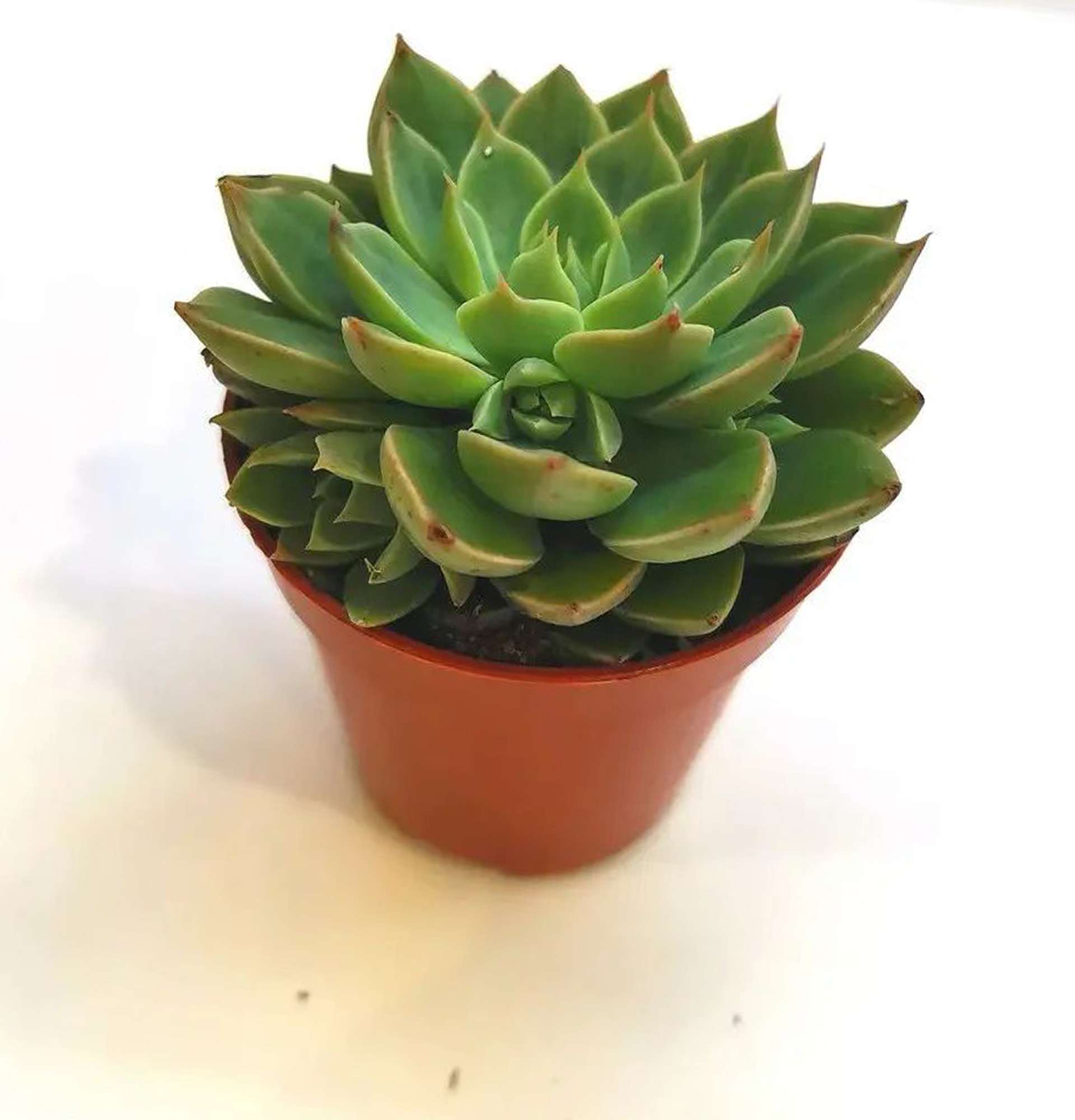
Latin name: (Graptopetalum)
Category: annual and perennial succulent plants
Origin: Mexico, Southwestern American continent
Amazing Graptopetalum – an exotic and decorative Mexican star
Graptopetalum, sometimes called Graptopetalum, is a genus that unites twenty varieties of succulent individuals that have found a place in the Crassulaceae family.
The name of the genus, when translated from Latin, means "graptus" - painted, "petalum" - petal, painted-petal. This unusual succulent wonder also has other interesting names. It is often called Graptopetalum, Mexican star, Tacitus.
The native territories of these decorative, stemless exotic plants are considered to be mountainous areas with coniferous forests, located above sea level at two thousand three hundred meters, in the areas of the North American continent, in the dry Mexican prairies, including the state of Arizona.
The end of the twentieth century became a period of acquaintance of European flower growers with cultivated species of decorative Graptopetalum. This was facilitated by the Mexican researcher and expert in the cultivation of Mexican cacti, Alfred Lau.
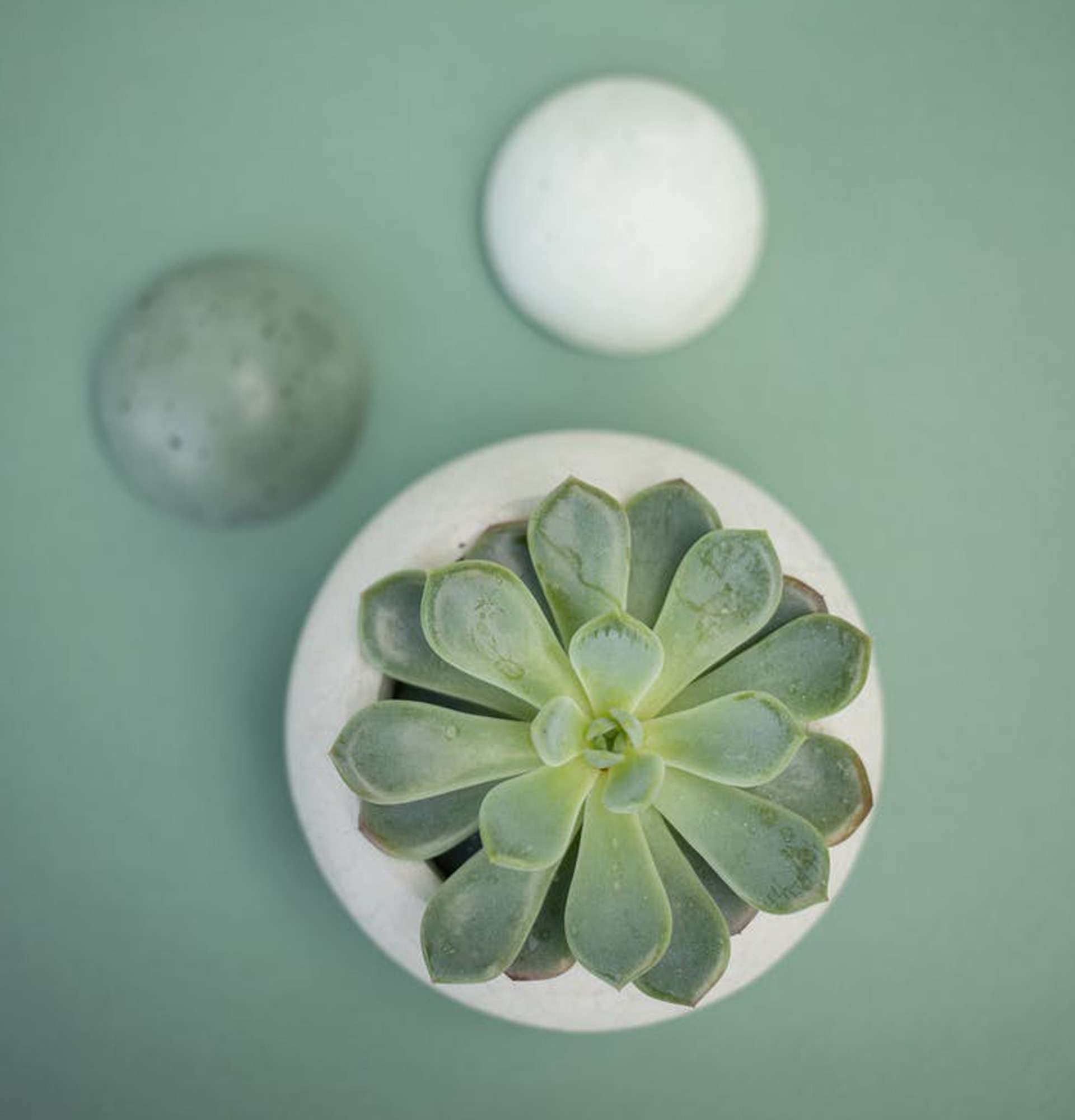
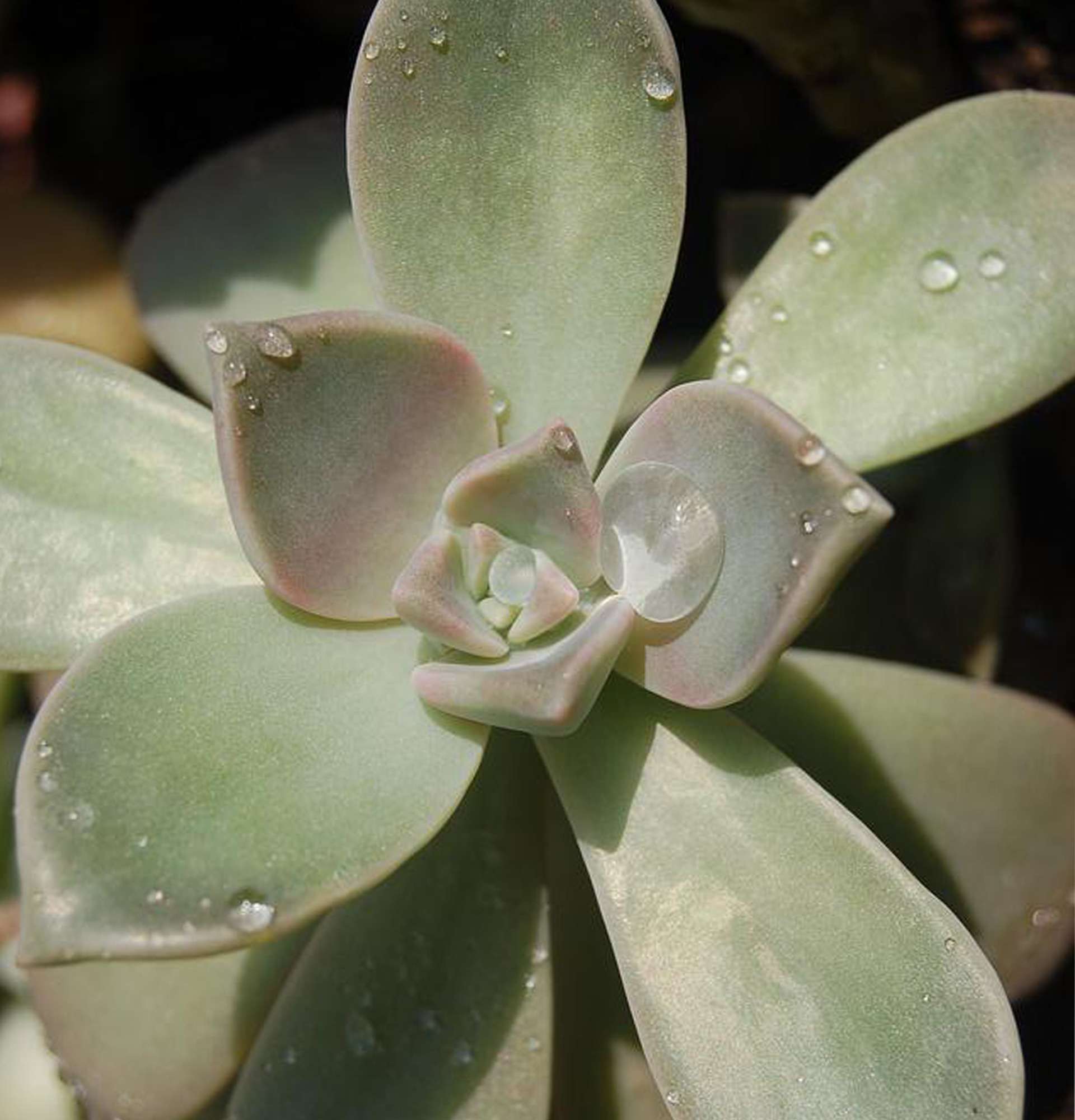
In its natural wild habitat with its extreme conditions, the Graptopetalum succulent grows up to one meter, and miniature species reach a height of no more than five centimeters. Domestic apartment conditions allow the decorative Mexican star to grow up to forty centimeters in height. Characteristic indicators of this decorative wonderful flower can be seen in its stemless qualities, as well as original shrubs with juicy stems. The main remarkable beauty that a room flower Tacitus can be proud of is a dense, round apical or ground rosette of light green leaves, which resembles shaggy cedar cones. These original succulents perfectly retain water, which they spend at a more necessary moment.
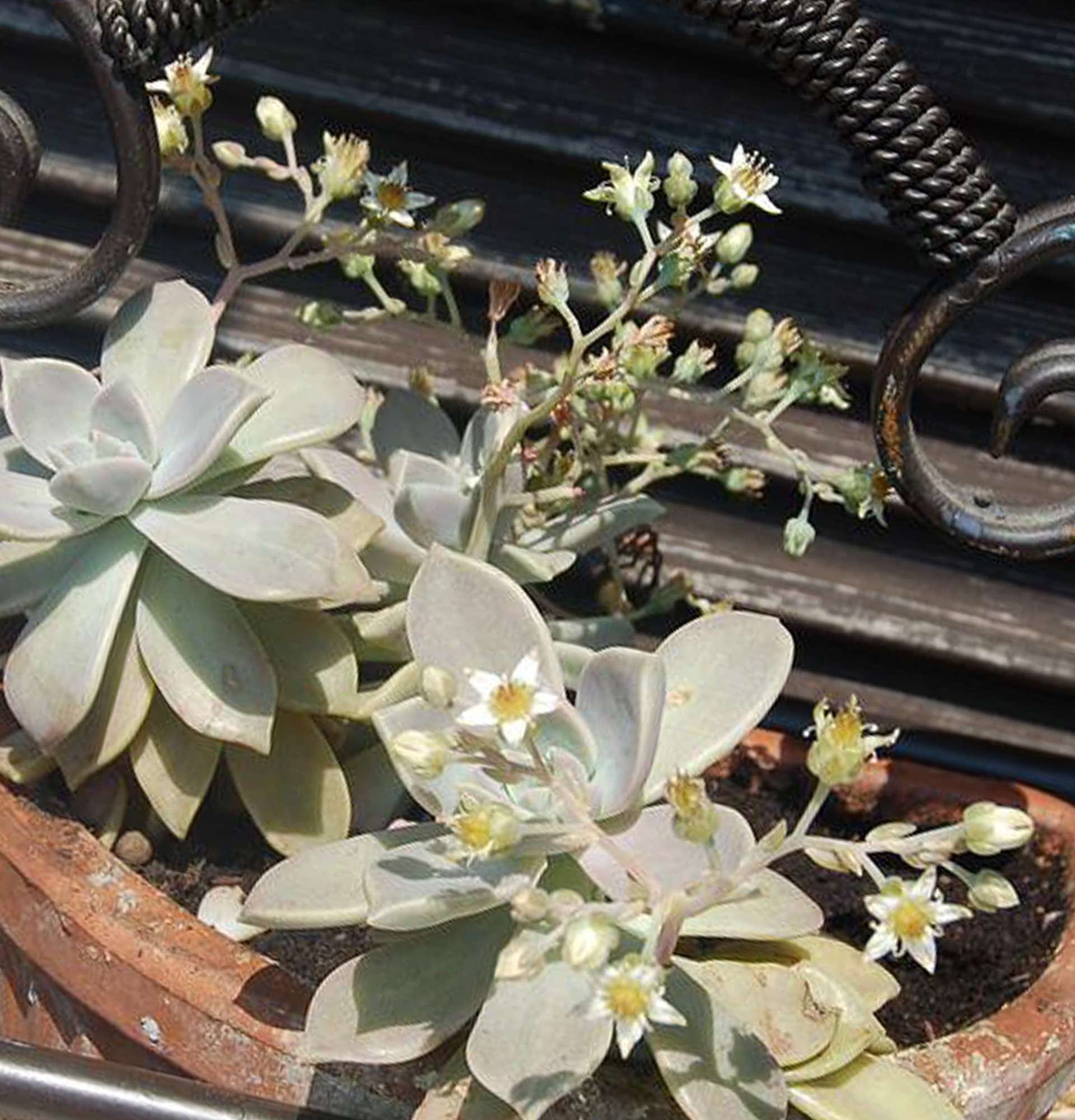
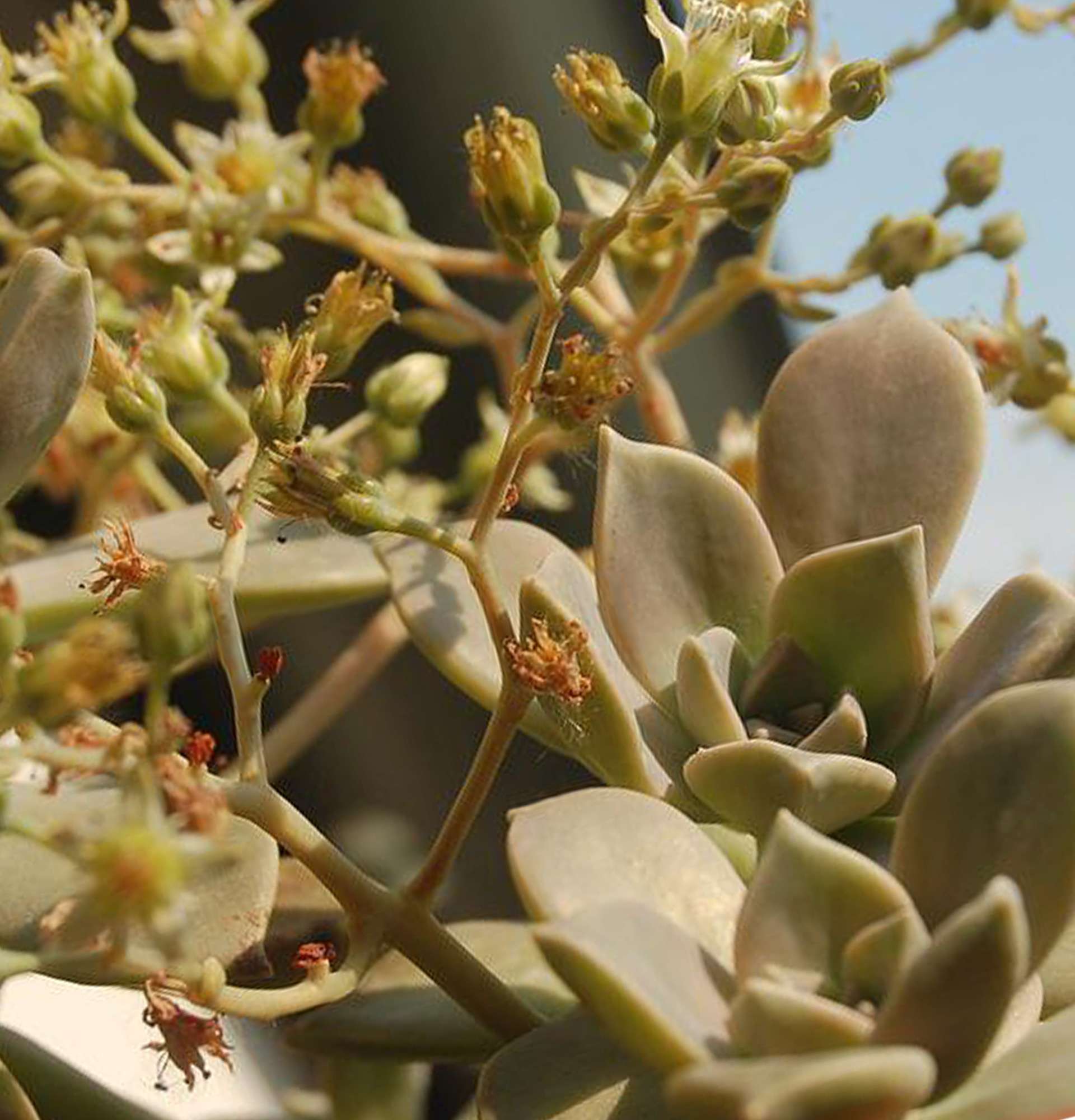
Pots of the domestic Mexican star flower delight their owners with star-shaped creamy or bright yellow flowers, collected in semi-umbellate inflorescences. The variety of shades is simply amazing. They can be purple, pink, green, blue, cream or bright yellow. A multitude of large, pointed stamens give the flowers a special decorativeness.
You can admire the flowering from the end of spring to the middle of summer.
The Graptopetalum succulent is not a demanding flower in terms of growing conditions. It can be easily placed next to such indoor plants as Haworthia, Crassula, Stapelia. These expositions will be a wonderful decoration for any interior.
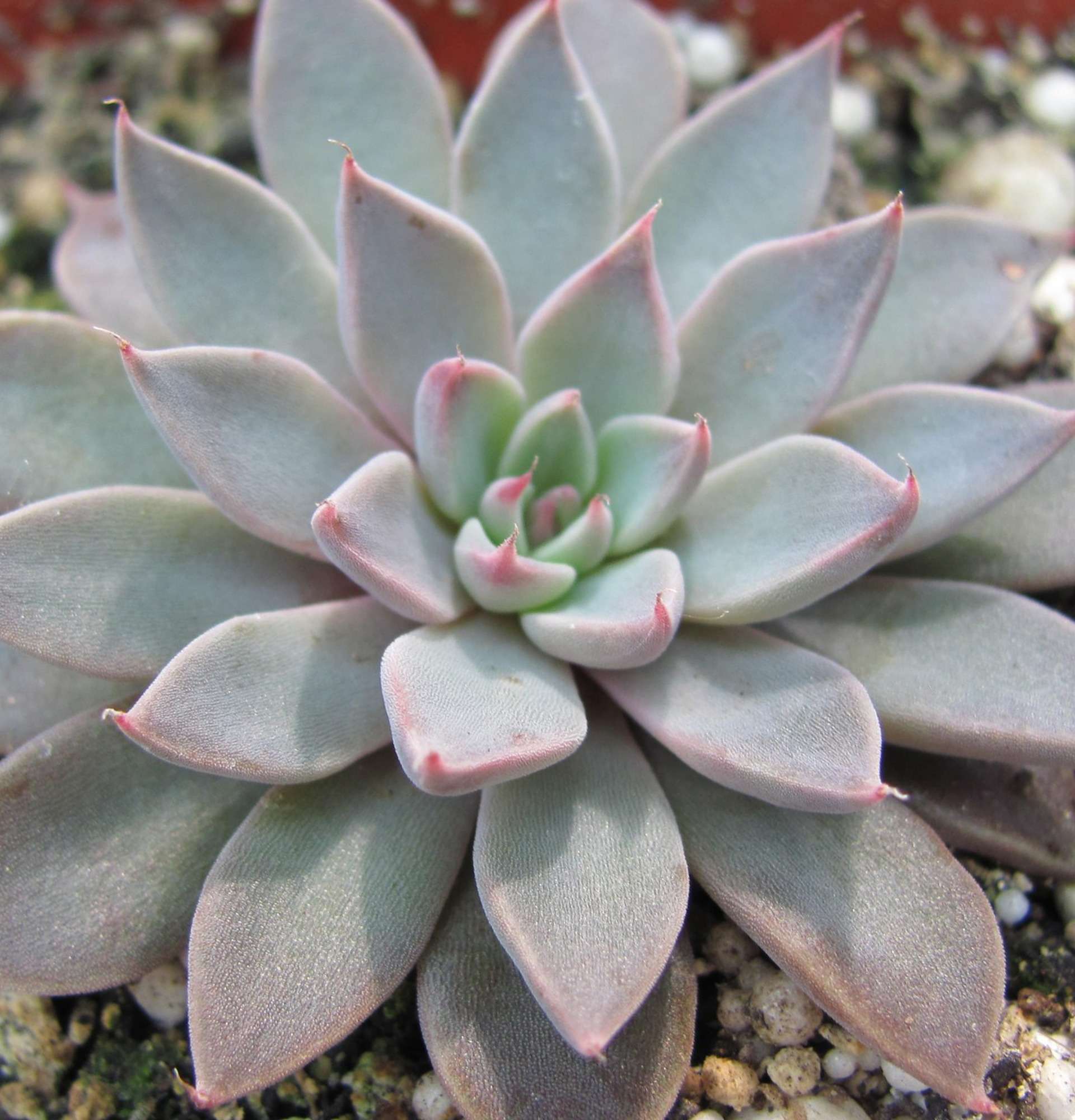
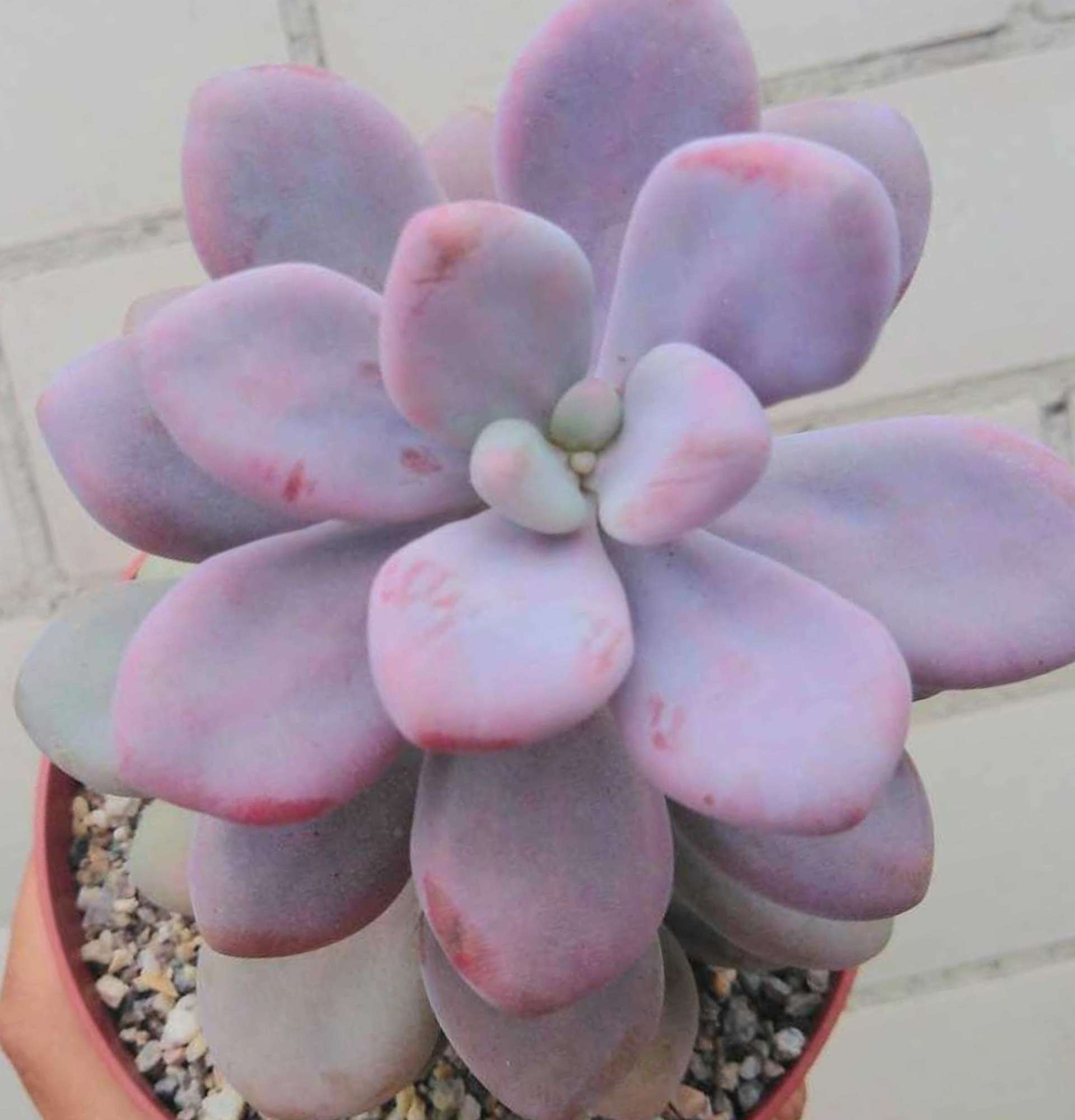
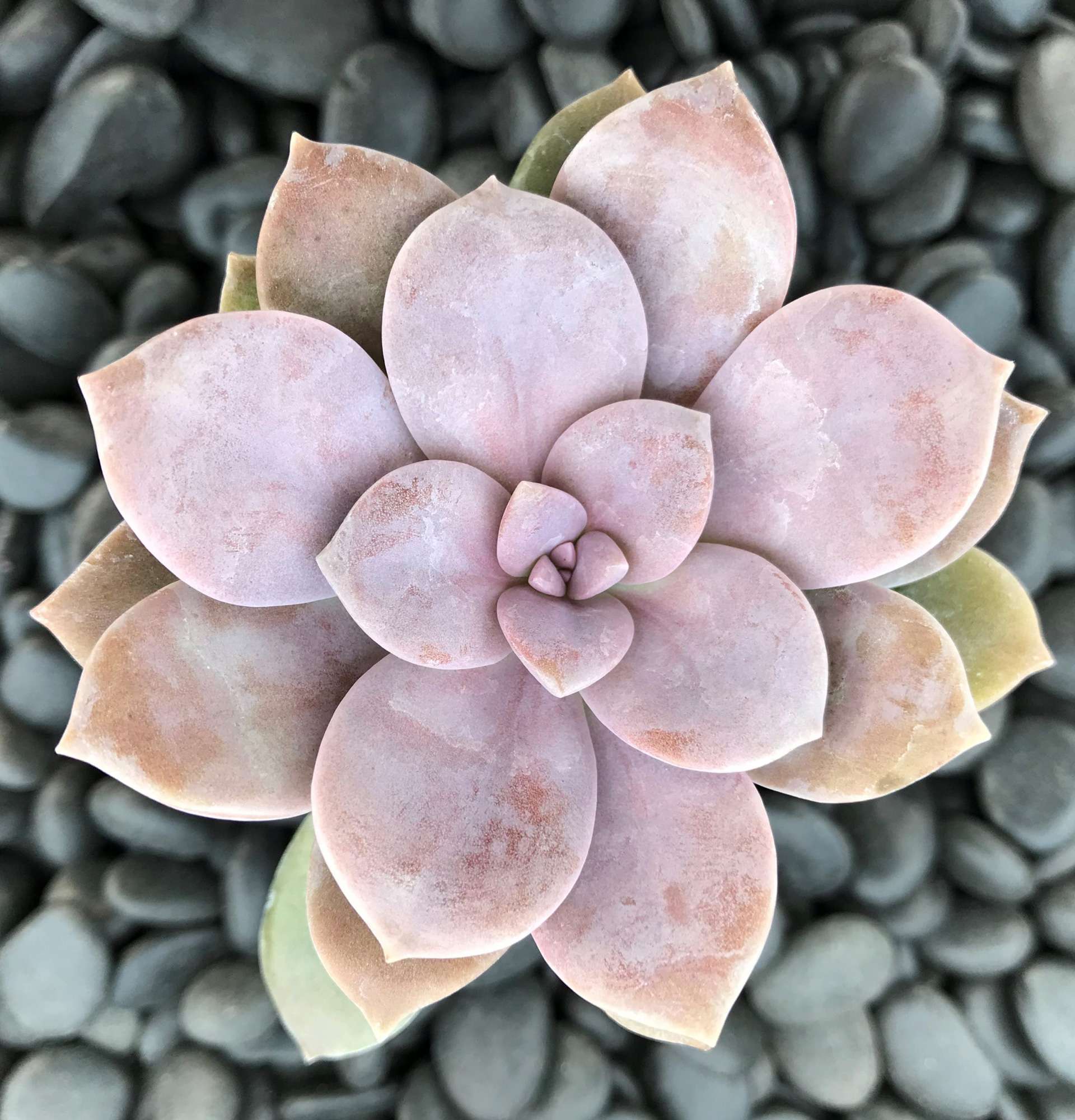
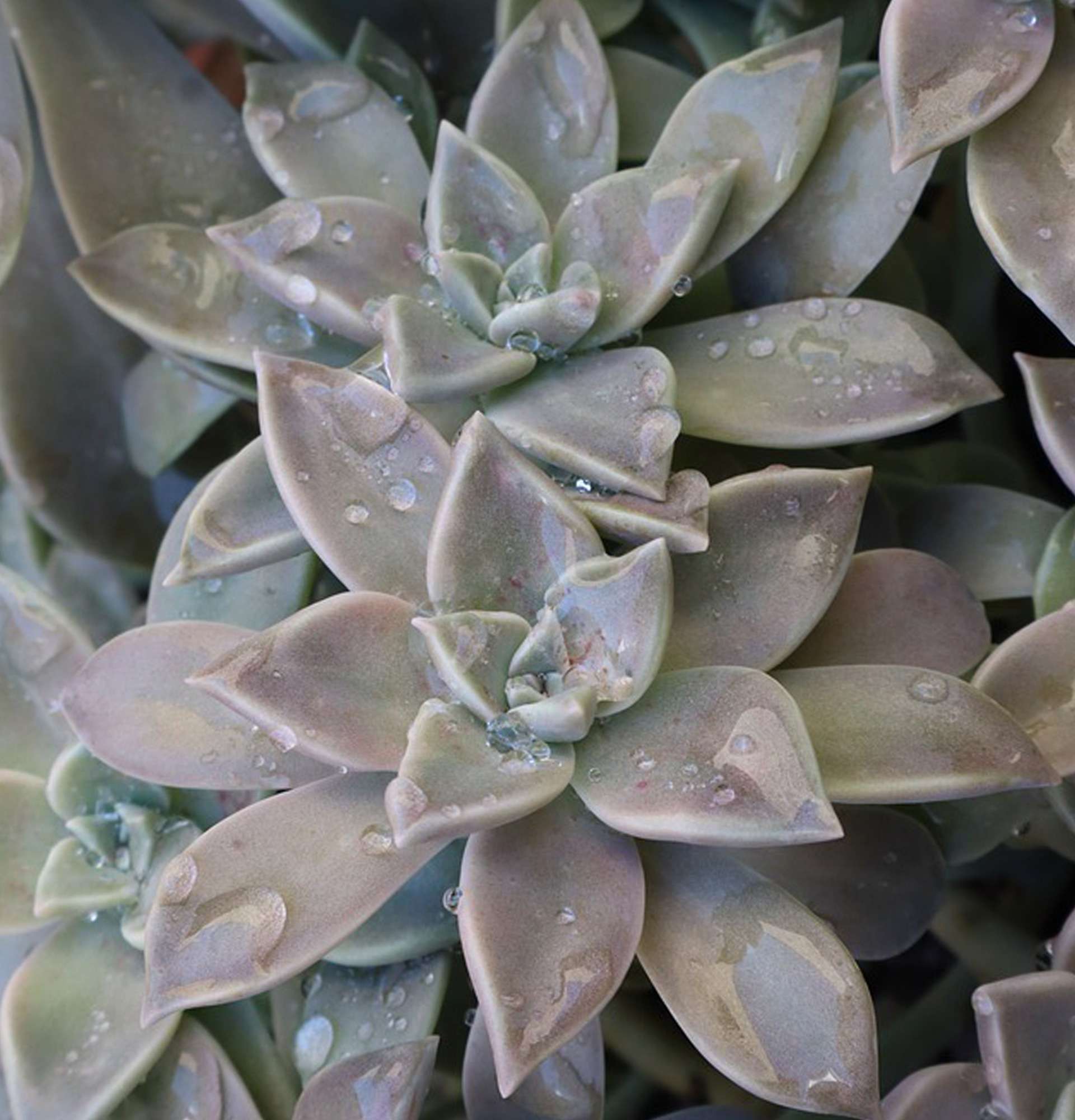
Graptopetalum, a photo of which can be seen when considering the unusual varieties of this decorative succulent.
Graptopetalum species
Graptopetalum paraguayense
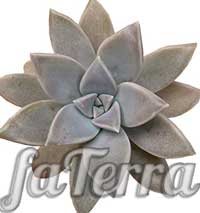 A perennial stone rose from Mexico and Paraguay has juicy, bare, short, thick stems. In early age, the stems of the plant have a straight shape, and adult individuals begin to bend and spread, which gives the plant a special attractiveness.
The bluish, pink-gray leaves are arranged in the form of flat, five-centimeter rosettes. The stone rose flower has fleshy, oval leaf plates with pointed tops, with concave surfaces and a charming waxy coating. Their size can reach eight centimeters in length, four centimeters in width and one centimeter in thickness. Flowering does not have special decorativeness. Small white flowers, consisting of five petals, are decorated with red dots and rise on a tall peduncle above the beautiful, dense rosettes.
Graptopetalum bellum
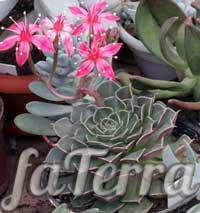 A popular variety of Graptopetalum among flower lovers is undoubtedly Tacitus bellum. This compact, naturally slow-growing wonder does not exceed thirty centimeters in height. It has the appearance of a ten-centimeter spiral, rounded rosette. Young green-gray leaves of a triangular shape, with slightly pointed ends, are pressed close to each other and are completely located on the surface of the earth. The bronze hue on the leaf plates makes Graptopetalum bellum especially decorative.
Twenty-five-millimeter, five-petaled flowers rise above the rosettes at a height of up to ten centimeters. The color scheme varies from pink to purple-red with beautiful dark pink stamens and white oval anthers.
Graptopetalum filiferum
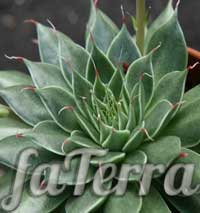 A distinctive feature of the Graptopetalum filiferum pot is the brown-red thin threads located at the tips of the neat, juicy greenish-gray leaves.
Original, decorative ten-centimeter rosettes, assembled from a hundred or two hundred green leaves, look especially attractive. It is periodically decorated with bouquets-inflorescences, consisting of large, four-centimeter flowers of five pieces in a company.
Graptopetalum Rusbyi
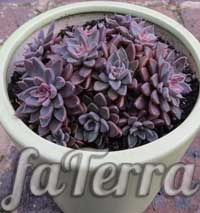 Compact rosette succulent shrubs with thick and juicy leaves with spiky tips, creamy or bluish in color. The sunny meadows and rocky gorges of Mexico and Arizona are the native territories for Graptopetalum Rusbyi.
Nine-centimeter rosettes, growing in groups, have a flattened shape, formed by sixty diamond-shaped leaves. Straight stems grow from the thick central root, and rosettes have lateral shoots. It pleases the eye with wide-open pink flowers, which are decorated with numerous stripes.
The indoor Graptopetalum Rusbyi is a very unpretentious and completely undemanding succulent wonder. It will beautifully decorate any interior, both alone and with other flowers, for example, with Kalanchoe.
Graptopetalum Mendozae
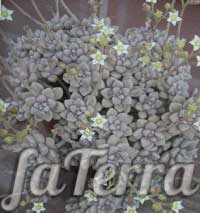 An original, unpretentious succulent indoor rosette plant. Juicy, fleshy, light gray leaves beautifully decorate the fifteen-centimeter stems. Thanks to the bright sun, the leaf plates become purple or yellowish. Tacitus Mendoza blooms with small, white, star-shaped flowers.
Graptopetalum pentandrum
 A very interesting variety of domestic Graptopetalum with dense rosettes, formed by oval leaves. Pots of this variety are miniature trees with a lush crown. On long peduncles are located inconspicuous six-petaled, small white flowers with a large number of red dots.
Graptopetalum pentandrum f. Superbum
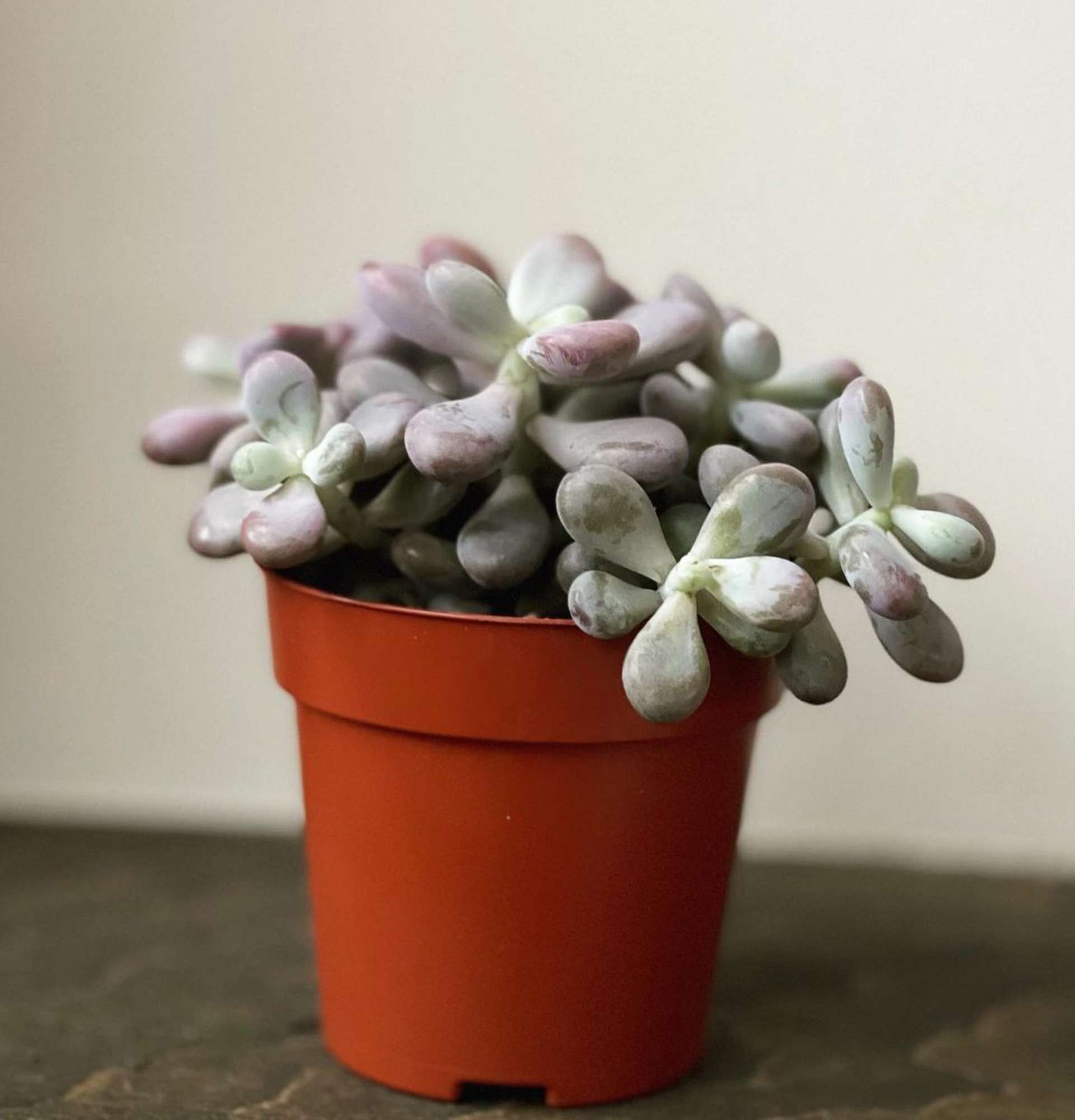
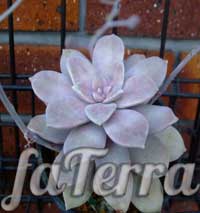 The flat rosette is organized by leaf plates of dark purple, lilac-pink, gray color, which changes depending on the amount and brightness of the sun's rays. The presence of a thick waxy coating gives the plant greater decorativeness. The leaves with pointed ends are superimposed on their neighbors, forming a rosette that resembles a flat, compact disc.
Graptopetalum care in the home
The domestic Mexican star flower is an unpretentious compact wonder that does not require much effort in care and can delight the eye for ten years. But there are special rules of keeping, by following which you can achieve amazing success.
Choosing a place and temperature regime
Graptopetalum care will be easier if you place the pot on a south or southeast window. It can also be perfectly placed on a west-facing windowsill.
Important! To avoid overheating the indoor plant, place the pot at a distance from the window glass.
The indoor temperature for domestic Graptopetalum is quite acceptable. In winter, up to 15˚C, the plant can spend the rest period in a cooler place - up to 6-12˚C.
Humidity and watering
Low humidity in the room will be comfortable for the domestic Tacitus.
Attention! The stone rose will perfectly spend the summer in the garden, on the balcony or loggia, enjoying the fresh air.
Settled, warm water for watering will be pleasant for the domestic flower. As the soil layer dries out by half, we pour water into the tray and wait until it is absorbed, the remainder must be drained so as not to cause the roots to rot. Starting from late autumn, we water no more than once a month, and in winter - almost without watering. The turgor of the leaves will be a signal for the next watering.
Soil and its feeding
The domestic Tacitus will grow perfectly in a soil mixture from the store, prepared for succulents. It is desirable to add a little sand. We individually prepare a loose soil mixture that allows water and air to pass through well. Such a mixture can be considered a mixture of leaf and turf soil, coarse sand, taken in equal quantities. You can add wood charcoal and bone meal.
You can feed the domestic stone rose once a month with a specialized fertilizer intended for cacti and succulents.
Tacitus is fertilized during the flowering period. It is not necessary to feed a transplanted plant and during a period of rest.
Graptopetalum transplant
This is not a very pleasant procedure for the Mexican star. It is carried out only if necessary - a cramped pot or no more than once every three years. It is desirable to choose a wide and low pot, since the plant has small roots. A thick layer of drainage must be placed on the bottom of the pot.
Graptopetalum propagation
It is not difficult to get a young domestic Mexican star flower using rosettes, leaves or seeds. A dried specimen can be rooted in a mini-greenhouse with a mixture of peat or sand. We periodically open it for spraying. After rooting, the rosettes are planted in a permanent place.
Pests and diseases
Pots of domestic Graptopetalum with a waxy coating on the leaf plates rarely get sick. Occasionally, the plant may be visited by unwanted guests - spider mites and mealybugs. When brown spots appear on the leaves, you need to come to the aid of your pet. Urgent treatment with insecticides is necessary, an acaricide will do.
Difficulties in growing
- The domestic Graptopetalum has slowed down its growth and the leaves are too small - the plant needs a transplant, the pot is too small.
- The leaves dry out, the buds fall off - poor watering and too high ambient temperature.
Love your unusual and wonderful Tacitus, follow all the growing conditions and the Mexican star will decorate any interior with its beautiful appearance and beautiful flowering.

Write comments
Comments