



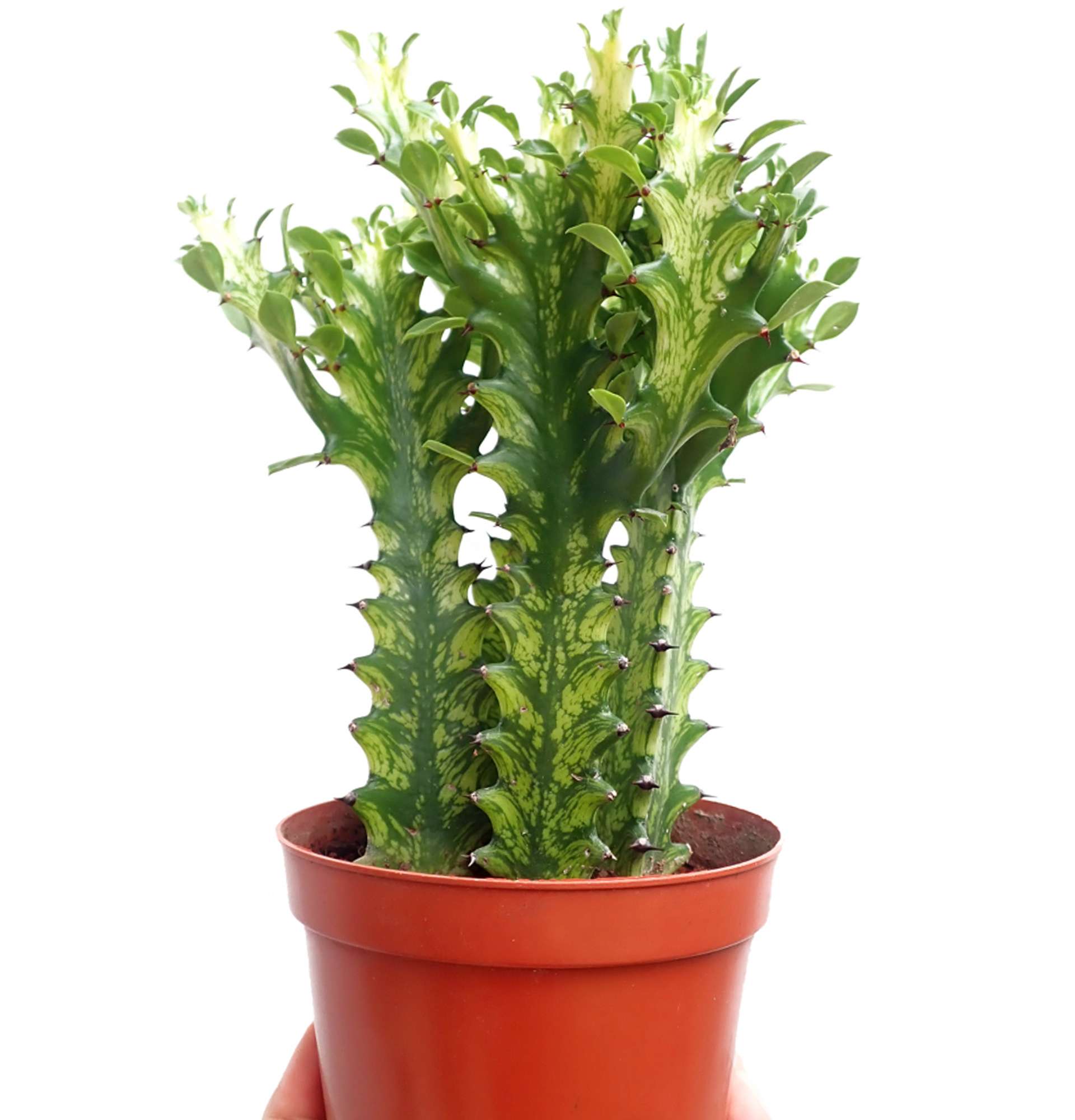
Latin name: (Euphorbia)
Category: perennial herbs
Origin: Africa, America
The genus Euphorbia, belonging to the Euphorbiaceae family, includes about two thousand varieties of plants, most of which are succulents. The diversity of species characteristics in the Euphorbiaceae family is vast.
Bright representatives of one group of Euphorbiaceae are annual and perennial herbs, shrubs, and trees, which have also adapted to cooler climates, with temperate climates being more suitable and subtropical climates being the most comfortable. These Euphorbiaceae have spread throughout the globe. The second group can be considered succulent – they have a hundred percent similarity in living conditions with cacti, but there is absolutely no family connection.
A distinctive feature of all Euphorbiaceae is the secretion of milky sap, which contains poisonous euphorbium. Africans use the milky sap of a herbaceous plant to stun fish.
The American and African subtropics, specifically the island of Madagascar, are considered the homeland of these euphorbias. Here, in natural conditions, woody Euphorbiaceae can be thirty-meter giants. Some species grow in gardens and squares and can even be used as living fences.
Our temperate climate allows many euphorbias to grow everywhere, but the exception is tropical species – indoor euphorbia. It is a wonderful decoration for any living space and has increased resilience when grown.
You can see a photo of the euphorbia in the next section of the article.
Euphorbia species
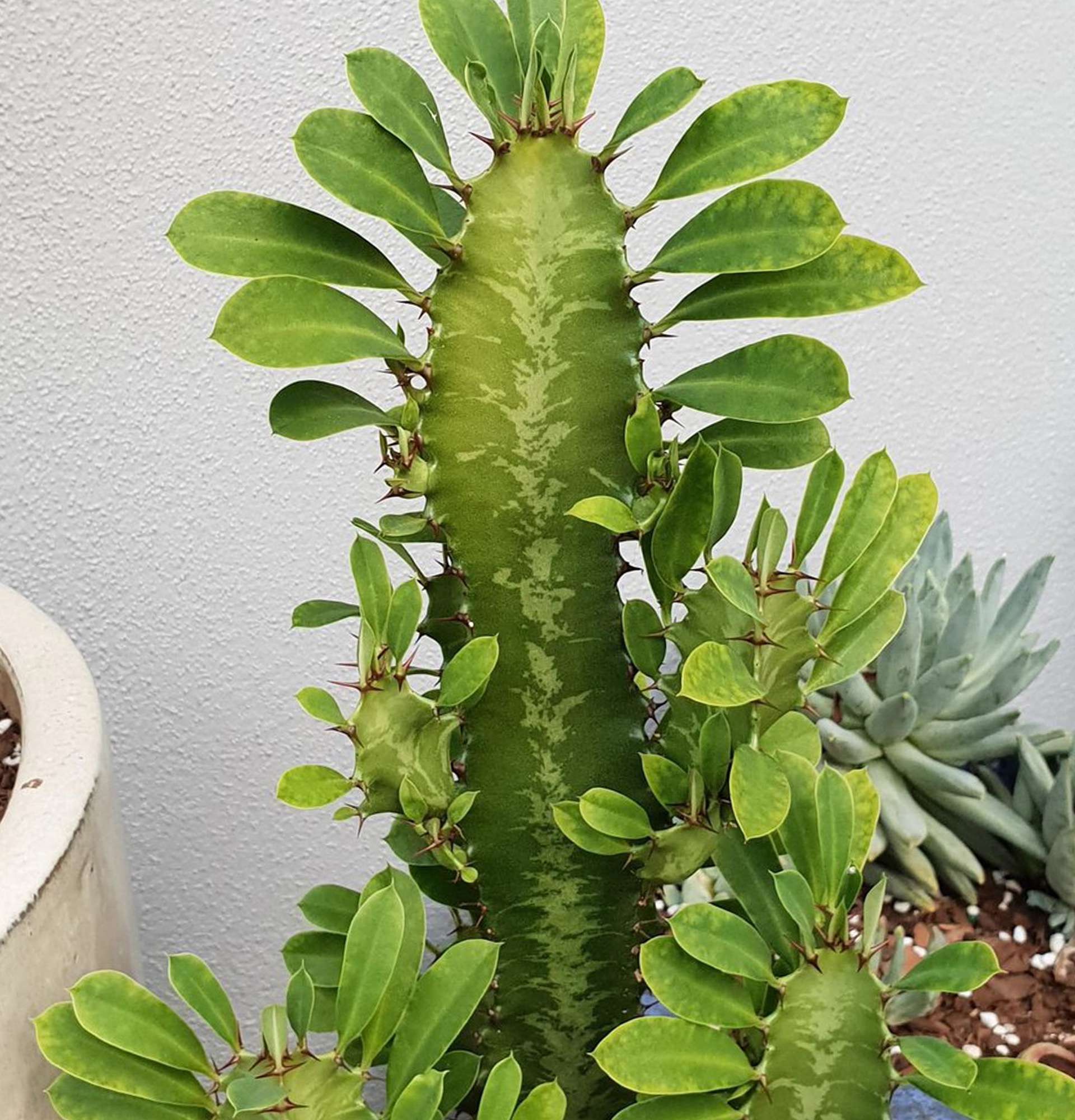
Triangular Euphorbia (Euphorbia trigona)
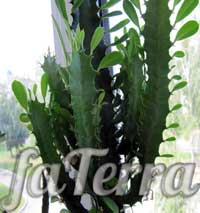 A very effective and unpretentious triangular euphorbia is widely cultivated and is in demand in various residential areas in indoor conditions. This large green pet is a frequent guest in offices and other public places due to its attractive appearance and simple, modest requirements for cultivation.
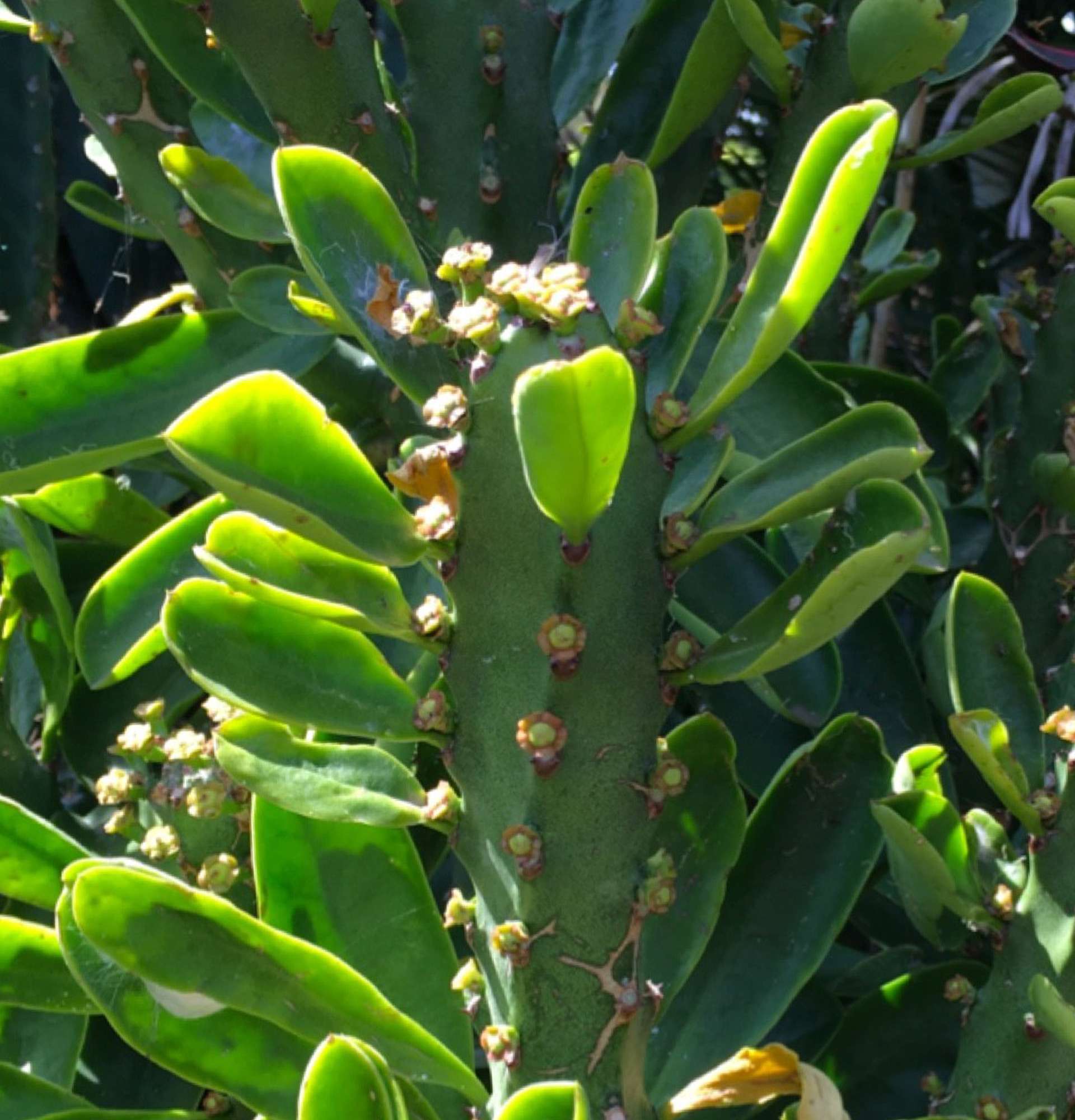
The triangular euphorbia has an upright, fleshy, large, thick stem, up to six centimeters in diameter, with a pleasant dark green color. The ribs of the shoots are decorated with solitary small brown thorns.
By the way! With its thorns, your pet will provide energy protection for your home if you place it closer to the entrance door.
On the tops of the branched shoots, lanceolate five-centimeter leaves grow. The triangular euphorbia grows quickly and without problems, and can reach a height of three meters in four years, and its upright branches can be compared to an original candlestick with triangular candles.
Euphorbia trigona is not just a wonderful plant, but also an excellent air purifier. The flower neutralizes unpleasant odors and carbon dioxide particles.
You can find interesting information by watching the video.
Euphorbia tirucalli
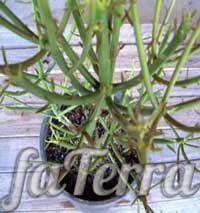 An absolutely easy-to-care-for African succulent shrub that has the ability to store a large volume of liquid in its stems. This is not surprising, as the Euphorbia tirucalli originates from the hot, arid climate of the African continent.
It has unusual, stick-like, dark green stems without leaves or thorns. In indoor conditions, it can grow into an original large tree.
Euphorbia tirucalli is a poisonous plant.
These qualities of the plant have found application in the production of insecticides to control insect pests and poison for stunning fish. Its milky sap is used to make rubber. Hence the second name of the flower.
Euphorbia leuconeura
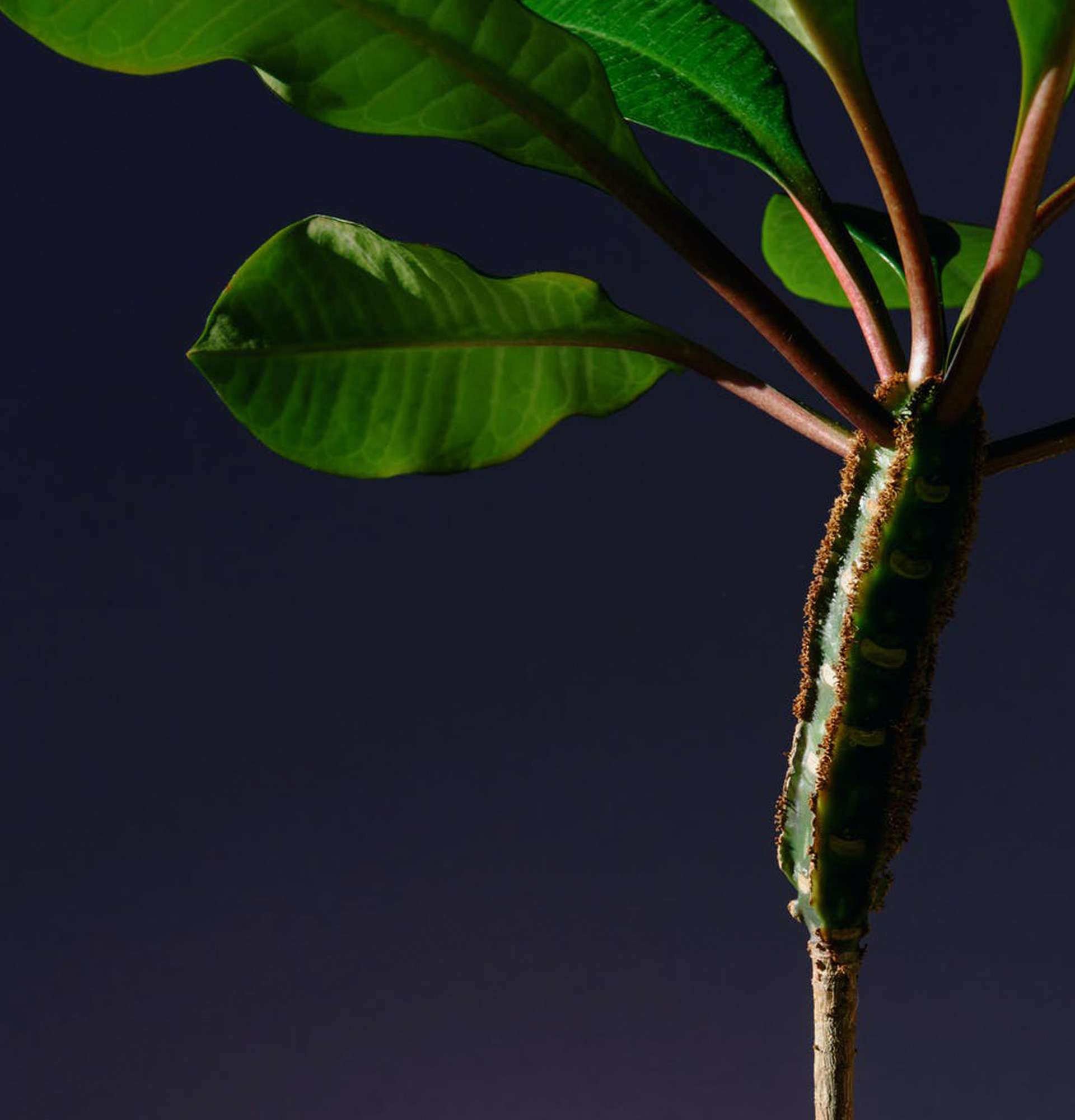
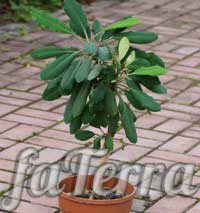 An impressive succulent-stemmed flower from the island of Madagascar, where it reaches a height of one and a half meters and creates impenetrable thickets. Since the twentieth century, the Euphorbia leuconeura has become a decoration for various interiors, an indispensable and beloved resident in greenhouses, botanical gardens, and parks. This is an unusually beautiful plant that resembles a palm tree, consisting of a ribbed, pentagonal trunk, decorated with a sultan of green leaves with an emerald tint and original whitish veins.
The Euphorbia leuconeura blooms with small white flowers during the warm period, and then seed pods appear. When ripe, the seeds burst out of the storage and fly in different directions, landing in pots of other flowers, where they also take root well.
You can find interesting information by watching the video.
Euphorbia pulcherrima
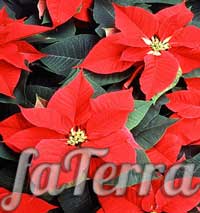 A very popular indoor euphorbia, the flowering beauty of which falls on Christmas. This euphorbia is also called poinsettia. It blooms with small, inconspicuous flowers, but it attracts attention with its red, pink, or white beautiful leaves, which are beautifully arranged below the inflorescences. The decorative attractiveness of the whimsical Euphorbia pulcherrima can be achieved by strictly following the temperature regime and normal air humidity.
Euphorbia milii
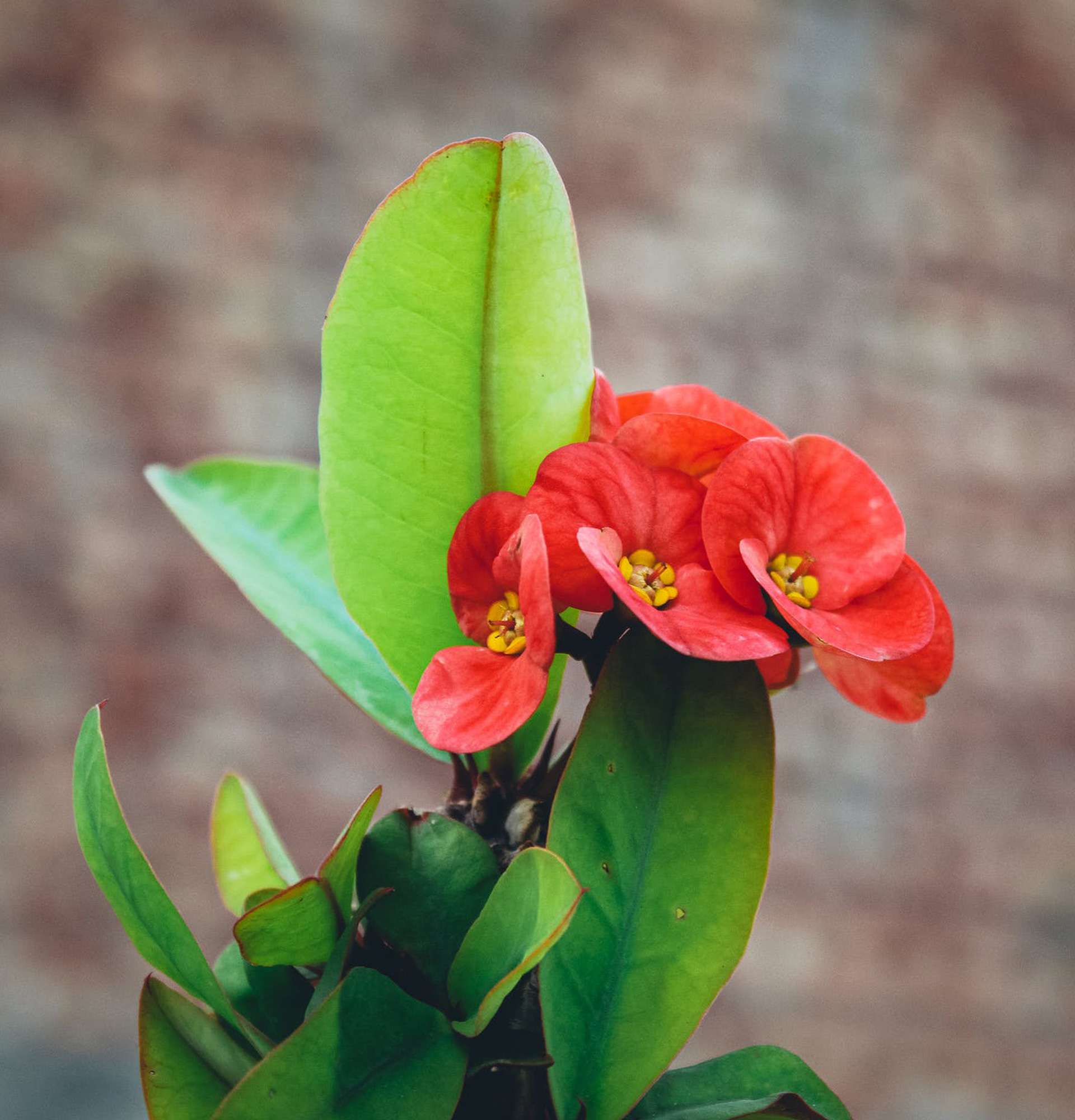
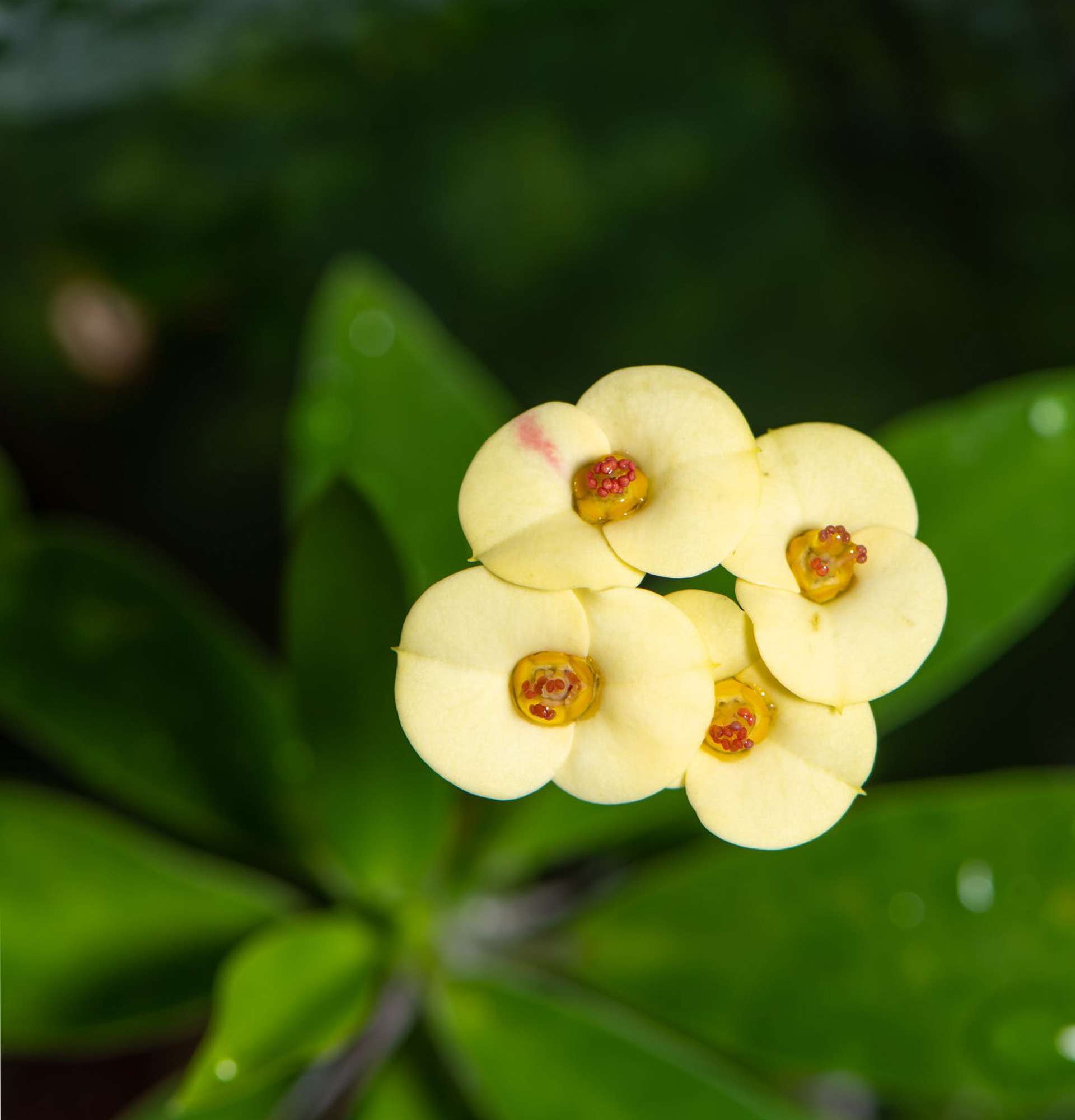
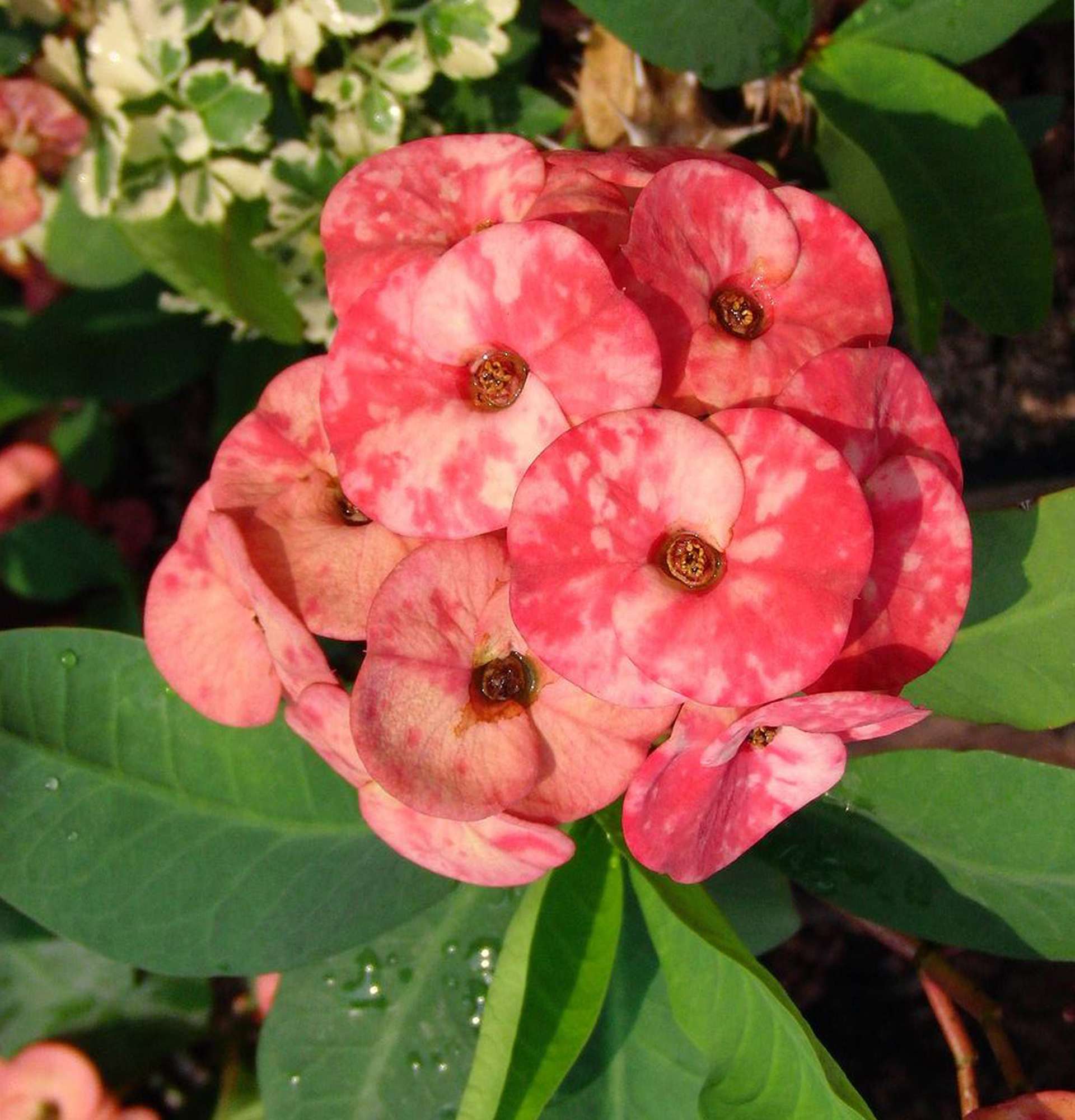
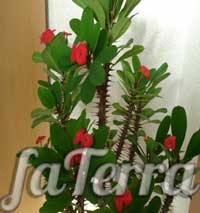 Euphorbia milii, often called the crown of thorns, is a favorite plant of most flower growers. In almost every office and other public places, you can find a thorny shrub with dark green leaves and many small flowers of pink, red, yellow, and even white color on the windowsills. This euphorbia is a light-loving plant and prefers southern areas.
You can find more detailed information about the euphorbia flower in the video. After watching it, you can learn about the intricacies of growing this wonder.
Euphorbia marginata
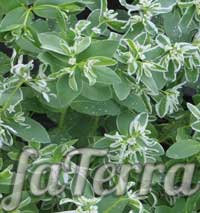 The slopes of the mountains of North America are the homeland of the annual euphorbia, which is called Euphorbia marginata. Its snow-white flowering has given rise to other names for the plant. It is called "rich bride," "snow on the mountain," "early snow."
Unusually attractive and unpretentious shrubs are densely covered with leaves with a white border. This garden euphorbia blooms with small flowers. It looks great on flower beds, in squares, and in gardens.
Euphorbia fischeriana, also known as Euphorbia pallasa or man-root
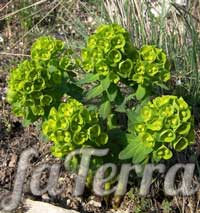 In natural conditions, the most valuable medicinal euphorbia has become a favorite of the Chinese, Mongolian, Korean, and Trans-Baikal regions. Here, the mysterious poisonous euphorbia was discovered by the German botanist Fedor Fischer and the biologist Pyotr Pallas. They studied the unique properties of the plant for a long time, which has anti-inflammatory and antibacterial effects.
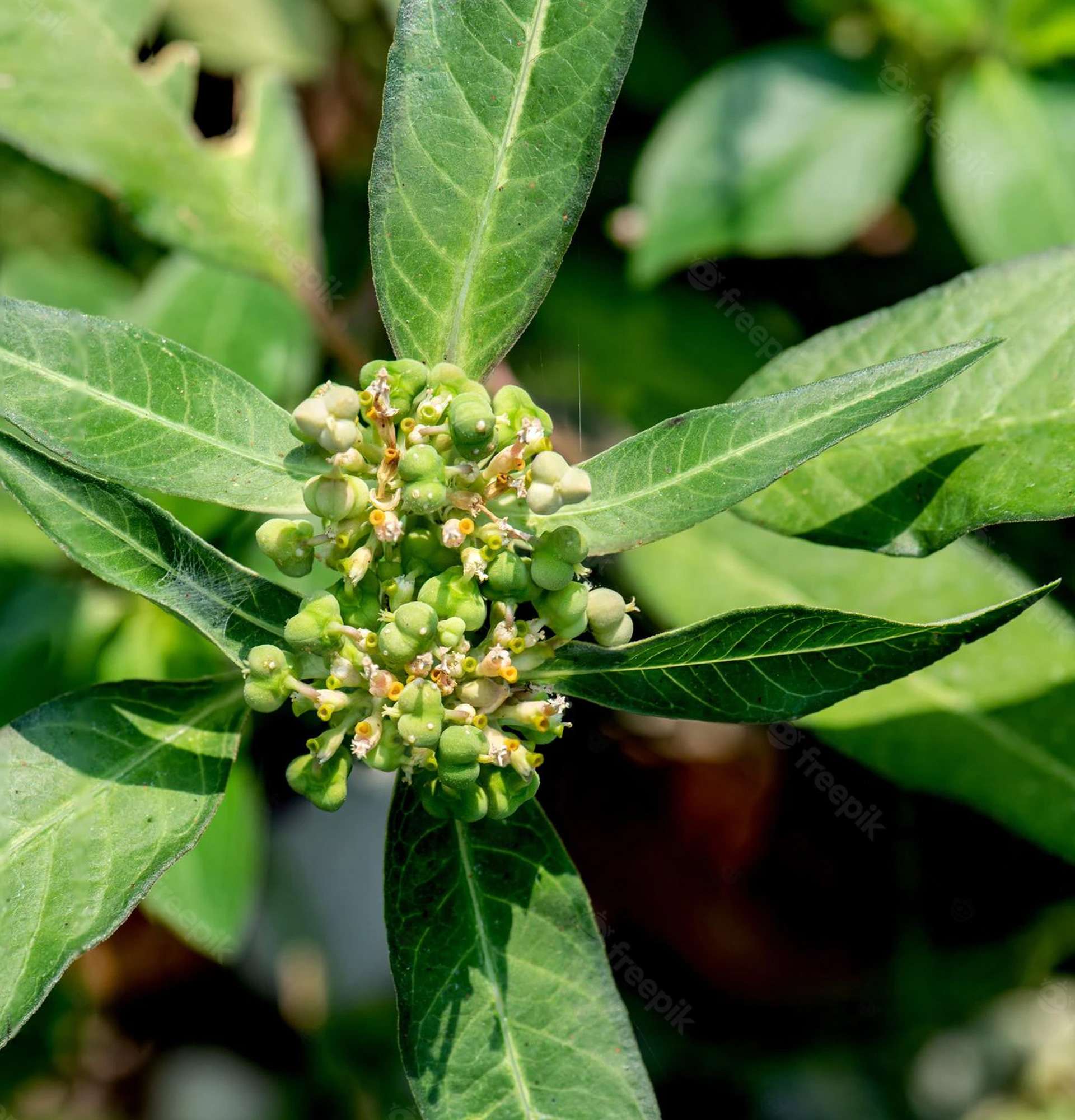
The unusual man-root has an upright stem up to forty centimeters long. It is covered with narrow, elongated leaves. At the top, the stem is decorated with an inflorescence resembling an umbrella of small yellow flowers that bloom in spring. The peak of flowering is the formation of a thick, three-lobed capsule filled with smooth, round seeds.
Euphorbia pallasa has a branched and thick rhizome that goes deep into the ground to a depth of one meter. When cleaned from the ground, the root resembles a male figure. When the integrity of the root is violated, white milky sap is released, which is highly poisonous.
Euphorbia fischeriana contains a large amount of selenium in all its parts.
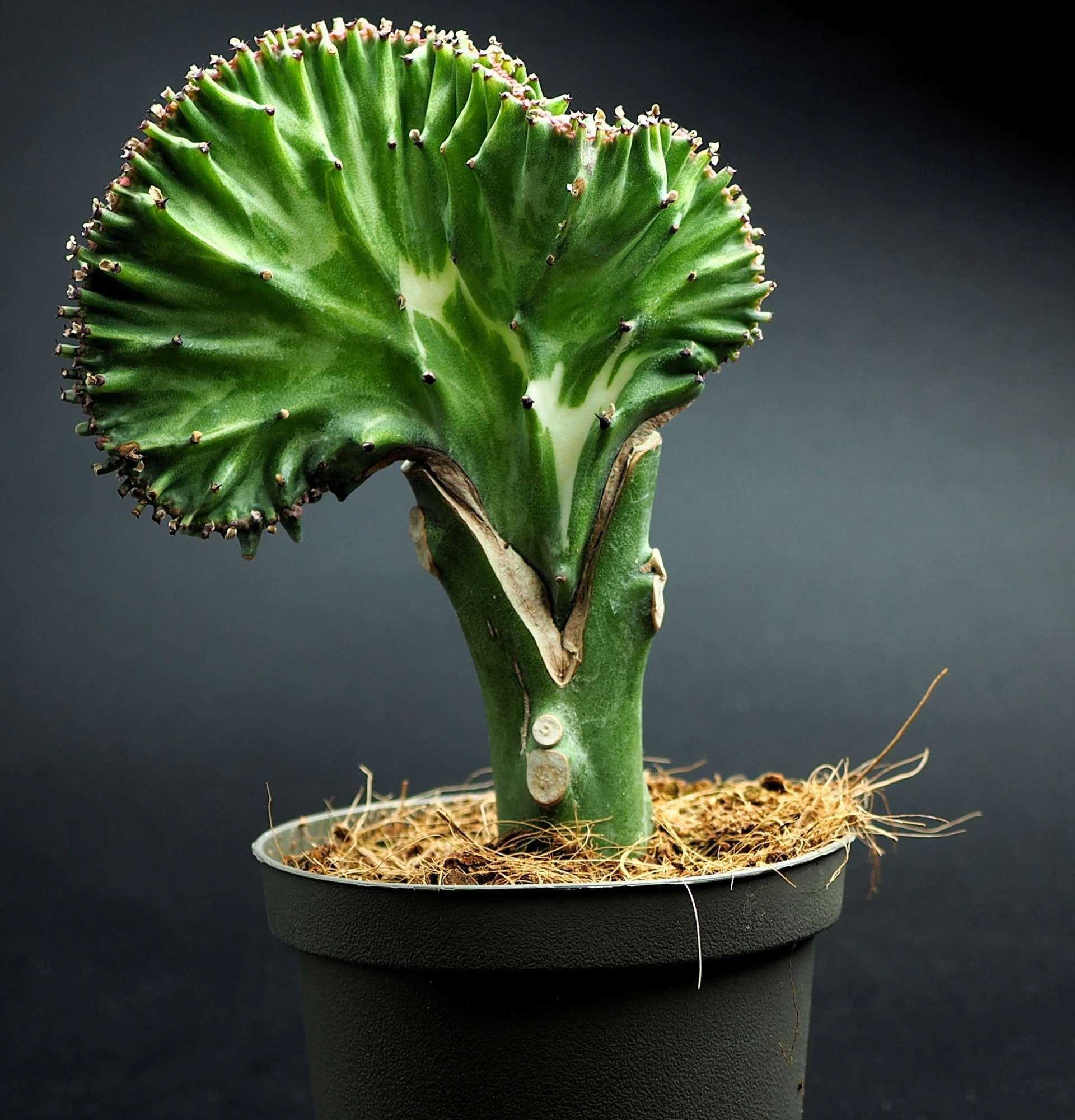
Euphorbia lactea, or Euphorbia cristata
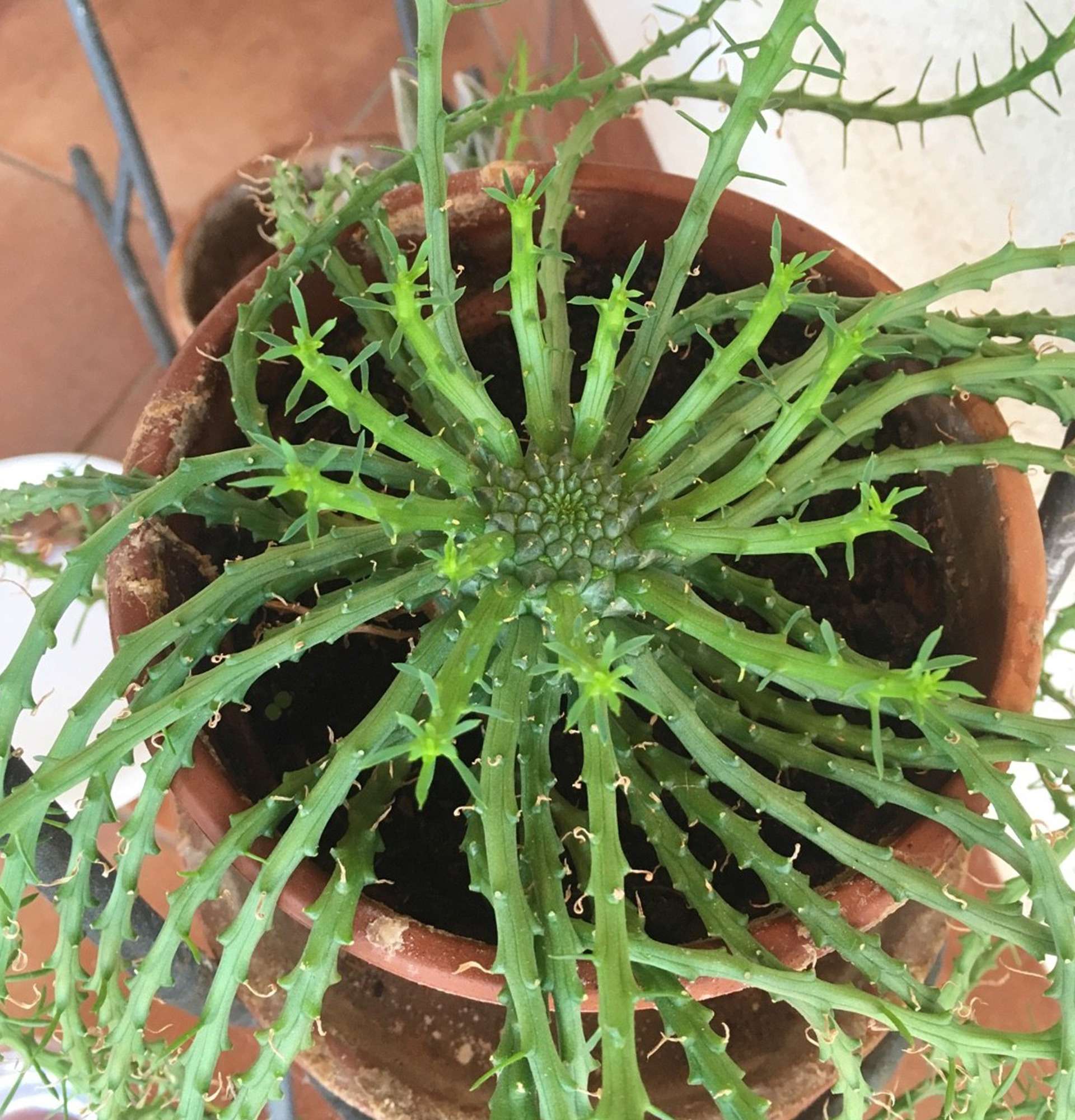
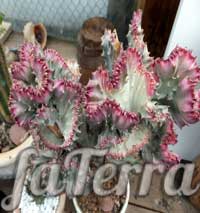 Milky euphorbias came from the tropics of Asia and became an unusual and beloved decoration for both apartments and offices, as well as gardens, parks, and squares. You can look at the photo of the euphorbia for a long time. Euphorbia lactea is an unusual wonder with a fan-shaped spread and is somewhat similar to coral. The unusual shape of the stems and the extraordinary color of this flower are fairy-tale. The central part of the spiky light green comb is a white spot. The serrated edges are pink, and the large thorns are red. The edges of the combs are decorated with small flowers.
Euphorbia cristata is an unpretentious plant, but it does not tolerate high humidity.
The flower Euphorbia cristata does not like spraying.
Euphorbia care in indoor conditions
Indoor euphorbia is a very unpretentious and resilient plant. It is suitable for beginner flower growers in all respects. But to get a beautiful and healthy flower, it is necessary to follow the basic rules of care for potted plants.
Choosing a place and temperature regime
Light-loving euphorbia grows best on south-facing windows. It will not mind a trip to the balcony or garden in warm weather.
Indoor euphorbia does not like drafts, and in winter, do not keep the plant near hot heating radiators.
The temperature range varies from summer values of 20–22°C to winter values of 10–13°C. The minimum limit is 5°C.
Air humidity and watering
The flower euphorbia does not require high humidity, and spraying can only be done for hygiene purposes.
Water as the soil dries out. The approximate frequency of watering in summer is once a week, in spring and autumn – every fifteen days, and in winter – every thirty days. Water the actively growing flower more often.
Soil and its feeding
The soil mixture for indoor euphorbia should not be dense. This can be achieved by adding perlite, brick chips, and wood charcoal to the mixture, which consists of equal parts of sand, peat, leaf, and sod soil, and compost. Store-bought soil mixture for cacti is also a suitable option.
How to propagate euphorbia?
Apical twelve-centimeter cuttings with five leaves are an excellent material for propagation. The cut tops are kept for two days to allow a protective film to form on the cut, and then the cut is briefly dipped in warm water. Then the cut is sprinkled with wood charcoal and planted in a peat-sand mixture. A lot of light and a temperature not lower than 20°C are necessary. The cuttings root quickly.
Euphorbia transplanting
Spring transplanting will only benefit the indoor euphorbia. Be sure to put a good drainage layer on the bottom.
How to prune euphorbia?
March pruning of the shoots by half is not only desirable but also necessary. This will form a beautiful crown and remove the shoots on which the leaves have fallen.
Diseases and pests of euphorbias
Euphorbias easily overcome diseases and are resistant to pests. However, sometimes unexpected guests may visit them. These can be:
- scale insects,
- spider mites,
- mealybugs.
Possible difficulties in growing
- Why do the leaves of euphorbia fall off? Lack of light in winter, excessive watering, and, conversely, lack of moisture, low temperature, and insufficient phosphorus in the soil mixture can lead to such misunderstandings.
- Lack of flowering in euphorbia, dropping of young leaves – the plant does not have enough light.
- The stem is rotting – low temperature in the room or excess moisture.
Remember! Euphorbia is poisonous.
It is necessary to follow the rules of cultivation and be extremely careful when interacting with the plant. Then the beautiful euphorbia will be an excellent decoration for any room. You can admire it constantly, but it is also necessary to get acquainted with other indoor flowers, photos and names of which can be found on the website. We open the catalog of indoor plants.
Write comments
Comments