



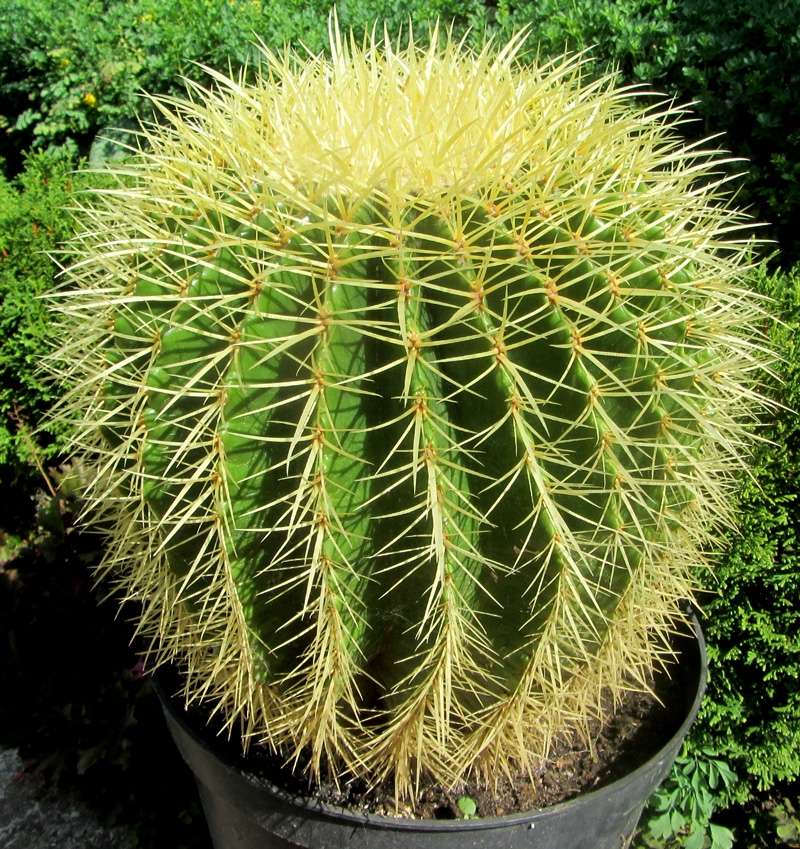
Latin name: (Echinocactus)
Category: perennial succulent plants
Origin: Mexico, South America
Spectacular echinocactus – a unique prickly ball
Echinocactus is a small genus with about ten species of spherical succulent plants covered with spines, which are grouped in the cactus family.
From a scientific point of view, the name translates from the words of the Greek alphabet: echinos – "hedgehog". And this culture, which resembles a hedgehog curled up in a ball, is called a hedgehog cactus.
In its homeland, in the subtropical regions of Mexico and the southwestern territories of the United States, these slow-growing succulent spiny long-lived plants reach a height of up to three meters. In volume, these giants even exceed the one-meter mark. The weight of such a ball reaches a thousand kilograms, and it gains it throughout its life, which can last up to five hundred years. These amazing exotics have powerful long spines that protect them from the scorching sun.
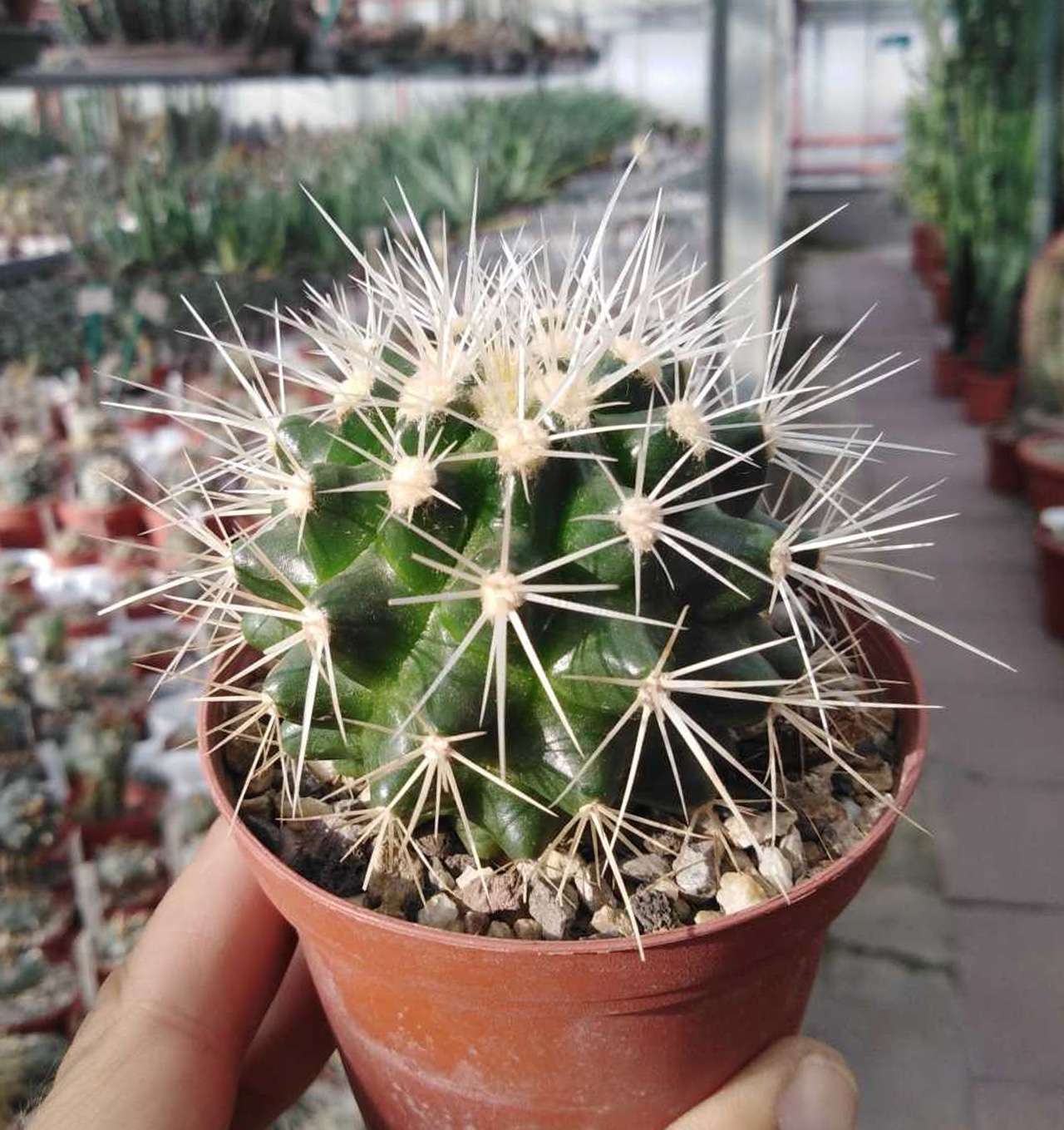
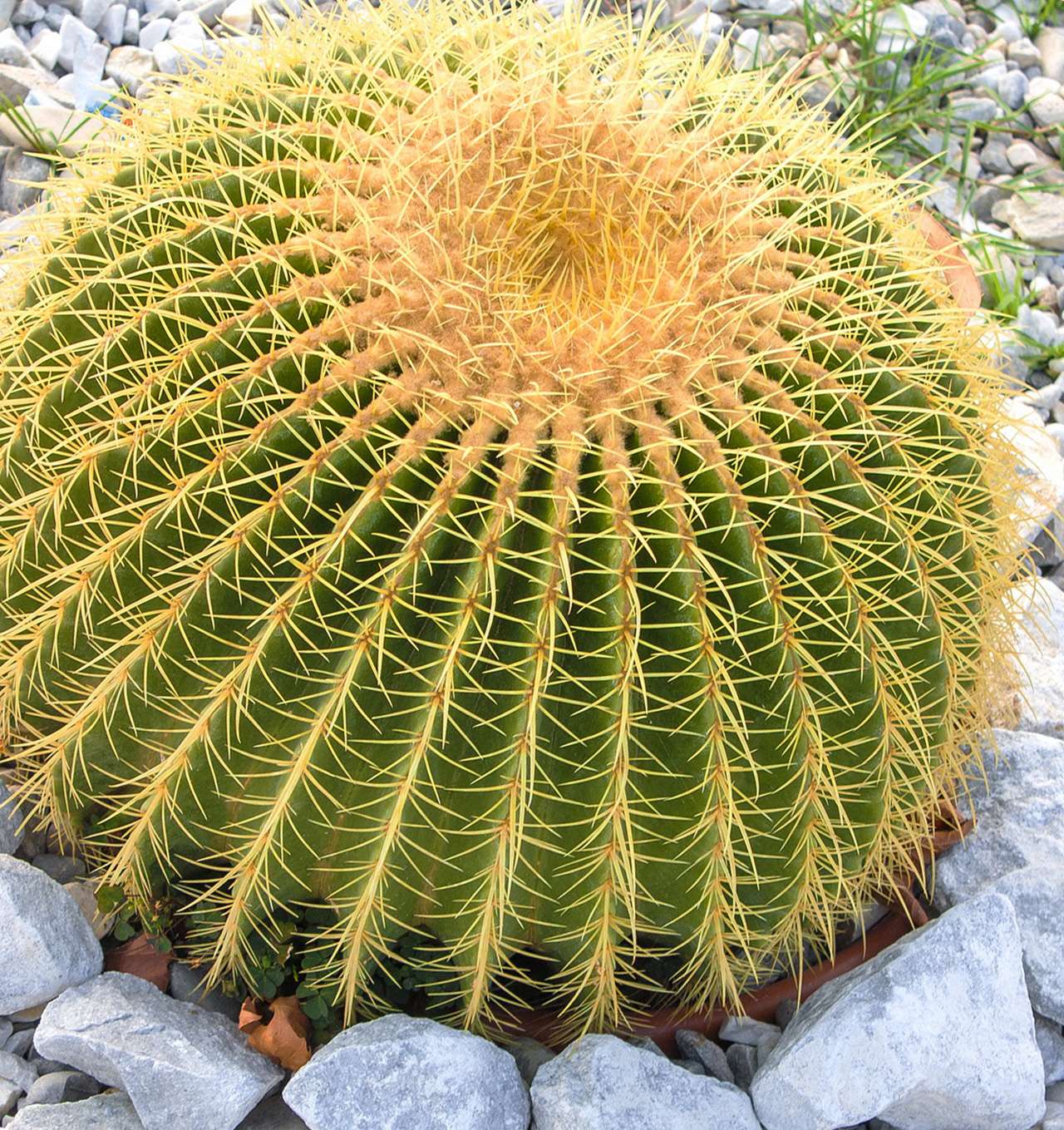
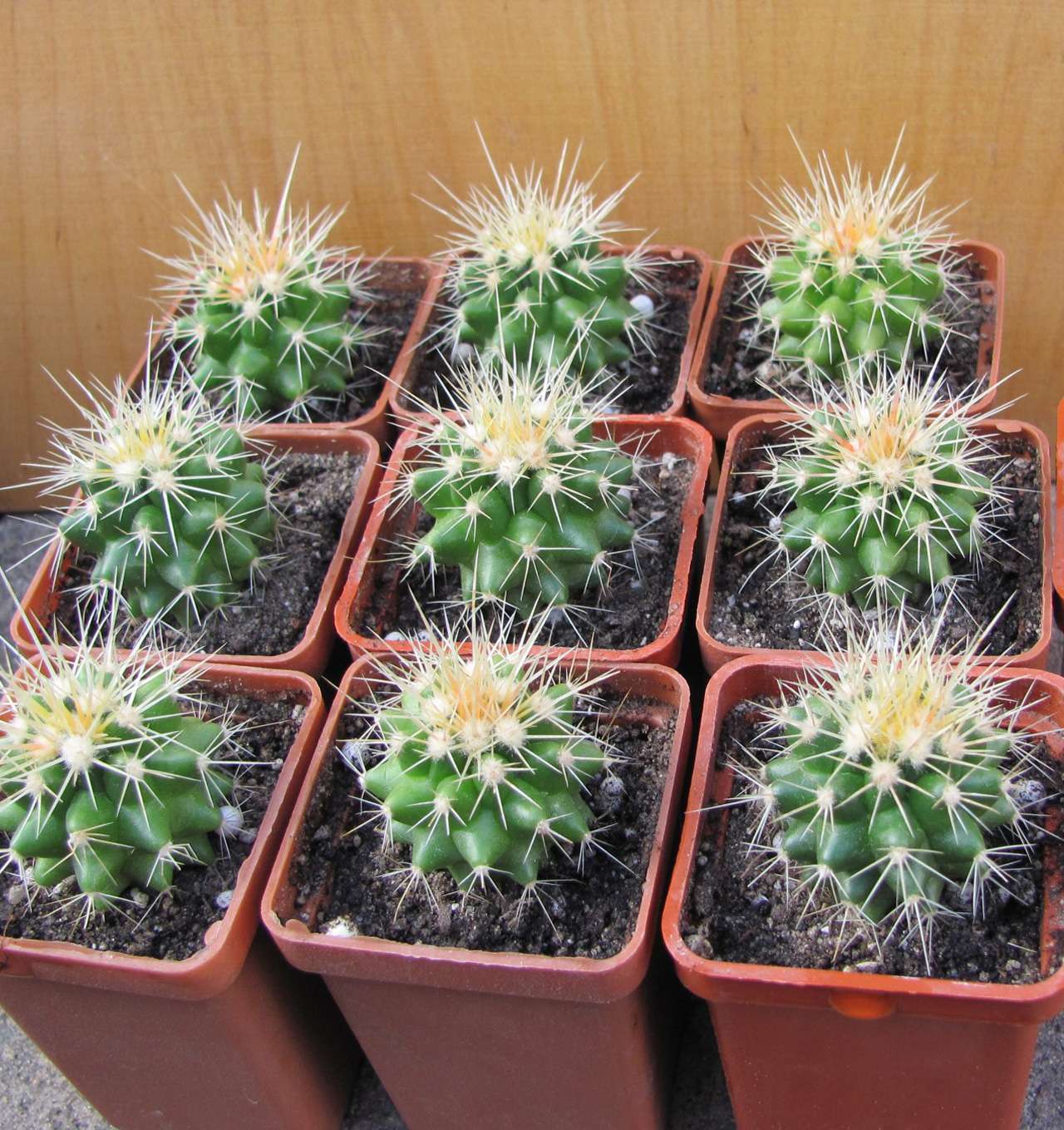
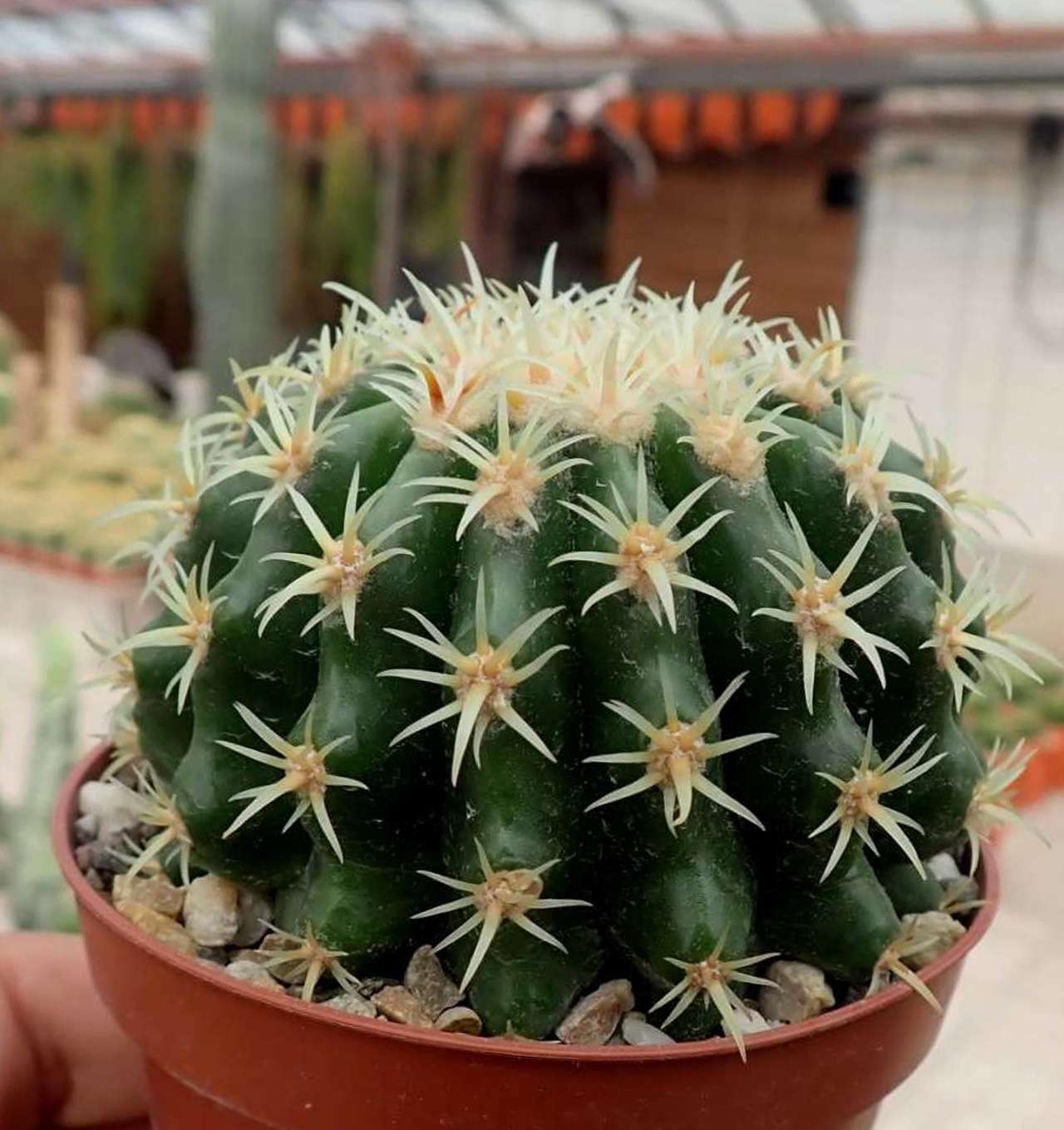
It is absolutely easy to grow echinocactus at home. These amazing indoor flowers, unlike their brethren that live in the natural desert environment, remain compact balls for a long time, and their colorful spines are their decoration. The length of the spines, gathered in bunches, ranges from three to five centimeters. An adult indoor echinocactus can reach a diameter of forty centimeters. The surface of the ribbed, glossy stem has a dark green color. Vertical ribs, from twenty-five to forty-five in number, are located along the entire length of the stem. On top of the golden barrel, a dense, soft cap is formed, made of long fluff.
An indoor succulent cactus is represented by a perennial rhizomatous plant, for which the pot should be deep and wide. After all, the cactus with its long, whitish, winding roots persistently entangles all the soil in the pot, requiring transplanting.
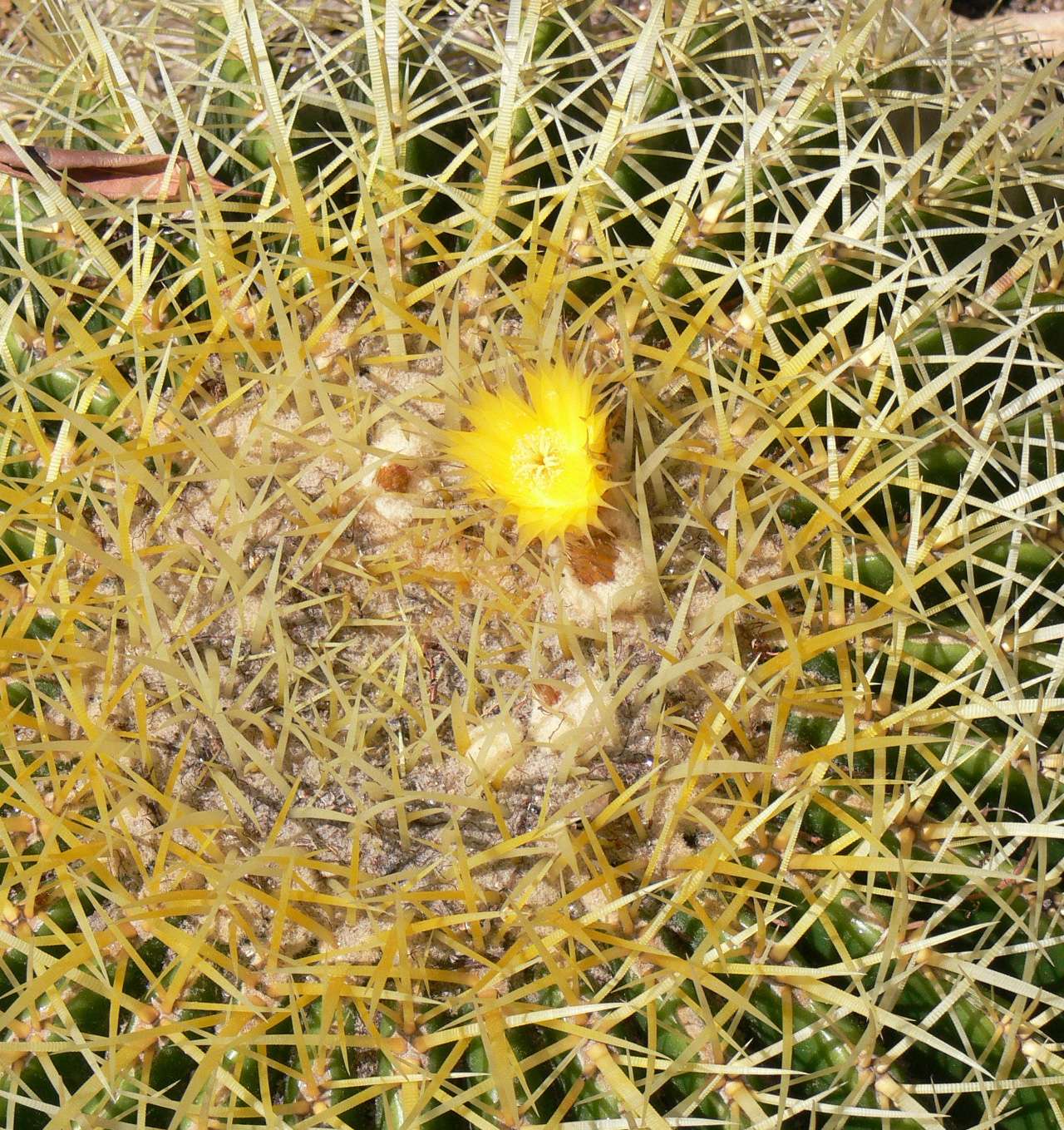
If you're lucky, in the spring, after twenty years of caring for your golden barrel, you can see an unusual miracle – the flowering of your favorite indoor echinocactus. At the top of the cactus succulent, an elevation appears in the form of a long bud. Gradually, it turns into a yellow funnel-shaped flower with interesting thin, glossy petals. There are varieties with red or pink flowers. A close relative of the Hedgehog cactus is the rebutia.
Echinocactus species
Echinocactus grusonii
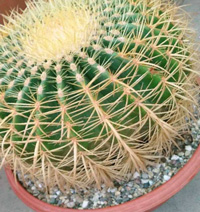 This variety of golden barrel or golden ball is considered the most popular in indoor floriculture. This is what the locals call this wonder, a native of Mexico – the homeland of echinocactus grusonii.
This large wonder can boast a height of up to one hundred and thirty-five centimeters, and its width can reach one meter. Echinocactus grusonii has a very colorful top, decorated with yellow-amber young fluffy spines.
Indoor conditions allow an adult hedgehog cactus to grow up to half a meter, and its width reaches forty centimeters. These exotic greenish balls consist of forty-five sharp, ribbed verticals. Caring for echinocactus grusonii is not particularly difficult. This light-loving and heat-loving golden ball needs a lot of bright light, a temperature of about 25°C, and moderate watering with settled water.
The flowering of echinocactus grusonii can be observed after the plant reaches twenty years of age. In the spring-summer period, a bud appears on the top, from which a long-awaited, spectacular and incomparable miracle unfolds – a yellow flower with thin, glossy petals. The edges of the flower are darker, even brownish. The length of the corolla reaches seventy millimeters, and its diameter is fifty millimeters.
Echinocactus platyacanthus
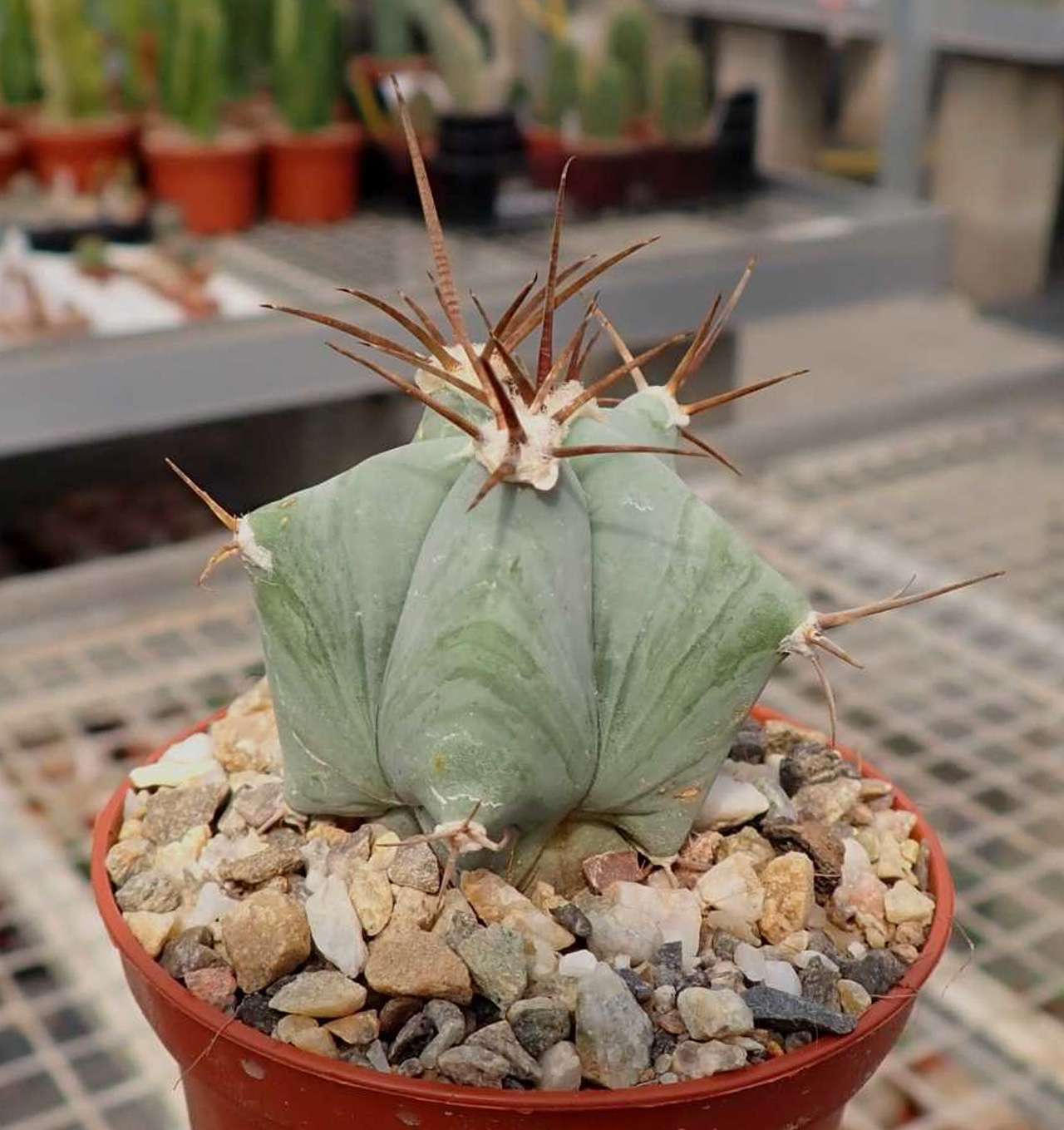
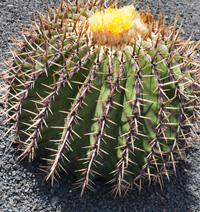 The native land of this variety is the Chihuahuan Desert in Mexico. These amazing giants can reach a height of up to two and a half meters, and the golden ball can reach up to one and a half meters in width. The ribbed surface of the bluish-gray stem has about twenty-five ribs, on which there are three-centimeter stiff grayish spines, gathered in bunches.
In late spring, the plant blooms with yellow tubular flowers. Then you can see the appearance of small striped fruits. The local population uses the cactus with edible fruits to prepare popular sweets, such as acitrón, which are used to make sweet pies, buns and other pastries. Edible cactus in Mexico can be purchased in the form of candied fruits, candied fruits, desserts, traditional sweets.
Echinocactus parryi
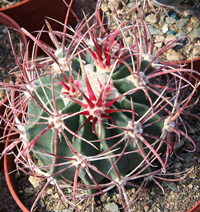 This echinocactus with flattened spherical ribbed stems reaches a height of up to thirty centimeters. Bunches of white or pink hooked needles, growing up to ten centimeters long, almost completely cover the plant. With age, the spines change their color from pink-brown to pure white. In the summer, the succulent cactus adorns its top with yellow or yellowish-orange flowers with a silky sheen.
Echinocactus horizontalonius
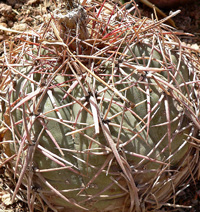 The desert territories of Sonora and Chihuahua are the homeland of these attractive solitary succulent cacti. They have light green, greenish-blue elongated stems up to thirty centimeters high, and their diameter is about twenty centimeters. Spherical, cylindrical, hemispherical or flattened outlines make these hedgehog cacti original and incomparable beauties. At the beginning of the summer period, the tops of the shoots are decorated with funnel-shaped pink, white or purple-red flowers, which reach nine centimeters in size. They react to light – they wake up in the morning, opening wide, and curl up in the evening.
Echinocactus polycephalus
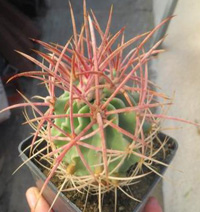 The desert territories of the Mojave and the north of the Sonoran Desert are considered the homeland of this succulent cactus. Here, in its natural environment, the plant can be found both as a single specimen and in groups of up to thirty, which is why it got its name, polycephalus. The height of these amazing ribbed creatures reaches sixty centimeters. The stem is covered with strong, frequent spines. This prevents the buds from fully opening. It blooms in the middle of summer.
Echinocactus care at home
It is absolutely not difficult to grow this amazing plant called golden barrel. To do this, you need to know how to care for a cactus? First of all, you need to remember that a cactus is a succulent. It does not require special requirements or excessive attention. It grows slowly, year after year, gradually increasing in size and maturing. To preserve the attractiveness of your pet, create conditions for it that are close to natural.
Natural conditions do not spoil the echinocactus with frequent precipitation in the winter, but it gets a lot of bright sun and low humidity.
Let's consider in detail how to care for cacti.
Choosing a place and temperature regime
A light-loving succulent cactus will gladly be placed on a south-facing windowsill. It wants to enjoy intense bright lighting and a long daylight duration. In winter, it is desirable to offer the plant artificial lighting with phyto-lamps.
To prevent deformation of the stem towards the light source, regularly turn the pot with the plant.
Comfortable temperature indicators for an indoor hedgehog cactus can be considered a range of 20°C to 25°C. In winter, it is not desirable to keep the plant in cold rooms below 10°C. This causes the appearance of brown spots, and the result is a loss of decorativeness.
With the onset of spring, the golden barrel will not refuse the gentle rays of the sun on the balcony or veranda.
Echinocactus is afraid of drafts.
Air humidity and watering
Echinocactus does not make special demands on the humidity in the room. In the summer, if necessary, the plant can be given water procedures in the shower or in the form of spraying to remove dust.
The frequency of watering with warm, settled water is regulated by the state of the soil mixture in the pot. Before watering, the soil should be well dried. In the warm off-season, the watering interval is no more than once a week, and in winter, the plant is watered minimally, with an interval of thirty days.
Overwatering threatens the echinocactus with root rot.
Soil and its feeding
The soil mixture should be light, neutral, breathable and permeable to water. A ready-made mixture intended for cacti and succulents is sold in flower shops. So that the golden barrel feels comfortable in the soil, add a small amount of brick chips or fine gravel. To prevent root rot, a small amount of pre-crushed wood charcoal is added to the soil.
Echinocactus feels great in an individually prepared soil mixture, which consists of fine gravel, river sand, leaf and sod soil (1:2:2:4). A small amount of wood charcoal will not hurt.
It is desirable to feed your hedgehog cactus in the warm off-season, once a month. The best fertilizers are those intended for succulents and cacti. It is necessary to pay attention to the presence of a high content of potassium.
How to repot a cactus?
Echinocactus needs to be repotted when the roots of the plant occupy all the volume of the pot, the children have grown on the entire area, and the container for the flower is already small. Young cacti should be repotted annually at the end of winter. More adult specimens – with an interval of three to five years. The pot should be purchased wide, stable, not too deep, and there should be a hole at the bottom.
Good drainage is required.
When repotting, you need to remember that the golden barrel is a prickly plant. It is necessary to take precautions to protect your hands from the spines.
Reproduction of echinocactus
You can grow a new hedgehog cactus from seeds, which can be purchased in a flower shop. A faster way to reproduce is to separate older children from the adult stem. They are rooted in sand, creating a mini-greenhouse.
Pests and diseases
Caring for echinocactus, we perform the listed rules, and a periodic prophylactic examination will not hurt it, with wiping the stem with a brush that can be moistened in alcohol. And then unwanted guests will bypass the golden barrel. But if the problem still remains and the plant is affected by scale insects, mealybugs, spider mites, it is necessary to urgently save the cactus. It must be isolated from other indoor flowers. First, urgently wash the plant with a soap solution, then with an alcohol solution. If these actions do not lead to a positive result, the golden barrel should be treated with insecticidal preparations.
Possible difficulties in growing
- Echinocactus grows very slowly – the plant needs to be fed, and the watering should be adjusted with warm water.
- The hedgehog cactus does not like frequent rearrangements.
- The stem is covered with soft brown spots – the plant has received a sunburn or is affected by fungi, stem rot.
- The stem is deformed, becoming elongated – the lighting is weak, and the temperature in the room is too high in winter.
Flower growers often have the question: can cacti be kept in the house? Without a doubt, you can confidently say that this original, unpretentious culture is very interesting for the home. The cactus will decorate the interior with its presence. Echinocactus will look great in the kitchen – with its presence it will be able to eliminate or absorb negative phenomena that arise in family relationships. Next to the computer, echinocactus is simply necessary to absorb the negative waves that come from the monitor and modem. In the hallway, the golden barrel will also not be superfluous – it will be able to prevent the entry of negative energy brought from outside.
But wherever your favorite echinocactus is, remember that it needs to be cared for with love, and then the plant will reward you with an original decorative appearance and even bright and colorful flowering.
Write comments
Comments