



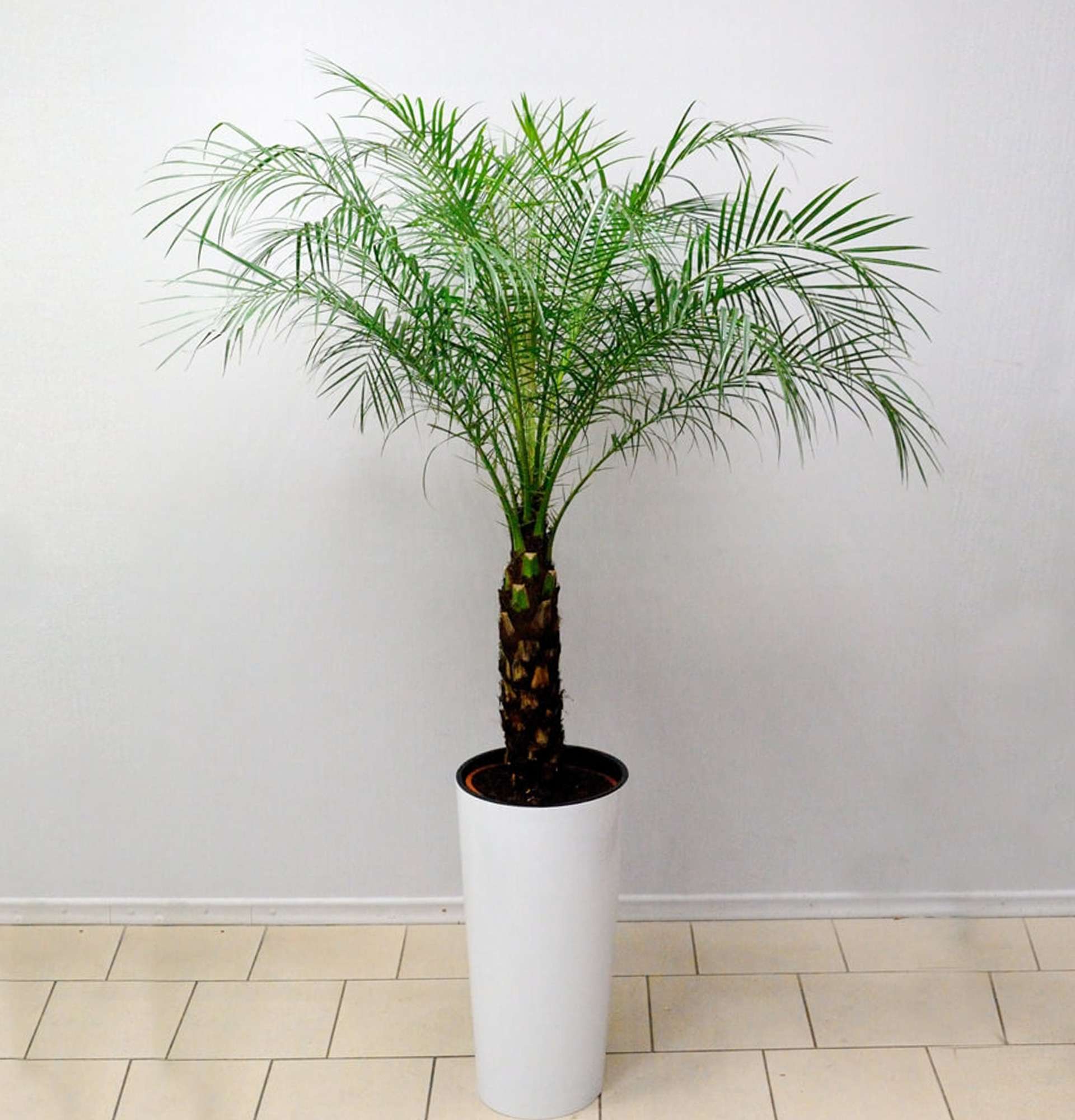
Latin name: (Phoenix)
Category: evergreen trees
Origin: tropical Africa, Eurasia
Date palm – queen of oases
The date palm, named Phoenix, Phoenix dactylifera, is a small genus, with only seventeen varieties, of decorative, exotic plants that adorn the Palm family (Arecaceae).
The natural conditions of the Canary Islands, the island of Crete, North Africa, Iraq, Iran, and the Arabian Peninsula are comfortable for the growth of the date palm. The palm became well-known and popular four thousand years ago. Its original location was Mesopotamia, present-day Iraq. And it arrived here thanks to merchants and traders who brought it to the areas of the Persian Gulf, the Canary Islands, Eurasia, and Africa.
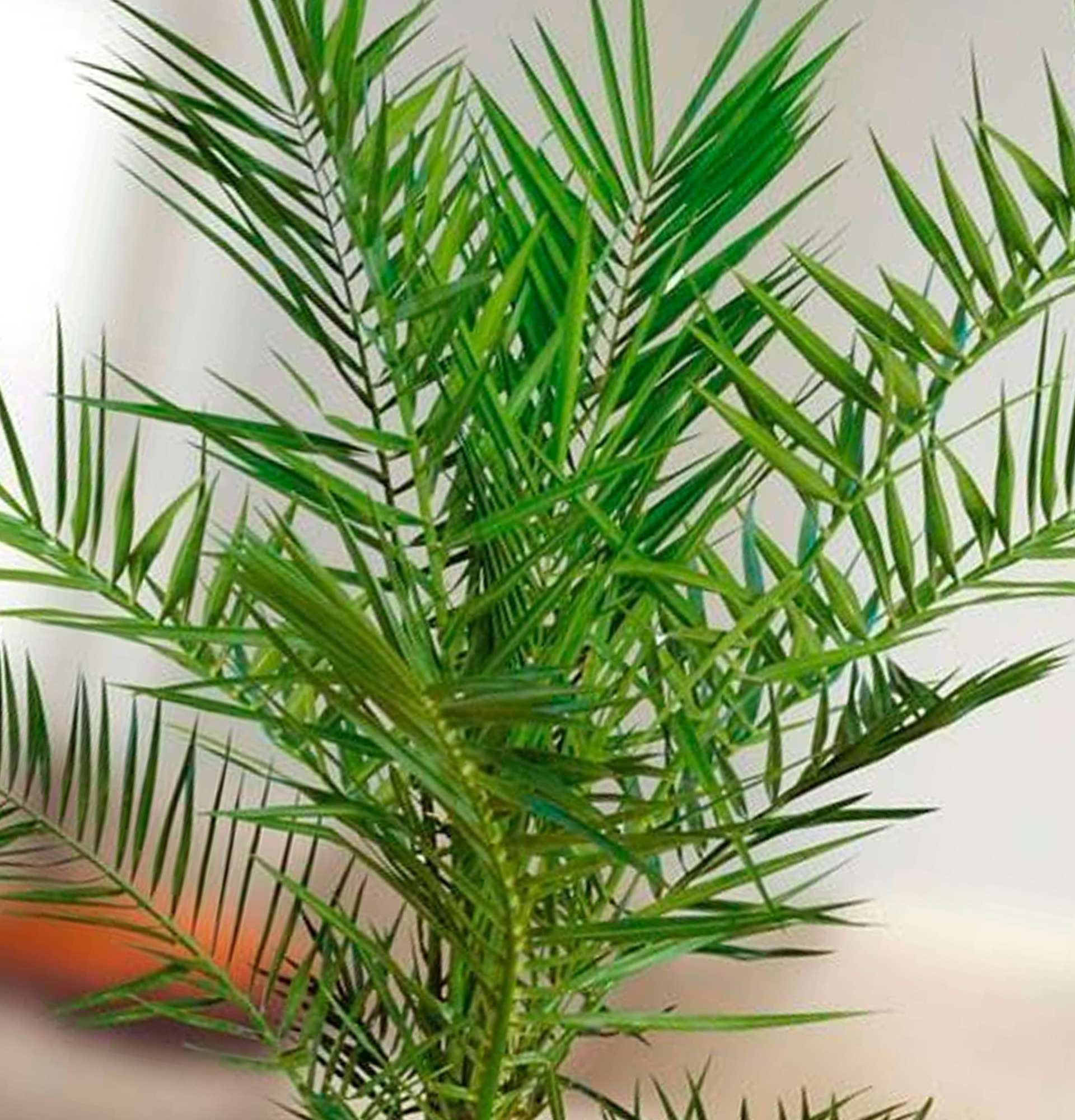
The nature of this archipelago allows the date palm to reach large sizes. The height of some specimens is recorded at thirty meters. The lifespan of these shrubs and trees is about one hundred and fifty years. Date palms have a strong trunk, the diameter of which reaches eighty centimeters. The top of the bare trunk is decorated with feathery, leathery, lanceolate, six-meter-long leaves, which form an original bunch.
The date palm blooms with unisexual flowers, gathered in inflorescences-ears. Pollination occurs with the help of wind. As a result, sweet and high-calorie, tasty and healthy fruits grow – dates, which are known and widely used by people all over the planet. They are about eight centimeters long and four centimeters wide.
The genus received its name "Phoenix" for its ability to sprout young shoots from the roots of dead old palms.
The Latin abbreviation of the variety Phoenix dactylifera comes from the words of the Greek language daktylos - "finger", fero - "I carry". Therefore, this very popular date palm is called Date palm, finger-bearing date palm, date-bearing date palm.
Eastern peoples praise this amazing plant in myths and legends. The date palm was embodied as the Tree of Life in the compositions of architecture by the ancient Egyptian masters.
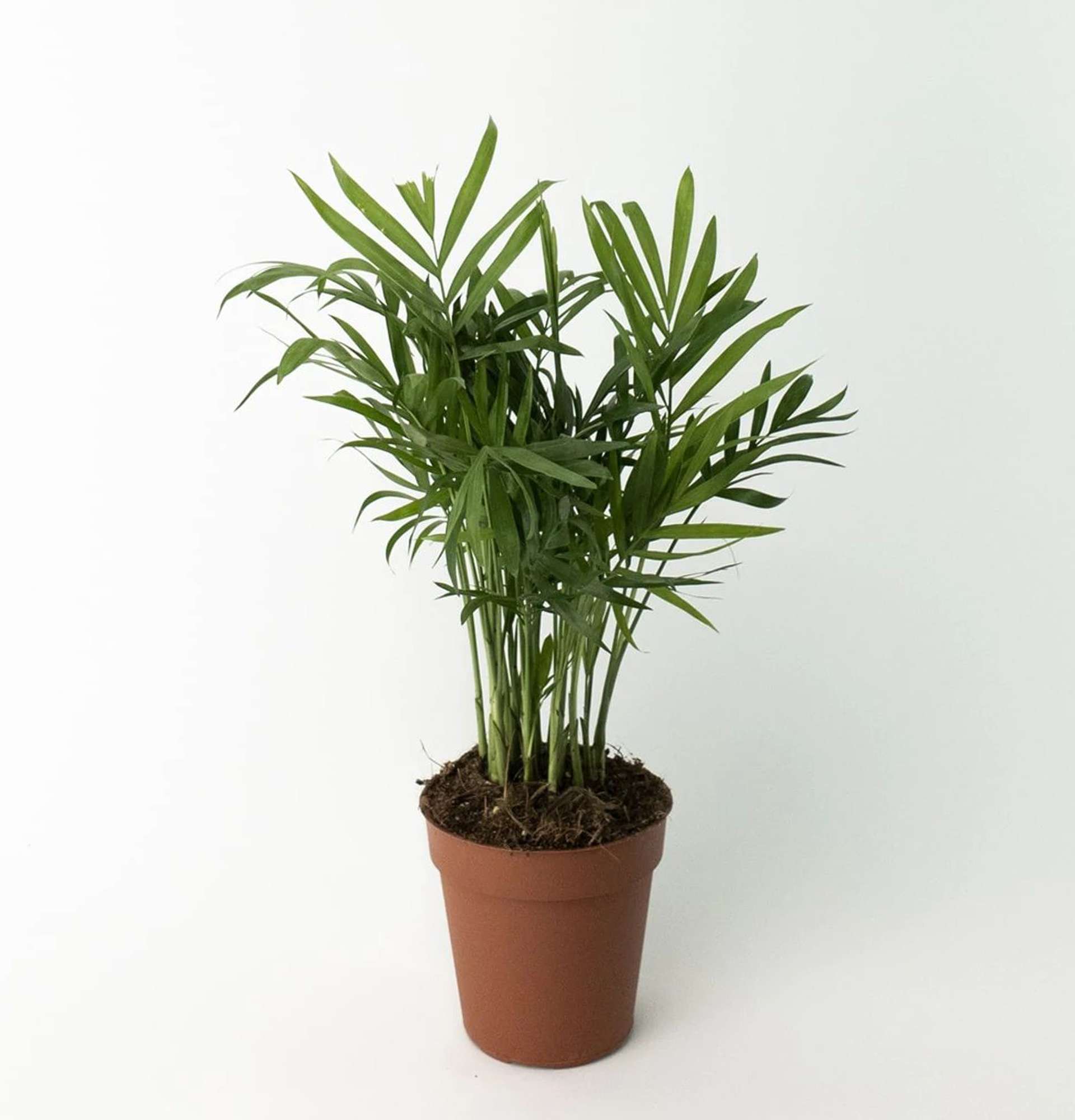
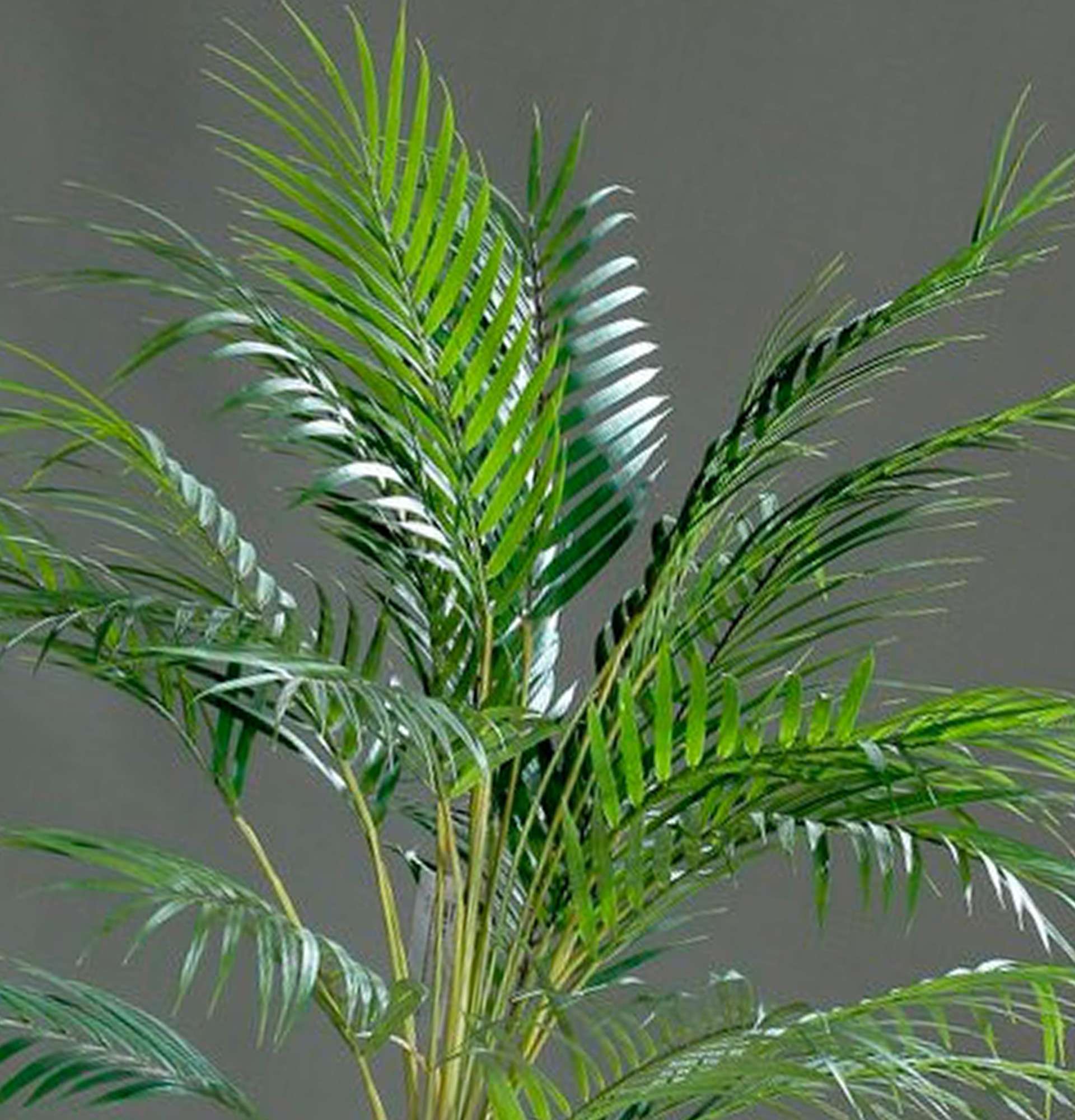
The date palm can rightfully be called the most attractive specimen in the palm family. Such a beauty is chamaedorea.
The inhabitants of the regions where date palms grow widely used this plant in everyday life. The trunks were used for the construction of dwellings, and the leaves were used for their roofs. The leaves were also a good material for making baskets, mats, and ropes.
The sweetness from the stems in the form of juice is widely used for the production of sugar and palm wines. The fruits of the date palm are widely used by the local population for the preparation of "honey", surrogate coffee, bread, and flour. Fresh bracts and apical buds are used to prepare a fresh salad in the form of "palm cabbage". Dates are eaten not only by people but also by camels and horses.
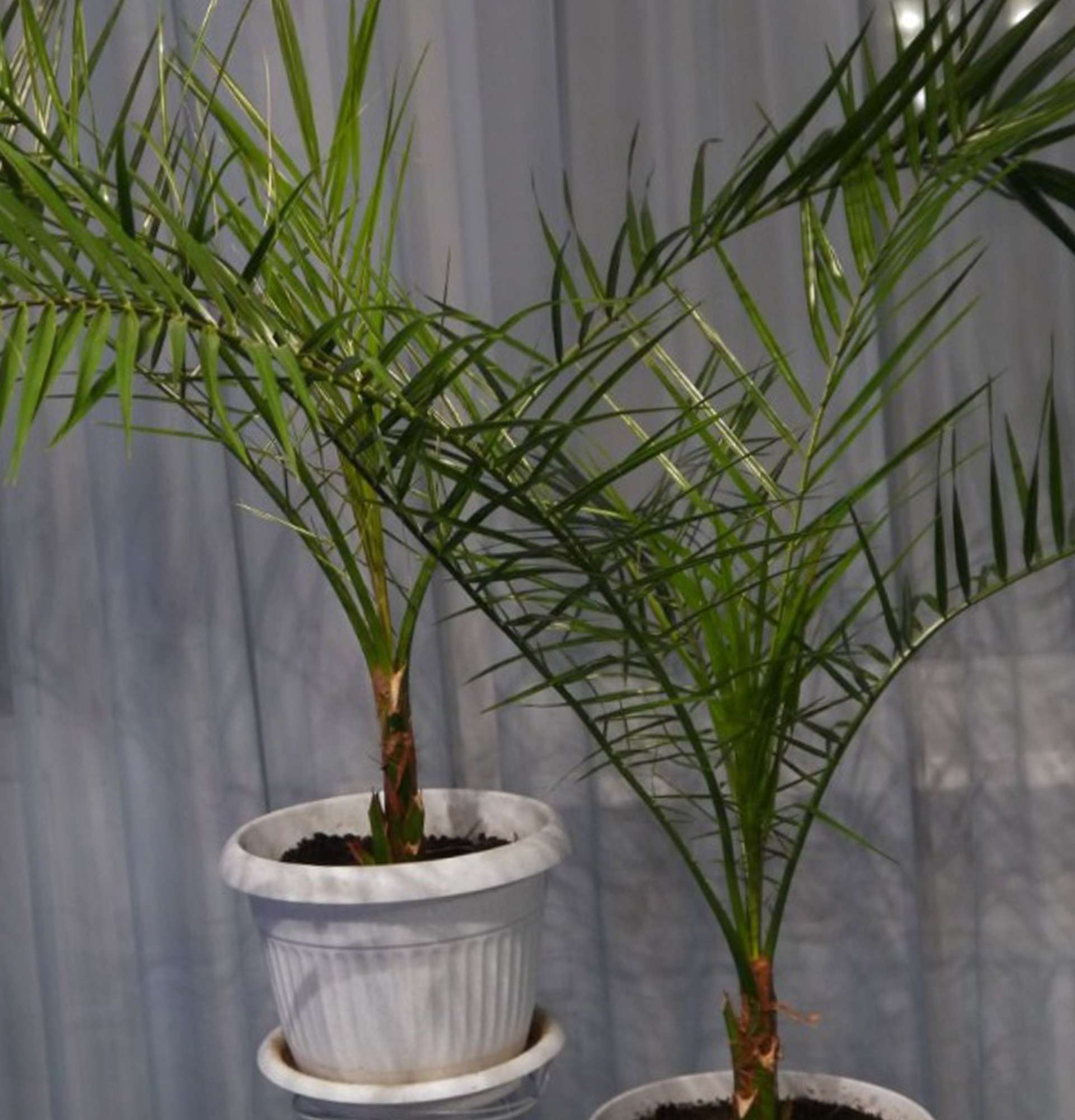
Date palm photo, you can see it by familiarizing yourself with the varieties of the plant.
Date palm species
The most well-known and commonly used varieties of common date can be distinguished:
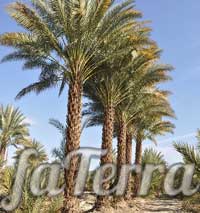 Variety "Medjool", which has soft and very tasty dates. And they grow on the tallest palm, up to 30 m high. It has a dense and lush crown. It has an effective silvery-green hue of the leaves.
 Variety "Zanidi" can be called medium-sized, it differs slightly from the previous one, has more compact forms, and the dates have a semi-dry consistency.
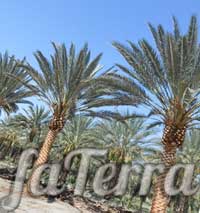 Variety "Deglet Noor" has a modest appearance. It is widely known and popular due to its large, light dates with a honey flavor. The name of this variety, if translated from the language of the Arabs, will sound like "finger of the Universe".
Indoor date palm has been widely used and loved by flower growers for a long time, and especially now. The incomparable indicators of an effective appearance with beautiful, elegant leaves, large sizes allow it to be found in halls, lobbies, large rooms, and offices. The indoor date palm not only decorates, ennobles, and pleases people but also cleans the surrounding area, absorbing toxins and dust, which really affects the improvement of the microclimate.
Date palm care at home
Caring for a date palm is not burdensome. The queen of oases will feel great in any well-lit room.
Choosing a place and temperature regime
The common date palm desires a lot of bright, diffused light. South, southwest, and southeast areas near the window are most suitable for the palm.
To properly form the crown, periodically turn your date palm.
In winter, the indoor plant will not mind being illuminated with phyto-lamps. Partial shade in summer will be pleasant for the date palm.
The ideal temperature for an indoor plant is 18-24°C. The winter mark is 13-18°C.
Humidity and watering
For the comfortable life of the common date palm, a humidity of 40% is sufficient. Water procedures in the form of regular spraying of the outer part of the palm with settled water are very useful, and a "shower" is recommended once a week.
In order for the date palm to grow into a beautiful and healthy plant in a home environment, to make it easier to care for it, you can purchase a self-watering pot.
Transplanting and suitable soil
Annual spring transplanting into a pot with a hole for young date palms is desirable and beneficial up to the age of five. In the future, the indoor plant is transplanted only if necessary. For large specimens, it is enough to change only the upper part of the soil mixture. If the roots protrude above the soil, they should be cut off.
The soil mixture "for palms" can be purchased in a store. You can also prepare the soil yourself, which should include: turf soil, moist peat, leaf soil or humus, and coarse-grained sand or perlite in half the amount. The pot should have a hole, at the bottom of which a thick layer of drainage is laid.
How to grow a date palm
A date palm from a seed can perfectly adapt to the living conditions in which it is planted. After all, in order to get a beautiful exotic palm, you need a lot of patience, attention, and care.
First, eat the largest, most delicious, ripe, unsalted date. We make small cuts in the seed and immerse it in warm water for a while. In prepared deep pots with holes, we plant the prepared seeds vertically, burying them two centimeters in moist sand or sawdust.
With regular watering and a fixed temperature of 23-27°C, seedlings will appear in a couple of months. Seedlings that have grown to ten centimeters can be carefully planted in a permanent place in separate deep pots, the diameter of which is twelve centimeters. The composition of the soil mixture is described above.
Caring for small plants is the same as for adult indoor date palms. The first dissected leaves may appear in the fifth year of life. We have a mature date palm in a place that is convenient for it.
We protect it from drafts, low temperatures, and direct sunlight.
Pests and diseases
If we violate the rules of proper care for an indoor palm, we expose it to diseases. The carriers of these troubles can be spider mites, scale insects, mealybugs, and thrips. When unwanted guests are found, we use chemical preparations.
Difficult moments in growing a date palm
- The leaves turn brown at the bottom - this can be considered a natural phenomenon of leaf fall with age.
- The leaf plates turn brown, wrinkle, and bend down - the plant needs to be watered.
- The leaves are covered with brown spots - the palm is susceptible to sharp temperature changes, the soil is waterlogged when watered with cold water.
- The ends of the leaf plates dry out and turn brown - the plant is in a cold room with dry air and without watering.
- Slow growth of the common date palm - the soil needs to be fed with nutrients.
Love your date palm. It will help you become more confident in your abilities, set goals for yourself and achieve them, make only the right decisions, and keep yourself in good shape.
Write comments
Comments