



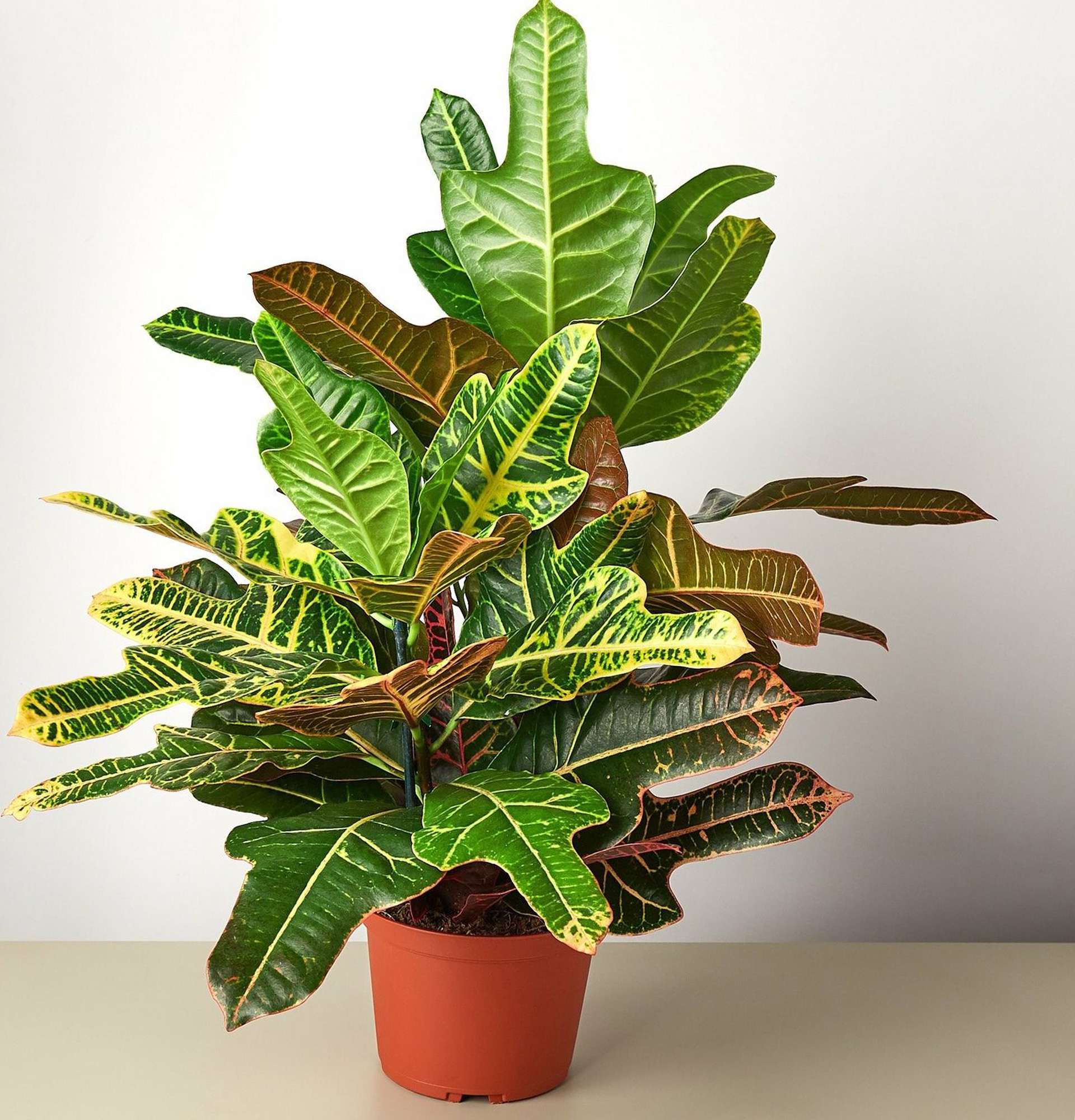
Latin name: (Croton)
Category: perennial herbs
Origin: Australia, India, Malaysia, Polynesia
Croton – an unusual, colorful wonder with exquisite leaf texture
Croton (Croton), its scientific name is Codiaeum, and its common name is "Joseph's coat," is a very colorful ornamental shrub that is distinguished by its high capriciousness. The croton genus, which includes about seventeen varieties, is concentrated in the Euphorbiaceae family.
The croton plant considers the archipelago of islands located in the Pacific Ocean to be its homeland. Close native places are Northern Australia, Southeast Asia, and India.
The mildness of the climate with a comfortable temperature of about twenty-five degrees and short, heavy rains became the most suitable for crotons. Here, in their native lands, the plant reaches a height of three meters or more. In home conditions, the croton flower is represented by upright bushes from half a meter to one and a half meters in height.
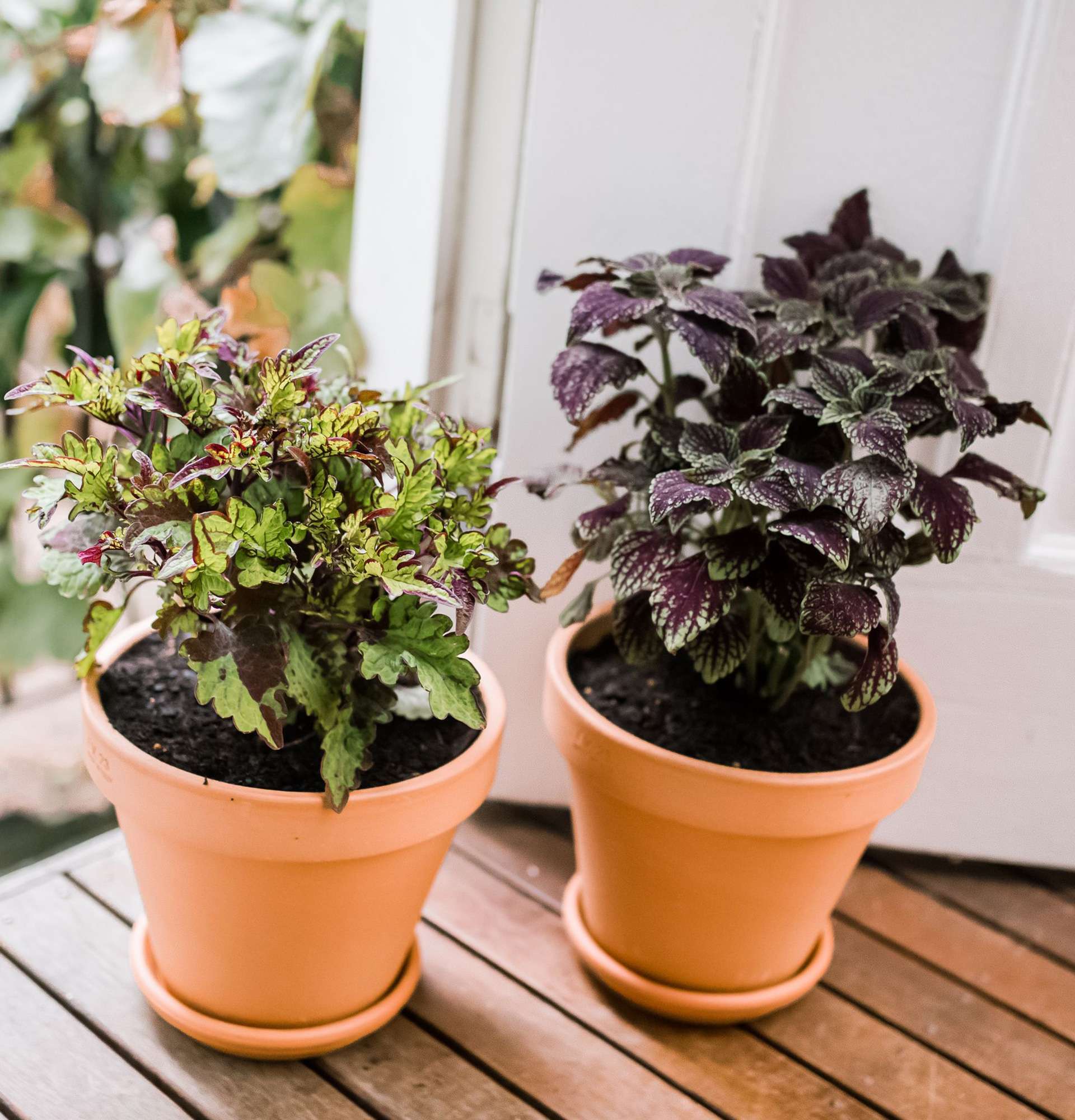
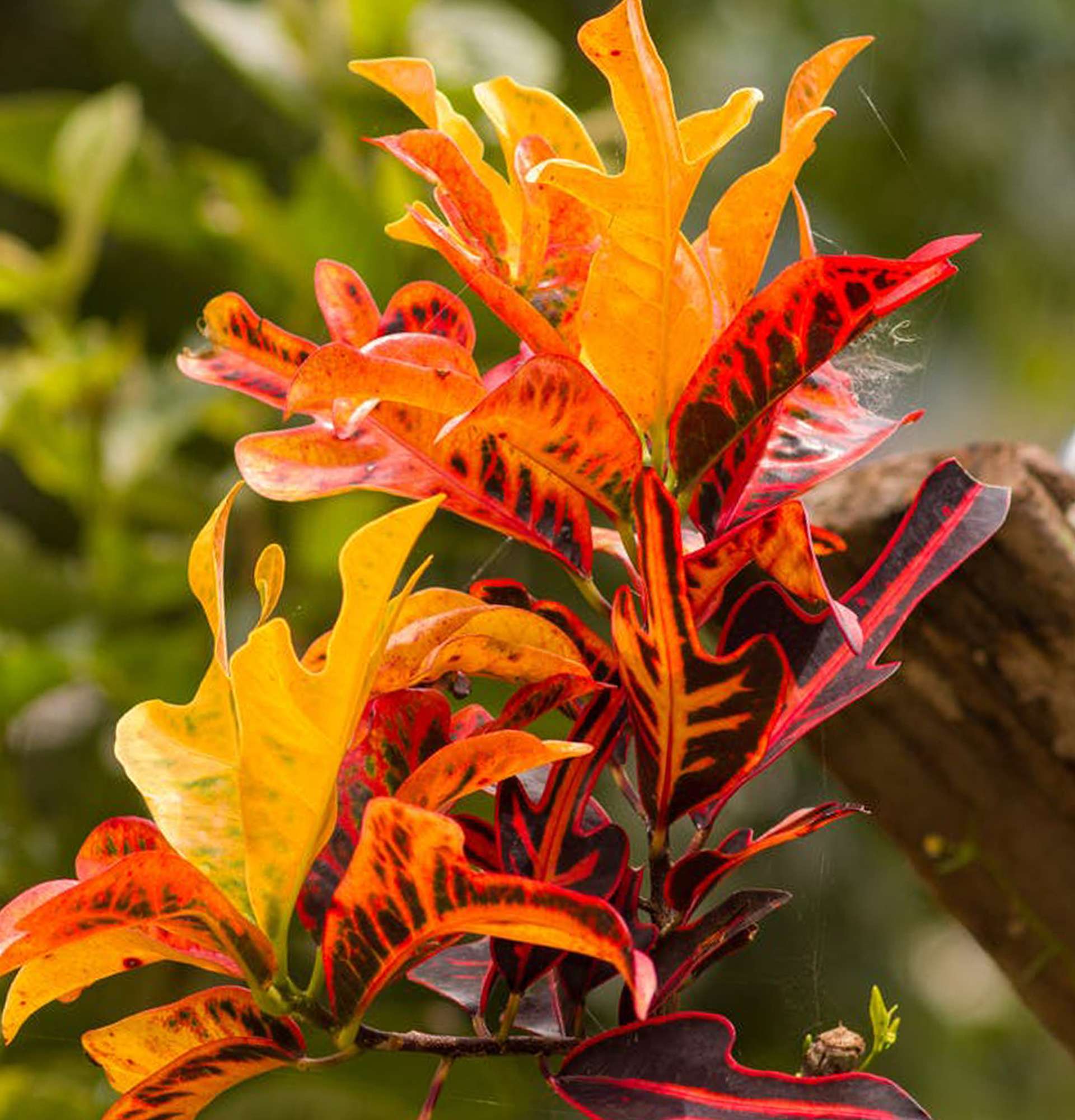
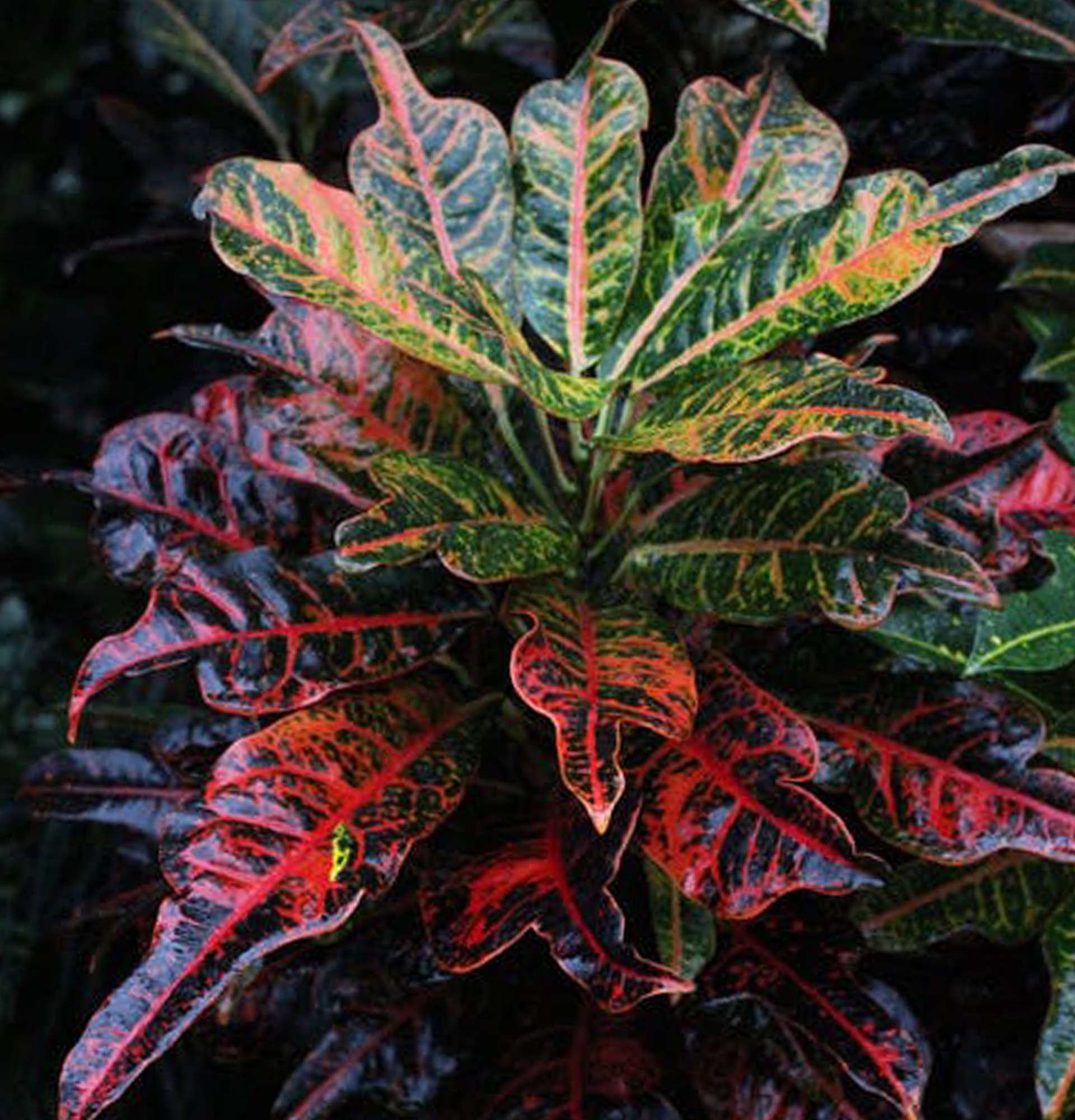
The variegated, leathery leaves have a huge number of varieties. Two or three-lobed leaves can be elongated or with narrow ovals; they have the shape of an ellipse with pointed ends. Croton plants can have wavy or whimsically curved leaves. The color palette of Codiaeums is even more beautiful and diverse, which is determined by the growing conditions and age. One bush can have leaves with different shades of green and patterns of yellow, red, pink, purple, or burgundy. The older the Codiaeum croton and the brighter its location, the brighter its leaves will be.
The botanical name of the flower has been Codiaeum since the end of the seventeenth century, which it received from the Dutchman Rumphius. This name was changed by Carl Linnaeus a hundred years later, and it became croton, which is associated with the name of a Greek city.
Croton photo decorates the next section of the article.
Croton species
Croton Petra (Codiaeum pictum Petra)
 The native lands of this large tree-like flower are Pakistan and China. Here, in the wild, Codiaeum Petra reaches a height of four meters. This magnificent branched tree is decorated with lobed, oval, and pointed dark green leaves. The edge is framed with bright yellow, and the veins and spots of the same shade are clearly visible. In the room, it is desirable to place this beauty on the floor, near a window.
Codiaeum Excellent
 The carved shape of small leaves, which resemble ordinary oak leaves, is a distinctive feature of this variety of croton. Croton excellent also differs in the color of the leaves. The top is green-yellow, and the bottom is burgundy-red.
Codiaeum variegated (Codiaeum variegatum)
 Natural conditions have a favorable effect on the height of these beautiful beauties. Here they reach three meters. In indoor conditions, Codiaeum variegatum can grow into a beautiful bush from sixty centimeters to one and a half meters in height. The stem of the plant gradually becomes bare. The upper part of the plant is decorated with leaves of brown-green color. Regularly working on breeding new species, breeders have pleased with new varieties. Among them:
- Croton flat-leaved is represented by oval, wavy, thirty-centimeter leaves, the width of the leaf reaches ten centimeters.
- Croton lobed is decorated with three-lobed, twenty-two-centimeter leaves. The color can be both variegated and solid.
- Codiaeum painted breeders constantly update and breed new hybrid varieties.
Croton curly (crispum)
 This variety is represented by narrow, wavy, bright leaves. Croton care for it in the right direction will allow you to see a Codiaeum flower with a lush, curly crown in your home. How to care for croton, we will consider in the next section.
Croton or Codiaeum Tamara (Codiaeum Tamara)
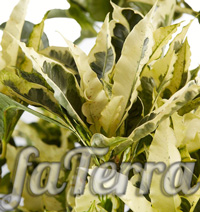 An unusual and unique rare variety of a large, evergreen, leafy-decorative shrub, which is completely different from other crotons with its interesting color. The plant has oval, leathery, dark green leaf plates with large light green and white spots scattered on them. It can reach a height of one and a half meters with a diameter of forty centimeters.
Croton Tamara blooms only in the wild. This is evidenced by the appearance of a short inflorescence with small, inconspicuous, creamy-colored, spherical inflorescences.
The native territories for this miracle are Asia and the archipelago of Pacific islands.
Croton Tamara looks very beautiful. And it is not surprising, because this unique variety was bred by the British by order of the emperor himself in honor of his beloved Tamara Branch.
And it is necessary to care for this light-loving, heat-loving member of the imperial family with great attention and love, so that the plant is decorated with bright colors. This indoor plant with white-green leaves will complement, decorate, and add its zest to the interior of any room.
Croton aucubolist (Codiaeum aucubaefolium)
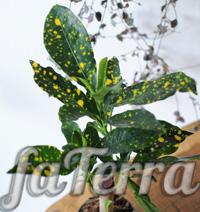 A very interesting, effective variety of croton, which was named for its unique resemblance to the leaves of the golden tree - aucuba. These fast-growing indoor plants have long, lanceolate, glossy, leathery leaves with pointed ends, which, with age, still resemble oak leaves with slightly pronounced lateral lobes, as in other crotons. This dark green beauty is decorated with lemon-yellow spots, which resemble golden dust, which turn greenish and yellowish during growth. The bushes grow up to one meter in height.
Croton care in the home
The main thing! We are looking for a light, beautiful place for our beloved and very whimsical flower, Codiaeum, and regularly water the plant with love, maintaining a constant temperature.
And now, in detail, point by point.
Choosing a place and temperature regime
Caring for croton at home directly depends on the location. The light-loving flower Codiaeum will feel comfortable near a west or east window in the summer, and near a south window in the winter. If possible, in the warm season, you can pamper your beauty with fresh air. Such places can be a garden, balcony, or gazebo.
Lack of light will directly affect the condition of the leaves.
The acceptable temperature difference in warm months is 20-27°C, and in the cool season - 15-17°C. Avoid sudden temperature changes.
Watering and air humidity
Codiaeum care will be good if you water it with warm water. In summer, water every two days, and in winter, once a week. We constantly monitor the condition of the soil. Overdrying the soil is not allowed.
An important factor in growing croton is air humidity. It should be more than 50%. This can be achieved by spraying and wiping the leaves with a damp sponge.
Soil and its feeding
The flower croton desires fertile, loose, slightly acidic soil. The soil mixture can be made from equal parts of sod, peat, leaf soil, and river sand. Another suitable option: one part of sand and peat, diluted with three parts of garden soil.
High-quality feeding with liquid fertilizers in the warm season every two weeks will benefit the croton plant. You can also use complex mineral fertilizers.
Transplanting
Young specimens need to be repotted every year. Adult croton needs to be repotted every two years. At the bottom of the pot with a hole, we put a good drainage of at least a quarter of the volume. After three years, you can limit yourself to replacing the top layer of soil.
Important! Codiaeum croton prefers to grow in a slightly cramped pot.
How to propagate croton?
Croton propagation can be done in two ways: by seeds and by apical cuttings. The first option is used quite rarely. We propagate the Codiaeum flower by cuttings. The question arises: how to root croton? Apical ten-centimeter cuttings are best suited for rooting. Treat fresh cuts with activated charcoal. With high humidity and a temperature of about 25°C in a greenhouse environment, we get young shoots in the soil mixture described above.
Pests and diseases of croton
If the growing conditions are not observed, you can find unwanted guests on the croton. These can be mealybugs, spider mites, scale insects, and thrips. To avoid such misunderstandings, it is necessary to familiarize yourself with the chapters of the article "Codiaeum care at home" before starting to grow your pet. According to these tips, the croton will be comfortable, and it will delight the owners with its beauty and charm.
Possible difficulties in growing
- The leaves of the croton have drooped - the plant is cold.
- The leaves turn pale, wither, and turn green - insufficient lighting.
- The leaves curl up - it is hot and dry in the room.
- The leaves are small and deformed - there are not enough fertilizers in the soil, feeding is necessary.
- Leaf fall - a sharp change in temperature or dry soil.
We take care of croton qualitatively, conscientiously, and with love, and as a result, we get a beautiful plant that delights with its beauty and brightness. When communicating with your pet, you should remember that the milky sap of the plant is poisonous.
You can see Codiaeum photos in the previous sections of the article. You can see other indoor flowers, photos, and their names by opening the catalog of indoor plants on the site.








Write comments
Comments