



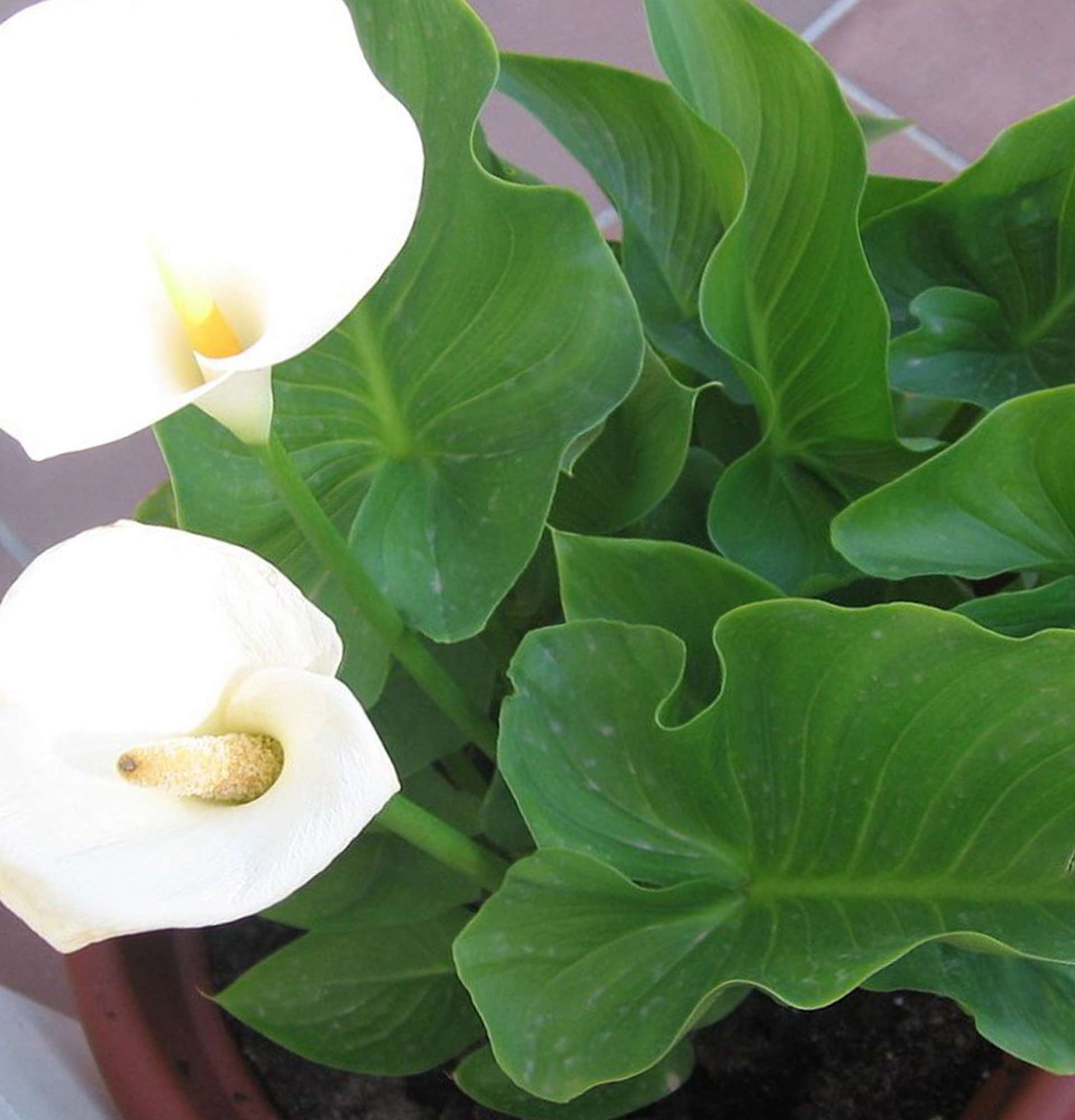
Latin name: (Calla palustris)
Category: perennial herbaceous plants
Origin: North America, Southeast Asia, Europe
White calla lily – a wonderful and unique beautifully flowering aquatic perennial
The white calla lily, also known as Calla (Calla) is a genus of amazing and unique herbaceous aquatic plants, located in coastal marshy areas, decorating the Araceae or Aronnaceae family. In terms of botanical classification, this genus includes one species – the marsh calla lily (Calla palustris).
An alternative name for the white calla lily, which is most common, is marsh calla, wild calla, also known as aquatic calla. If translated from the Greek language, Calla means "beauty," and it is not for nothing that it is called "wedding flowers" among the people. There are many other interesting names associated with this amazing plant, which has chosen humid, marshy areas, shallow riverbanks, ponds, and other bodies of water. It is also called lake watchman, snake grass, pig's ear, and breadbox.
The plant is native to North America, Southeast Asia, and Europe. Beautifully flowering coastal plants for a pond are loved in the tropical regions of the Northern Hemisphere with a temperate climate.
In some areas, there is a threat of extinction of this natural wonder, so to save the plant, it was included in the Red Book.
The flower of the white calla lily is a perennial herbaceous plant in which creeping or prostrate shoots prevail. The height of the shoots reaches thirty centimeters. And they are located on a thick, greenish rhizome, which creeps almost on the surface of the soil. Peaty substrates are a stimulant for the strong branching of the marsh calla lily.
The leaf arrangement of the calla is unique. From the roots, elongated petioles rise, decorated with large leaf plates that reach sixteen centimeters in length and fourteen centimeters in width. Dark green, smooth, glossy leaves have an original heart-shaped configuration with distinct veins.
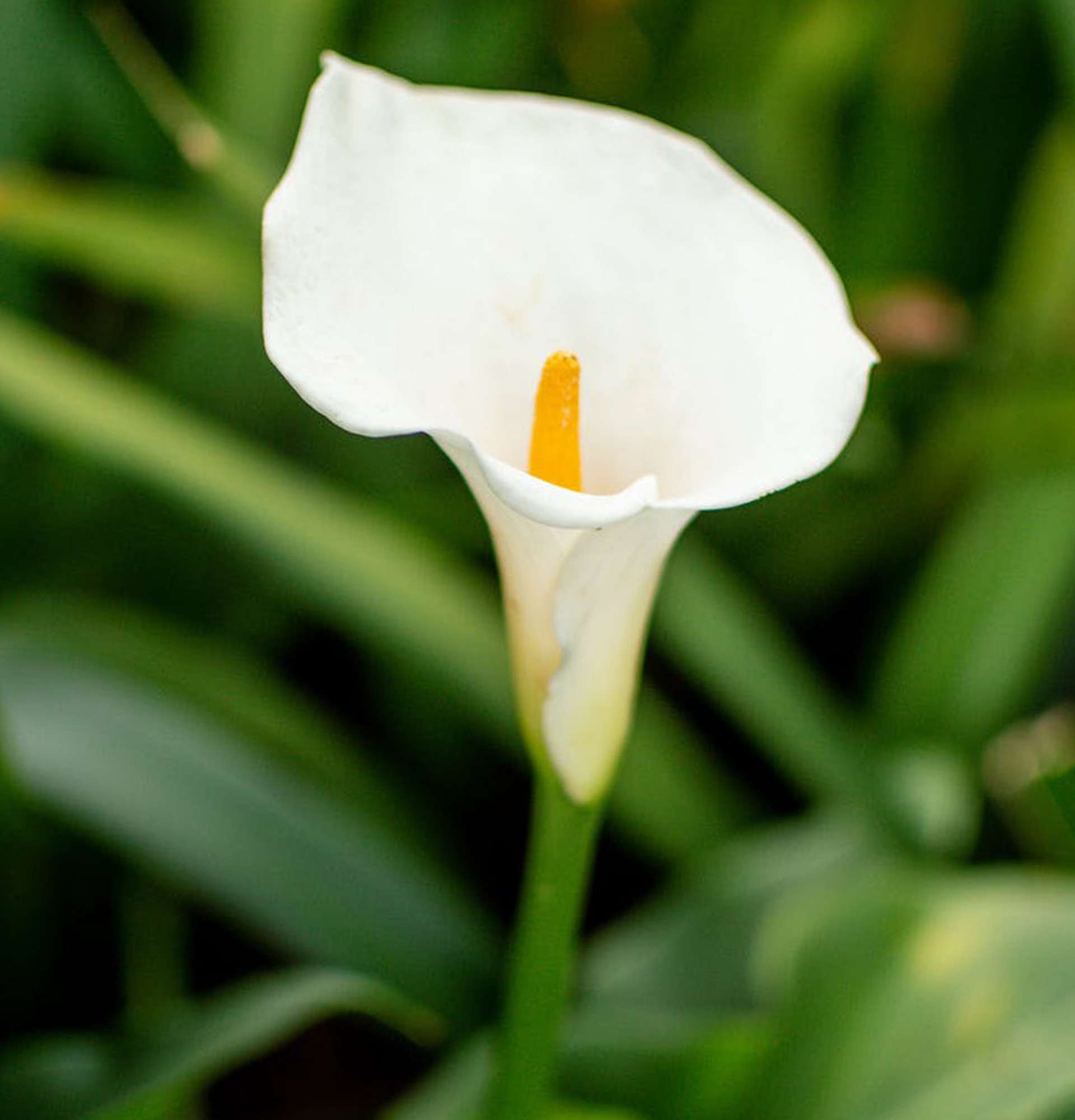
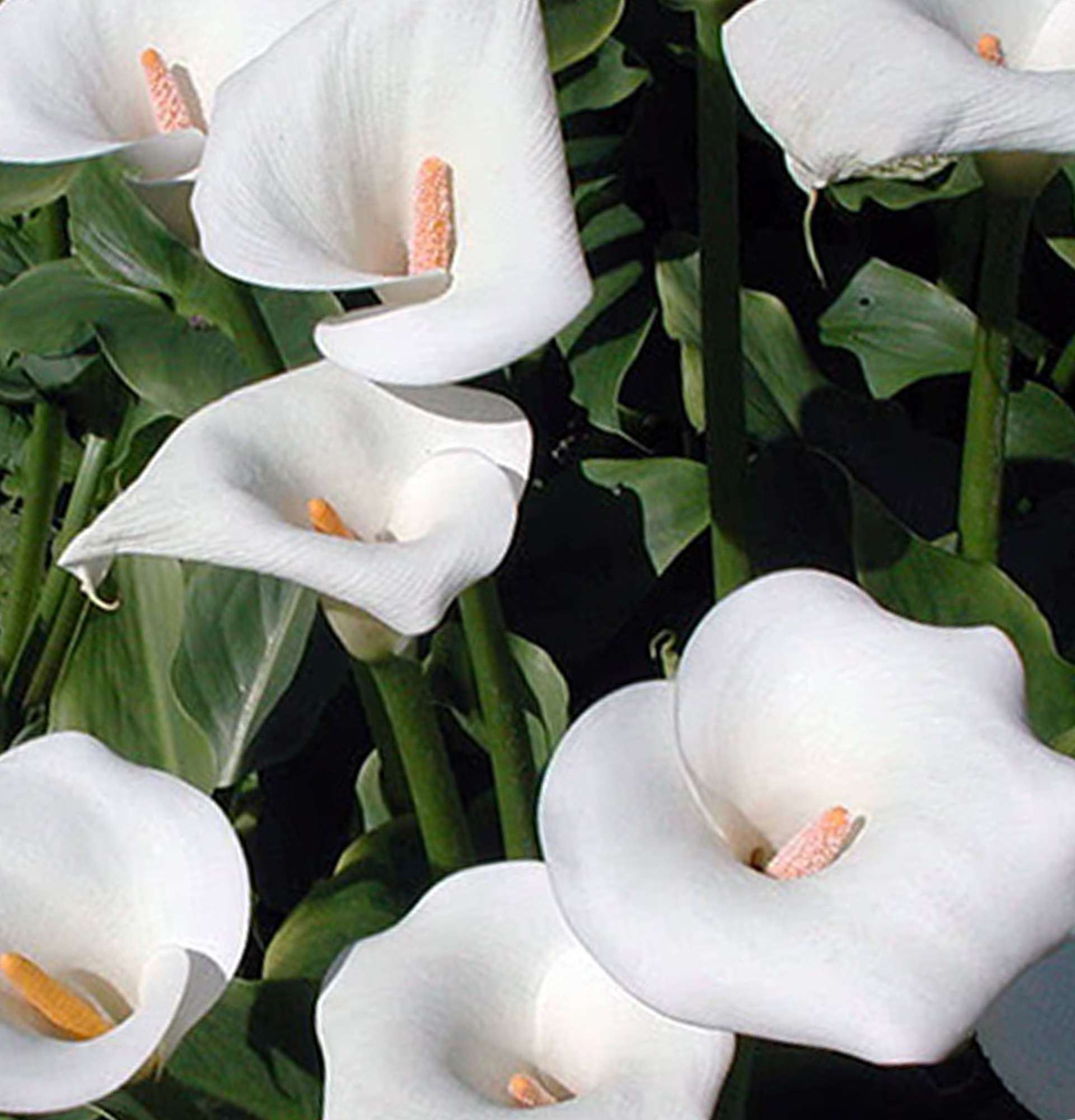
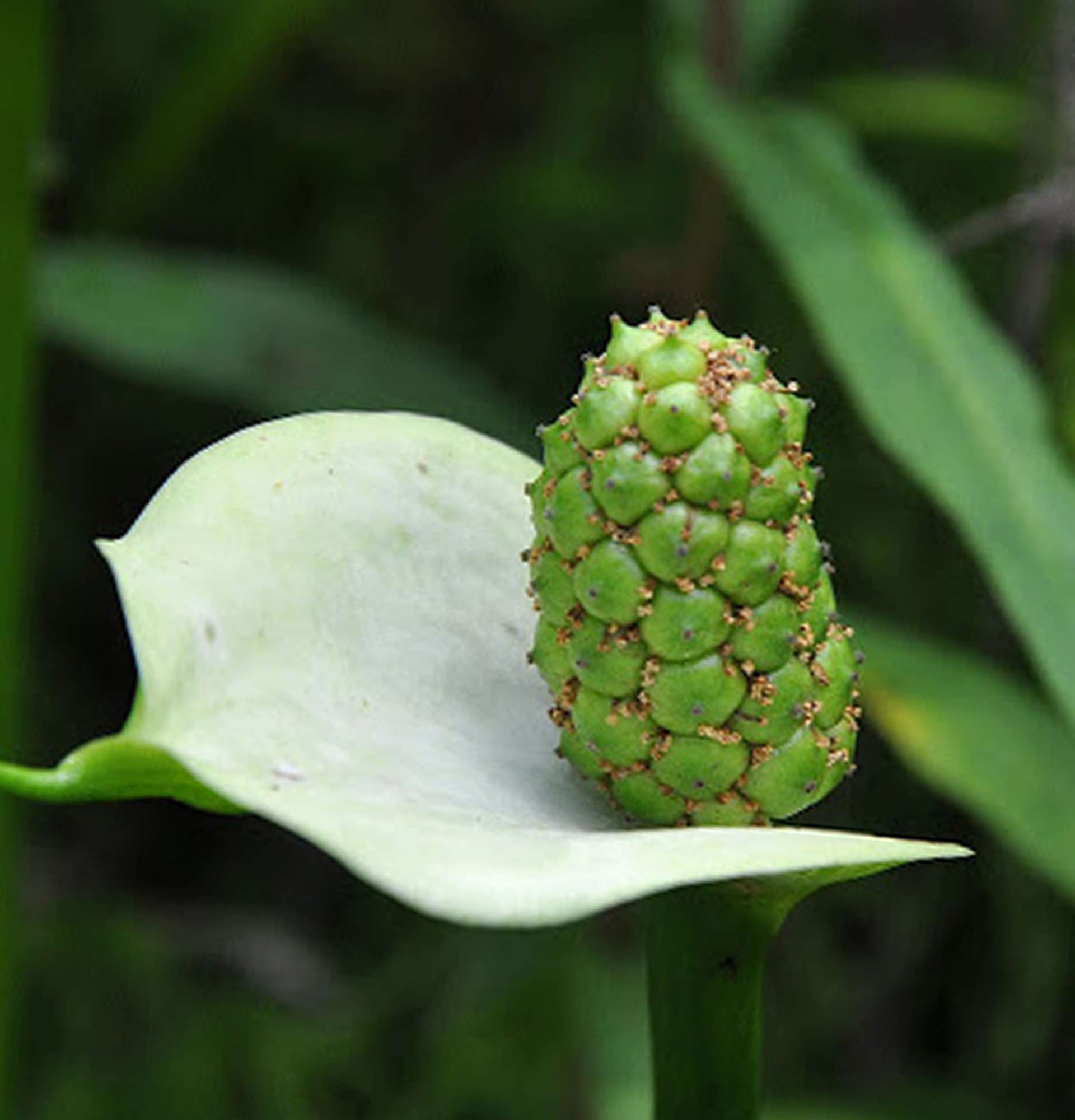
The rosette of basal leaves formed by the leaves can signal the appearance of a flowering shoot with small flowers in large numbers, gathered in a dense vertical cob of a cylindrical shape – the main decoration of the plant. The color palette of the petals is diverse, from rich white, yellow-green to cream. At the top, the inflorescence is decorated with flowers that have stamens, and in its lower part there are pistils on which pollen falls from the wind, and pollination occurs.
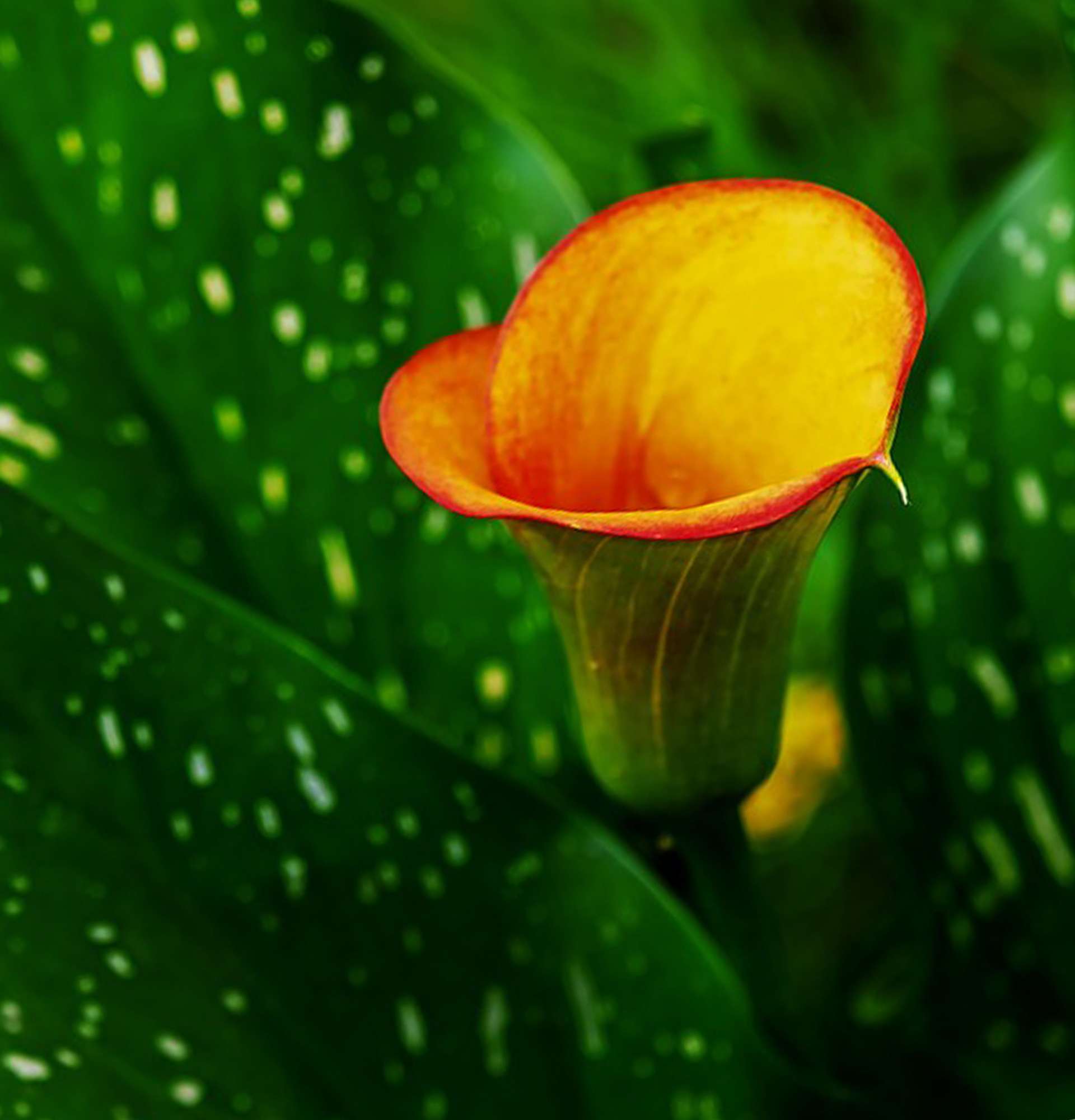
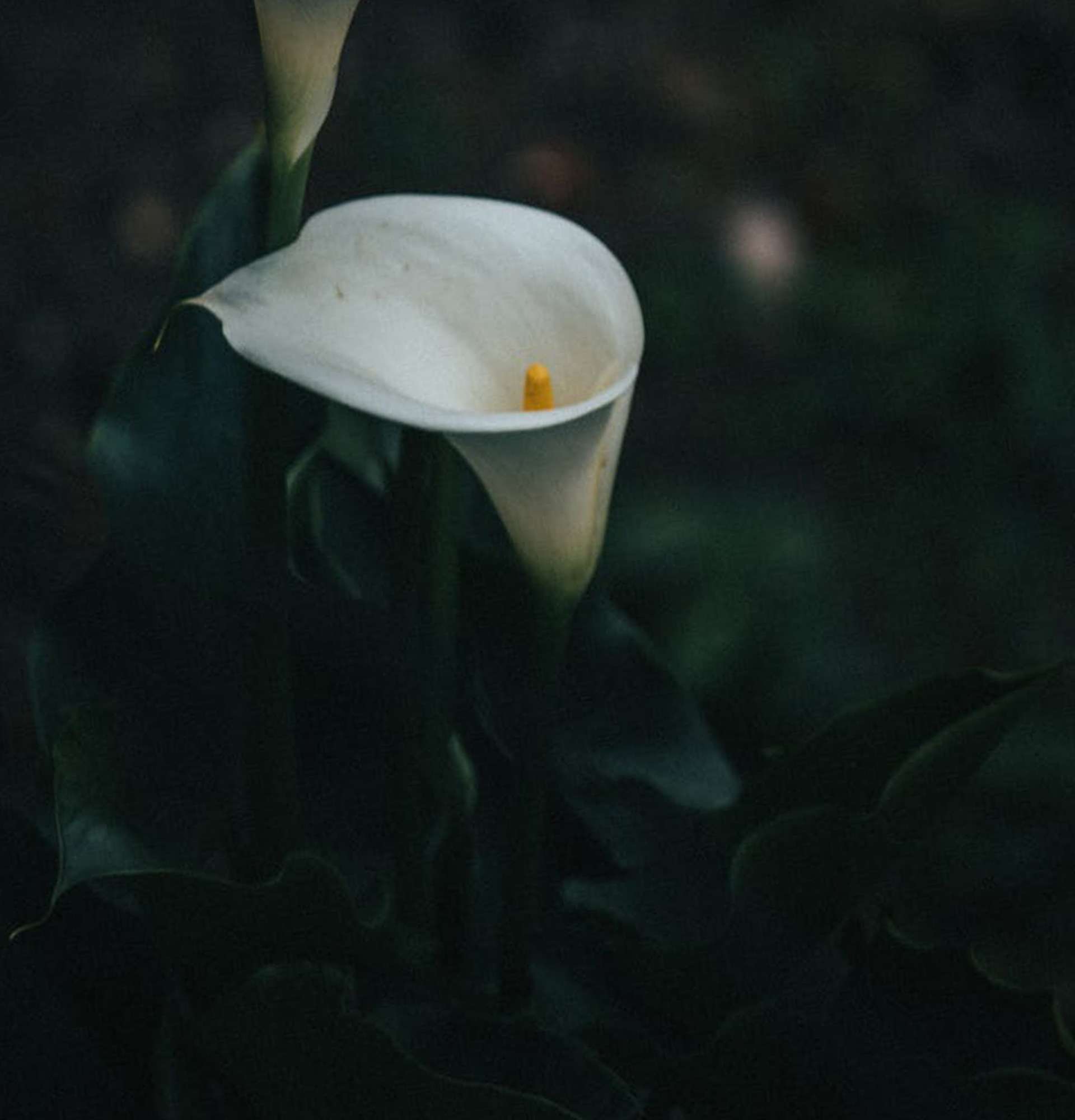
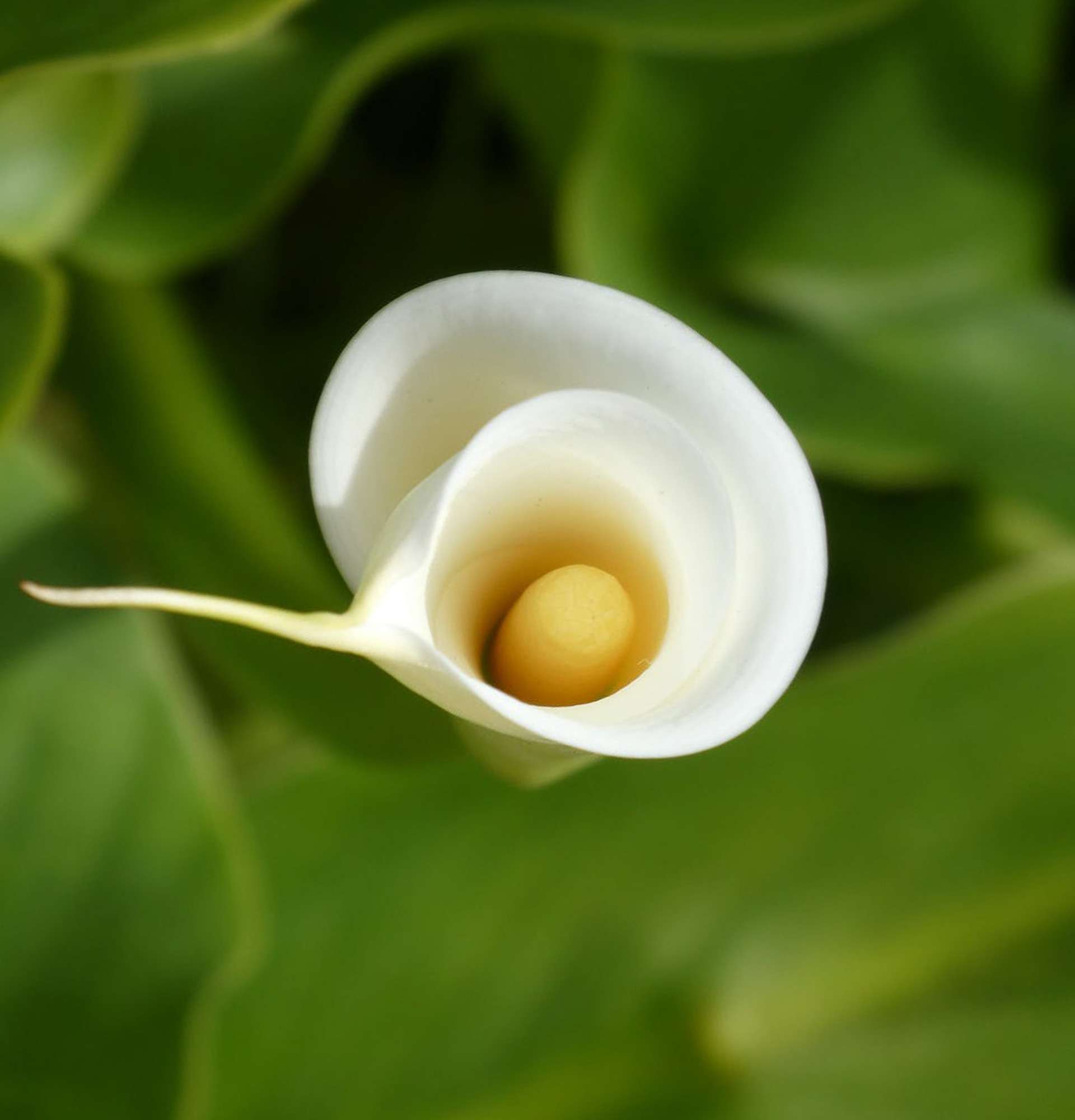
The entire inflorescence is protected by a leaf bract, the inside of which is snow-white, and the upper side is pale green. When the cob is fully formed and all the flowers are fully open, this "hood" deviates from the inflorescence, and all its snow-white beauty is revealed. This served as a unique moment for obtaining the beautiful name "white calla lily."
The flowering period of the marsh grass can be considered the end of spring and the beginning of summer.
With the onset of autumn, the cob is covered with effective bright red berries. Ripe fruits turn brown.
The closest relatives of the marsh calla lily can be considered anthurium, spathiphyllum.
Snake grass and landscape design
Small ponds, ponds, and unique streams are a suitable territory for the lake watchman, which, with its harmony and elegance, forms dense carpets of leaves with amazing white bract inflorescences, decorating their banks. Snake grass will look good and be a wonderful neighbor for fern. The long flowering period of the marsh calla, the high decorative value of both the flowers and the red berries, make the presence of this plant in landscape design desirable. This original plant is simply impossible not to notice and not remember.
Marsh calla lily growing conditions
One of the main positive qualities of the white calla lily is its unpretentiousness. And every flower lover individually decides to admire the marsh grass on the windowsill, in the garden, or near a pond. In order for the plant to look great, it is necessary to take good care of it. To do this, you need to choose a suitable place for the indoor flower that grows in water. The coastal plant for the pond does not require frequent feeding; if necessary, it needs to be provided with a cozy wintering and monitored for its beautiful growth.
Choosing a place and suitable temperature
The marsh calla lily will feel great in a beautiful, not too deep, quiet body of water. A mandatory indicator for the quality cultivation of the white calla lily, its beautiful flowering, is the regular exposure to sunlight. Diffuse lighting will also be sufficient, but not complete shade. Even if the pond temporarily dries up, the outdoor calla will withstand this unpleasantness, but if the soil is dry for a long time, the snake grass may die. After all, the root system of the aquatic plant is accustomed to water.
The white calla lily flower can easily overwinter in a normal pond without being covered. Therefore, it is not necessary to transfer your pet to a basement or other room.
Soil and its feeding
An indoor flower that grows in water requires a substrate with increased acidity and nutritional value. The soil mixture should contain a significant amount of silt, and the composition should include sand, clay, and loam.
After two months, the planted lake watchman can be fed with a complex mineral fertilizer. It is undesirable for the solution to get on the bract. The flowering pig's ear will not refuse eggshells, tea grounds, and fruit peels – excellent mineral fertilizer.
Snake grass reproduction and planting
In its natural environment, the marsh grass reproduces perfectly thanks to waterfowl, which are carriers of seeds. Amateur gardeners reproduce by dividing the roots, using cuttings, and seeds.
Freshly harvested seeds in the fall, treated with a biostimulant, are kept in a humid state for at least a week and sown in moist substrate no later than September. The seedlings that appear are transplanted into separate pots and placed in containers with water. The young plants should spend the winter in a room, get stronger, and with the onset of spring, they can be transferred to the territory of the pond.
The spring period is very suitable for reproducing the marsh calla by dividing the root system of the plant. Healthy parts of the roots should have a bud and be free of pests. Planting calla in a pot is carried out according to certain rules. The bottoms of the pots should be covered with a good drainage layer of at least eight centimeters. Deep planting of the roots is not allowed, as the buds should be on top of the substrate.
White calla lily diseases and pests
The outdoor calla has its unwanted guests that harm the plant – these are moths. Some species of caterpillars, such as the Kaya bear, damage the juicy leaves of the white calla lily. And the leaves of the leafworm damage not only the leaf plates but also the cobs. The leaves of the snake grass can be a place for the appearance of larvae from which longhorn beetles grow.
The lake watchman can be attacked by aphids, spider mites, and scale insects. If the damage is minor, the plant can be saved with a soap solution. In more complex situations, we use insecticides.
The main thing to remember! The white calla lily flower is poisonous.
The content of sharp and pungent saponin-like compounds, as well as alkaloids, makes the plant very dangerous to those around it. It is especially necessary to monitor children, who like the pretty berries of the snake grass. Animals are also often victims of the colorful flower. If it enters the human body, it can cause convulsions, tachycardia, shortness of breath, diarrhea, nausea, and vomiting. The urgent use of laxatives and gastric lavage saves the situation.
The pollen of the white calla lily can cause allergies.
Despite these negative qualities, thermally treated roots of the plant can be used in cooking. After all, they contain starch compounds. In ancient times, the inhabitants of rural areas added dried or boiled rhizomes to rye flour. As a result, the folk name of the flower is "breadbox."
White calla lily medicinal properties
- Traditional healers widely use snake grass for colds, dry cough, constipation, and rheumatism, treating the bronchi and lungs for inflammatory processes and pathologies.
- A decoction of the roots of the white calla lily is used to treat edema, headaches, oxygen deficiency, and digestive disorders.
- In case of snake bites and other animals, boiled leaves of marsh grass are applied. Such compresses are used to treat osteomyelitis and panaritium. The insecticidal properties of the tincture of the roots of the white calla lily are well known.
The snake grass is a unique flower – a natural barometer. In clear weather, the marsh calla lily is always visible in all its beauty. Before bad weather, the coastal plant for the pond is almost invisible. The main dense inflorescence-cob is beautifully surrounded by a large leaf-bract. If this leaf sticks up, the weather will be clear. A harbinger of rainy weather or bad weather is the bending of this hood from the cob, and the steeper the angle of bending, the sooner the rain will start.
According to popular beliefs, the white calla lily plant foretells love, well-being, and family happiness. Every gardener decides for himself whether to believe in this or not. In any case, this wonderful flower will worthily decorate the flowerbed, pond of any garden plot.

Write comments
Comments