



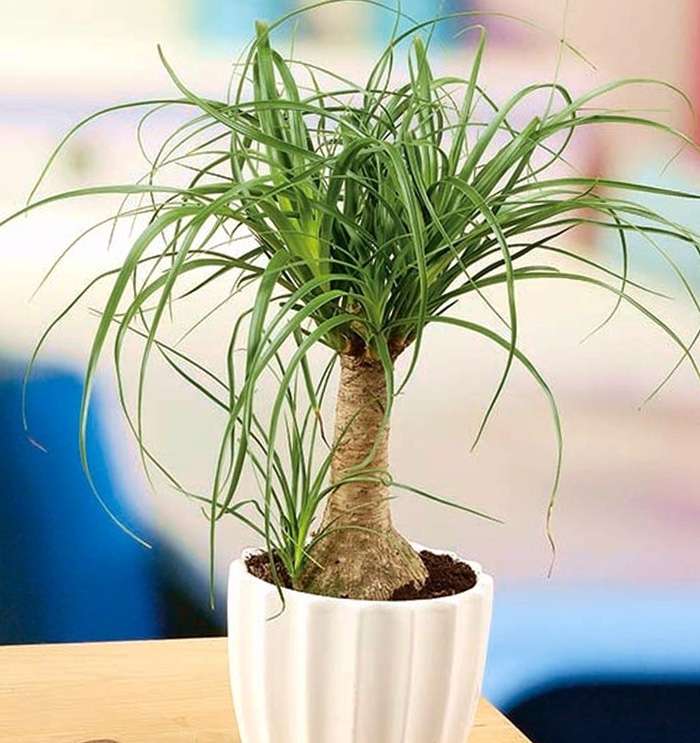
Latin name: (Beaucarnea)
Category: evergreen succulent shrubs and trees
Origin: Central America, Mexico
Beaucarnea – an exotic tropical beauty – a dark green palm
The asparagus family, as determined by modern plant classification, includes a relatively small genus, Beaucarnea, which consists of nine species of perennial succulent tropical plants.
The homeland of this wonder, which combines the characteristics of a palm and, in a way, a cactus, is the tropical southern part of the American continent, specifically the United States of America – the state of Texas, and, most importantly, southern Mexico.
The eastern part of Australia can also boast of having exotic plants. The bottle tree of Australia is very loved and respected by the local inhabitants of the continent, not only for its attractive and unusual appearance. The industrious local residents have found uses for all parts of the bottle tree. The succulent dark green leaves are used to feed animals, and the roots and seeds are eaten by the people, who add them to their food. The most delicious drink is the sweet juice that is collected from the upper parts of the trunks of bottle trees. It is a truly delicious nectar, which is enjoyed not only by the local people but also by various insects. The most useful and necessary thing for the local population, in the conditions of the Australian drought, is considered to be the drinking water, which is perfectly preserved in the trunk of this strange plant. Now that we have considered where the bottle tree grows, let's look at its names.
The first official name of this interesting tropical plant is Beaucarnea, for which the plant should be grateful to the notary and famous collector from Belgium, Jean-Baptiste Beaucarnea, who discovered this beauty during an expedition to Mexico.
In the distant year of 1803, the French traveler and botanist André Michaux also discovered, studied, and described this amazing, unique plant, immortalizing the name of the Frenchman P. Nolina, who was a breeder and gardener, in its name. Thus, the second scientific name appeared – Nolina.
The plant Beaucarnea Nolina is not limited to its official names. The unusual structure of the stem with its swollen caudex contributed to the emergence of many popular names. It is called "elephant's foot," "horse's tail," "bottle tree," or "bottle palm." In China, Nolina is called "camel tree."
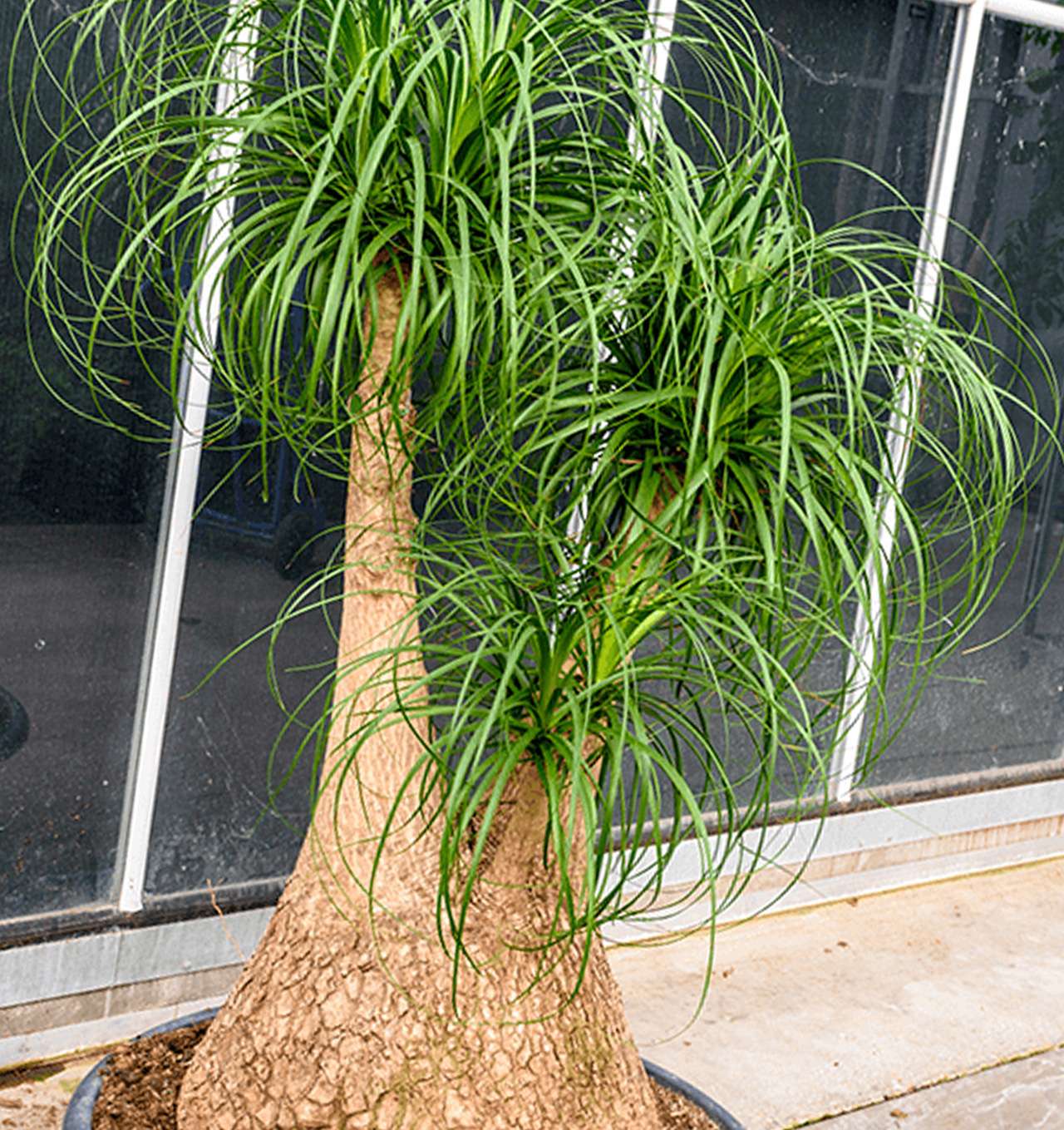
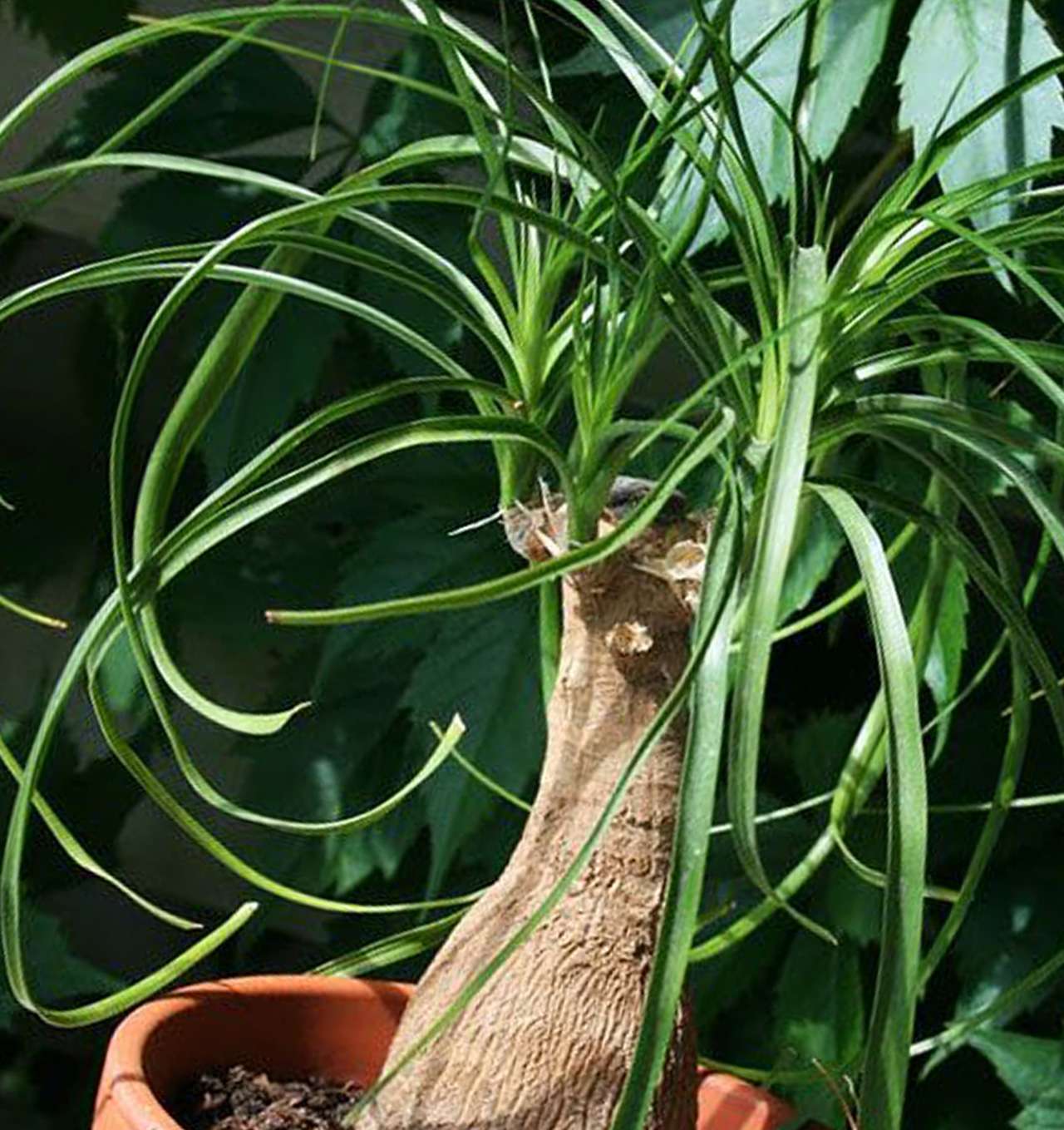
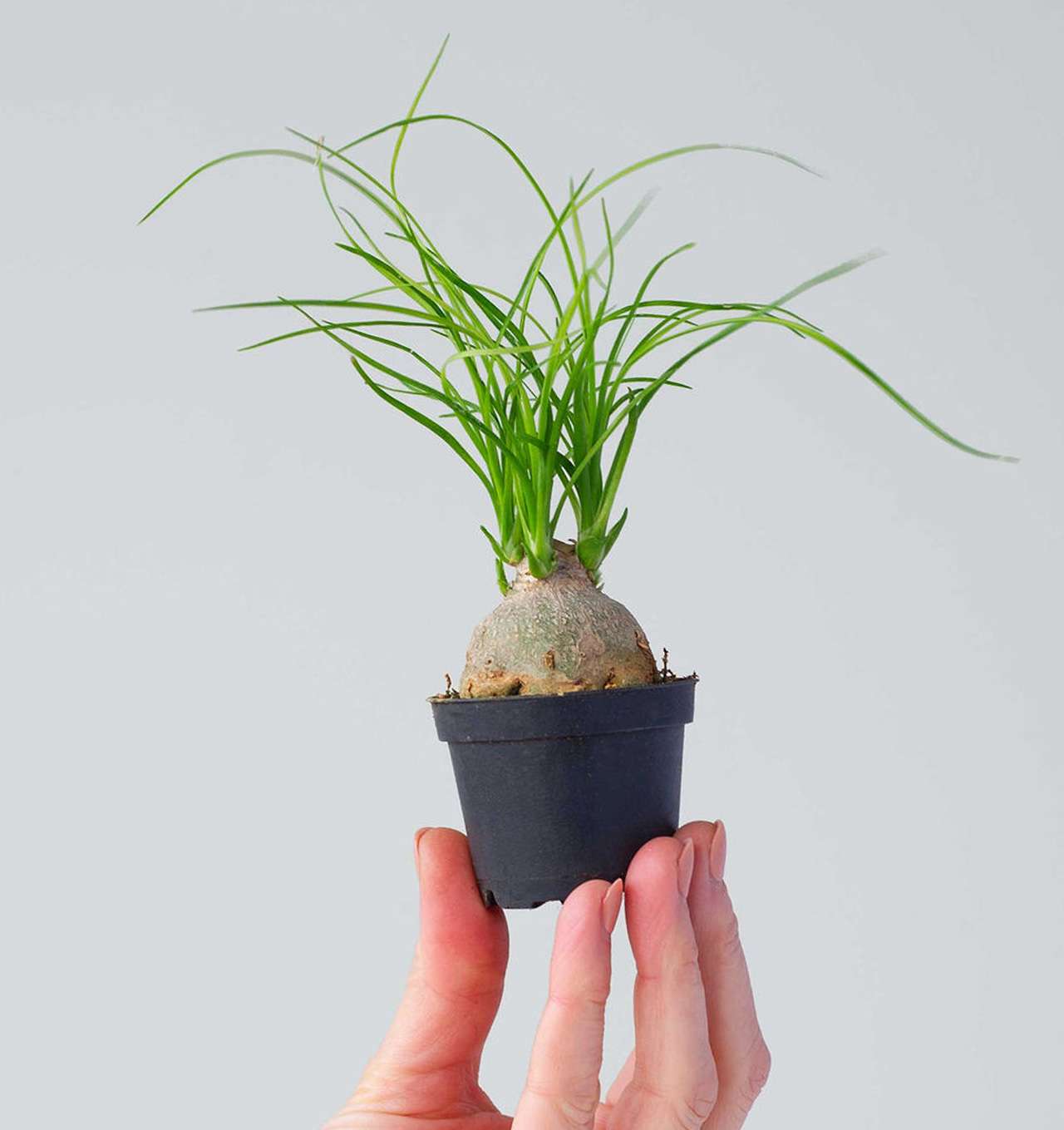
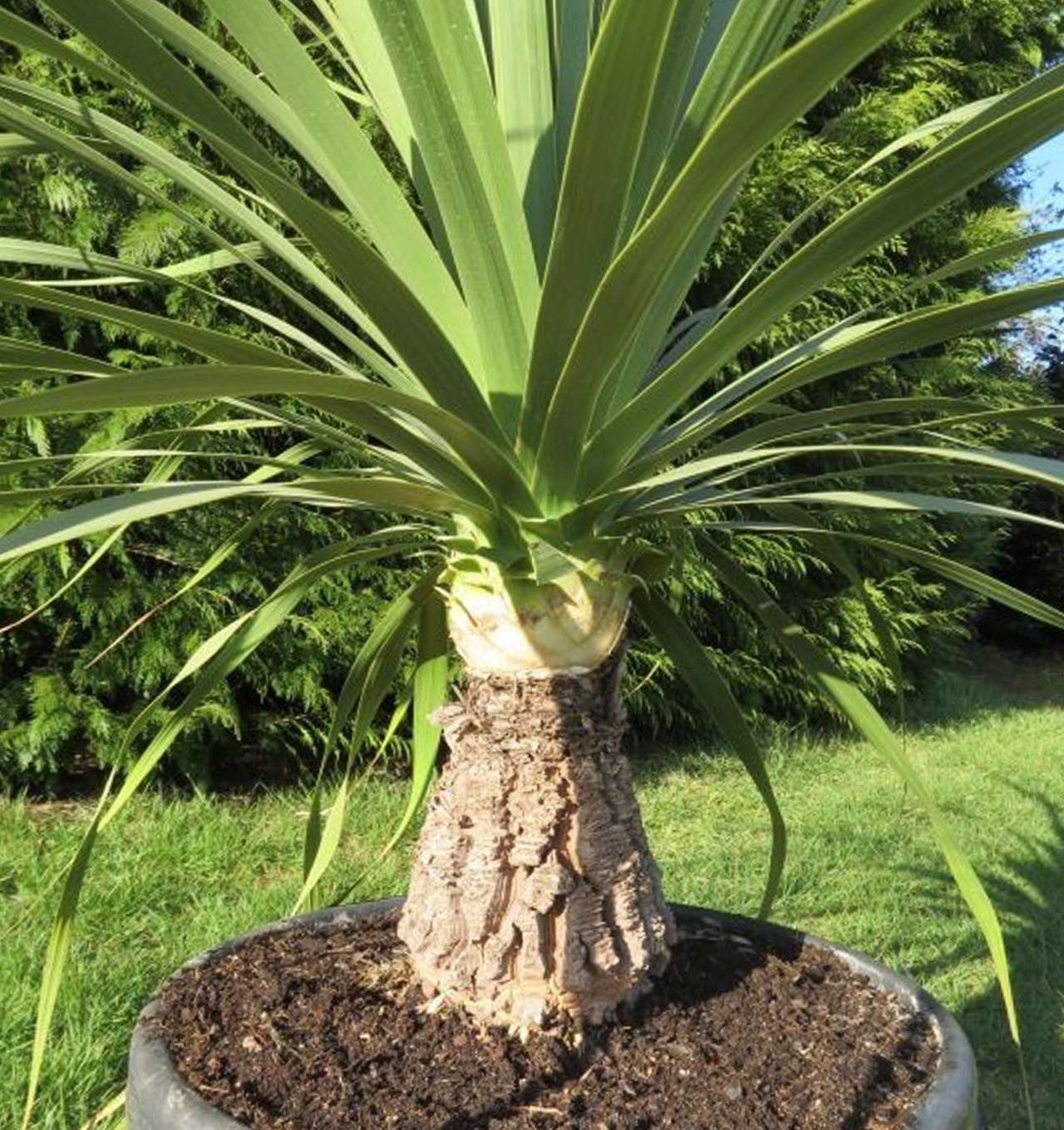
It is easy to answer the question: why is the bottle tree called that? As mentioned earlier, this beautiful, unique ornamental plant has very impressive external characteristics, namely, the tree immediately catches the eye with its bottle-like shape.
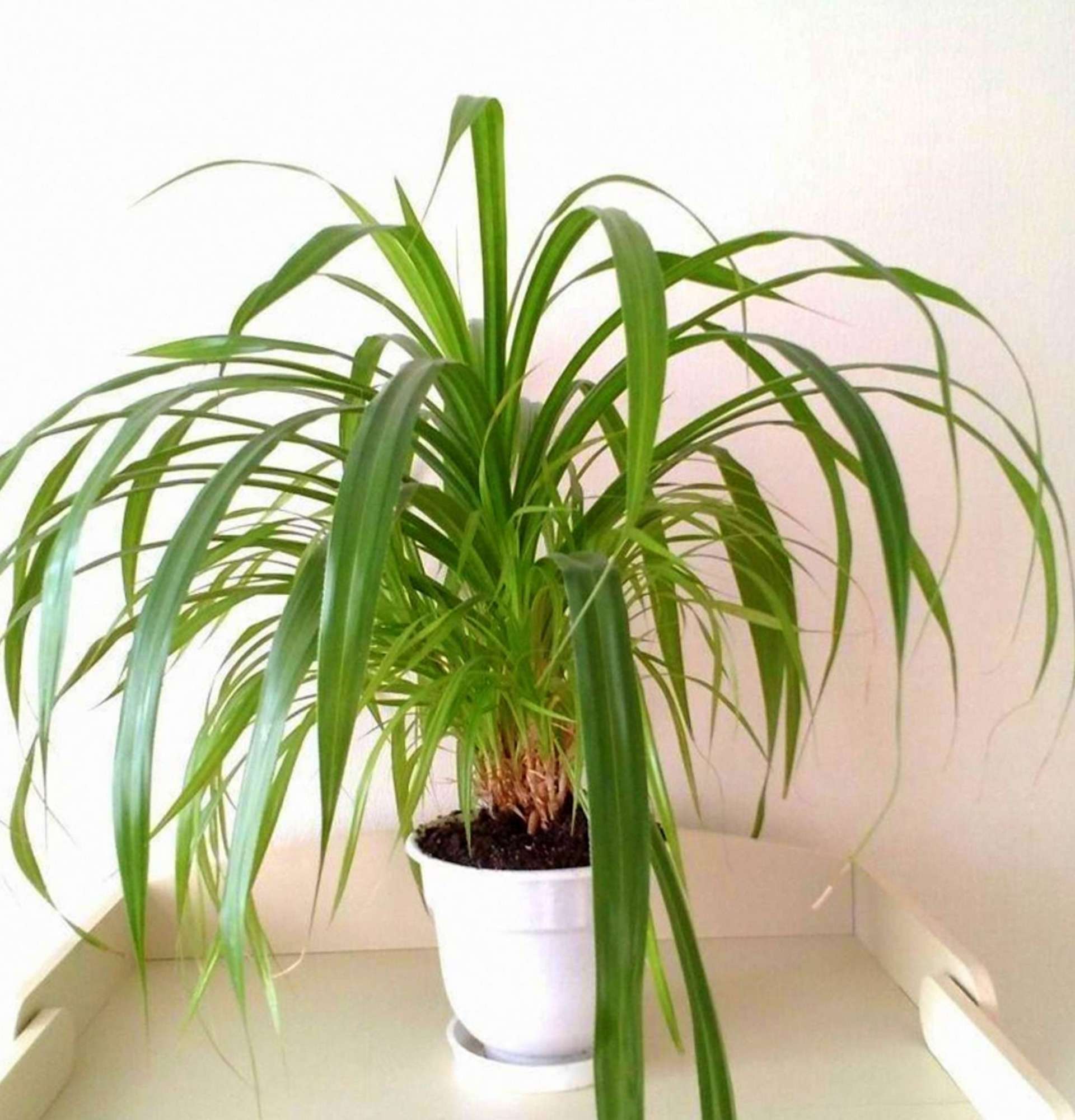
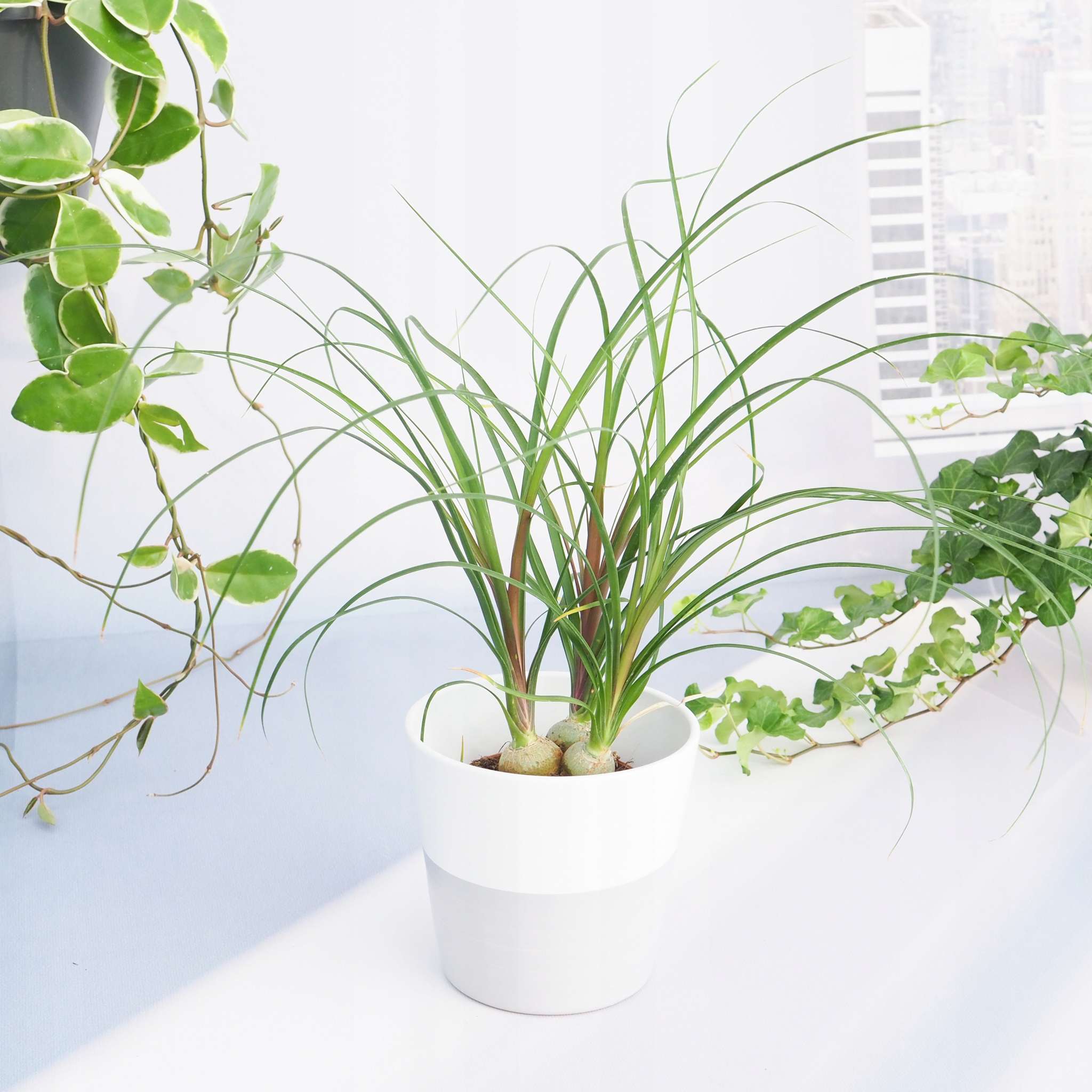
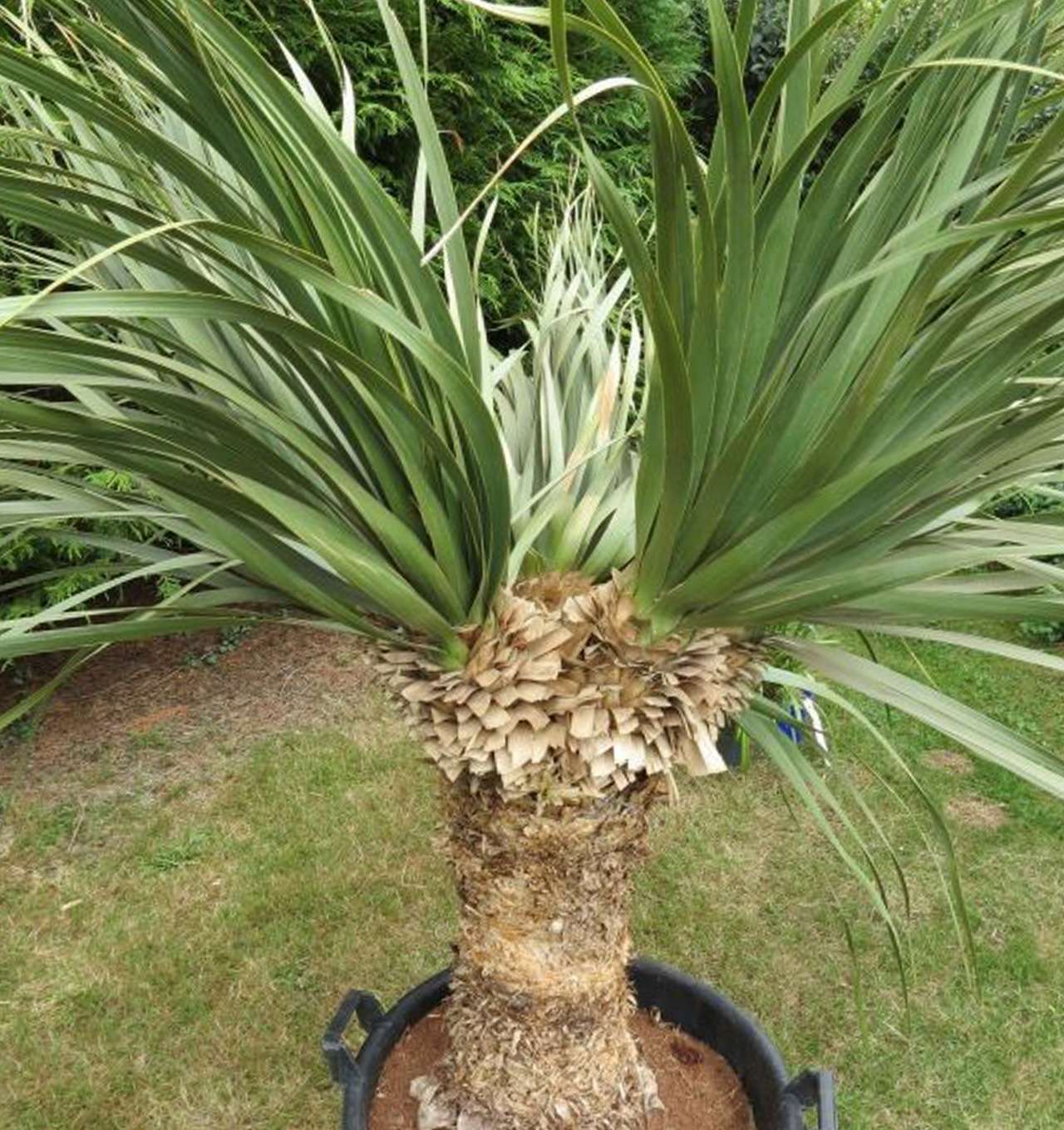
In the wild, this exotic plant can reach a height of fifteen meters, and the diameter of its original trunk can reach three meters. Here, in the arid, rocky terrain, the huge dark green trees have adapted to natural cataclysms and store water in their bulbous bottle using corky bark, which can be imagined as folds on the skin of elephants. This property is reflected in the appearance of the tree – its trunk in nature resembles a thick bottle, and the branches grow at a great height and look like roots. The sharply narrowed upper part of the trunk is decorated with a dome-shaped crown of long, green, feathery, thin, and stiff leaves, which give the tree the appearance of a palm.
To see Beaucarnea Nolina in color and admire this impressive and unforgettable sight, which is like a "firework" created by fragrant white, half-meter-long panicles, is only possible in the wild.
A non-flowering indoor bottle tree is increasingly appearing and has proven to be excellent in offices, homes, greenhouses, and gardens. This interesting, unpretentious, ornamental exotic will perfectly fit into and decorate the interior of any room.
If you believe in the teachings of Feng Shui, then the Beaucarnea flower in the house can contribute to improving prosperity and the atmosphere in the relationship between family members. There is no scientific evidence for these statements, but the fact that Nolina can saturate the air in the room with oxygen, ozone, and aeroions and cleanse it of gaseous impurities has already been proven by scientists. The beneficial properties of the bottle tree are also expressed in the release of phytoncides, which, to some extent, fight against the pathogens of respiratory viral infections, strengthen the immune system, and calm the nervous system of those around it.
The Nolina palm has some similarities with such exotics as adenium, pachypodium, ornithogalum. Beaucarnea will look great both in single plantings and in combination with haworthia, money tree.
Breeders are not idle. Thanks to their diligent and fruitful work, new interesting varieties of the plant have appeared.
The bottle tree photo can be seen and admired in the next section.
Beaucarnea species
Beaucarnea recurvata
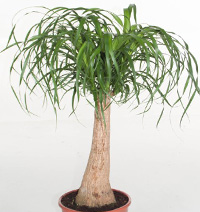 The homeland of the most popular bottle tree is considered to be Mexico, its eastern territories. Here, in its natural environment, the local population has the opportunity to admire the flowering of the bottle palm, which produces a racemose inflorescence, decorated with creamy flowers. But the inhabitants not only admire the "elephant's foot" but have also found practical use for the leaves of the plant. They make beautiful woven baskets and sombrero hats from it.
Natural conditions allow the plant to reach a height of ten meters, and the cultural Nolina bottle tree reaches only two meters.
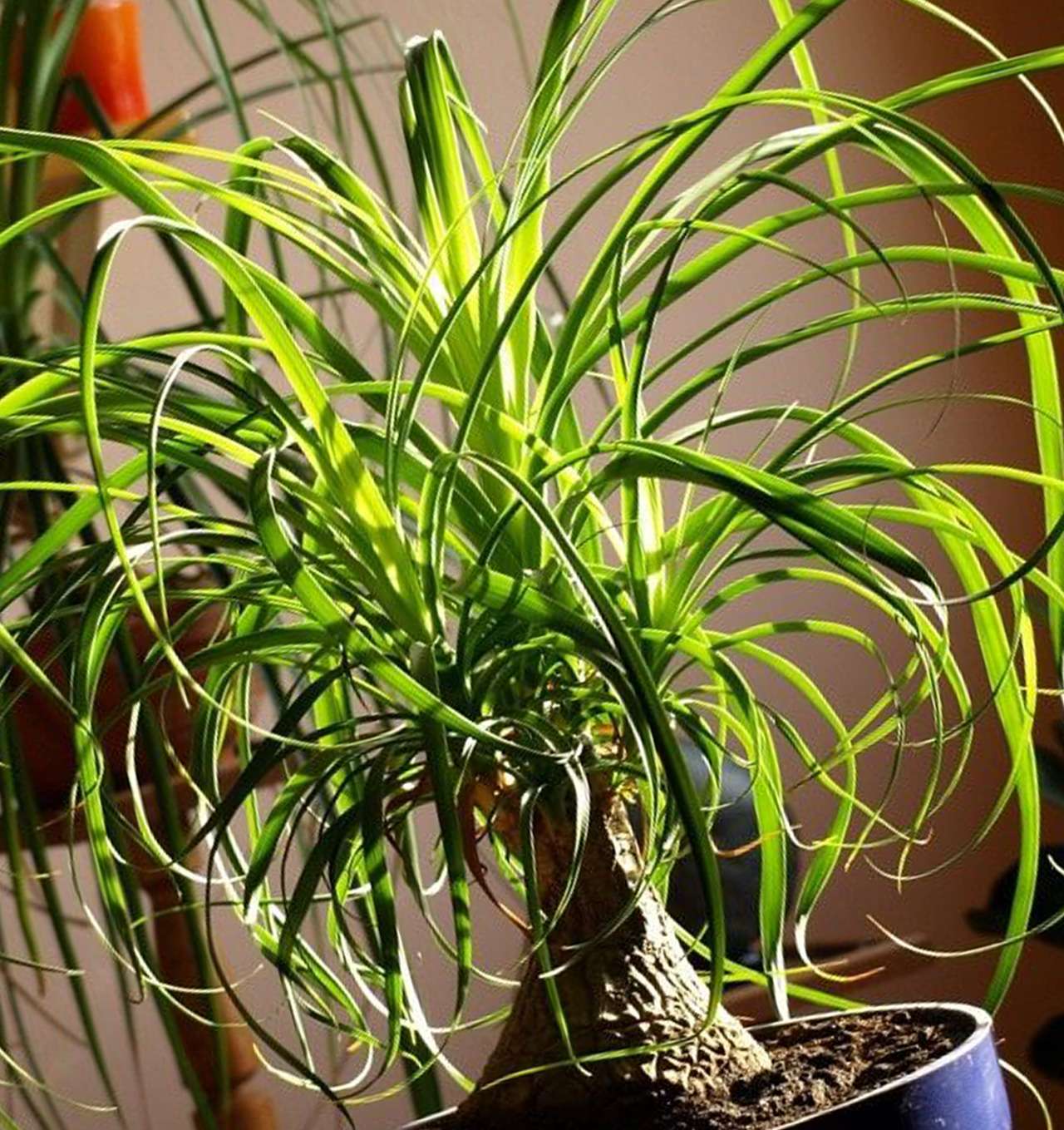
The rosette, formed by long, narrow, leathery, drooping dark green leaves, adorns the top of the trunk. The size of the leaf plates reaches up to one hundred centimeters in width and two centimeters.
This Mexican ornamental exotic looks original throughout its life. The indoor bottle tree grows up to half a meter in height and will be a wonderful decoration for any interior, both in a work and living space.
Beaucarnea stricta
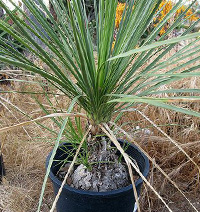 This variety is recognized by flower growers and is almost as popular as Nolina recurvata. This effective exotic indoor plant has a lush "hairstyle" and captivates with its beautiful, compact, slightly flattened shapes. It can even be compared to a bulb. The leaves, which are slightly dry, are pressed against the stem and form a very original "skirt." This bottle tree attracts office workers, who gladly buy this stylish, unique plant to improve the interior of the office lobby or the manager's office. And rightly so, because, along with other houseplants, such as chlorophytum, the indoor Nolina palm gladly and effectively disinfects the air from pollution.
Beaucarnea, Nolina nelsonii
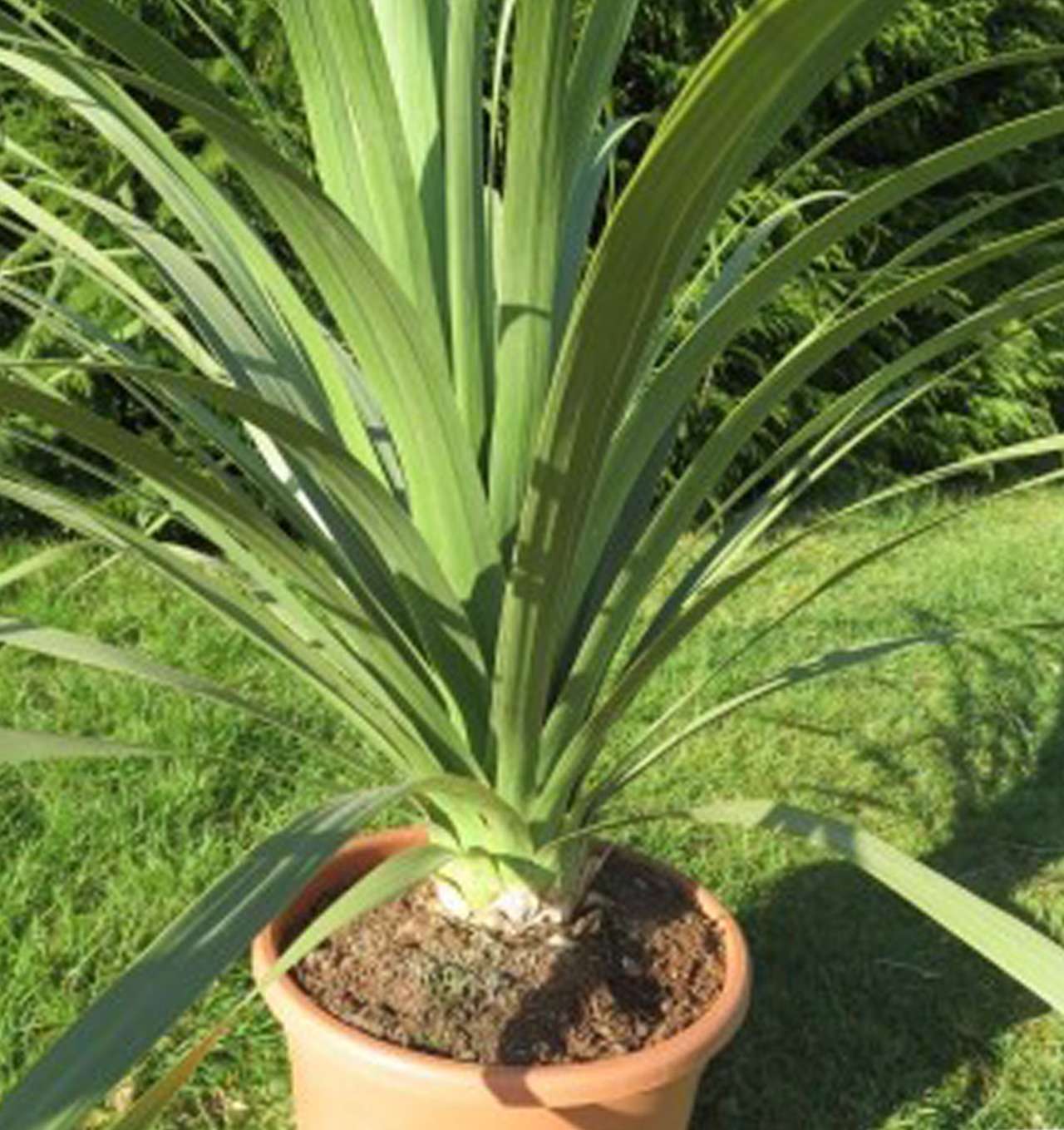
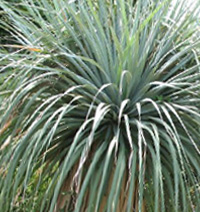 This is considered the tallest variety of a bushy plant with a strong stem covered with light brown bark. The luxurious three-meter crown, formed by narrow plates of bluish-gray leaves that stick out in different directions, looks aggressive. In addition, the leaves are edged with thorns. Thanks to the dense waxy coating, the green leaves of Beaucarnea Nelson have a bluish tint. This variety is frost-resistant and can withstand even ten degrees of frost. The inhabitants of the southern regions use this quality of the exotic Nolina to green parks, squares, and private areas.
The homeland of this interesting exotic creature is Mexico.
Beaucarnea, Nolina guatemalensis
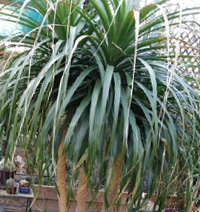 In its native Guatemala, this caudex-like tree grows up to nine meters in height, and the diameter of its trunk can reach two meters. The unique stem is a kind of reservoir for moisture, which is very necessary for the plant in arid areas. Numerous long, narrow, bright red leaves, which turn green with age, adorn this tall wonder, which is called the "Guatemalan tail" in the people. In appearance, Nolina guatemalensis can be imagined as a palm, but its succulent qualities are more pronounced, like in agave or yucca.
Beaucarnea, Nolina parryi
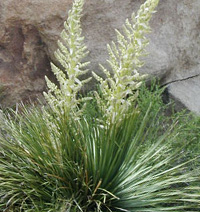 This decorative representative of Beaucarnea has some differences from other varieties. The wide base of Nolina lindheimeri gives rise to a very narrow, short trunk, the top of which is decorated with a dense bunch of green, stiff, long, narrow leaves. They form a chic, dense crown, which can reach the ground. With good care, the bottle tree can reach a height of one and a half meters in a relatively short time. The cultural plant is often found in greenhouses and botanical gardens.
Nolina lindheimeriana
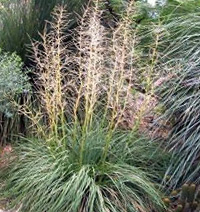 This decorative representative of Beaucarnea has some differences from other varieties. The wide base of Nolina lindheimeri gives rise to a very narrow, short trunk, the top of which is decorated with a dense bunch of green, stiff, long, narrow leaves. They form a chic, dense crown, which can reach the ground. With good care, the bottle tree can reach a height of one and a half meters in a relatively short time. The cultural plant is often found in greenhouses and botanical gardens.
Nolina longifolia
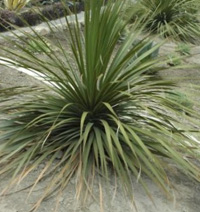 The living nature of its native Mexico allows this variety of Nolina to reach a height of three meters and delight those around it with huge racemose inflorescences, formed by a large number of whitish-cream flowers. These dark green trees have significant branched trunks with corky bark. Nolina longifolia is famous for its stiff, long, strap-shaped, dark green leaf plates with pointed tips. It is rarely found in indoor floriculture in our regions, but it is an interesting variety for greenhouses.
Nolina matapensis
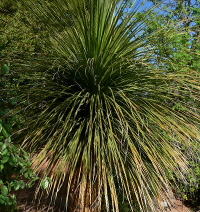 It is a low-growing tree that reaches two meters in height. With age, the leaves dry out and huddle against the stem, forming an interesting "skirt." It blooms with yellowish-white flowers, which gives originality to its large racemose inflorescences. In indoor conditions, Beaucarnea matapensis has not proven itself.
Beaucarnea care in the home
The care of the bottle tree in the home must be based on the characteristics of a succulent plant. The main simple rules for caring for the Nolina palm are to provide the plant with a well-lit area, which means placing it in a comfortable place, and in winter, provide the plant with dry and slightly cool air. Then, Beaucarnea Nolina will be a wonderful decoration for any interior.
Location and temperature regime
The sun-loving plant prefers a well-lit area.
Light is never superfluous for Nolina. The brighter and more light it receives throughout the year, the more solid the bottle-shaped trunk will be, and the green "hair" will be lush and beautiful.
Therefore, it is necessary to place the indoor Beaucarnea flower on the south, southeast, or southwest side. In the winter, in order for the plant not to lose its charming decorativeness, it is desirable to add artificial lighting with phyto-lamps. Once a week, slightly turn the exotic plant so that the bottle grows evenly. In the warm season, Beaucarnea will gladly enjoy the fresh air on the balcony, veranda, terrace, or in the garden.
Drafts are very harmful to the ornamental indoor pet.
The comfortable summer temperature for the tropical bottle is in the range of twenty to twenty-six degrees, and it can also withstand higher fluctuations. In the winter, the temperature can be maintained in the range of ten to fifteen degrees.
Air humidity and watering
With average air humidity of about fifty percent, the indoor bottle tree will feel comfortable. Spraying is not a mandatory attribute for caring for Nolina; periodically, you can wipe and moisten the leaves with a sponge.
A control moment for the quality of watering Beaucarnea is the complete drying of the top layer of soil in the pot. In the warm season, water abundantly with settled water every seven days, and reduce watering in winter to a minimum – once every thirty days or eliminate it altogether. When watering, the trunk should remain dry to prevent it from rotting.
Excess moisture can destroy the bottle tree.
Soil and its feeding
Beaucarnea will grow well in light, airy soil. It is easy to buy a ready-made special soil mixture for Nolina or a soil mixture for succulent plants. To make the substrate more airy, add some pebbles or bricks.
To prepare the substrate yourself, you need to measure one part of turf soil, greenhouse compost, and leaf compost, half the norm of river sand. This mixture is diluted with wood charcoal, brick chips, or gravel.
In the warm season, actively growing and abundantly watered Nolina is fed with liquid complex fertilizers, first reducing their concentration by half. The procedure should be carried out every thirty days.
The fertilizer should have a minimum concentration of nitrogen.
Beaucarnea transplant
In the spring, young Nolina are transplanted every three years, depending on the fact that the plant's surface roots fill the volume of a small but spacious pot. Adult large trees are repotted every four years, and then it is desirable not to disturb Nolina again.
A good layer of drainage is necessary, which will protect the roots from rot.
After transplanting, it is not desirable to water the Beaucarnea flower for about five days.
Beaucarnea propagation
The indoor bottle tree can be propagated by seeds or apical cuttings. Pre-soaked seeds are sown in a mixture of peat and sand. It is necessary to maintain a humid atmosphere and a temperature of twenty degrees. Seedlings will appear in thirty days. Seedlings are planted in separate pots.
Apical cuttings are rooted in peat-sand soil and create conditions for a mini-greenhouse with good lighting, warmth, and comfortable humidity. Young leaves that appear indicate that the young plant has taken root well.
Pests and diseases of Nolina
If the conditions of keeping the plant are violated and periodic inspections are not carried out, you may miss the appearance of unwanted guests in the form of spider mites, scale insects, or mealybugs. The plant should be treated immediately with a soap solution. If this is not enough, it is necessary to use chemical preparations – aktellik, carbophos, or fitoverm.
Problematic moments in growing
- The indoor Beaucarnea slows down its growth, the leaves appear infrequently, small, and pale – perhaps the plant needs to be repotted in a larger pot with further feeding with fertilizers. It is too hot in the room.
- The stem of the dark green tree is thin, elongated, and does not form a caudex – there is insufficient lighting, excessive watering, which needs to be adjusted and allowed the soil to dry out between waterings.
- The ends of the leaves turn brown and begin to dry out – the air in the vicinity of the plant is too dry.
The Beaucarnea flower is a strange, beautiful, attractive, unpretentious, and useful tree with a thick, rough trunk and a luxurious green crown. Love your indoor bottle tree, take care of it, and admire its impressive and unique appearance, which brings harmony and peace to the house.
Write comments
Comments