



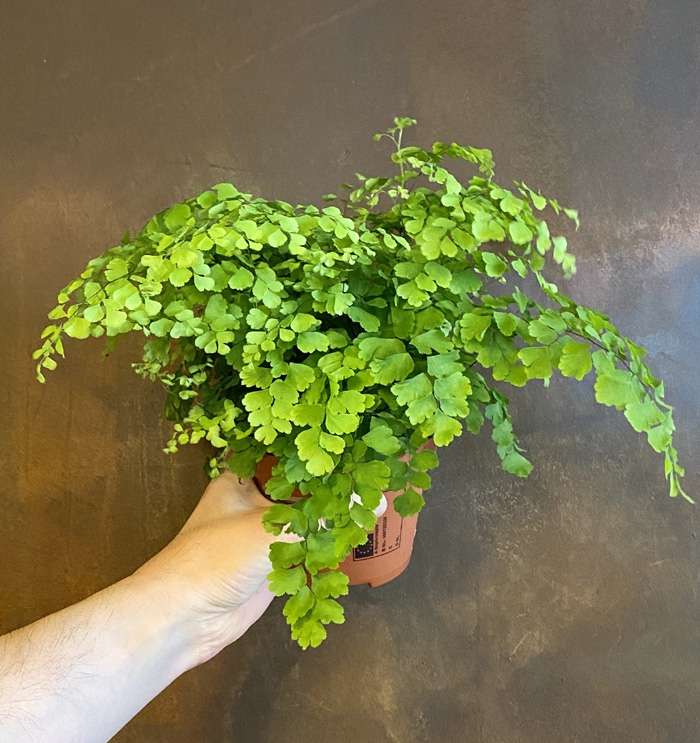
Latin name: (Adiantum)
Category: perennial ferns
Origin: East Asia, America, Brazil
Elegant adiantum fern – an exquisite marvel and delight on the windowsill
Adiantum is a genus that combines delicate and refined, striking ferns in the Pteridaceae family. Other plant classification systems assign this genus, consisting of two hundred amazing, decorative specimens, to the related family Adiantaceae.
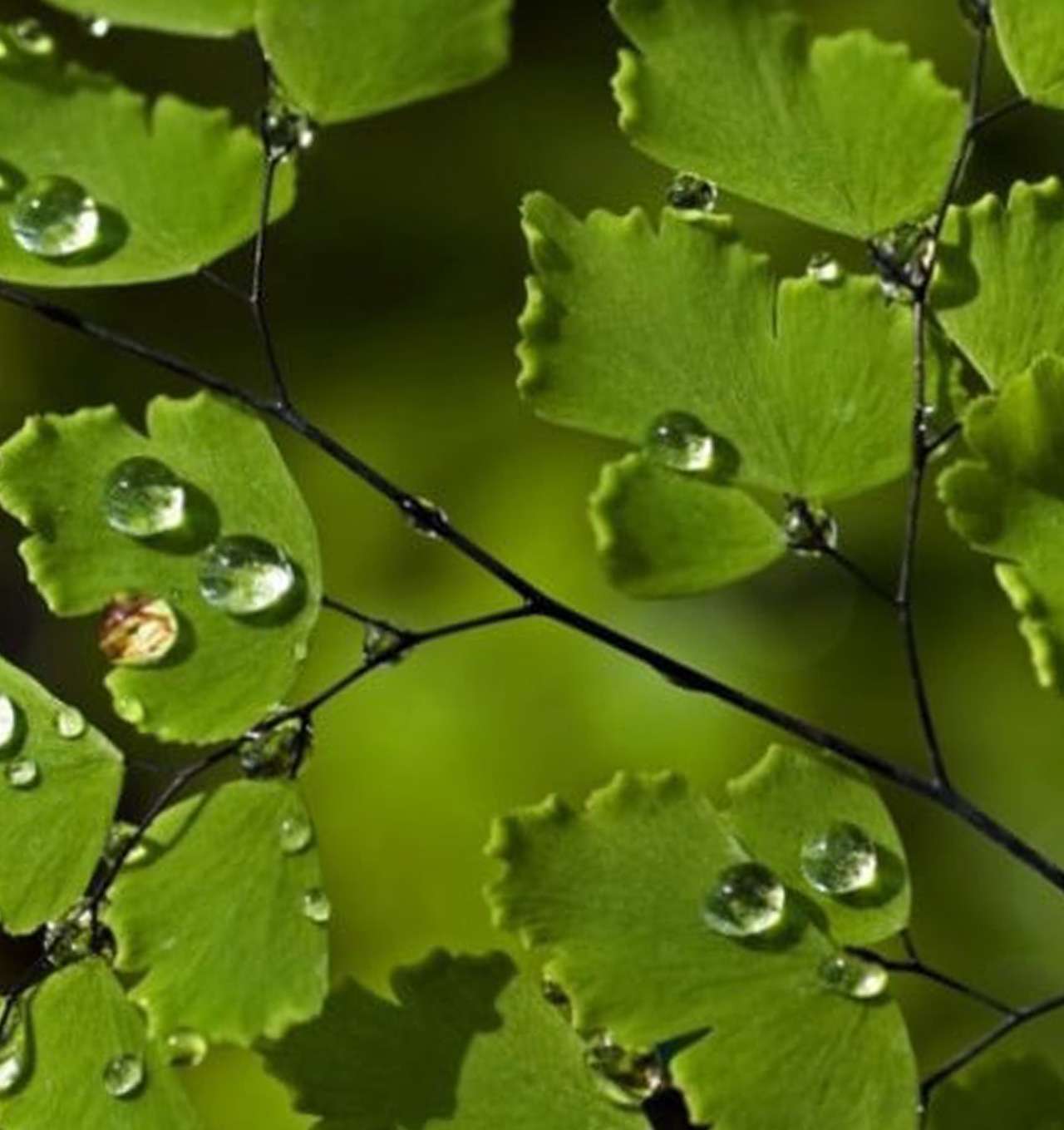
The Latin name of these unique ferns, when translated from the Greek language, means "to moisten," which is due to the strange, specific quality of the leaf blades, which have a hydrophilic background characteristic of all members of this plant coalition – remaining "plants that do not get wet," dry under any water exposure.
There are also many folk names for these interesting ferns with airy and delicate stems and sori. The adiantum flower gladly responds to these wonderful names. It is also called Venus' hair, curly, maidenhair, dry-stem, adiantum.
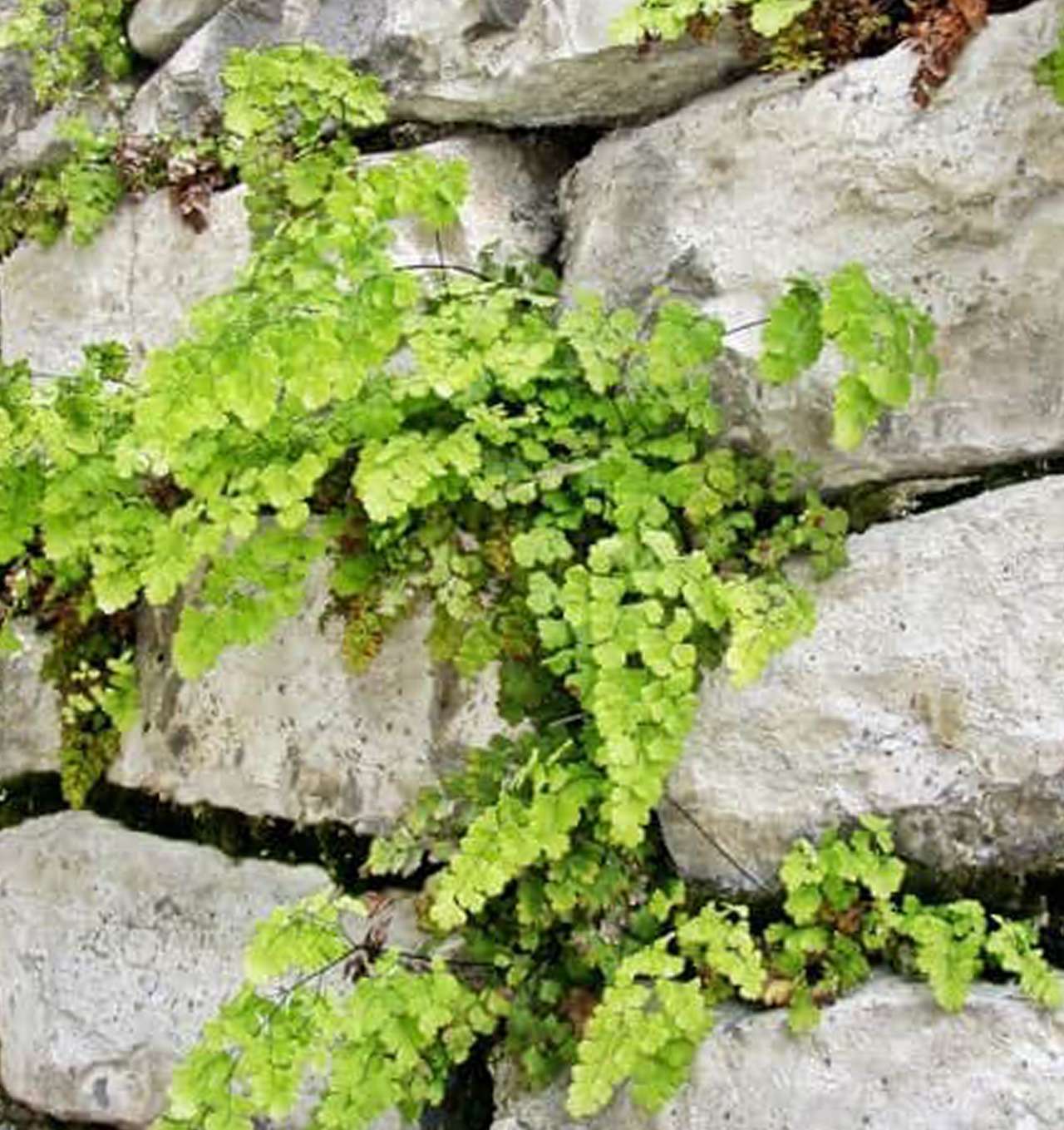
The elegance of these low, freedom-loving, moisture-loving, wild ferns is clearly manifested in the places where they grow. Such favorite areas for the evergreen shrub are shady, humid places, areas with calcareous tufa, riverbanks, ravines with springs and waterfalls, which are abundant in the subtropical regions of our planet.
The adiantum fern is native to Southeast Asia, South America, and Brazil.
Adiantum gained popularity as early as ancient times. It was described by the ancient Roman writer and scholar Pliny the Elder in the largest encyclopedic works that preceded Wikipedia – "Natural History."
And this beloved decorative adiantum fern became one of the fashionable indoor and greenhouse plants. The amazing, attractive, and striking appearance of the adiantum flower will decorate any room, perfectly fit into a modern interior, and transform this area into a true paradise.
This wonder looks like herbaceous perennials with thin creeping roots, on the surface of which small, sometimes brown, dull scales are visible. The height of the light, airy shrub, which can be placed both on a windowsill and in a hanging basket, reaches up to half a meter. In terms of volume, the plant looks very large, but visually does not overload the area, and its appearance resembles a luxurious green waterfall.
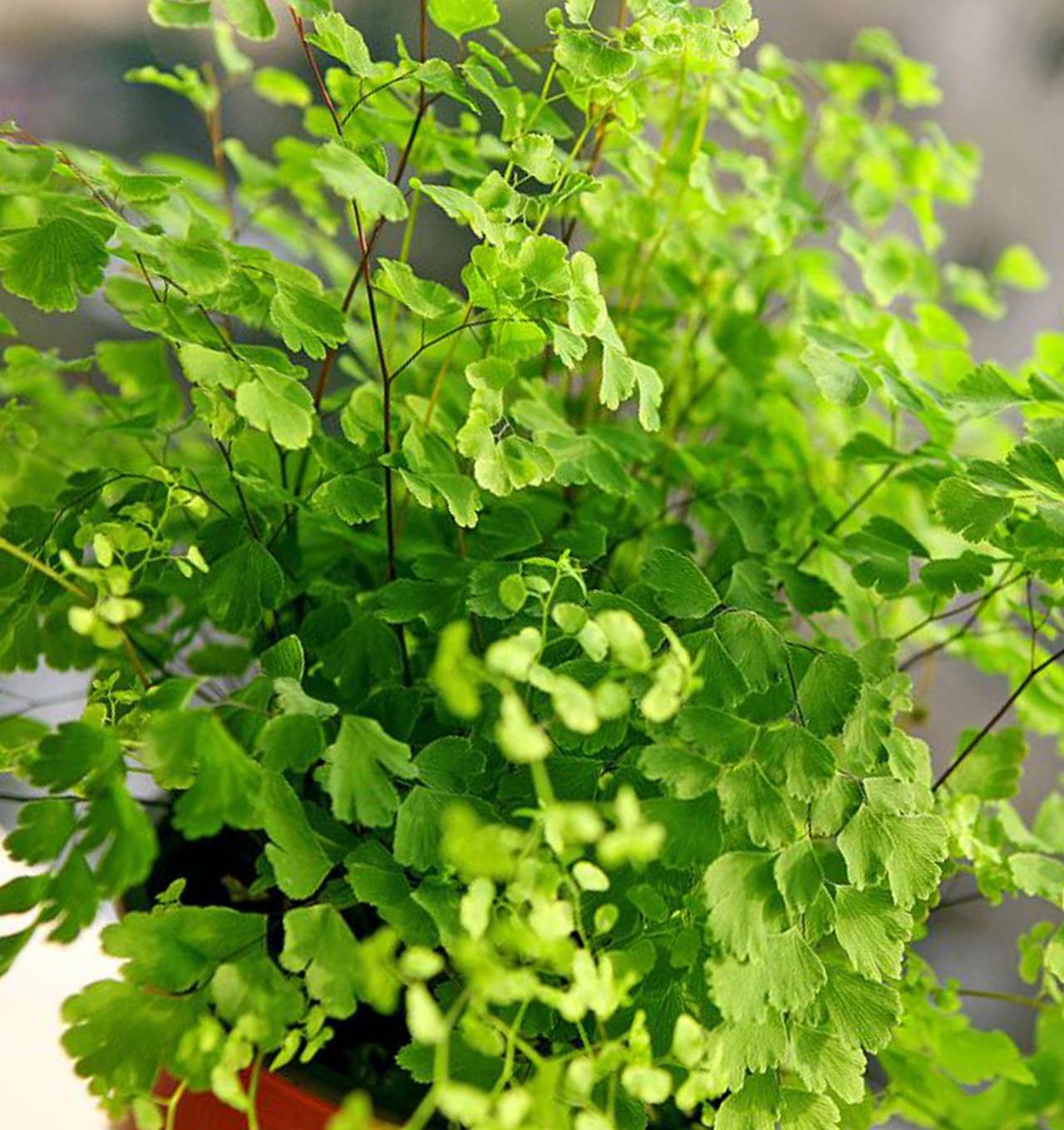
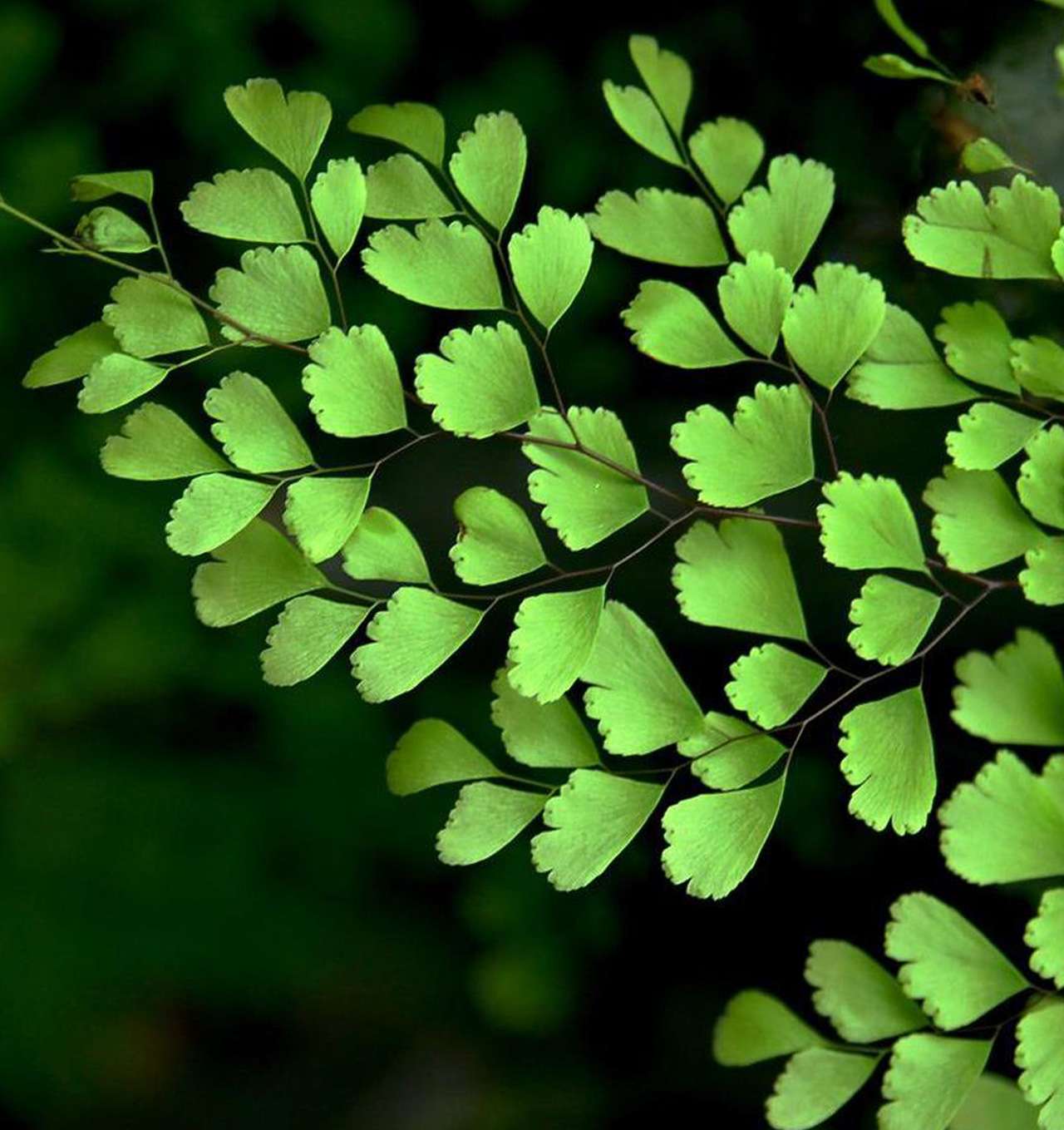
And all this is due to the small, lacy leaves of the bluish-gray or bright green adiantum, which are comfortably located in an opposite or alternate order on a twenty-five-centimeter smooth, dark stem, which is called a rhizome in ferns. The wide and smooth leaf blades are deeply dissected, have wedge-shaped, trapezoidal, or ovate sections with a fan-shaped arrangement, forming original fronds with a strict patterned structure. From below, the individual leaf sections are wrapped in round, elongated, or linear spore organs – sori.
These unusual, unique leaves-fronds resemble large, lacy leaves of jacaranda, as well as ferns nephrolepis.
The Venus hair flower is not only famous for its beauty and attractiveness but also for its medicinal properties. Its lacy leaves are rich in triterpenoids, flavonoids, lipids, steroids, essential oil, phenolic carboxylic acid, and even their derivatives. The leaf blades of adiantum have healing and antibacterial properties and are an excellent material for the preparation of medicinal drugs. Mixtures, tinctures, and syrups are often used as expectorant and antipyretic agents by Western European specialists. The respiratory tract, liver, spleen, and urinary bladder can also be treated with drugs made from dry-stem. Compresses and lotions are used to cure malignant ulcers and reduce detoxification in case of bites from rabid animals. Chinese doctors have achieved treatment of alcohol addiction with decoctions of adiantum leaves. Dandruff is cured if the hair is regularly rinsed with such a decoction. Shampoos for hair with the use of essential oil from the Venus hair flower are in demand. Alcohol tincture helps in the fight against psoriasis.
Adiantum species
Let's consider the species of domestic adiantum ferns in more detail, with individual characteristics and interesting photos of the plant.
Adiantum Venus Hair (Adiantum capillus-veneris)
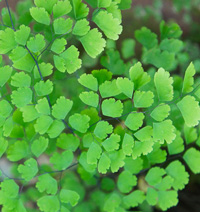 This species is the most common of all indoor ferns, which received its interesting name for the similarity of its leaves to human hair. This heat-loving, herbaceous, terrestrial variety of adiantum reaches a height of about forty centimeters. It forms elegant fronds up to twenty-five centimeters long with lacy, bluish-gray or bright green leaves, located on the stems-rhizomes in an opposite or alternate order. In its natural environment, it adorns the beauty of the Caucasian and Crimean mountains near water on limestone soils. The Venus hair plant in the home has become the most interesting and favorite decoration of the interior of offices and other public areas.
Adiantum foot-shaped (Adiantum pedatum)
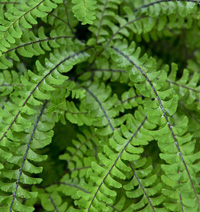 The most beautiful, elegant, and striking adiantum foot-shaped fern considers North America and East Asia with its broad-leaved forests, mountain waterfalls, streams, rivers, and lakes to be its native territory – here the plant feels comfortable.
The evergreen herbaceous plant, up to sixty centimeters high, with feathery leaves-fronds, which can be both a garden decorative plant and a wonderful decoration of your cozy nest, taking its honorable and prominent place.
Adiantum foot-shaped has a straight rhizome and creeping stems, which are covered with flat, shiny, one-sided, pinnately compound, light green leaves with notches on the edges. This amazing unique plant does not bloom, but with its beautiful appearance, it can lift the mood in any weather throughout the year.
Adiantum foot-shaped imbricatum (Adiantum pedatum Imbricatum)
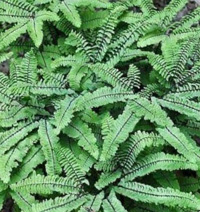 A very interesting, unusual, elegant dwarf fern, which forms a spherical bush up to fifteen centimeters high. It has lacy beauty with rounded, flat, fan-shaped, greenish-blue leaves with thin, shiny, black shoots. The evergreen shrub looks great both on its own and in the company of other plants. This wonder perfectly fits into office premises and will be an excellent decoration of the home interior, and will look majestic in gardens, parks, and greenhouses.
Adiantum Fragrans (Adiantum Fragrans)
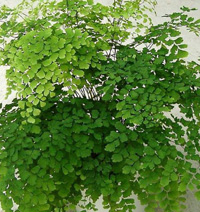 South Asia and the South American Andes are the native land of this delicate decorative wonder.
The evergreen shrub, which grows very quickly, reaches fifty centimeters in height in its natural environment. Its dense bushes are made up of oval, light green leaves, up to three centimeters long and one and a half centimeters wide. Cultivated adiantum fragrans are very popular and in demand among flower lovers – these fast-growing indoor plants have become a unique decoration of any interior.
Adiantum raddianum (Adiantum raddianum)
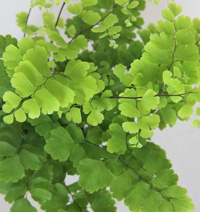 This is a wonderful epiphytic plant that has perfectly settled in its native lands – the subtropics of the Brazilian forest.
Adiantum raddianum, also known as wedge-shaped, looks like a dense creeping plant. Its forty-five-centimeter leaf blades are up to twenty-five centimeters wide and dissected into individual centimeter-long, bright green leaves with shiny black roots. The base of the leaf is wedge-shaped, and the tops are rounded. The lower parts of the leaves are occupied by semi-circular sporangia.
Adiantum trapeziforme (Adiantum trapeziforme)
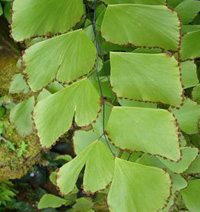 Central and South America with its humid tropical forests are the homeland of adiantum trapeziforme.
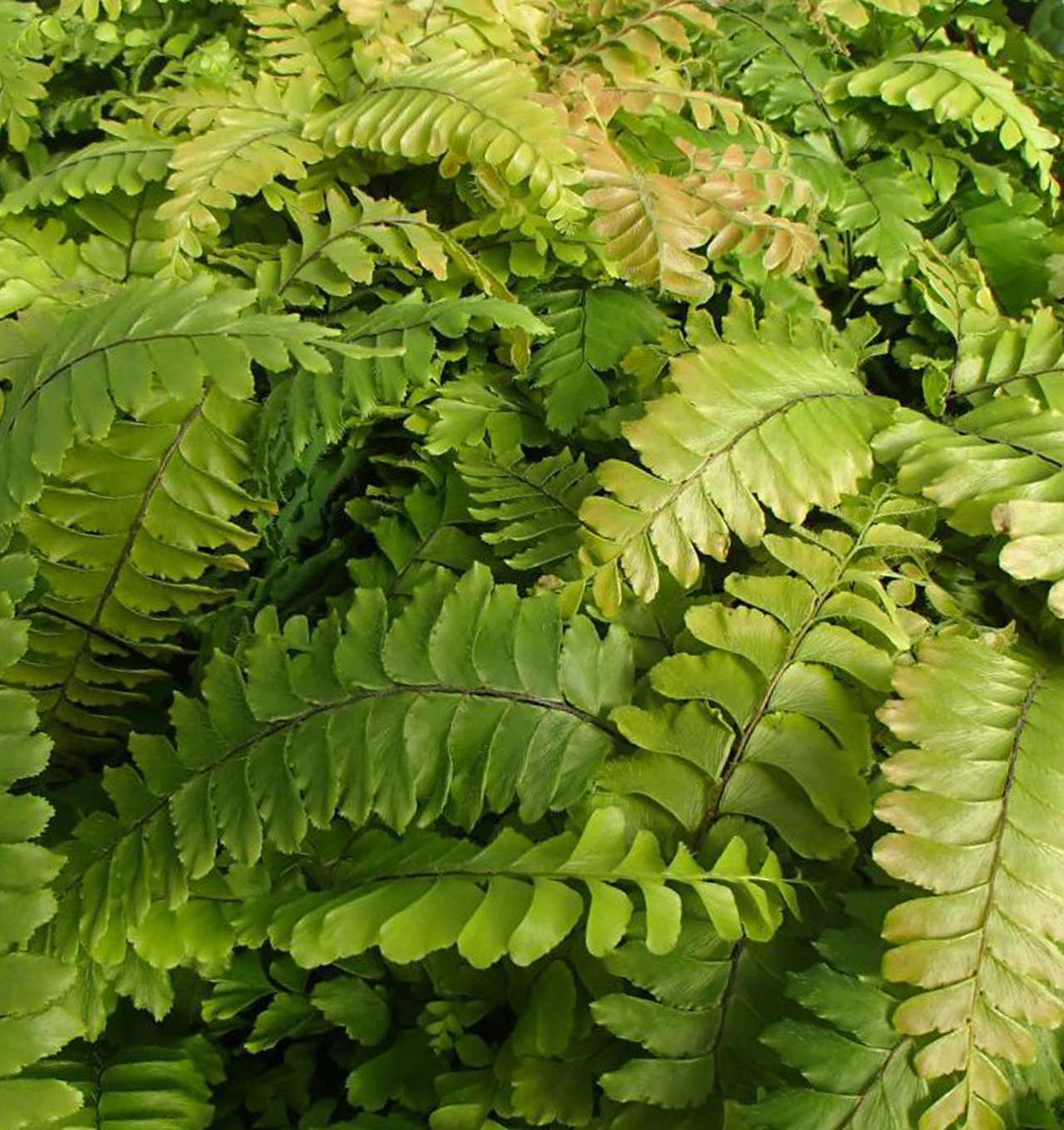
Perennial, large, bushy ferns reach a meter in height and up to eighty centimeters in width. Trapezoid fronds are formed by pinnate, dark green, rhomboid leaves with uneven edges and thin black petioles on the main black axis. Sori are located on the edges of the leaves.
The indoor fern adiantum trapeziforme attracts attention with its large size, and the drooping crown that hangs from the pot looks magical.
Adiantum formosum (Adiantum formosum)
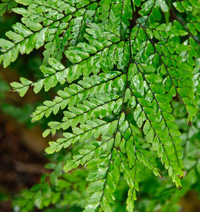 Also known as adiantum beautiful, it is one of the largest and most powerful indoor adiantums. Dark green, triangular, pinnate, strict leaves are held by strong dark purple petioles. As a result, an original, dense, cascading crown is formed. This powerful and strict exotic looks great in greenhouse compositions with other plants, for example, with dieffenbachia.
Adiantum care in the home
At first glance, the indoor fern Venus hair is not a whimsical plant and will exist in any area. But in order to get an interesting and attractive pet, it needs proper and high-quality care, fulfilling its requirements and whims. Venus hair care in the home involves creating a special microclimate of terrariums or florariums for it, because humid air and stable temperature indicators are very important for the indoor pet. This tropical wonder will grow well in the bathroom.
Tobacco smoke, chemicals, dust, and gas can harm the health of the indoor pet.
Choosing a place and temperature regime
The location of the indoor adiantum should be bright with partial shade, where direct sunlight does not fall. North or east sides will be suitable.
Venus hair does not like frequent rearrangements.
It feels great with artificial lighting. It perfectly decorates and adds its zest to the interiors of office premises, kindergartens, hospitals, shops, and hotels, where daytime lighting is regularly used.
Comfortable temperature indicators for adiantum in the warm season are about 20°C, and in the winter off-season, the flower will feel good at a temperature of 15°C. It is possible to lower the indicators to 10°C, further cooling will be stressful for adiantum, the leaf blades will not withstand the cold and will begin to die, and problems with the further growth of the plant may occur.
Do not place the pot with dry-stem near heating appliances.
Adiantum loves fresh and clean air. The room should be ventilated more often. In the warm season, the fast-growing indoor plant will be happy to spend time on the balcony, veranda, or in the garden.
Protect your pet from drafts.
Humidity and watering
The indoor plant Venus hair desires high humidity, more than sixty percent. These indicators can be adjusted by regularly spraying the adiantum with warm water and the area around it. Next to your pet, you can put a container with water or a stand with humidifiers, an aquarium, or a terrarium. An effective way to increase humidity is to use self-watering flower pots.
Regular watering of your curly pet in the warm season is at least three times a week, and in winter – once every seven days. It is not desirable to allow the soil to dry out, but overwatering the curly plant is also harmful. You can practice bottom watering until the top layer of soil is saturated. Then the water is removed from the tray. The water should be slightly warm, soft, and, if possible, rainwater or well-settled.
Soil and its feeding
You can buy a soil mixture intended for ferns in a flower shop, which is loose, acidic, and breathable. It is also quite simple to prepare the soil at home. It must include equal parts of peat, sand, turf, and leaf soil. To obtain a higher quality soil composition, it is necessary to add a little sphagnum and wood charcoal.
In the warm season, when adiantum is actively growing, it must be fed with liquid fertilizers every two weeks. The rate of fertilizer application is reduced by half, as indicated in the instructions. In the autumn-winter period, Venus hair does not require feeding.
Transplanting
It is recommended to repot young specimens in a new pot every spring, and more mature ones – as the pot is filled. Any process has its nuances. It is also necessary to know and take into account how to repot a fern adiantum with less stress for it.
The pot should be chosen wide, not too high, not much larger than the previous one, and with a hole. The appearance of roots in the hole is a sign for transplanting. Carefully freeing the plant from the soil, carefully examine the delicate and fragile roots of the curly plant. If necessary, remove damaged areas. Plant the indoor plant at the same level as before. Do not tamp the soil around the flower too much, just press it lightly. After transplanting and watering, return the adiantum to its usual place with high humidity and good care.
Good drainage is essential.
Adiantum reproduction
Indoor conditions allow you to propagate the indoor Venus hair flower by dividing the bush into parts during transplanting and by spores.
In the spring-summer period, you can separate young shoots of adiantum with roots and plant them in separate pots.
Reproduction by spores is a more laborious and complex process, which can be obtained from the back of the leaf. Treat the spores with a weak solution of potassium permanganate and sow them in a previously disinfected soil mixture, which is in shallow pots. Create conditions for a mini-greenhouse, temporary shading, and bottom heating at 21°C. Seedlings may appear in a month. For further growth, they need to be moved to a bright place. This is how adiantum reproduces in its natural wild environment.
Adiantum pests
The leaves of dry-stem contain substances that repel harmful unwanted guests. If you find spider mites, mealybugs, thrips, or aphids on the plant, immediately treat the flower with insecticidal preparations. A preventive measure against pests may be treating adiantum with a water solution with tobacco dust.
Possible difficulties in growing adiantum
- Why does the fern dry out? Adiantum reacts to drying and falling leaves to high temperatures, too dry air in the room, too much light, possible exposure to sunlight, insufficient watering, and too heavy soil.
- Why does the fern turn yellow? Adiantum needs to be fed, and it is advisable to adjust the watering.
- Curling of the leaves in adiantum – the plant is exposed to drafts, the soil in the pot is too wet, it is cold in the room, and the humidity is too high.
- The leaves become pale – it is necessary to move the Venus hair flower to a more shaded area.
Follow the above growing conditions for adiantum with love and care, and your fast-growing indoor plants will delight you with their wonderful, unique appearance thanks to their amazing carved leaves all year round.
Write comments
Comments