



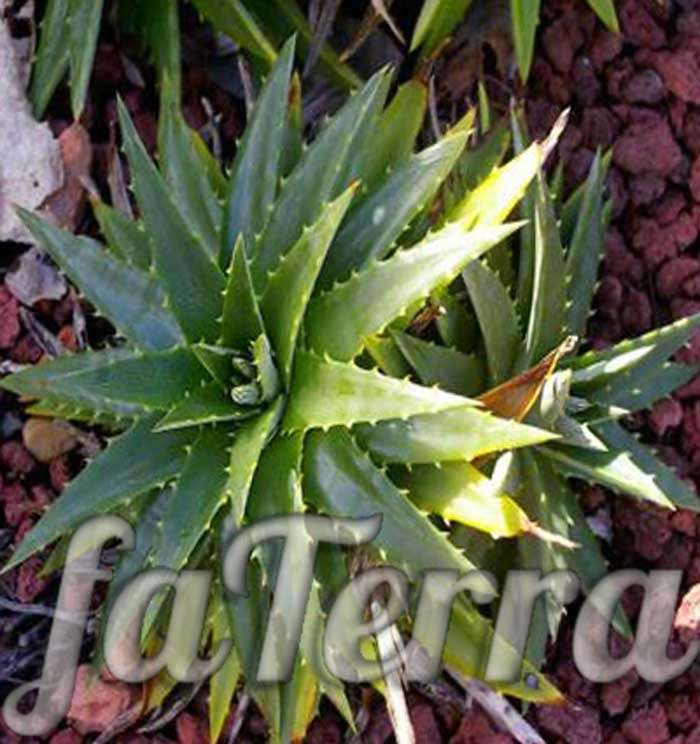
Latin name: Dyckia
Category: succulent herbaceous plants
Origin: Central South America
A little about unpretentious Dyckia
The Dyckia genus includes over a hundred perennial, low-maintenance succulents, united in the Bromeliaceae family.
Dyckia owes its name to the prominent botanist of the eighteenth century, Joseph Salm-Reifferscheidt-Dyck.
The native habitats of Dyckia, like its relatives, the Tillandsia, are the mountainous regions of the southern part of the American continent, and especially Brazil, with its dry equatorial climate. Here, Dyckia, a lithophyte, takes root on rocky surfaces and grows beautifully in bright sunlight.
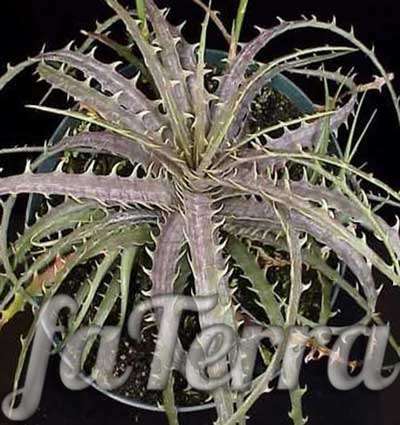
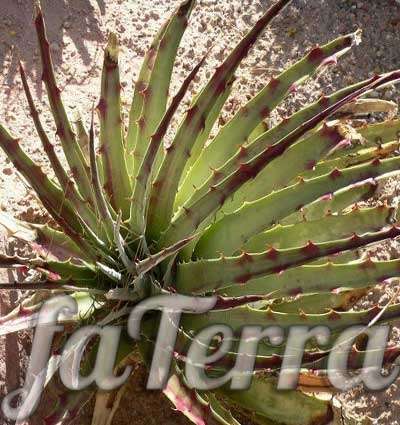
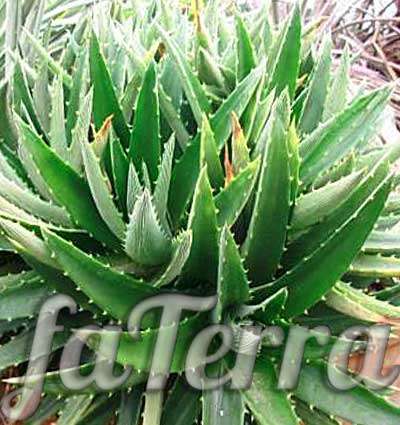
Dyckias are represented by hard, narrow, prickly leaves, forming rosettes ranging in size from 20 cm to 50 cm. Many small plants appear near adult plants, and as they grow, they become a prickly clump or an original bush. The color range depends on the plant species. The leaves can be either green or gray-blue. From the side of the rosette, a sixty-centimeter flower stalk appears with flowers that resemble bells, ranging in color from yellow to red and orange. They create inflorescences similar to ears of wheat. This beauty can be seen closer to autumn. In appearance, Dyckia is similar to pineapple. Growing Dyckia does not require much care, but in caring for indoor flowers, there are always specific rules.
Dyckia species
Dyckia remotiflora
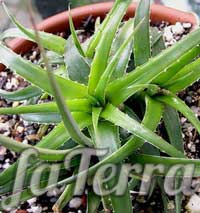 An impressive, thirty-centimeter bushy succulent with twenty-five-centimeter dark leaves. The homeland of Dyckia is the southern highlands of Brazil and Uruguay. There are gray scales on the back of the leaf. Dyckia blooms closer to late autumn. The bushes are decorated with flower stalks up to one meter high with bright inflorescences, which create orange flowers.
Dyckia brevifolia
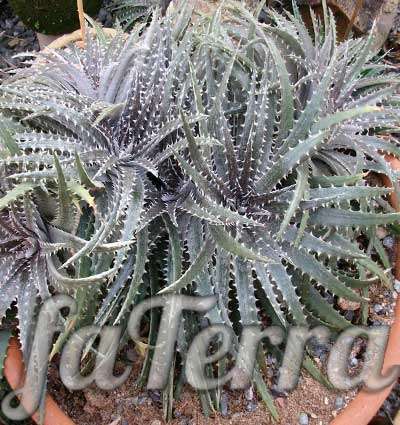
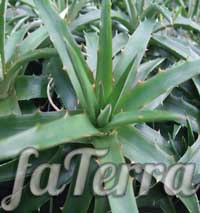 This variety of Dyckia has a miniature rosette up to 35 cm in size. It is formed by a large number of dark green, short, prickly leaves with a scaly reverse side. The flowers, which resemble bells, form inflorescences similar to ears of wheat, which adorn a sixty-centimeter flower stalk.
Dyckia Fosteriana
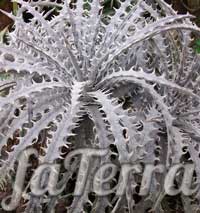 A succulent specimen of a perennial Dyckia with a beautiful flat rosette, 20 cm high and 13 cm wide. The leaves are covered with grayish scales. The flowers are orange.
Dyckia Fosteriana
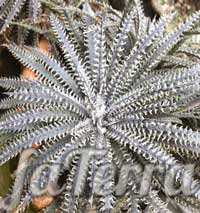 It is also called giant Dyckia. It grows in Argentina. It has hard, elongated, curved, prickly leaves on the sides, which grow directly from the roots. The rosette has a beautiful star shape. It blooms in spring. On a flower stalk almost a meter high, an inflorescence is formed with a few bright flowers of orange or yellow color. The species is frost-resistant. Dyckia Fosteriana is similar to Hechtia.
Dyckia care in the home
Dyckia is a very unpretentious plant. It does not have special requirements for its cultivation. Even a beginner gardener can have this exotic plant in his home collection. Let's get acquainted with these simple rules.
Lighting and location
Dyckia loves bright sunlight, but can also tolerate partial shade, but it will grow more slowly. South, southeast, and southwest windows will be the best option for the plant.
Temperature regime
A comfortable summer temperature is 20-29°C, and the winter temperature range is 10-17°C. Fresh air in the garden, on the balcony, or terrace in the warm season will also be beneficial for the plant.
Humidity and watering
A humidity of 60% is suitable. It is desirable to spray the plant on hot days. During flowering, limit watering so that the flowers do not lose their decorative effect. To maintain moisture in the pot, a layer of sphagnum can be placed on the surface of the substrate.
In warm weather, water abundantly with non-cold, soft water. The soil should be slightly dry between waterings. Winter watering is moderate and infrequent.
Soil
To prepare the soil mixture yourself, you need to take garden soil, coarse sand, and peat (2:1:0.5). Finely chopped pine bark and a little perlite or red brick will also be useful. A layer of good drainage should occupy one-third of the pot.
Fertilizer
During the growing season, the plant needs feeding. At least once a month, apply soluble fertilizers. They should be diluted with water in a ratio of 1:4.
Dyckia transplanting and propagation
The main indicator for transplanting a well-grown plant is a small pot and an unstable state of the flower in the pot. You need to choose a wider pot with a bottom hole and transplant the plant, without damaging the roots. If there are many small offshoots, they are separated from the adult plant and planted in separate pots.
Dyckia is propagated by dividing the bush, by offspring, and by seeds. When performing this procedure, be sure to wear gloves.
Dyckia pests and diseases
Regular inspection of the plant will prevent the appearance of unwanted guests: scale insects, spider mites, and mealybugs. If this unpleasant moment occurs, treat the Dyckia with insecticides (Ferovit, Aktara).
Problematic moments of cultivation
- Wilted and soft leaves - the temperature in the room is too low.
- The roots and stem are rotting - overwatering the soil.
- The tips of the leaves have turned brown - do not water the plant with hard water.
- Gray spots have appeared on the leaves - increased air humidity, a sign of fungal diseases. It is necessary to urgently transplant into a new pot and new substrate, which must be treated with insecticides.
- The succulent is growing too slowly and there are no young rosettes - the plant needs to be fed with nutrients.
Write comments
Comments