



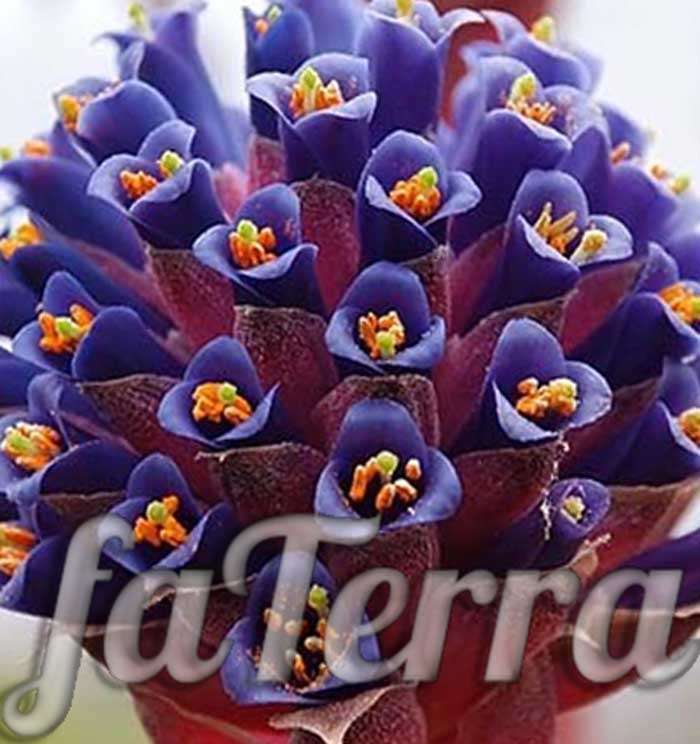
Latin name: Puya
Category: herbaceous plants
Origin: South and North America
Delicate and beautiful Puya
Puya (lat. Puya) is a genus of two hundred species that grow slowly, are evergreen, herbaceous, picturesque, terrestrial, and have a perennial growth period. They belong to the Bromeliaceae family.
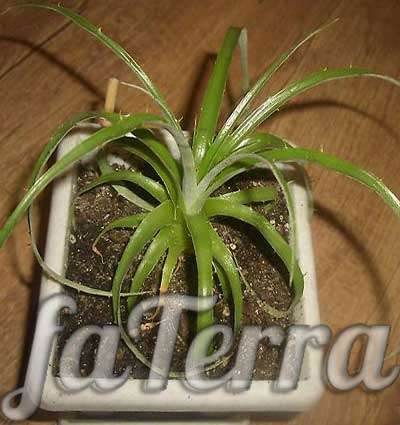
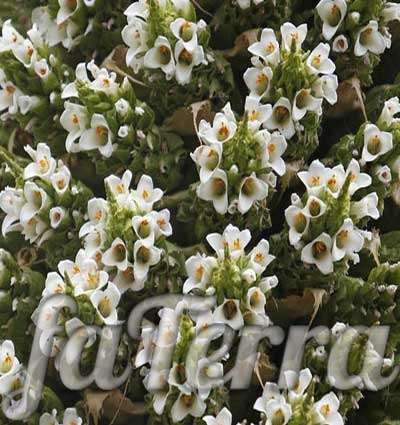
In home gardening, puya is not a very popular plant, despite its extremely decorative qualities and unusual resilience. In its youth, the puya resembles pineapple in appearance. It has stiff, light green leaves. Its inflorescences are racemose and dense, pyramidal in shape, and consist of amazing yellow, blue, red, and white flowers. They are concentrated on straight, massive, sharp, spiky flower stalks, which are covered with scattered scales. After flowering, the plant is covered with fruits similar to capsules, which contain unusual seeds with wings.
The forest areas in the mountainous regions and on the arid slopes of America are the native habitat of puya.
Puya species
Puya Berteroniana
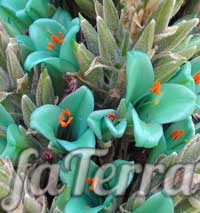 This is a unique plant with a perennial growth period. It has an unusual, attractive caudex, and its decoration is a wide rosette. It is formed by large, dark green, lanceolate, curved, spiky leaves. It blooms in the second half of autumn when the plant reaches eight years of age. The native habitat of this species of puya is Chile.
Puya alpestris
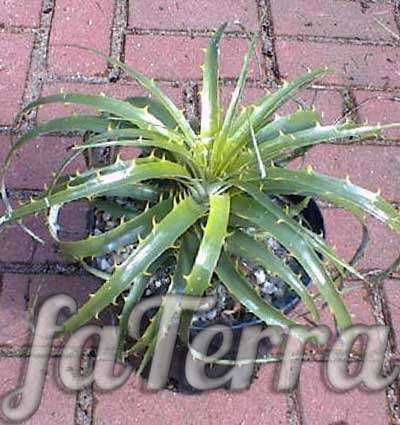
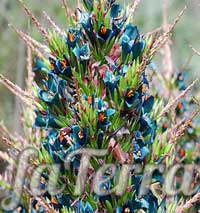 The southern and central mountainous regions of Chile are the native habitat of puya alpestris. This terrestrial succulent is decorated with long, wide, succulent, scaly leaves with thorns. They form apical rosettes. From June to December, the plant delights with beautiful inflorescences of bluish flowers. This species of puya is perfectly suited for decorating and landscaping rocky gardens. It is grown in greenhouses. Bright, sunny areas are very suitable for puya alpestris.
Puya chilensis
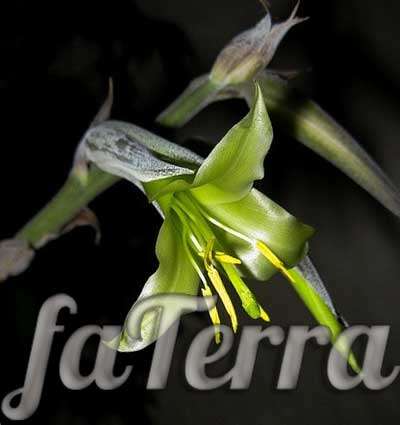
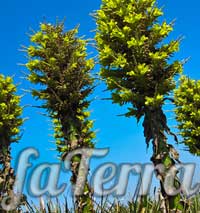 The amazing and unsurpassed flower stalks of puya chilensis can reach a height of three meters. The branched shoots become woody. The massive, meter-long, green leaves with a bluish tint are unusually curled and framed with bright thorns. It delights the eye with five-centimeter yellow or yellowish-green flowers.
Puya mirabilis
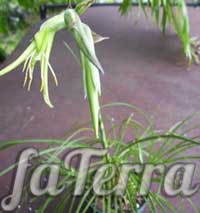 The forest areas of Bolivia and Argentina are the native habitat of puya mirabilis. This terrestrial beauty reaches a height of one and a half meters. Rosettes of light green, stiff, spiky leaves decorate tall, strong, straight, and bare flower stalks. On them are inflorescences with a small number of yellow-green flowers. The fruits of the plant are collected in capsules.
Puya raimondi
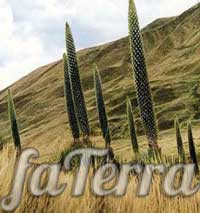 Puya raimondi is the oldest, rarest, and largest plant in the bromeliad family. The wild conditions of the Andes are its native habitat. This unusual beauty with giant, the largest inflorescences-panicles in the world, ten meters high and up to two and a half meters in circumference, can be seen in Peruvian and Bolivian reserves. This unique plant delights the eye with ten thousand simple, three-petaled flowers. Puya raimondi, which has already bloomed, gives life to tens of millions of seeds. Close relatives of this giant are indoor favorites: vriesea, echmea, guzmania.
This giant plant is named after the famous Italian scientist and explorer Antonio Raimondi. Its discovery is considered to be 1830, when the French explorer Alcide Charles d'Orbigny discovered it in the high-altitude flora of the Andes.
Puya care in the home
Puya grows slowly and can adapt to low humidity and different temperature and light conditions. To have a beautiful puya at home, you must know and follow the plant's requirements.
Choosing a location and temperature regime
Bright and sunny places are very suitable for puya. The winter temperature limit is 6-13˚C, and the summer temperature can be 17-35˚C. In warm weather, it is desirable to place the puya outdoors.
Watering and soil
Water abundantly in summer and spring. Slightly dried soil in the pot indicates the need for the next abundant watering. Winter watering is done every seven days.
Loamy soil and sand in equal parts will be suitable for puya. It is necessary to add crushed brick for good drainage.
Reproduction and transplanting
Puya can be propagated by seeds or root suckers. The seeds are sown in sterile soil and kept in a greenhouse. It is desirable to maintain a constant temperature of 18-22˚C around the clock.
It is desirable to transplant puya into small, round pots. Wood charcoal should be added to the soil mixture. High air humidity is necessary for the good health of the transplanted plant. Regular spraying, keeping the plant in a tray with moist gravel, or using a self-watering flower pot is recommended.
Pests and diseases
- No insects attack puya.
- The main factor in the quality care of the plant is to prevent root rot.
Write comments
Comments