




Latin name: Hedera
Family: Araliaceae
Native to: Subtropical regions of Europe, Asia, North Africa, and Australia
Interesting facts about ivy
Ivy, or Hedera, is a flexible evergreen climbing vine or creeping shrub that can reach a height of up to thirty meters. It belongs to the Araliaceae family. There are 15 known species of Hedera, and a vast number of different varieties.
Ivy prefers humid environments and is often found in subtropical forests in the European part, Asia, the African continent, and the American territories. In the wild, ivy grows freely in shady forest areas, where it climbs to great heights on trees using tendrils, and also grows on rocks, rocky slopes, and the ground.
Its long stems become thick and woody with age. The original, lobed, alternate leaves of ivy are dark green with light veins, arranged beautifully so they don't shade each other, and also form a leafy mosaic. Small flowers are gathered in umbrella-shaped inflorescences, they are bisexual, yellow-green in color. They produce yellow or black berries with three or five seeds.
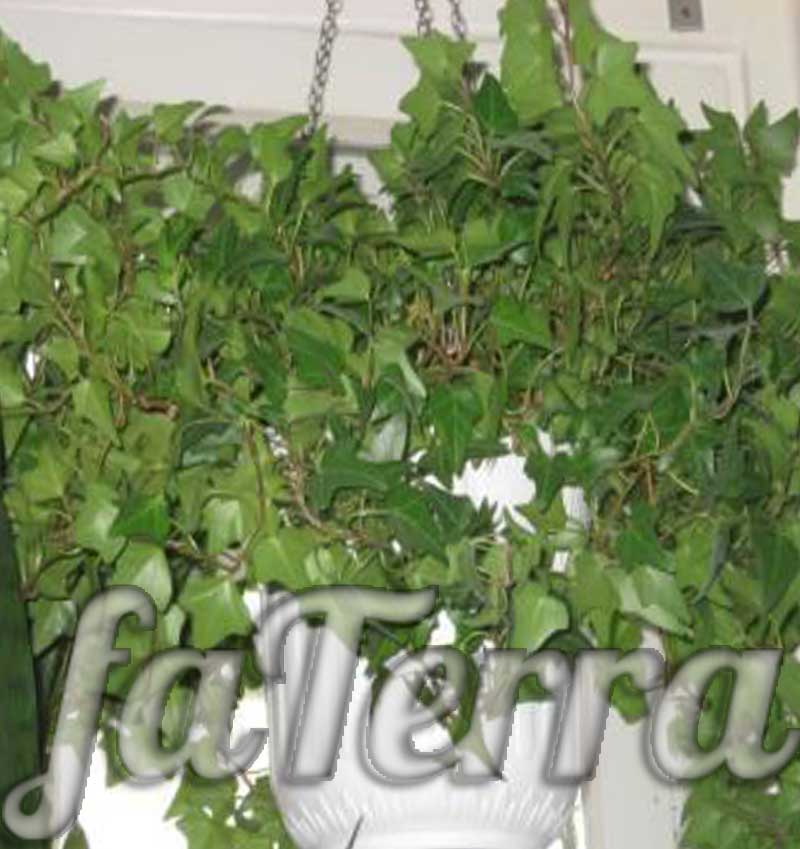
Indoor ivy is very popular because it is easy to grow at home, even for beginners. Dwarf ivy looks very beautiful in home conditions, and it also cleans the air in the room. It can be grown even in low light conditions. For example, dwarf ivy can thrive well in a bathroom, where the humidity is higher and there is less light. Ivy is widely grown in gardens, courtyards, offices, and shops, using original vertical landscaping techniques. Living green walls of buildings, windows framed by ivy, evoke delight and fit into any interior.
The most popular types and varieties of ivy
Common ivy (Hedera helix)
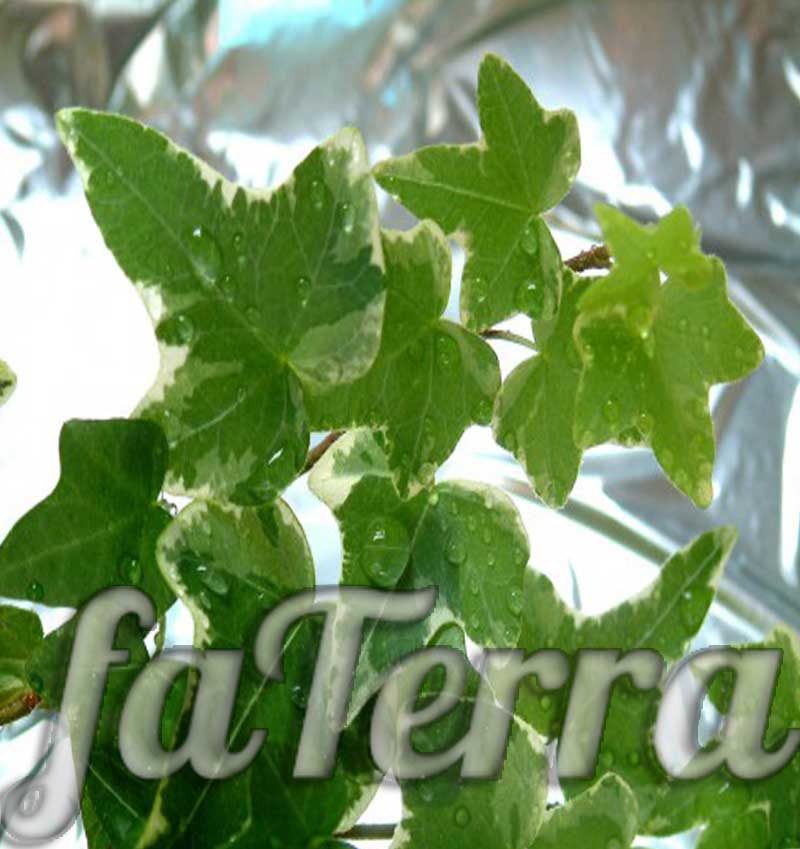
 This is the most common type of ivy. There are about 100 different varieties of common ivy, which are more demanding and require bright light. The most popular varieties have leaves with spots of various colors: white, creamy, yellowish. The flowers of ivy are not particularly beautiful; in home conditions, it almost never blooms. Due to the large number of leaves, ivy effectively cleans the air. The medicinal properties of ivy have been known worldwide and are used in traditional medicine.
Colchian ivy (Hedera colchica)
 This is a very interesting type of ivy. The large, dark green leaves have a distinctive musk scent. The delicate stems of the evergreen climbing ivy fix their vertical position with short aerial roots and grow up to 30 meters in height. Small flowers bloom in the fall. The above-ground part of the ivy has medicinal properties.
Canary ivy (Hedera canariensis)
 The native habitat of this powerful evergreen vine is the Canary Islands, Portugal, and North Africa. The main difference between canary ivy and other types is the absence of suckers on the roots. The plant needs supports for proper growth. It can be grown as an ampelous plant. The powerful climbing stems grow up to 30 meters. Different varieties of canary ivy differ in leaf color and size. The flowers are small, greenish-yellow, and gathered in umbrella-shaped inflorescences. Canary ivy is poisonous.
Wax ivy (Hoya) or Hoya
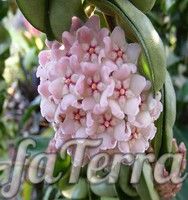 This is an unusually beautiful indoor plant that blooms with beautiful, delicate white, pink, or yellowish waxy flowers in home conditions. This beautiful vine belongs to the family Apocynaceae, but that is a whole other interesting story.
Ivy care at home
Indoor ivy is not a demanding plant. One of the main advantages of ivy is its shade tolerance, which is a rare quality for a plant. Ivy does not require high humidity and does not need to be watered frequently. Wipe or rinse the leaves of the ivy to prevent them from becoming dusty. Clean leaves will clean the air in the room more effectively.
The plant feels more comfortable in cool rooms; in summer, the ideal temperature is 18 degrees Celsius, and in winter, 6-12 degrees Celsius. It is not afraid of drafts and sudden temperature changes. If the temperature in the room is above 20 degrees Celsius, it is recommended to spray the plant to increase humidity.
Caring for ivy is not difficult, but it requires attention and care, and the plant will reward you with its beauty and attractiveness.
Ivy propagation
It is very easy and simple to propagate indoor ivy at any time of the year. Use top cuttings. Root them in water, and after planting in the soil, pinch the shoots to promote branching.
Ivy transplanting
Young plants need to be transplanted every year, while mature plants need to be transplanted once every three years. Choose a wide pot for transplanting so that the root system of the ivy can comfortably fit. Good drainage is essential. The soil should be peaty with the addition of turf and leaf soil.
To give the plant a beautiful shape, it needs to be pruned regularly.
Pests and diseases of ivy
Ivy is a fairly resistant plant to diseases. However, if the rules of cultivation are not followed, various problems may arise. Ivy is often affected by spider mites, mealybugs, scale insects, thrips, and aphids. Pests that attack ivy spread very quickly. Therefore, immediately treat the plant with chemical preparations.
Ivy is poisonous, especially the berries of the plant are considered poisonous.



Write comments
Comments