



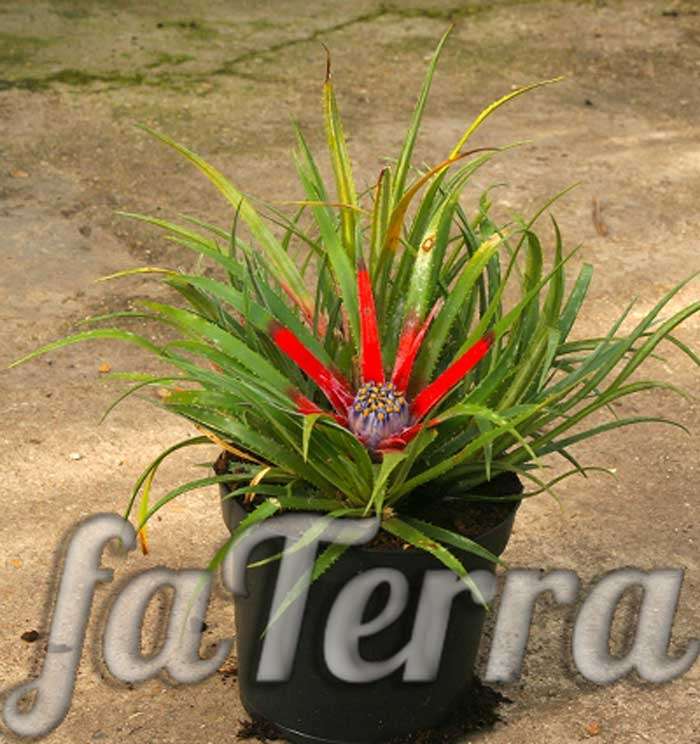
Latin name: Fascicularia
Category: perennial herbaceous plants
Origin: Chile
Decorative and exotic fascicularia
The small genus Fascicularia includes only five species of very bright specimens of the world's green flora and adorns the Bromeliaceae family.
Originally, the mountainous regions of Chile are considered the native habitats of this unusual herbaceous beauty.
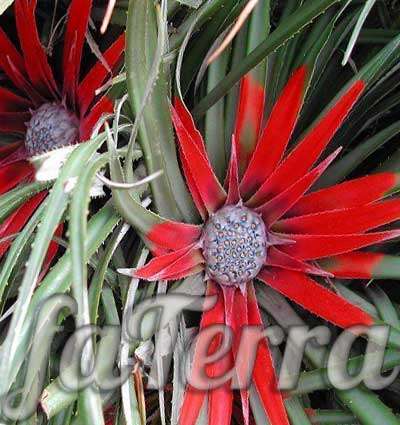
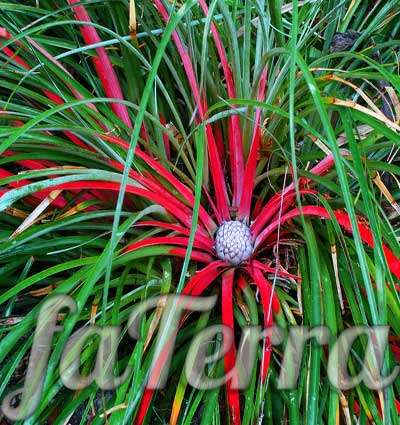
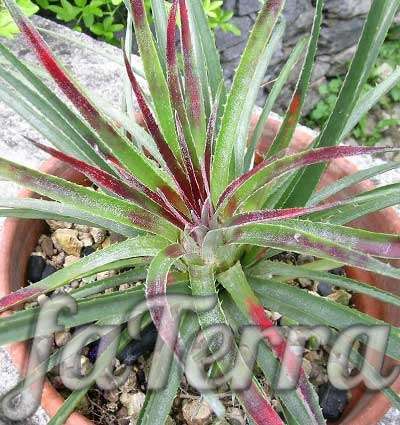
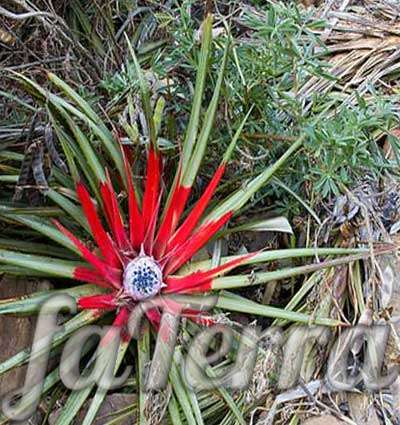
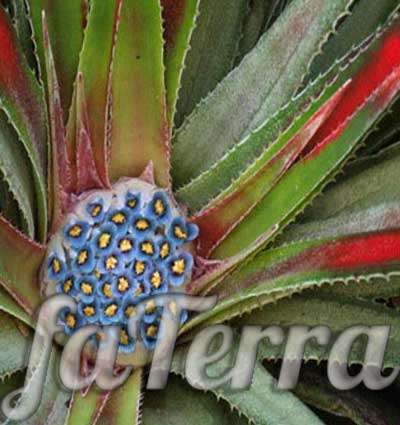
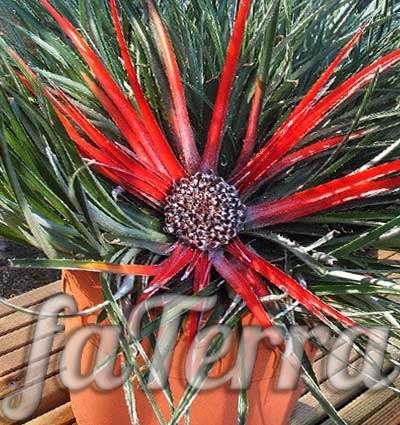
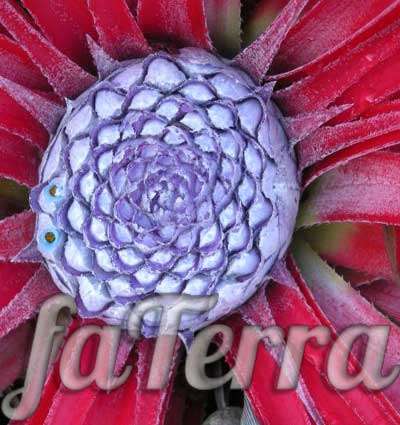
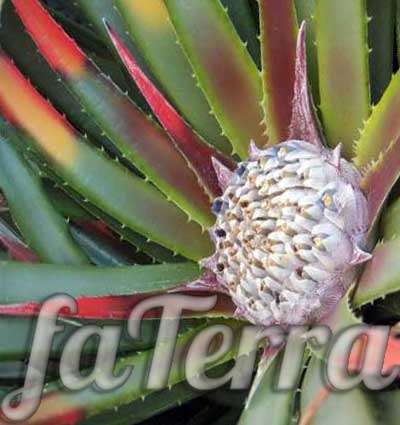
Fascicularia can be either terrestrial, xerophytic, or epiphytic, diverse, evergreen perennials with a stem or a short stem. A rigid, closed rosette is formed by linear, fifty-centimeter green leaves. At the bottom, they are wide, and their ends are pointed. In the flowering, incomparable fascicularia, the inner leaves turn dark red. From the middle of the rosette, a very short arrow with a flowering stem appears, which has a spherical shape. It is decorated with blue, tubular, three-centimeter flowers, which are surrounded by serrated beige or cream-colored bracts. On the faded plant, fruits covered with scales grow. In shape, they resemble an egg. Thanks to its structure, the flower is perfectly adapted to any living conditions. A very hardy and unpretentious plant will be interesting for absolutely inexperienced flower growers.
Fascicularia species
Two-color fascicularia (Fascicularia bicolor)
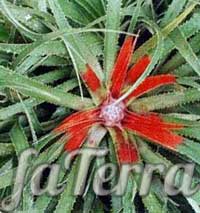 The most common species of fascicularia among flower lovers. It looks great, beautifully decorates spacious living rooms, greenhouses, terraces, offices and other public areas.
Andean fascicularia (Fascicularia andina)
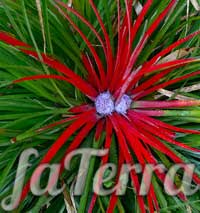 It is a terrestrial, perennial, rosette plant that resembles pineapple. It has significant dimensions, up to 45 cm in height and up to 60 cm in width. The flower has thin, prickly, rigid, green leaves of different shades. Their length reaches fifty centimeters. In the flowering, in summer, the inner leaves of the Andean fascicularia turn dark red.
Pitcairnia-leaved fascicularia (Fascicularia pitcairniifolia)
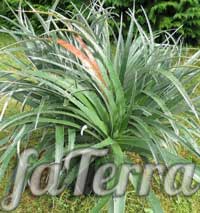 More voluminous than the previous species, sprawling, terrestrial, rosette, perennial plant. Its size reaches one meter. The flower is decorated with green, meter-long leaves, the edges of which are covered with sharp, short, wide, brown thorns. A gray coating covers the leaf plates, and the color becomes more matte. The plant blooms with blue and bright purple flowers. They are collected in inflorescences and framed by bright red leaves that resemble collars.
Fascicularia care in the home
Very few plants can compete with the beautiful flowering fascicularia. An advantage of this heat-loving flower is its ability to adapt to different growing conditions. It does not require special care, but some subtleties must be known and its whims strictly followed in order to see its favorite in good condition.
Lighting and location
To stimulate the bright color of the leaf plates and abundant flowering, it is desirable to place the plant in the east and west areas. Direct sunlight should be avoided.
Temperature
Summer indoor temperature in the range of 20-28˚C, in the cold off-season, the temperature on the thermometer can drop to 16˚C. Fascicularia can withstand a short-term drop in temperature to zero and even a slight minus. Access to fresh air is essential for the plant.
Air humidity and watering
For fascicularia, air humidity is not as important as for its close relatives, bilbergia and neoregelia. Soft and warm water for regular weekly spraying will be absolutely beneficial for the flower.
Regular abundant watering with soft, settled water at room temperature at least once a week is optimal for the plant. With the onset of cold weather, watering should be slightly reduced, adjusting the frequency of the procedure with slightly dry soil. It is not worth overwatering the plant so that the roots do not rot.
Transplanting and substrate
It is not necessary to bother with transplanting fascicularia. The roots of the plant do not grow quickly, so we transplant the flower as the pot is filled with roots. Spring is the best time for this procedure. Be sure to use gloves when in contact with the prickly beauty.
The soil mixture can consist of the following ingredients: leaf, sod and peat soil, top peat, sand, wood charcoal, sphagnum moss. At the bottom of the pot, there should be a decent layer of drainage.
Fertilizer
Fascicularia does not need frequent feeding, but with the onset of the warm period, it is desirable to apply liquid soluble fertilizers in half the norm. If you overdo it with feeding, you can only see beautiful leaf plates, but not enjoy the flowering of the plant.
Propagation of fascicularia
Fascicularia is propagated in the same way as its close relatives, dickia and neoregelia. Lateral shoots-children are separated from the adult plant and planted in separate pots. Spraying is mandatory, and the temperature should be maintained at 27˚C.
Pests and diseases
Violation of the rules of plant care leads to the appearance of unwanted guests:
- scale insects,
- mealybugs,
- aphids.
Treatment with insecticides is mandatory.
Fascicularia is an unpretentious and beautiful flower, and with age it becomes even more decorative and attractive.
Write comments
Comments