



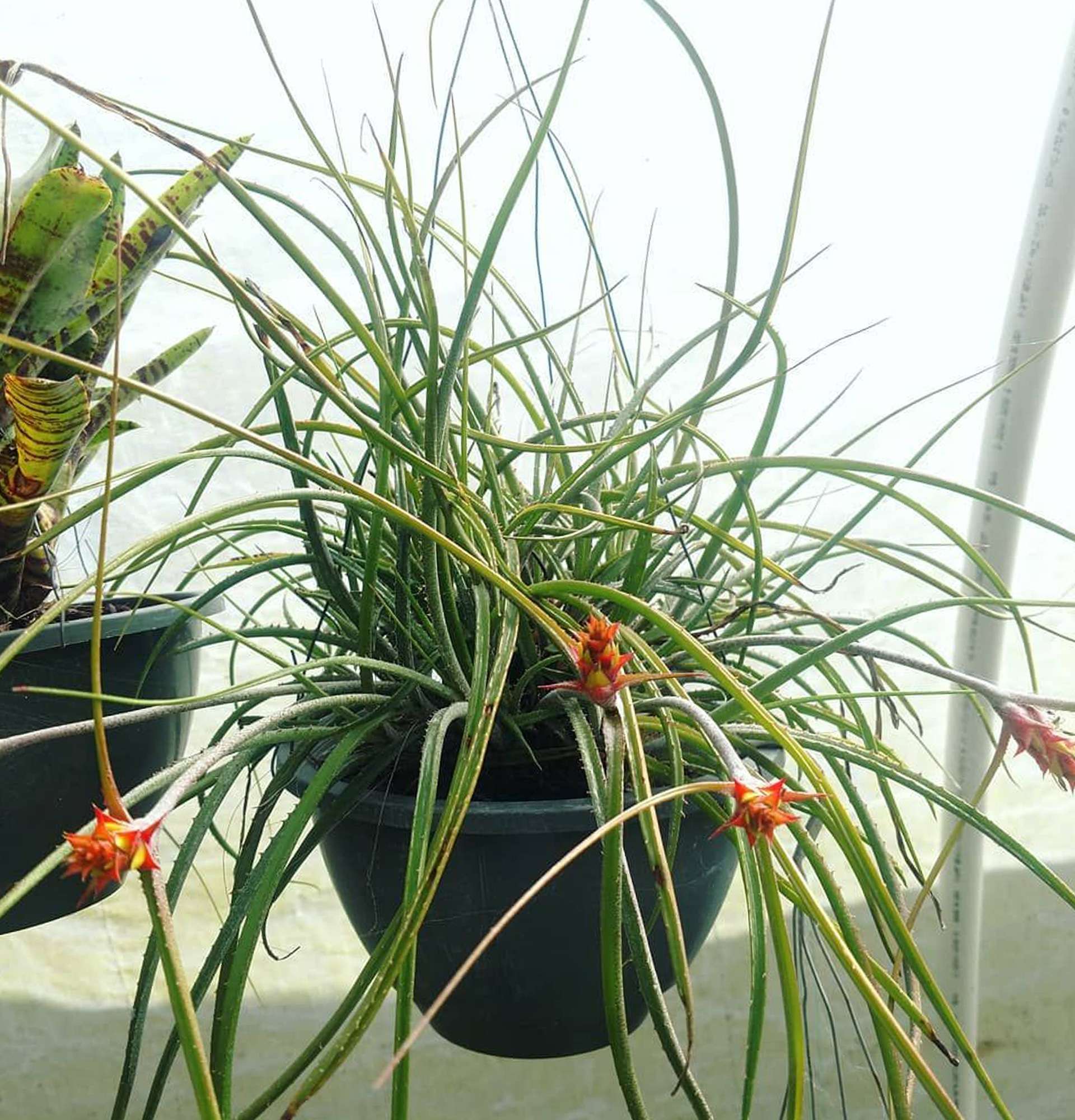
Latin name: Acanthostachys
Category: epiphytic herbaceous plants
Origin: South and Central America
Brief information about the unique exotic Acanthostachys
Acanthostachys is the smallest genus in the Bromeliaceae family.
In the tropics of the South American continent, there grow large, perennial epiphytes that really like the branches and trunks of tall trees.
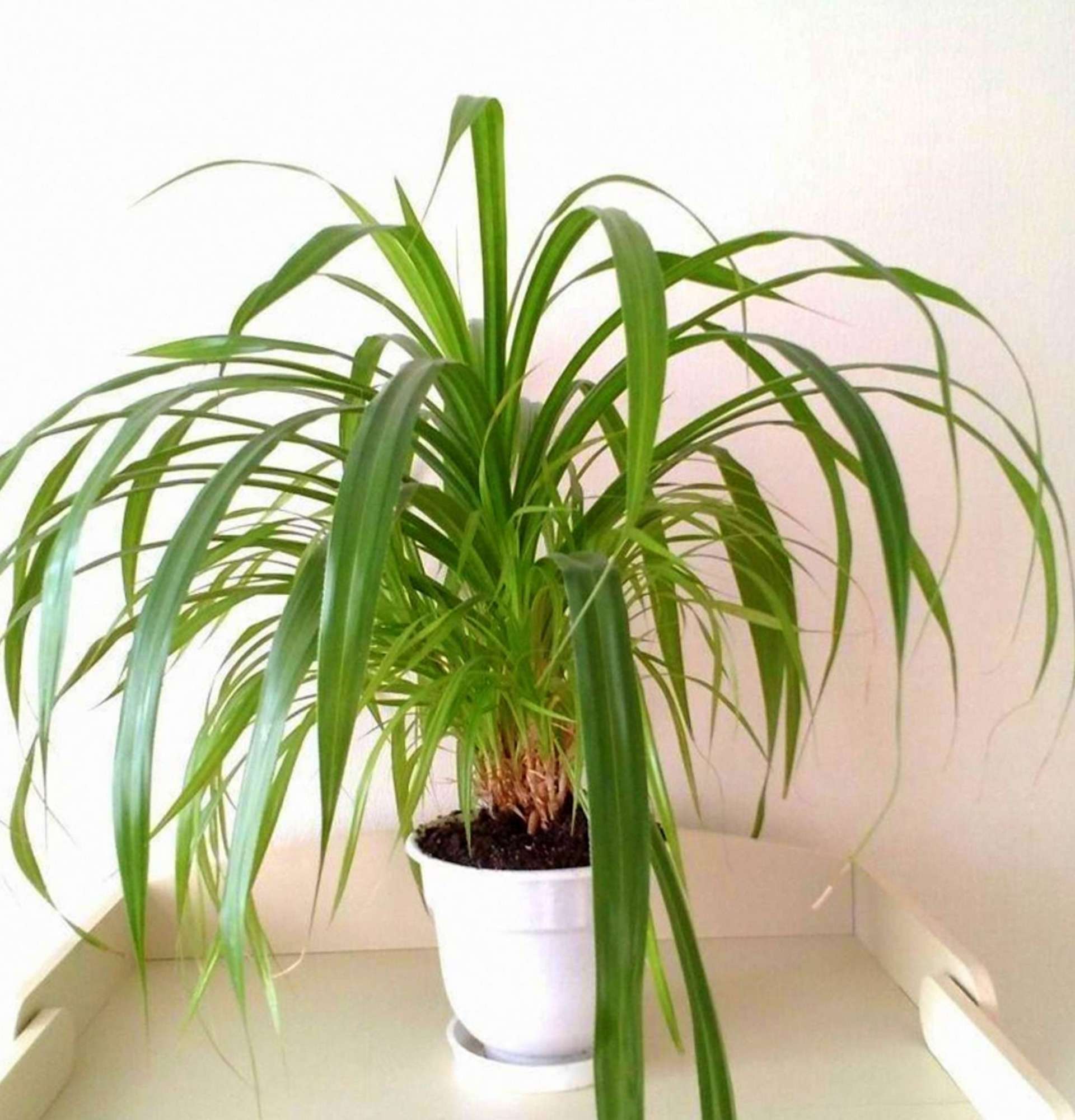
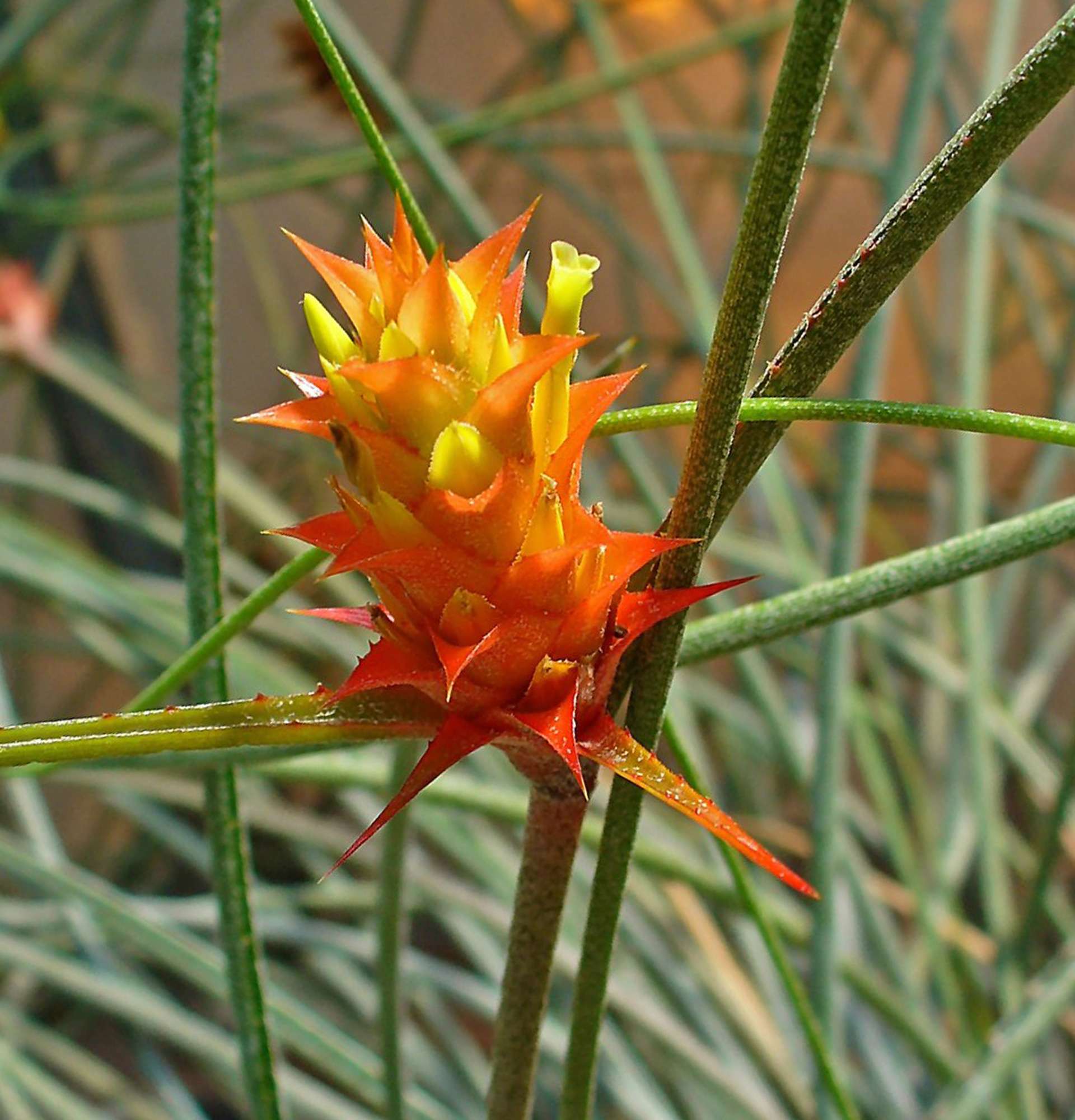
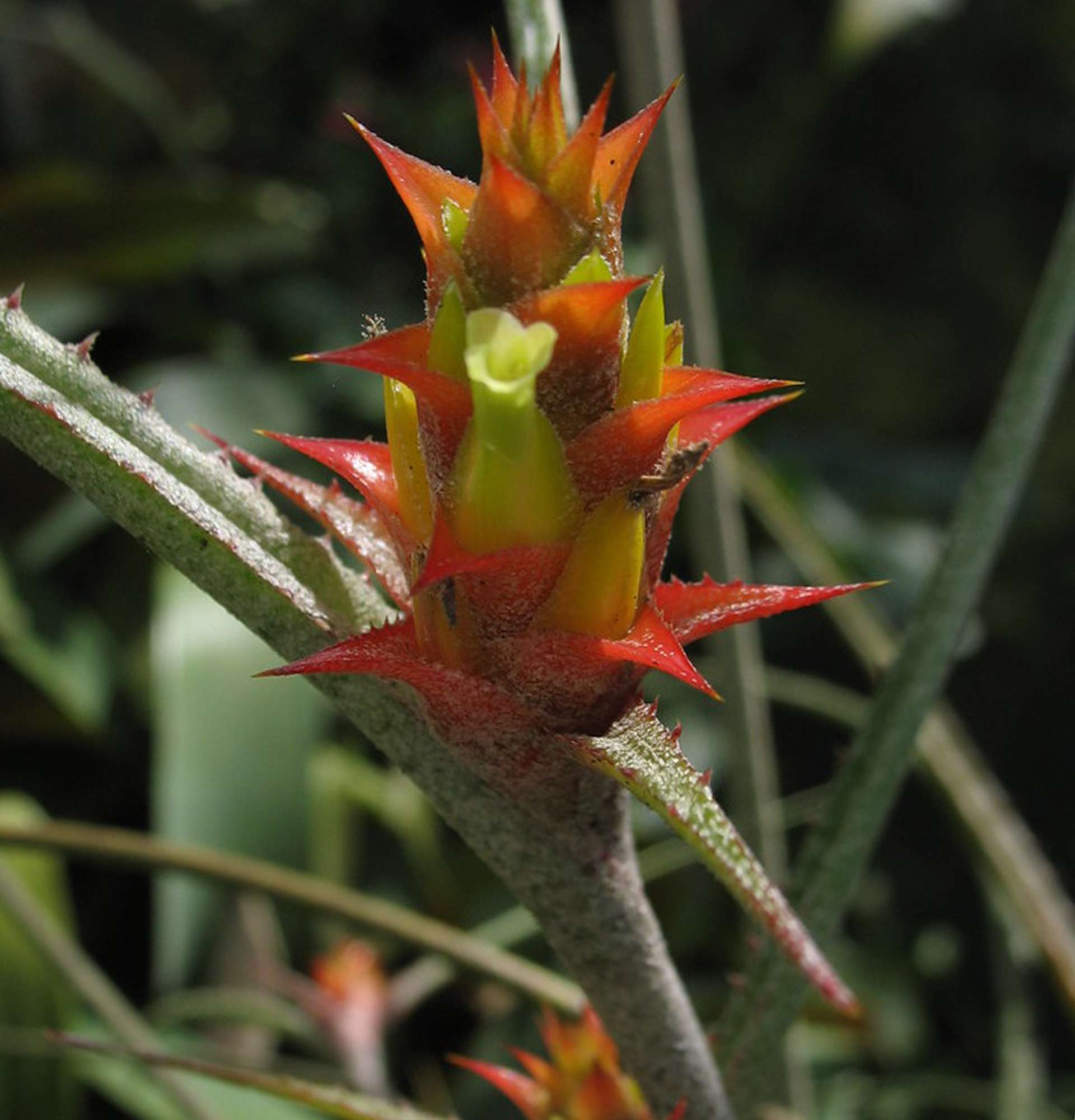
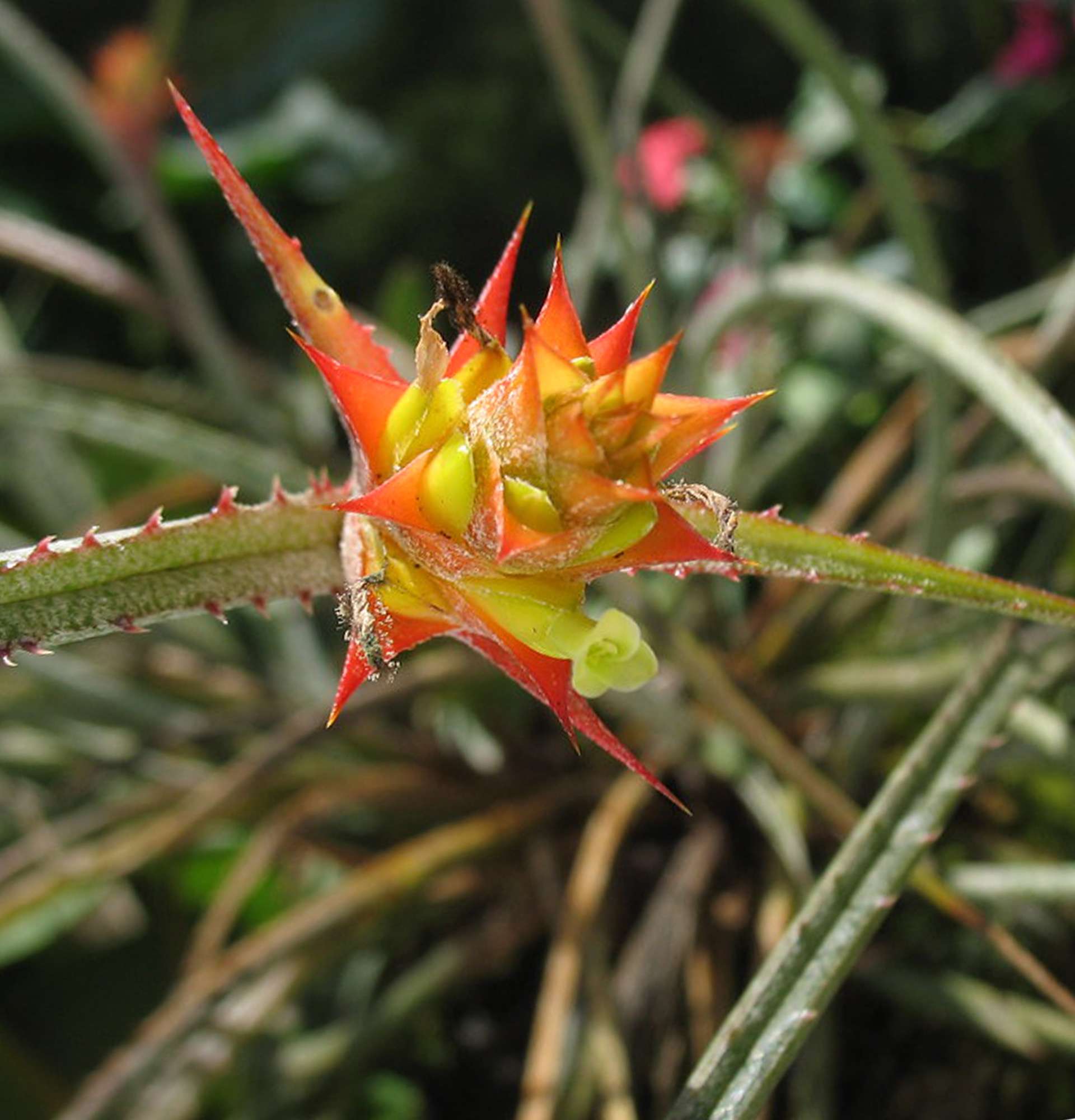
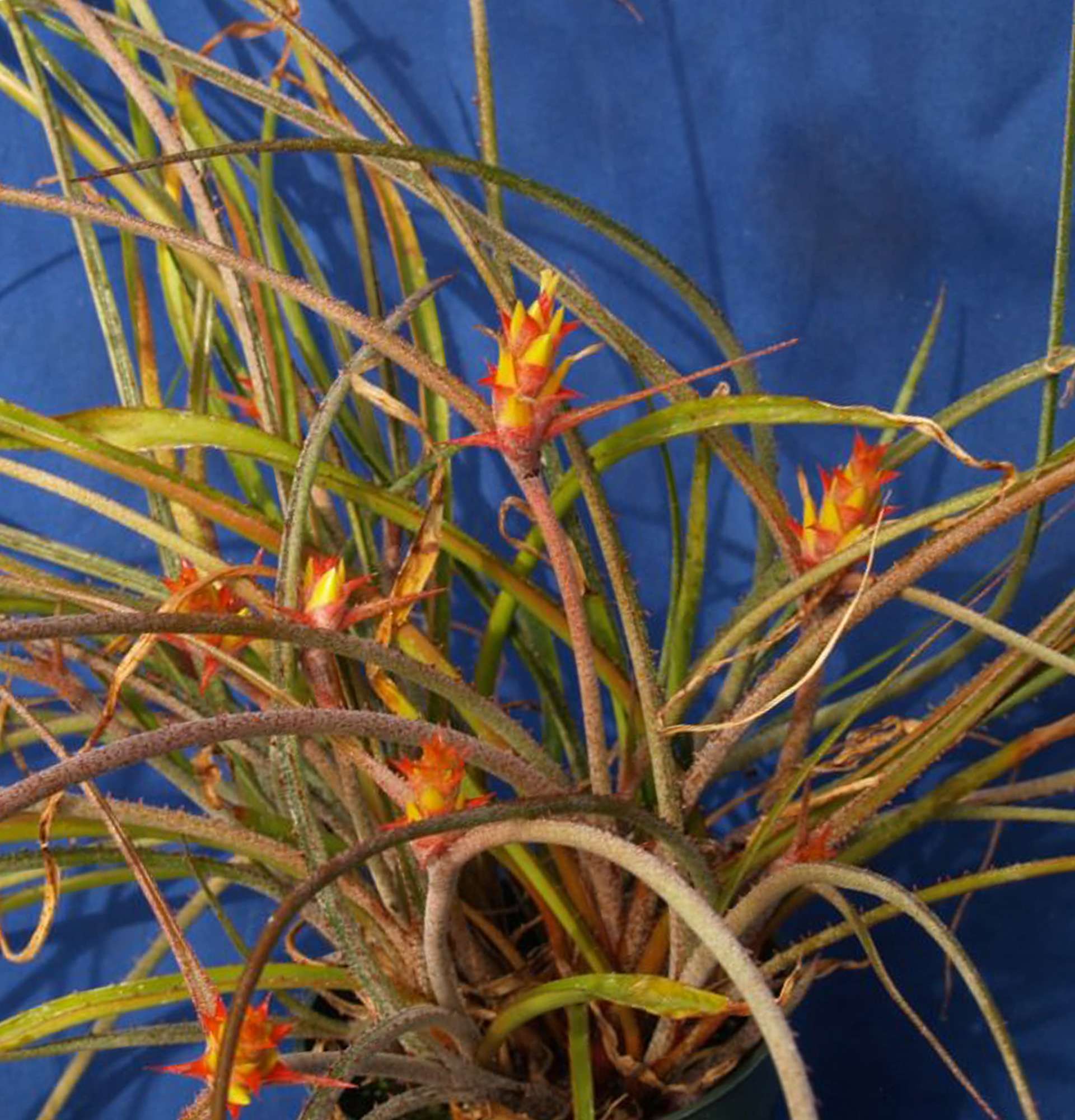
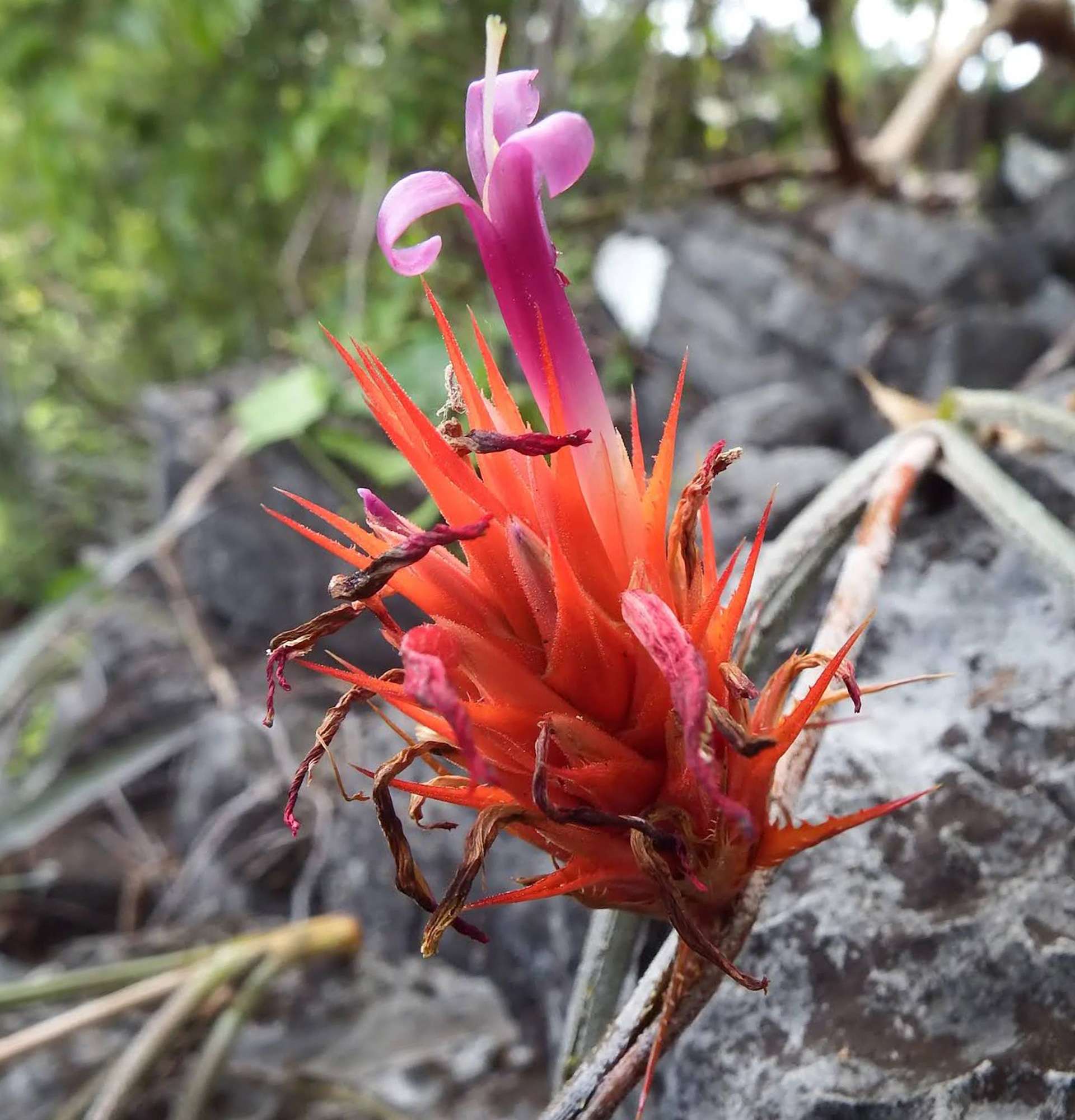
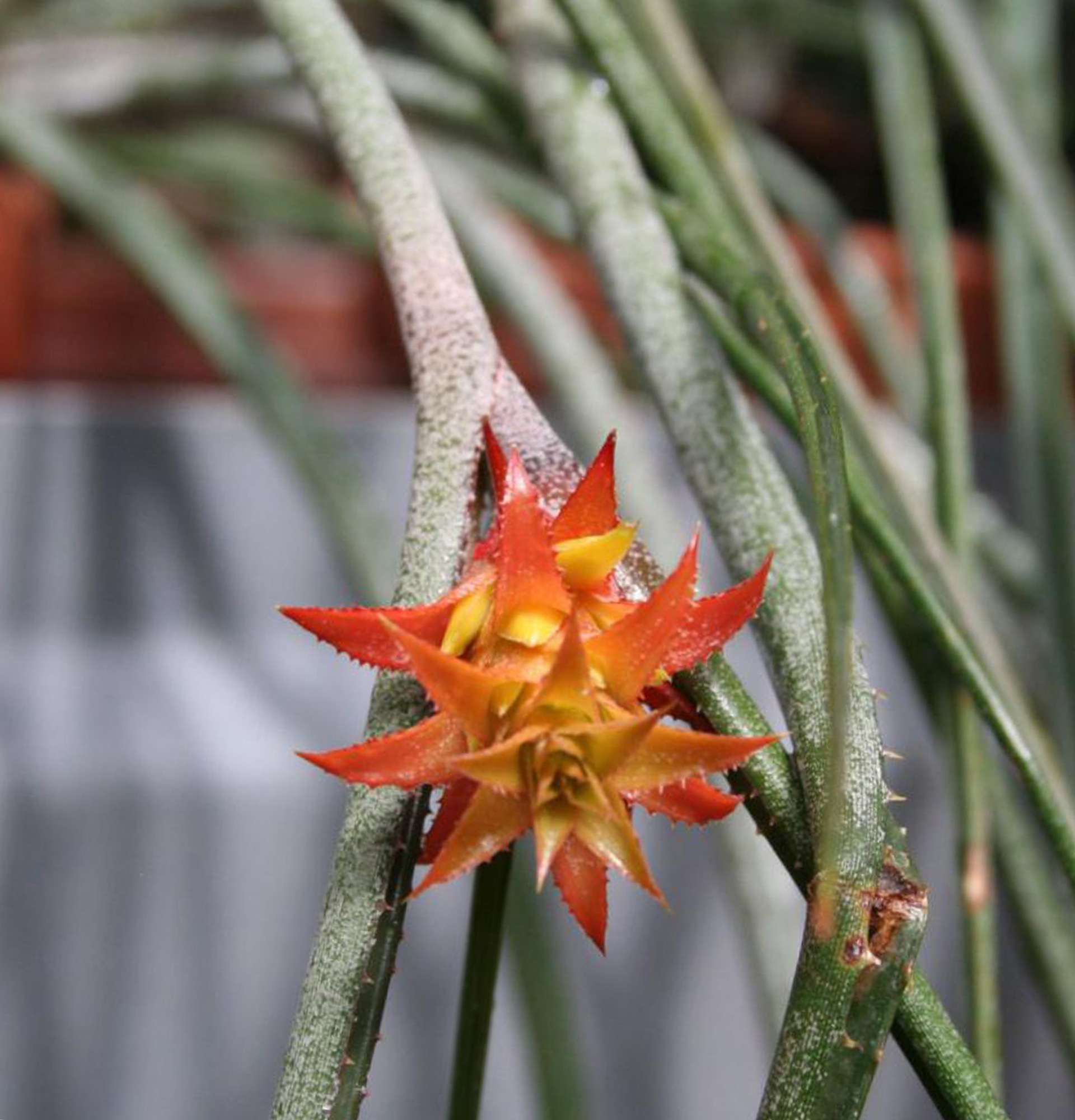
Acanthostachys is a rosette-type plant. Narrow, drooping, with prickly edges, long, almost meter-long dark green leaves make up this unique beauty. As it grows, lateral shoots appear. From the center of the rosette, flowers grow from July to October. After flowering, an orange-red inflorescence is formed, which looks like a pineapple.
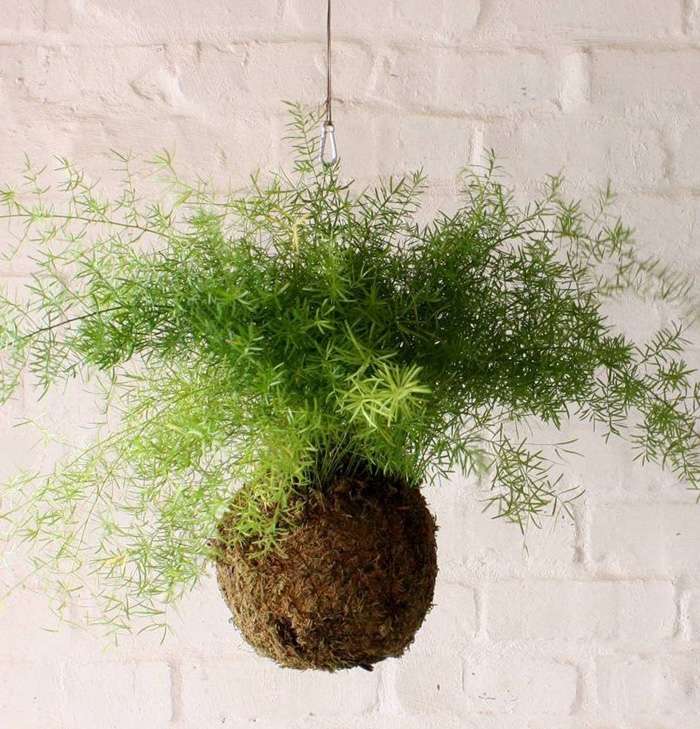
The plant is a wonderful decoration for large, bright and spacious areas: shopping centers, winter gardens, greenhouses, and recreation homes. In less spacious areas, Acanthostachys is used as a beautiful hanging decoration, as well as an epiphyte plant on original wooden stands and in colorful pots.
Its name is fully associated with the appearance and structure of the plant's leaves. If you translate literally from the Greek language, "acantha" and "stachys" mean "thorn" and "spikelet".
Types of Acanthostachys
Acanthostachys strobilacea, Klotzsch & Otto
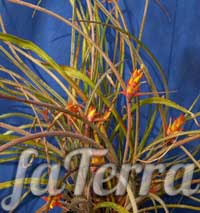 Since the mid-nineteenth century, the perennial herbaceous Acanthostachys has been a cultivated ornamental plant. Its height can reach one meter. A loose rosette is formed by narrow, long, drooping, greenish-silvery leaves. The edges of the leaf plates are covered with sharp red thorns. It forms lateral shoots. It blooms from mid-summer to late autumn. Conical inflorescences grow after flowering. They are very similar to a pineapple.
Wild Acanthostachys strobilacea grows well at an altitude of 800 meters above sea level, in the forests of the tropics and subtropics. This epiphytic exotic can climb along the trunks and branches of trees, and as a lithophyte, it can decorate rocky areas. These areas include eastern Brazil, Paraguay, and northeastern Argentina.
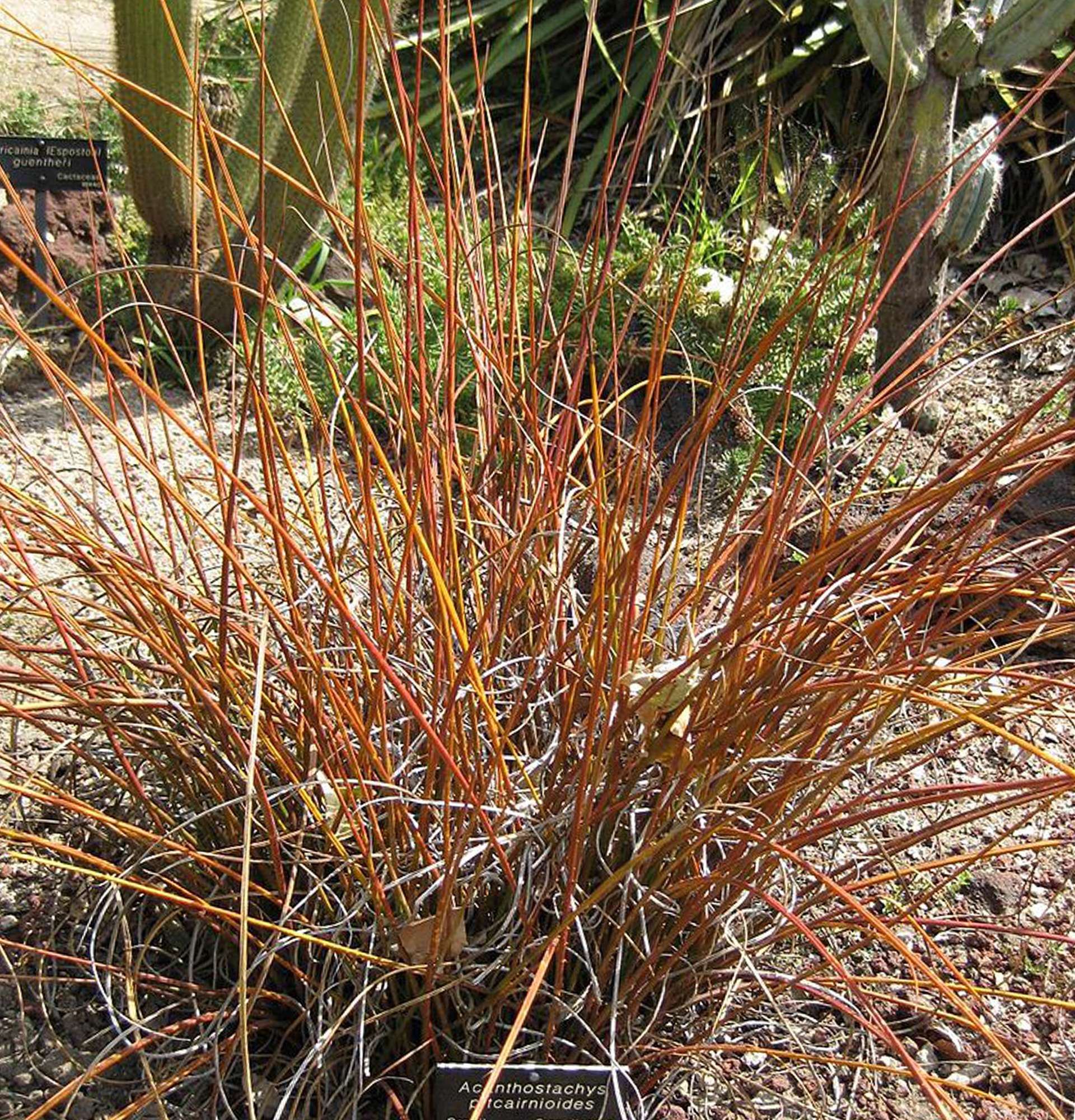
Acanthostachys pitcairnioides
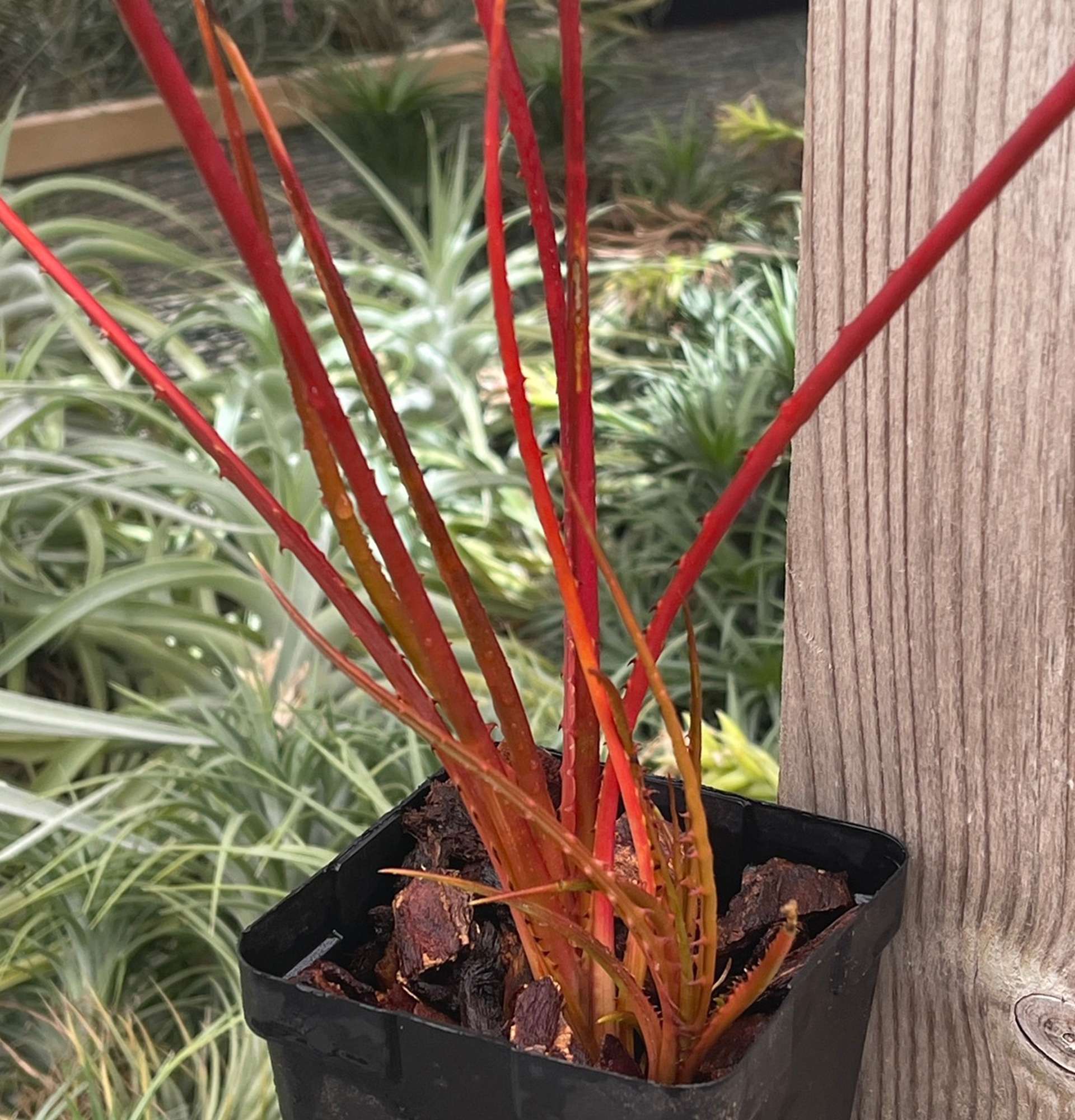
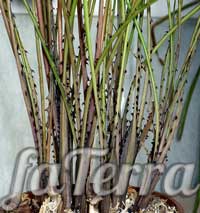 This herbaceous perennial with prickly dark green leaves of a dark emerald hue is sometimes called Aechmea pitcairnioides. It blooms with unusual blue, very delicate flowers that appear from the center of the rosette.
Acanthostachys care in the home
Acanthostachys is not a whimsical flower, and it likes the conditions of an apartment. This exotic will look very original in the interior if you use funny stumps, supports, wooden hangers, and decorative small pots. To do this, you need to properly care for the plant and ensure its proper maintenance.
Lighting and location
Acanthostachys prefers shade, and intense light should be diffused. The best places for this tropical exotic will be areas facing east, west, and north. If the pot is placed on the south side, the herbaceous plant needs to be protected from bright sunlight, which negatively affects the leaves of the plant.
Temperature
Warm rooms without sudden temperature changes are very suitable for Acanthostachys. The optimal temperature for a warm season is 20-25°C, and with the onset of cold weather, it is necessary to gradually reduce the air temperature and maintain it at 15-18°C.
Watering and air humidity
In winter, water moderately with warm, settled water, on slightly dried substrate in the pot. Regular watering of the plant in the warm season will make it look beautiful.
The main task is to prevent the soil in the pot from drying out or water from stagnating in it.
Acanthostachys needs high air humidity. Spraying with warm, soft water will be very beneficial for the plant.
Fertilizers
Feed with soluble fertilizers twice a month. The procedure can be carried out in the form of spraying. Fertilizers are not necessary in winter.
Soil
Acanthostachys in a pot will grow well in a soil mixture consisting of: compost, leaf soil, coarse sand or perlite, pine bark (2:4:1:1). To make the soil mixture breathable, it is supplemented with sphagnum, wood charcoal, and sod soil.
Transplanting and propagation
Transplant in the spring, remove faded rosettes. The pot for a young plant should not be very large, because Acanthostachys will only delight with abundant flowering after the roots fill the entire volume of the pot.
Acanthostachys is propagated by young, formed offshoots. They are separated from the mother plant and planted in separate pots. It is also possible to obtain young plants from seeds. To do this, the seeds are disinfected with a solution of potassium permanganate and sown in a porous soil mixture, creating mini-greenhouse conditions. After six days, young plants should appear.
Diseases and pests
If the conditions of keeping are violated, Acanthostachys may be visited by unwanted guests - mealybugs and scale insects. They can be immediately detected by examining the plant. Immediately apply folk remedies: soap solution, oil solution, or alcohol tinctures.
If treatment with these drugs does not give results, it is necessary to immediately seek help from insecticides.
Difficulties in growing
- The ends of the leaf plates are covered with brown spots, and then the entire leaf dries out - the air in the room is too dry, and hard water is used for watering.
- Brown-pale spots appear on the surface of the leaves - direct sunlight has caused burns on the plant.
- Leaves and shoots rot - the result of overwatering.
Love your exotic, follow all the nuances of caring for a tropical plant, and it will reward you with variegated leaves and colorful flowers.
Write comments
Comments