



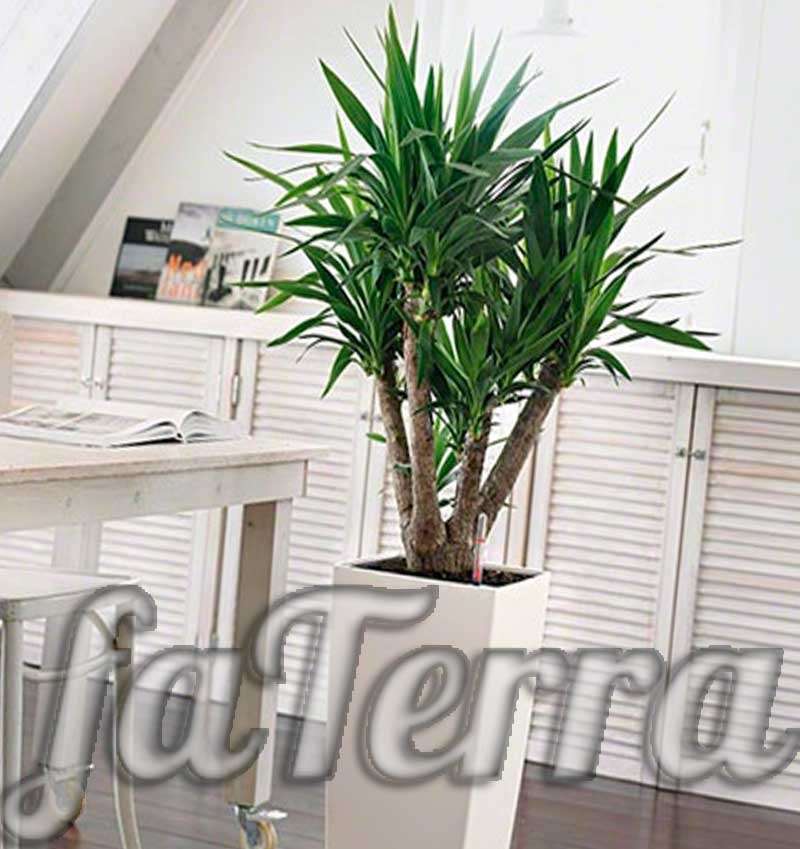
Latin name: yucca
Native to: Caribbean islands, Mexico, USA
Description of Yucca
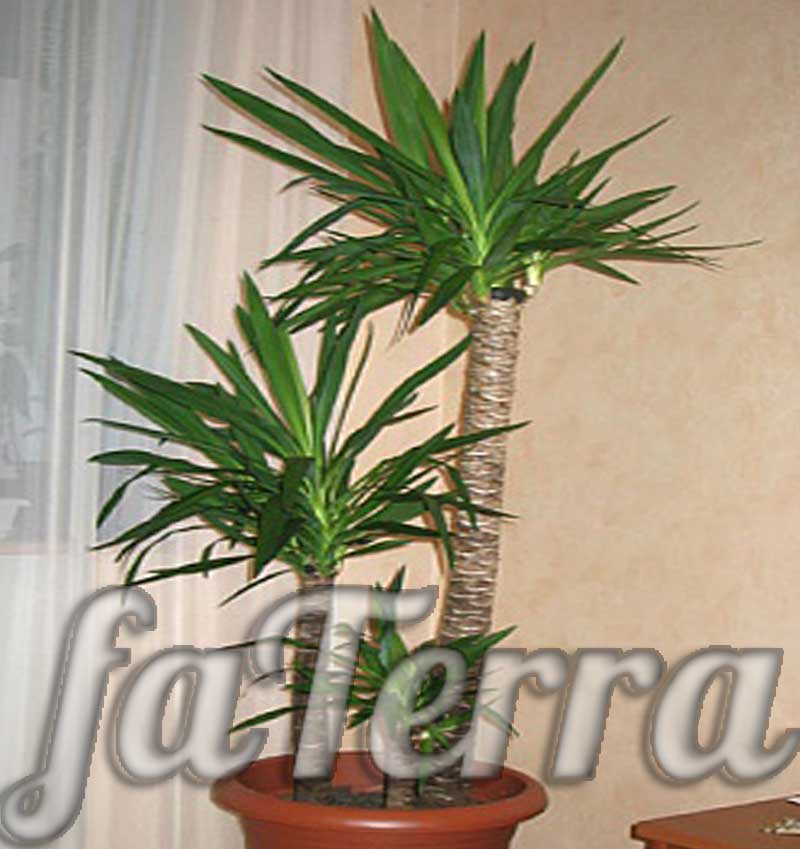
Yucca resembles a palm tree, and is also called a "palm lily," but it has absolutely nothing to do with it. Novice gardeners may mistake this plant for a
The evergreen yucca is often used to decorate the interior, and varieties with a branched trunk are even more valued. An adult yucca can reach 2 m or more in height in indoor conditions, so only a small plant can be placed on the windowsill. However, even for it, a wide windowsill is needed so that the leaves do not touch the window.
The indoor yucca takes a leading position among its competitors. This is not surprising, because the yucca palm is absolutely undemanding, so if you are a beginner gardener, you can safely buy this plant for your home. And those who have it do not spend a lot of time growing it.
Yucca can endure a lack of care, the main thing for it is watering.
Types of Yucca
Threadlike Yucca (Yucca filamentosa)
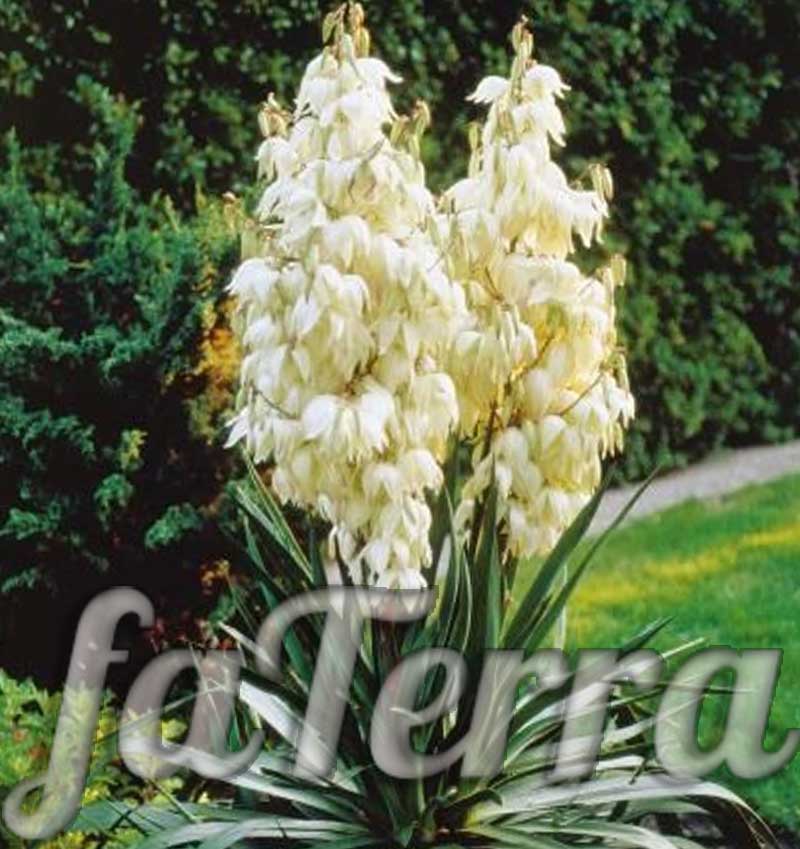
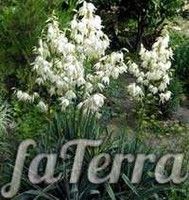 This species has almost no stem. Native to eastern North America. The roots are quite deep in the soil. Threadlike Yucca can survive short frosts up to 20°C. The leaves are gray-green in color with a sharp tip, and white at the edges. The length of the leaves reaches 70 cm, and the width is up to 4 cm. Seeds, which can be used to propagate the plant, are obtained only with artificial pollination. The inflorescence reaches a height of 2 m, covered with 8-cm white-yellow flowers. A rounded 5-cm box is the fruit.
Elephant Yucca (Yucca elephantipes)
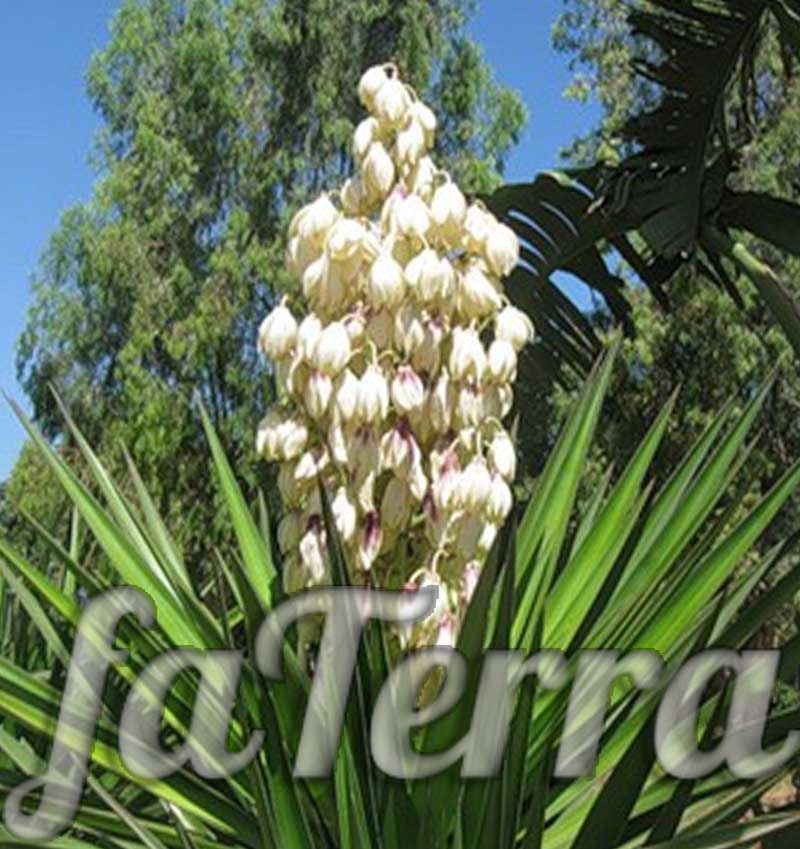
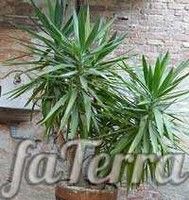 This species got such a strange name because of its incredible resemblance to an elephant's foot. An adult plant becomes like a small tree or an upright bush up to 10 m in height. The stem of the yucca is woody and heavily branched. The ends of the branches have sockets of fibrous and hard leaves. The shape of the leaves is lanceolate, 0.5-1 m long, light green, with a sharp spine at the tip and toothed edges. In summer, meter-long inflorescences with numerous flowers grow from the sockets in adult plants.
Gray Yucca (Yucca glauca)
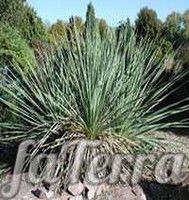 This 2-meter-tall species is native to the western United States. Gray Yucca has a short stem and fibrous leaves that are tightly pressed into meter-long sockets. The leaves are bluish-green, reaching 60 cm in length, have a lanceolate shape and whitish or gray edges. The inflorescence is covered with numerous creamy bell-shaped flowers.
Rostrata Yucca (Yucca rostrata)
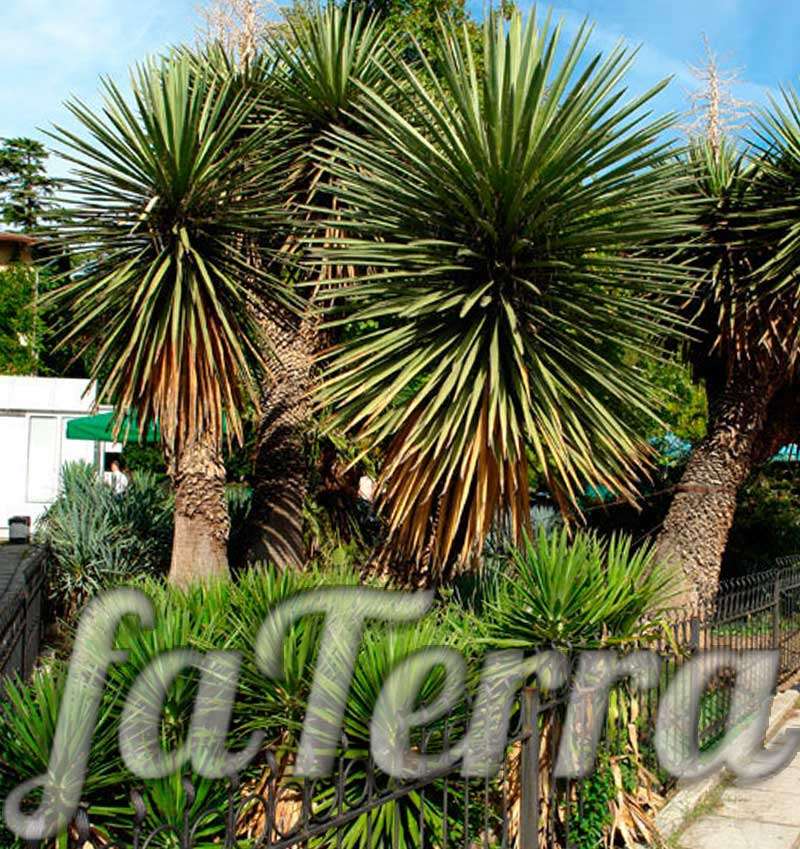
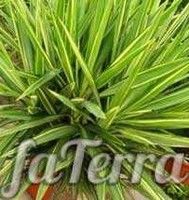 This tree can reach 3 m in height, with a thick trunk and a very branched crown. There are many long and thin leaves, up to 1 cm wide; they are leathery to the touch. As with the previous species, this yucca also has leaves that end in sharp spines, the edges are yellowish with small teeth, and the entire leaf is striped. White flowers are located on a long inflorescence.
Yucca Care at Home
Yucca does not require special knowledge of care, as it is undemanding. However, even this undemanding plant loves attention. So, if you want to boast of your favorite, find out how to care for yucca before buying it.
Yucca are found in nature in conditions of infrequent rainfall, low humidity, and good lighting. Therefore, when growing the plant, create conditions close to natural.
Yucca is very light-loving, it develops well in a warm environment.
Choosing a Location
By placing yucca on the windowsill, you risk damaging the plant with sunlight, as it can easily get sunburn or cold burn. The ideal place for the plant is on the floor near the window. Remember that yucca is light-loving, provide it with sufficient light - it loves bright, diffused light. In summer, yucca can be planted in the fresh air, as it loves it very much, but it does not like drafts.
The ideal temperature for yucca is 18-22°C, in winter 10°C. In the cold season, protect the plant from drafts and chills, as a sharp drop in temperature can lead to the death of yucca.
Yucca easily tolerates the dry air of apartments. In summer, spray the plant daily to remove dust from the leaves. In the winter, if the plant is kept warm, you can spray it more often.
Watering
It requires abundant watering, but the top layer of soil in the pot with yucca should be slightly dry. It is also not necessary to overwater it, as this will lead to root rot. Water in summer every 6 days, and in winter every 10-12 days.
Soil
It grows well in a mixture of: 1 part sod soil, 1 part leaf soil, 1 part peat, 1 part humus, 1 part coarse sand, or simply 1 part leaf soil and 1 part sod soil, and 3 parts sand. Drainage is essential.
Fertilizing
Yucca needs fertilizer. The active growth of the plant occurs from April to August, so it needs fertilization during this period. Ordinary liquid fertilizer is suitable, and it is usually fed once every 14 days.
Repotting
There are no problems with repotting young plants, they are transplanted once a year or two. However, yucca grows quite quickly, and when changing the "place of residence", problems may arise. Adult plants do not need to be transplanted, they just need to change the top layer of soil. This is done every year.
Choose a nutritious and loose soil so that the root system has access to the necessary moisture and air. You can buy a ready-made mixture or make it yourself. A large yucca is sometimes immediately planted in a larger container, because it is not very resistant. This can lead to soil souring. To avoid this, it is enough that 5% of the soil consists of a loosening agent, such as perlite.
Yucca Propagation
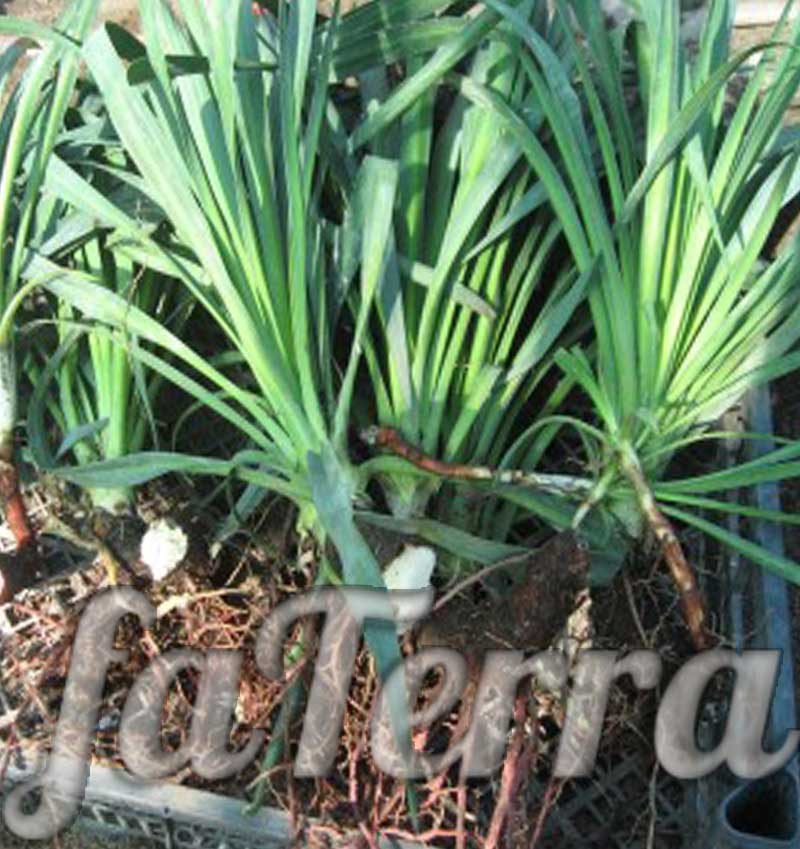
You can separate a young root shoot from the mother yucca, it will easily take root. You can also propagate by dividing the stem, it should be cut into pieces, the length of which should be more than 10 centimeters. These pieces need to be rooted in a mixture of sand and peat, предварительно обработав нижнюю часть всех отрезков корневином, затем, поддерживая температуру около 25°C, накройте полиэтиленом. It should be removed only after 3-4 weeks. Some gardeners prefer to lay the stem horizontally on moist sand. With moderate watering and a temperature of about 20°C, expect the appearance of young shoots with roots. When this happens, cut the stem into several pieces and separate the shoots.
It is also possible to propagate by lateral shoots, rooting in the same mixture of sand and peat, and covering with polyethylene at a temperature of about 23°C. You can also propagate by apical cuttings, which are simply planted in peat or sand.
Pests and Diseases of Yucca
Yucca is very rarely affected by pests. Sometimes scale insects or botrytis fungus may appear.
Problems that may arise
Often people ask: "Yucca is yellowing the leaves, why?" The answer is simple - if you notice light spots on the leaves, just move the plant to a less light place. But if the lower leaves of the yucca turn yellow and then fall off, don't be alarmed - this is normal, it happens as the plant grows and matures. Occasionally, significant yellowing of the lower leaves indicates insufficient lighting.
Another question that interests many people: "Why are the leaves of the yucca curling?" The leaves of the yucca may become dark, soft, and curl from too low a temperature. The edges and tips of the leaves may dry out from insufficient watering and too low humidity. Also, brown spots may appear on the leaves of the yucca due to insufficient watering.
Be careful with watering, because excessive moisture can cause the stem to rot from below.
Yucca in the house, beliefs
- It is believed that yucca brings positive, bright energy into the house. Some believe that it can help in the most difficult times, solve all conflicts, gather strength, and even extinguish the disease in the early stages. Minor cuts and scratches heal much faster with it, and the nervous system becomes stronger.
- Yucca can bring wealth to your home, you just need to bury coins in the pot. This should be done on a day off, preferably on Saturday. Share yucca cuttings with friends and acquaintances, because the more cuttings you give away, the more happiness there will be in your family.
Write comments
Comments