



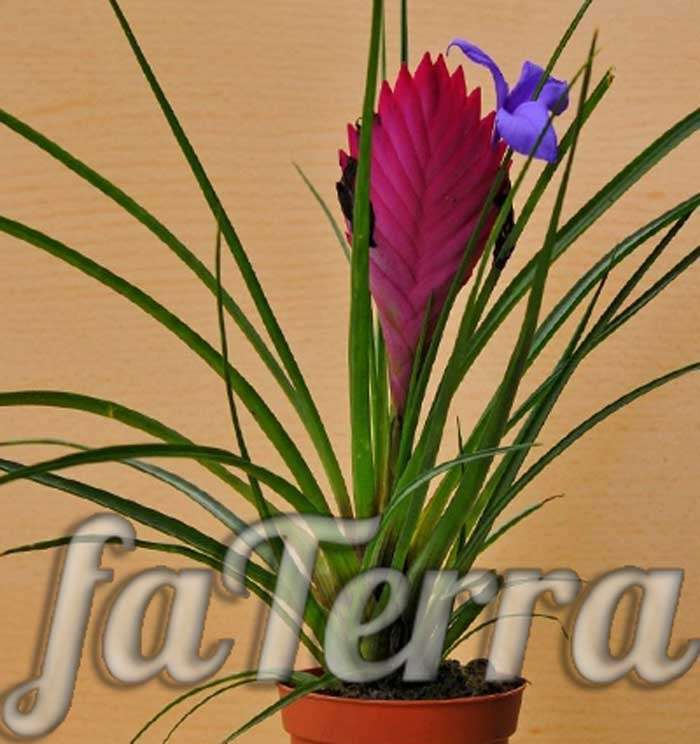
Latin name: Tillandsia
Category: perennial herbaceous plants
Native to: subtropics and tropics of America
Interesting information about the unique and exotic Tillandsia
Tillandsia (Tillandsia) is one of the large and widespread genera of the Bromeliaceae family. It includes over half a thousand species of exotic epiphytic and evergreen plants, which are completely different from each other.
Tillandsia got its name from the Swedish botanist of the 17th century, Elias Tillands.
Wild specimens of Tillandsia have adapted to various climatic zones of South and Central America. Favorite places to grow can be both marine coasts, tropical forest areas, and scorching semi-deserts, dry savannas, and even mountainous areas bordering the permafrost. There are absolute external and biological differences between the forms, sizes, and living conditions of individual species.
Species of Tillandsia are divided into two completely different groups.
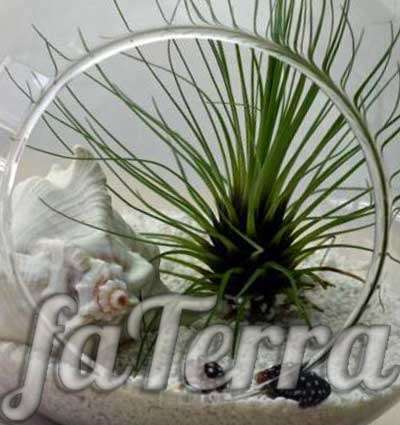
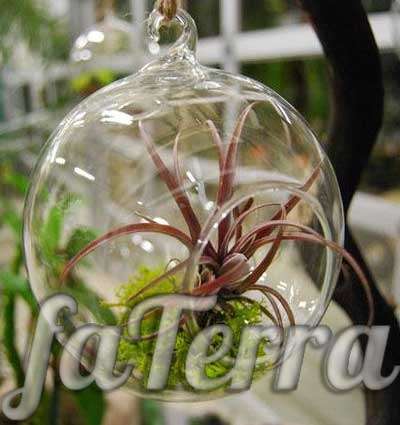
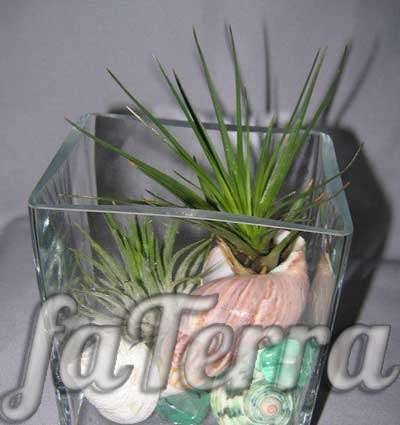
Atmospheric Tillandsia includes a group of very demanding, epiphytic plants with hard, lush leaves and practically no root system. Dense scales cover the thin, thread-like leaves and help the plant to feed and absorb water from the air. Due to the reflection of sunlight on the scales, the plants acquire a grayish tint and are called gray Tillandsia. They are often used for interior decoration, in the creation of original compositions.
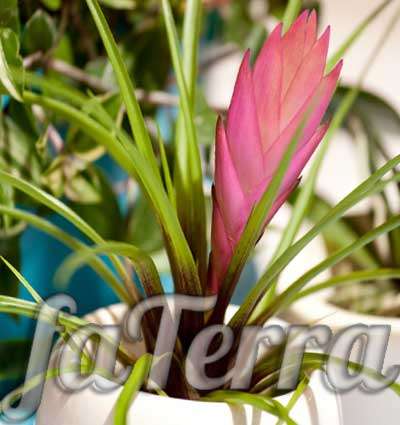
Green Tillandsia, or pot-grown, form the second subgroup of plants. Green, narrow, linear or triangular leaves up to 40 cm long form a rosette. Tubular flowers rise on bright bracts in spectacular, picturesque panicles.
Hybrid varieties and species of Tillandsia
Atmospheric
Tillandsia usneoides
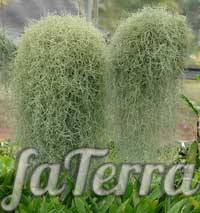 The most popular variety of epiphytic "atmosferics", also called "old man's beard" or "Spanish moss". An unusual wonder of nature that has no roots - a long-stemmed plant with two-row, five-centimeter thread-like leaves. Scales that densely cover the green leaves reflect light, creating the impression of a gray or silvery tint. The plant grows well on branches, cacti, rocks, forming a lace cascade, and in summer it is also covered with yellow-salad flowers. The main thing for Tillandsia usneoides is to have a support, without any fastening, and the ability to grow downwards.
Tillandsia tricolor
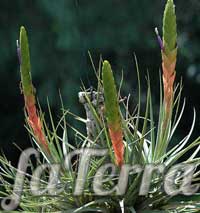 A Mexican epiphyte of compact shape. Gray-green, linear, twenty-centimeter leaves, up to 1 cm wide, form a sprawling rosette where moisture accumulates. One or several panicle inflorescences rise on a medium-sized peduncle. Colorful, long, oval bracts: reddish at the bottom, yellow in the center, and green on top, try to modestly hide the bright, rhomboid, purple flowers.
m
Tillandsia ionantha
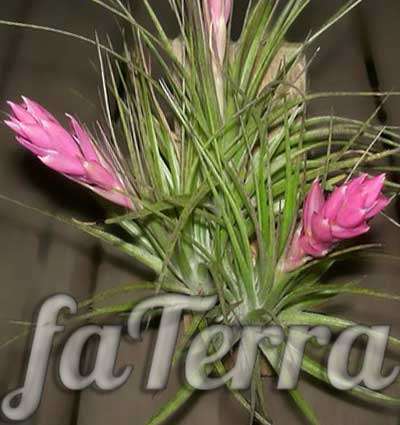
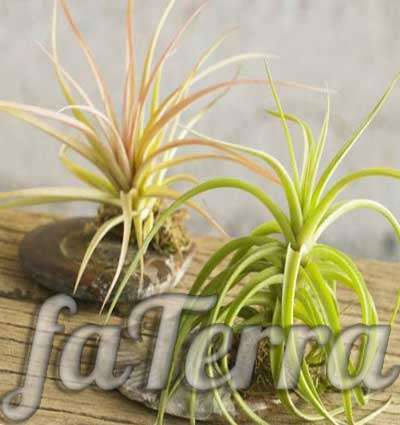
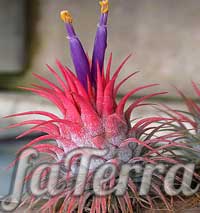 A flower - an epiphyte. It has silvery, curved leaves that form dense rosettes. In the summer months, the plant blooms with purple-blue inflorescences. The silvery inner leaves have a red color.
Tillandsia Fladellata
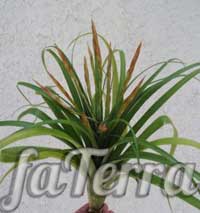 Narrow, long, green leaves form a rosette. The decorative value of the plant is the picturesque tubular bracts of a saturated red-orange color.
Pot-grown
Tillandsia cynea
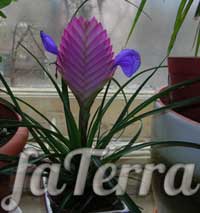 The most common herbaceous, epiphytic plant from the tropical regions of Peru and Ecuador.
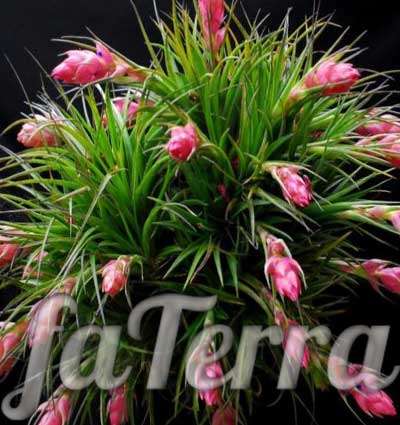
Curved, thin, maroon-green leaves form a bizarre dense rosette. A straight or curved peduncle in the form of an ear is covered with small scales. It blooms from the top, where one by one, not long-blooming, purple or blue flowers gradually appear. The inflorescence is framed by red, lilac, or pink bracts.
Tillandsia Anita
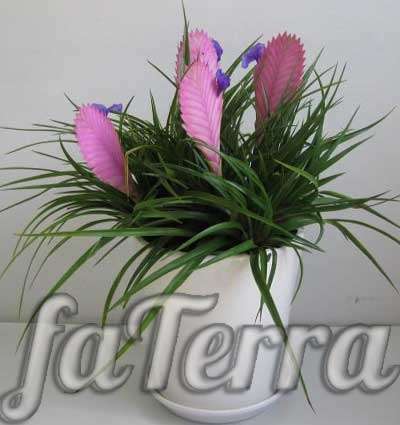
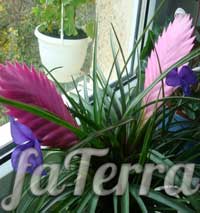 A hybrid variety of Tillandsia cynea. The excellent root system of Tillandsia Anita makes it possible to grow it at home. This compact exotic forms a dense rosette of long, narrow, grayish-green leaves. From it, a panicle inflorescence grows on a short peduncle. It consists of bright blue three-petal flowers. Contrasting bright pink bracts that overlap each other make the plant very picturesque and unique.
Tillandsia lindenii
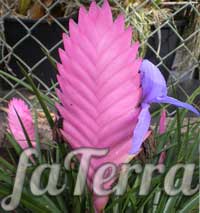 Tillandsia lindenii is very similar to Tillandsia cynea. The difference can be considered the color of the bracts. In Tillandsia lindenii, they are decorated with bright red and pale pink hues. The original blue flowers are covered with white speckles.
Tillandsia care at home
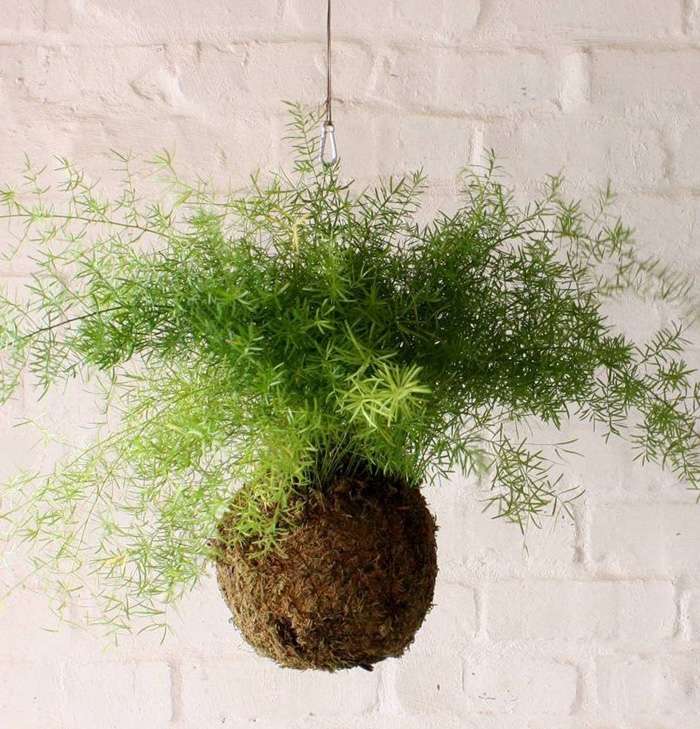
Lovers of exotic plants will bring a variety and unusual beauty into the house with this beautiful flowering indoor plant, Tillandsia. This wonder of nature is very original in the interior on specially made unusual stands, and also looks great in decorative pots. It is possible to grow the plant even "upside down" by fixing its roots on a support. Dare! And for this, it is necessary to properly care for the plant and properly maintain the conditions of keeping.
Choosing a location
Bright, diffused natural light is necessary for the normal condition of pot-grown species of Tillandsia throughout the year. It is best to place the plant on the south, east, or west side. In summer, it is better to plant the plant in the open air, on a porch, balcony.
Epiphytic species do not require a lot of light, they will be comfortable in partial shade or in shade.
Air temperature
A uniform temperature regime without significant fluctuations is desirable. In the summer, 22-30°C with frequent ventilation of the room, in winter - 17-18°C.
Air humidity and watering
For a Tillandsia flower, like for Vriesia, humidity of at least sixty percent is required. This is helped by daily spraying, except during the flowering period, so as not to worsen the decorative appearance of the flowers due to increased humidity.
Watering is necessary abundantly in the summer with soft, warm water under the center of the root neck with an interval of once every seven days. In winter, water carefully. To avoid root rot, observe the condition of the soil, which should be quite dry.
Soil and feeding
The soil mixture should be light and fertile and consist of equal parts of garden soil, peat, coarse sand, and sphagnum moss. You can use a ready-made mixture that is suitable for bromeliads. It is desirable to disinfect the soil in advance, sterilize it. Good drainage is essential.
During the growing period, the plant is fertilized with a soluble fertilizer, which must be diluted by half. It can be applied to the soil or by spraying on the leaves.
Tillandsia transplant
Frequent transplants are a stressful procedure for Tillandsia. Therefore, it is transplanted only when necessary into a pot, slightly larger than the previous one, and the rosette should not be buried too deeply in the soil. It is necessary to annually renew the top layer of soil.
Tillandsia propagation
Tillandsia can be propagated in the spring-summer period by lateral shoots that have reached a length of about eight centimeters. They are slightly dried and planted in the soil. Regular spraying is necessary.
It is possible to propagate by seeds. They should be sown in a moist substrate, maintaining a temperature of about 25°C, but this process is very laborious and lengthy.
Pests and diseases
Damage to Tillandsia by pests is not common. But preventive measures against spider mites, mealybugs, and bromeliad scale insects will not hurt. Regularly inspect and admire your exotic plant. If pests are found, wipe the leaves with a soapy solution. If this is not enough, use insecticides - karbofos or actellik.
Caring for Tillandsia is not very difficult, and the appearance of the plant immediately shows mistakes in care.
Possible difficulties in growing:
- The roots and the base of the stem rot - excessive watering at low temperatures.
- The leaves are soft and drooping - too low air temperature.
- Slow plant growth and infrequent flowering, pale leaves, and loss of decorativeness of the flower - lack of light.
- The tips and edges of the leaf blades become brown, the leaves dry and fall off - too dry soil and very dry, cold air. Do not forget to spray and water the plant.
Properly care for indoor Tillandsia plants, and this amazing exotic plant will decorate your living space with unusual beauty and attractiveness.
Write comments
Comments