



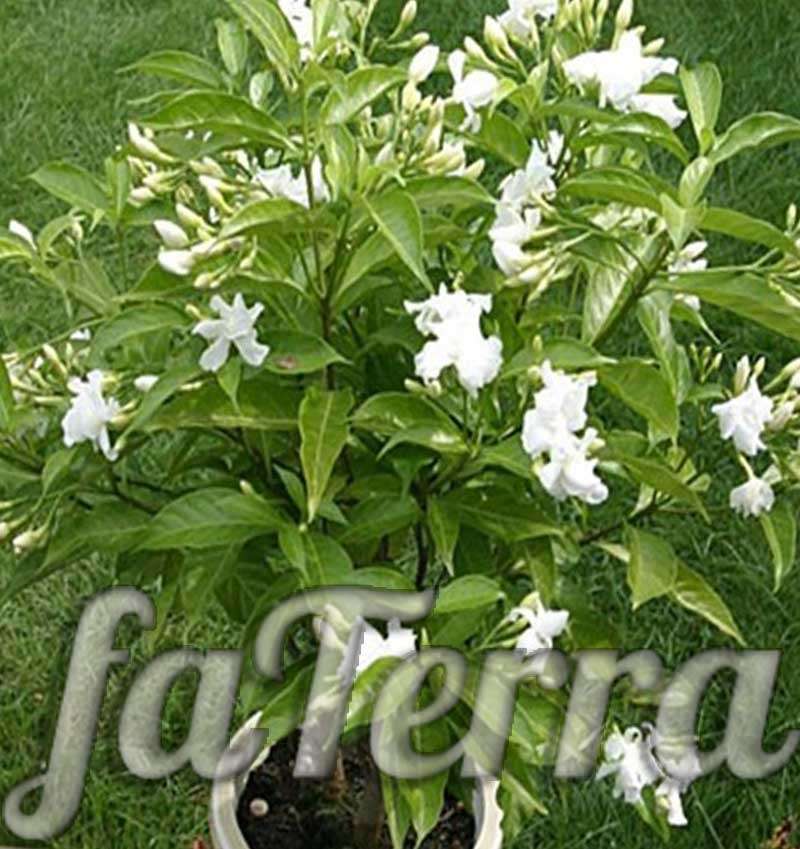
Latin name: Tabernaemontana
Family: Apocynaceae (Dogbane family)
Native to: Subtropical and tropical regions of Africa, Southeast Asia, and the Americas
Brief information about Tabernaemontana
Tabernaemontana belongs to the Apocynaceae family and is an evergreen flowering shrub. In its native habitat, the plant typically grows in coastal areas. The long name was given to it by the French botanist Charles Plumier, who lived in the 17th-18th centuries. He named the flower after the German doctor J.T. Tabernaemontanus (his pseudonym).
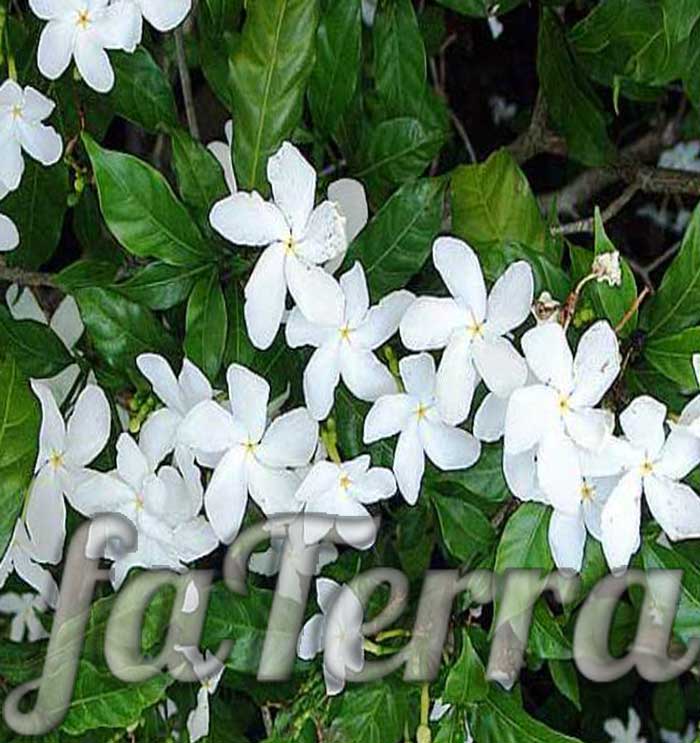
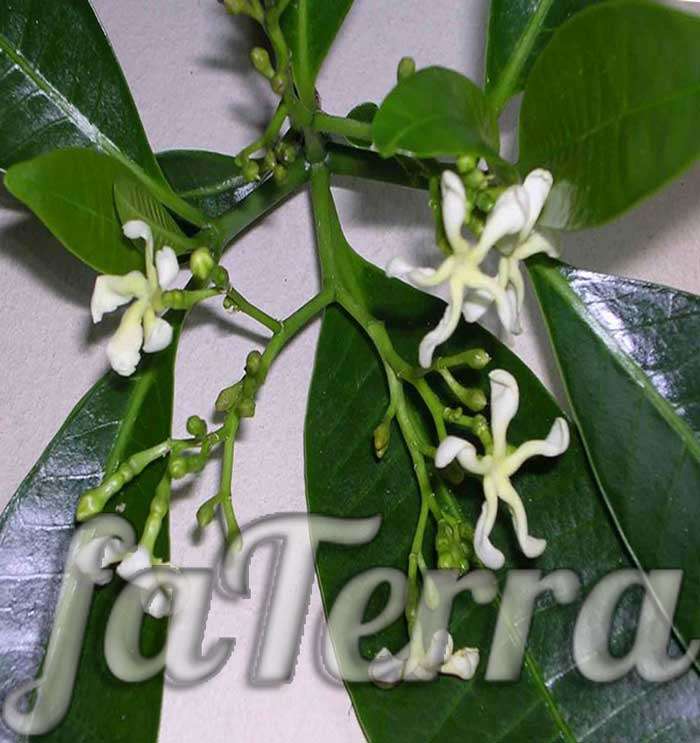
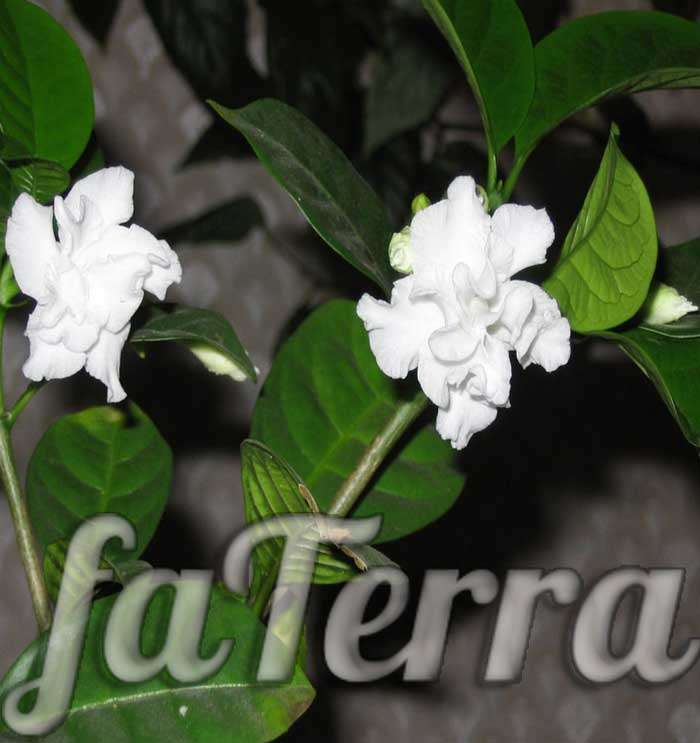
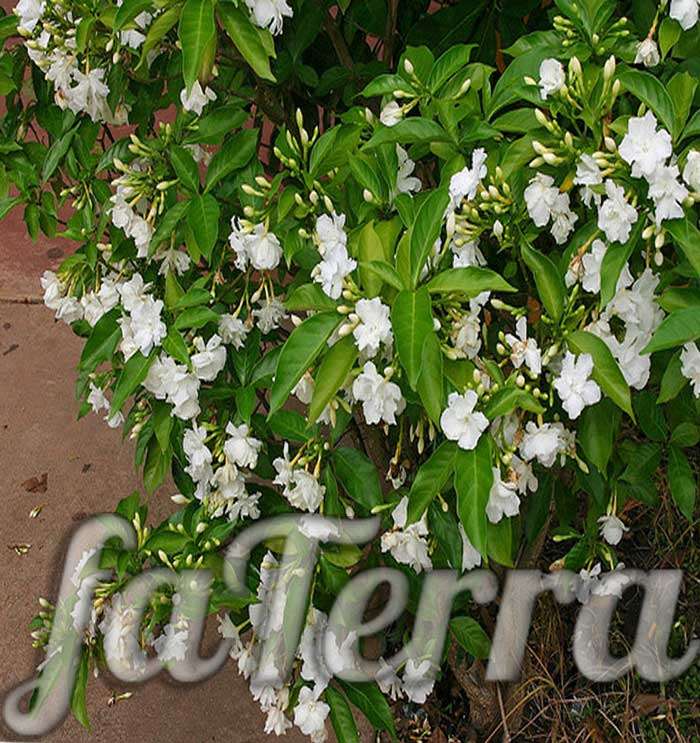
The Tabernaemontana shrub is small to medium in size and can reach up to 1.5 meters in height in home conditions. It has glossy, oblong, leathery leaves arranged oppositely on the stem. There is also a variegated variety of Tabernaemontana. The length of the leaves varies depending on the plant species, ranging from 6 cm to 30 cm. The inflorescences consist of numerous flowers. The flowers are double, white or creamy, and have a pleasant fragrance. The flower has 5 petals, and the corolla is small and wheel-shaped. The fruit of Tabernaemontana is a large capsule containing numerous seeds.
The plant blooms throughout the year with short breaks. The most abundant flowering occurs in the spring and summer. This is why Tabernaemontana is so popular. It is believed that such beauty requires effort, and you need to fulfill all the plant's needs, but Tabernaemontana is relatively easy and resilient.
Tabernaemontana is very similar to gardenia, and they are often confused due to their similar leaves. However, once the flowers bloom, you will immediately notice the difference. Gardenia flowers resemble roses, while Tabernaemontana flowers resemble ruffled bells.
Types of Tabernaemontana
Tabernaemontana divaricata
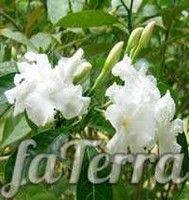 It is also called double Tabernaemontana, and it is the most well-known and common species. It has a well-branched structure and large, opposite, glossy leaves. The leaves are approximately 18 cm long, oblong in shape with pointed tips. It has almost horizontal branches and white double or single flowers with a strong fragrance reminiscent of jasmine. The fruit of this species has a wrinkled or smooth surface and an orange, juicy pulp.
Tabernaemontana sananho
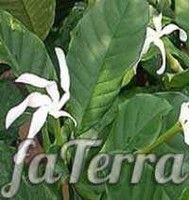 This species is less common than the previous one, and is even considered rare. It has fragrant flowers and edible fruits. Sananho has the longest leaves, reaching up to 30 cm. This plant has medicinal properties, and is often used in traditional medicine by indigenous peoples of the Americas.
Amsonia tabernaemontana
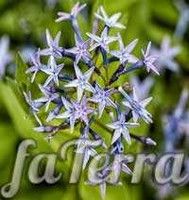 This is the most popular and undemanding species. It is native to the eastern United States. This shrub can grow up to 90 cm tall, with dark lanceolate leaves and blue flowers. Amsonia does not require special care, as it is self-sufficient and tolerant of different soil types, although it prefers slightly acidic soil. It is best to place it in a sunny or partially shaded location and water it moderately.
Tabernaemontana care in home conditions
Tabernaemontana is a relatively undemanding and fast-growing plant that recovers quickly after pruning. If you don't like a particular branch, leaf, stem, or even flower, feel free to prune it, as it can quickly recover and grow new foliage. Tabernaemontana is heat-loving and prefers bright, diffused light, which helps it develop a harmonious and symmetrical crown. Therefore, this shrub feels just as good in home conditions as it does in its natural environment.
Choosing a location
The plant will grow on any window, but the best options are east- or west-facing windows, as it loves light. You can also place Tabernaemontana on a south-facing window, but it is best to provide some shade. If you place it on a north-facing window, it will bloom poorly.
The plant loves warmth and dislikes drafts. The ideal temperature for it in summer is 24°C, and in winter, it should not be lower than 10°C. It thrives in fresh air during the summer on a balcony or in the garden. Tabernaemontana loves high humidity, but it can also tolerate dry conditions. It is best to spray it with soft, distilled water, making sure that large water droplets do not get on the flowers.
Watering
In summer, when Tabernaemontana is in full bloom, water it once a week, making sure that the water does not stagnate. Use soft water, and you can occasionally add a few drops of lemon juice. Reduce watering in the winter. Avoid overwatering, but also do not let the soil dry out.
Soil
It will grow in any soil, but it is best to choose slightly acidic soil. It grows well in a mixture of: peat, leaf mold, sand, and turf (all in equal proportions). If possible, you can add a small amount of soil from a coniferous forest to this mixture. Drainage is essential.
Fertilizing
The plant needs fertilization. Use a liquid fertilizer that does not contain lime, and fertilize it every 3 weeks during the spring and autumn. Choose a fertilizer that contains a large amount of phosphorus and potassium, and a smaller amount of nitrogen. You can also use a fertilizer for orchids.
Repotting
It is sufficient to repot it once every 3 years. Check the pot to see if it is too small, and if the roots have filled the entire space, it is time to repot the plant. Tabernaemontana has delicate roots, so be careful during repotting.
Tabernaemontana propagation
It can be propagated at any time of the year. To propagate, cut a 10-cm tip, cover it with polyethylene, and place it in a mixture of perlite and peat, using rooting hormone (such as rooting powder or auxin). Rooting usually occurs within a month. Once the cuttings have rooted, plant them in separate pots. They can bloom in 2-3 months.
Another way to propagate Tabernaemontana is by seeds. The seeds will germinate in about a month if you provide them with diffused light and a temperature of 18°C. Plants grown from seeds usually bloom in 2-3 years.
Diseases and pests
Tabernaemontana can be affected by pests such as scale insects, mealybugs, spider mites, whiteflies, and thrips. It can also suffer from chlorosis (yellowing of leaves). This can be caused by acidic soil, or by using hard or cold water. If the edges of the leaves are drying or turning brown, it may be due to overwatering or underwatering, or due to low humidity. If there are holes in the leaves, it may be due to irregular watering.
Problems that may arise:
Is your Tabernaemontana's leaves turning yellow? What to do? Let's figure out why Tabernaemontana leaves turn yellow. This can happen if you have over-acidified the soil, or if you are watering with hard or cold water. If only the edges of the leaves are turning yellow, it may be due to overwatering or underwatering, or due to low humidity. If there are holes in the leaves, it may be due to irregular watering.
Are the flowers and buds of your Tabernaemontana falling off? This is likely due to sudden temperature changes. Remember that a flowering plant should not be moved or kept in a dry environment, as this can cause the flowers to fall off. If your plant is not blooming, try placing it in a location with more diffused light.
Write comments
Comments