



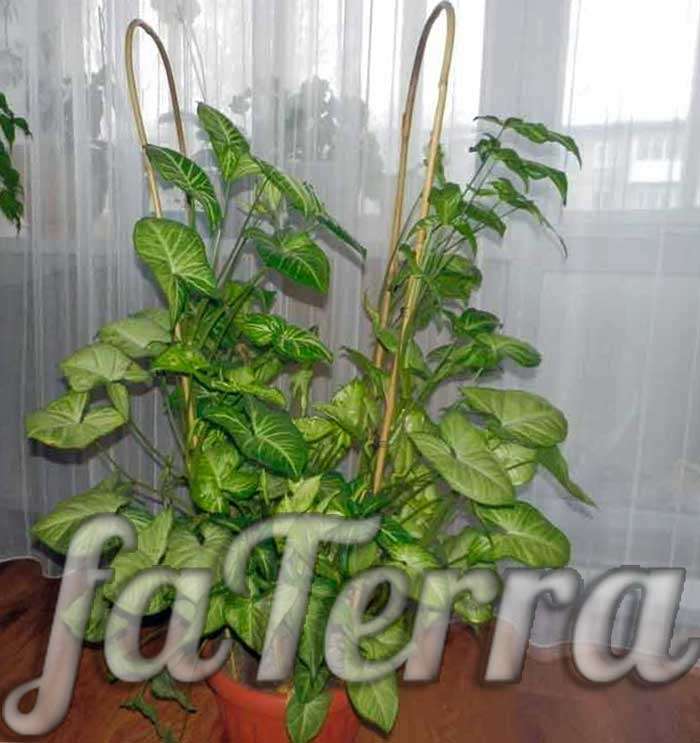
Latin name: Syngonium
Category: perennial, herbaceous, evergreen vines
Native to: Central America, South America, West Indies
Syngonium: Brief Information
Syngonium (Syngonium) is an unusual variety of picturesque, bright, and undemanding herbaceous vines and epiphytic plants, in which the flexible stems do not branch. This wonder belongs to the family of over thirty evergreen, perennial, fast-growing flowering monocotyledonous plants, which is the Araceae (Araceae) family.
The syngonium plant is native to the tropical forests of Central and South America. Some varieties are found in West India.
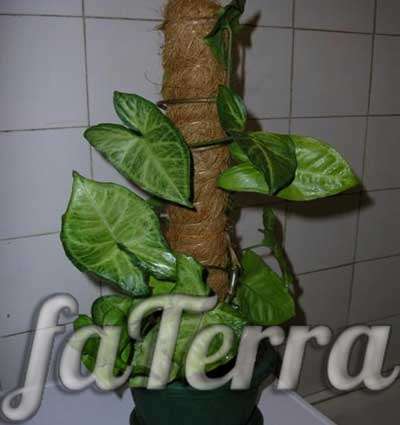
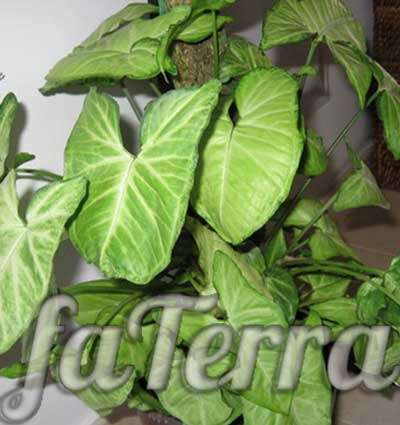
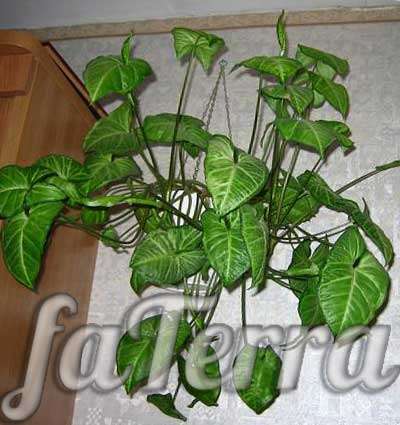
The indoor syngonium is an herbaceous plant with a thin stem and aerial roots that try to cling to support. The shape of the syngonium leaves is varied. The leaves of young vines can be whole, lobed, or deeply dissected. They can resemble arrows, hearts, or spears, and as the plant matures, three- or five-segmented lobed leaves can grow. The color variety ranges from green to pure white with mottled spots, streaks, and silvery veins.
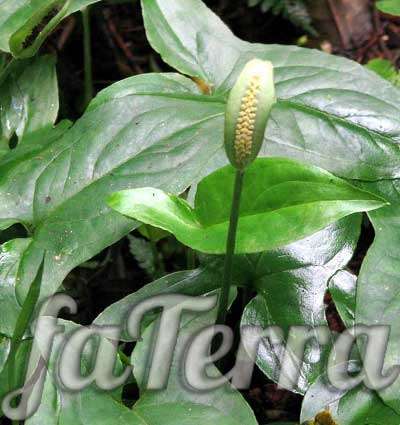
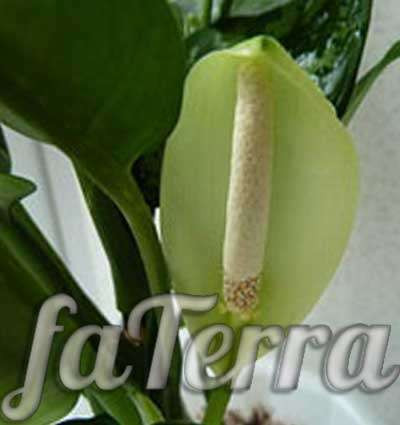
The unusual spathes of the syngonium resemble a spadix and are always in a vertical position. They are located on a short, three-sided peduncle, which increases as the fruits mature, containing about a hundred fragrant brown seeds.
In home conditions, the syngonium flower never blooms, but in tropical forests, this beautiful plant forms a green inflorescence resembling a spadix with reddish or pink bracts.
Syngonium is perfectly suited for apartments and has become a true decoration. It is considered a symbol of prosperity, peace, and tranquility. It can be a great companion to fuchsia. Together, these elegant and beautiful plants will decorate the interior of any office or apartment.
The exquisite and beautiful syngonium is very similar in structure to the more powerful and stately philodendron.
Syngonium: Varieties and Cultivars
Syngonium auritum, also known as syngonium earleaf (Syngonium auritum)
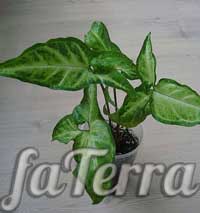 This plant is native to the humid forest tropics and mountain peaks, where it thrives at an altitude of 1000 meters above sea level on the islands of Haiti, Jamaica, and Mexico.
The earleaf type of syngonium is a variety of vines that can well climb on supports with their long stems, which are 2-2.5 cm thick. Air roots form between the nodes on the stems. Syngonium can grow up to two meters, and the annual growth is up to 80 cm.
The green, glossy, and firm leaves are up to 35 centimeters long and 20 centimeters wide. The leaves change with the age of the plant and resemble drooping ears. The beautiful, bright leaves are located on petioles that are 40 cm long.
Syngonium podophyllum (Syngonium podophyllum)
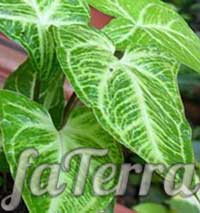 This is an evergreen vine. Its favorite habitats are Costa Rica, El Salvador, Honduras, Guatemala, Panama, and Mexico.
Syngonium podophyllum is a beautiful plant with dark green leaves. In young plants, the leaves have an arrow shape, but as they mature, they resemble a foot. Their size reaches 30 cm in length and 10 cm in width. They are attached to half-meter petioles with 10-centimeter sheaths.
Syngonium Pixie (Syngonium Pixie)
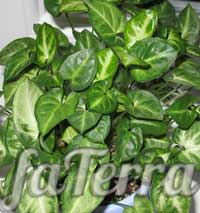 This is a very compact, finely leaved variety of syngonium. Its leaves are green, decorated with light, prominent veins and white spots.
Syngonium Aron Broun (Syngonium Aron Broun)
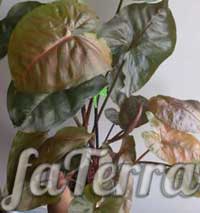 This plant has an original and attractive appearance with a chocolate hue. The leaves of the plant are triangular and round in shape, with dark green "ears." The leaves are attached to reddish petioles, which are a darker color.
Pink Syngonium (Syngonium Neon Pink)
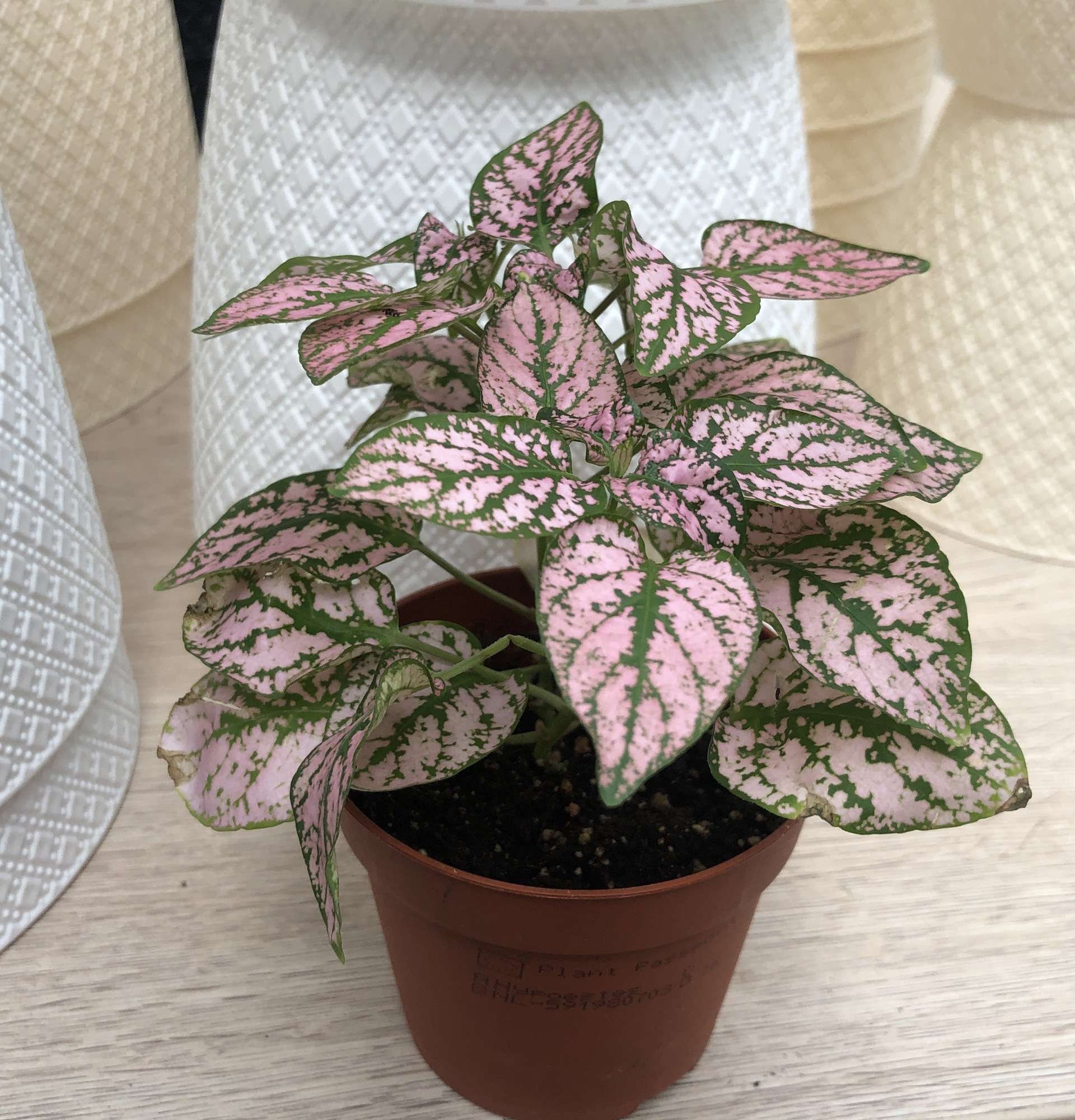
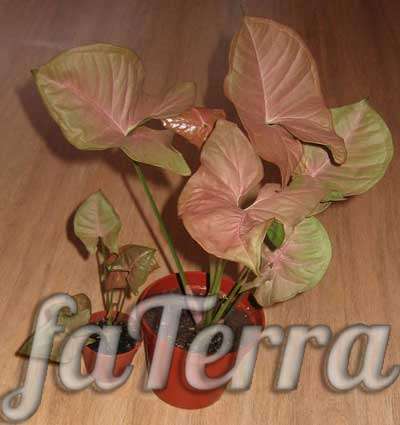
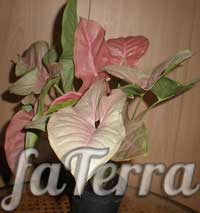 This is a very beautiful varietal vine with pink, heart-shaped leaves that have a beautiful pale green border. The young plant is bright pink, while the adult plant has light pink leaves with pink veins.
Syngonium Care in Home Conditions
The simple and undemanding care for syngonium in home conditions is what makes it so popular among flower lovers. If you follow the simple rules and conditions, the syngonium will beautifully decorate any office or other space, making it cozy, original, and beautiful.
Choosing a Location and Temperature
Choosing a place for your plant is not difficult. Windows facing east or west are ideal, where there is less direct sunlight. In winter, syngonium needs bright, but subdued light.
The ideal temperature for syngonium in summer is 18-22°C, and in winter, it should be no lower than 16°C. Avoid drafts.
Air Humidity and Watering
The air humidity should be around 60%. In summer, the syngonium loves a daily shower, and in the gloomy winter months, wiping the leaves with a damp cloth is sufficient. It is also helpful to place the pot with the plant in a tray with wet gravel. Heating radiators should be located far from the plant.
Use soft, room-temperature water for watering. Water 2-3 times a week in the warm season, and reduce it to once a week in winter. Monitor the condition of the soil; it should be slightly dry.
Soil
You can mix equal parts of coarse sand, turf soil, and leaf soil. Another option is to mix equal parts of turf soil, leaf soil, and peat soil with half a part of sand. Syngonium will thrive and feel comfortable in any of these mixtures.
Fertilizing
In spring and summer, during the active growing season, syngonium can be fertilized once a month with a vitamin supplement, using half the recommended dose of calcium. You can use organic or mineral liquid fertilizers.
Syngonium Propagation
Syngonium can be propagated using 15-centimeter-long top cuttings or pieces of shoots. Before planting in a box or pot with soil, it is recommended to treat the cuttings with a hormonal solution. The temperature for rooting is 20-25°C. The seedlings need to be watered abundantly and sprayed to maintain humidity, and protected from direct sunlight. After the sixth leaf, pinch the young syngonium to encourage bushier growth. The same care is required for scindapsus.
Syngonium Repotting
Young, fast-growing syngonium should be repotted annually, or even twice a year, into wider pots. More mature syngonium plants need to be repotted less frequently, about once every three years, or when the roots fill the pot.
Pests and Diseases
Like all living organisms, syngonium can be susceptible to pests such as scale insects, thrips, and aphids. Folk remedies for fighting them include soapy water, garlic infusion, or tobacco infusion. More serious measures include using insecticides such as Decis, Aktellik, Intavir, or Fipronil according to the instructions.
Possible Problems:
• Why are the leaves of the syngonium turning yellow? The plant needs to be fertilized.
• The tips and edges of the leaves are covered with brown spots and fall off - the air in the room is too dry.
• The stems are rotting - the temperature is too low combined with excessive soil moisture.
• The leaves are pale, small, and dull - the plant is not getting enough fertilizer and light.
• Drops of liquid appear on the tips of the leaves - the humidity in the room is too high.
Syngonium: Superstitions and Beliefs
An interesting belief associated with syngonium is the appearance of droplets of water on the tips of the leaves. It is said that this means it will rain. So, the droplets are actually condensation due to high humidity. And the syngonium "thanks" for the suitable tropical environment with these droplets of joy.
However, there are also superstitions about syngonium. Some believe that this plant is a "womanizer." Conversely, others believe that syngonium promotes family harmony. If you believe in superstitions, this plant is a beautiful and healthy plant that can create a positive atmosphere, promote optimism, reveal oratory talents, make you more active, decisive, and strengthen your character.
So, we have answered the question: can you keep a syngonium at home? Having this royal and generous plant, you should enjoy its beauty and the happiness, joy, and luck it brings.
It is important to remember that
A positive fact is that syngonium can purify the air of formaldehyde and xylene. The spathiphyllum
Write comments
Comments