



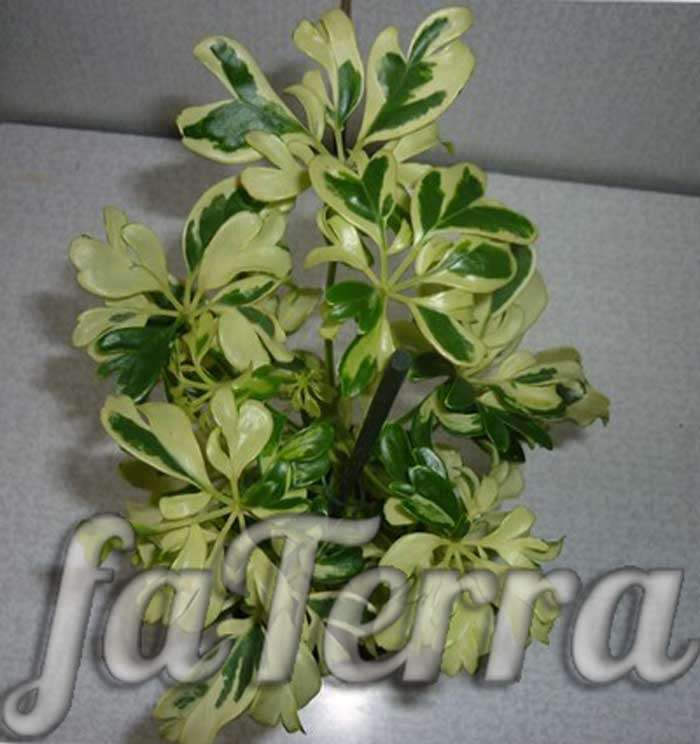
Latin name: Schefflera
Category: perennial herbaceous plants
Native to: subtropical and tropical regions of America
Schefflera (Schefflera) is a unique umbrella for the office and home
Schefflera is the most numerous genus of tropical plants, with more than two hundred species that adorn the Araliaceae family with their decorativeness.
The name Schefflera is a tribute to Carl Linnaeus, who honored the name of his friend, the famous German botanist of the eighteenth century, Jacob Christian Sheffler.
The native habitats are the tropical forest areas of Southeast Asia, the Australian continent, the island of New Guinea, Java, Taiwan, Hawaii. Here, this southern natural wonder is represented by evergreen trees, shrubs, and sometimes vines, reaching a height of six meters. They are covered with inconspicuous, small, white flowers, collected in complex panicle inflorescences that resemble an umbrella.
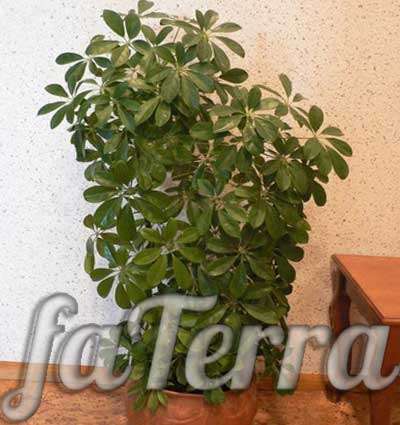
The flower of schefflera is no less attractive in room conditions. This exotic, evergreen, sprawling bush with flexible branches and unusual-shaped leaves will decorate any interior. Many varieties of schefflera are used to create beautiful bonsai.
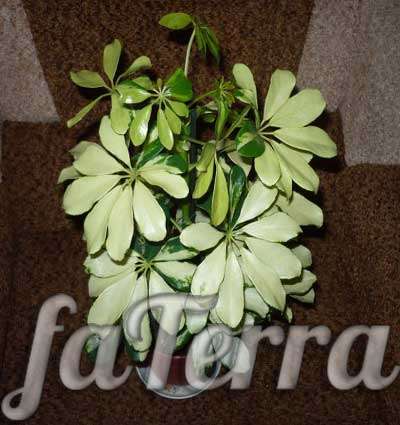
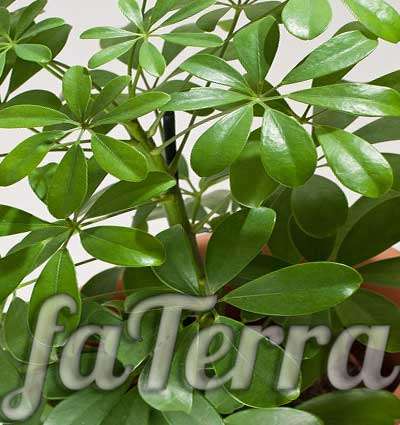
The amazing and unique structure of the schefflera leaves resembles a palm with widely spread fingers, which attracts the attention of flower lovers. Each leaf consists of 6-12 bright green, flexible, segmented plates that extend from a central point, resembling an open umbrella. Thanks to this analogy, schefflera has received a second name - umbrella tree.
Types and unique varieties of schefflera
Schefflera arboricola
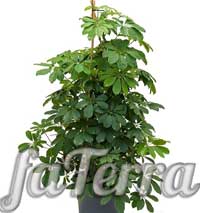 A flowering evergreen shrub that came to our country from the islands of Hainan and Taiwan. In its native habitat, the plant with an upright, branched trunk reaches a height of four meters. The leaves are complex, oval in shape, with up to nine leaf plates, with a length of up to 20 cm and a width of up to 10 cm. The young shoots of Schefflera arboricola are light green, and with age they become light brown.
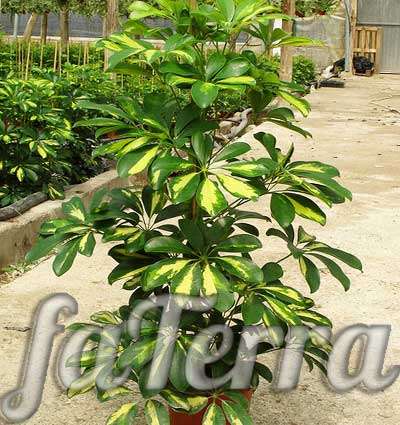
Based on this species, new varieties have been bred: Amate - has very beautiful shiny waxy leaves, is less susceptible to pests and requires less light; the Gold Capella variety has an incredible resemblance to a palm tree, with bright green leaves dotted with small yellow spots.
Schefflera actinophylla
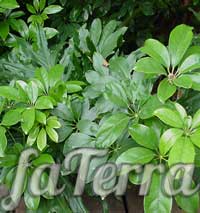 It is also called "green star". One of the most common species. In natural conditions, this single- or double-stemmed plant reaches a height of up to 15 meters. This decorative tree grows well in gardens and greenhouses in a warm, mild climate.
In home conditions, it can reach a height of 2.5 meters. On the gray-brown straight trunk, there are reddish-brown long petioles that beautifully carry bright green, shiny, large leaves. They consist of 8-15 separate leaf plates. The length of the elegant toothed leaves reaches 60 cm. Small bright red flowers form inflorescences, resulting in bunches of purple fruits.
Schefflera octophylla
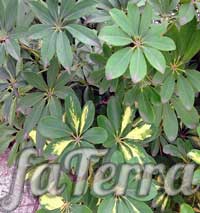 A tropical plant from the humid mixed forests of India, Japan, and China. Here, trees or shrubs of Schefflera octophylla reach a height of up to 15 meters.
Original light green rosettes with 8-11 glossy, leathery, oval leaf plates are located on creamy, thirty-centimeter petioles. The back of the leaf has a matte green color. In late autumn, the plant is decorated with inflorescences of white flowers, and by December, fruits appear.
Matches made from soft wood are in demand. Folk medicine treats colds, congestion, and injuries with a decoction of leaves and roots of Schefflera octophylla.
Schefflera Janine
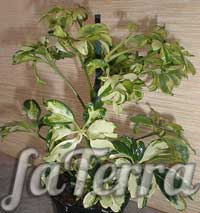 This beautiful and bright leaf beauty has become popular due to its unpretentiousness in cultivation. It grows well in the shade, retains its bright green foliage and dark, chaotically arranged contrasting stripes and specks.
Schefflera Nora
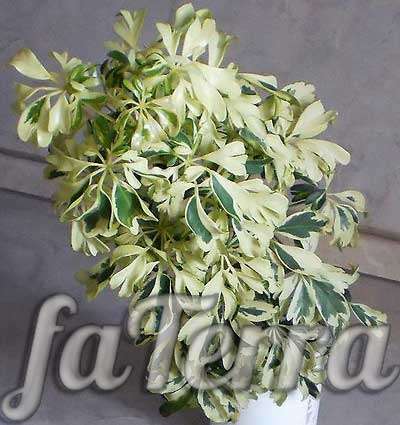
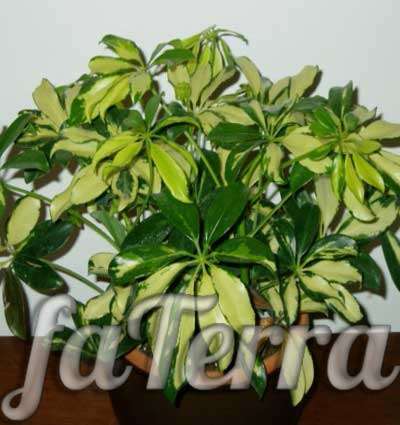
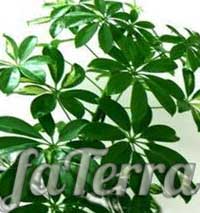 The lush foliage and unpretentiousness in care of Schefflera Nora are increasingly loved by flower growers. A lush crown of long, narrow, light olive leaves with yellow speckles can create a cozy and positive atmosphere in the home.
Schefflera Louisiana
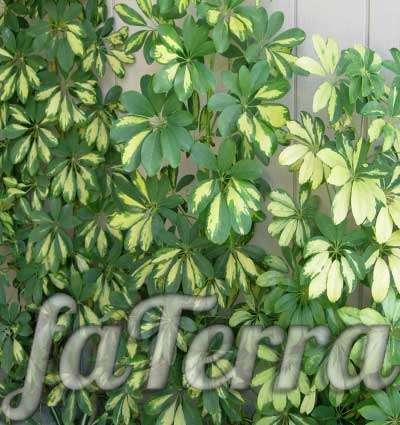
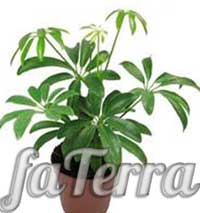 This exquisite Schefflera Louisiana is absolutely undemanding in care. It is enough to follow only the general rules of cultivation, and you can endlessly admire its decorative, openwork leaves. When placing the plant in a sunny room, its leathery, shiny leaves will become even more colorful with yellow or white speckles.
Schefflera Gerda
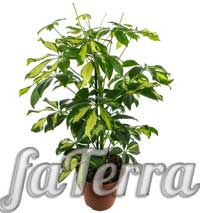 This variety does not require special care. It will feel good with diffused light and reach a height of 2.5 m. This picturesque tropical plant will be grateful for moderate soil moisture and normal room temperature of 16-20°C.
Schefflera Charlotte
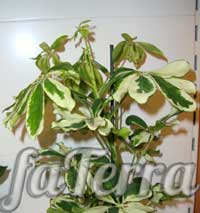 This variety was recently bred by breeders. Landscape designers decorate offices and residential premises with this beauty.
The leaves of Schefflera Charlotte have a dark green border on the outside. The back of the leaf is a darker and more saturated color.
Schefflera digitata
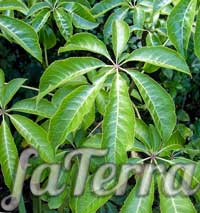 Native to the tropical forests of New Zealand, where it reaches a height of eight meters. The leaves of the plant, divided into 7-10 finger-like, soft, and thin plates with pointed ends, resemble palm leaves. Large flowers form inflorescences, resulting in edible purple fruits - a favorite treat for birds and insects.
Local residents use the sap of the plant to treat weeping sores and ulcers on the skin. In ancient times, the wood of Schefflera digitata was used to start fires. Nowadays, local residents sell souvenirs and products made from the plant to tourists.
Write comments
Comments