



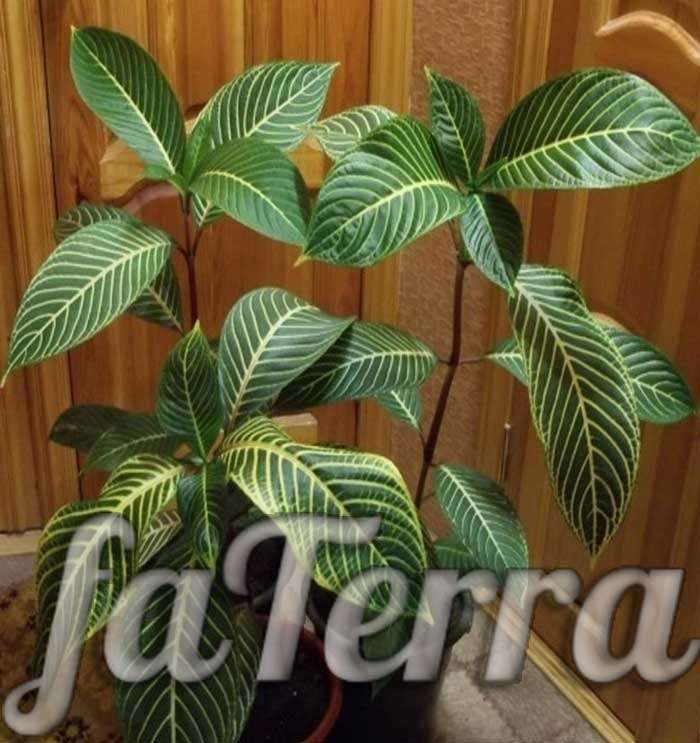
Latin name: Sanchezia
Category: flowering shrub
Native to: Southern and Central America
Interesting information about the beautiful flower Sanchezia
Sanchezia (Sanchezia) is a genus of decorative flowering plants that is a bright representative of the Acanthaceae family. In nature, there are about 60 attractive variegated flowering shrubs, herbaceous perennials, and vines. They live in equatorial forest tropical areas of Colombia, Peru, Brazil, and Ecuador. Sanchezia appeared in Europe back in the eighteenth century.
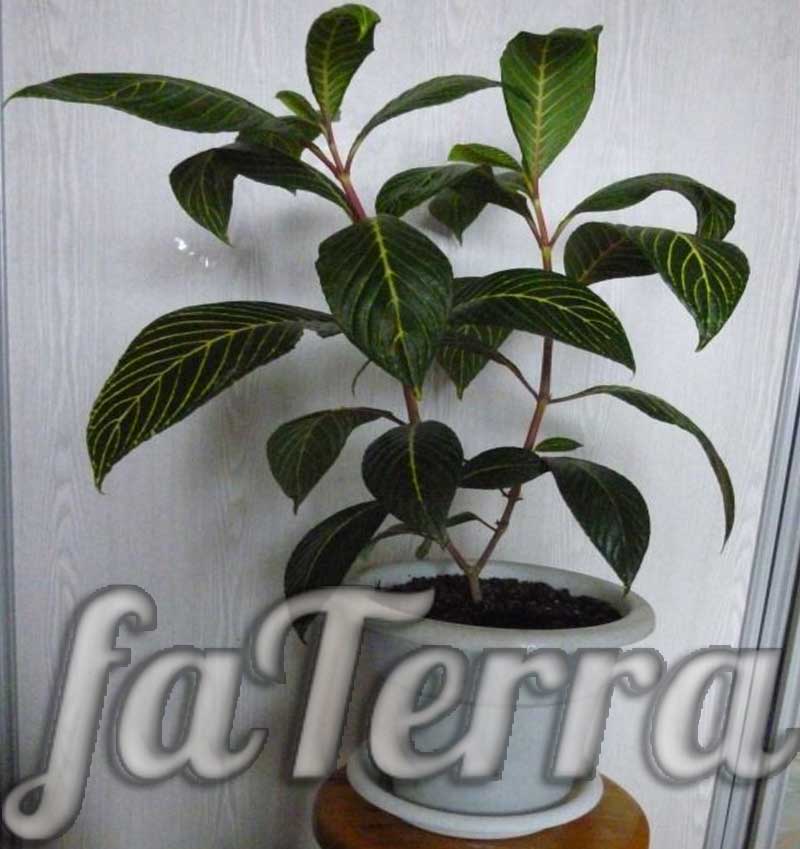
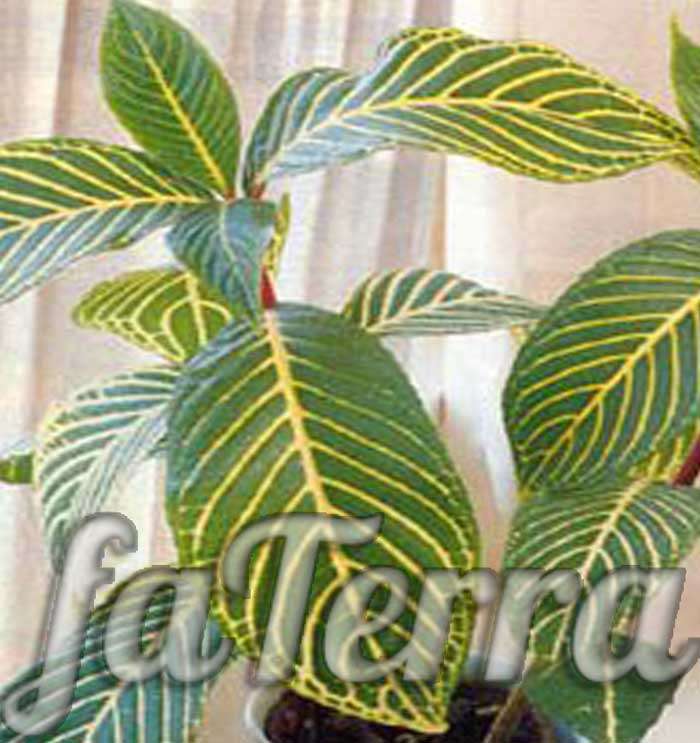
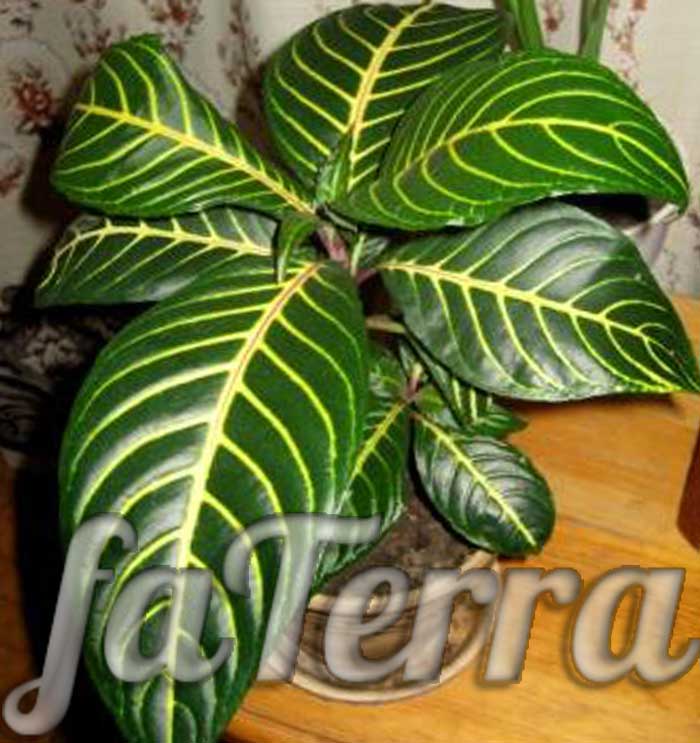
The plant is named after the Spanish botanist Jose Sanchez. Each nationality pronounces this surname in their own way. Therefore, the Sanchezia plant has many different names. We can list them: sanchezia, sanshecia, sanshezia, sanhecia, sanchecia. And all these names are correct and beautiful. Sanchezia is sometimes called "zebra" because of the extremely beautiful striped leaves, which make the plant attractive and can always decorate any interior, and it will be a find for creators of floral compositions.
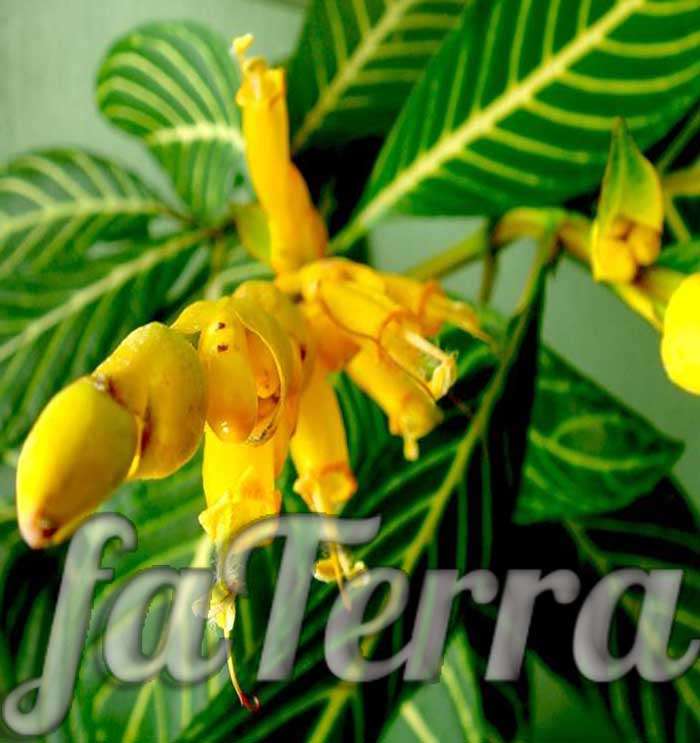
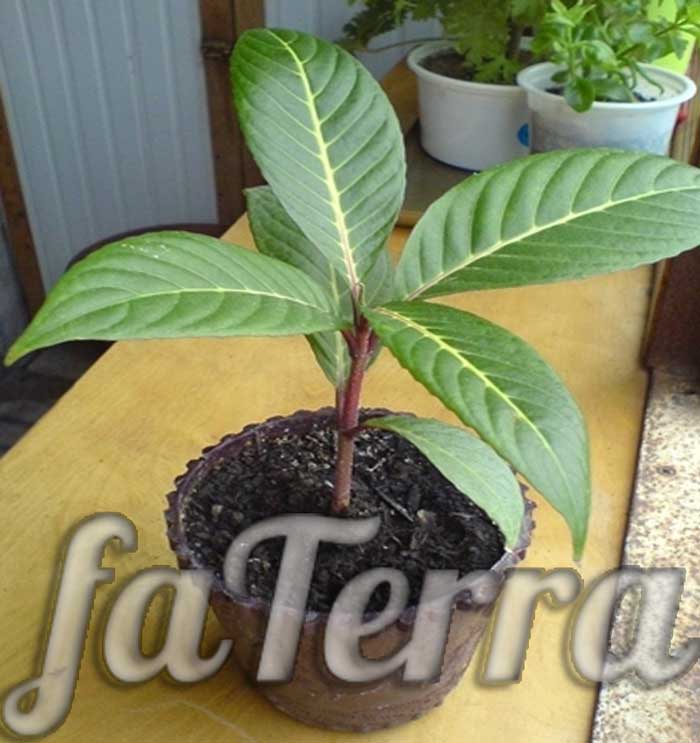
The stems of the Sanchezia semi-shrub have a rectangular shape with a pinkish-green hue, which becomes woody with age. They are decorated with magnificent leaves up to thirty centimeters long. The oval leaf blades are very bright green with picturesque silvery-white or yellowish, creamy wide veins. Thanks to these huge stripes, the Sanchezia plant can easily be confused with its relative, Acalypha, especially when the plants are not in bloom. In the spring, Sanchezia blooms with inflorescences that resemble an ear, located on decorative bracts with beautiful yellow flowers, majestically rising above the extremely attractive and daring bush. The plant grows up to one meter in height.
Types of Sanchezia
Sanchezia nobilis
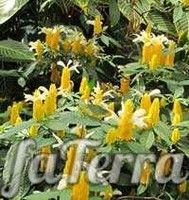 The most common and popular type of Sanchezia for indoor cultivation among flower lovers is Sanchezia nobilis, which is often called Sanchezia speciosa - an exotic representative of hot Ecuador, where it grows in humid tropical forests and foothills. An interesting fact is that in its warm and rainy homeland, Sanchezia is pollinated by small hummingbirds. As a result, a fruit is formed, and a small box emerges from which a large number of seeds fly out. From them grow herbaceous shrubs up to one meter high, which delight with their beautiful striped leaves and yellow tubular flowers up to five centimeters long.
Sanchezia nobilis is the only representative in the cultural flower industry. The height of the plant does not exceed one meter. And with proper care, you can see a bright golden bloom. Also, Sanchezia needs to be regularly pruned and pinched.
Sanchezia parvibracteata
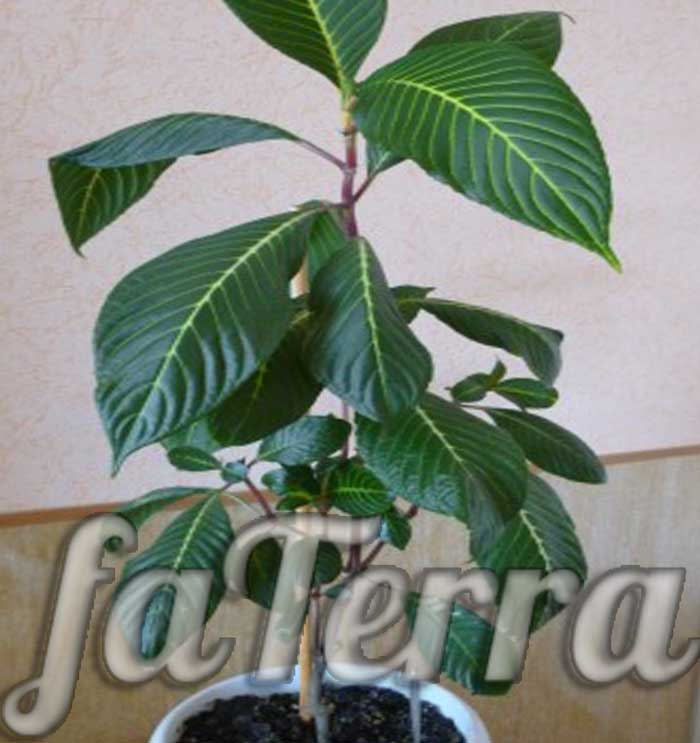
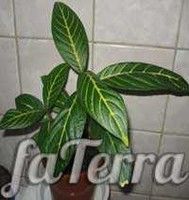 A larger variety of Sanchezia that can reach a height of two meters, and up to 80-90 cm in culture. Sanchezia is a native of the humid tropical forests of South America. The stem of the perennial shrub is reddish, the leaves are wide and elliptical, and the midrib is also reddish. The flowers are collected in small cymes, smaller in size than in Sanchezia nobilis, and the bracts are small.
Sanchezia nobilis glaucophylla
 This species of Sanchezia is native to Brazil. This is a beautiful and unusual exotic plant with original blue-green leaves. Along the veins of the leaf blade are light yellow and golden yellow original spots.
Sanchezia, care in home conditions
The Sanchezia flower is a typical inhabitant of the tropics. And despite its delicate nature, Sanchezia easily adapts to life in apartments and offices. This plant is very undemanding. Caring for Sanchezia does not require much effort. And like any living thing, Sanchezia needs attention and certain rules of care, so that the plant's life does not become a test. Moreover, these rules for growing are absolutely not different from the requirements that are предъявляются to other tropical plants.
Choosing a location
The best places for Sanchezia are east or west-facing windowsills. This is what Sanchezia loves, namely, diffused bright light. You can, of course, place the plant near a south-facing window, but be sure to shade it from the bright sun. After all, only with sufficient lighting will a beautiful, bright, compact plant grow.
Sanchezia will feel great if there is a humid gravel or pebbles in the tray under the pot.
After all, Sanchezia, like Jacobinia, requires a high level of humidity. Pay special attention in the winter when heaters are on. Don't be lazy to regularly spray the plant. Although, compared to other plants, Sanchezia is less demanding of humidity than, for example, Calathea.
Temperature regime
The Sanchezia flower loves warmth. And so that your beauty pleases you, try to maintain an optimal temperature of 18°C to 25°C all year round. In winter, adjust the temperature to no lower than 15°C. It does not tolerate drafts.
Watering
Proper watering is the key to successful growing of Sanchezia.
Water regularly and abundantly. The soil must always be moist.
Excessive watering is harmful.
Especially in the cold season, excessive moisture can cause root and shoot rot.
Soil
It grows well in a mixture of equal parts: peat, leaf soil, sand, and perlite. Do not use heavy soil mixtures. Good drainage is essential.
Feeding
During the growing season, fertilize Sanchezia twice a month with balanced fertilizers, but preferably with a low percentage of nitrogen, so that the leaves do not become pale and monochromatic. It is also allowed to alternate organic and mineral fertilizers. In winter, if the plant is dormant, do not fertilize, but if it is growing actively, you can apply fertilizer once every two months.
Watering and pruning
It is necessary to often spray Sanchezia. You can limit yourself to wiping the leaves with a damp cloth.
Pruning the plant is one of the main aspects of care. Sanchezia grows quickly and becomes a giant. Annual spring pruning to two-thirds of the length is necessary, but the leaves will already be smaller, and as it grows, you need to pinch the shoots. Pruning is done at your discretion, depending on what kind of Sanchezia you want to have - flowering, compact, or with large leaves.
How to transplant Sanchezia?
Transplant the plant annually in the summer into a larger pot, trying to cause minimal damage to the root system. After all, the large leaves of Sanchezia require a lot of moisture. After transplanting, it is not recommended to place the plant near the window.
Sanchezia propagation
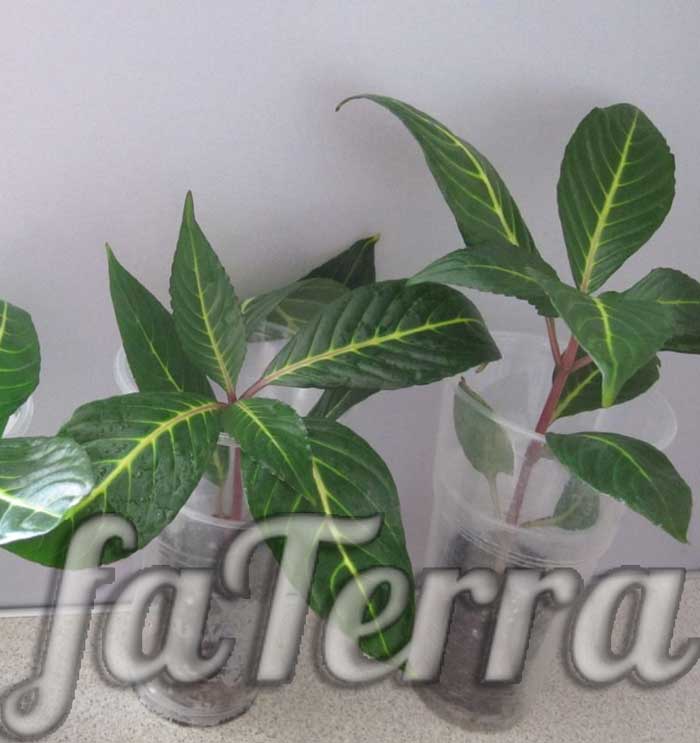
It is easy to propagate Sanchezia by stem cuttings, which must first be treated with rooting hormone. Cover the cuttings with a plastic bag. Remove the large leaves. The desired temperature for rooting is 25°C, and bottom heating is required. After three weeks, the cuttings will take root. They need to be planted in a larger pot. The roots of Sanchezia grow quickly, along with the above-ground part of the plant.
Pests and diseases of Sanchezia
Normal care and good conditions are the key to the fact that pests will never attack Sanchezia. However, Sanchezia can be affected by scale insects and aphids. The appearance of scales and sticky deposits on the leaves may indicate this problem. If a white coating appears, it is mealybugs or spider mites. If pests are found, the plant should be sprayed, washed, and then treated with chemical preparations.
Caring for indoor plants is a painstaking activity, but it brings a lot of joy, pleasure, lifts the mood and vitality.
Overcoming difficulties in growing:
- Sanchezia sheds its leaves after being moved from one place to another. The plant is afraid of drafts, cold, strong heat, watering with cold water, or prolonged lack of watering. The natural process of aging can also be the cause of leaf fall.
- The tips of the leaves dry out - too dry air;
- Brown spots on the leaves - possible sunburn;
- The leaves become smaller, the stripes disappear - insufficient nutrients, the plant needs to be fertilized;
- The leaves turn black - excessive watering, which can cause root and shoot rot.
Indoor plant names, photos will always gladly help you in finding the right plant for you.
Write comments
Comments