



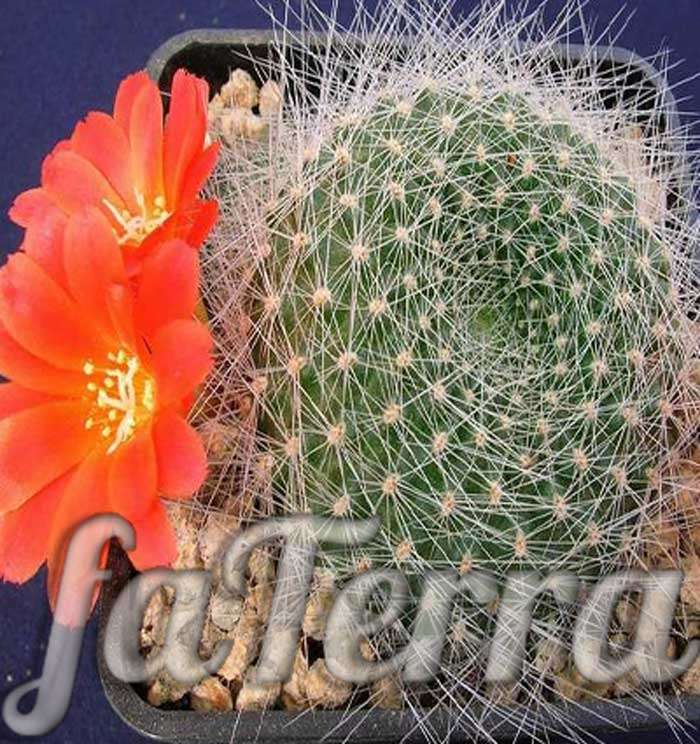
Latin name: Rebutia
Category: perennial stem succulents
Origin: Argentina, Bolivia, subtropics and tropics of South America
Unpretentious Rebutia - a cactus with charming flowers
Rebutia (Rebutia) is not only attractive due to its beautiful name but also due to the charming appearance of this beautifully flowering South American spherical cactus, covered with thorns. More than 40 species of plants are united in the genus Rebutia and decorate the Cactus family with their presence.
The homeland of the Rebutia cactus is considered to be Argentina, its northwestern part, as well as Bolivia, where these stem succulents grow among rocks and their crevices in high-altitude areas exceeding 3000 m above sea level.
The genus Rebutia was named after Karl Moritz Schumann, a professor of botany and curator of the Berlin Botanical Garden, in honor of Pierre Rebut, a French garden owner and competent cactus specialist.
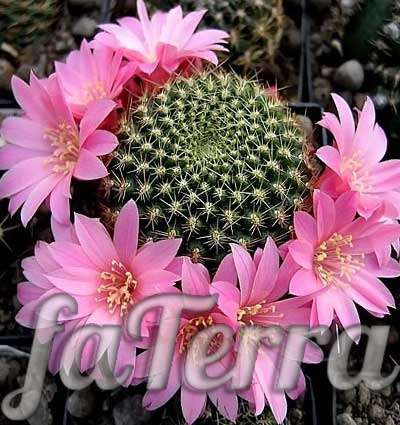
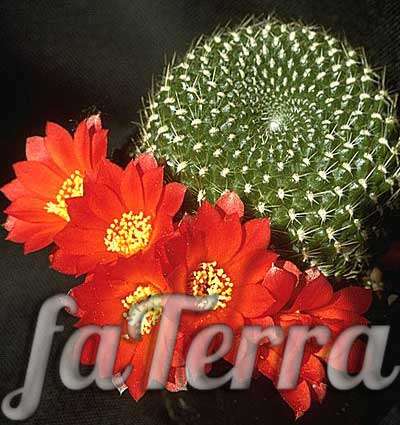
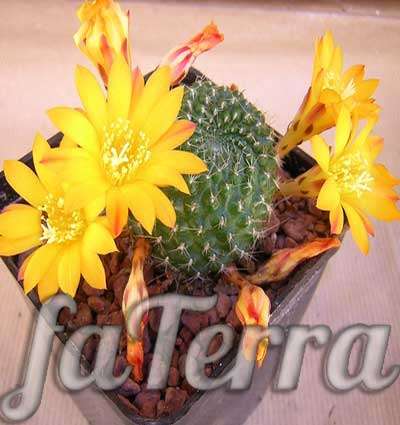
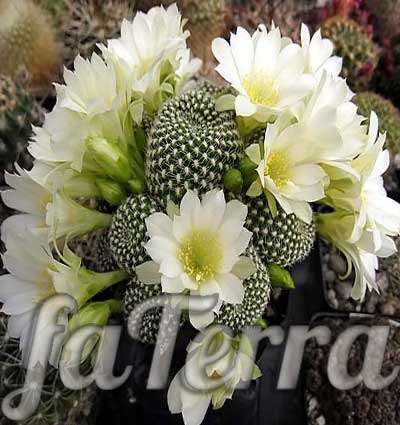
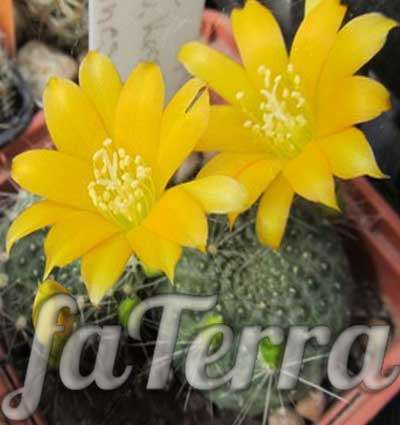
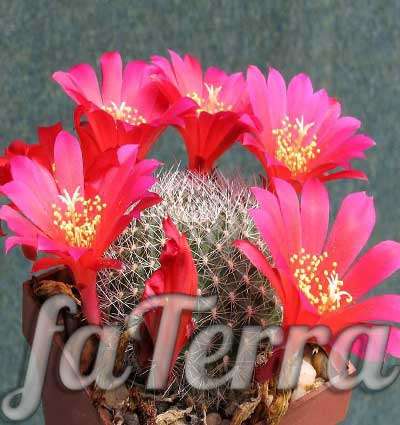
It is not difficult to grow a Rebutia cactus as a houseplant. These are ideal, unpretentious indoor plants that have a small size with spherical, ribbed stems, completely covered with short and stiff thorns of silvery or yellowish color. The unusual beauty of these indoor Rebutia flowers is a wonder. These pots delight with their beauty with the onset of warm summer. On a small peduncle that appears near the base of the ball, small, funnel-shaped flowers up to three centimeters in diameter bloom. Glossy petals of cream, purple, red, and pink colors are arranged around the core with long yellow stamens and delight the eye of those around them on sunny days. In the evening, the flowers close.
The minimum flowering period is two days.
Types of cacti
Rebutia miniscula
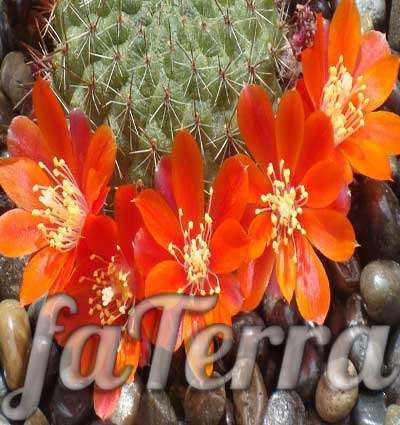
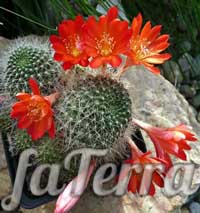 A beautiful miniature cactus from Argentina. This species is very common in cultivation. Rebutia miniscula has the appearance of a five-centimeter light green ball with spiral tubercles on its surface. These whimsical stems are covered with numerous thorns, which have a white, silvery, brown, or golden hue. And in June, red, tubular flowers up to 4 cm in diameter bloom on these globes. As a result, red berries appear, which burst, and the seeds scatter, giving life to small, very tenacious Rebutias in microscopic thorns.
Rebutia pygmaea
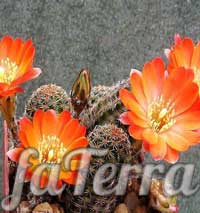 The dark green stem of this cactus has the shape of an oval or cylinder. It is all covered with thorns and reaches up to 4 cm in height. A large number of offspring create colonies of small Rebutias with roots similar to turnips. Special beauty can be seen during the flowering period of Rebutia pygmaea, which falls at the end of spring or the beginning of summer. The base of the cactus is covered with large, tubular flowers with pink or reddish petals, delighting the eye with its elegance.
Rebutia krainziana
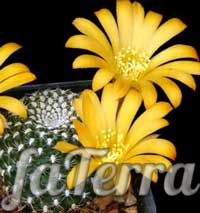 A very original-looking Rebutia. It grows as a single, large, spherical, dark green stem. Tubercles cover the surface of the cactus. Thorns of white or silvery hue grow from them. The flowers are bright red or white with twisted petals and usually face one side of the stem. This variety of pots should be shaded from bright sunlight.
Rebutia canigueralii
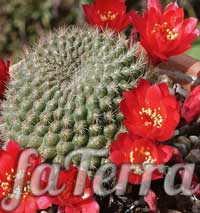 A very well-known and popular cactus among flower growers with a spherical, branched stem covered with long black or golden thorns. A wreath of small, dark pink flowers adorns the top of the stem. This is the most drought-resistant species.
Rebutia deminuta
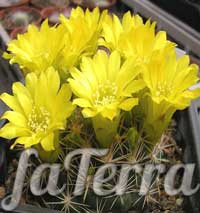 The native land of Rebutia deminuta is Argentina.
Short, stiff, brown thorns cover the spherical stem. Bright red and orange friendly flowers signal the arrival of summer. Rebutia deminuta is a plant that loves the sun.
It is desirable to spend the winter period in a cool place and without watering.
Rebutia muscula
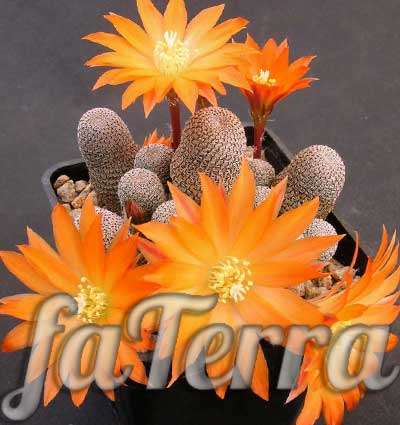
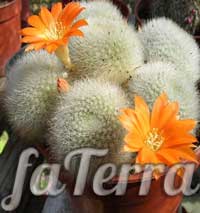 The cactus has a small stem, about four centimeters in diameter. It is all covered with white, soft, thin, and very dense thorns. It blooms beautifully with orange, tubular flowers. It prefers south-facing windows, sunny balconies, and bright summer greenhouses.
Rebutia senilis
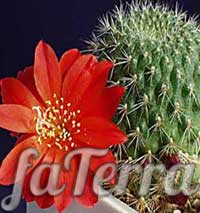 A beautiful species of cactus from northern Argentina.
In Rebutia senilis, the diameter of the stem reaches seven centimeters, and the height is 8 cm. The spherical succulent is green in color, and its surface is covered with white, bristle-like thorns up to three centimeters long. In early spring, bright red flowers with a white center appear. Their size reaches up to three centimeters.
How to care for a Rebutia cactus at home?
Rebutia is an absolutely unpretentious plant and does not require special knowledge of care. But it should not be completely neglected.
In nature, Rebutia grows in conditions of infrequent precipitation in winter, moderate temperatures, low humidity, and excellent lighting.
Care for indoor plants should be as close as possible to natural conditions, and it is necessary to provide fresh air and a cool winter.
Choosing a place
The ideal place for a light-loving Rebutia will be a window facing south-east and south-west. In summer, the plant will feel good in the open air. Glazed balconies and loggias can be a permanent place of residence for Rebutias.
Temperature regime
A comfortable temperature for Rebutia is in the range of 18°C to 25°C. It is necessary to organize a smooth transition to winter conditions with a temperature of 6-10°C.
Humidity and watering
Rebutia cacti are positive about dry air, but they will not refuse morning spraying in summer. This procedure will clean the plant of accumulated dust.
Watering should be moderate, and it is necessary to constantly monitor the condition of the substrate, which should be slightly dry.
Feeding
Feed the plant as needed in the warm season no more than once a month. The best fertilizer will be fertilizer for cacti.
Soil
The substrate should be light for good air and water permeability. Such a mixture for cacti and succulents is available for sale. It will also grow well in a self-prepared mixture: leaf and sod soil plus sand. Take all ingredients in equal quantities.
Repotting Rebutia
Repot the plant as the roots fill the pot or when the offspring grow, when the pot becomes too small for them. Repot young Rebutias annually, and adults every three years. The pots should be wide, shallow, and, of course, with a hole. Good drainage is necessary. The soil should be dry during repotting. Water the plant in about seven days.
Propagation
To propagate Rebutia, you can use seeds or lateral shoots that grow on the adult stem.
Pests and diseases
Pests rarely affect the Rebutia cactus. Sometimes, red spider mites, scale insects, or mealybugs appear. Treat immediately with a 0.15% solution of Aktellik. Preventive measures can prevent these unpleasant things. It is necessary to regularly inspect the plant, wipe it with a cotton swab dipped in alcohol, lower the temperature, and reduce watering.
Rebutia flowering
Caring for cacti is not burdensome. But to get a plant that blooms actively, profusely, and beautifully, you need to know what indoor Rebutia plants want. It's very simple:
- Plenty of intense, bright, pleasant sunlight in summer.
- The winter temperature should not exceed 10°C.
- Cactus substrate, mandatory drainage.
- Moderate watering throughout the year, infrequent in autumn, and no watering in winter.
Difficulties in growing
- The stem stretches out - the plant lacks light, and in winter it is too warm.
- The plant does not grow - it needs feeding, insufficient watering in summer, and overwatering in winter.
- Brown spotting - sunburn.
Caring for indoor plants is a very laborious and interesting job. It must be done conscientiously. And green friends will reward you with their beauty and picturesqueness.
Write comments
Comments