



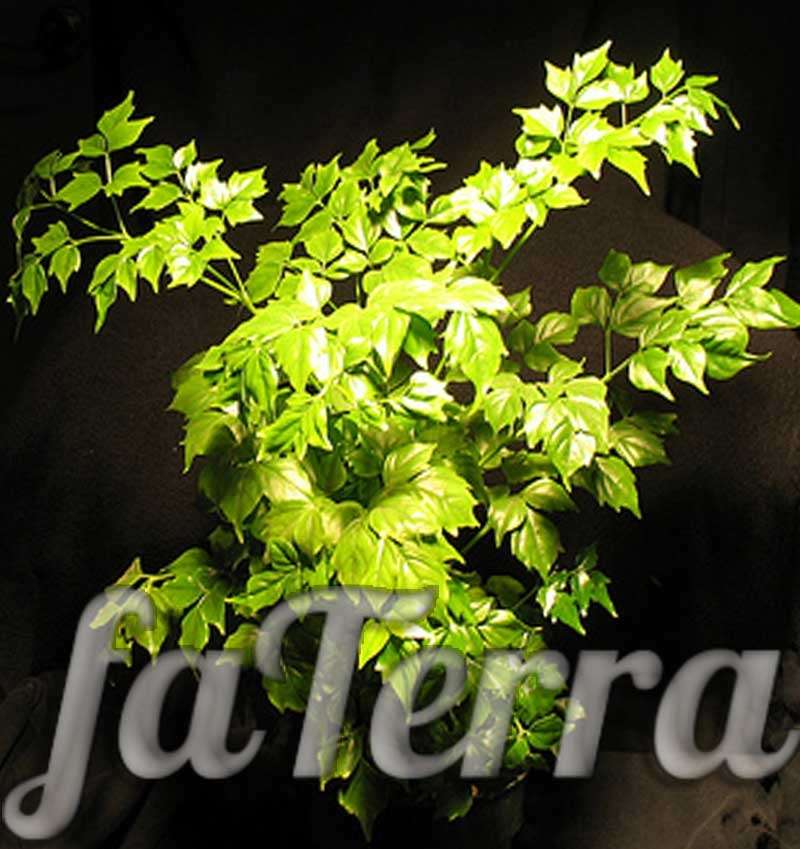
Latin name: Radermachera
Category: evergreen trees and shrubs
Family: Bignonaceae
Native to: Southeastern Asia
Original brief description of an undemanding Radermachera
The genus Radermachera includes about sixteen species, and they are included in the Bignonaceae family. Radermachera is named after the botany enthusiast from the Netherlands, Jacob Radermacher. There was another interesting name for this tree, but unfortunately, it did not become widely known - Stereospermum sinicum. The native habitat of this unusual tree can be considered Southeastern China, the island of Taiwan, from where it was brought to the second half of the twentieth century. The flower of Radermachera has become one of the most beloved indoor plants due to its undemanding nature and ease of cultivation.
Due to its unusual leaf beauty, Radermachera is often called the "emerald tree" (Emerrald Tree). Other interesting names for this wonderful, branching plant in indoor conditions include Serpent Tree and China Doll.
Many species of Radermachera in this small genus are huge trees that reach a height of thirty meters with trunks about one meter in diameter. In the wild or in greenhouse conditions, large, yellowish, whitish, or gray-yellow flowers, resembling bells, bloom beautifully on Radermachera only at night, reaching a diameter of seven centimeters. This exotic plant has a pleasant aroma similar to carnation flowers. Interestingly, you can only see a flowering Radermachera in natural, wild conditions.
An indoor plant may only bloom after fifteen years, and even then, it is not very common.
Radermachera sinica
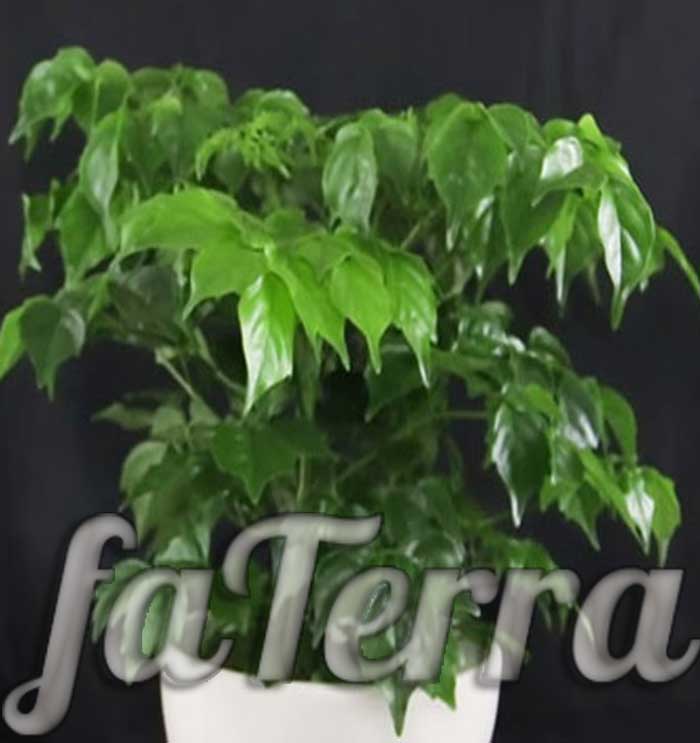
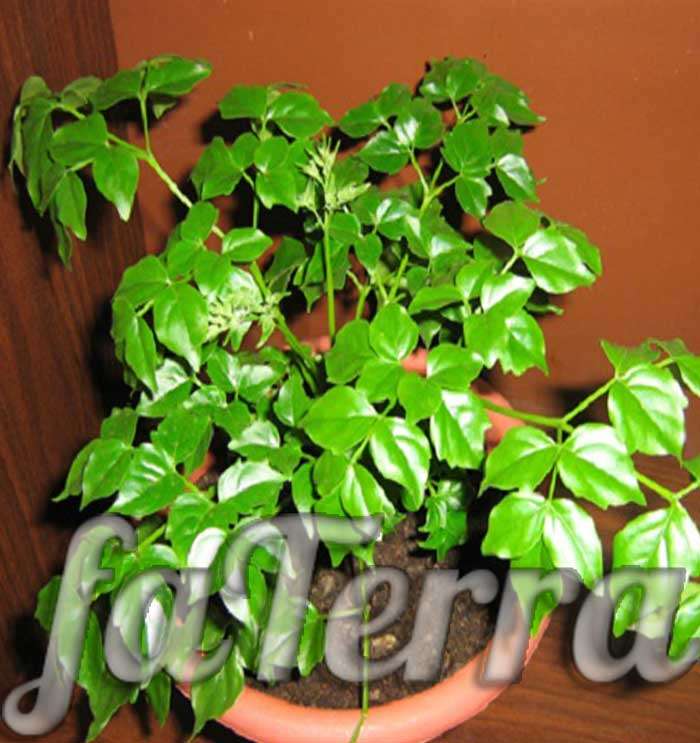
 One of the only species of this Chinese flower that has become widespread is Radermachera, which has recently appeared in flower shops. The Radermachera plant is a small tree or a branching shrub. An indoor Radermachera plant can reach a height of up to two meters with rapid growth. Numerous slightly drooping branches grow from the straight, even trunk, densely covered with glossy leaves. It is the original, complex, pinnate, smooth, and small leaves, toothed along the edges, green or dark green, that give this large flower an unusual beauty and attractiveness. A well-formed, lush crown will depend on the care and growing conditions of the Radermachera.
Radermachera care at home
How to care for Radermachera? In short, you can say that Radermachera is undemanding to grow and grows very quickly.
Since Radermachera is a plant of mountainous regions, it does not need to be watered often, and it is not allowed to have water stagnation in the substrate, but it should not be overdried either.
The Radermachera flower requires regular and proper pruning, which can help achieve a more lush and branched crown. It is important to remember that Radermachera does not like the smell of tobacco smoke and soot. It is not necessary to place Radermachera in the kitchen. Now let's take a closer look at all the points of plant care.
Location
Radermachera, like all flowers, requires careful and high-quality care. It is desirable to provide bright, diffused light, but protect it from direct, bright sunlight. A lack of light will immediately affect the beauty of the leaves. The leaves will become small and pale. The most optimal option for Radermachera is windows facing east or west. If there is not enough light, the tree may stretch and turn into a vine. It is necessary to rotate the plant around its axis to avoid deformation of the crown.
Temperature
It is necessary to choose the right place for your exotic plant. Constantly monitor the optimal temperature: in the summer, it is desirable to have 20-25 degrees, and in the winter, it is necessary to maintain 15-18 degrees for Radermachera, but not lower than 14 degrees. The Radermachera flower loves fresh air, so it is necessary to ventilate the room where the plant is located frequently. It is important to remember that Radermachera is afraid of drafts.
Air humidity
It is not desirable to keep Radermachera in a too dry atmosphere. Spray it periodically with filtered, soft water to avoid spots on the glossy leaves. You can place the pot with the plant on a tray with wet pebbles, but do not place the bottom of the pot in water. In the summer, you can pamper Radermachera with a cool shower.
Fertilization
Feed your Radermachera during the active growing season, from spring to autumn, with complex fertilizers for indoor flowers, or with universal preparations. The procedure can be performed after watering to avoid burning the roots of the flower. The frequency of fertilization can be every two weeks. It is not necessary to fertilize during the winter.
Radermachera transplant
To maintain a fresh soil lump, young Radermachera plants should be transplanted every spring, and adult flowers every two or three years. The pots for transplanting should be 2-4 cm larger in diameter than the previous ones. It will grow well in fertilized soil consisting of one part of turf, leaf, and humus soil, and half as much sand and peat. Good drainage is essential.
How to propagate Radermachera?
It can be propagated by seeds, cuttings, and cuttings. In the spring, seeds are sown in a tray with fertilized soil. Sprinkle the seeds with soil and cover with foil or glass to create a greenhouse effect. Sprouts appear two weeks later. They need to be transplanted into small pots, you can plant several seedlings in one pot.
Most often, Radermachera is propagated by cuttings. Beautiful, fresh, cut top cuttings, no more than 15 cm long, are rooted in a sandy-peat mixture. It is necessary to create greenhouse conditions using glass or polyethylene film. The main thing is to maintain an optimal temperature of +22 to +25 degrees with periodic ventilation and spraying.
In some cases, Radermachera is propagated by cuttings. Make an incision on the stem, wrap it with moist moss and cellophane. Constantly maintain moisture and wait for the roots to appear. Cut the cutting when the cellophane is filled with roots and plant it in a separate pot, about 15 cm in diameter.
Radermachera pests and diseases
Most often, Radermachera can be affected by scale insects, aphids, and spider mites. To prevent pests from attacking the plant, it is necessary to regularly inspect it and admire it. If such a case occurs and pests appear, it is necessary to take action to eliminate them immediately. The simplest way to fight aphids and scale insects is to wash the plant with a soapy solution. If there are many pests, it is necessary to use insecticidal preparations.
In case of severe infestation, it is necessary to use insecticides immediately.
Problems that have arisen during plant cultivation:
- Radermachera drops its leaves - too frequent watering, reduce the frequency.
- Radermachera drops and yellows its leaves - it may be an attack of pests. Take action to eliminate them immediately. Lack of light can also be the cause of this phenomenon.
- The tips of the leaves dry out - it may be too dry air and too bright light.
- The plant stretches and the leaves become small and dull - it may be a lack of light, it is necessary to place the flower near the window, it is necessary to lower the air temperature and feed the plant with fertilizers.
- Weak shoots - Radermachera lacks light and it is necessary to feed the plant.
You can buy Radermachera in flower shops. This beautiful exotic plant can decorate offices, summer areas, kindergartens, and you can see it on the streets, in gardens, and squares in the summer months. At home, you can admire the beauty and attractiveness of your favorite plant all year round with proper care. It is necessary to devote a piece of love, attention, and a good mood, and you will be provided with a pleasant communication with the plant. Good luck to you!

Write comments
Comments