



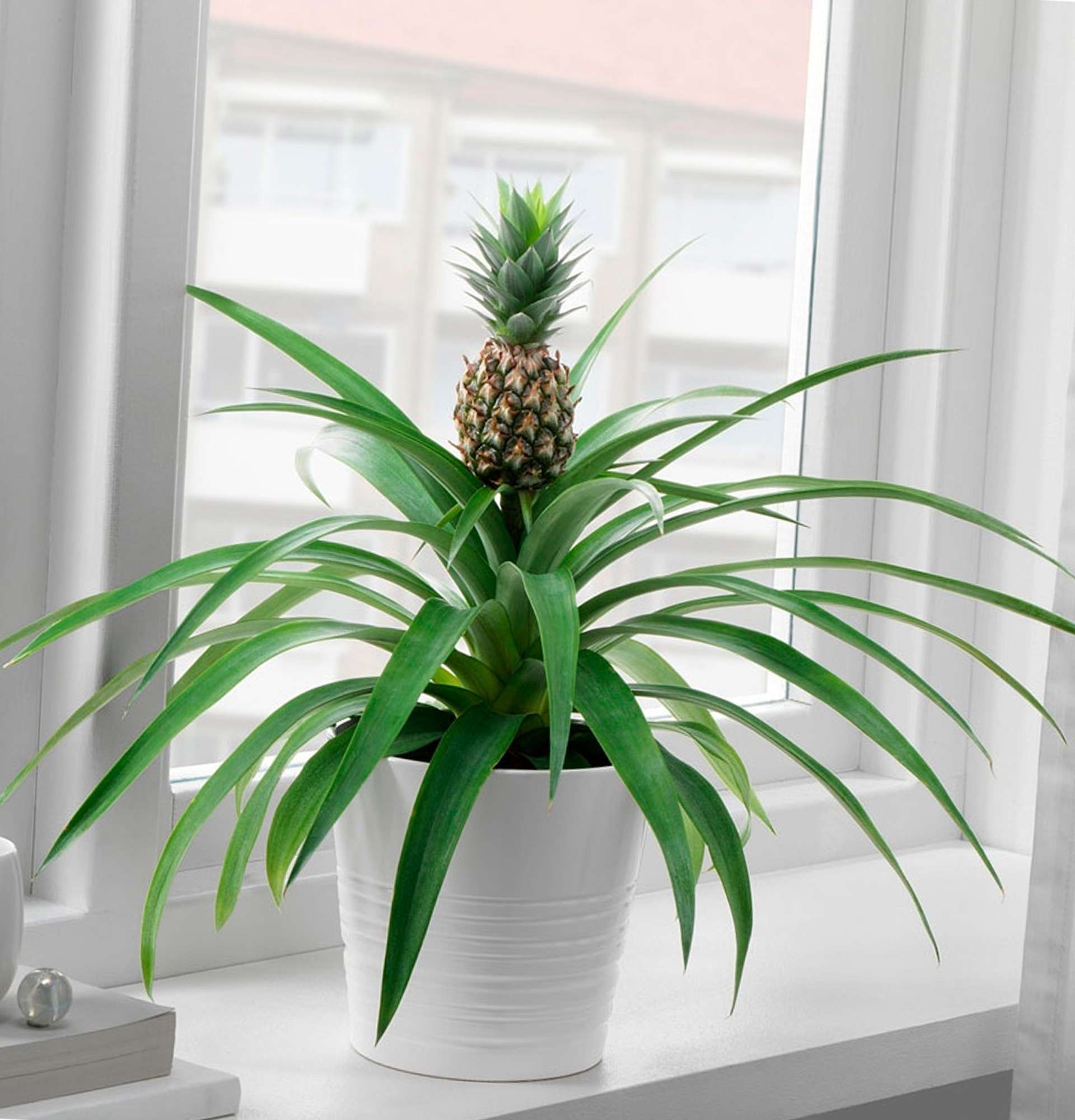
Latin name: Ananas
Category: epiphytic herbaceous plants
Origin: Eastern Brazil
Pineapple - king of exotic fruits, brief information
Pineapple (Ananas) is a genus of beautifully flowering and drought-resistant plants belonging to the Bromeliaceae family.
Its origin is the dry Brazilian highlands, where six species of pineapple are found. The beginning of Europeans' acquaintance with pineapple is considered to be the end of the 15th century, during the discovery of the American continent by Christopher Columbus. He was the first to taste this exotic delicacy, calling it a pine cone with an apple flavor. Hence comes the English name for this tropical guest - Pineapple - apple of the pine. The local Indians called the fruit "ana-ana", which means "scent of scents". Thus, the scientific name of the "king of scents" - Ananas, was established in 1753 by Carl Linnaeus, a Swedish scientist and botanist.
In the second half of the 17th century, Europe saw pineapple with its own eyes. It was grown in greenhouses and conservatories, and the pineapple amazed with its unusual "cones". If desired, it is possible to grow pineapple in the homes of ordinary lovers of exotic plants.
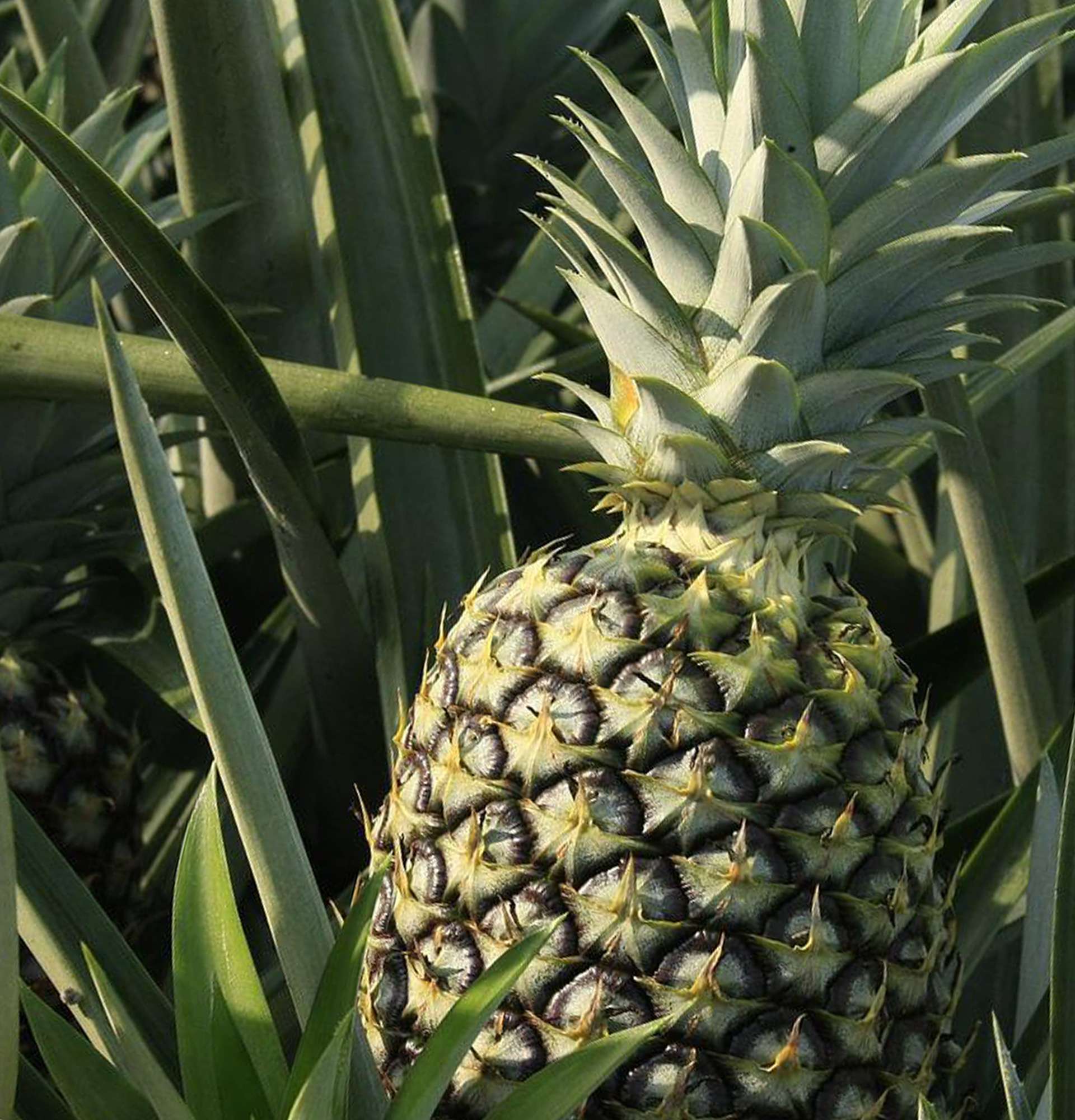
Pineapple is a terrestrial perennial shrub with a short stem, having an original dense rosette and extremely juicy, sweet, and slightly spicy fruits.
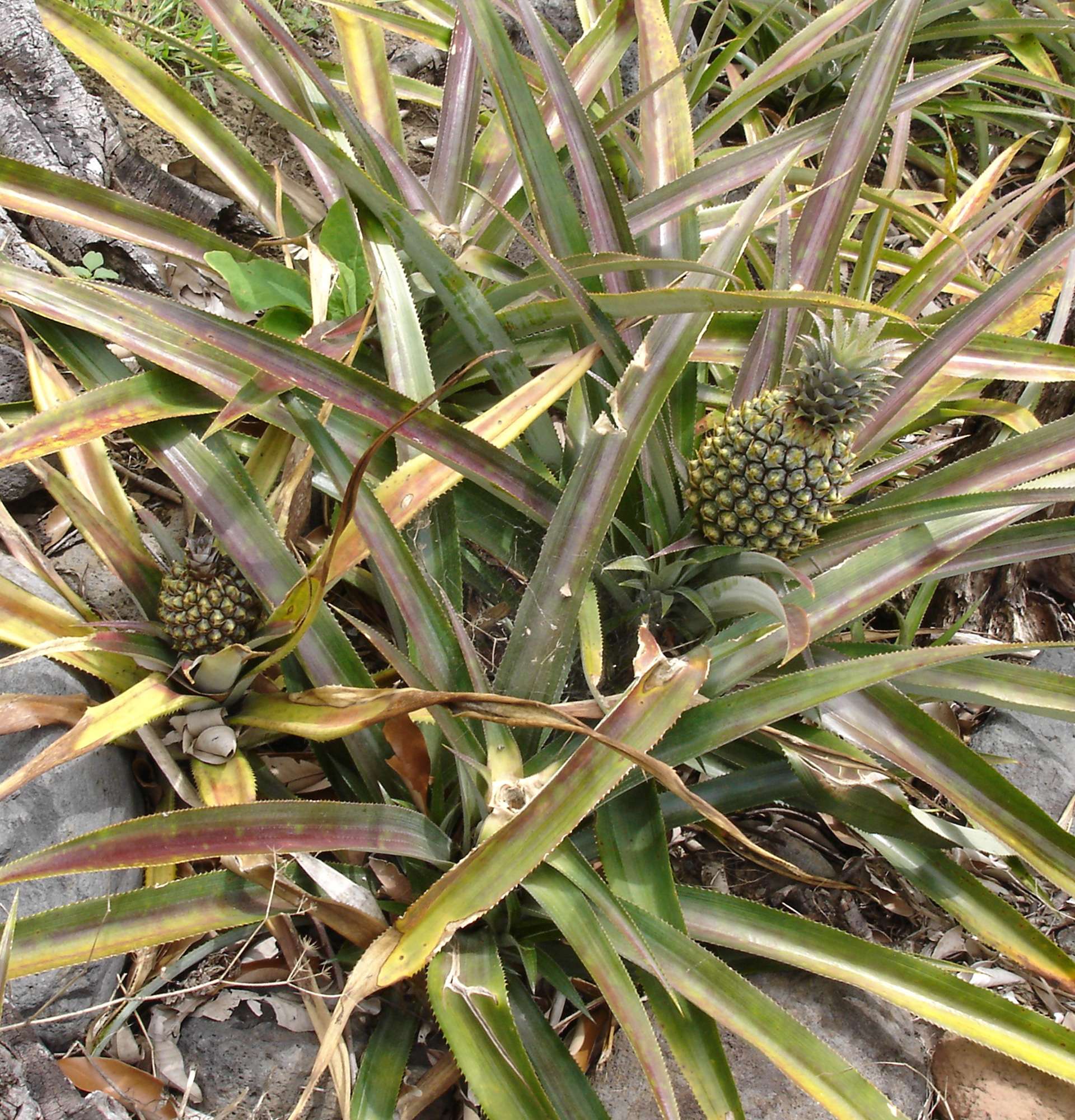
The leaves are stiff and strong, sword-shaped, succulent, with edges having strong straight or curved thorns, exceeding a meter in length, and about six centimeters in width. A fully formed plant can reach a meter in height and about two meters in width. A unique function of pineapple leaves, like that of agave, is the accumulation and retention of moisture by the plant's cells, which allows it to survive for a long period in areas with a dry climate.
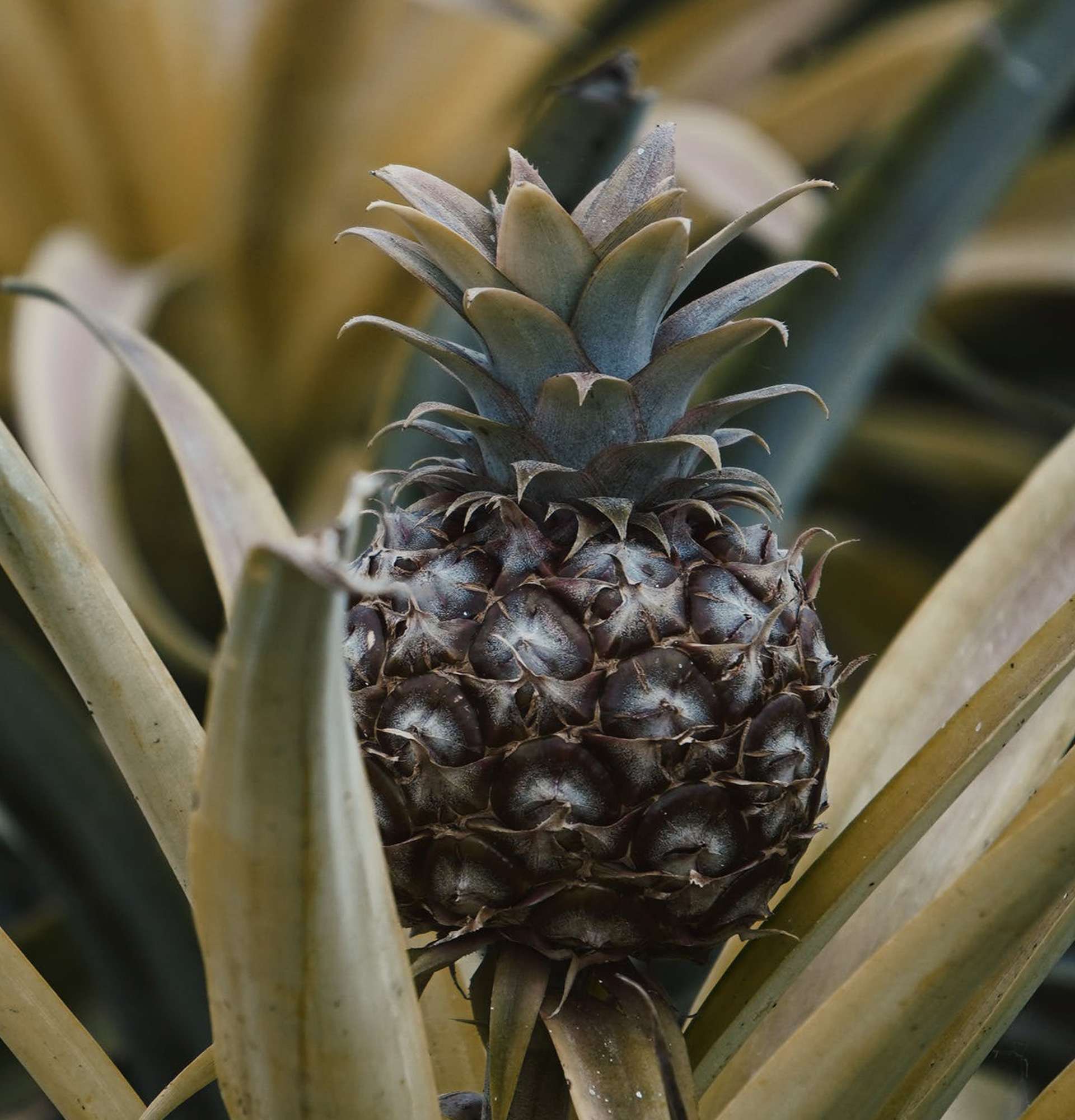
The basal rosette serves as a platform for the formation of a short stem. It is continued by a sixty-centimeter flower stalk with a spike-shaped inflorescence. It is formed by hundreds of white-green or purple unattractive flowers, hidden in red or green bracts, which form a "sultan" rosette during growth. The culmination of the five-month flowering is the appearance of a dense, tasty, fleshy, yellow-golden inflorescence - a "cone".
Types of pineapple
Large-crested pineapple (Ananas comosus)
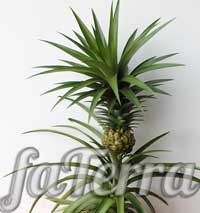 It is also called crested or true. This is the most valuable fruit-bearing, terrestrial species of Brazilian pineapple. The leading producers of pineapples are the Hawaiian Islands, followed by Thailand, the Philippines, Brazil, and Costa Rica. In Taiwan and the Philippines, tough pineapple leaves are used to make spinning fibers.
In open areas, adult plants exceed a meter in height, and they grow the tasty fruits that we are familiar with. In home conditions, there are many varieties and species of compact-sized pineapples.
Bract pineapple (Ananas bracteatus)
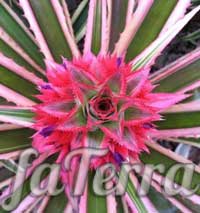 It is well adapted to the climate of Brazil, Paraguay, Bolivia, Ecuador, and Argentina. It is a very beautiful species of pineapple with almost meter-long, curved, bright green leaves with yellow and white stripes. The leaves turn pink or red in sunlight. A variety of the tricolor form - Ananas bracteatus tricolor, which is considered a very popular indoor flower, can even produce edible fruits in an apartment.
Shiny pineapple (Ananas lucidus)
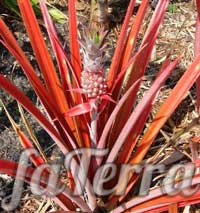 This variety of pineapple, which has bright, decorative, thornless, up to one meter long leaves, grows in Ecuador, Peru, Venezuela, Colombia, Guyana, and northern Brazil. The wide range of colors of the leaves, from reddish-orange to brown to green, makes the plant particularly effective. The flowering purple inflorescence attracts many flowers. The fruits are small in size, 12 cm long and 5 cm wide, and are inedible because the pulp is not tasty.
Dwarf pineapple (Ananas nanus)
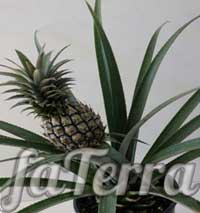 This miniature pineapple has leaves that reach 30 cm in length. It does not differ in edible qualities. Like other indoor flowers in the interior, dwarf pineapple can be a wonderful representative that will bring more comfort, warmth, and positive emotions to any room with its decorativeness and beauty. Floral arrangements with its participation will be charming.
Paraguayan pineapple (Ananas parguazensis)
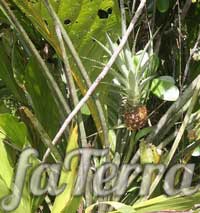 This is a rare species of pineapple. It is found in the territories of South America. The plant has soft leaves that form magnificent sultans above small fruits. It has no commercial interest.
Pineapple care in the home
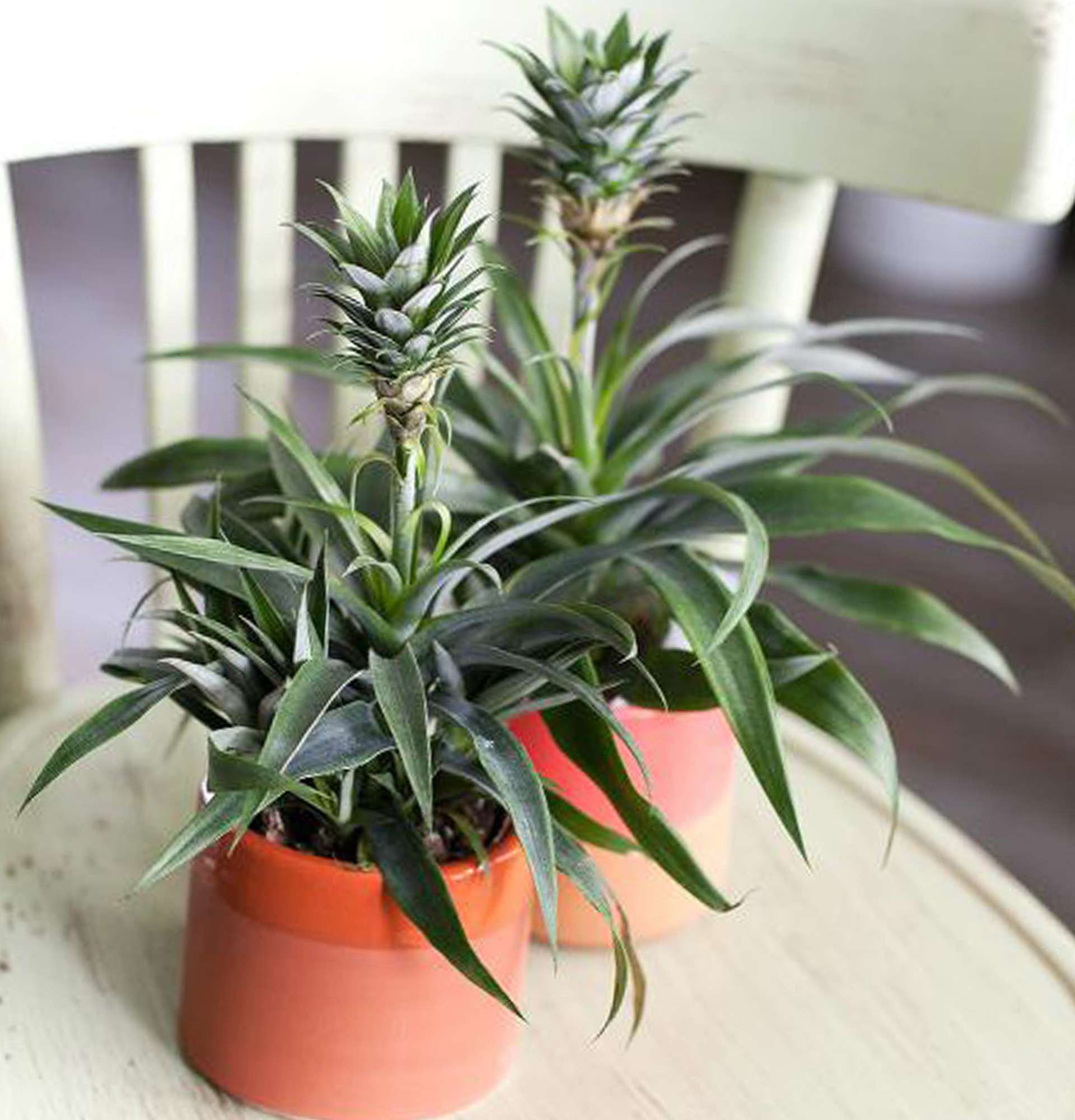
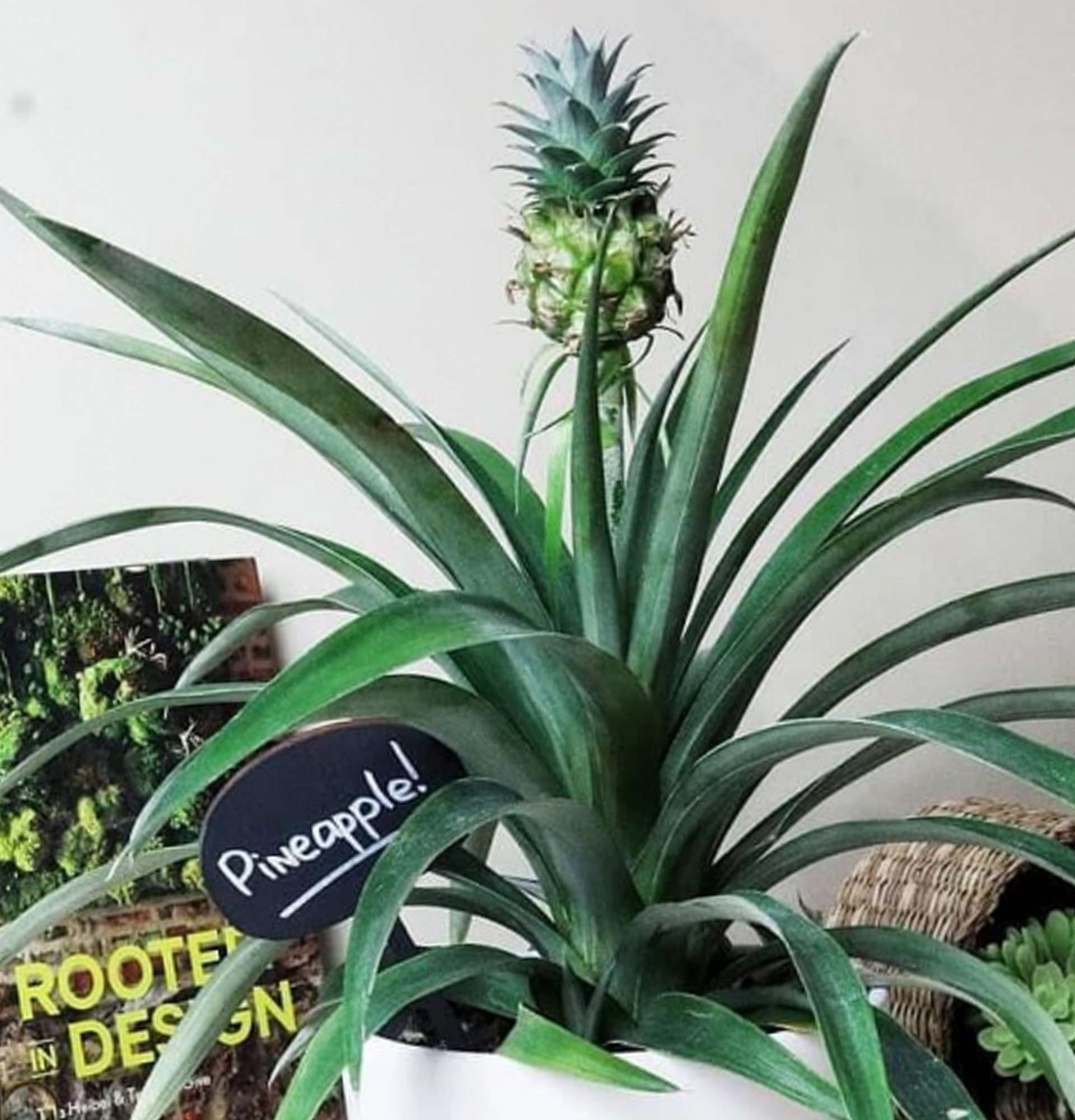
Lovers of the exotic simply need to have a pineapple, which will look spectacular both in homes and in offices. This hardy and beautiful plant will not take much time to care for. All that is needed is knowledge and the correct implementation of the growing conditions, which must be brought as close as possible to natural ones.
Choosing a place
Indoor pineapple loves bright light, and light sunlight can be used without shading. Rooms facing south and southwest will be the most suitable for the plant. Regular ventilation is very beneficial.
It is not necessary to rotate the pineapple around its axis in order not to slow down its growth.
Temperature
Heat-loving pineapple needs a temperature of 20-25°C in summer, and no lower than 15°C in the cold season. Since further cooling can be fatal to the plant.
Air humidity and watering
Pineapple can be attributed to moisture-loving plants, but it can also tolerate dry air well. In the warm season, abundant watering is recommended, filling the rosette with settled, non-cold water. Spraying in the evening will not hurt, which will remove dust from the leaves and positively affect the appearance of fruits. In the winter months, watering should be done less often to prevent root rot.
The regulator of watering is slightly dried soil in the pot.
Soil
Light earthy mixture with an acidic pH of 4-6 should include turf soil, sand, and humus (3: 1: 1). Pineapple will also grow well in a soil mixture for orchids. Drainage is essential for the active growth of pineapple.
Fertilizer
In the warm season, it is necessary to feed the pineapple with liquid fertilizers with nitrogen at least twice a month. Be sure to reduce the dose by half, as indicated on the package.
Transplanting
Spring is a very good time for this procedure. Pineapple should be transplanted before flowering into a larger pot. It should be wide and not deep.
Propagating pineapple
Pineapple can be propagated with root suckers, like its close relatives cryptanthus and tillandsia, which have reached a height of twenty centimeters and have their own roots. It is also possible to obtain pineapple from seeds, but this method is extremely laborious.
It is possible to grow pineapple from a fruit that is sold in the store. The crown will be the cut top of the pineapple with well-developed leaves. The cleaned and dried crown in a dark place for a week is planted in moist peat-sand mixture.
Do not forget to spray the sprout.
Pests and diseases
Pineapple is a very resistant plant, and the appearance of aphids, scale insects, and spider mites is very rare. For safety, inspect the leaves of your pet more often. If unwanted guests are found, it is necessary to immediately treat the plant with a soap solution, and then apply insecticides.
Difficult moments in growing:
- Pineapple leaves dry out - increased air temperature and lack of moisture. It is recommended to spray and water regularly.
- The color of the leaves becomes pale, the rosette is unstable and loose - weak lighting, you need to put the flower closer to the light or use fluorescent lamps.
- The plant grows slowly and no flowers appear - it needs urgent feeding with fertilizers containing phosphorus and potassium.
- The base of the rosette is rotting - the plant is cold, the soil is overwatered.
Only scrupulous care, the implementation of the basic rules of maintenance, and the tropical exotic will delight you with its original inflorescence, the appearance of juicy, heavy, and long-awaited pineapple.
It should be remembered that the inflorescences of pineapple are edible, and the leaves of the plant contain a caustic juice.
Write comments
Comments