



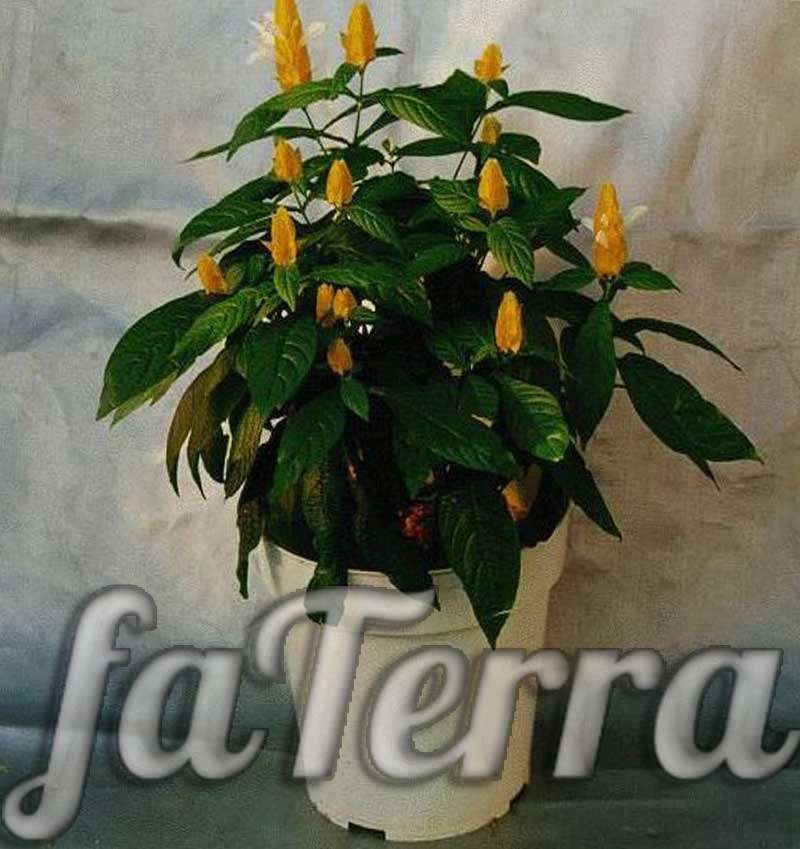
Latin name: Pachystachys
Category: flowering shrub
Family: Acanthaceae
Native to: Peru, Mexico
Pachystachys - a stunningly beautiful plant, interesting information
Pachystachys (Pachystachys) is a small genus of amazingly beautiful flowering plants that includes only twelve species of shrubs and subshrubs. The Pachystachys genus belongs to the Acanthaceae family. The names of indoor flowers are always associated with the territory of residence, as well as with the appearance of the plant. The interesting scientific name Pachystachys comes from Greek words, pachys - "thick" and stachys - "ear".
The Pachystachys plant is a true representative of the American tropics, and its native habitat can be considered the forest thickets of Mexico and the Peruvian valleys. It also grows well in eastern India, where the giant Pachystachys has perfectly adapted to the local climate.
Europeans became acquainted with the Pachystachys flower as an indoor plant in the nineteenth century. It quickly gained popularity and was loved by flower lovers and collectors. During the period of popularity, the plant ceased to be fashionable. A new wave of popularity of Pachystachys arose again in the second half of the twentieth century.
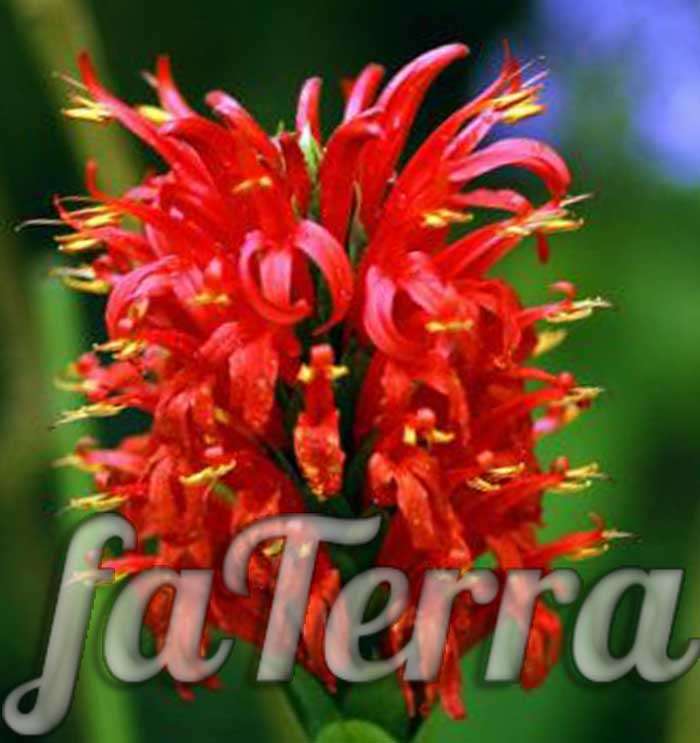
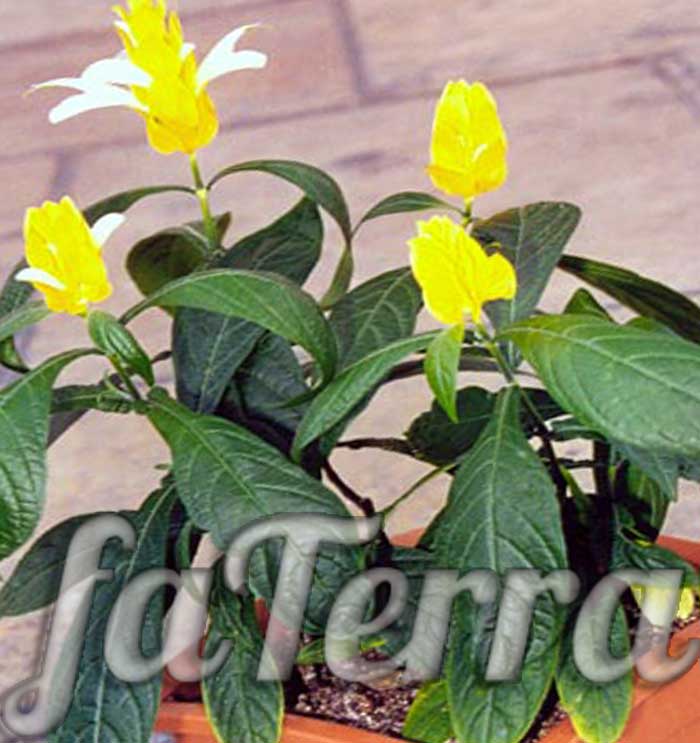
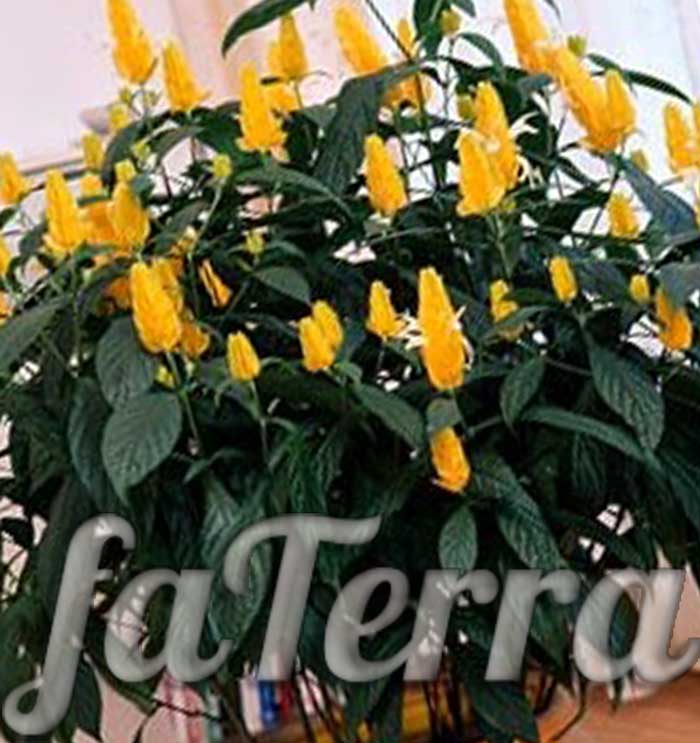
The Pachystachys flower has green stems on which there are bright green, oval, pointed leaves with veins. The dense, multi-flowered, spike-like inflorescences that adorn the tops of the shoots look especially beautiful. The small white flowers quickly fall off, and the bright yellow bracts delight the eye all year round. It is these bracts that make Pachystachys very similar to Acalypha. It is also impossible to deny the resemblance of Pachystachys to Jacobinia.
The very beautiful name "golden shrimp" was given to Pachystachys due to its resemblance to Beloperone.
Species of Pachystachys
Pachystachys lutea (yellow Pachystachys)
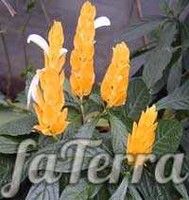 This is the most common species and is more popular among flower lovers for home cultivation. Evergreen shrubs grow up to one meter in height, with straight and thin stems. With age, they become woody. The oppositely arranged dark green leaves, 12 cm long, have an oval shape with clearly defined veins. The bright yellow inflorescences, up to 10 cm in size, resembling an ear or a Christmas tree, rise above the leaves and bloom from spring to late autumn. The small, delicate white flowers gradually open from the base to the top, and they emit a faint scent of the sea. Unfortunately, the flowers quickly fall off, but the golden, bright orange bracts continue to give Pachystachys a special decorative effect.
Pachystachys coccinea (red Pachystachys)
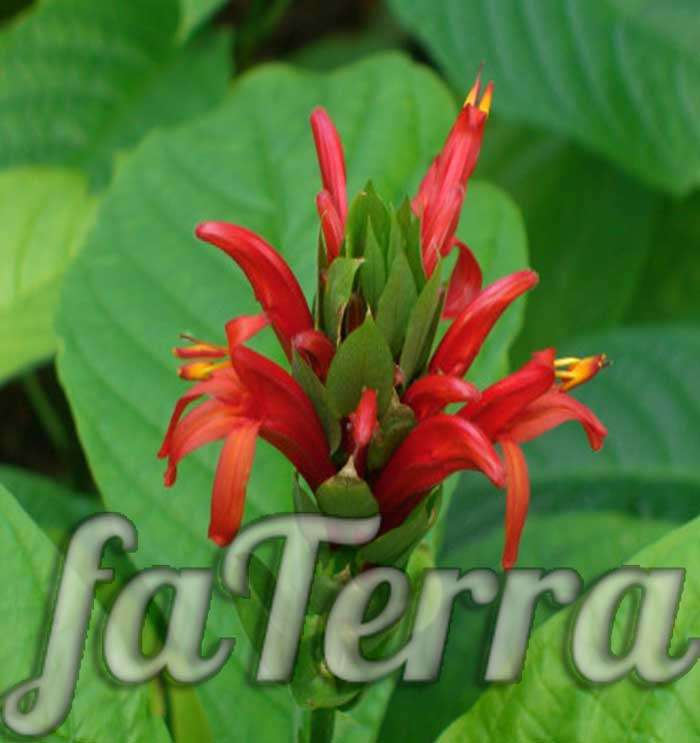
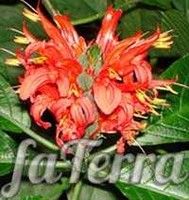 It has a particularly decorative appearance due to the beautiful combination of green and red colors, which distinguishes it from Pachystachys 'ice cream'. On shrubs that grow up to two meters in height, there are dark green inflorescences with red flowers.
Pachystachys care at home
Pachystachys care is quite simple. And if you follow the absolutely not complicated rules of keeping, it will delight and decorate with its long flowering.
Choosing a location
The optimal location plays an important role, which is necessary for Pachystachys, a bright place without direct sunlight. Suitable areas are windows facing west or east.
Temperature regime
The Pachystachys indoor flower is a tropical plant. This immediately implies that growing Pachystachys in a warm room is the main condition for its excellent condition at home. In spring and summer, a satisfactory air temperature is 20-25°C. And in autumn and winter, the temperature should be maintained at 20°C, if the temperature drops below 16°C, the leaves on the Pachystachys will fall off. The dry air from the heating radiators has a negative effect on the plant. Protect the plant from drafts.
Air humidity and watering
The Pachystachys flower care at home directly depends on the air humidity and watering. On sunny and warm days, water abundantly and regularly, maintaining a uniform moisture of the soil. If you do not water in time, the plant will immediately lower its leaves. In comparison with the more hardy Sansevieria, if you stop watering, Pachystachys will not recover and will lose its drooping leaves.
In addition to watering, spraying the plant with a spray bottle will only be beneficial, especially in winter with the heating on and in the summer in the hot days. The water for the water procedures should not be cold, it must be pre-standing or boiled.
Suitable soil and feeding for Pachystachys
Pachystachys can use a universal substrate for decorative and flowering plants. Drainage with perlite is required. The second option is a mixture: one part of peat, humus, sand, leaf soil and two parts of garden soil.
To improve growth, it is desirable to feed Pachystachys with special complex fertilizers for flowering plants twice a month during the growing season.
Transplanting and pruning
Annual spring transplanting of Pachystachys will only be beneficial.
To form a lush crown, Pachystachys needs to be pinched and pruned. The first time this should be done in a seedling at a height of 15 cm. Remove the third pair of leaves from the lateral shoots. Then, repeat this procedure with the next four tiers of the plant. In the spring, it is desirable to pinch all the tops. A two-year-old plant can be allowed to bloom. In the next season, pruning should be repeated. As a result, you get a lush crown and a dense flowering Pachystachys.
Propagation of Pachystachys
The most acceptable and reliable way of reproduction is considered to be cuttings. Moreover, cuttings easily take root even in water at a temperature of 20°C. The best option is a mini-greenhouse, where comfortable conditions are created, keep the pots with cuttings in a warm place, periodically ventilate them. After rooting, the seedlings are planted in pots, and as they grow, the plant is transplanted into larger pots.
Diseases and pests
With proper care, Pachystachys is rarely bothered by pests. For prevention, it is necessary to regularly inspect the plant and keep it in normal conditions. However, Pachystachys can be affected by mealybugs, spider mites, scale insects, whiteflies or thrips.
Let's fix the problems that arise when caring for Pachystachys at home
Let's consider specific cases:
- Pachystachys dropped its leaves, what to do? - Insufficient watering, drafts;
- The tips of the leaves dry out, the leaves curl - dry air;
- The shoots are elongated, the leaves are small, there is no flowering - lack of light;
- Slow growth - the plant needs to be fed;
- The lower part of the stem is bare - it is necessary to rejuvenate the plant, cut off the top.
If you are interested in another plant, the catalog of indoor plants is always ready to help.
Write comments
Comments