



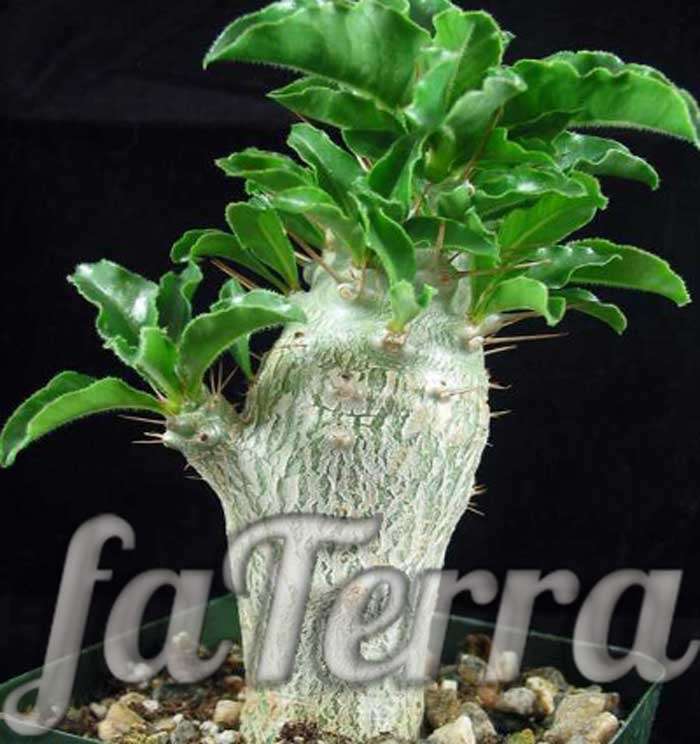
Latin name: Pachypodium
Category: evergreen succulents, shrubs
Origin: Southern Africa, Madagascar Islands
Pachypodium (Pachypodium) – an extravagant and unique beauty
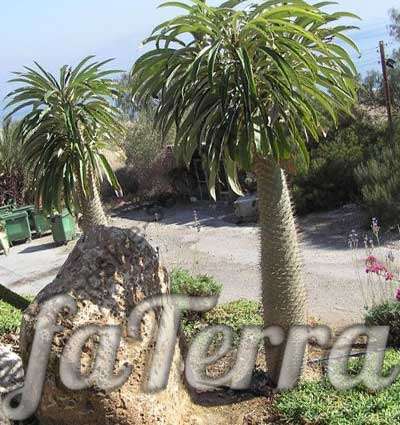
The Cactus family has sheltered the small genus Pachypodium, which has twenty-three species of stem succulents. The unusual combination of palm and cactus features in one specimen, which consists of powerful stems and magnificent crowns, is what gave rise to the name "thick foot" for the plant. Most of the pachypodiums, namely eighteen species, adorn the island of Madagascar. Hence, the popular name of the plant, "Madagascar palm," which rises up to six meters, and the diameter of the trunk reaches one meter. It is also called the "ghost man" exotic.
These exotic specimens can be found in the arid territories of Africa and Australia.
The beautiful pachypodium is the dream of many flower growers. Indoor pachypodiums grow slowly, bloom beautifully, and reach a height of half a meter. The duration of growth depends on the growing conditions of the plant and can range from three to fifteen years.
If you have a pachypodium in your dendrarium, you should not forget that the sap of the plant with very sharp thorns is extremely poisonous. Rubber gloves should be used when caring for it.
Pachypodium species
Pachypodium geayi
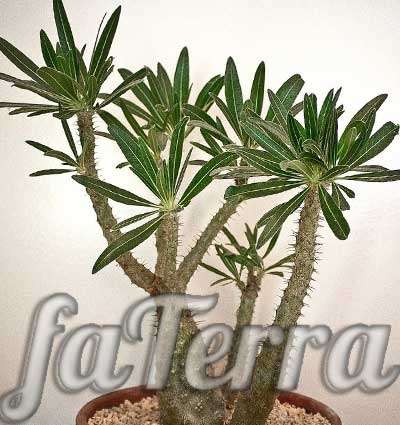
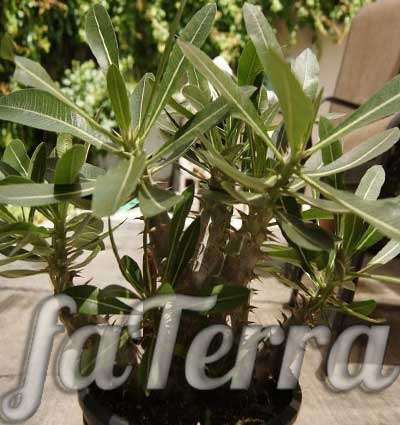
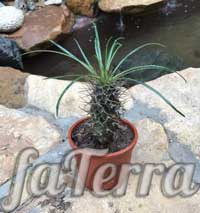 Often found in flower growers' collections, this is a single-stemmed succulent tree with a height of up to sixty centimeters. In natural conditions, Pachypodium geayi can grow up to six meters in height. It is decorated with three-centimeter-long, thin, greenish leaves.
Pachypodium lamerei
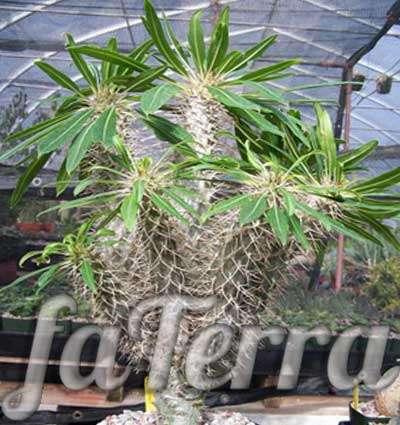
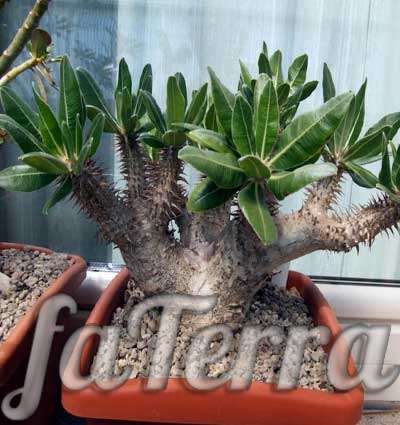
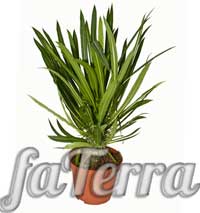 Madagascar is the homeland of this beautiful tree, which prefers limestone rocks. On its thick and thorny six-meter trunk, a large number of long, five-centimeter leaves grow. Pink or cream-colored flowers with a yellow center turn into green, elongated, oval-shaped fruits. In indoor conditions, the plant can grow up to one and a half meters.
Pachypodium saundersii
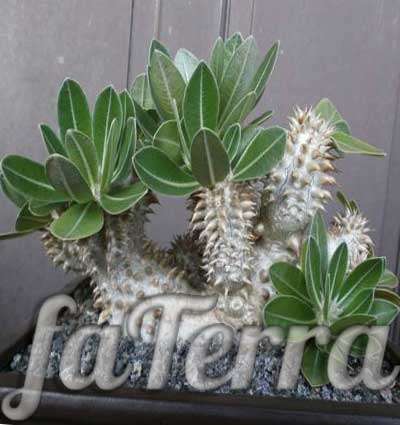
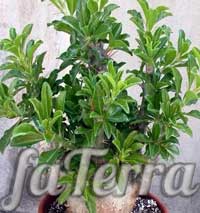 It has a main cylindrical stem, the top of which branches out and forms a small number of shoots with brown thorns up to two and a half centimeters long. At the ends of the stems, a few wide, dark green leaves form rosettes. The plant is covered with original white flowers with pink stripes, which delight its owner.
Pachypodium densiflorum
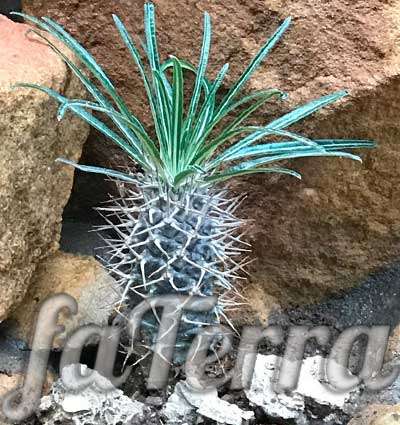
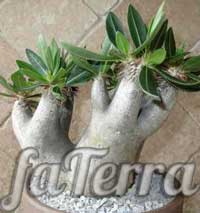 The fleshy texture and light green color of the thirty-centimeter-diameter trunk clearly distinguish this species from other varieties. When grown at home, it reaches a height of ninety centimeters. In this exotic plant, which grows very slowly, the leaves form on top of the trunk. The plant is decorated with bright yellow flowers with a lemon hue.
Pachypodium succulentum
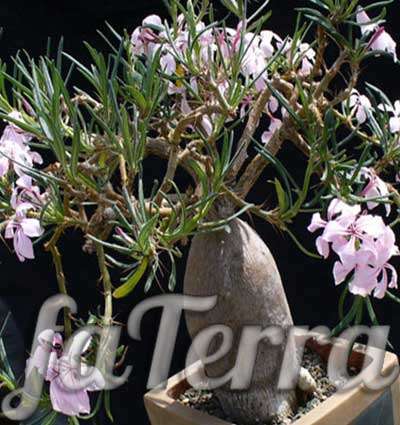
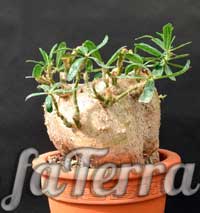 One of the largest shrubs in indoor culture. The main trunk is wide, has the shape of a turnip, its diameter is about 15 cm, and its height is up to one meter. It is characterized by branching with paired thorns up to two centimeters long. The plant is decorated with pink bell-shaped flowers with a red center.
Pachypodium care in the home
Pachypodium care is not difficult; it is easy to grow if you correctly take into account the features of growing the Madagascar palm. And these requirements are quite minimal – a comfortable level of lighting and humidity, timely feeding, and regular watering. Now, let's get specific.
Lighting and temperature regime
It is very important to place your pet in areas with bright light. Preferably south, southeast, or southwest. The sun's rays should be slightly shaded. Partial shade will not harm the plant, but if it is heavily shaded, the leaves will lose their decorative effect.
The plant is heat-loving. The summer temperature limit is 20-30°C, and the winter period of rest is pleasant at a temperature of at least 15°C. Sudden temperature changes are undesirable. It does not like drafts.
Air humidity and watering
The level of humidity is not the main indicator for pachypodium. It is not necessary to spray the plant; you can simply wipe the leaves occasionally.
We maintain an optimal watering regime: in the winter, once or twice a month; in the summer, we water abundantly once a week as the soil dries out. The water should be warm and settled.
Pachypodium transplanting
The plant does not require frequent transplanting. The procedure is carried out in the spring once every four years. One-third or even half of the pot should be occupied by drainage. The soil composition: leaf, sod soil, coarse-grained sand in equal proportions. It will be useful to have clay, pieces of brick, and wood charcoal in the mixture.
Pachypodium propagation
The plant can be propagated:
- by seeds,
- by cuttings.
The seeds should be soaked for twenty-four hours and sown in moist sand. Seedlings may appear within six months.
Cuttings for planting should be dried for a week. Root them in a mixture of sand and peat. For a successful result, it is necessary to have warmth, good lighting, and moist soil.
Pests and diseases of pachypodium
When growing your exotic plant, it is necessary to protect it from pests. Scale insects, red spider mites, and thrips can visit the plant. If you find unwanted guests, we take measures to eliminate them – we treat them with a soapy solution. If this is not enough, we treat them with chemical agents.
Love your pachypodium, follow the proposed care instructions, and enjoy a beautiful and healthy plant.
Write comments
Comments