



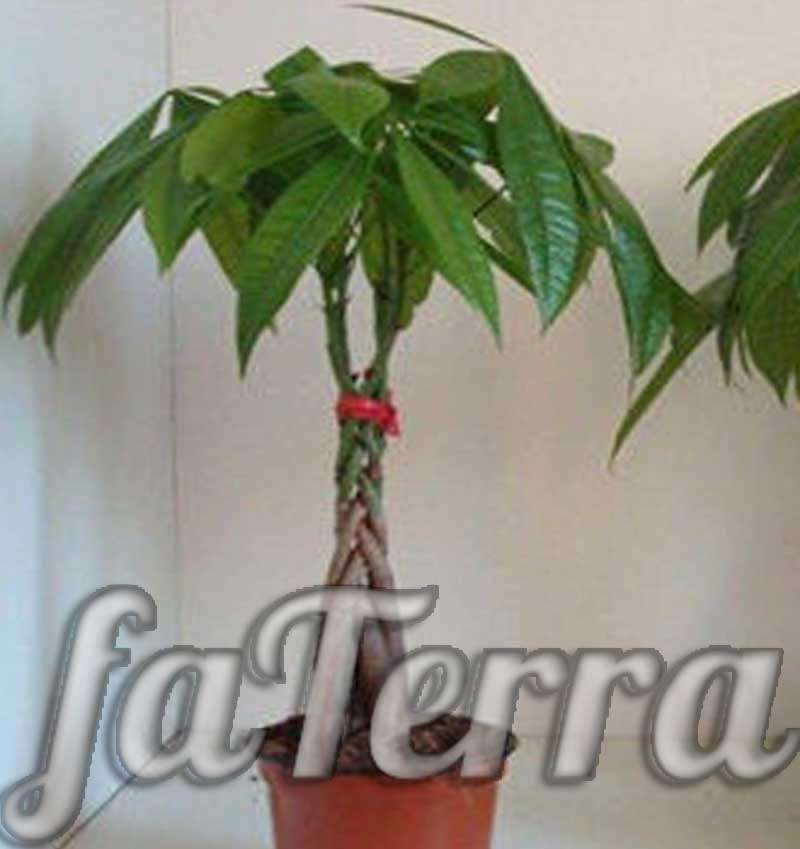
Latin name: Pachira
Family: Malvaceae
Native to: Southern and Central America, India, Africa
Interesting facts about Pachira
Pachira (Pachira) - the genus of this unusual plant that loves warmth and high humidity contains twenty-four species, belongs to the Malvaceae family.
Since 1775, Pachira owes its name to the French naturalist Jean Baptiste Oblé.
This unusual, exotic, evergreen tree, Pachira, can grow up to eighteen meters tall, with a characteristic root system resembling a walking stick. It comes from the tropical humid jungles of Central and South America, where the climate is variable and humidity changes sharply with drought. The plant has to adapt to these natural conditions. Pachira has an original stem with a thickened lower part. A special layer forms between the stem bark and the wood, where water is stored during the hot season. That's why it's called Pachira aquatica and is compared to bottle trees. The name of the plant translates to "fatty" in Russian. Pachira, also known as the money tree, is a popular name for these ornamental trees in East Asia, where they are a symbol of financial well-being and good luck. Its close relatives include baobabs.
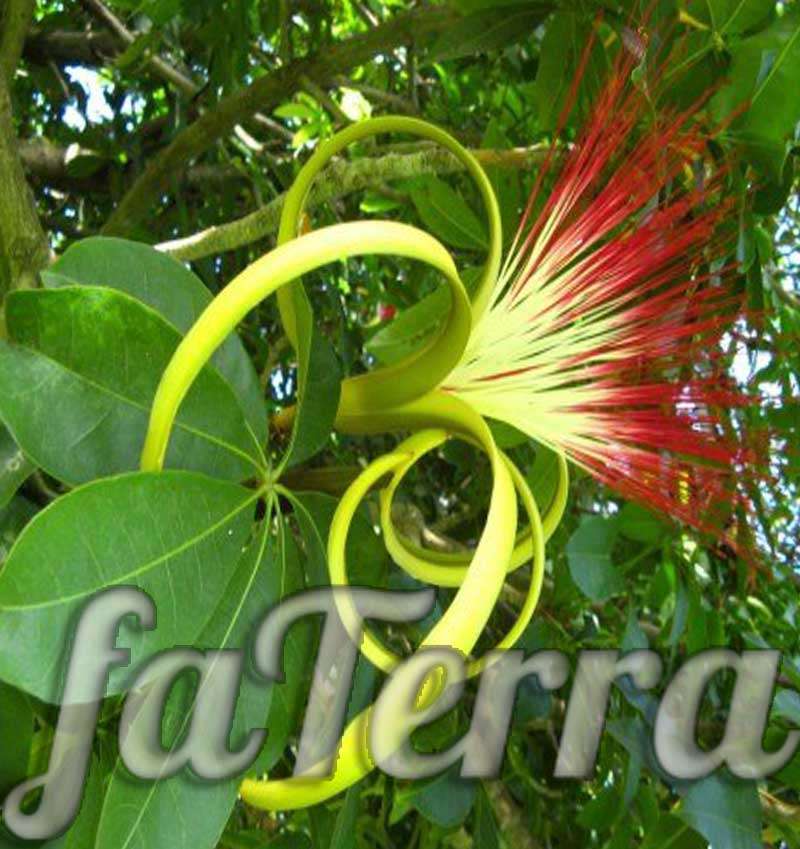
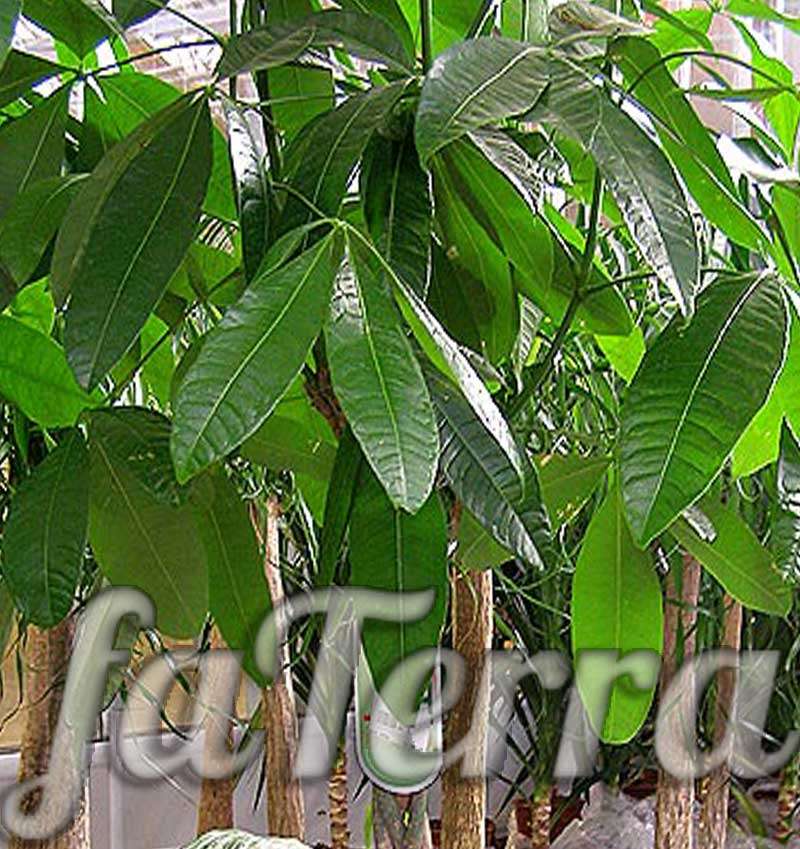
The beautiful, bright green, palmately compound leaves of Pachira are arranged on long petioles and resemble chestnut leaves. This is where another name comes from: Malabar chestnut or Guianan chestnut. Pachira has white, narrow flowers, about 10-15 cm long, which are beautifully arranged in inflorescences resembling an ear of corn. They emit a vanilla-like fragrance. After flowering, a large green fruit forms, containing up to twenty-five nuts. They are used as food, eaten raw, cooked, or fried. Flour is made from the nuts and used to bake bread. Also, a drink that resembles hot chocolate is made. The flowers and leaves of the plant are also edible. Entire plantations of Pachira are cultivated.
The Pachira flower rarely blooms in greenhouses, and almost never blooms in indoor conditions.
Species of Pachira
Pachira aquatica (Money Tree)
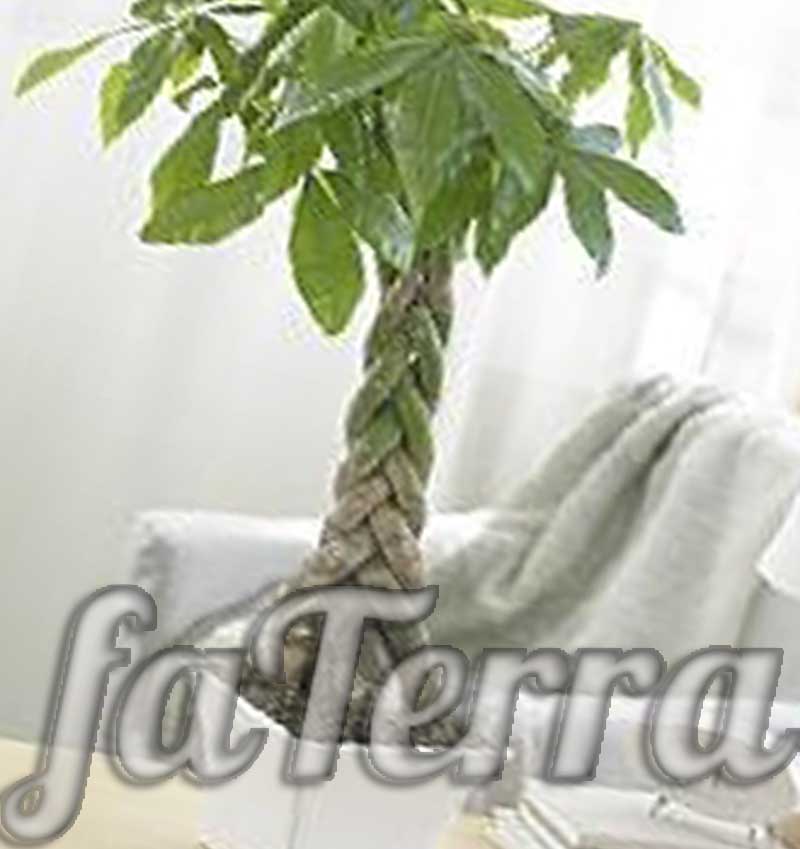
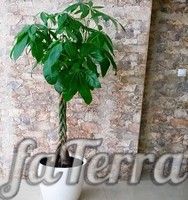 Native to South America, this small tree has a thick trunk and beautiful, thick, shiny, dark green leaves. The leaves of Pachira resemble chestnut leaves. That's why Pachira is also called Malabar chestnut or Guianan chestnut. Flowering is a rare occurrence in indoor conditions. Despite the lack of flowers, this plant is a unique specimen. The unusual and neat intertwining of the trunks of Pachira, which change size very slowly, while the leaves grow actively and form a lush, original, green "crown," is fascinating. This wonder is sure to attract the attention of lovers of exotic plants. Pachira can now be bought in flower shops and will be a wonderful gift. Pachira has many beneficial and beautiful qualities. It can enrich the air with oxygen and ozone, improving the microclimate of the room. Pachira has a beneficial effect on the nervous system in cases of neurosis and insomnia, strengthens the body's immune system, which reduces the incidence of respiratory diseases. Pachira is an indispensable and desirable plant in offices, hospitals, kindergartens, and apartments.
Pachira argentea (Silver Pachira)
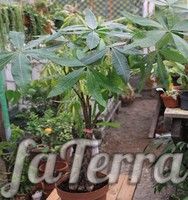 Pachira argentea is a native of the humid Brazilian jungles. It is very similar to Pachira aquatica, but the main distinguishing feature of this unusual and exotic tree is the beautiful, bright silver stripes on the dark green, original leaves.
Pachira rotundifolia (Round-leaf Pachira)
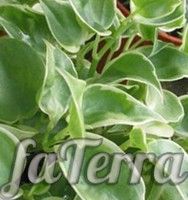 Pachira rotundifolia is the rarest species found in cultivation. The peculiarity of this plant is its long shoots covered with round leaves that can creep along the ground. Thanks to this, Pachira rotundifolia can be seen as an original ampelous plant, decorating shops, offices, gardens, and apartments.
Caring for Pachira at Home
Caring for Pachira is not difficult. The plant is moisture-loving, so it should not dry out, it needs to be watered frequently, and direct sunlight should be avoided. Even during the winter, it is necessary to increase the humidity in the room by spraying the plant.
Pachira does not like artificial heating, so it is best to place the plant away from radiators. It can be placed on a refrigerator, where there is more light and it is further away from the heating.
Excess moisture is not harmful to Pachira, and fresh air is beneficial.
Temperature
Growing Pachira does not require special efforts. It is best to maintain a temperature of 20-25 degrees Celsius in spring and summer, and lower the temperature to 16 degrees Celsius in winter. The plant will not stretch. It is important to protect the plant from drafts.
Pachira: Watering and Humidity
In summer, Pachira needs to be watered abundantly, otherwise the leaves will begin to wilt. In winter, watering should be limited to prevent the stem from rotting. The water should be warm and soft. It is necessary to monitor the humidity in the room. It is best to spray the plant twice a day, but the water should not get on the trunk to avoid rotting.
Lighting
Pachira loves bright light. Otherwise, the stem will stretch and lose its decorative appeal. It is best to place the plant on a windowsill facing west or east. In summer, Pachira can be placed outdoors in a shaded area, but it should be protected from rain, drafts, and direct sunlight.
Crown Formation and Pruning of Pachira
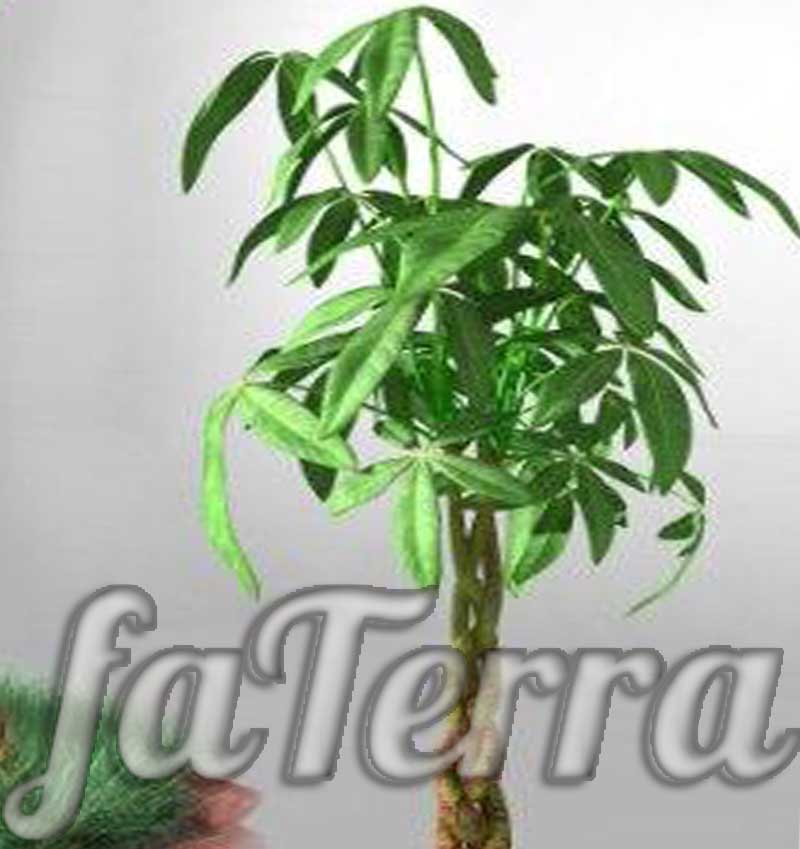
In spring, it is necessary to start forming the crown. To do this, carefully cut off the shoots that have grown upwards. New shoots will grow in these places, and the crown will become more lush and dense. The crown is usually shaped like a beautiful ball or oval. You can buy a Pachira with three or more intertwined trunks. Forming such a decorative plant from seedlings requires skills and time, but you can achieve such beauty in a few years.
How to Propagate Pachira?
This beauty is best propagated in summer using the tips of cuttings or seeds.
Fresh seeds are sown in a regular moist soil mixture at a temperature of 25-30 degrees Celsius, sprayed, and covered with polyethylene. Ventilate and water the seeds daily for three weeks, and they will germinate.
Cuttings are rooted in a moist mixture of sand and peat. They are covered with film to create a greenhouse atmosphere. Under conditions of warmth and high humidity, a small miniature tree will grow in a few months.
Repotting Pachira
It is best to repot Pachira annually in March, before the active growth phase of the plant. The roots of Pachira are not deep, so the pot for planting should be wider and a few centimeters larger than the previous one. The soil for transplanting should consist of leaf soil, sand, turf soil, and brick chips. Good drainage is essential.
Pests of Pachira
The main pests of Pachira are spider mites and scale insects, especially in rooms with dry and hot air.
Diseases of Pachira and how to avoid them:
- Leaf drop - insufficient humidity;
- Root and stem rot - overwatering, water getting on the trunk, especially at low temperatures;
- Brown leaf tips - insufficient watering, dry air, drafts (do not place Pachira between doors and windows);
- Soft and curled leaves - temperature too low, possible sharp temperature fluctuations;
- Light spots on leaves - possible sunburn, shade the plant from direct sunlight, especially in summer;
- Stretching stem, loss of thickening - lack of light, move the plant closer to the window.
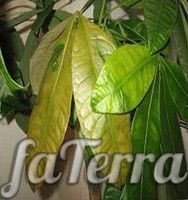 If the leaves of Pachira turn yellow and fall off, especially in winter, this is a very alarming sign. The cause may be the heating radiators, which make the air in the room dry. In addition to following all the care instructions, a beautiful Pachira will delight you with its beauty, charm, and grandeur.
Write comments
Comments