



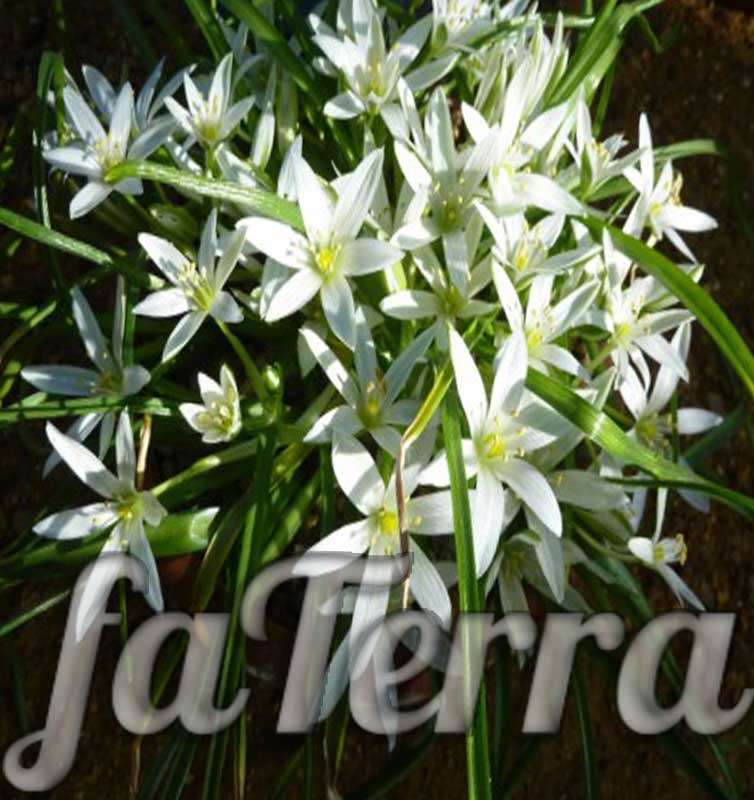
Latin name: Ornithogalum
Category: perennial herbaceous bulbous plants
Native to: Southern Africa
Interesting information about bird's eye flower (Ornithogalum)
All bird's eye flowers are a genus of herbaceous bulbous perennial flowering plants. They belong to the family Asparagaceae, order Asparagales. Interestingly, in the not-so-distant past, they were classified as lilies.
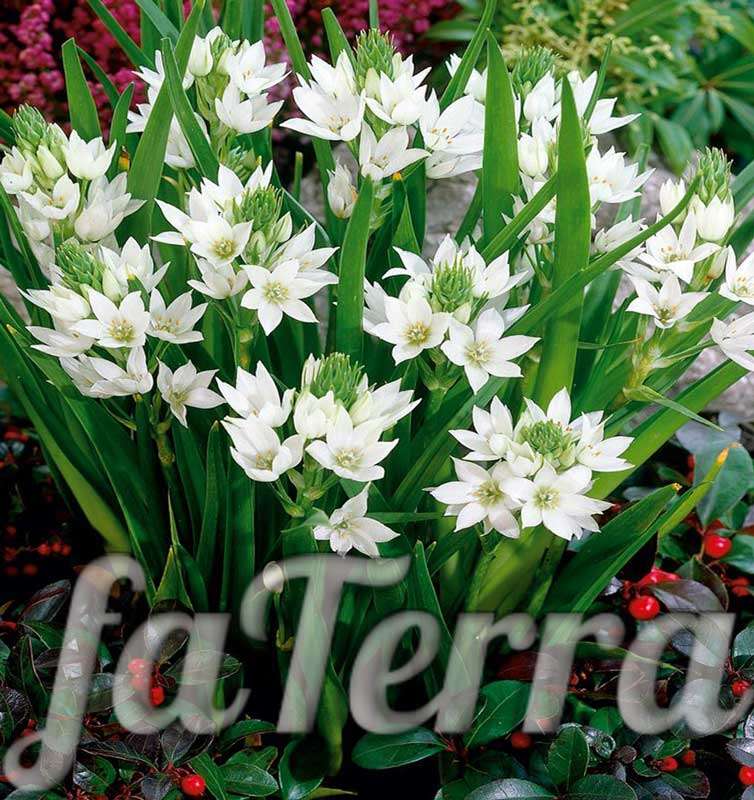
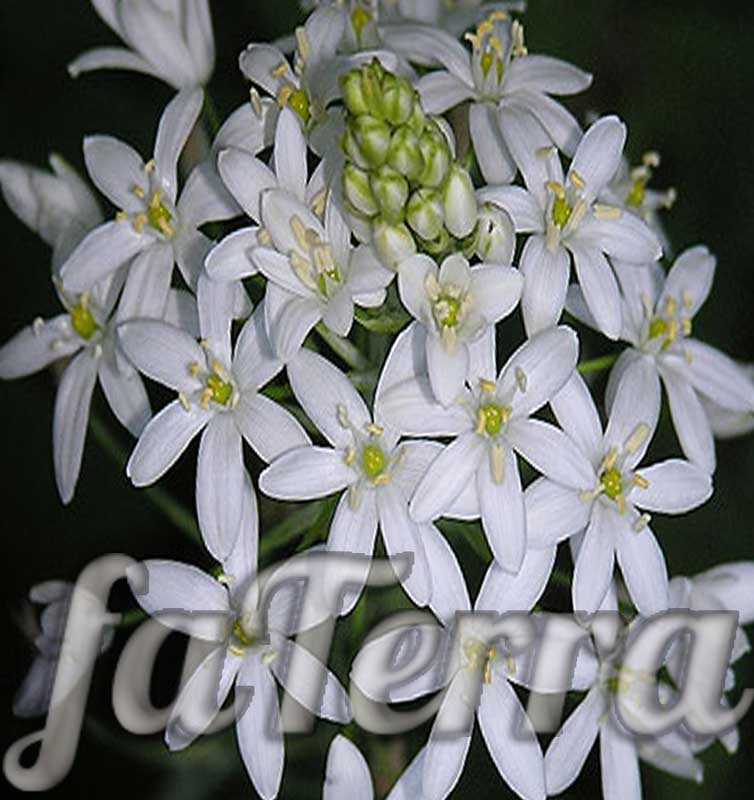
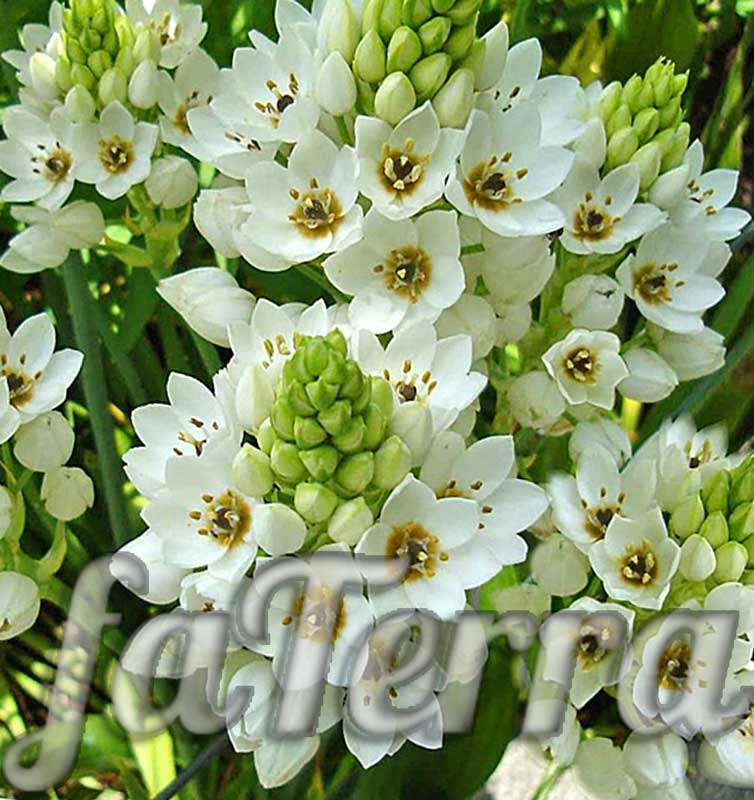
Botanists know best, because, indeed, each genus requires its own individual approach. And so, the genus Ornithogalum includes approximately 150 species, and in the wild, they are found in subtropical areas and temperate zones of Central Europe, Africa, and Central Asia. One species of this plant grows in South America, and about four species are found in North America. The bird's eye flower plant prefers mountainous areas. All species of bird's eye flower have lanceolate, green, linear, glossy leaves. The flowers are white with various shades and a silvery sheen, collected in shield-shaped vertical inflorescences.
A distinctive feature of the bird's eye flower is the large bulb that protrudes from the ground, of considerable size and greenish color.
It does not require special attention and looks great when grown in gardens.
Variety of bird's eye flower species
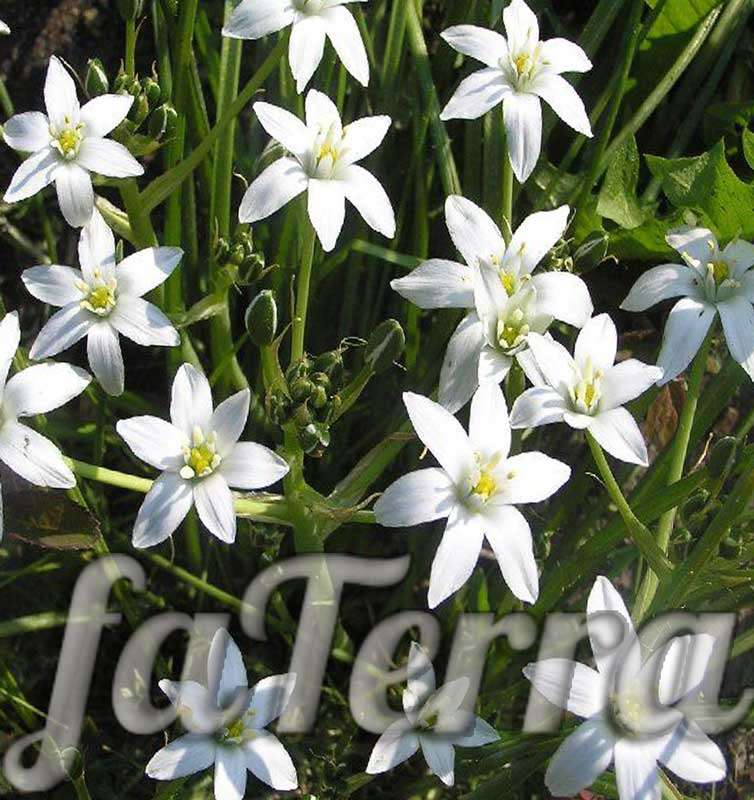
Bird's eye flower umbrella (Ornithogalum umbellatum L.)
 One of the most well-known Ornithogalum species is the bird's eye flower umbrella, or white brandushki. Its distinctive feature is primarily its modest size, the original color of the grooved leaves with a longitudinal white stripe, and the unusual umbrella-shaped inflorescence. A large, green bulb is located small and protrudes significantly from the ground.
Bird's eye flower umbrella is the only species, according to experts, that is officially recognized by medicine as a valuable source of colchicine, which helps treat gout, certain immune, and oncological diseases.
Bird's eye flower pyramidal (Ornithogalum pyramidale L.)
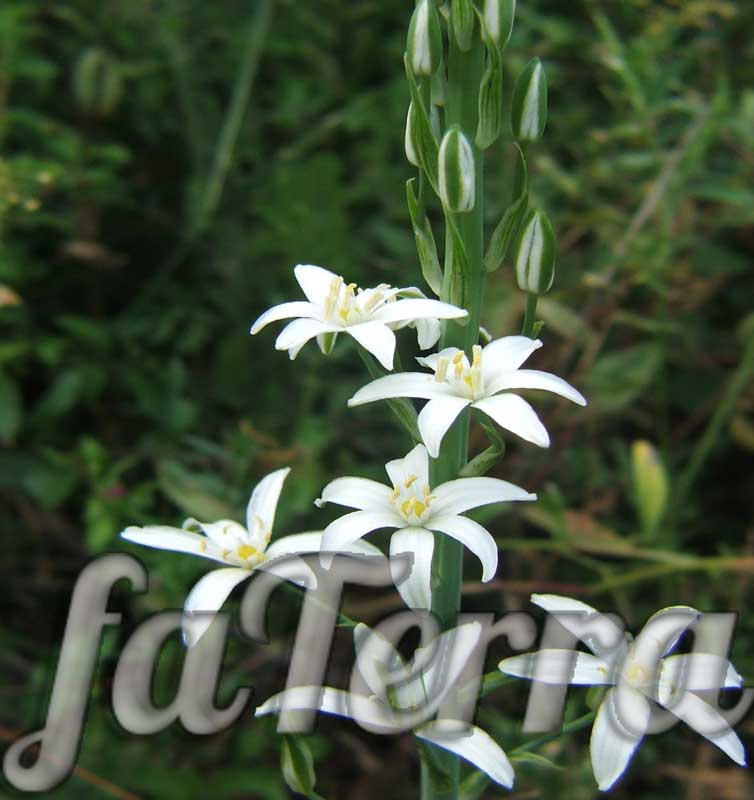 One of the most common perennial ornamental plants, reaching a height of 50-100 cm, native to Southern Europe and the Middle East. Over four hundred years ago, it began to be cultivated to decorate and landscape gardens and parks.
Shiny, ground-hugging, fleshy, linear leaves of greenish-blue color. Egg-shaped bulbs, about four centimeters in diameter. The erect or spreading flower stalk grows up to half a meter in height with a raceme inflorescence, consisting of 16-18 small white flowers, each about three centimeters in diameter. The flowering period of the pyramidal bird's eye flower lasts up to two weeks, which is the latest, in mid-summer, from the end of June to mid-July. The pyramidal bird's eye flower is undemanding and frost-resistant.
Bird's eye flower Arabic (Ornithogalum apabicum L.)
 One of the most heat-loving bird's eye flowers, so in countries with moderate temperatures, it is grown in greenhouses, houses, and bright rooms. Its native region is the western part of the Mediterranean.
The Arabic bird's eye flower has light green, linear, drooping leaves that form a basal rosette. From it grows a vertical flower stalk up to a meter high with white, extremely beautiful flowers up to 5 cm in diameter with a pleasant aroma, collected in a loose, sparsely flowered inflorescence. It blooms in May for two to three weeks. These unusual inflorescences of the Arabic bird's eye flower are used in making bouquets.
Caring for a bird's eye flower is quite simple; it loves bright light but prefers partial shade.
It is not afraid of direct sunlight.
The soil for planting should be well-drained and humus-rich. Repotting is done with an increase in the bulb size, and a pot should be chosen that is 5 cm wider than the diameter of the bulb. The optimal temperature range for the bird's eye flower during the growing season is 20-22 degrees, and in winter, 10-15 degrees. Water the plant moderately, and reduce watering in winter. It is desirable to feed the bird's eye flower with mineral fertilizers in the summer. With a little love and attention, the bird's eye flower on your windowsill will be wonderful.
Seeds are best sown in the fall. Seedlings emerge in the spring. Such a bird's eye flower blooms for the third or fourth year.

Write comments
Comments
Маметова Э...