



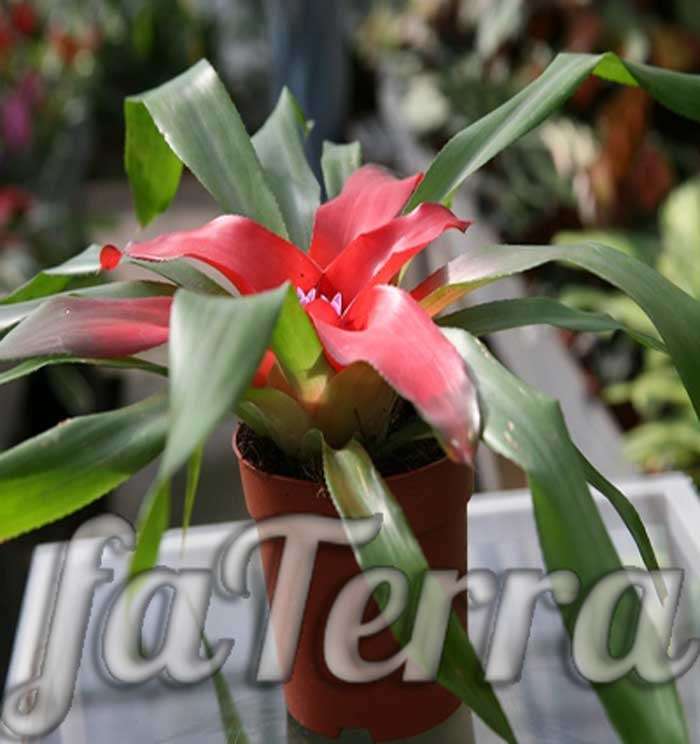
Latin name: Nidularium
Category: epiphytic herbaceous plants
Origin: Eastern Brazil
Brazilian wonder Nidularium
Nidularium is a genus of colorful and picturesque epiphytes that settled in the botanical family Bromeliaceae.
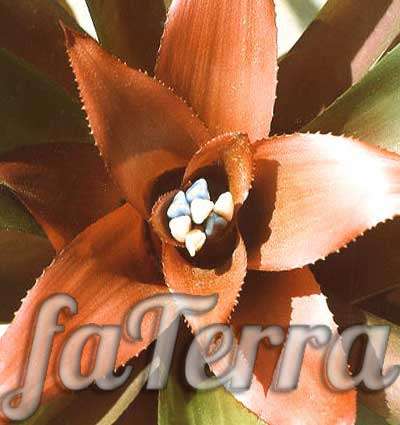
It got its name due to the unusual structure of the inflorescences in the middle of the rosette; in Latin, "nidus" means a nest.
The natural habitat of these almost 80 varieties of plants, which have a herbaceous growth form, is Brazil. The average size of this epiphyte is 40-120 cm. They prefer tree trunks and branches, where they receive natural fertilizer from falling leaves and bird droppings.
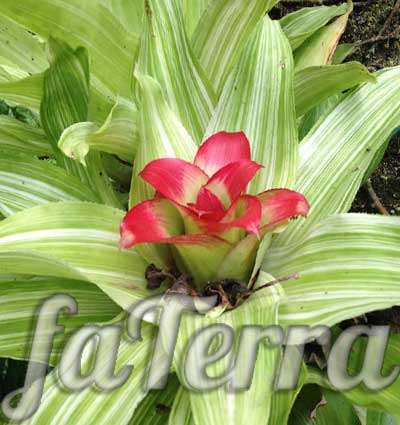
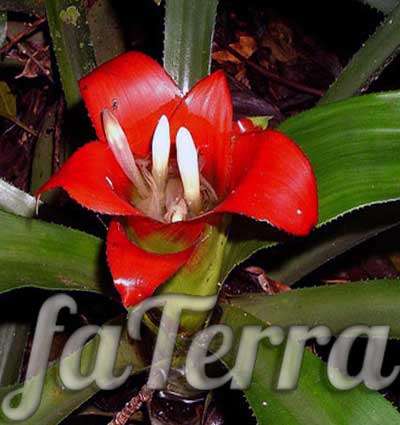
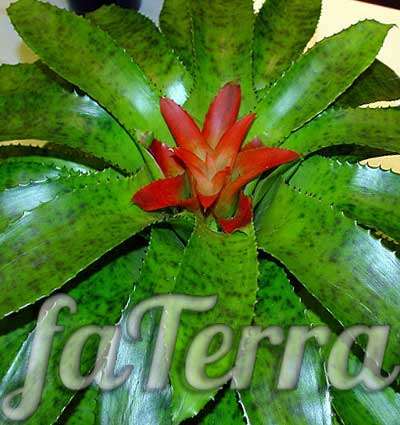
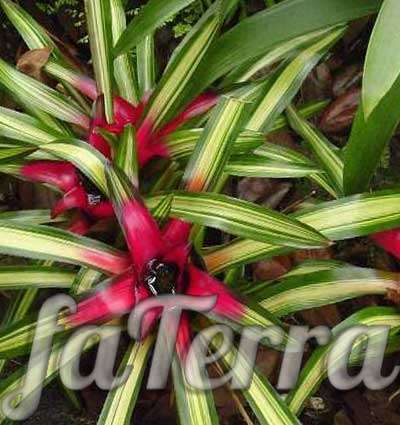
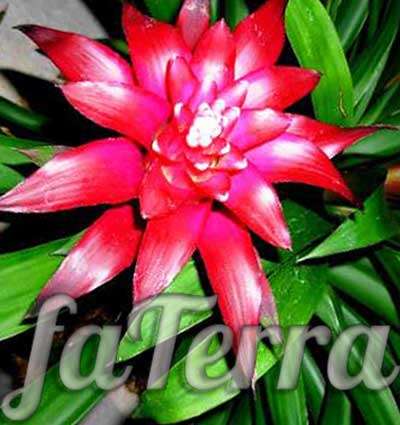
This unusually beautiful stemless plant resembles neoregelia. With its tough, elongated leaves with serrated edges, it forms a dense rosette that resembles a goblet. The color of the leaves is always green. Each variety of plant has its own characteristics. Before flowering, the inner leaves turn a beautiful red color. From this unusual nest, a capitate inflorescence begins to grow. It is formed by densely arranged large white flowers. But all the beauty of the nidularium, which blooms in warm weather, is not in the flowers, but in the wonderful and bright bracts, which turn red, lemon-yellow, or green.
Nidularium species
Nidularium billbergioides
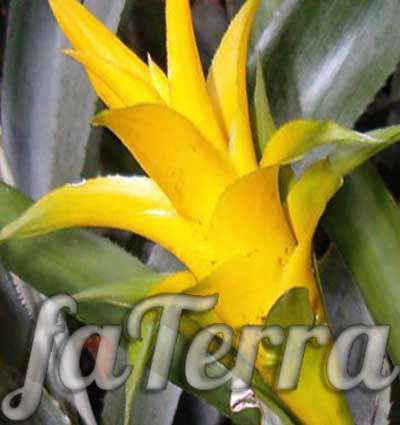
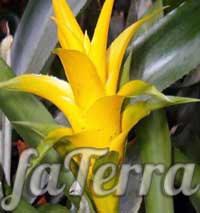 In the natural environment, in the flat forest areas of Brazil, you can find this wonder. It can be an epiphyte or an epilite. A small number of beautiful, bright green, elongated leaves with serrated edges form a rosette-funnel. The length of the leaves reaches 70 cm, and the width is 4 cm. During flowering, from summer to late autumn, the plant is decorated with an inflorescence, consisting of 5-6 spikes on a straight and thin peduncle, which is hidden in bright lemon-yellow bracts. After flowering, the bract leaves turn green.
Nidularium innocentii
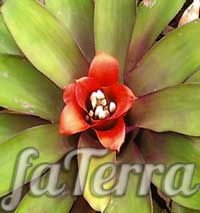 Sprawling rosettes of numerous sixty-centimeter leaves decorate the humid Brazilian forests, both as an epiphyte and as a terrestrial plant. The spiky leaves, like tongues, are dark green in color with a reddish tint on the outside, and the back is dark burgundy. Short peduncles with bright red, serrated bracts are hidden among the bracts. The flowering period is long, from late spring to winter.
Nidularium purpureum
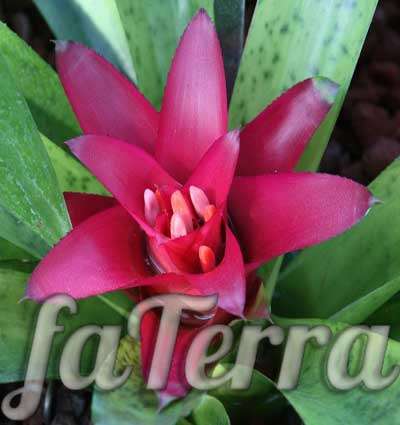
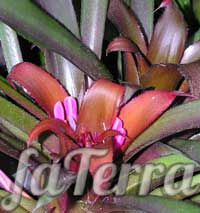 Unlike the previous species, Nidularium purpureum has longer and narrower, scaly leaves. The inflorescence is in the form of a spike, consisting of five-centimeter flowers, reliably hidden in the axils of broad-ovate, brown-red bracts. It pleases with its flowering from mid-spring to mid-summer.
Nidularium fulgens
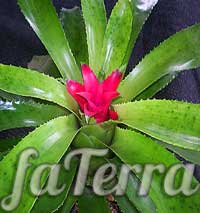 A dense, original rosette is formed by twenty spotted, bright green leaves. They grow to only 30 cm in length, and their width is 3 cm. The edges of the leaves have brown, four-millimeter, bent spines, which turn bright red during the flowering period. The petals of the flowers are blue or purple-lilac in color.
Nidularia care in the home
Nidularia, like its closest relative billbergia, is a true tropical beauty. This means that it has an increased need for humid air. Of course, humid greenhouses and terrariums are more suitable for tropical exotics, but even in an apartment, nidulariums will feel great if the necessary growing rules are followed.
Choosing a place and lighting
Nidularia loves bright, non-concentrated light. The east and west sides are good places to put the plant. It will also be comfortable on the north side. On the south windowsills, the nidularium needs to be shaded from direct sunlight to avoid a pale appearance of the bracts. It will also feel good in the bathroom, where there is plenty of moisture, and the lack of light can be compensated for with fluorescent lamps.
Comfortable temperature regime
Nidularium, which loves warmth, does not like sharp temperature fluctuations throughout the year. The summer temperature difference is 19-25°C, and the acceptable winter temperature is 13-15°C. Heat and cold drafts are also unacceptable for nidularia.
Watering and air humidity
In the warm season, abundant daily watering is desirable for the plant. This is done in the morning, and the rosette is filled with warm water at least once a week. Winter watering is reduced and even canceled at temperatures below 19°C. You can limit yourself to just spraying.
The optimal humidity is at least 70%. This can be achieved by regular spraying and wiping the leaves with a damp cloth. To increase humidity, you can place the pot in a tray with wet expanded clay, pebbles, or use a self-watering pot.
Soil and its feeding
The substrate should be light and nutritious. A mixture of fine pine bark, leaf soil, coarse sand, and sphagnum (2:2:1:1) may be suitable. You can also take equal parts of leaf, peat, compost, turf soil, and sand. A special soil mixture for bromeliads will also be an excellent option for the plant.
During the growing period, the nidularium should be fertilized every thirty days with a diluted, half-strength, fertilizer solution. The procedure should be carried out by spraying or directly into the soil.
Propagation of nidularium
The spring-summer period is the best time to propagate nidularia by separating young rosette-offshoots and planting them separately in a shallow but wide pot.
Propagation by seeds in a mini-greenhouse is also an acceptable procedure, but it is more time-consuming. The seeds are sown in moist soil, the temperature is maintained at at least 25°C, and young shoots are waited for in three weeks.
Transplanting
First of all, it is necessary to transplant the plant purchased in the store after flowering. Then, the frequency of transplantation is regulated by the growth of the rosette-offshoots, which fill the pot and are separated from the adult plant. To avoid rotting, do not bury the rosette in the soil. Drainage is required.
Pests and diseases of nidularia
If the above-mentioned conditions of plant maintenance are not followed, you may not notice the appearance of unwanted guests, such as scale insects, mealybugs, or spider mites. Immediately treat the plant with a soapy solution or wipe the leaves with alcohol. If these measures do not help, immediately use chemical agents.
Problematic moments in growing
- The ends of the leaves turn brown, or the entire leaf dries out - too much humidity in the room.
- Pale brown or brown spots appear on the leaves - exposure to bright sunlight.
- The plant is very stretched in height - insufficient lighting.
- The leaves are drooping - the plant is too cold.
- The plant does not bloom and begins to fade - the soil is too wet.
- Nidularia does not form daughter rosettes - the soil is not nutritious enough, it is necessary to add fertilizer.
Write comments
Comments
Ирина