



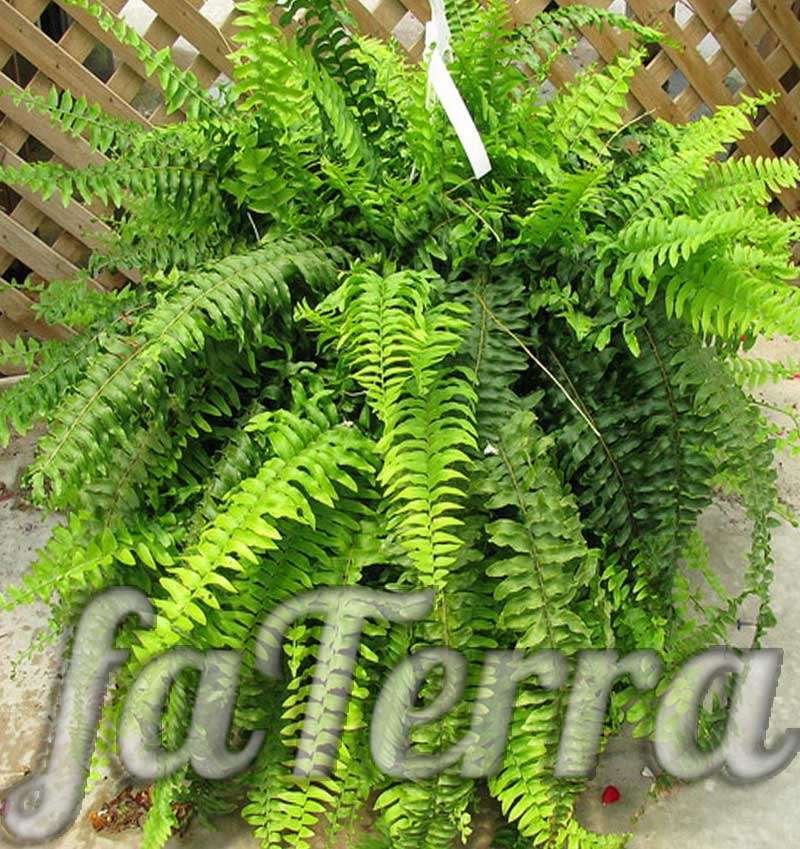
Latin name: Nephrolepis
Family: Davalliaceae
Native to: Tropical forests of Southeast Asia
Nephrolepis fern - a wonderful and undemanding plant
Nephrolepis is an undemanding fern that belongs to the Davalliaceae family. About thirty species of herbaceous perennials are found throughout the tropical belt of the Earth. It is possible to determine the key habitats of ferns. The main attribute of a fern's existence is increased humidity, which is provided by shady forests; a hidden side of a rock, where sunlight does not reach; and the presence of tropical trees, because many ferns are epiphytes. Specifically, the largest concentrations of Nephrolepis are found in the eastern and southeastern territories of Eurasia. The native land of Nephrolepis is Southeast Asia.
Why are ferns classified as higher plants? Nephrolepis, like all higher plants, has roots, an underground stem, and leaves, which are called fronds.
The genus name comes from the Greek phrase: "hrops" - bud, "lepis" - scale. Together, in Ukrainian, it means "bud-scale". This incredible name was given to Nephrolepis due to the shape of unusual membranes that cover the sporangia, which are located on the underside of the frond. They reach a length of seventy centimeters, grow from a short, vertical underground rhizome. Nephrolepis is a non-flowering plant, it reproduces by spores that ripen in sporangia, which form sori on the underside of the frond. They look like brown scales. The fronds of ferns grow very unusually, continuing their growth in length throughout their life. The leaflets are twisted like a snail at first, and then they grow and uncurl. The Nephrolepis fern resembles the large, delicate leaves of jacaranda.
The Nephrolepis fern is an undemanding and hardy houseplant. It can be easily grown by any florist, and the main thing is to know that Nephrolepis prefers high humidity and daily spraying with warm, soft water. This is why Nephrolepis is very popular among flower lovers.
The Nephrolepis fern will decorate any home interior. This ornamental plant will grow well in a bathroom or kitchen, saturating the air with moisture and the room with freshness.
Types of Nephrolepis
Nephrolepis exaltata
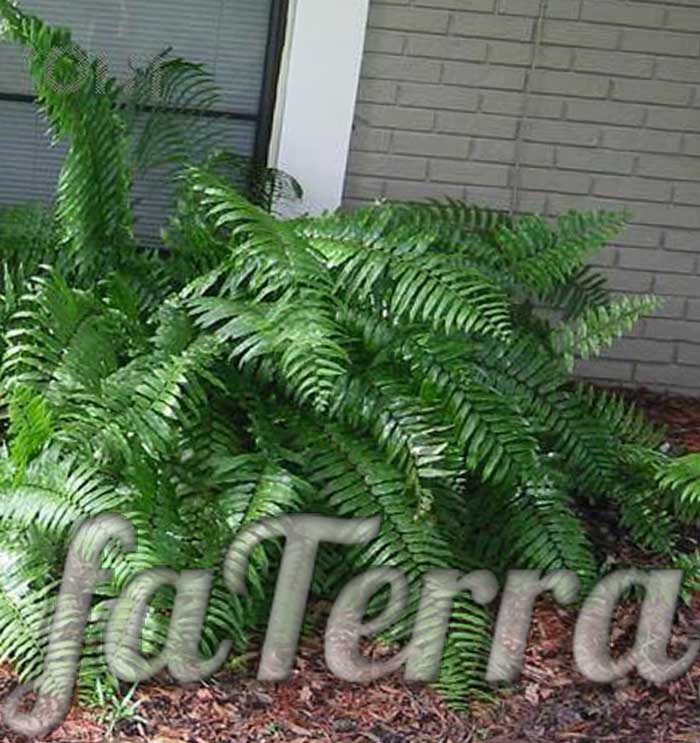
 Nephrolepis exaltata is a herbaceous fern, either a terrestrial plant or an epiphyte. It has a short, vertical root from which a dense, feathery rosette grows. It consists of large leaves, up to seventy centimeters long. The fern fronds are arched on short petioles, elongated, bright green. They consist of lanceolate segments, up to five centimeters long, with serrated tips. The underside of the segments along the edges is covered with round sori, which contain the plant's spores. From the rhizome, leafless shoots - tendrils - extend, covered with scales. They take root and give rise to new plants. The native habitat of Nephrolepis exaltata is the tropical forest areas of Southeast Asia.
Nephrolepis cordifolia
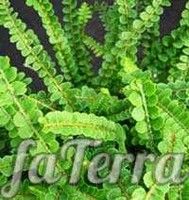 Nephrolepis cordifolia has been cultivated in home floriculture for a relatively long time. For example, in England, it became popular a long time ago. It differs from Nephrolepis exaltata by having underground shoots - stolons, which have swellings resembling bulbs, for storing moisture. These stolons also serve as a means of vegetative propagation of Nephrolepis cordifolia. Its fronds, which can reach more than half a meter in length, are arranged in a rosette, almost perpendicular to the ground. The tightly arranged leaf segments overlap each other, resembling tiled roofing.
The native habitat is the tropical and subtropical forests of both hemispheres.
Nephrolepis biserrata
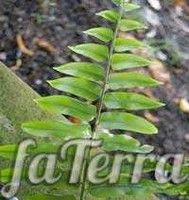 This is a very large epiphyte or terrestrial plant. The large, lush fronds of Nephrolepis biserrata can reach a length of one meter.
Nephrolepis Bostoniensis
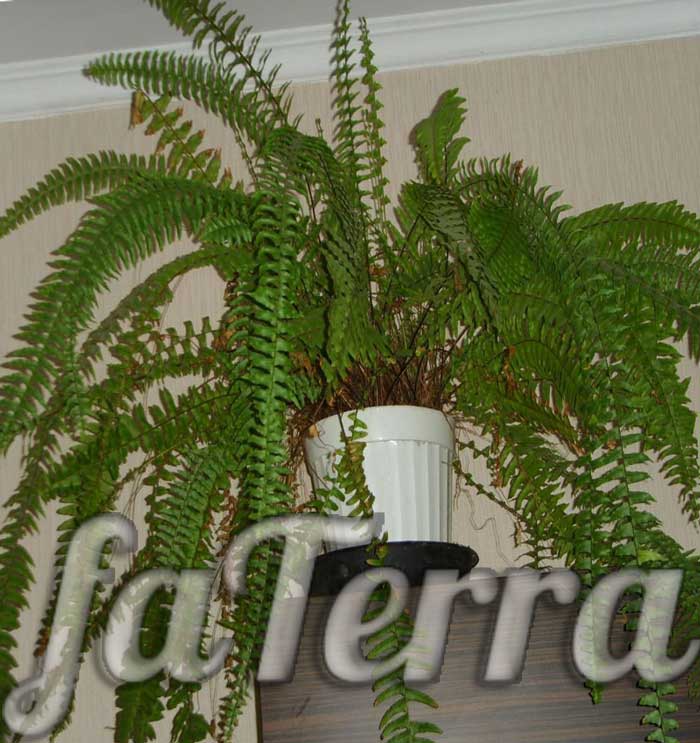
 Nephrolepis Bostoniensis is one of the many varieties of Nephrolepis exaltata. It has a very decorative appearance with wide and short fronds. This variety was created almost a hundred years ago in Boston, USA. The Boston fern gained its popularity due to its delicate, voluminous foliage that cascades downwards. It cleans the air well and looks great in any interior, whether it's an apartment or another public space, where lamps are used for lighting.
Care for a fern at home
Caring for a Nephrolepis fern is not difficult, as it is undemanding to grow. The main requirement is high humidity and the absence of heaters nearby.
Let's consider the care for a Nephrolepis fern in more detail and step by step.
Lighting
The Nephrolepis fern is a shade-loving plant.
Nephrolepis requires diffused light, so it is best to place the plant on a north-facing windowsill or near an east or west-facing window. In rooms with bright light, it should be placed further from the window, but not in complete darkness.
Nephrolepis also grows well under artificial lighting. This beautiful plant is indispensable in the interior of offices, hotels, kindergartens, shops, and other public spaces, where lamps are used for lighting.
Temperature
The ideal temperature for Nephrolepis in the summer is 20°C. It is necessary to spray the plant frequently during heat. The ideal winter temperature for Nephrolepis is 15°C. Temperatures below 11°C are harmful.
Air humidity
High humidity is required! Although Nephrolepis can adapt to dry air. It is not recommended to place the plant near heaters in winter. Create comfortable conditions for it. It loves a light shower and frequent spraying with warm, soft water.
Watering
The watering of Nephrolepis depends on the temperature. It is necessary to find a balance. Nephrolepis prefers moist soil, but does not tolerate overwatering, but also does not allow the soil to dry out. In the warm season, water abundantly as the soil dries out, and less often in the winter. Water with warm, soft water.
Fertilizing
In the warm season, a Nephrolepis fern requires fertilization every two weeks. Use fertilizers, reducing the recommended dosage by half. Do not fertilize the plant in winter.
Soil
A mixture of equal parts of leaf soil, sand, peat, and compost is well suited for growing Nephrolepis. You can buy a special mixture for ferns in a flower shop. The main thing is that the soil mixture is light and loose. It will not hurt to add lime or dolomite flour.
Transplanting
Annual spring transplanting into a wide, shallow pot that is larger than the previous one is an important part of caring for Nephrolepis. Transplanting is a stressful procedure for the plant, and it must be done correctly. An important factor in transplanting is placing the Nephrolepis at the same height as before. Do not bury the plant deeper than before, so that it does not rot. Good drainage is essential.
How to propagate a fern?
- Nephrolepis is easily propagated by dividing the rhizome. In spring or summer, separate young shoots from the fern along with the roots, plant them in pots.
- Nephrolepis can also be propagated by stolons. They must be slightly covered with soil, wait for rooting, and the appearance of new small plants.
- Propagation of Nephrolepis by spores is a complex and time-consuming process. In most cases, ferns reproduce in this way in natural conditions. In home conditions, Nephrolepis is almost always propagated by vegetative methods.
Pests
Nephrolepis can be affected by scale insects, spider mites, aphids, and powdery mildew. If the plant is infected, it can be treated with insecticides such as Aktara or Aktellik.
Problems that arise when growing Nephrolepis:
- Why is the Nephrolepis fern drying out? The causes of this problem may include: insufficient soil or air moisture, lack of light, the plant may have been exposed to direct sunlight;
- Slow growth of Nephrolepis, the leaves are fading - low temperature, insufficient watering, lack of micronutrients, too small a pot, insufficient light;
- Young leaves are turning yellow - possibly too dry air; the plant has scale insects or mealybugs;
- The leaves are turning black and rotting - fungal infection.
Beneficial properties of Nephrolepis
The Nephrolepis fern is a beautiful plant that can decorate any interior. But the main thing is that Nephrolepis is an excellent air purifier and can be compared to plants such as spathiphyllum and chlorophytum.
Florists often use cut Nephrolepis fronds, which retain their freshness and attractiveness for more than two weeks, in the design of floral arrangements and bouquets.
Nephrolepis can absorb electromagnetic radiation if placed near a TV or computer, and can also absorb some of the microbes and negative energy that is harmful to the human body. It is often grown in industrial premises and kindergartens due to its ability to clean the air from formaldehyde, xylene, and toluene. Interestingly, Nephrolepis can boost the body's immune system.
Love your Nephrolepis, it's easier to breathe and live with it!




Write comments
Comments