



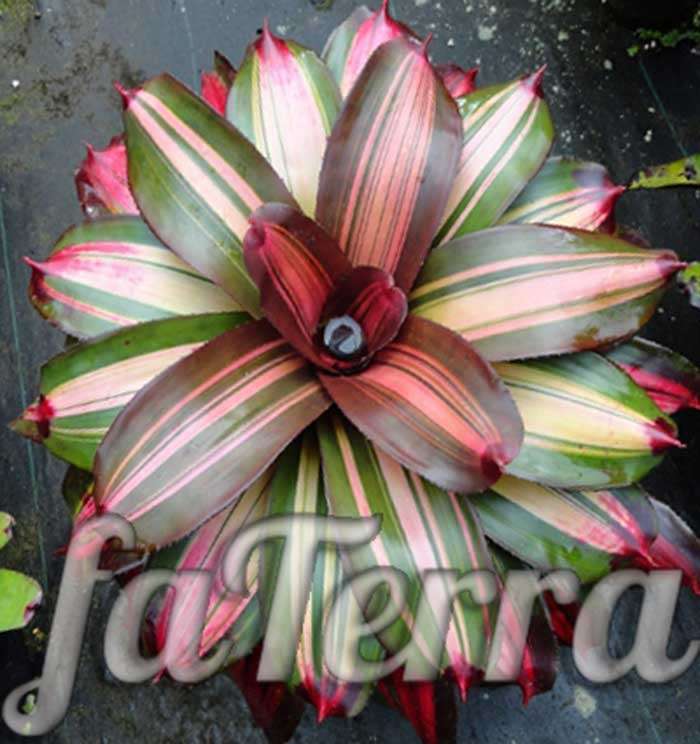
Latin name: Neoregelia
Category: herbaceous epiphytic plants
Origin: South America
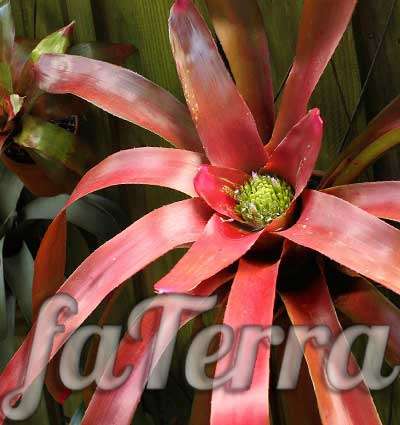
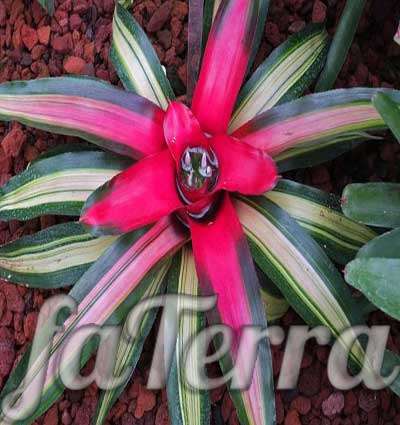
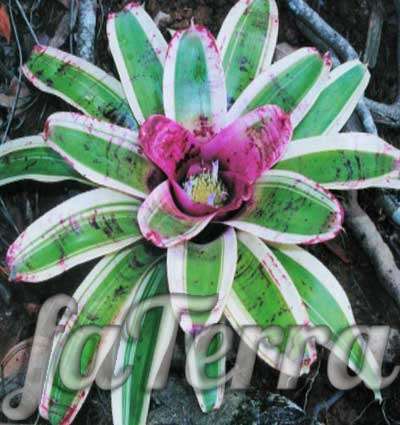
Picturesque and charming Neoregelia
Neoregelia is a small genus of rosette-shaped, stemless, perennial herbaceous plants with beautiful foliage, belonging to the Bromeliaceae family.
This beautiful name was given to the plant in the nineteenth century in honor of the famous biologist, Doctor of Philosophy, scientist, gardener, and director of the Botanical Garden in St. Petersburg, Eduard Regel. Neoregelia, if translated from Latin, means "New Regelia"
About 60 species of neoregelias live in the humid forests of South America: in Brazil, Colombia, Ecuador, and eastern Peru. They are all very different in size, shape, length, and color, but all species have beautiful foliage. These are epiphytic parasites with compact and spreading rosettes of small size compared to their relatives Guzmania and Echmea. About forty species of cultivated varieties have become very popular. They are often found in greenhouses, botanical gardens, offices, and residential areas.
Neoregelia species
Neoregelia carolinae
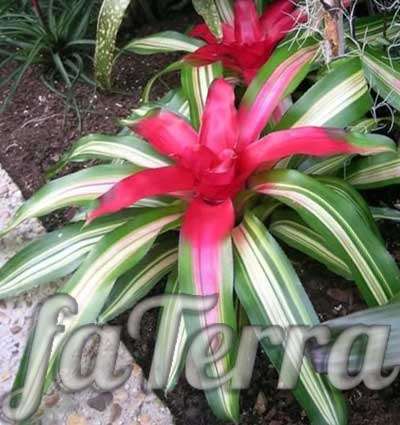
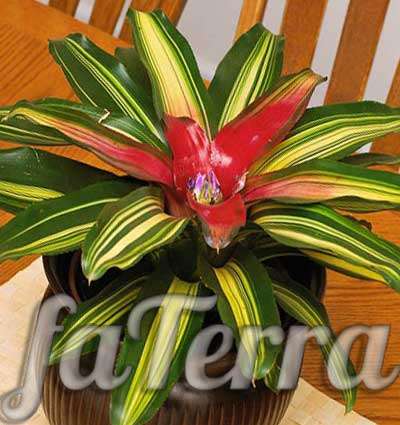
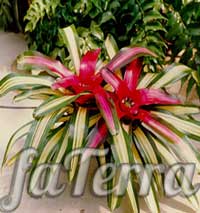 This variety of perennial epiphyte is common in the high-altitude tropical, humid, forested areas of Brazil. The bright green leaves with a shiny surface, up to sixty centimeters long and up to four centimeters wide, are gathered in groups of 20 in spreading rosettes that resemble funnels. Before flowering, these spiky leaves at the edges turn bright red. From the center of the rosettes, simple, dense inflorescences in the form of heads with many blue flowers emerge. They are framed by elongated, whitish-green bracts. Flowering Neoregelia carolinae can be seen in the warm season.
Neoregelia marmorata
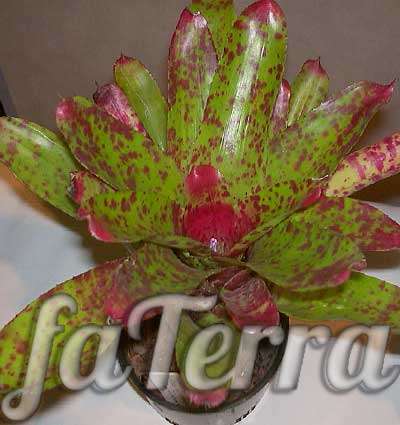
 This Brazilian beauty has a multi-year life cycle, which allows it to grow closer to the ocean, on rocks or soil, in forested areas, which it decorates with dense, sturdy, funnel-shaped rosettes. The leaves of Neoregelia are elongated and pointed, with serrated edges and spots. Size: up to 60 cm long and up to 8 cm wide. The outer side of the leaves is scaly, covered with red and green spots. A simple inflorescence, formed by many small, pinkish-white flowers, modestly hides in the axils of the inner leaves. This beauty can be seen in early summer.
Neoregelia tristis
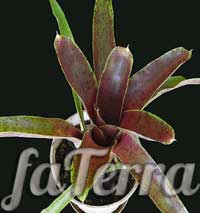 This is an epiphyte flower. The green, tongue-shaped leaves form tight rosettes that resemble funnels, in which the heads of many-flowered, bluish inflorescences are hidden. Dark red bracts surround the inflorescence. Flowering can be seen at the end of summer.
Neoregelia ampullacea
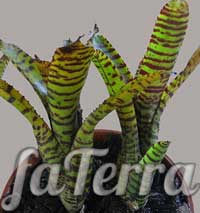 This is an epiphyte plant with compact clumps that resemble a bottle. On the green leaves with serrated edges, a red stripe is visible. The size of the leaves reaches twenty centimeters in length, and their width is about two centimeters. In the center of the rosette, a lush inflorescence, formed by flowers with asymmetrical, narrow, blue petals, is barely visible. Annual flowering occurs in April and August.
Neoregelia spectabilis
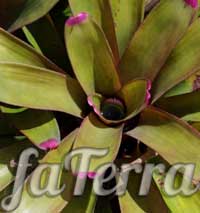 This is an epiphytic specimen with a multi-year life cycle, native to the Brazilian tropics.
A spreading rosette of green, tongue-shaped leaves, about forty centimeters long, hides a head-shaped inflorescence of blue flowers. They can be seen in winter, from January to February, and in summer, from June to July.
Neoregelia tigrina
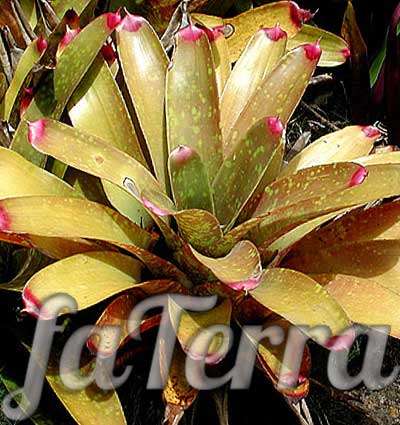
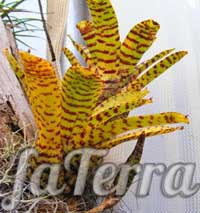 These are perennial, round, and dense rosettes-epiphytes - Neoregelia tigrina. It is distinguished by its rounded leaves with rounded tips and serrated edges. They are yellow-green in color with interesting brown stripes and a scaly base. A dense inflorescence with a large number of delicate, purple flowers is located on a low peduncle and blooms in early spring.
Neoregelia care at home
Neoregelia is a must-have for lovers of exotic plants. Its appearance and unusual flowering, although not as long-lasting as in Vriesea, cannot be compared to other flowers. To achieve good growth and a beautiful overall appearance of the plant, it is necessary to follow all the rules of Neoregelia care.
Location and temperature regime
Neoregelia loves bright light. The sunlight should be bright but diffused, without direct, scorching rays, so as not to harm the leaves of the plant.
High temperatures are beneficial for Neoregelia. The optimal temperature is 19-25°C, and a lower winter temperature of 15°C will positively affect the duration of flowering - up to six months. Constant access to fresh air is necessary, and drafts should be avoided.
Humidity and watering
The desired humidity level is about 60%. This can be achieved by spraying daily. Wiping the leaves with a damp cloth is very pleasant for the plant. Adjust the humidity: you can place the pot in wet expanded clay, pebbles, or moss. You can also use self-watering pots. Due to its tendency to high humidity, Neoregelia will happily decorate your bathroom.
During the active growing period, the plant will benefit from abundant watering. The rosette can be filled with water. In the cool season, water moderately with warm, settled water into the soil. The frequency of the procedure is regulated by slightly dry soil.
Substrate
Looseness, coarseness, and lightness are the main qualities of the soil mixture for good air access to the roots of the plant. One-third of the pot is occupied by drainage. The composition of the substrate can be adjusted. For epiphytes, take fine pine bark - 3 parts, sphagnum moss, peat, leaf, and compost soil - 1 part each. The second option is suitable for terrestrial varieties: leaf soil - 2 parts, compost and peat - one part, and half the norm of sand.
Neoregelia transplanting and propagation
It is desirable to repot the plant purchased in the store after flowering in a new, prepared soil mixture. Do not bury the rosette in the soil. A signal for repotting a long-lived plant may be the death of the adult rosette, from which it is necessary to separate young shoots. Care must be taken when handling the roots of the plant. After repotting, keep the plant in a room with a temperature of at least 22°C, and provide bottom heating for good rooting, and do not overwater the soil.
It is easy to propagate Neoregelia, just like its close relative Cryptanthus. Separate the daughter rosettes, plant them in prepared substrate, and do not forget to spray them.
Seed propagation is also acceptable, but it is more time-consuming. The seeds are lightly sprinkled with a mixture of sand and sphagnum moss, and conditions for a mini-greenhouse with a temperature of 25 degrees are created. After three weeks, as the seedlings grow, they are planted in their permanent location.
Feeding
Do not forget to feed the plant with weak mineral fertilizers in the summer months. They can be added to the rosette or sprayed on the plant.
Pests and diseases
If the care methods are violated and the created conditions are not comfortable, the plant may be visited by unexpected and unwanted guests: aphids, scale insects, spider mites, and mealybugs. Immediately treat with a soap solution, and if this is not enough, use insecticides: actellik, decis, and carbophos.
Fusarium is a disease in which the lower part of the bush rots and the plant may die. It is possible to fight or prevent the disease. It is necessary to use fundazol.
Problematic moments in cultivation
- Why are the leaves of Neoregelia covered with pale brown spots? The plant was burned by direct sunlight. It is necessary to urgently eliminate this deficiency by changing the location of the plant.
- The tips of the leaves are drying out - probably the air humidity is too low or there are drafts in the room.
- Why are the leaves of Neoregelia turning pale? The plant does not have enough light.
Love your Neoregelia, give it the attention it deserves, and it will reward you with a beautiful appearance, bring you positive emotions, and good mood.
Write comments
Comments