



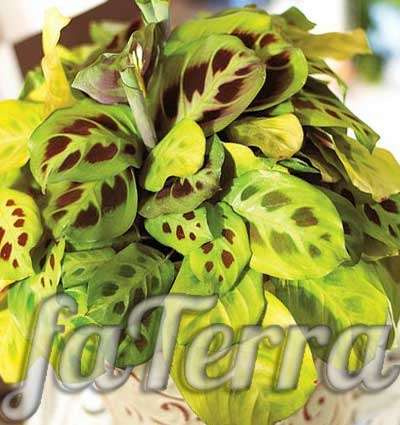
Latin name: Maranta
Category: perennial herbaceous plants
Native to: tropical forests of South and Central America
The Wonderful Maranta Plant
Maranta (Maranta) is a picturesque and striking representative of the marantaceae family. It includes about twenty-five species of perennial herbaceous plants, mostly variegated. These bright flowers are biologically unique because the leaves of these plants contain cells with more than one genotype.
The native habitat of the maranta plant is the swampy forest areas of Central and South America. This beautiful tropical plant can be found on all continents except Australia.
The discovery of the maranta is attributed to the French monk and botanist Pierre Charles Plumier, who named the beautiful plant after the Italian doctor, Venetian botanist of the 16th century, Bartolomeo Maranta.
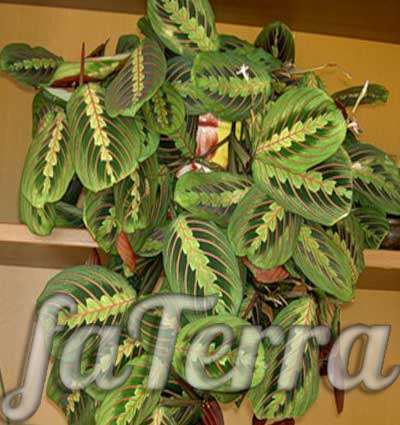
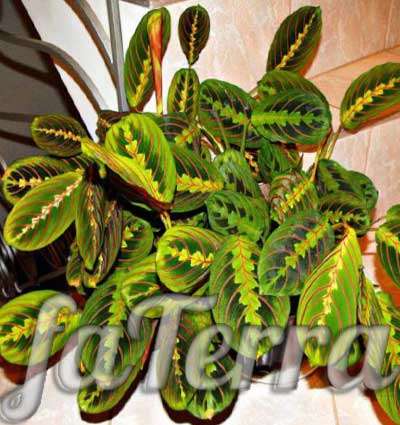
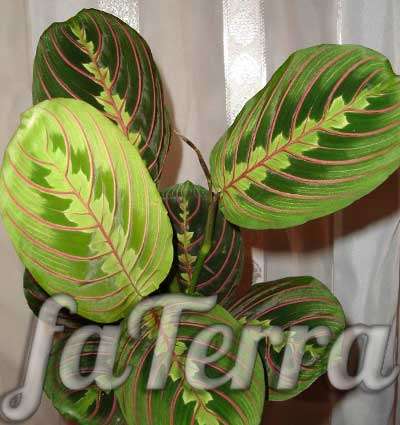
The maranta flower is a low-growing, herbaceous, perennial shrub that has no stem. The roots of the plant are superficial. The maranta can reach a height of up to thirty to forty centimeters. The variety of leaves of the maranta depends on the variety of the plant. The color spectrum of the leaf plates ranges from light green to dark green and even closer to black. The underside of the leaf can be red to greenish-blue. The outer surface of the leaf plates also has a variety of shapes, from oval to lanceolate, with a length of about fifteen centimeters.
Maranta, like its closest relatives, calathea and stromentia, is attractive for its unique leaf beauty and its ability to unfold them towards the light source. At night, the leaves rise up and take a vertical position. Thanks to this, the dew that falls from the leaves settles in the pads, which help them rotate. In the morning, with the first rays of the sun, the leaves unfold and take a horizontal position. As a result of this process, the maranta plant has acquired folk names such as "praying mantis" or "Prayer plant." The English call their maranta "the ten commandments." The maranta is also called "frog queen" because of the resemblance of the plant's beautiful color to the skin of the fairytale Vasilisa the Beautiful.
The maranta flower can serve as a living barometer in room conditions, and like all humidity and light indicator plants, it will accurately predict weather conditions and rain.
Maranta: Varieties and Unique Species
Maranta tricolor (Maranta tricolor)
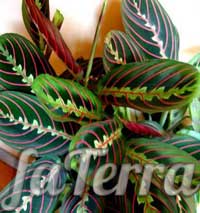 The tropical humid forests of Brazil are the native habitat of the maranta tricolor.
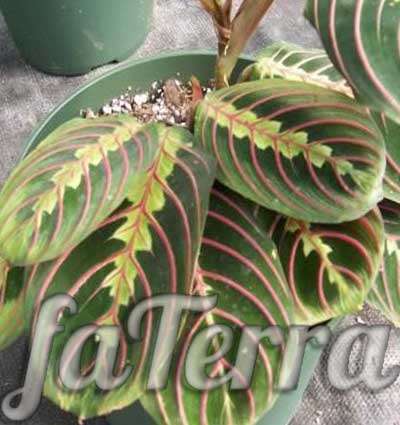
The leaves are oval, decorative, dark green in color, and the edges have a lighter, light pink hue. The center of the leaf is marked with clear, bright red veins on the outside and pink on the inside. Along them, spotted patterns form a colorful pattern. The leaves grow up to 13 cm in length and up to six centimeters in width. In the spring-summer period, small, pale pink flowers appear between the beautiful leaves.
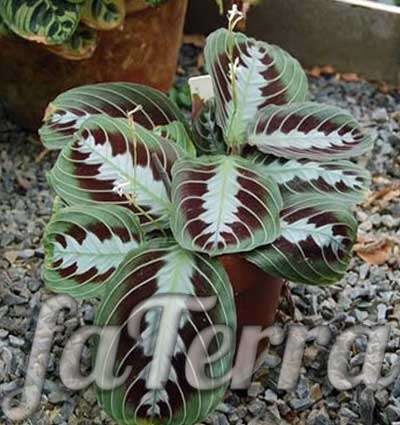
Maranta leuconeura (Maranta leuconeura)
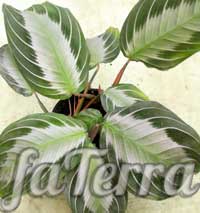 A Brazilian beauty. It appeared in Europe in the distant 16th century. This decorative, low-growing plant, up to 30 cm tall, with incredibly beautiful leaves, has become a leader in decorating various interiors.
Maranta leuconeura is an absolutely undemanding plant. Its oval leaves, 15 cm long and 9 cm wide, form a basal rosette. The unique beauty of this plant lies in its leaf plates, which are dark green and decorated with colorful patterns with a bright central silver vein and white lateral veins. The underside of the leaves is painted with greenish-blue and red patterns. Thanks to the plant's ability to raise its leaves in the evening and lower them during the day, you can see a completely different plant at different times of the day. The indoor flower, maranta, rarely pleases with small white flowers.
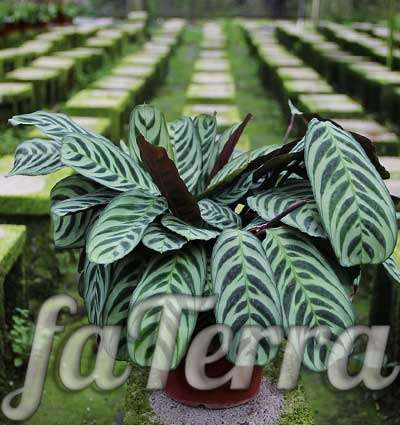
Maranta kerchoveana (Maranta kerchoveana)
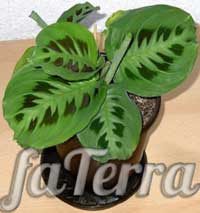 A very beautiful, small, herbaceous plant with elliptical, bright green, spotted leaves decorated with a white central stripe. The underside of the leaf has red and blue hues. Sometimes, maranta kerchoveana has small white flowers that form original inflorescences.
Due to its hardiness and minimal requirements for care, maranta kerchoveana is often a decoration of various institutions, offices, and apartments.
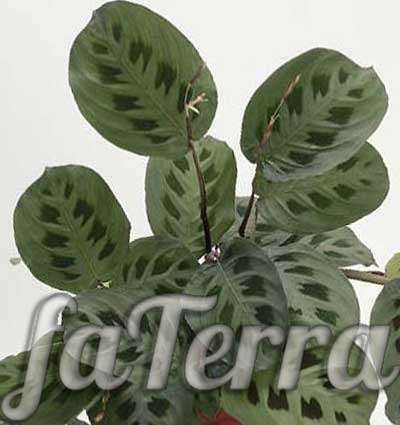
Maranta bicolor (Maranta bicolor)
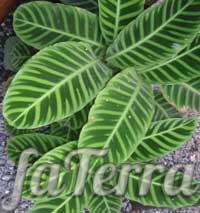 This is a separate species of maranta. It resembles maranta kerchoveana. However, maranta bicolor does not form bulbs, and the back of the leaf has a purple hue.
It is a pity that this beauty, with oval leaves covered with brown spots in the center, is not often found on the windowsills of amateur gardeners.
Maranta arundinacea (Maranta arundinacea)
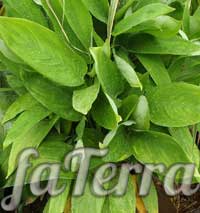 The natural habitat is Central and South America.
In these humid tropical forest areas, you can find lush, compact shrubs up to one meter tall, which form thick root bulbs. The leaves of the plant reach up to 25 cm in length, have an oval shape, and a beautiful bluish-green color. Maranta arundinacea blooms with small white flowers.
Maranta Massangeana (Maranta Massangeana) or black maranta
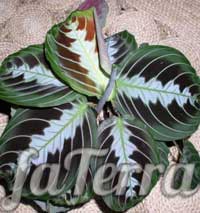 Maranta Massangeana is one of the most demanding and capricious species among all marantas.
This miniature, compact, charming flower has a very dark, neat oval leaf, the length of which does not exceed 15 cm. The decoration is the central steel-colored vein from which longitudinal ribs spread out, between which there are patterns of greenish and brownish-green colors.
Maranta Care at Home
Caring for a maranta can be intimidating, but this tropical plant is not as difficult to care for. The main task is to create conditions close to its natural environment, namely high humidity, warmth, partial shade, and comfort. Then, in gratitude for the careful and appropriate care, the maranta will decorate any administrative building and cozy home with its beauty and attractiveness.
Now, let's consider in detail, step by step, how to care for a maranta at home?
Choosing a Location
Like many indoor plants, maranta does not like direct sunlight. Its leaves become pale and curl. Partial shade is the best option for the plant. Flower growers with north-facing apartments can safely grow maranta. It will also feel good if the plant is located on the east or west side.
The main thing is to avoid drafts.
Write comments
Comments