



Latin name: Ludisia
Category: terrestrial herbaceous plants
Family: Orchidaceae (Orchids)
Native to: Southeastern Asia, Indonesia
Ludisia: Interesting Facts
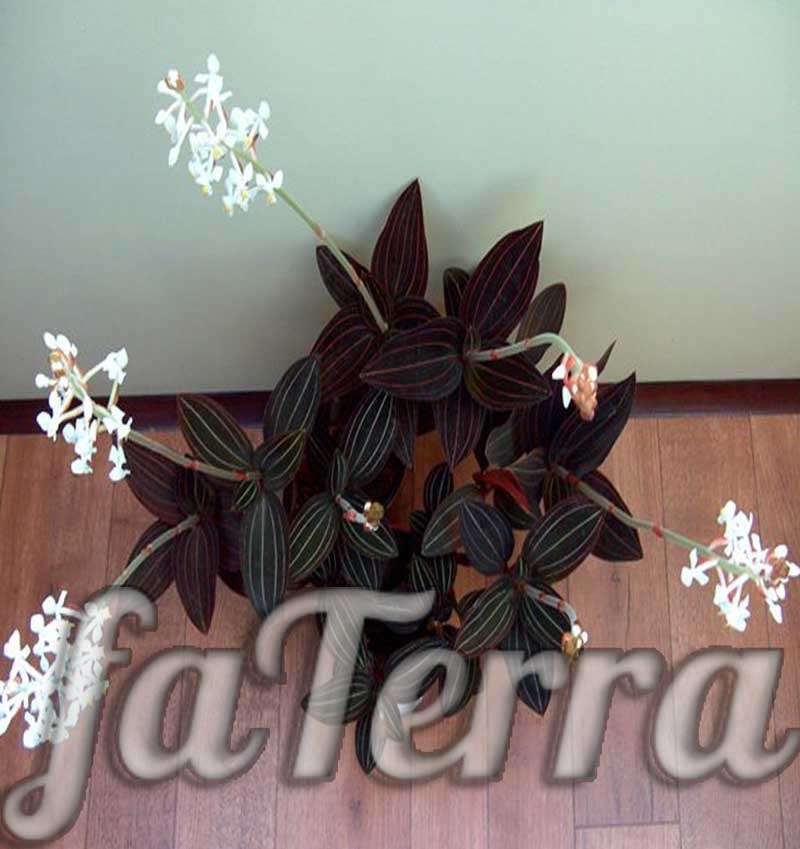
Ludisia (Ludisia) is a beautiful, evergreen, and unique flower belonging to the Orchid family. The native habitat of Ludisia can be considered Indonesia and Southeast Asia. It grows in the wild in southern China, Vietnam, Malaysia, Thailand, and also on Sumatra, where this beautiful and incomparable beauty is spread across cool green carpets in hot tropical forests. Flower enthusiasts classify this plant as a separate group of "precious orchids." Interestingly, the splendor and attractiveness of this natural phenomenon are not in the flowers, but in the unusual beauty and color of the leaves.
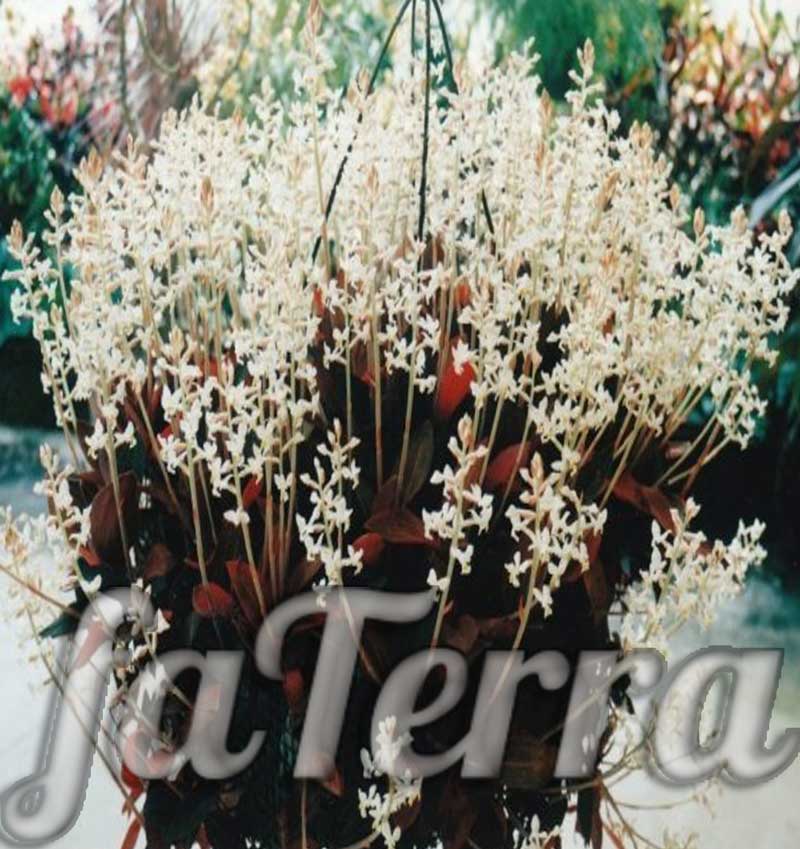
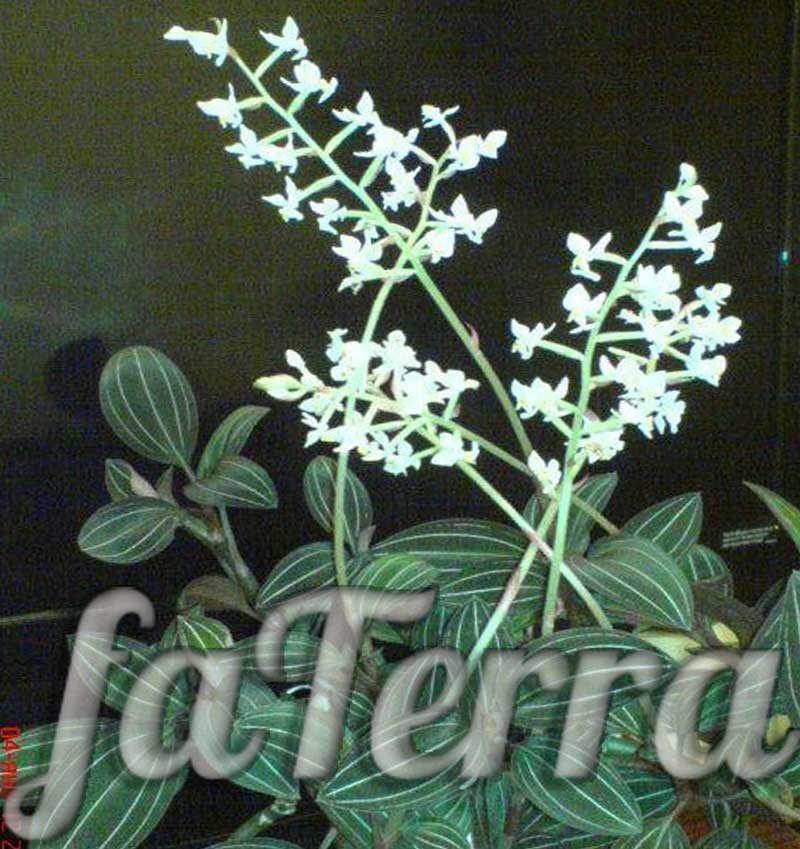
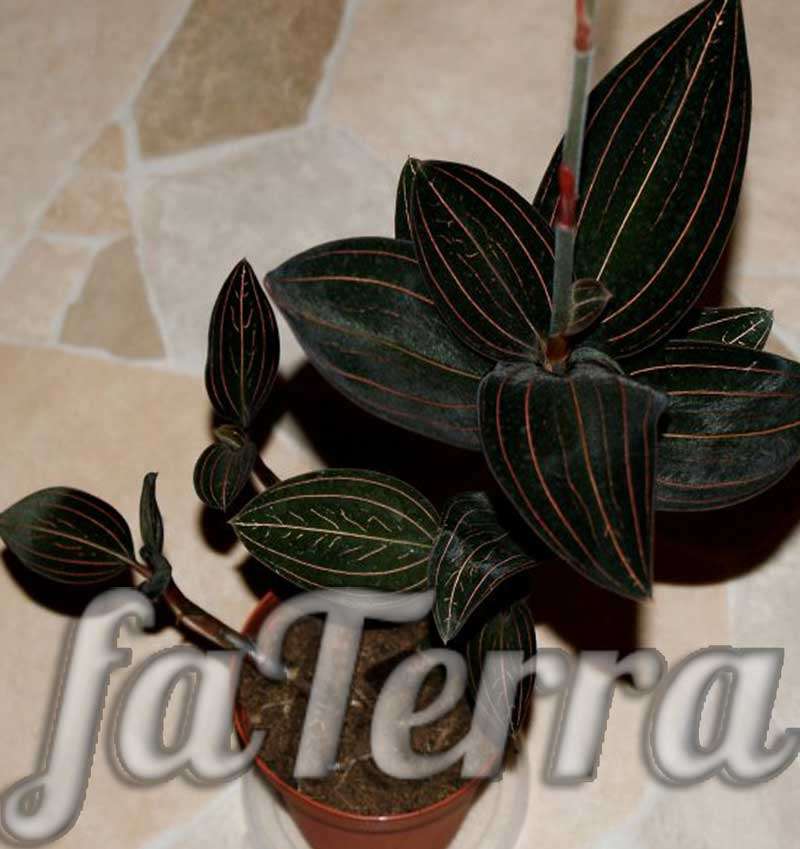
The Ludisia plant, in its archive, has other names: Gemaria, Ludisia, and Ludisia - it is a herbaceous terrestrial sympodial orchid with creeping, fleshy stems that spread across the surface of the soil. From them, a large number of young shoots emerge. The orchid bush grows up to a height of no more than 15 cm. The length of the plant's leaf is 7 cm, and its width is 3-4 cm. The upper part of the leaf is velvety with silvery streaks. The color palette is varied, mainly with bright shades of burgundy green, emerald, brown, bright red, crimson, and sometimes black. The underside of the leaf is smooth with burgundy and brown hues. Tiny, white, fragrant flowers grow on a tall peduncle, which bloom throughout the year and retain their beauty for up to seven years.
Species and Varieties of Ludisia
 Ludisia, a precious orchid, comes in only one bicolored species. It is also called colorless and variegated.
Ludisia discolor (Ludisia discolor). This precious orchid has fleshy stems that creep along the ground. At the tips, a leafy area forms with three to six dark leaves that have original color patterns. A straight peduncle grows from the top of the shoot, reaching up to thirty centimeters in length, where tiny, white or white-yellow flowers are located, arranged in a row on the peduncle, approximately twenty to thirty in number.
The Ludisia discolor orchid has several varieties that differ mainly in leaf color.
Ludisia discolor (Davsoniana). Davsoniana is considered the largest form, reaching about thirty centimeters in height, with brownish-red leaves and beautiful pink veins.
Ludisia discolor (Rubrovenia). Rubrovenia is a very original plant with elliptical bronze leaves with copper-colored veins.
Ludisia Orchid Care at Home
It is absolutely undemanding and does not require special conditions. It is one of the bright representatives of plants that love low temperatures and prefer diffused light. In summer, it needs shade, and in winter, it needs supplemental lighting. The duration of the light period for normal plant growth is, on average, 12-15 hours per day. A lack of light immediately affects the elongation of the stems, and an excess of light causes the leaves to droop, and the plant loses its attractiveness and beauty. A significant difference between daytime and nighttime temperatures stimulates flowering in Ludisia.
The optimal daytime temperature is about 20-24 degrees in summer, and 16-18 degrees at night, and a few degrees lower in the winter.
Watering Ludisia depends on the temperature, the higher the temperature, the more you need to water the plant with soft, warm water after the soil substrate dries out. During the active growth period, Ludisia can be fed with mineral fertilizers.
It is necessary to maintain high humidity by frequently spraying the air near the plant.
Ludisia should be repotted in the spring as the root system fills the pot. The frequency of repotting is approximately once every two years. Pots should be chosen low and wide with drainage holes. A soil mixture with a high proportion of peat and humus, leaf soil, pine bark, and wood birch ash is well suited. Place large pieces of substrate at the bottom and a fine fraction on the top of the pot. The plant that has been repotted should be provided with light, warmth, and moisture.
Ludisia Propagation
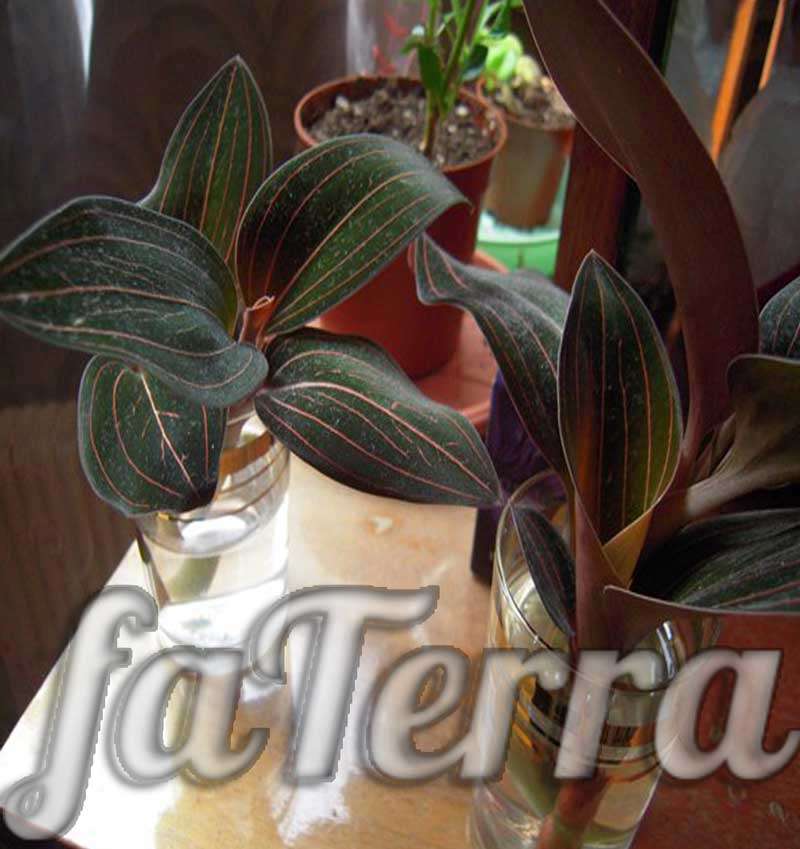
Ludisia can be propagated by dividing the bush, stem segments, and apical cuttings. The best time for propagation is spring. Apical cuttings with three or four nodes on the stem are cut, dried, and rooted in moist sphagnum or in water with activated charcoal.
Pests and Diseases
Caring for a Ludisia orchid at home is not difficult, but it is necessary to treat the plant with love and provide all the necessary conditions to protect it from a large number of pests and diseases. For example, snails or slugs can get into the soil if it is not treated, which damage the stems and leaves of the orchid. Ludisia is often attacked by spider mites, scale insects, whiteflies, and mealybugs.
Write comments
Comments