



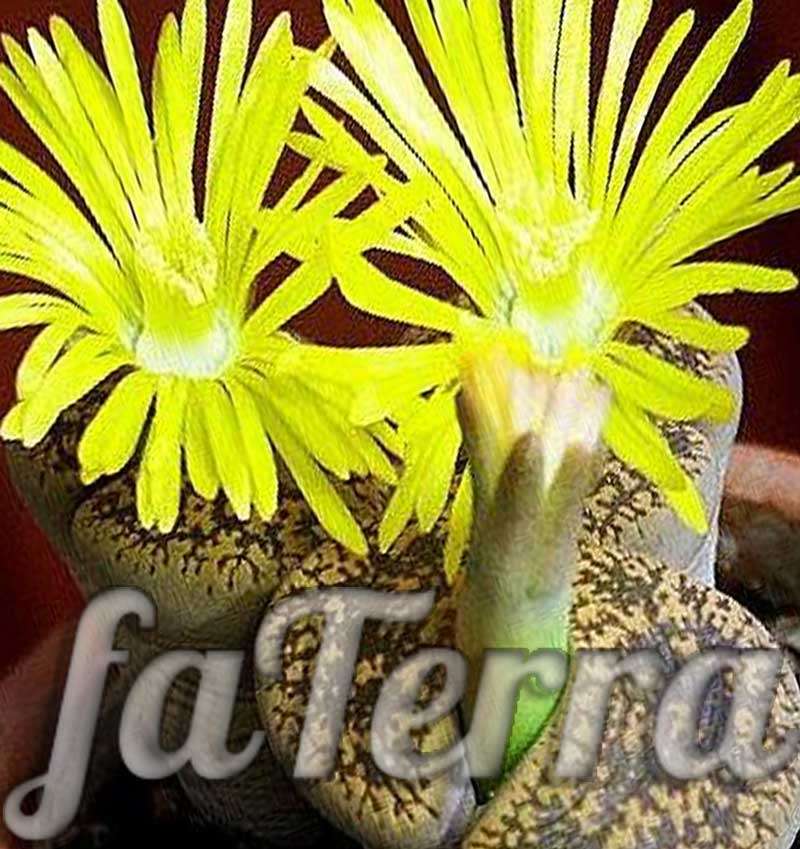
Latin name: Lithops
Category: perennial succulent plants
Native to: Southern Africa, South Africa, Namibia, Botswana
Lithops - "living stones" - interesting information
These are extremely beautiful and diverse plants in nature. The most unusual and amazing representatives of the African deserts, belonging to the Aizoaceae family, are the flowering "living stones".
Lithops are unusual succulent plants, which means "stone-like".
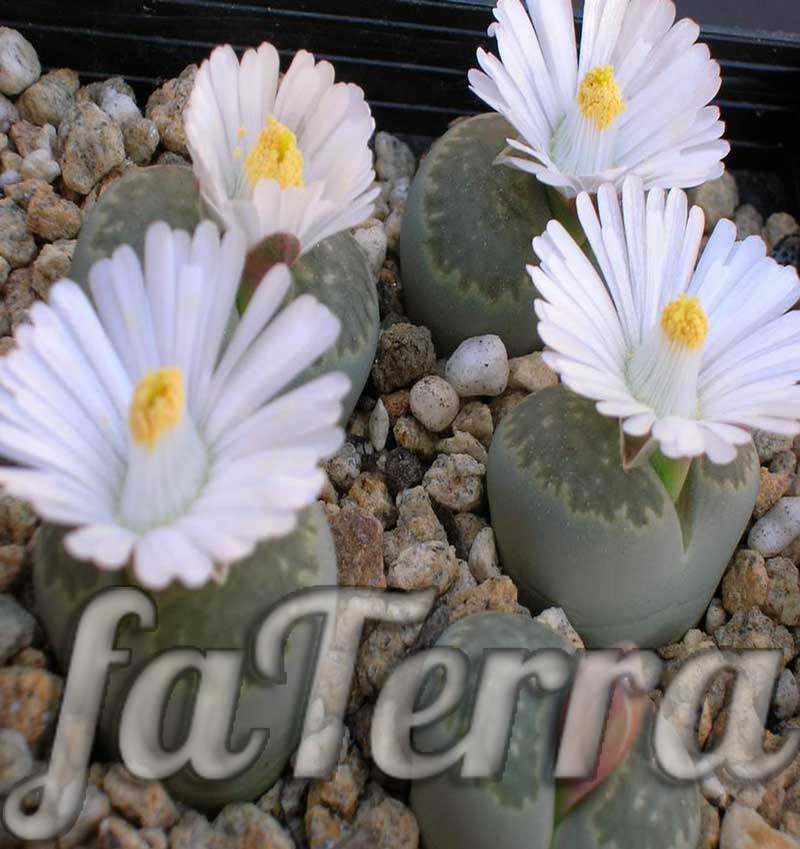
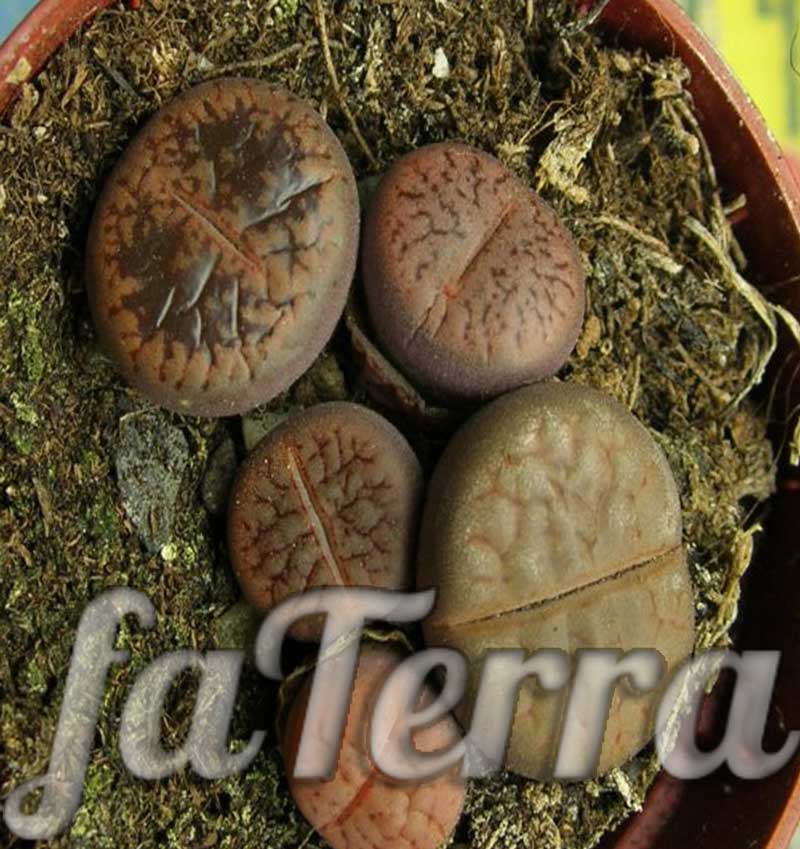
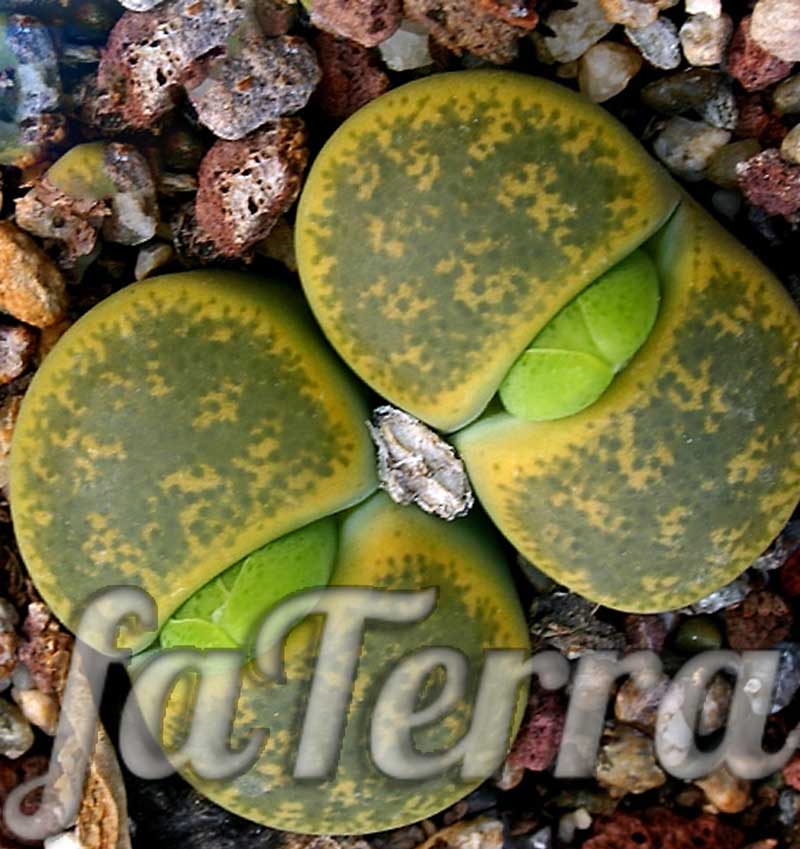
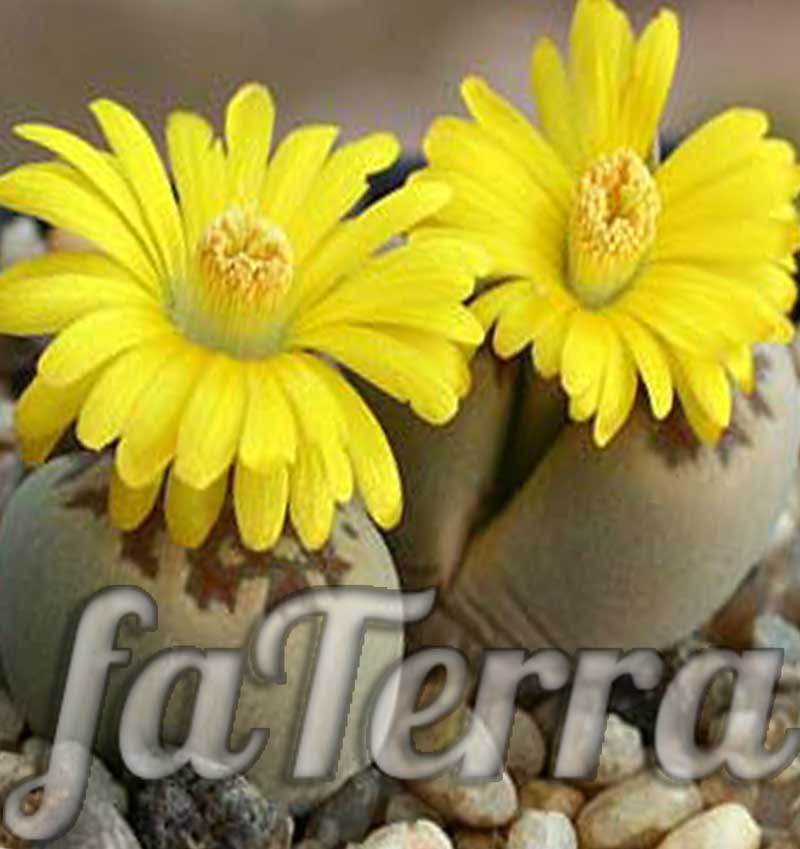
They really resemble a stone and even take on the color of the surrounding area where they grow. This ability to camouflage helps lithops escape from animals that eat them. Lithops grow under the scorching sun of the deserts, burying themselves in the sand and withstanding temperatures above 50 degrees. There are about 37 species of this plant in the wild. Lithops "living stones" are succulents that consist of two thick, fleshy, fused leaves. These leaves are separated by a small slit from which a flower stalk grows. The size of the slit or incision depends on the type of plant. The surface of the thick leaves has a variety of patterns and shades: green, greenish-gray, brown-red, and also very originally decorated with multi-colored spots, patterns, or dots of various colors. The size of the leaves also depends on the type of plant and can grow up to 5 cm in width and height. Lithops flowers are white, yellow, or orange. The size of the flowers can reach about two to three centimeters in diameter. They also look like our daisies or chamomile. Lithops bloom for about 7-10 days, and they begin to bloom in the third year.
Types of Lithops
Lithops Marmorata (Marble Lithops)
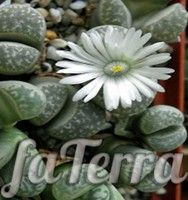 This is an unusual, exotic, flowering, very compact succulent. This plant got its name due to the characteristic marble pattern on the upper part of the leaf. Grayish-green color dominates in Lithops marmorata. The width of the adult leaf is slightly more than 1-2 cm. The flowers are about five centimeters in diameter, white in color, and emit a very pleasant, delicate aroma.
Lithops pseudotruncatella
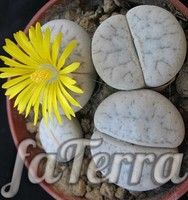 This is a succulent, unusual, beautiful, flowering plant. The original shape of this succulent consists of two leaves with a diameter of up to three centimeters, and a height of up to four centimeters. The leaf colors are dominated by gray, brown, or pink tones. On the upper, flat part of the leaf, there is a branched, linear, or patterned pattern. From the deep slit between the leaves, beautiful, daisy-like, golden-yellow flowers up to four centimeters in diameter appear. Lithops bloom for 5-10 days, and after pollination, fruits appear.
Lithops Optica
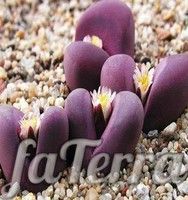 This type of lithops is a succulent, original plant with green-gray or light-green leaves. There is also a variety of lithops with pink-raspberry leaves. The leaves reach a height of about two centimeters. The partial fusion of the leaves forms a deep slit from which beautiful white flowers appear, which delight the eye for 7-10 days.
Lithops care at home
If you prefer exotic plants, then you should buy lithops. These amazing desert plants will bring beauty and variety to your home. Caring for lithops is very simple, and even a beginner can successfully handle this task. To do this, you only need bright sunlight, dry air, and a nutritious soil mixture consisting of two parts of leafy soil and one part of coarse sand and pumice, and drainage is essential.
The variety of appearance of lithops encourages collecting these "living stones". They look very original in the interior, attract with their decorative appearance, miniature appearance, and it is advisable to grow lithops in very deep pots. They will not take up much space, but will decorate and diversify your life and reward you with lushness and unique beauty.
Air temperature
Lithops are quite resistant to heat, so they should be kept in a sunny location with windows facing south, east, or west, and well-ventilated. A room with a moderate temperature is also suitable for the plant. In winter, during the dormant period, a temperature of 10 to 15 degrees above zero is suitable for lithops.
Lithops watering
- Lithops is a succulent and should be watered moderately to prevent root rot.
-
To prevent water from getting into the slit between the leaves, bottom watering should be used for lithops.
- From January to the beginning of May, the plant should not be watered at all.
Repotting lithops
Lithops should be repotted during the growing season as the roots fill the pot. When repotting, excess roots should be trimmed and soaked in acidified water for a few hours to remove salt. Good drainage is essential. The top layer of soil should be covered with pebbles, small stones, or broken bricks of various sizes, shapes, and colors. This will prevent root rot, improve the natural background, and promote better growth of the lithops.
Lithops propagation
Growing lithops from seeds is done in the autumn-winter period, but the most favorable time is March. Before sowing, the seeds are soaked in warm water for six hours, then sown on the surface of the soil. The pots with seeds should be covered with glass or polyethylene and watered daily. After six to ten days, seedlings should appear. The seedlings should be placed in a bright place, protected from direct sunlight.
Lithops pests
Lithops are often affected by spider mites and aphids. If pests are found, the plant should be treated with insecticides immediately. Also, treat the roots, then rinse them and plant them in new soil.
Lithops are beautiful, original plants for plant lovers. A diverse, colorful collection of these miniature succulents will look incredibly beautiful and original on a home windowsill.
Write comments
Comments