



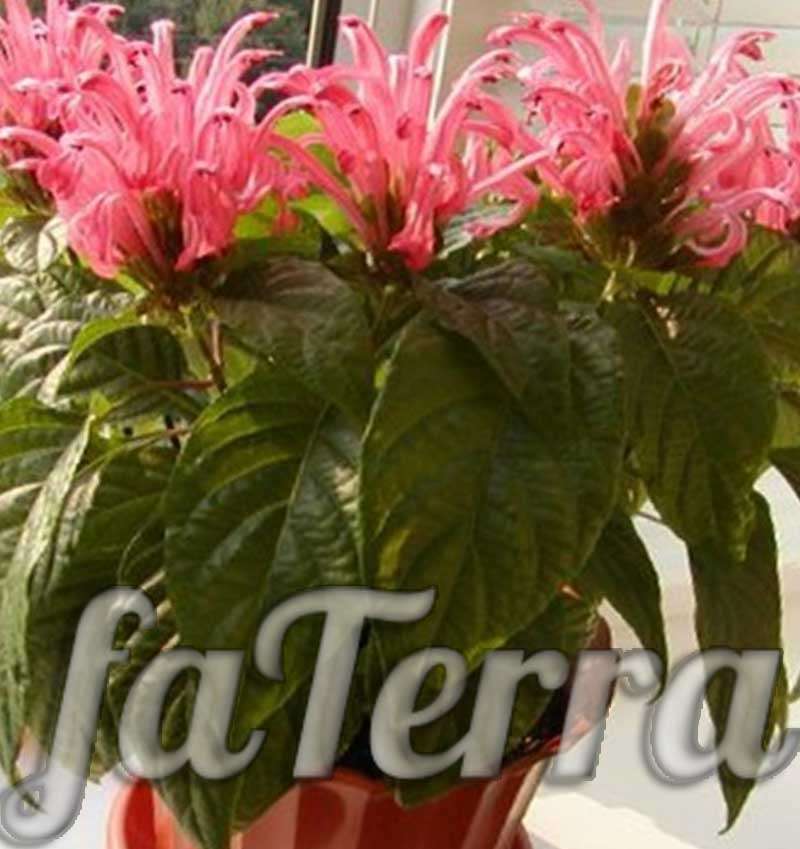
Latin name: Jacobinia
Native to: Bolivia, Brazil, Mexico
Interesting information about the beautiful Jacobinia
Jacobinia (Jacobinia) is a wonderful tropical plant that has its first name, which corresponds to the name of a small town in the southeastern part of Brazil in the state of Bahia, where it is most common. That's where it was first discovered. Another name for Jacobinia is Justicia, in honor of the gardener and florist from Scotland, James Justice.
The genus Jacobinia belongs to the Acanthaceae family and includes about 50 species of shrubs and herbaceous plants. According to the new plant classification, Jacobinia is currently classified in the genus Justicia.
The genus Jacobinia is rich in evergreen, perennial shrubs that often reach a height of 1.5 meters, as well as herbaceous plants. These plants have a brownish-red color with straight, partially woody stems with swollen and inflated nodes. The leaves of Jacobinia are green or colorful, arranged oppositely, lanceolate, ovate, and can be described as resembling an ellipse, with sharp edges. The yellow, red, orange, or white flowers are tubular, solitary, or arranged in decorative inflorescences that resemble a spike. They are beautifully displayed by the colorful, elongated bracts on which they are located. It is these bright yellow bracts that make Jacobinia similar to its close relatives in the Acanthaceae family, such as Acalypha, Pachystachys, Pelargonium and Sansevieria.
Wonderful varieties of the common indoor beauty - Jacobinia
The different varieties of this beauty can be divided into two groups:
- Jacobinia with one or four flowers located on lateral shoots;
- Jacobinia with flowers arranged in terminal inflorescences.
Jacobinia pauciflora
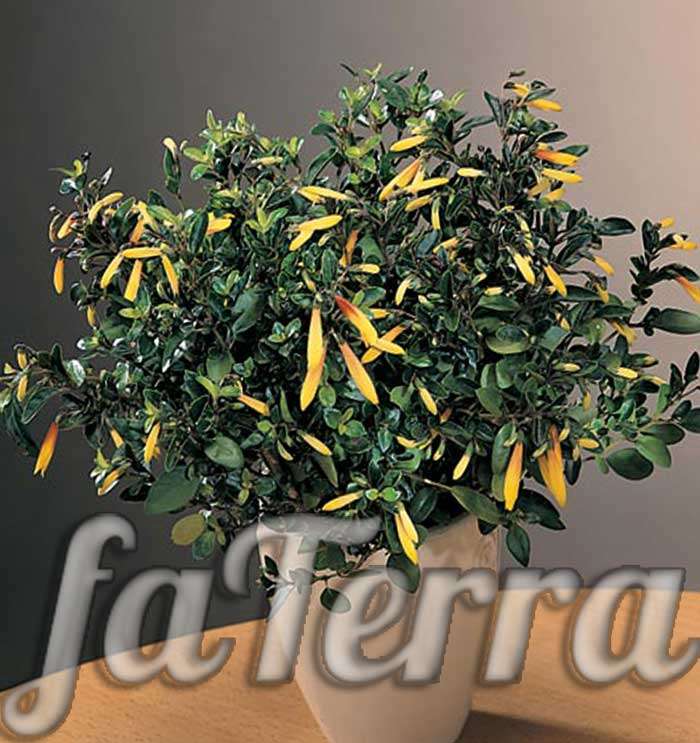
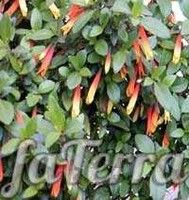 As mentioned earlier, Jacobinia and Justicia are the same plant. It also has another name - Justicia rizzinii. This low-growing, semi-shrub has hanging and profusely branched stems, reaching a height of only 30 to 60 centimeters. The leaves are about 7 centimeters long and 3 cm wide, leathery, and elliptical in shape, tapering from the tip to the base. What's interesting is that the upper leaves are always larger than the previous ones. Single flowers appear in the leaf axils, which are distinguished by interesting and original colors: the base of the flower is red, while the tips are yellow. The Jacobinia plant blooms profusely, for a long time, and beautifully.
Jacobinia carne
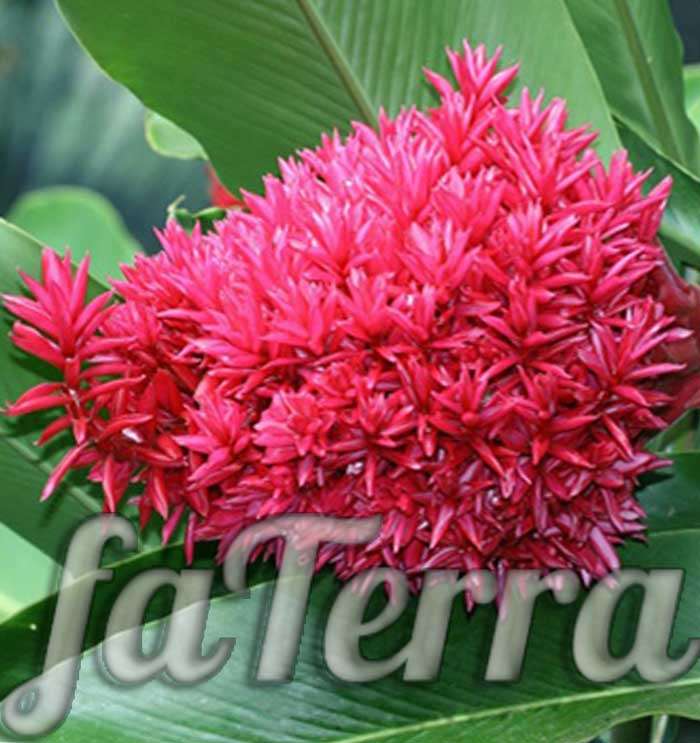
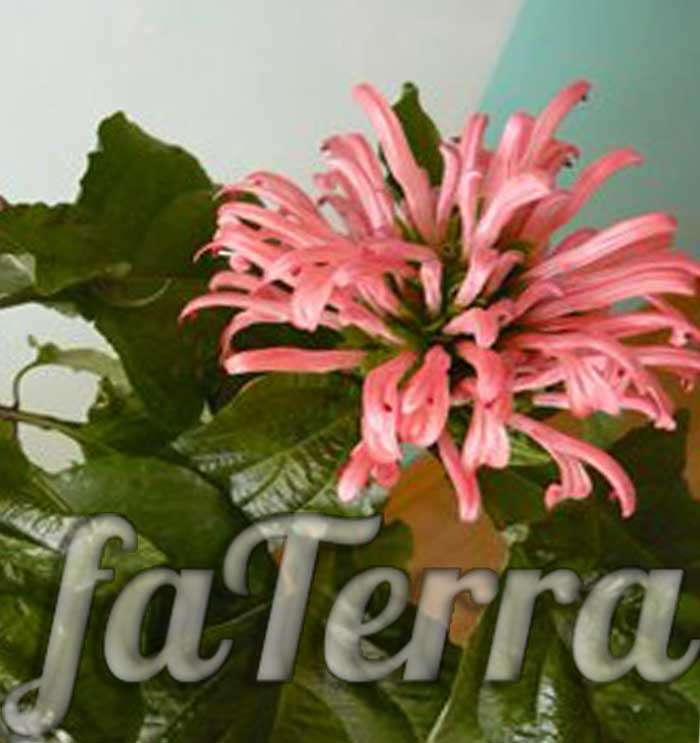
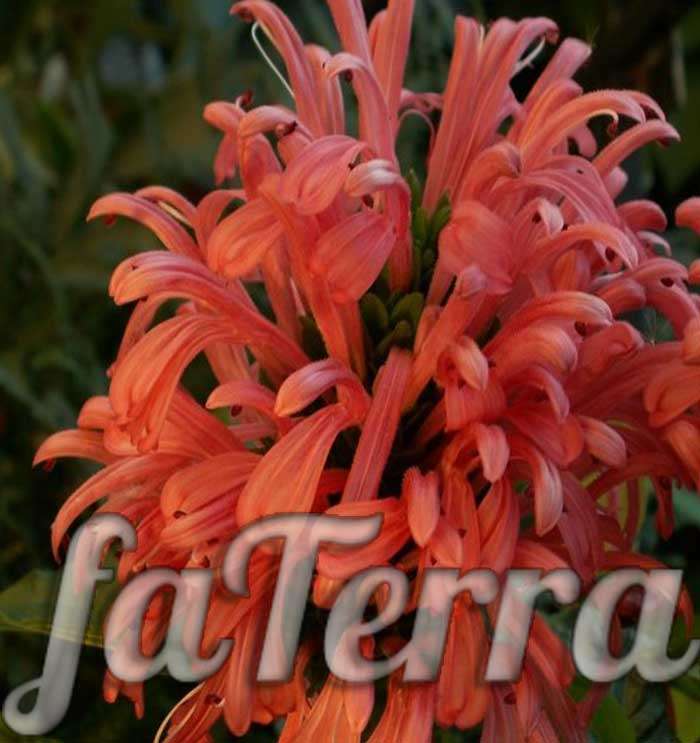
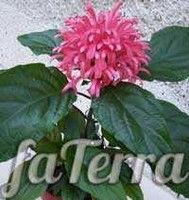 The perfect opposite of the previous variety is Jacobinia carne. This flowering semi-shrub grows up to 1.5 meters tall, with straight stems and sparse branches. The oppositely arranged, oblong, wrinkled leaves grow up to 25 centimeters long. Interestingly, the upper side is dark green, while the underside is light green with a reddish tint. Jacobinia blooms throughout the summer until late autumn. This beauty is represented by a spike-like terminal inflorescence up to 15 cm long, with numerous bright red and bright pink flowers. This variety of Jacobinia can be found in reference books under another name - the plant Justicia carne.
Jacobinia pohliana
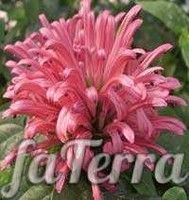 The native habitats of Jacobinia pohliana are mainly Brazil, where it thrives in subtropical moist forests. The 1.5-meter semi-shrubs adorn the tropics with beautiful pink flowers arranged in large terminal inflorescences resembling a spike. The oppositely arranged, elongated leaves with wavy edges are beautifully clustered at the ends of the stems with long petioles.
Jacobinia care at home
Jacobinia care is not very demanding, but depends on the type of plant. To get a beautiful shrub with large, shiny leaves and a bright floral arrangement with exotic "sultans" or original two-color "bells", you need to create certain conditions for keeping your pet.
Location
The Jacobinia flower is a plant that loves bright, diffused light. In summer, it feels best outdoors, but in winter, it even prefers direct sunlight.
Acclimate the plant to bright sunlight gradually to avoid burns.
Temperature
Moderate temperatures are suitable for Jacobinia. As mentioned earlier, it is best to take the plant outside in summer, where it will adapt to the conditions of the garden, balcony, but avoid direct sunlight. The normal summer temperature is 20-24 degrees, and the winter temperature is around 15 degrees, which can be lowered to 7 degrees.
Air humidity, watering, and feeding
Like most indoor plants, Jacobinia loves optimal conditions. However, dry air is not desirable for Jacobinia, a tropical plant. It is sensitive to air humidity.
Regular misting of the crown with soft water is necessary.
The plant will also appreciate a warm shower. It is important to constantly maintain moisture in the pot's tray.
In the summer, Jacobinia should be watered abundantly with soft water at room temperature after the top layer of soil has dried, but do not overwater to avoid harming your pet. In winter, watering should be reduced depending on the temperature.
It is possible to fertilize the plant once a week with organic and complex mineral fertilizers during the active growing period, but not excessively. During other periods, fertilize once a month. Avoid over-fertilizing Jacobinia, as this can affect its flowering. The plant may not bloom at all. Do not fertilize in winter.
Repotting and pruning
You can buy a Jacobinia in a store. And, of course, skill, desire, and experience are necessary to properly adapt the plant. Repotting is also an important factor for the healthy growth of the plant. It is best to repot in early spring. Repot the Jacobinia into a slightly larger pot with drainage holes. The plant is not particularly demanding on the soil mixture, but it will feel good in a mixture of one part sand, peat, compost, and three parts leaf soil.
Drainage is essential.
Proper and timely pruning of Jacobinia is essential for getting a beautiful, profusely flowering plant. Prune the shoots mercilessly, leaving 3-4 nodes. As a result, you will get young shoots and abundant flowering.
Propagation of Jacobinia
It is quite easy to propagate the Jacobinia plant, also known as Justicia, using cuttings with two leaves. In a greenhouse environment, cuttings planted in a mixture of perlite and peat take root within a month. The rooted cuttings can be transplanted into pots with a diameter of 10 cm. During growth, pinch the tops of the cuttings several times for better branching and shaping of the bush. And then, by autumn, you can expect beautiful flowering of the Jacobinia.
You can buy Jacobinia seeds in flower shops. Sow these seeds in soil and wait for them to germinate in a warm room at a temperature of about 25 degrees.
Jacobinia pests and diseases
With proper care, these problems usually do not occur. However, if the plant is in a very dry environment with low humidity, it can become infected with scale insects or spider mites. This is why Jacobinia can get diseases, which can be identified by symptoms such as yellowing of leaves, the appearance of silvery webs on the underside of the leaves. If you find spider mites, remove the leaves with affected areas, spray, and rinse the plant. Treat it with chemical preparations.
Problems that may arise when growing Jacobinia:
- The plant drops its leaves - the soil is either too dry or too wet, or the humidity is too high;
- The plant does not bloom and has large leaves - possible over-fertilization;
- Yellowing and dropping of lower leaves - too cold, insufficient light;
- Gray mold on flowers - excessive moisture, too low temperatures.
Love your plant! Follow the simple rules of care described above. Take into account all the features of the life of Jacobinia in natural conditions and recreate them in indoor conditions. Enjoy the beauty and uniqueness of your luxurious Jacobinia, the splendor of its lush crown, and the stunning beauty of its flowers.
Write comments
Comments