



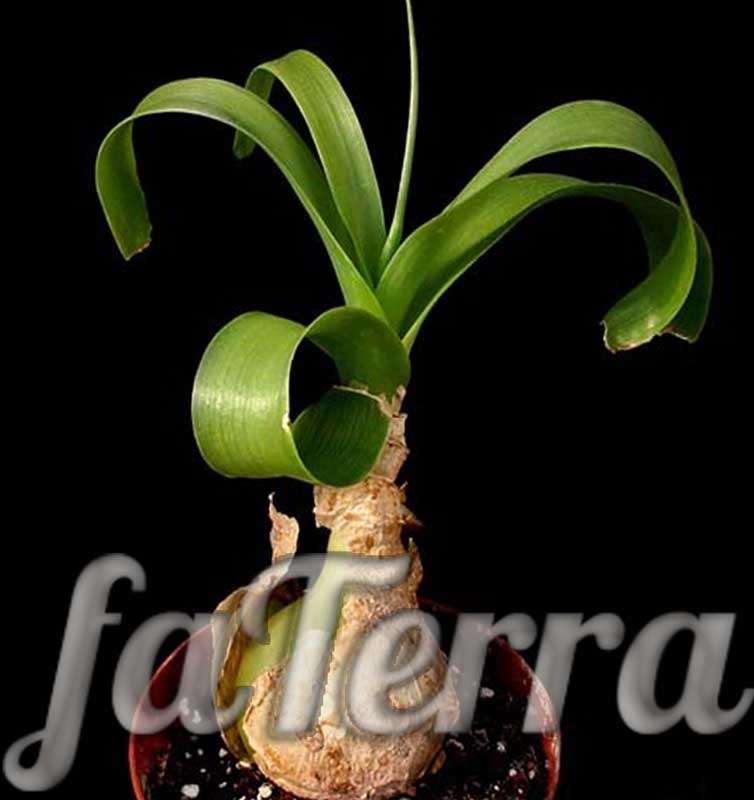
Latin name: Ornithogalum
Category: bulbous herbaceous plants
Family: hyacinth (Hyacinthaceae), previously in the lily (Liliaceae) family
Native to: Southern Africa
Indian onion - the history of origin and distribution of tailed ornithogalum
The scientific name of this bulbous perennial plant is tailed ornithogalum (Ornithogalum caudatum). The impassable subtropical thickets of Southern Africa are its homeland. In our regions, the Indian onion, as a houseplant, appeared quite recently, since 1961, but it has already rightfully taken its place on the windows of homes. The seeds of tailed ornithogalum were brought to the botanical institute in Leningrad.
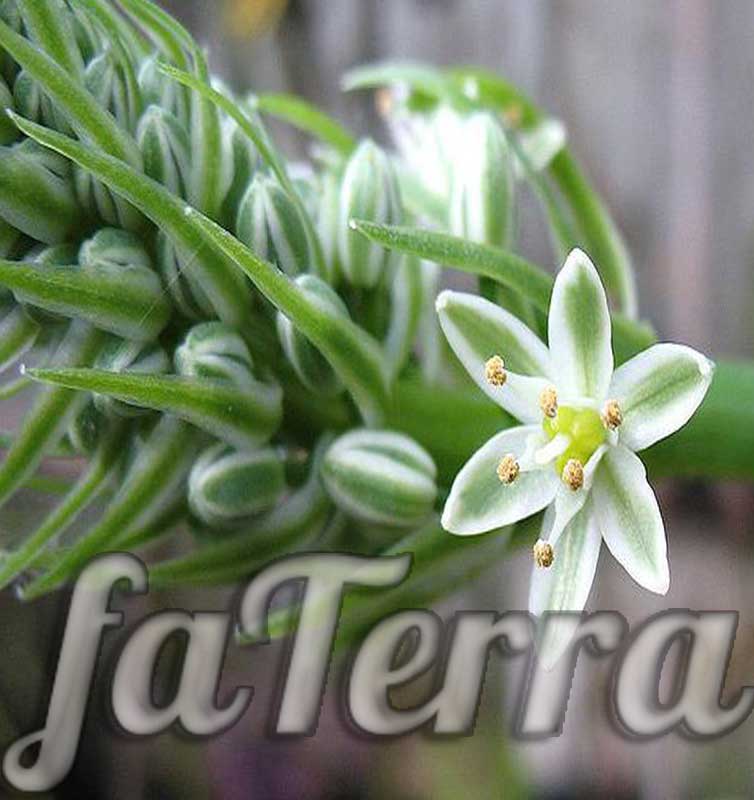
The Indian onion is a representative of the hyacinth family, which was recently transferred from the lily family. Naturalists call it tailed ornithogalum (Ornithogalum caudatum). If you translate the words of Greek origin "ornis" - bird, "gala" - milk, you get bird's milk. These tiny, picturesque white flowers became the reason for this original name.
Different peoples have their own name for this plant: Indian onion, Chinese onion, sea onion, false sea onion.
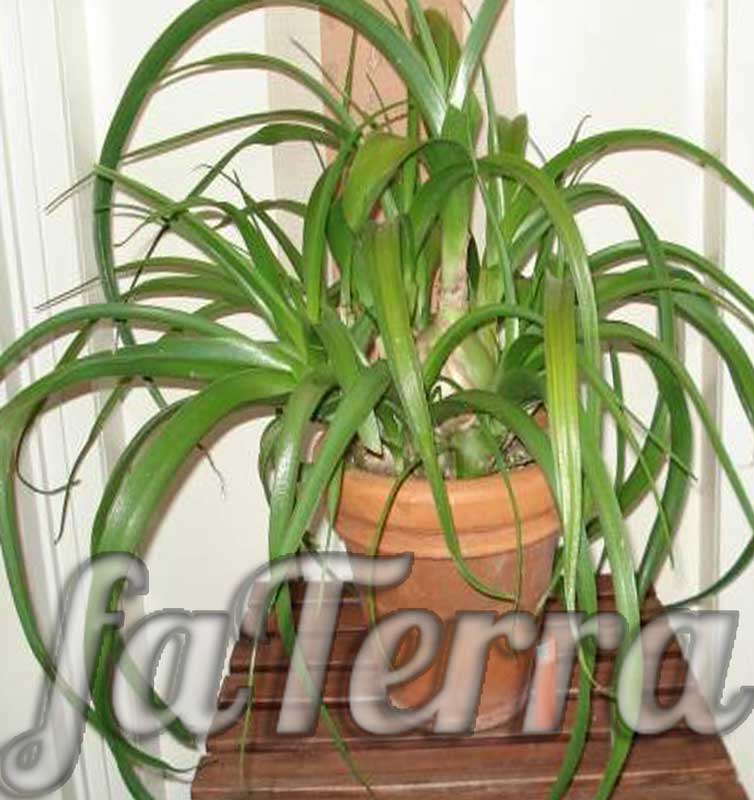
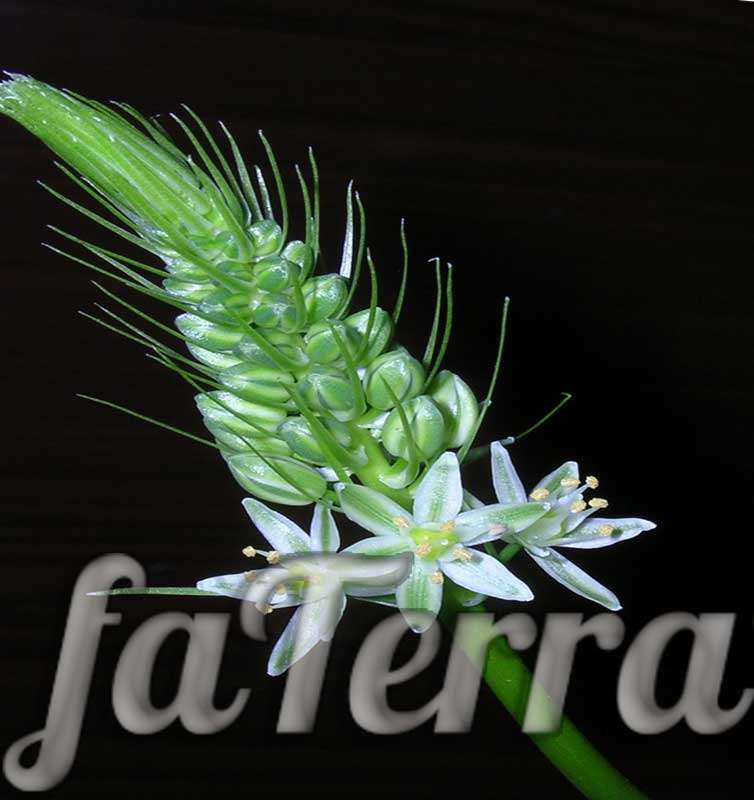
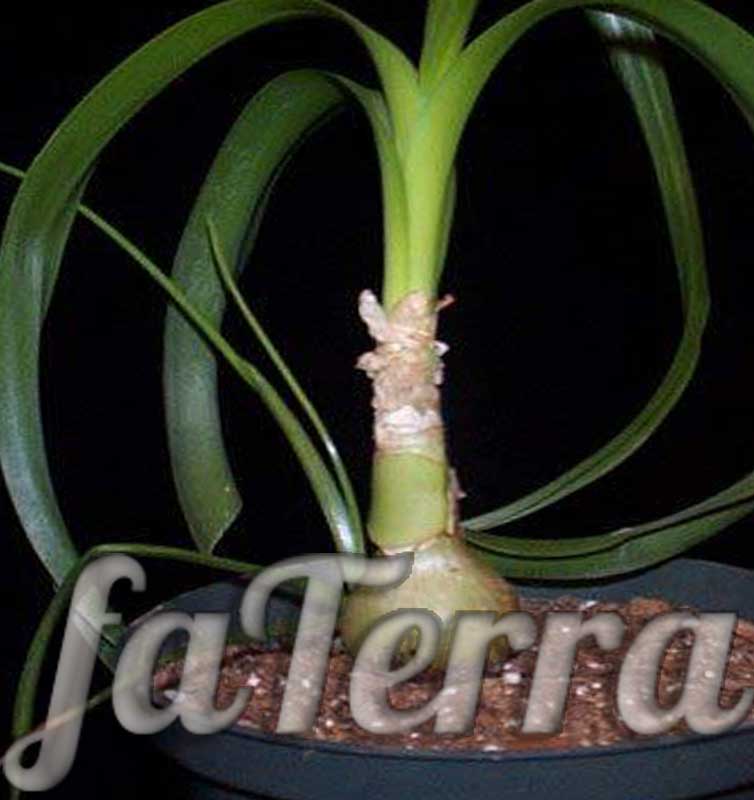
The plant itself has a flat, wide, belt-like foliage that resembles feathers. White-yellow scales tightly cover the green bulb, which can reach a diameter of ten centimeters or more. By the way, the flower of the Indian onion blooms for a long time, it blooms in the second or third season, and at the same time, it releases an original peduncle about 60 cm high, and under good conditions, it can delight the owners for a very long time, up to thirty years. Ornithogalum belongs to the category of poisonous plants, but it has medicinal properties.
Indian onion care at home
This is an unpretentious plant to grow. And so that your pet is beautiful and looks healthy, you need to take care of it and follow certain rules:
- it is best to choose a clay pot for your flower. The flower will be comfortable in it: clay allows moisture to evaporate and prevents the soil from accumulating excess salts and various deposits. The bulb must be planted two-thirds of its size above the surface of the soil, over time it will take up the entire space of the pot;
- you need to water the plant when the soil dries out. In winter, the frequency of watering should be reduced, because excessive moisture is absolutely not needed for the Indian onion, which can lead to root rot;
- the Indian onion, as a houseplant, needs a lot of air, which is necessary for the roots to develop and increase the bulb. For this, it is necessary to loosen the soil a couple of times a week;
- the temperature and lighting should be moderate and constant during the period of active growth, and during dormancy, a slight decrease in temperature is allowed;
- the Indian onion will feel comfortable in a mixture of turf, leaf and sandy soil;
- the plant should be fertilized during flowering and during the period of intensive growth, it is not necessary to fertilize it in the winter;
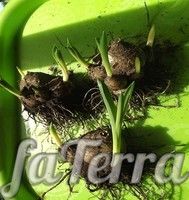 Indian onion propagates in two ways: by seeds - previously pollinating them during flowering with a brush or with the help of bees; by bulbs - by offspring, which independently develop under the scales of the mother bulb. It is also possible to propagate by dividing the bulb;
- transplanting the Indian onion is carried out in the spring or summer, if necessary, into a larger pot, and a drainage layer must be placed at the bottom.
The Indian onion, when cared for properly, will only bring positive results and will reward its owners with beauty and attractiveness.
Indian onion application
First of all, the Indian onion is a medicinal plant.
The healing properties of the Indian onion are its greatest value.
Folk medicine widely uses the Indian onion externally as a healing and analgesic agent for joint pain, for bruises, for headaches, for hair loss, and also for colds. The structure of the Indian onion contains active substances - phytocides, which can enhance blood flow to diseased organs. All parts of the plant are endowed with healing properties, which contain a large amount of healing juice. Treat your plant with love, take care of it and be healthy.
Write comments
Comments