



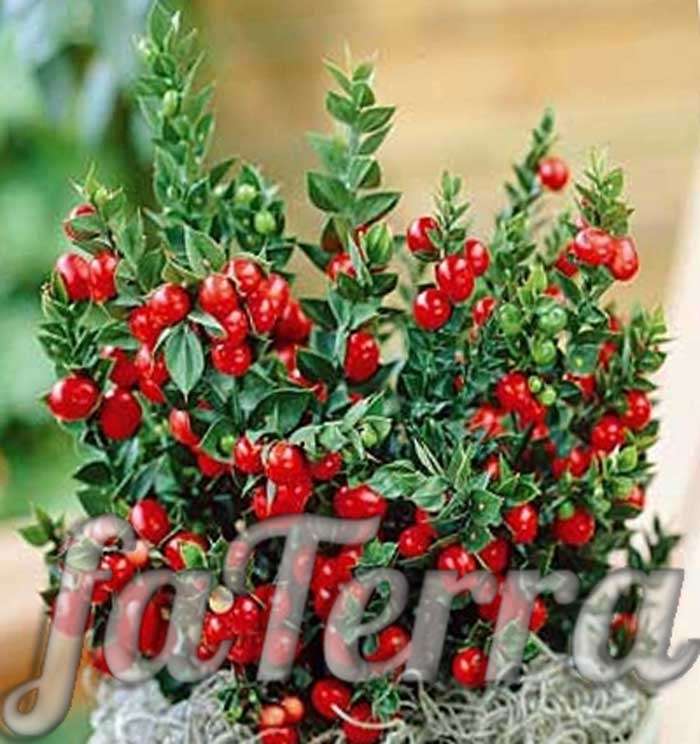
Latin name: Rúscus
Category: evergreen shrubs, shrubs, perennial herbs
Native to: Crimean Peninsula, Mediterranean, Caucasus
Interesting information about the spectacular rush
Rush (Ruskus) is a genus of evergreen shrubs, shrubs, and perennial herbs that was recently classified as belonging to the Asparagus family, order Asparagales. Until recently, the genus rush had its own family, the Rush family, and according to some sources, it was included in the Lily family. Botanists need to know where to classify this genus, as they approach each plant genus individually.
The name of this unusual and beautiful plant is translated from Anglo-Saxon (early English) and means "box". The rush flower has other names - it is called rush, and in folk language it is called "mouse thorn" or "butcher's broom".
The genus rush includes about ten species of plants. The natural habitat for the rush plant is the oak and pine forests of Europe, the Caucasus, Crimea, Southern Russia, Great Britain, the Mediterranean, where it hides in the shade from the bright sun.
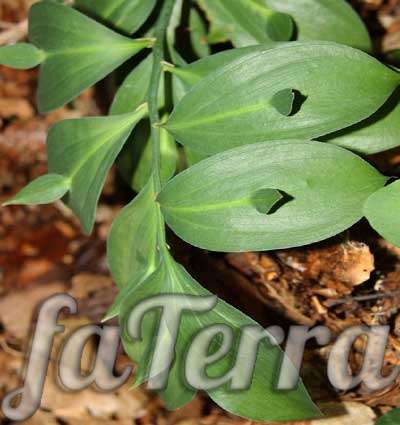
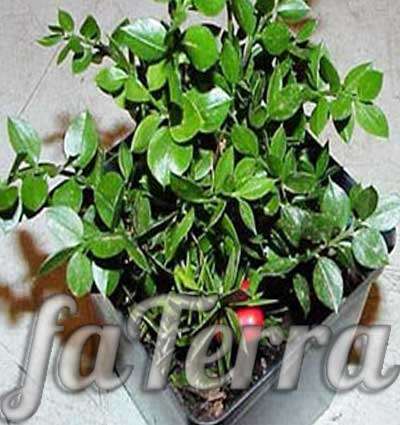
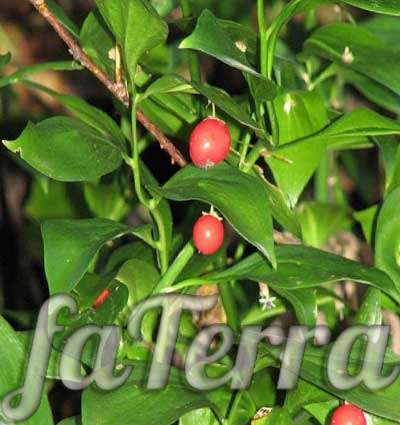
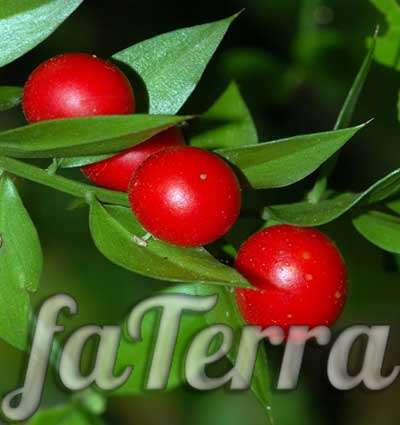
These evergreen shrubs and shrubs reach a height of up to one meter, have a creeping rhizome of greenish-gray color. A distinctive feature of the rush is the unusual, modified, upright, grooved stems with rough ribs. They are called phylloclades. The leaves of the rush are almost invisible - they are small, resembling thin, transparent films. The rush is a dioecious plant. Small, inconspicuous flowers on female specimens grow from the bottom of the phylloclades, of course, if a male plant is growing nearby. Only then will orange-red, spherical berries up to 10 mm in diameter appear on the rush. Inside this beautiful ball are two or three seeds.
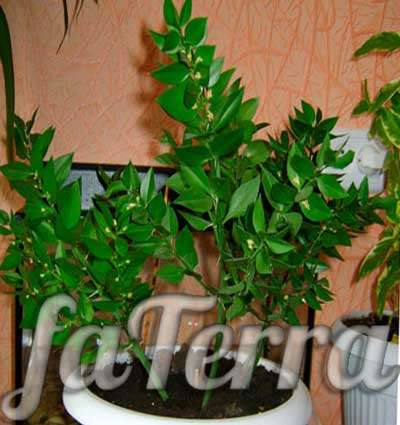
The rush or rush is a very attractive and undemanding indoor plant. It can be grown as a small bush and even wait for fruits. And this beauty will fit perfectly into the interior, both in an apartment and in an office. It would be especially interesting to see the rush as a talisman during the Christmas holidays.
The rush tree is very similar to a Christmas tree, and the charming red berries are like Christmas tree toys. Stiff, dark green branches of the rush look very attractive when creating floral compositions.
Rush species
Pontic rush, also known as prickly rush or spiny rush (Ruscus aculeatus)
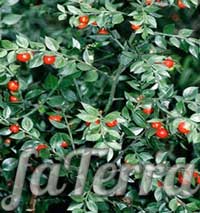 This perennial plant reaches a height of just over half a meter. Small, inconspicuous flowers are located in the lower part of the leaf-like phylloclades. In late autumn, on female plants, in the presence of male individuals nearby, you can see red, edible berries. Inside the beautiful fruits are three seeds. They are suitable for making a coffee substitute.
The natural habitat of the spiny rush is the mountain ranges of Western Europe. This frost-resistant species is widely cultivated in the south of Russia, on the Crimean Peninsula, in the Caucasus, and in European countries.
The Pontic rush is listed in the Red Book.
The medicinal properties of the prickly rush have been known for a long time. In the distant past, the tough root of the plant was used to clean butcher's boards. This is due to the antibacterial properties of the rush. Since then, the rush has been called "butcher's broom".
Colchian rush (Ruscus colchicus)
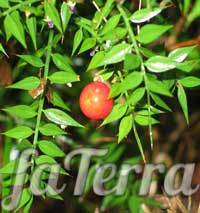 You can also hear other names for the Colchian rush - horse tongue, butcher's broom.
In its natural environment, it prefers humid, clayey soil in deciduous and coniferous forests of the Caucasus, and is also found in the south of the Crimean Peninsula.
The Colchian rush is a low-growing plant up to 60 cm tall, with upright stems covered with pointed, elongated, large phylloclades. In the autumn-winter season, flowers adorn the underside of them.
The Colchian rush is a medicinal plant. Its rhizomes contain an active substance that is used in the manufacture of drugs for the treatment of blood vessels.
This species of rush is listed in the Red Book and is on the verge of extinction due to improper human use and excessive cutting of more than 4-5 shoots, which leads to the death of the plant. Beautiful branches of the Colchian rush are used to create bouquets and floral arrangements, even brooms. Local residents use the Colchian rush as animal feed.
Underleaf rush (Ruscus hypoglossum)
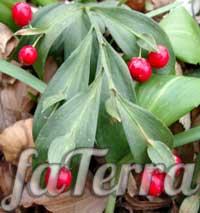 This low-growing perennial reaches a height of 40 cm. Its stems are modified, leathery, and much larger than the phylloclades of the Pontic rush.
It grows on the Southern coast of the Crimean Peninsula. It is listed in the Red Book there. This plant is also widely distributed in Europe, the Mediterranean, the Balkan Peninsula, and Asia. It is found in humid, shady forests, on rocks, among pebbles, where it holds the soil from erosion.
Italian Rush
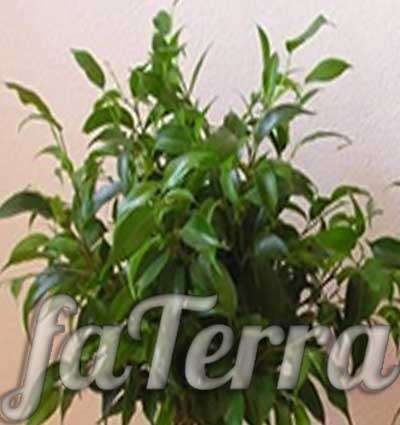
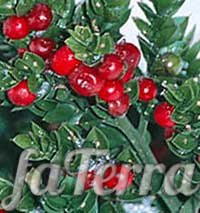 This species differs from other types of rush. This plant has a chic, graceful emerald foliage on tall, thin, elegant stems. Thanks to this, Italian Rush has found its application in the work of florists. The rush plant looks great in floral compositions and various bouquets, and retains its excellent lush shape for a long time.
Rush care at home
The rush is very hardy and not difficult to care for. For good and vigorous growth, the plant especially needs proper care in the spring. And if you want to see your unusual rush thriving, create the right conditions for it.
Location and temperature
The best place for the rush in the summer is an east or west-facing window. The rush is a hardy plant and does not require bright light, which can negatively affect young phylloclades, and prefers to be in the shade. In winter, when the daylight hours are short, the rush will feel more comfortable on a south-facing windowsill.
The temperature regime for successful cultivation of the rush is very simple. It is enough to maintain a room temperature in summer and a minimum temperature of 4°C to 6°C in winter. The plant is not afraid of drafts and short-term temperature fluctuations below 0°C.
Air humidity and watering
The rush does not have special requirements for air humidity in the room, as this southern plant tolerates dry air well. To make the plant feel comfortable and grow actively, it is necessary to carry out watering - spray or wipe the phylloclades with a damp cloth.
Regular watering is essential for the rush during the growing season. The water in the pot should not stagnate. After the formation of shoots, the rush does not need to be watered as often.
The main thing is not to let the soil dry out.
Soil
The rush does not have special requirements for the composition of the soil, as its natural habitat is meadows and slopes. The soil should not be too dense. The bush will feel good in a mixture of one part of soddy soil and sand, three parts of leaf soil, or in a mixture of peat soil and leaf soil and a double portion of soddy soil. It is desirable that the pot has a drainage hole.
Feeding
From spring to late autumn, the rush needs to be regularly fertilized with complex mineral fertilizers no more than once every two weeks. The rest of the time, the rush is in a state of dormancy and does not need feeding.
Transplanting
The best time to transplant the rush is spring, every 2-3 years. This depends on how lush you want your beautiful rush to be. It will be a beautiful, lush bush in a wide pot, and less bushy in a narrow one.
Propagation of rush
The rush can be propagated in two ways: by dividing the rhizome or by seeds.
The first method is most often used during transplantation of the plant. It is necessary to clean the root system from the soil, remove the old growth, cut the rhizomes into several parts. It is desirable to treat each root with charcoal and plant in a separate pot with soil that is suitable for the rush. Then follow all the rules for caring for an adult plant.
Propagation of rush by seeds is a more time-consuming process. The seeds need to be sown in pots with moist soil, provide a bright place and maintain a temperature of 20°C. Seedlings may appear no earlier than three months later. When the seedlings reach a height of 8 cm, they need to be transplanted into separate pots.
Diseases and pests
The rush can be affected by such dangerous pests as powdery mildew, scale insects, spider mites, and thrips.
The most important factors for growing a beautiful plant, the rush, have been considered. It is necessary to perform them carefully and efficiently, and an unusual and beautiful plant with stiff branches that turn into sharp spines will grow on your windowsill.
- The rush is listed in the Red Book.
- Grow this plant and you will help to ensure that the beautiful rush does not disappear from our planet.
It is necessary to remember that the rush plant is poisonous. Another poisonous representative of the Asparagus family is Agave.

Write comments
Comments