



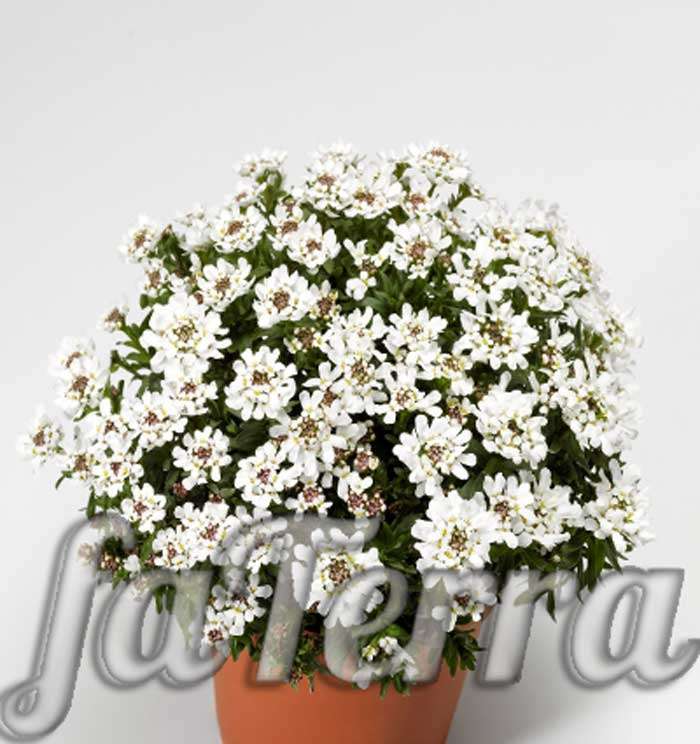
Latin name: (Iberis)
Category: annual, perennial herbaceous plants
Origin: Southern Europe and Asia Minor
Iberis – the king of landscape design
Iberis (Iberis), also known as Iberian, or wallflower, is a genus of forty species of herbs, frost-resistant perennials, or heat-loving annuals, and perfectly fits into the Cruciferae or Cabbage family.
The Iberis flower was discovered in the lands of the Iberian Peninsula (in ancient times, Iberia). Hence the name of this cheerful evergreen plant, which awakens first after the winter cold and delights the eye with its surprisingly beautiful green foliage.
You can also hear other synonymous names for the plant: wallflower, multi-petal, crossflower.
The area of distribution of this delicate creature is the mountainous and coastal areas of Southern Europe and Asia Minor.
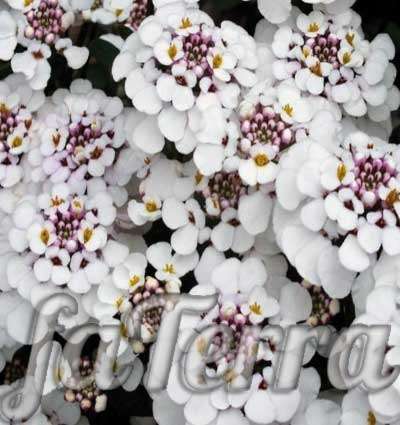
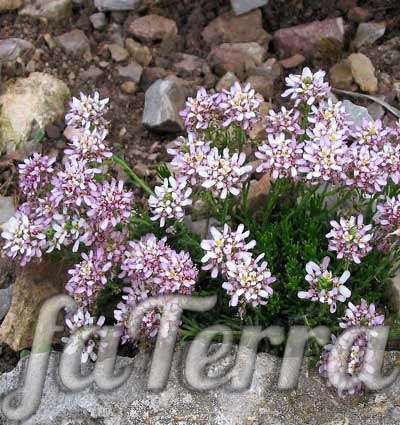
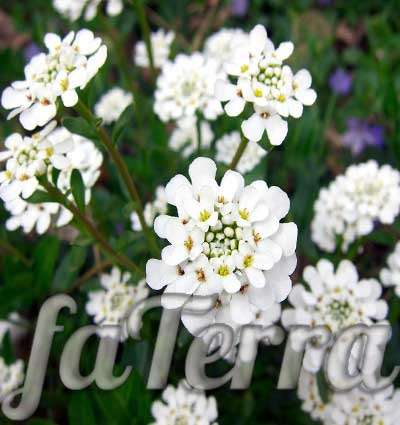
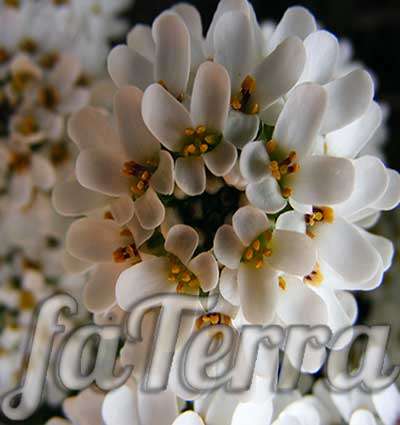
Description of Iberis: its distinctive feature is a taproot. The stems are erect or drooping. They grow up to 35 cm in height. They are covered with small, up to seven centimeters, dark green leaves with a sheen, which have an elongated, wedge-shaped shape and are slightly thickened. Magnificent, long, umbellate inflorescences are composed of forty small, round, fragrant flowers with a diameter of 1.5 cm. The flowers are colored from pink, lilac, white, lilac to red. From May, you can admire the lush flowering of the Iberian, which lasts up to two months and completely hides all the foliage. Bees and butterflies often gather on the Iberis. It is a good honey plant. In July, seeds appear on the plant, which are collected in pods.
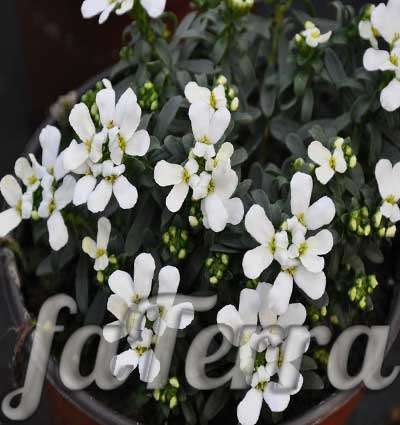
Thanks to its two main qualities – decorative beauty and pleasant aroma – Iberis is becoming increasingly popular in the country house. Without its charming bright flowering and unpretentiousness in cultivation, it is difficult to imagine an original landscape design. Iberis will beautifully decorate rocky gardens, rockeries, alpine hills, flower beds, and flower beds. Iberis in pots, hanging baskets, and baskets with its abundantly flowering bushes looks great on the balcony and terrace. Cut Iberis flowers in bouquets look wonderful, and you can enjoy them in vases for a long time and inhale the pleasant honey aroma.
Iberis species
Perennial Iberis or multi-petal, its varieties
Evergreen Iberis (Iberis sempervirentes)
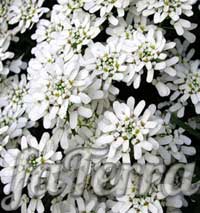 Asia Minor is the homeland of this semi-shrub plant, which reaches a height of forty centimeters. On strong, branched stems are located seven-centimeter long, smooth, glossy leaves of dark green color. The wallflower blooms with small, fifteen-millimeter white flowers, collected in umbellate, five-centimeter inflorescences. It has been cultivated since the second half of the 17th century.
Iberis Dana (Iberis Dana)
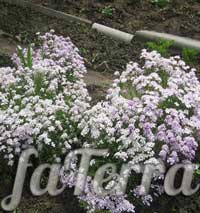 This is the most popular dwarf variety, up to fifteen centimeters in height. It differs from evergreen Iberis by its very abundant flowering.
Iberis gibraltarica
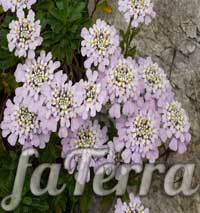 Spain and Morocco are the homeland of this semi-evergreen, twenty-five-centimeter shrub. Iberis is a chameleon, it reproduces on its own. The color of the lilac flowers periodically changes its intensity.
Iberis saxatilis
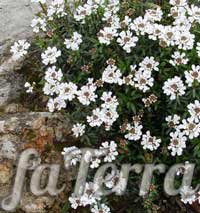 This Iberis is represented by fifteen-centimeter semi-shrubs that bloom from the beginning of May. For two months, the juicy green grass is covered with solid pale pink or white fragrant flower caps.
Iberis simplex
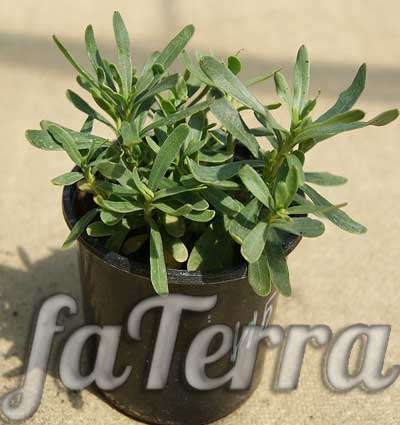
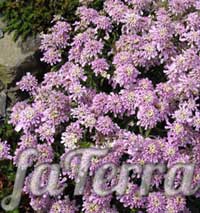 A low-growing, up to ten centimeters, perennial plant with bluish-gray, pubescent leaves. During flowering, it is covered with purple buds, which gradually change color and turn into white flowers. The wallflower loves sunny, rocky areas with poor but well-drained soil with a high calcium content.
Annual Iberis and its varieties
Iberis umbellata
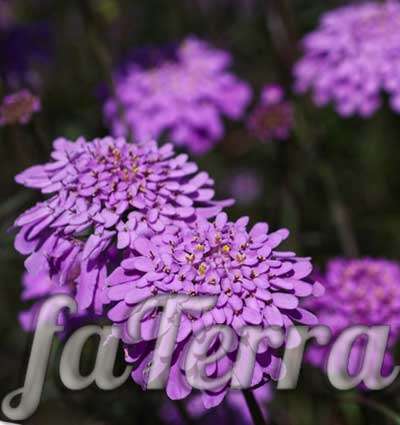
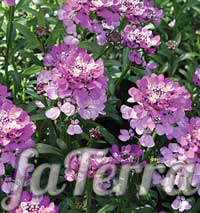 The most popular annuals, which have smooth, bare, branched stems up to forty centimeters high with alternate lanceolate leaves, are umbrella Iberis. Their flowers are of various colors, from pink to lilac, forming a lush foam of umbellate inflorescences. You can admire this beauty for two months. It has been known and cultivated since the 16th century.
Iberis amara
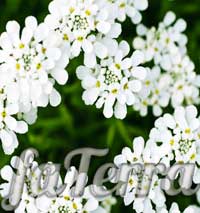 Annual Iberis, its height is up to thirty centimeters. Branched from the root and slightly pubescent stems are covered with serrated at the edges, blunt, alternate leaves. Two-centimeter flowers, white or lilac, form corymbose inflorescences, which resemble a column. The plant has been cultivated since the 16th century.
Iberis planting and care in the open ground
Iberis is unpretentious in cultivation, but you still need to know some of the nuances to achieve an impressive result.
You should plant the wallflower in the open ground in warm spring weather. It is desirable to place it in an open, sunny place to obtain bright and abundant flowering.
It should be remembered that the soil for Iberis should be loamy or stony, which does not allow excess moisture to stagnate in the roots.
The process of planting seedlings should be carried out very carefully. The seedlings should be planted at a distance of at least 15 cm from each other. Lightly compact the soil around each plant and water it. Excessive watering can negatively affect the root system of the plant. They will begin to rot, which will lead to the death of the plant.
Caring for Iberis is not difficult. It is desirable to feed your pet with a solution of complex mineral fertilizers twice – when the first leaves appear and during flowering. This will be enough for the fantastic flowering of Iberis.
Perennial Iberis, which has already faded, needs to be pruned by one-third of the upper part of the plant to maintain a good, compact appearance. Periodically, you need to remove the faded flowers. When the Iberis reaches five years of age, it is desirable to replant it to maintain its unique decorativeness and increase the size of the flowers.
Iberis is a frost-resistant plant, but before the onset of winter cold, it is desirable to cover it with a layer of fallen leaves or a layer of brushwood.
Iberis – description of cultivation from seeds
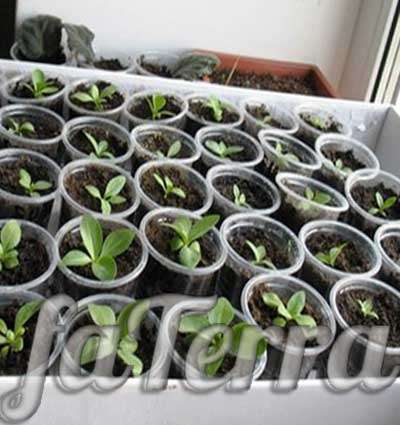
Usually, Iberis is propagated by seeds. They are sown in mid-spring. Sometimes it is practiced to sow them even before the onset of winter. Then the area where the Iberis was sown should be covered with leaves to protect it from frost. Spring Iberis will begin to bloom only after two months. And the one that was sown in winter will sprout ten days after the weather warms up. To prolong the duration of the flowering period of the wallflower, the seeds can be sown twice with an interval of two weeks. The seedlings that have sprouted should be thinned out. A gap of at least 20 cm should be left between the plants. Iberis does not like to grow in cramped conditions.
Iberis can also spread on its own. The seeds fall off, and in the spring, a large number of seedlings grow. They can be properly planted and a full-fledged plant can be obtained.
Iberis will look very beautiful in landscape design, emphasize the texture of stones or their fragments, create wonderful light clouds and illuminate the composition from the inside. Moreover, it adequately and positively reacts to neighboring plants. The main thing is that they do not too limit its personal space. Such plants can be tulips, phloxes, juniper, and many others.
Diseases and pests of Iberis
If the agrotechnology is violated, Iberis can be visited by pests:
- aphids,
- mealybug,
- flea beetles.
When uninvited guests are detected, the plant should be treated with an insecticidal or acaricidal agent.
Iberis is a poisonous plant
Wonderful and unpretentious Iberis will transform and decorate the country plot with a cloud of flowers, enchant and give pleasant emotions with its unforgettable aroma.
Write comments
Comments