



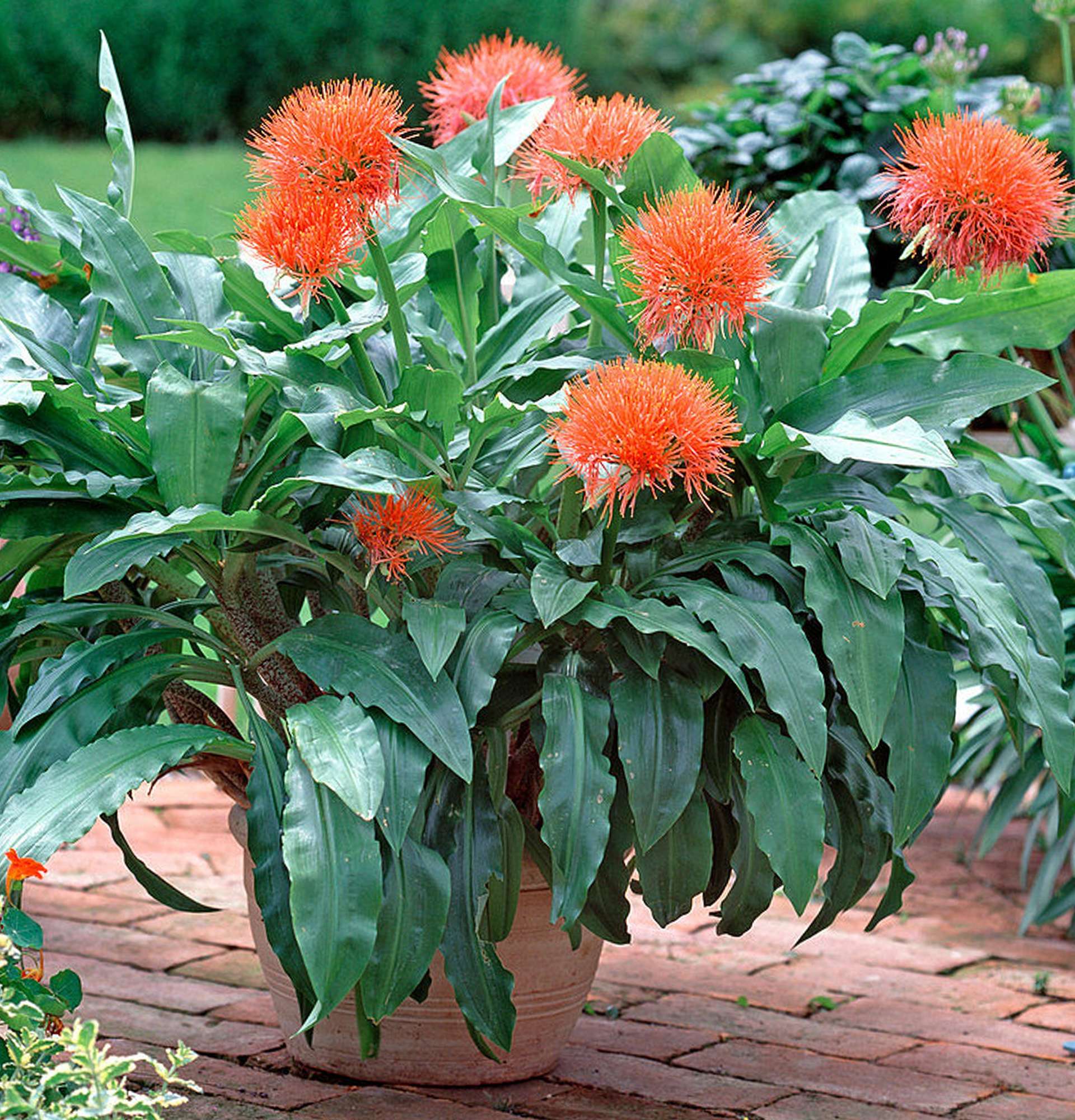
Latin name: Haemanthus
Category: bulbous herbaceous plants
Native to: Southern Africa
History of origin and distribution of Haemanthus
Haemanthus (Haemanthus) also has a folk name "deer tongue" or "elephant ear". The native land of this unusual bulbous plant, resembling a dandelion, but with red flowers, is tropical Africa. Here, Haemanthus grows on mountain slopes and forest tropical areas.
This genus of flowering plant is classified within the Amaryllis family. The Haemanthus flower owes its appearance to the great naturalist, doctor, and botanist Carl Linnaeus. As early as 1753, he described it, as if giving it life. The red color of the original, unusual flowers of this plant group is the reason for such a name. If we translate from the Greek language, "haemo" means blood, and "anthos" means flower. This translates to "blood-red flower." However, this does not mean that all species of this plant have red flowers.
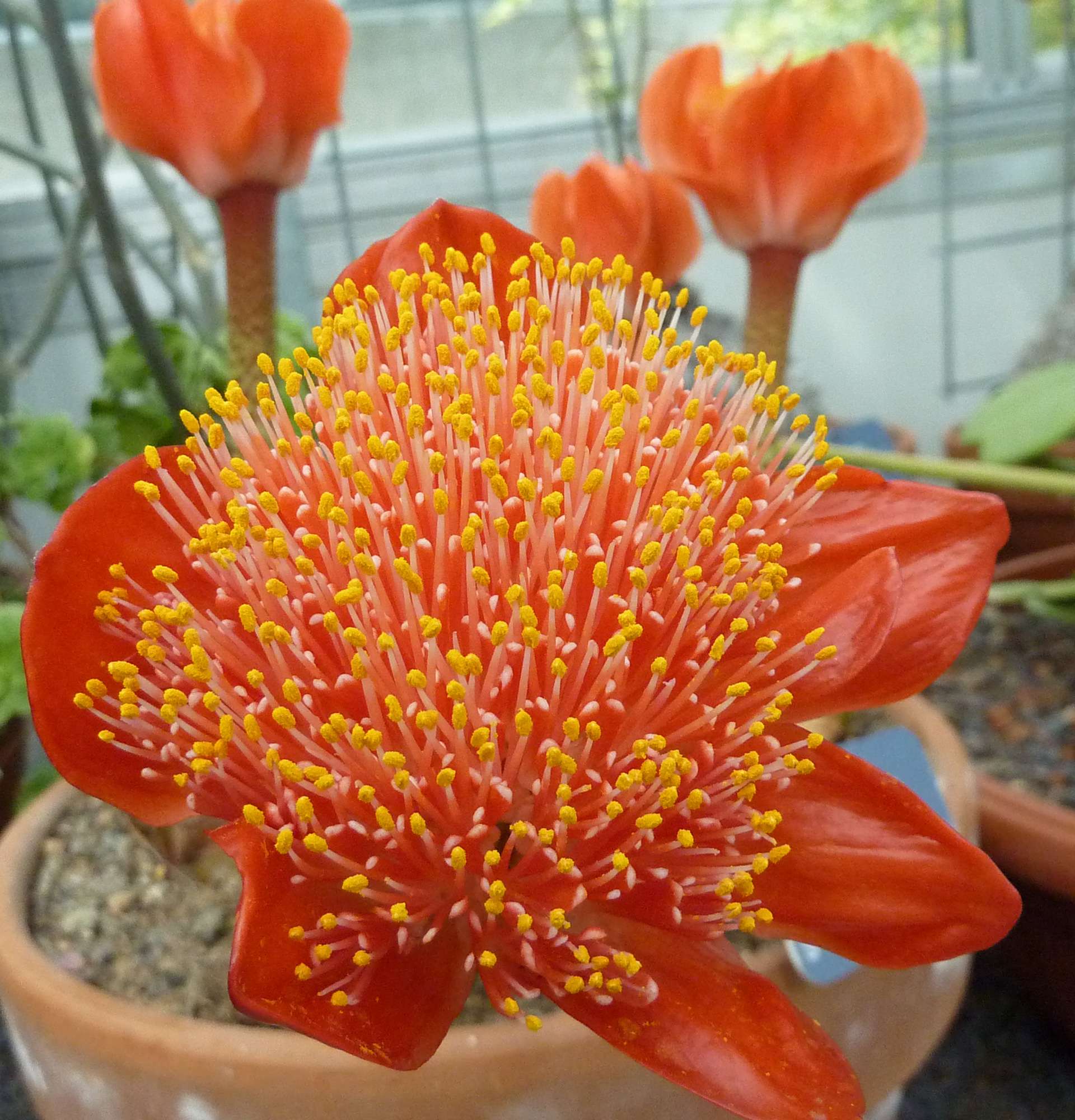
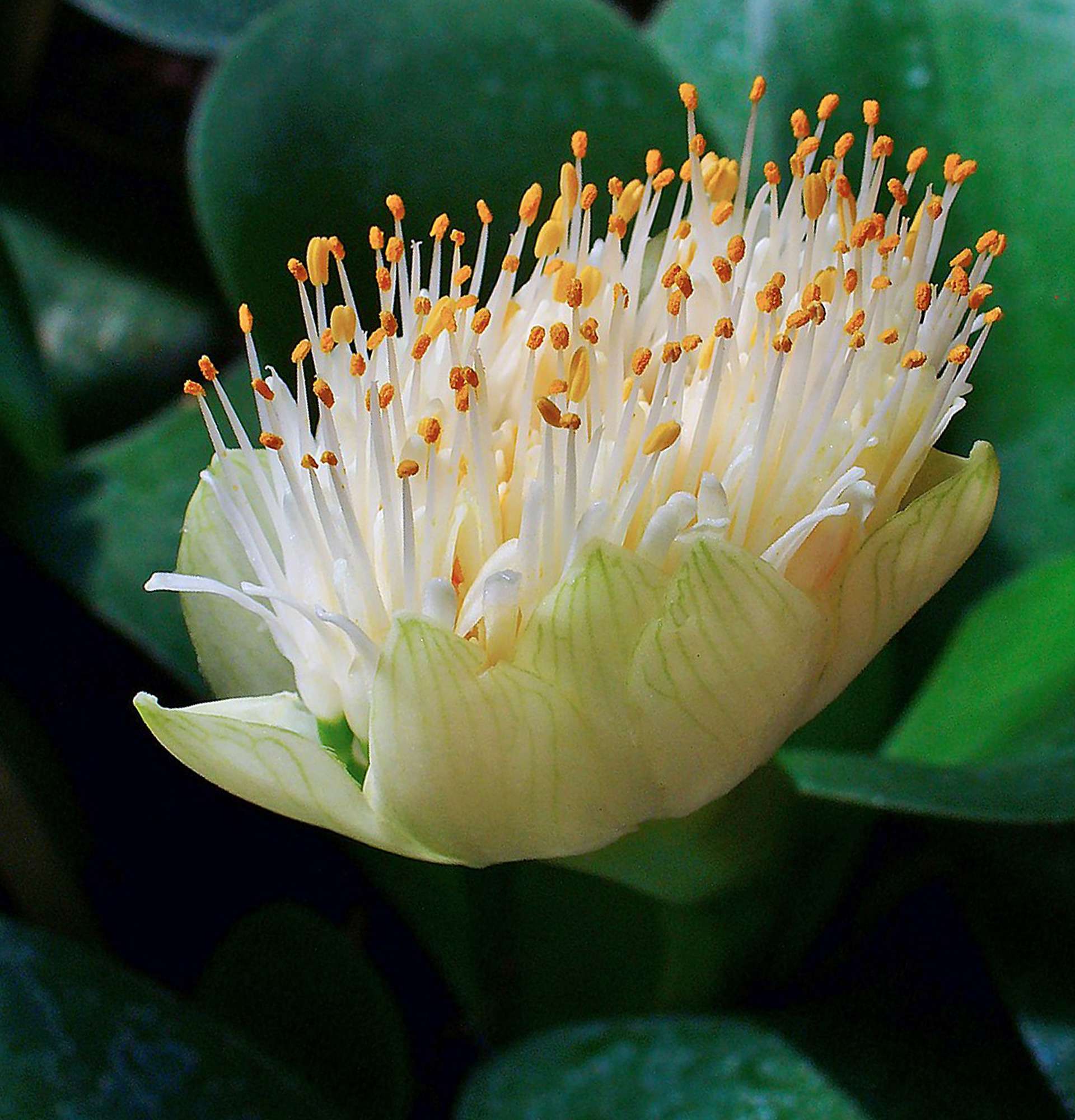
Haemanthus with orange and white flowers looks very attractive. The special decorative effect comes from the anthers on which there are droplets of bright yellow pollen, forming an unusual, colorful, fiery-red ball.
Close relatives of Haemanthus include Amaryllis, Clivia and Eucharis.
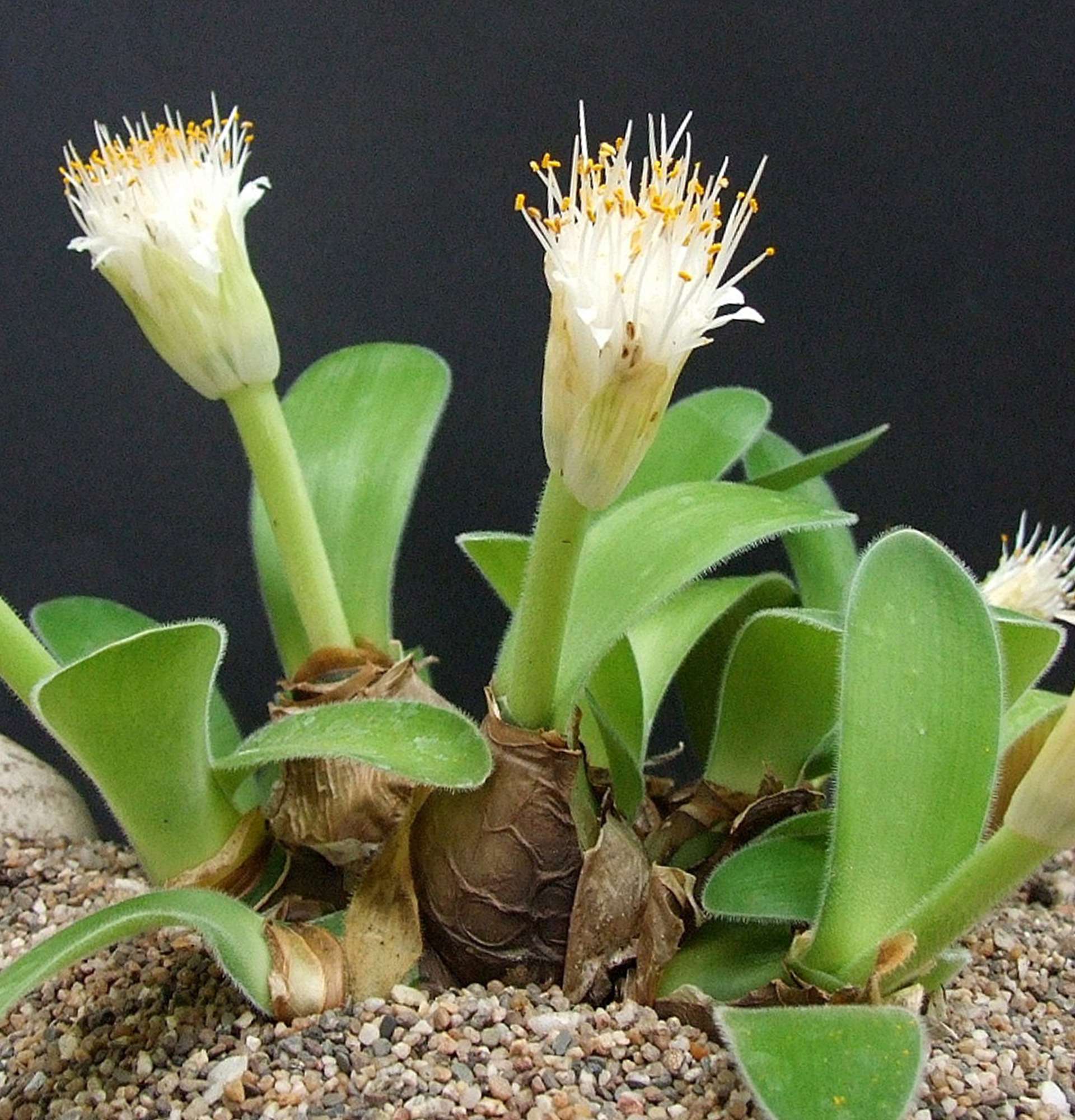
If you love exotic plants, the Haemanthus indoor flower will decorate your collection with its fluffy inflorescences on long, thick peduncles. But the special attractiveness of this plant comes from the fleshy, wide leaves with rounded ends, which are bent outwards. They are very much like green tongues.
During one cycle, a Haemanthus plant grows only two leaves.
Species of Haemanthus
Haemanthus katharinae
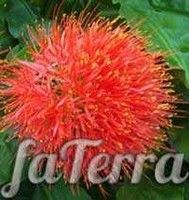 One of the most original and impressive indoor plants can be Haemanthus katharinae, native to the Natal province of South Africa. It grows there, decorating rocky hills, mountain slopes, and tropical forests.
This is an unusual, evergreen, decorative, bulbous, and profusely flowering plant. Haemanthus "deer tongue" is its folk name.
The thickened roots of Haemanthus are bulbs, up to eight centimeters in size. A low, strong stem grows from them. Four or five leathery leaves are located on the upper part of the stem. Their size reaches up to 30 cm in length. The leaves of Haemanthus are similar to the leaves of Krinum.
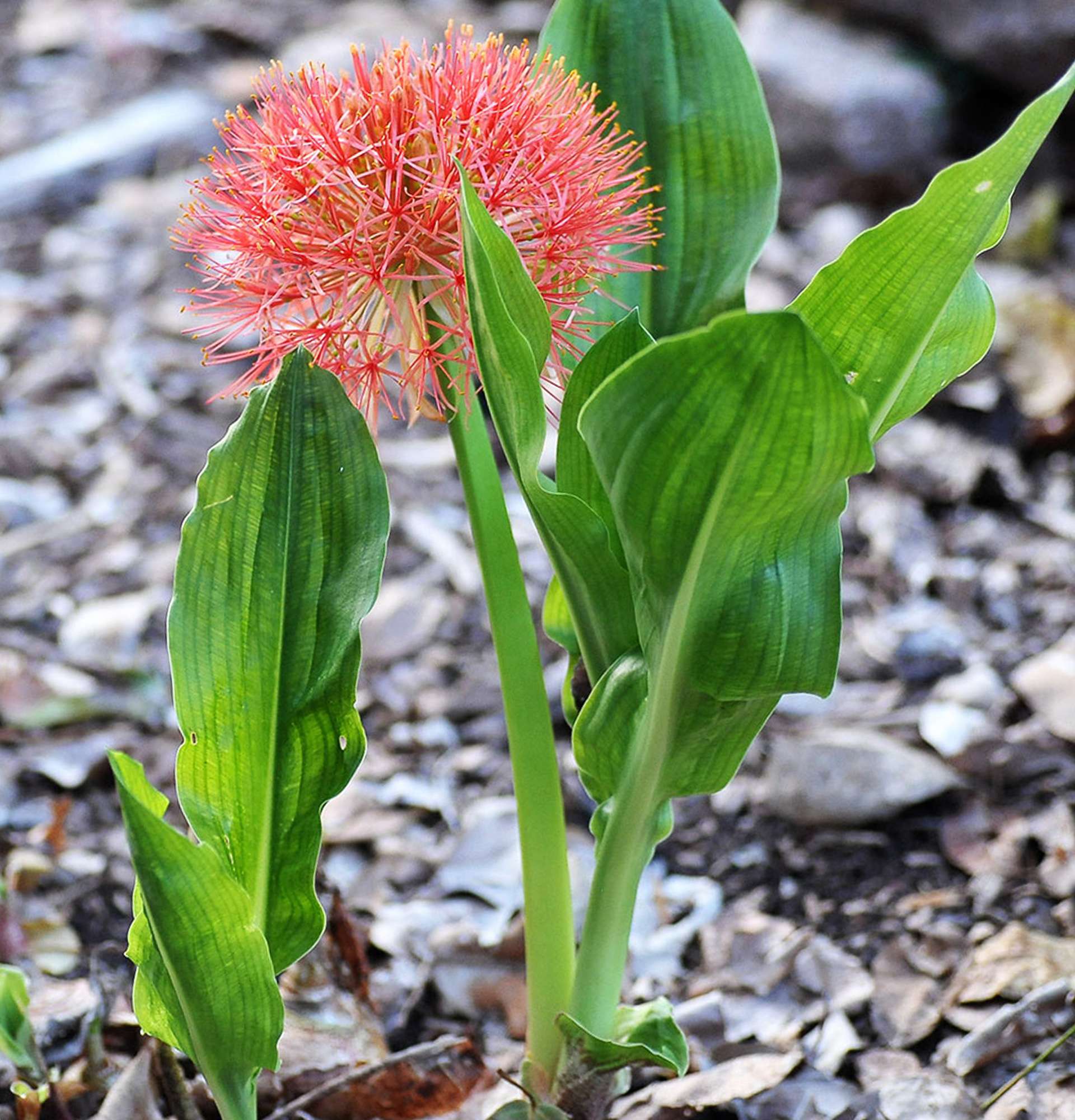
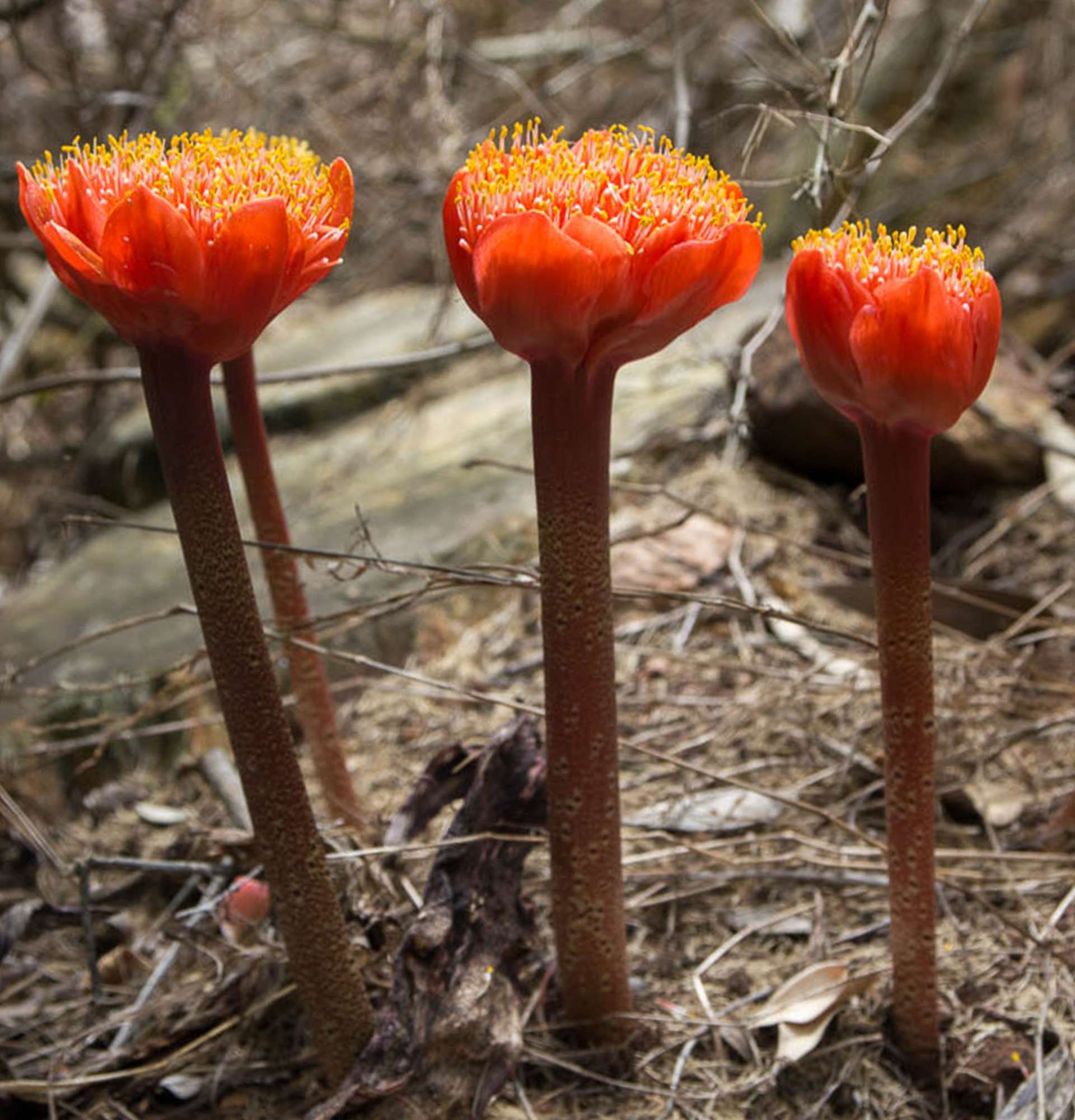
Towards autumn, a thick, spotted peduncle rises above the leaves. Its height can reach up to sixty centimeters. The bright red inflorescence resembles a hedgehog with its spines. The diameter of this original ball is about 24 cm.
The inflorescence consists of numerous flowers, which are located on peduncles, up to five centimeters high. This beauty delights the eye for about a month. After that, almost 60 fruits, about 1.5 cm in size, form, resembling beads.
Haemanthus albiflos, also known as white Haemanthus
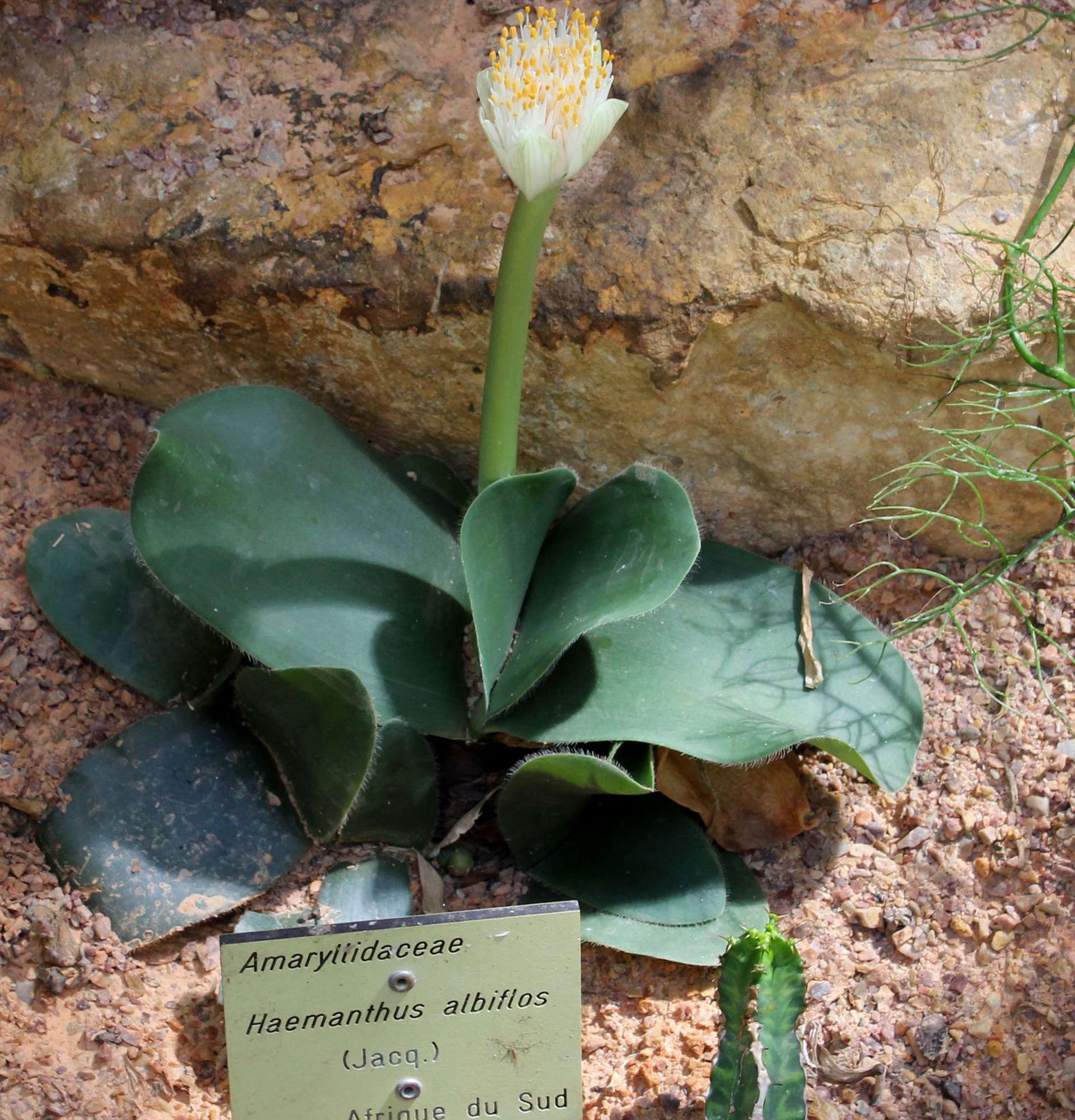
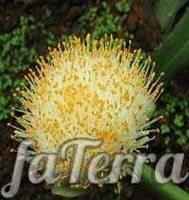 The native land of the evergreen perennial with a bulbous root, Haemanthus albiflos, is Southern Africa.
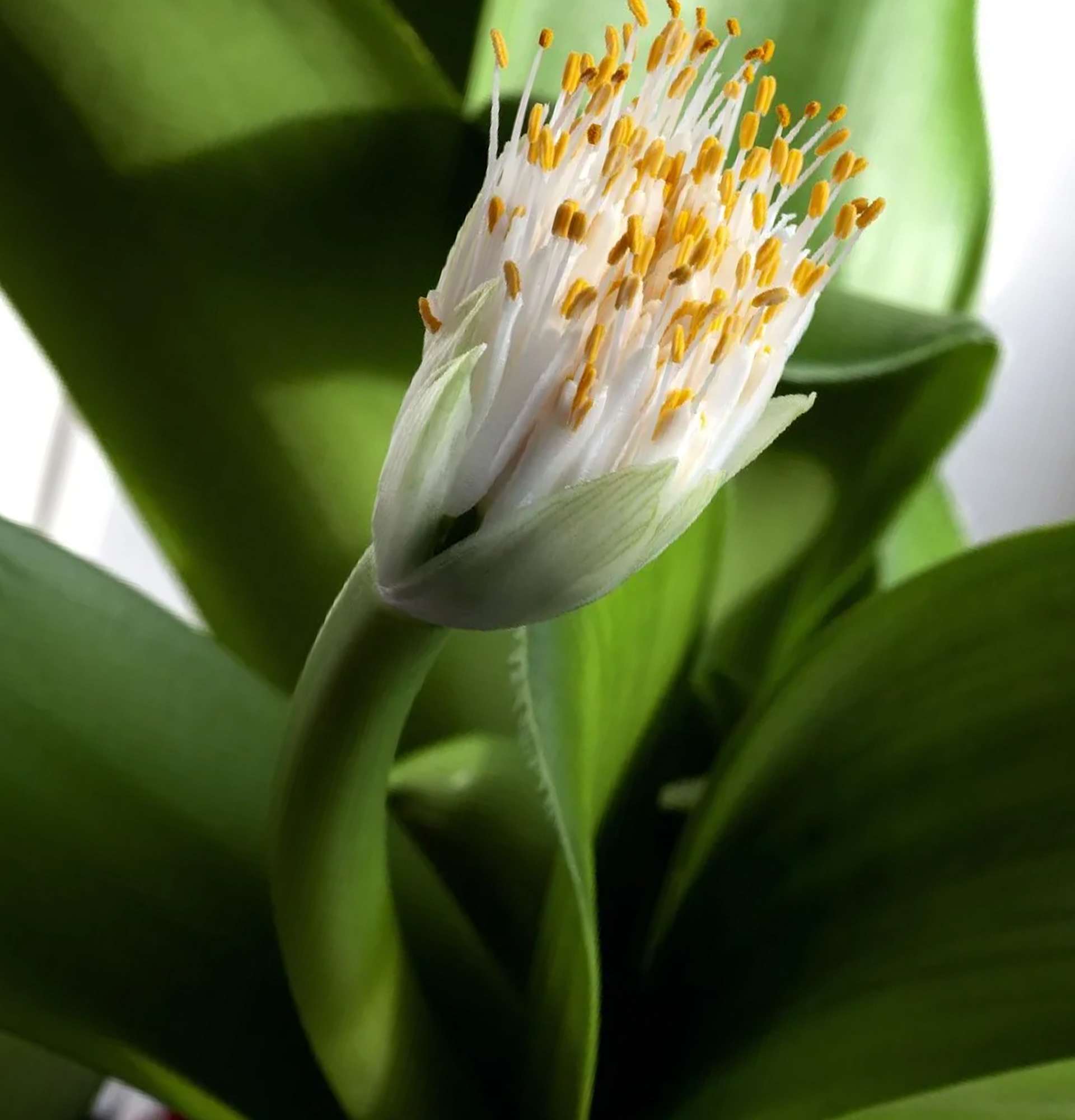
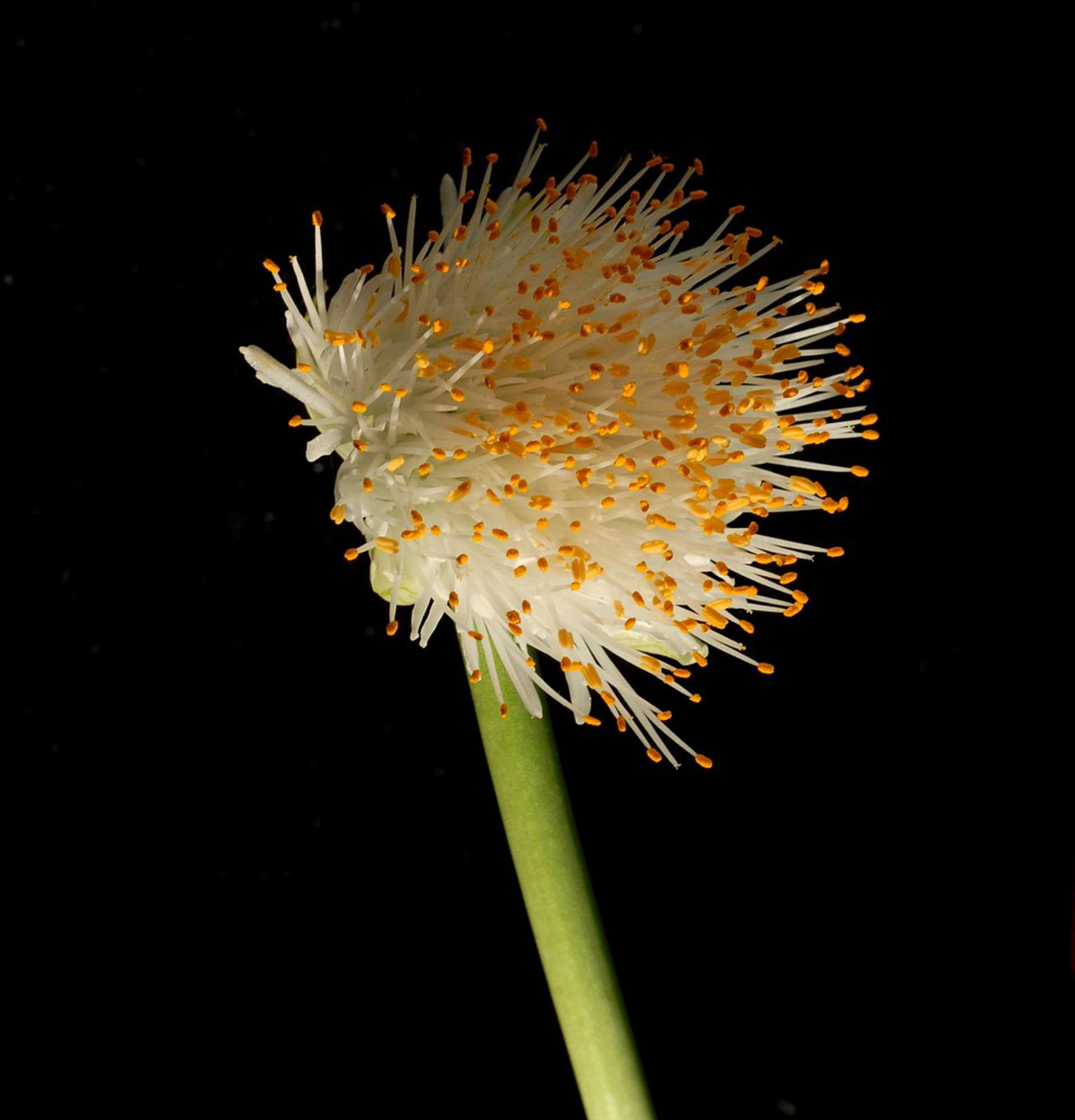
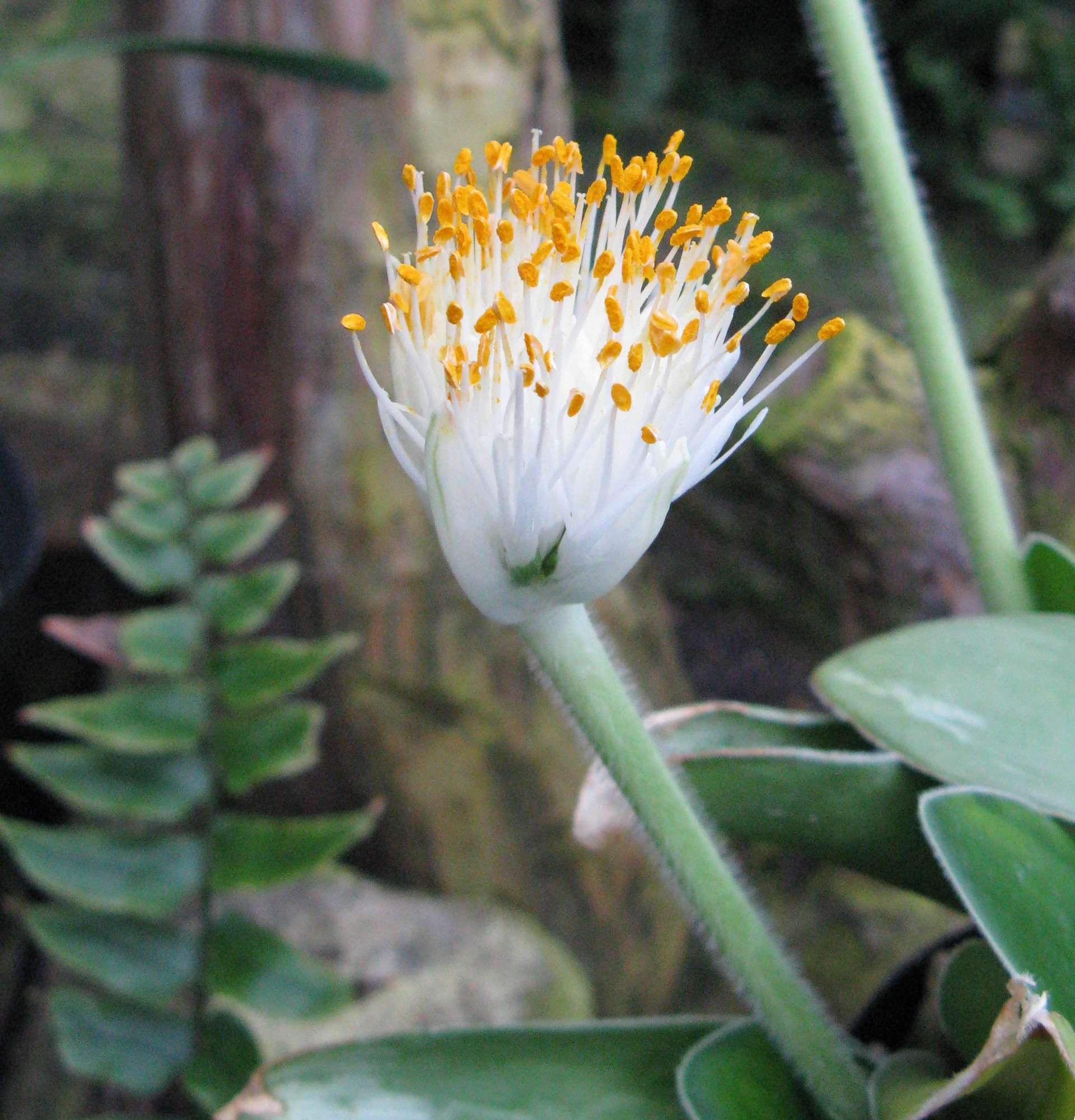
The plant has a long, opposite, drooping, dark green leaf. The size of the leaves reaches up to 20 cm in length and up to 10 cm in width. The upper side of the leaves is smooth, and the edges are fringed. A short, twenty-centimeter thick peduncle usually appears along with the leaves. It is decorated with an inflorescence resembling an umbrella. The delicate white flowers with yellow anthers resemble a cover sprinkled with yellow powder.
Caring for Haemanthus albiflos at home does not require special care. A little love, attention, and adherence to simple rules of care, and Haemanthus albiflos will feel very happy.
Haemanthus puniceus
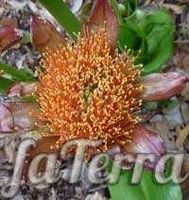 This species of Haemanthus is also native to rocky areas of Southern Africa.
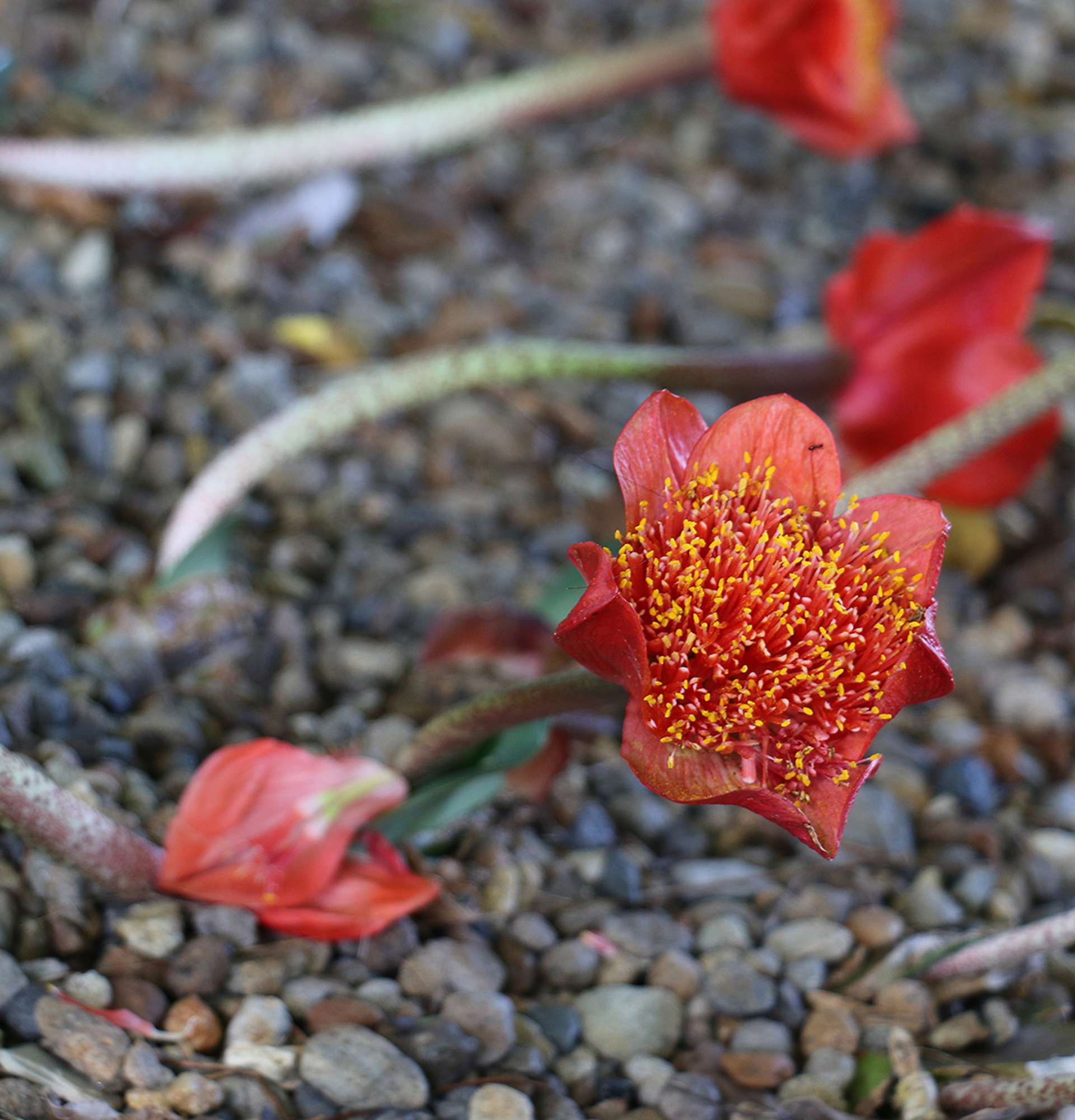
The bulbous, evergreen flower, Haemanthus puniceus, boasts its light green, slightly wavy leaves, which taper into a short petiole. The dense, umbrella-shaped inflorescence, consisting of two dozen yellowish-red flowers, delights the eye every summer.
Haemanthus coccineus
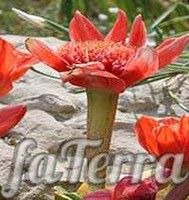 The rocky slopes of Southern Africa are the native land of the evergreen bulbous plant, Haemanthus coccineus.
In Haemanthus coccineus, a paired number of leaves grow in the winter after the flowering period. They reach a large size, up to 50 cm in length and up to 20 cm in width. The green, beautiful "tongue-like" leaves taper at the base of the leaf. The edges have a reddish tint.
On the 25 cm high peduncle, there is a round, dense umbrella-shaped inflorescence with a diameter of up to eight centimeters. It consists of bright red, three-centimeter flowers with linear, out-turned petals and red anthers. Unfortunately, you can only admire the flowering of Haemanthus coccineus not every year.
Haemanthus cinnabarinus
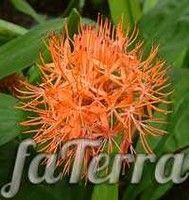 In the mountainous regions of Cameroon, you can find the unusual evergreen Haemanthus cinnabarinus. The plant blooms in April.
The root is a round bulb up to three centimeters in diameter. A paired number of fleshy, leathery, oblong, oval leaves, up to 25 cm in size, adorn the plant. A green peduncle appears simultaneously with the leaves. Its height reaches 30 cm. A round, dense umbrella-shaped inflorescence with a diameter of up to 10 cm decorates it. About forty cinnabar-red flowers with lanceolate, out-turned petals are located on three-centimeter peduncles.
Haemanthus care at home
Caring for Haemanthus at home is not difficult. This is a delicate and beautiful plant that feels good in normal indoor conditions. The main thing to remember is bright, diffused light, especially during the growing season. The best option is to place Haemanthus on windowsills facing west or east. It is important to remember that a lack of light will negatively affect the flowering of the plant.
Temperature regime
For successful growth and abundant flowering, Haemanthus requires a warm room with a normal room temperature of 18-22 degrees Celsius. In warm summer days, Haemanthus will happily breathe fresh air. Drafts and cold should be avoided. During the autumn-winter period, Haemanthus does not bloom and is in a state of relative dormancy. During this period, a temperature of 12-15 degrees Celsius is sufficient for it. It is desirable to avoid sharp temperature changes, which can be dangerous for the plant.
Air humidity and watering
Haemanthus is not very demanding on air humidity, and spraying is not necessary for it. However, it will not mind if its leaves are wiped with a damp cloth.
Abundant watering with soft water at room temperature is necessary for Haemanthus during the summer months, but it is still necessary to monitor the condition of the soil. The top layer of it should be slightly dry, about 1-2 cm deep.
With the onset of autumn, watering is reduced, and in winter it is even more limited.
Repotting Haemanthus
To have a beautiful and abundantly flowering Haemanthus, it should be transplanted in early spring every 2-3 years. The plant needs a wide pot with a drainage hole. A good drainage layer is essential at the bottom. When transplanting, it is necessary to be careful not to damage the roots. This can cause diseases during the growing period.
When planting, the bulb of Haemanthus should be buried in the soil only halfway.
When transplanting, it is necessary to use fertile soil. The mixture should consist of one part each of turf, compost, leaf soil, and sand.
Fertilizing
Once a month, during the growing season, it is desirable to feed the plant with a liquid, diluted fertilizer.
Propagation of Haemanthus
Haemanthus can be propagated by bulbs, seeds, and leaf cuttings. Seeds are not stored for long and are sown immediately. Bulbs are separated and transplanted to a permanent place. The plant can also be propagated by leaf cuttings. The cut leaf is sprinkled with charcoal and planted in a substrate of peat and sand. The seedling is periodically sprayed and ventilated. After three years of good care, the young Haemanthus will bloom.
Diseases and pests of Haemanthus
The main enemies of Haemanthus can be aphids, spider mites, and mealybugs. If pests appear, it is necessary to immediately wash the plant with soapy water, and then with clean water. If necessary, carry out treatment with insecticides.
Problems that arise during cultivation
- If the leaves of Haemanthus are pale, and the stem is elongated, it means there is not enough light.
- Why isn't Haemanthus blooming? Perhaps the bulb is still too small, and the pot is too large with a lot of soil.
- A light coating has appeared on the leaves - perhaps the plant was watered with hard water.
Caring for Haemanthus is not very demanding. If all the care measures are followed, the beautiful plant Haemanthus will thank you for your love and attention with luxurious inflorescences and beautiful decorative leaves.
Write comments
Comments
Олег