



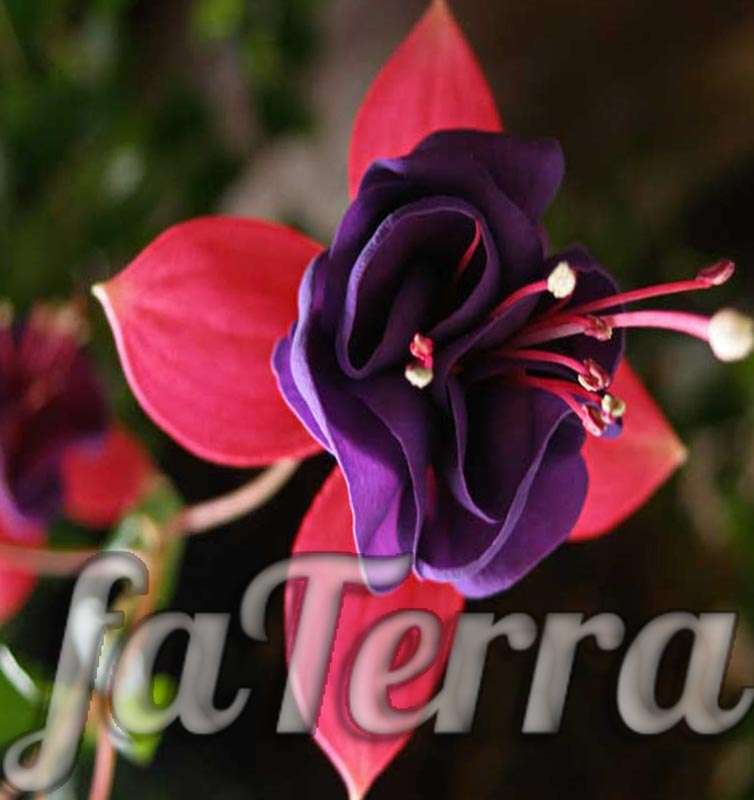
Latin name: fuchsia
Family: Onagraceae
Native to: New Zealand, Central America, and South America
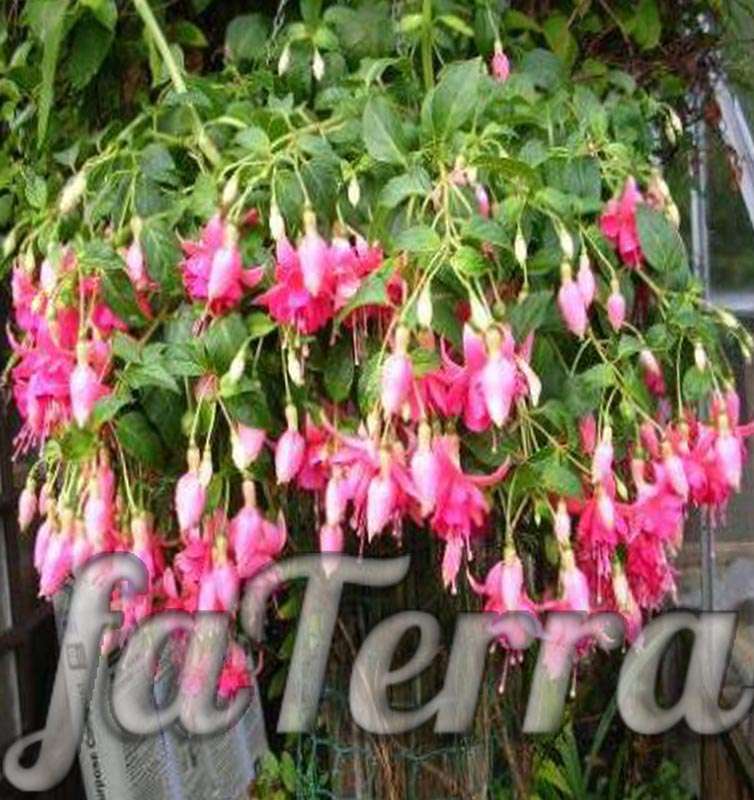
Fuchsia is a beautiful and well-known houseplant, with its distinctive bell-shaped flowers that delight us for many months. There are approximately 100 species in nature, most of which are ornamental.
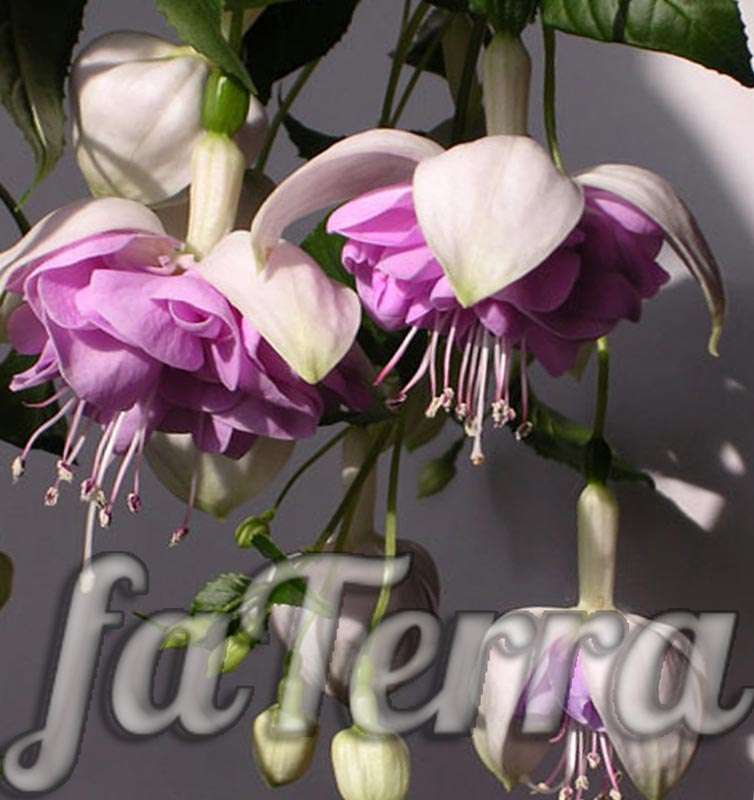
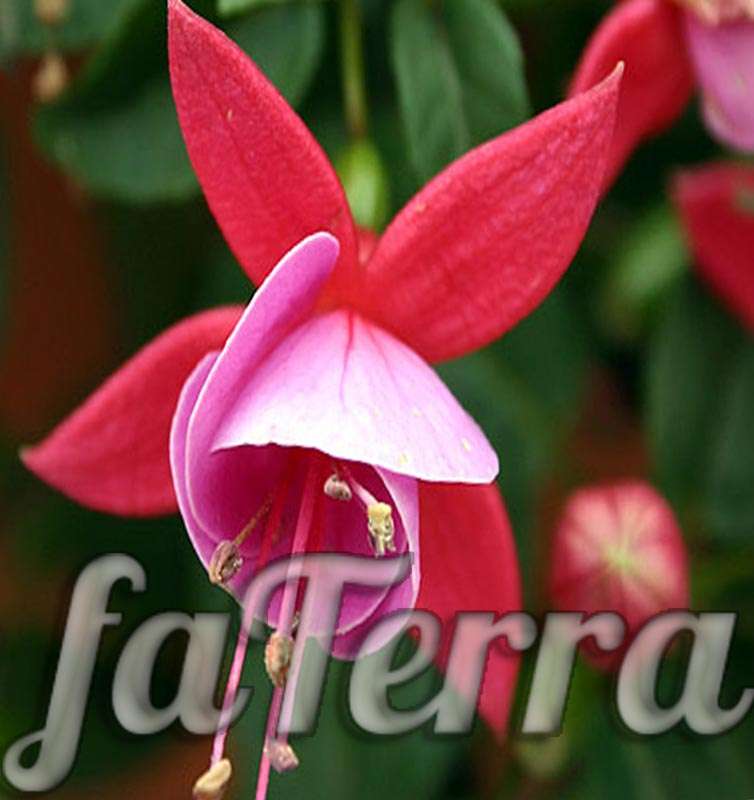
Fuchsia can be of various shapes: a bush or a small tree, depending on the variety. It can also have flexible branches covered with small, slightly reddish or green leaves. The leaves are 4.5 cm long, oval-lanceolate in shape, slightly toothed, and pointed at the ends. It blooms profusely and for a long time. The flowers come in a wide range of colors and can be either double or single. There are also varieties with double-colored flowers. The flower has two parts: a tubular corolla and a bright, calyx-like structure.
This houseplant is relatively undemanding and comes in a wide variety of hybrids, which attracts plant lovers. Fuchsias are sometimes grown as trailing plants, hung on walls indoors or outdoors. They can be grown both indoors and outdoors.
Fuchsia is heat-loving and does not tolerate frost well. In the fall, it is transplanted into larger pots and moved indoors to a place with a consistently cool temperature. In the summer, it can be planted in a flower bed, where it blooms beautifully throughout the season.
Fuchsia Species
Fuchsia fulgens
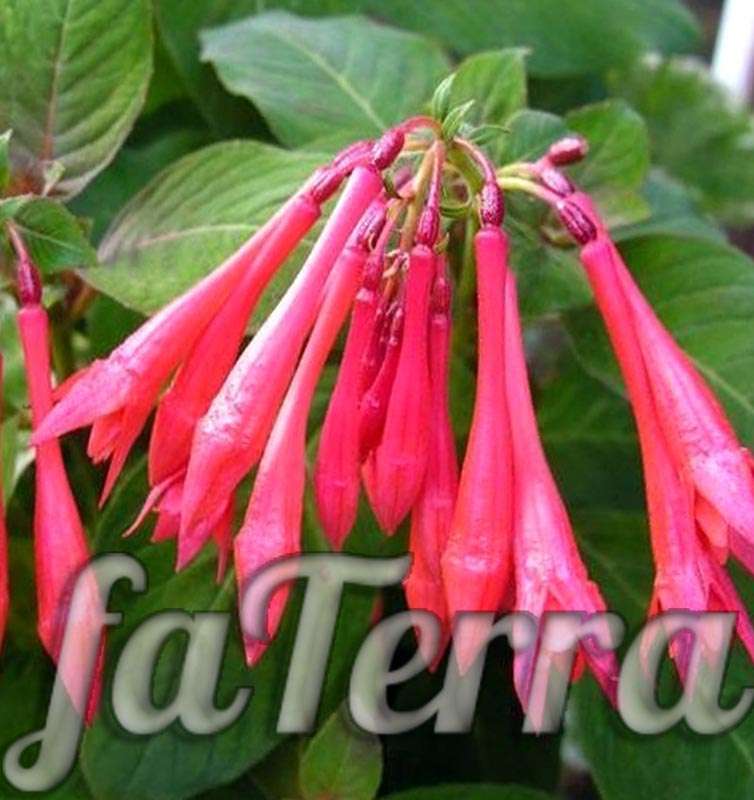
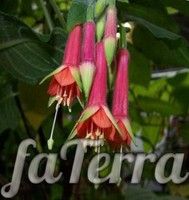 This plant has large, elongated, and oval leaves, up to 12 cm long. This evergreen shrub has bare, reddish stems and reaches a height of 2 meters. The drooping flowers are a reddish-orange color and are clustered in dense, terminal clusters. The corolla tube narrows at the base and is 10 cm long, while the petals are about 1 cm long. This species of fuchsia produces an edible fruit (berry). This plant is ornamental and blooms profusely from June to August.
Fuchsia paniculata
 This fuchsia is considered a rare species. Its petals are fused into a short tube, and the flowers are clustered in loose, upright clusters. The opposite leaves are elongated, about 14 cm long and 5 cm wide, tapering to a point. The petals are 13 cm long, the pistils are short, while the stamens are long with pink anthers. The bush is approximately 1 meter tall.
Fuchsia boliviana Carriere
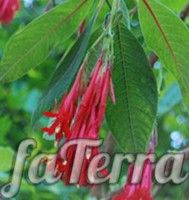 The bush reaches a height of 1 meter. The oval-elliptical leaves are 10-13 cm long and have pointed edges. The petals of the flowers are 1 cm long. Warm rooms are ideal for this plant.
Fuchsia Care at Home
Caring for fuchsia at home is not difficult due to its ease of propagation and undemanding nature. The main challenge is helping the plant survive the winter.
Air Temperature
The optimal temperature for fuchsia growth and flowering is 17-24°C. Growth slows down at temperatures above this range, and the flowers may begin to wilt. Hot, stuffy balconies in the summer are not suitable for this plant, as it can lose its lower leaves and drop its flowers at high temperatures. Providing a cool temperature of 10-12°C in winter is essential for successful fuchsia flowering and healthy growth.
Watering
In summer, the soil needs to be kept moist (always slightly moist), while watering should be reduced in winter. If the fuchsia does not receive enough water, it will drop its buds and flowers. However, to avoid overwatering, it is necessary to choose the right soil and provide good drainage. It is best to water and mist fuchsia with boiled or filtered water.
Lighting
Fuchsia loves light, but it needs diffused light, as direct sunlight can cause burns. The most suitable window is an east-facing one.
Fertilizing
Feed fuchsia with a mineral fertilizer for flowering houseplants from March to September, once every 1.5 weeks.
Air Humidity
Fuchsia prefers high humidity, as its native climate is quite humid. It loves frequent misting, especially in summer (every 2 days), but avoid getting water on the flowers.
Soil
The soil should be loose. A good mix is: 1 part peat, 1 part turf, 1 part leaf soil, and 1 part coarse sand or perlite. Good drainage is essential.
Repotting
Repot annually in spring. Young plants should be repotted several times a season until they reach their mature size. If a reddish-white coating appears on the soil in the pot, it should be removed and replaced with fresh soil.
Propagation
The easiest way to propagate fuchsia is by stem cuttings. They should be rooted in water, or in a moist mixture of peat and sand, where they will develop roots in about 1-2 weeks. Plant the cuttings in a small pot, a few at a time, when they reach a length of 5 cm.
Fuchsia can also be propagated by seeds. Sow them in a mixture of sand and peat, preferably in a mini-greenhouse (you can use a regular plastic box). The optimal temperature is 18°C. Do not bury the seeds, but spread them evenly over the surface, and moisten them with a spray bottle. Keep the soil constantly slightly moist. After about a month, the seedlings will emerge. At this time, it is important not to overwater them, to provide plenty of diffused light, and to avoid drafts.
Pests
Spider mites, whiteflies.
Possible Problems in Care
- The fuchsia leaves are wilting and falling off? Increase watering and misting.
- The leaves are turning yellow and developing brown spots? This indicates overwatering. If the spots on the leaves are gray or brown, the plant is infected with a fungus.
- The fuchsia is not flowering? The stems are elongated? This indicates a lack of light. Provide the plant with diffused light, but avoid direct sunlight. If the plant blooms for a short time, it may be due to a warm winter or a lack of fertilizer.
- The leaves of the fuchsia are wilting? This is a sign of root rot due to excessive moisture in the soil.
- The fuchsia is dropping its flowers? This may be due to being moved to a different location or turned to a different side to the light. This should be avoided. It may also drop its flowers due to insufficient or excessive watering, or due to a hot summer. If you have just purchased this plant, do not be alarmed if the fuchsia drops its flowers - this is just a sign of a change in growing conditions. If you are planning to buy this plant, it is better to buy fuchsia with buds, not flowers.
Write comments
Comments
Оксана
Александр
Светлана