



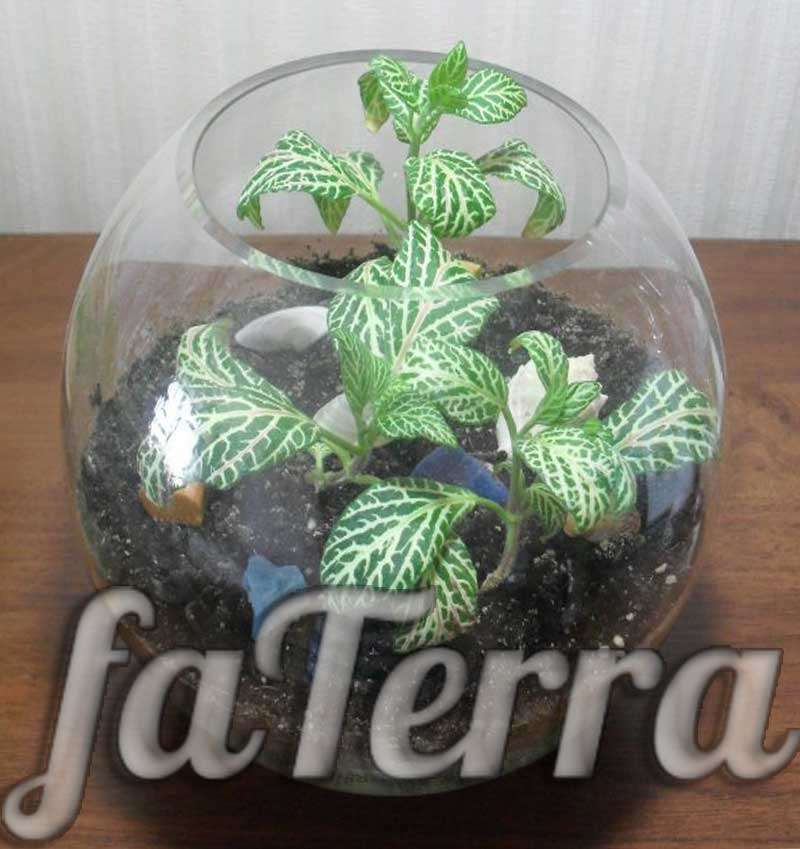
Latin name: fittonia
Native to: Peru
Brief information about fittonia
The fittonia houseplant is very elegant and refined, belonging to the Acanthaceae family, which includes four ornamental perennial species. This plant is named after the English sisters Fitton, who created the first classic botany textbook in the 19th century.
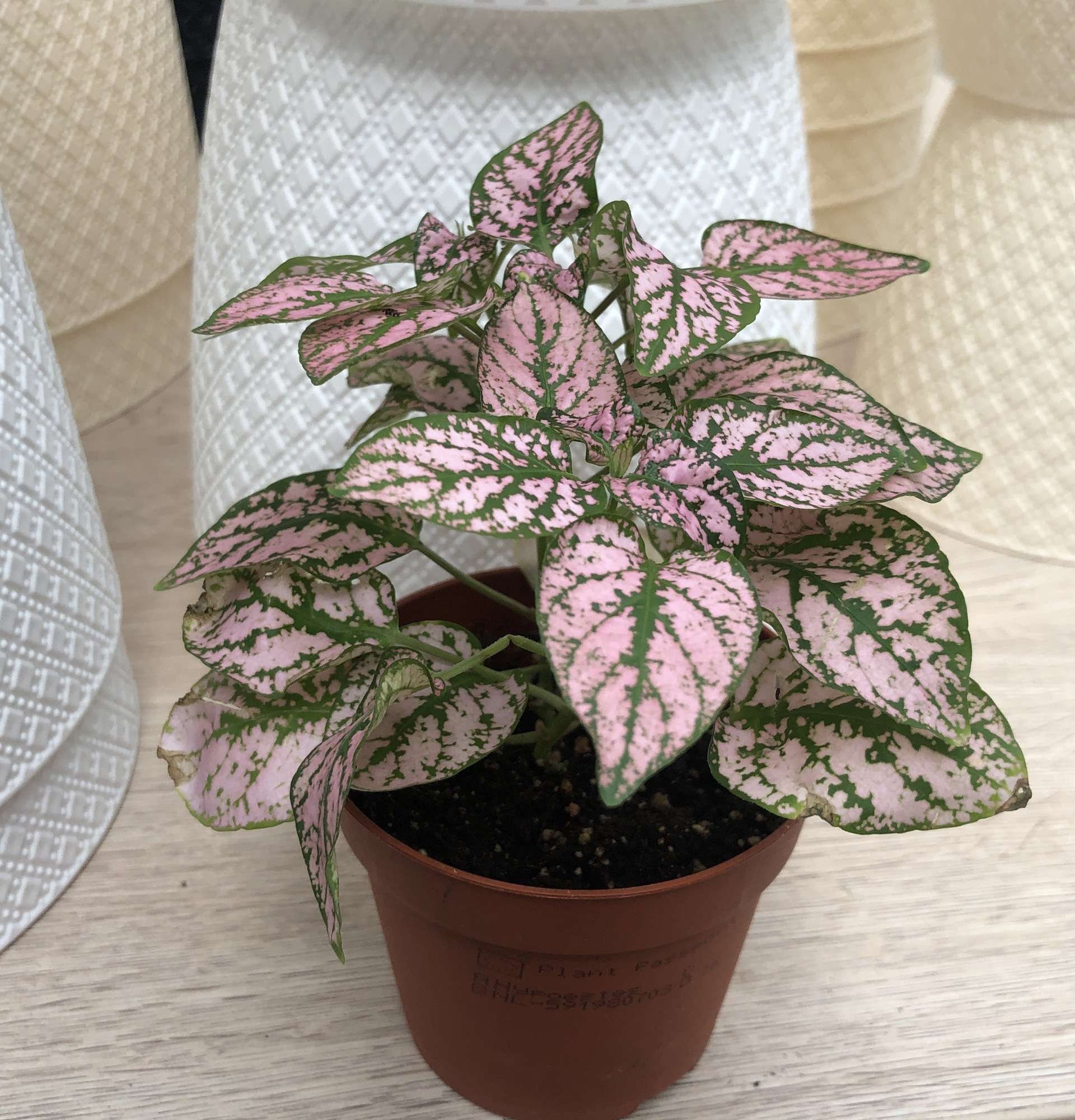
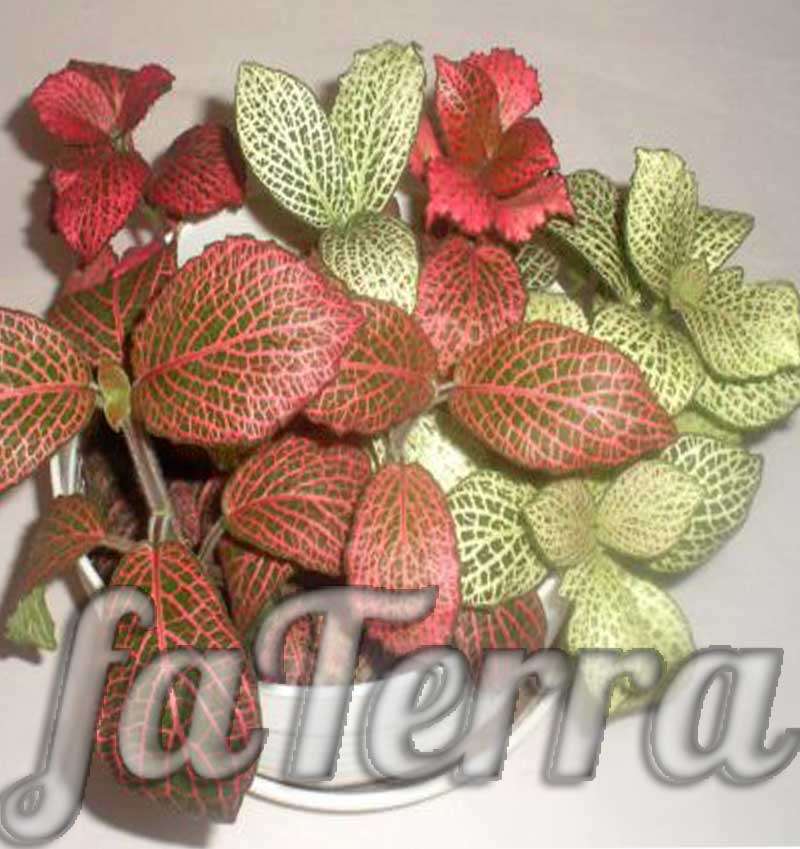
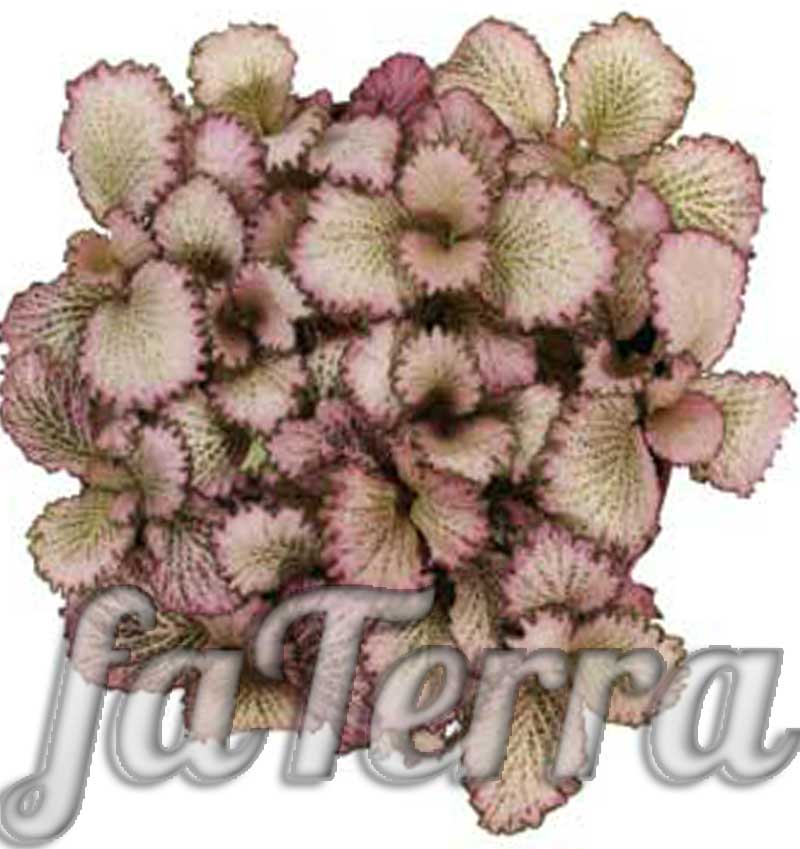
It is loved for its beautiful matte leaves with beautiful patterns. Their shape is oval, dark or light green in color with light veins. The flowers of fittonia are small and unattractive.
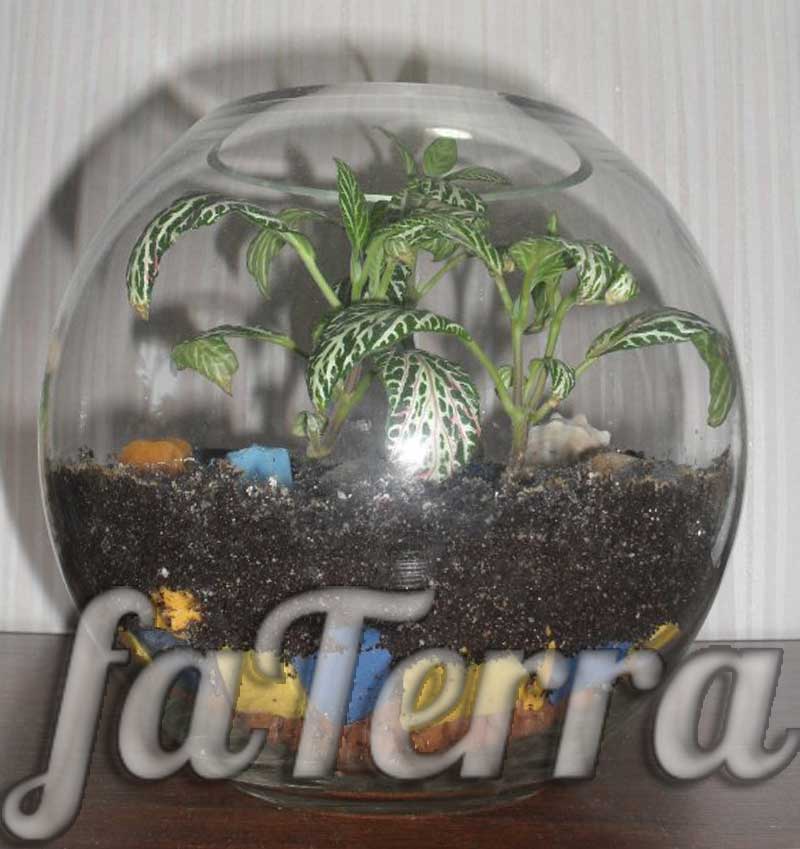
Fittonia is a small plant with thin, creeping stems, so it is often used to create terrariums or planted in small gardens.
They look great in a floral composition with different plants in glass containers. Home gardeners often plant several varieties in one pot, which is called a fittonia mix.
Popular varieties of fittonia
Fittonia verschaffeltii
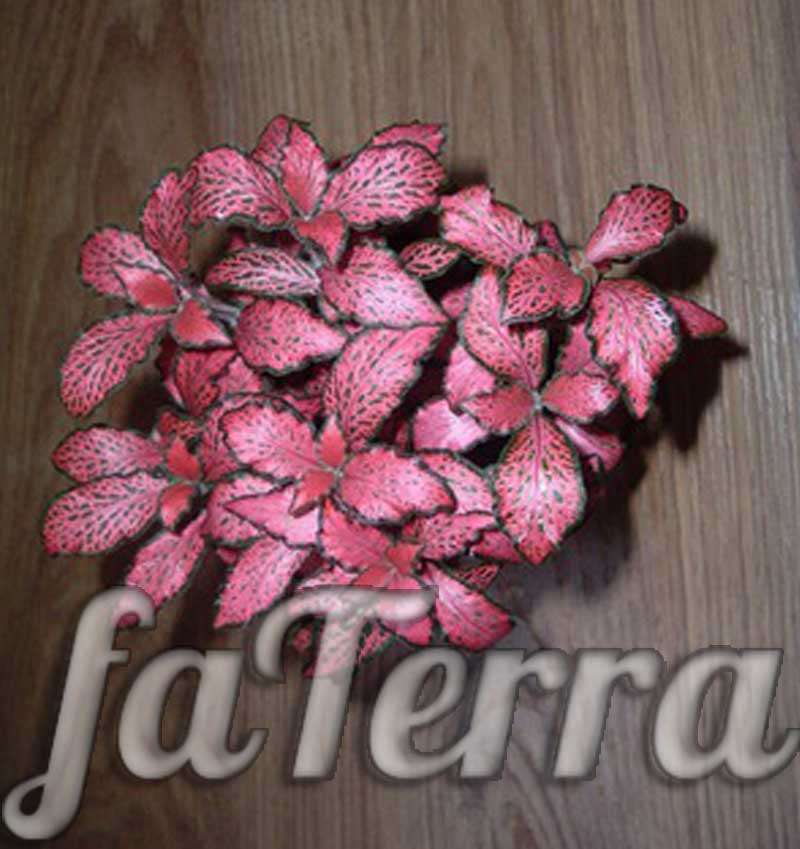
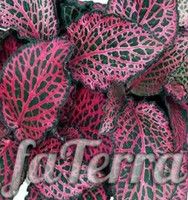 This variety has creeping shoots and superficial roots. The stems can reach up to 10 cm in height, and they are densely branched. The leaves of Fittonia verschaffeltii are up to 10 cm long, attached to a small petiole. They are dark green, matte with pink veins. The yellow, inconspicuous, and lovely flowers are collected in inflorescences and have no decorative value.
Fittonia argyroneura
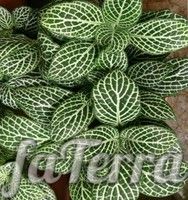 This variety has silver-white veins on the leaves, and the leaves themselves are green. It has a dwarf variety called Nana, which is known for its ease of cultivation.
Fittonia care at home
Caring for this plant is not difficult and does not require much effort. Fittonia needs humidity, light, and proper watering, as it is native to the humid forests of South America. The fittonia houseplant needs regular pruning, which will make it more branched.
It should not be kept in the kitchen, as it does not tolerate smoke and fumes.
Also, the plant does not like drafts, but it needs ventilation. Let's talk about all this in more detail...
Choosing a location
Bright, diffused light is needed, but fittonia should be shaded from direct sunlight. It can grow near a brightly lit window and feels great on an east-facing window. It also grows in partial shade, but loses its decorative appearance. Fittonia is heat-loving, so do not allow the temperature to drop below 18°C. It does not like drafts and dry air, so do not place it near heaters. It is moisture-loving, so spray it with warm water every day, or better, place wet gravel in the tray. A humid environment like a bathroom is ideal for it.
Watering
It requires abundant watering with settled water, and in winter, watering is reduced to once a week. The most important thing for the plant is regular watering. If you forget to water the fittonia even once, its root system will dry out, and it may shed its leaves. If you overwater the soil, it will lead to root rot.
Soil
It grows well in a mixture of: 1 part peat, 1 part leaf mold, 1/2 part perlite or coarse sand, and 1 part торф. Some gardeners use equal parts of торф and leaf mold.
Only use a pot with drainage holes.
Fertilizing
Fertilize with liquid fertilizer every 14 days, but dilute it three times from the recommended dose, as excessive fertilizer is harmful.
Repotting
It needs to be transplanted every spring, so the soil is fresh. Good drainage is essential. Use low pots, because the roots of fittonia are small and superficial. After about 3 years, the plant loses its decorative appearance, so it needs to be pruned and the cuttings rooted.
Fittonia propagation
It can be propagated by: division of the bush, cuttings, layering, and seeds. In spring, cut a 7-cm cutting and plant it in moist sand, covering it with plastic wrap. Maintain a temperature of 20°C and soon expect roots. Then plant the flower in a small pot and pinch the tips to promote branching. Cuttings can also be rooted in water.
It is easy to propagate fittonia from seeds. Sow them in spring in a seedling tray with a sand-peat mixture. Sprinkle them lightly with soil and cover with film or glass, then place in a dark place. When the seeds germinate, move them to a bright place. Then, transplant the seedlings into pots with 4 cuttings each.
Old fittonia are propagated by dividing the bush during transplantation. Carefully separate the bush, trying not to damage the root system.
Sometimes, fittonia is propagated by layering from the stem. Simply cover a part of the stem with moist soil and wait for the roots to appear. When the shoot is rooted, separate it and plant it in a separate pot.
Pests and diseases
It can be affected by:
- mealybugs,
- aphids,
- spider mites,
- whiteflies,
- powdery mildew,
- thrips.
- Problems that may occur
The leaves of fittonia may curl and dry out. This happens either from bright sunlight or from dry air. Also, the leaves may droop. This means that the plant has not been watered for a long time, just water it and the leaves will recover. If the leaves are not growing, turning yellow, or drooping, it is due to cold temperatures.
Write comments
Comments